
|
Getting your Trinity Audio player ready… |
By Kei Ninomiya
There is something wonderfully strange about a Noir Kei Ninomiya collection. The designer has built his language around intricate construction, sculptural silhouettes, black-and-white contrasts and an almost obsessive approach to detail, but for Spring 2027, that familiar darkness opened the door to something softer, more playful and unexpectedly romantic.
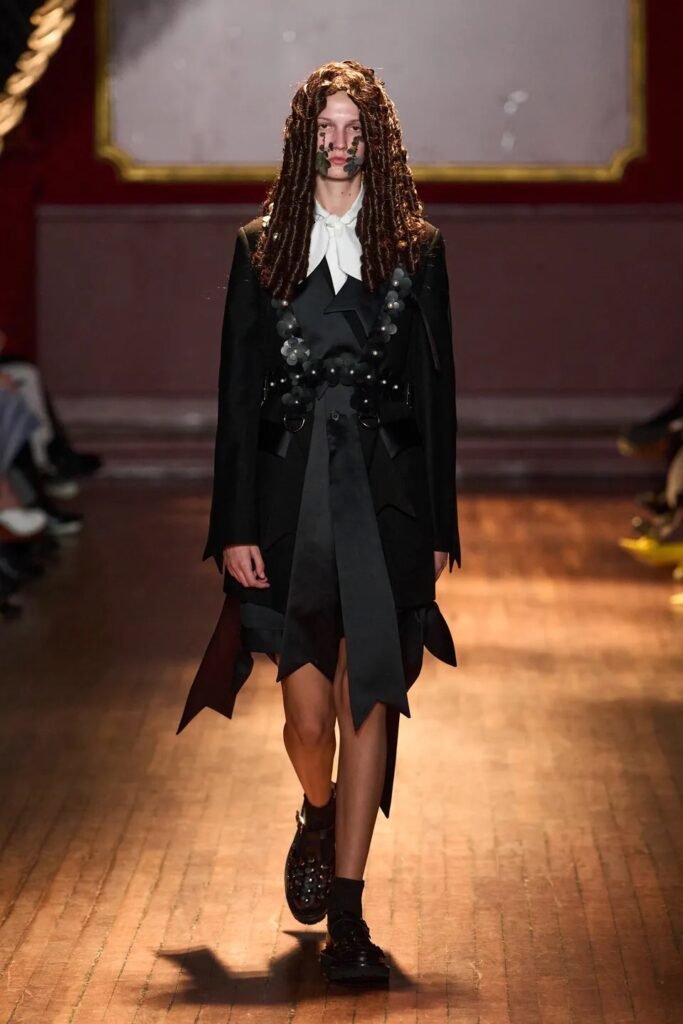
Presented in Paris on October 3, 2026, Noir Kei Ninomiya’s Spring 2027 Ready-to-Wear collection entered a world somewhere between a punk wardrobe, a Victorian garden and Alice in Wonderland.
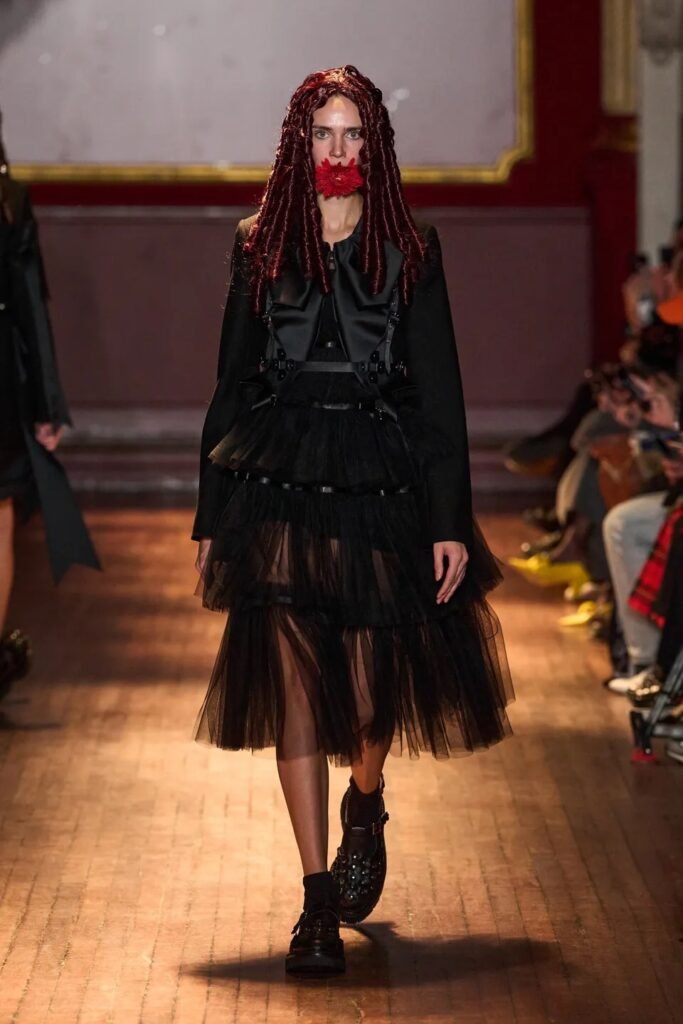
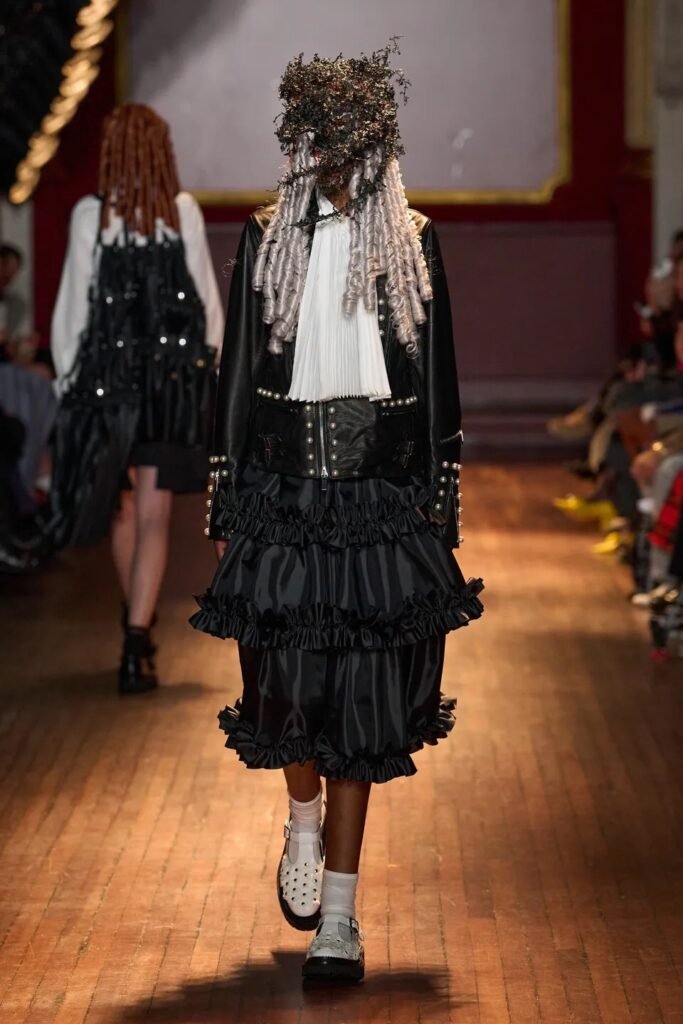
The result was one of Ninomiya’s more approachable collections without sacrificing the theatricality that makes Noir Kei Ninomiya instantly recognizable. Motorcycle jackets, tailored blazers, crisp shirts and structured dresses remained central, but pearls, bows, ruffles, flowers and playful shapes softened the collection’s usual hard-edged attitude.
A Wonderland of Noir
The collection seemed to ask what happens when punk dressing falls down the rabbit hole.
There were references to the familiar visual codes of British punk and Japanese avant-garde fashion, but Ninomiya approached them with a distinctly whimsical hand. Instead of relying entirely on studs, hardware and aggressive silhouettes, the designer introduced delicate embellishment and romantic decoration.
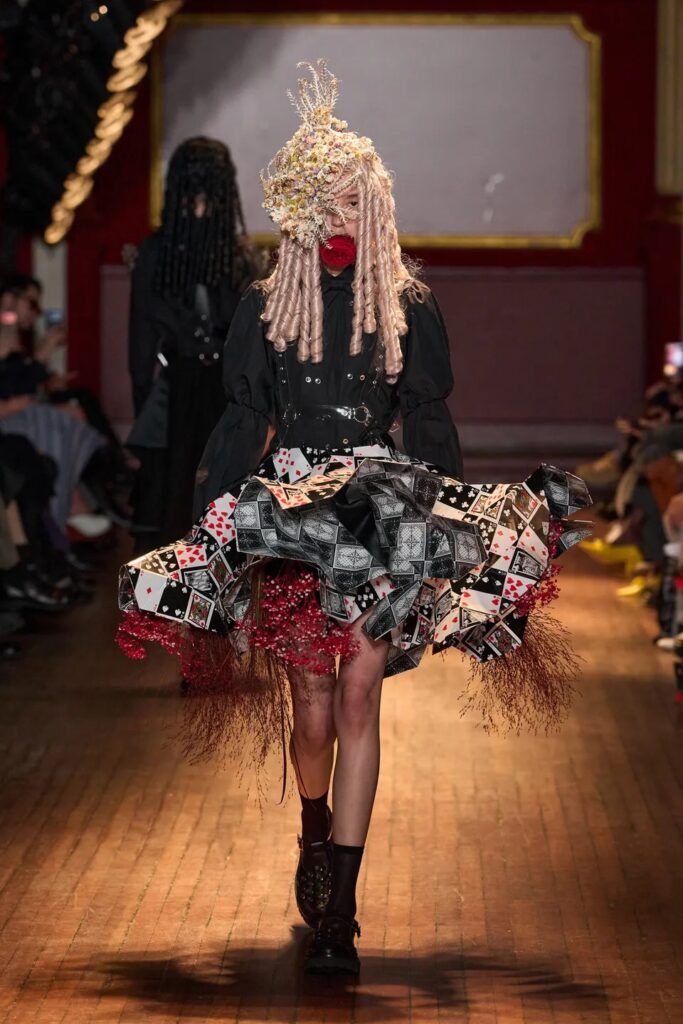
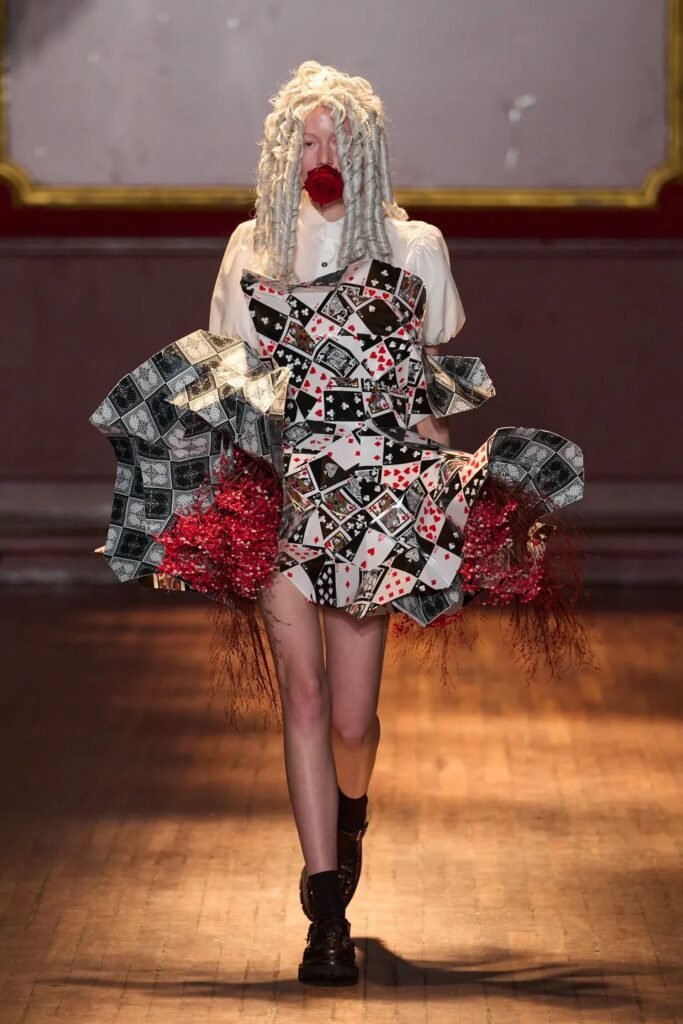
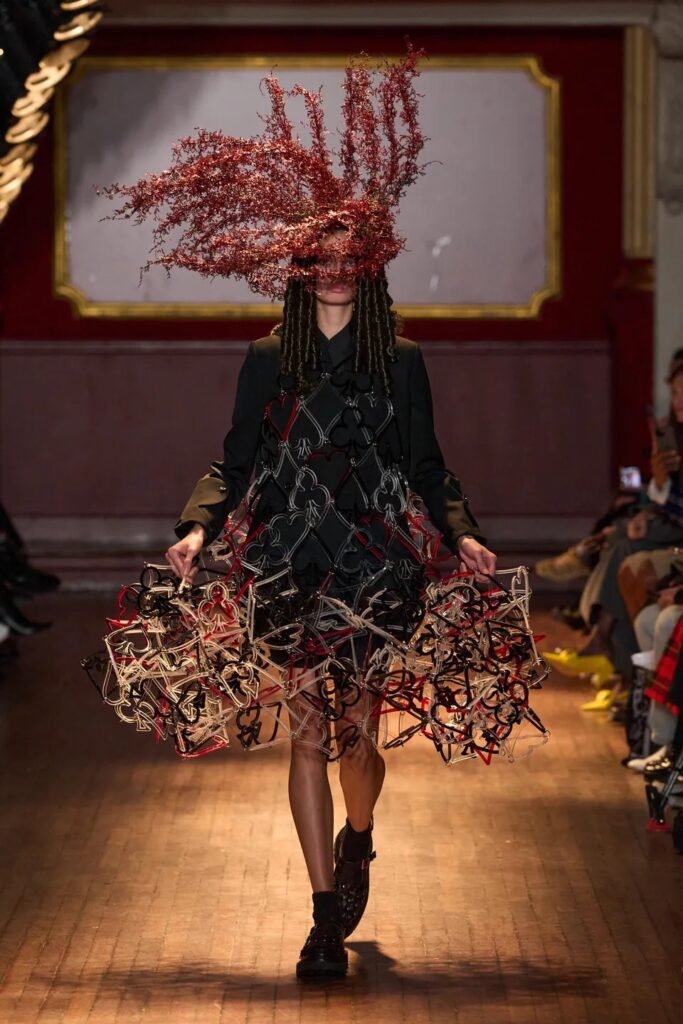
Playing-card imagery became one of the season’s more surreal motifs, appearing in sculptural forms and Plexiglass harness-like pieces. The effect was theatrical without becoming costume-like, reinforcing the collection’s strange fairytale atmosphere.
It was a particularly effective direction for Noir because Ninomiya’s clothes already occupy a space between fashion and sculpture. A skirt can become architecture, a jacket can become an object, and a dress can feel almost like a constructed installation.
For Spring 2027, that sculptural language was given a sense of innocence.
Punk Gets Romantic
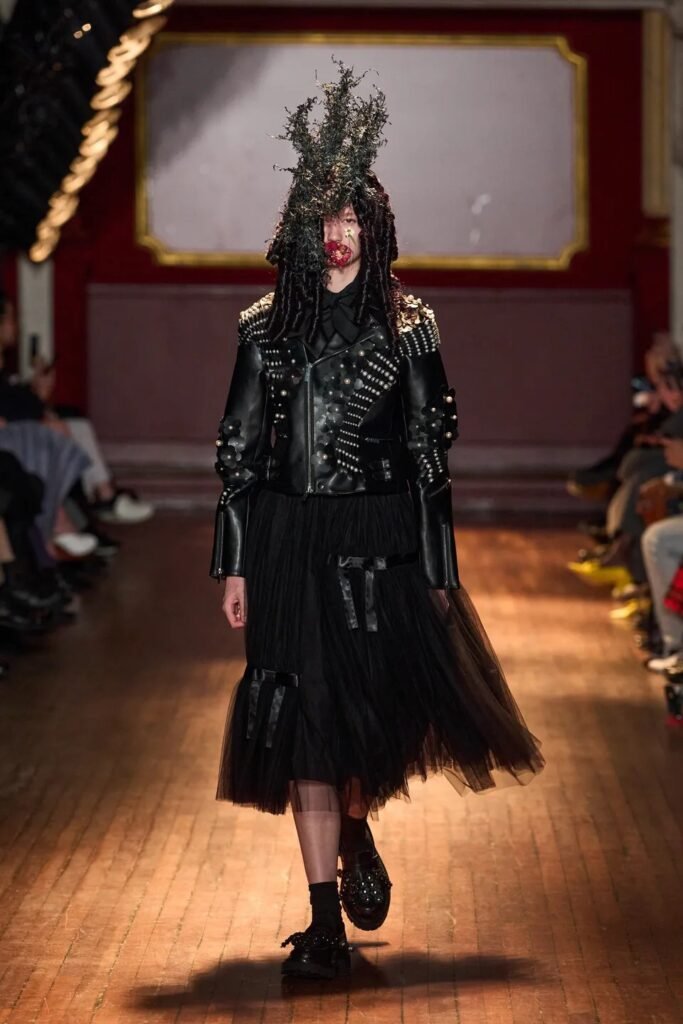
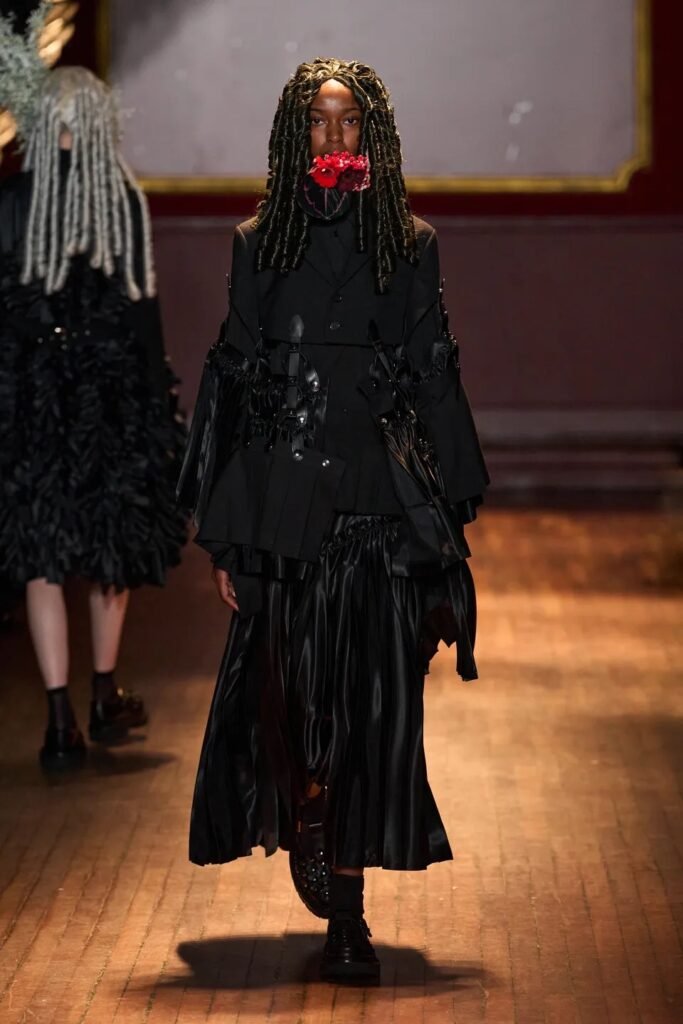
Noir Kei Ninomiya has long understood the power of the motorcycle jacket. For Spring 2027, the familiar biker silhouette returned, but it was treated with unexpected delicacy.
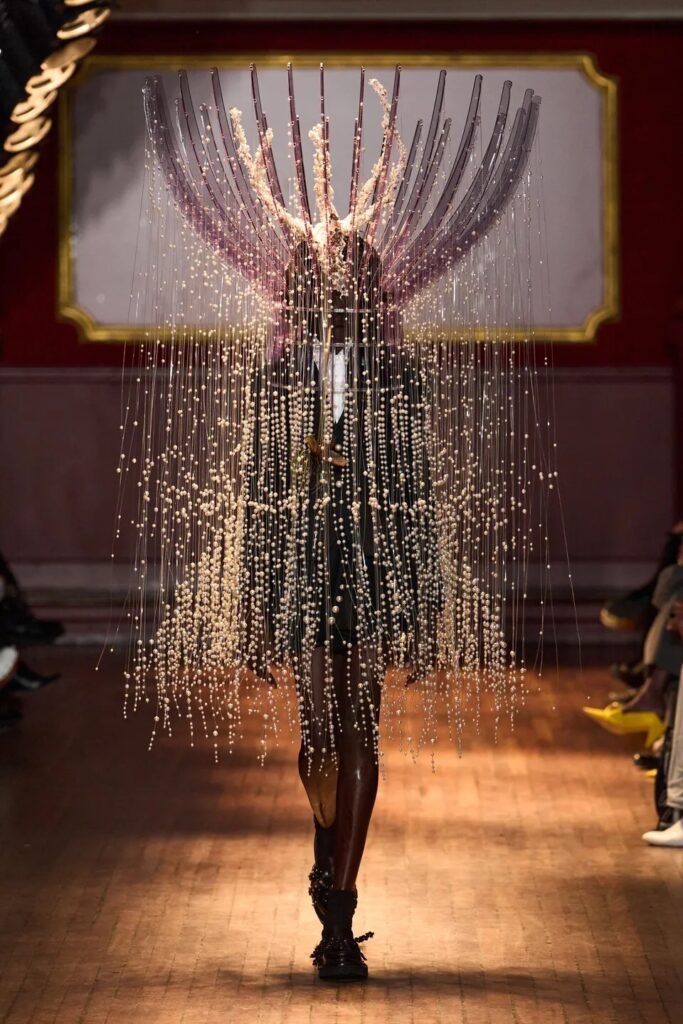
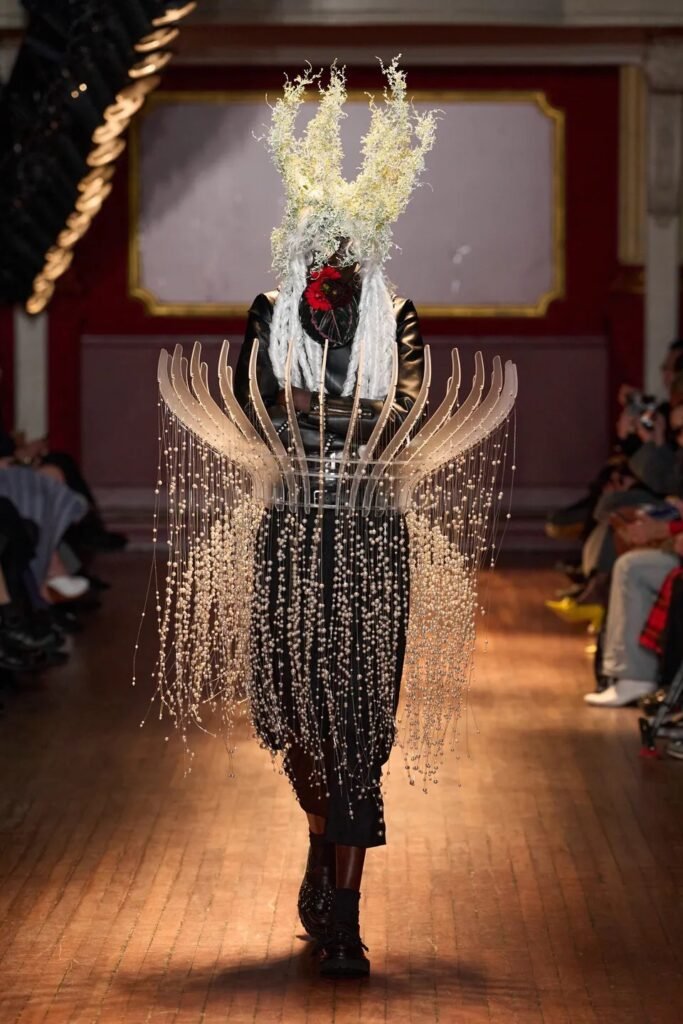
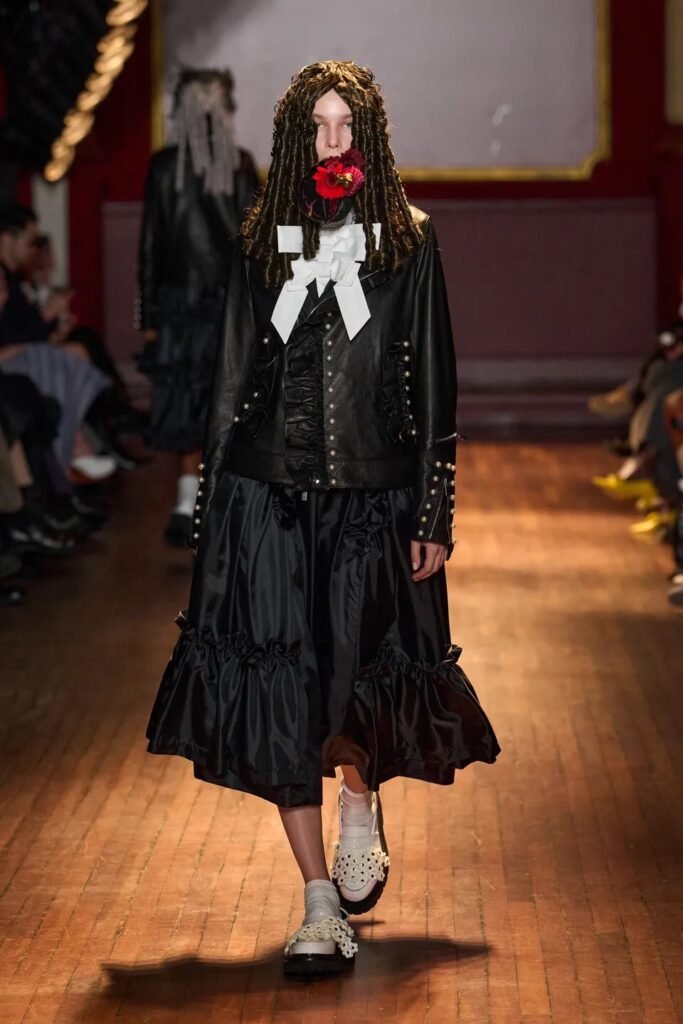
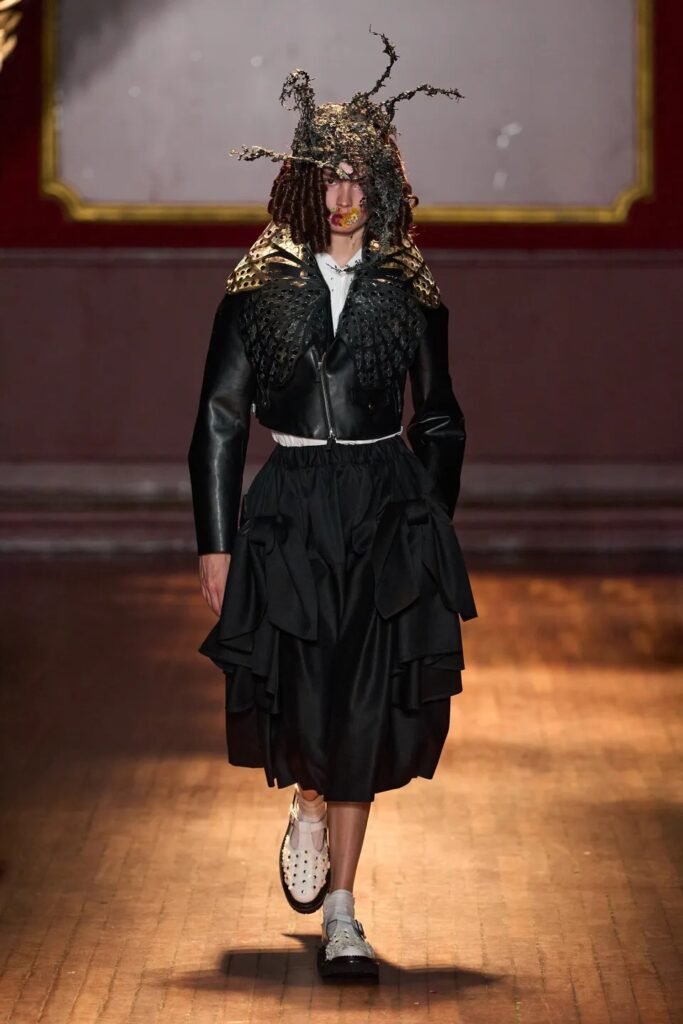
Leather was softened with pearls and floral details, while cropped jackets appeared alongside structured skirts and dresses. One standout example was a leather blouson decorated with pearls, transforming a traditionally rebellious garment into something almost precious.
This tension became one of the collection’s strongest ideas.
The clothes could be tough and delicate at the same time. They could reference punk without looking nostalgic, while romantic details never completely erased the underlying darkness.
A cropped lightweight wool biker jacket featured pockets shaped like hearts, with three-dimensional heart ornaments appearing at the back of the cuffs. It was a clever example of Ninomiya’s ability to take a familiar garment and push it into a new visual territory.
Flowers Become Fashion
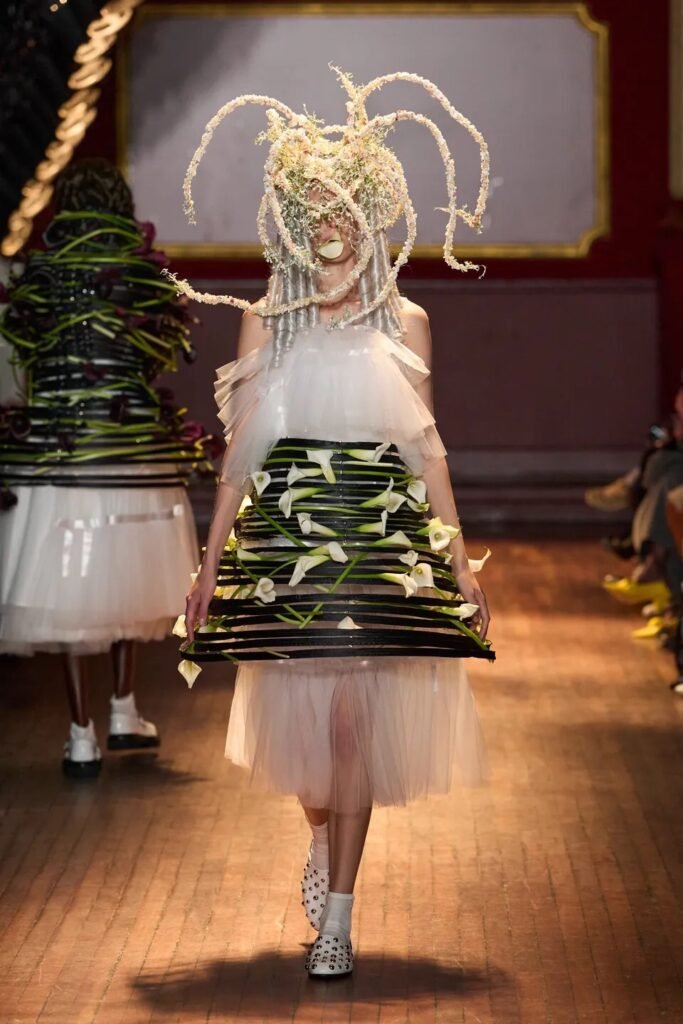
Flowers were everywhere, but they were not presented in the conventional language of spring fashion.
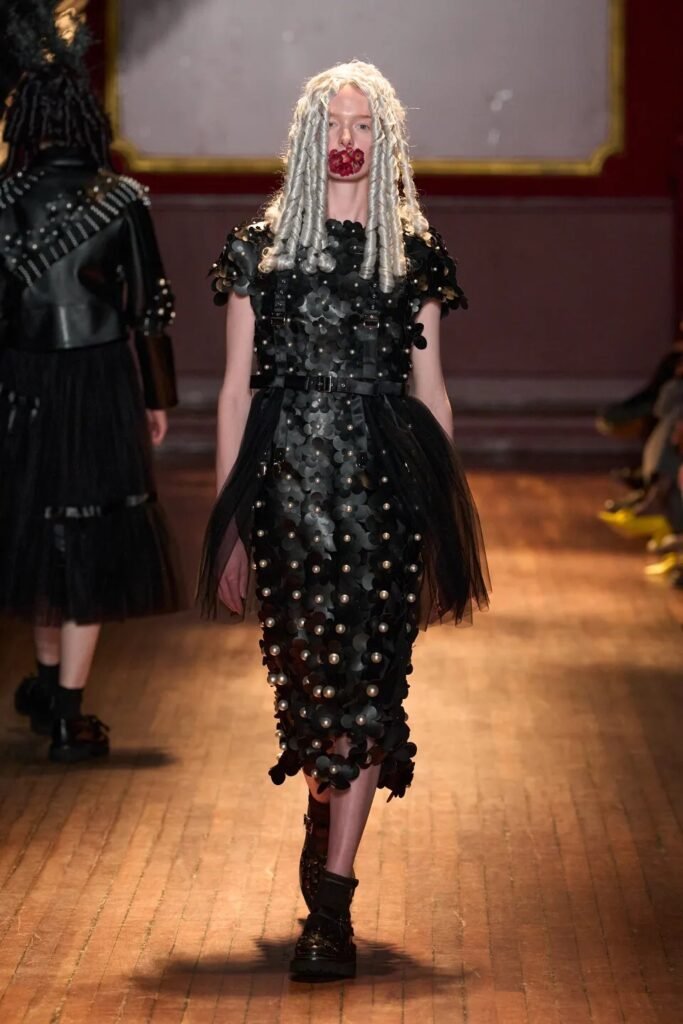
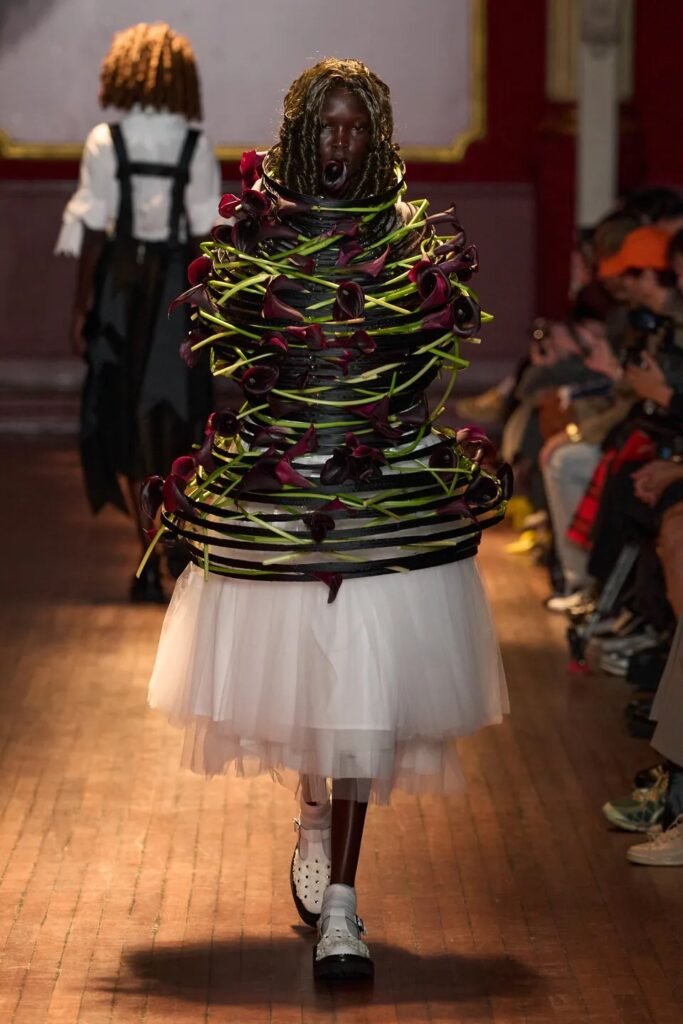
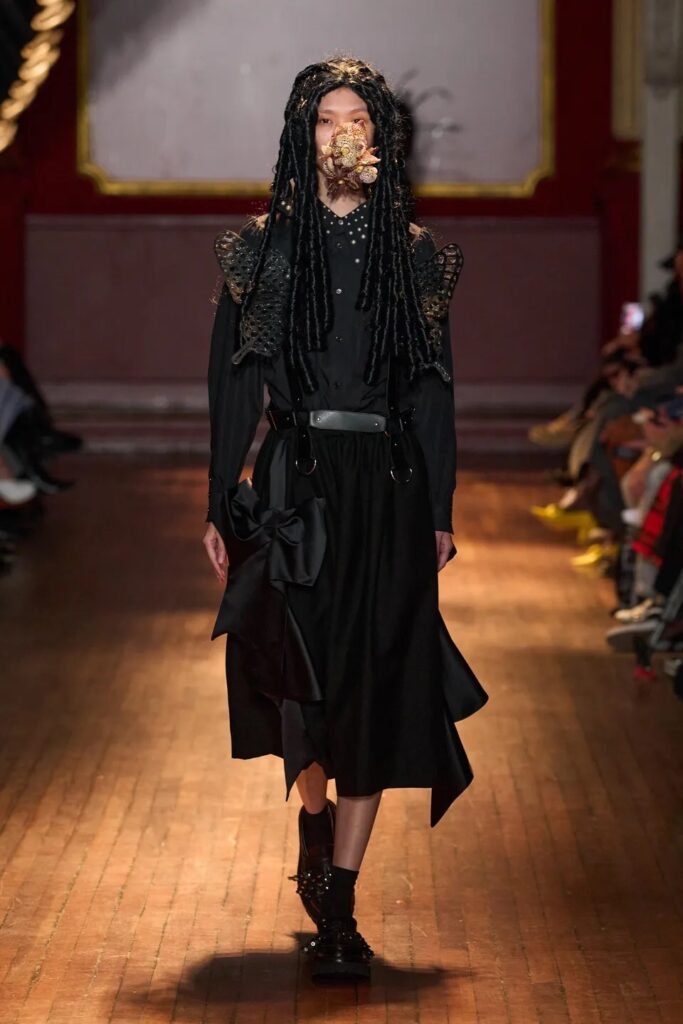
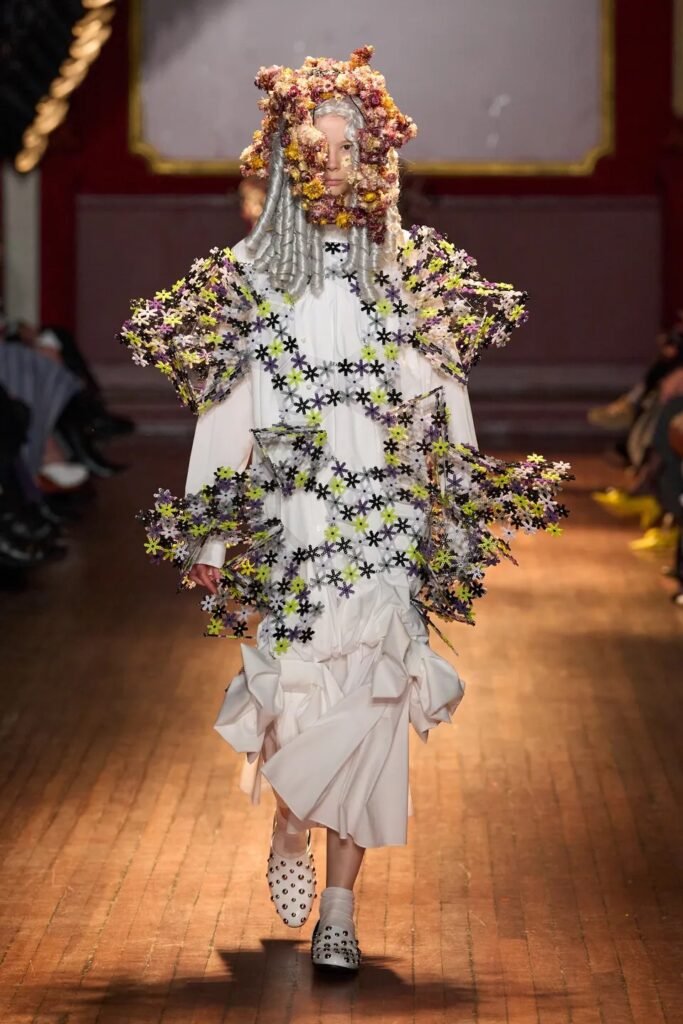
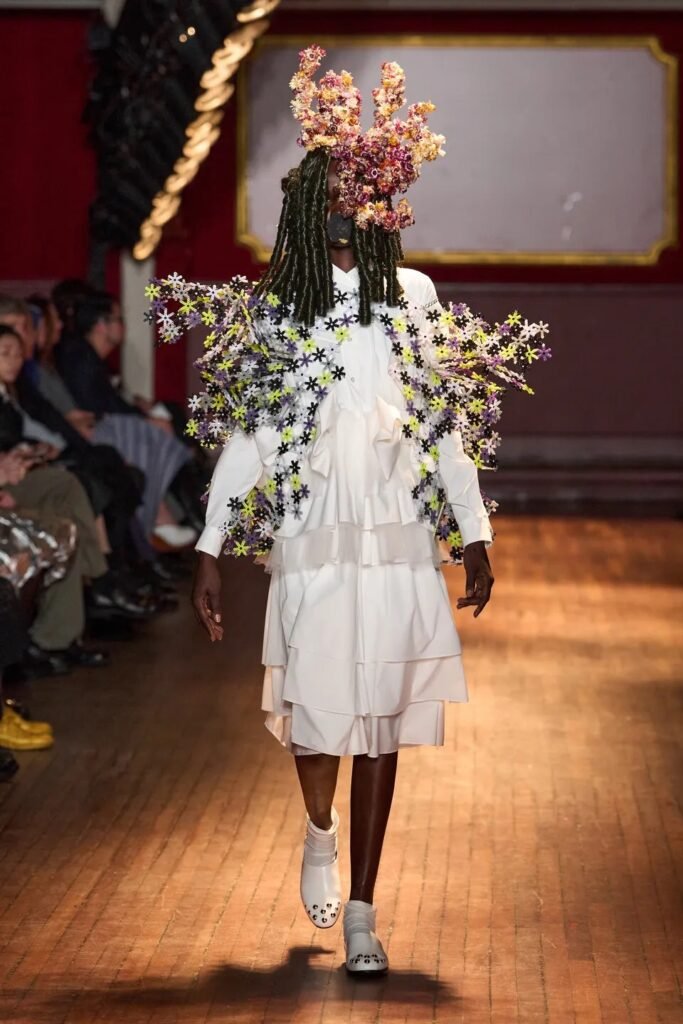
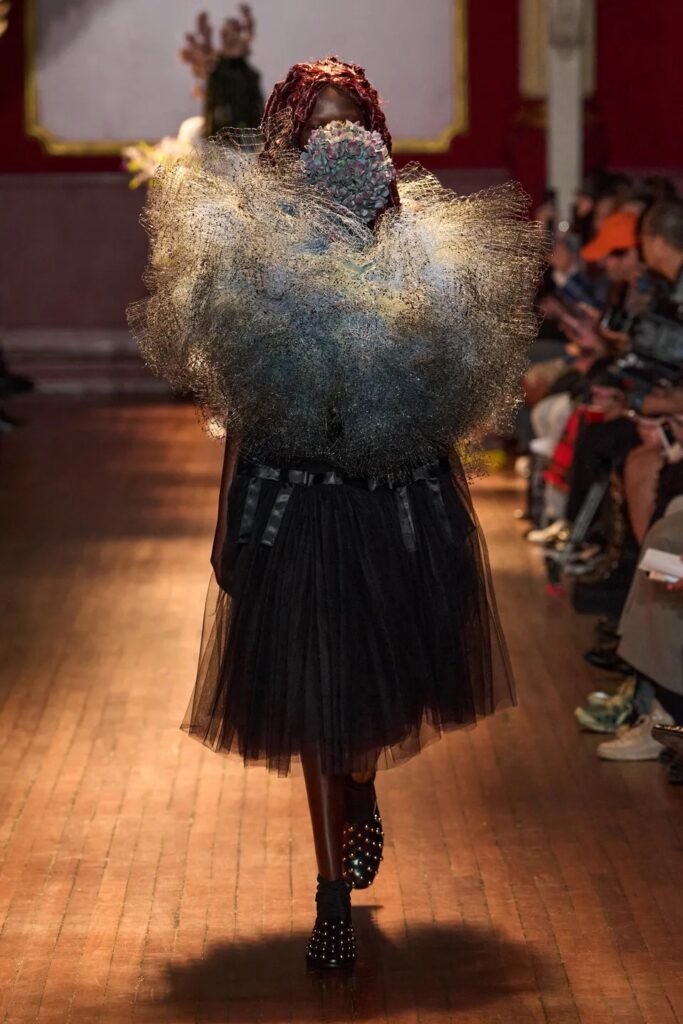
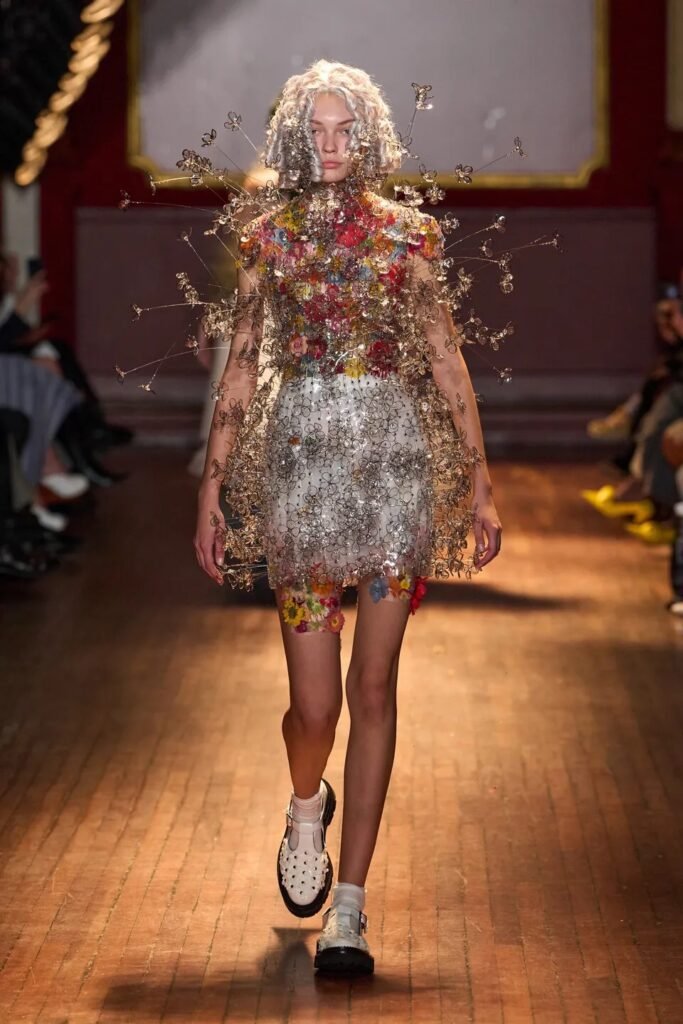
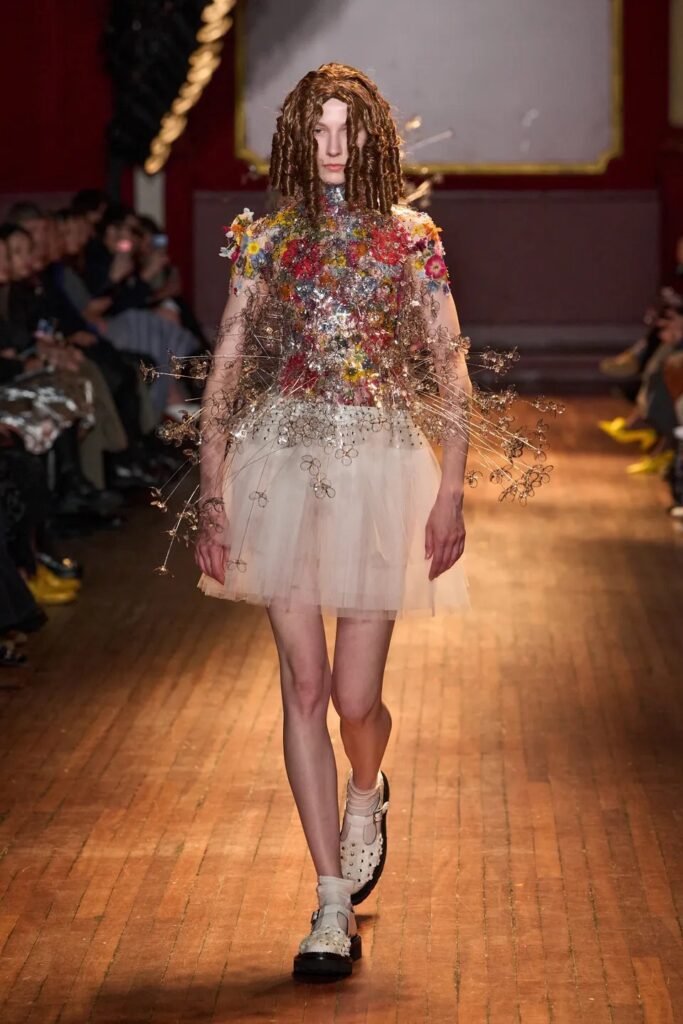
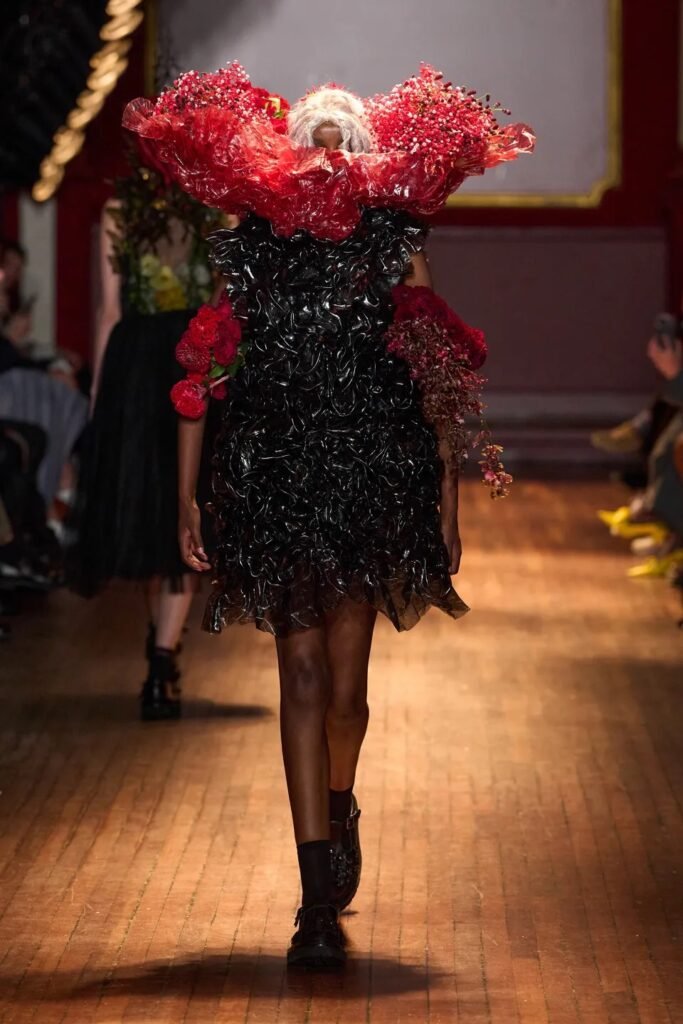
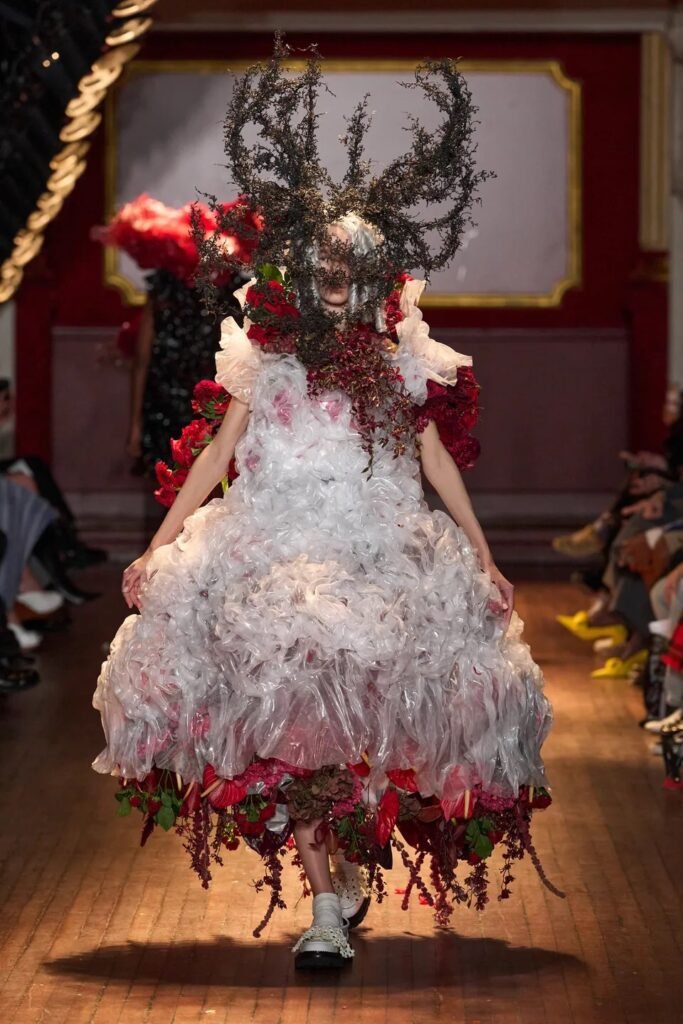
Instead of simply printing florals onto dresses, Ninomiya approached flowers as physical objects and sculptural decoration. Naïve five-petal appliqués appeared across garments, while other looks incorporated more elaborate floral treatments.
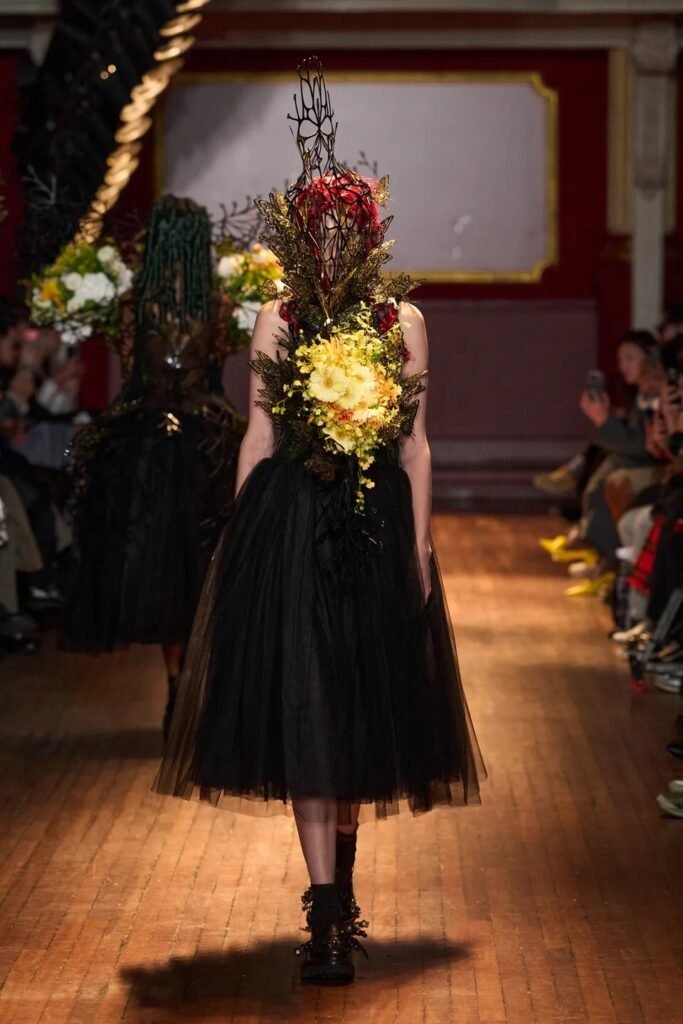
The show also featured a collaboration with floral artist Makoto Azuma, whose work helped create an ephemeral atmosphere around the presentation. Fresh blooms and fallen petals introduced a sense of impermanence, creating a contrast with the engineered precision of Ninomiya’s clothing.
That contrast is essential to understanding the collection.
Ninomiya’s clothing is often associated with permanence: carefully constructed shapes, elaborate surfaces and garments that appear almost engineered. Flowers, by comparison, represent fragility and decay.
Putting the two together created a poetic tension between nature and construction.
Pearls, Bows and Ruffles
Perhaps the biggest surprise of Spring 2027 was the way Ninomiya replaced some of his traditionally sharper details with romantic embellishment.
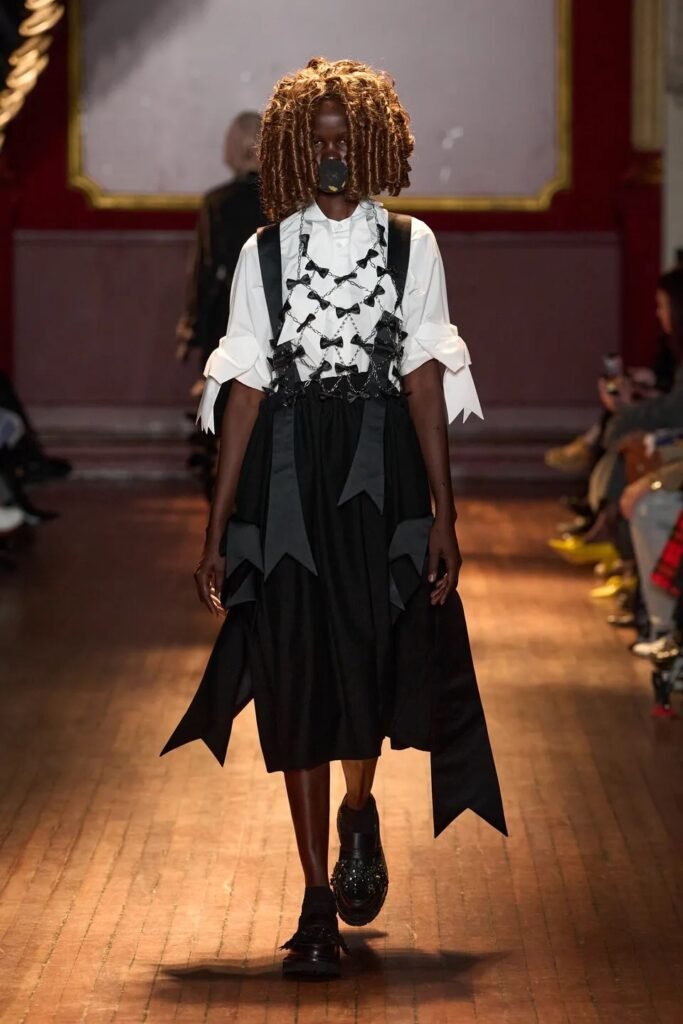
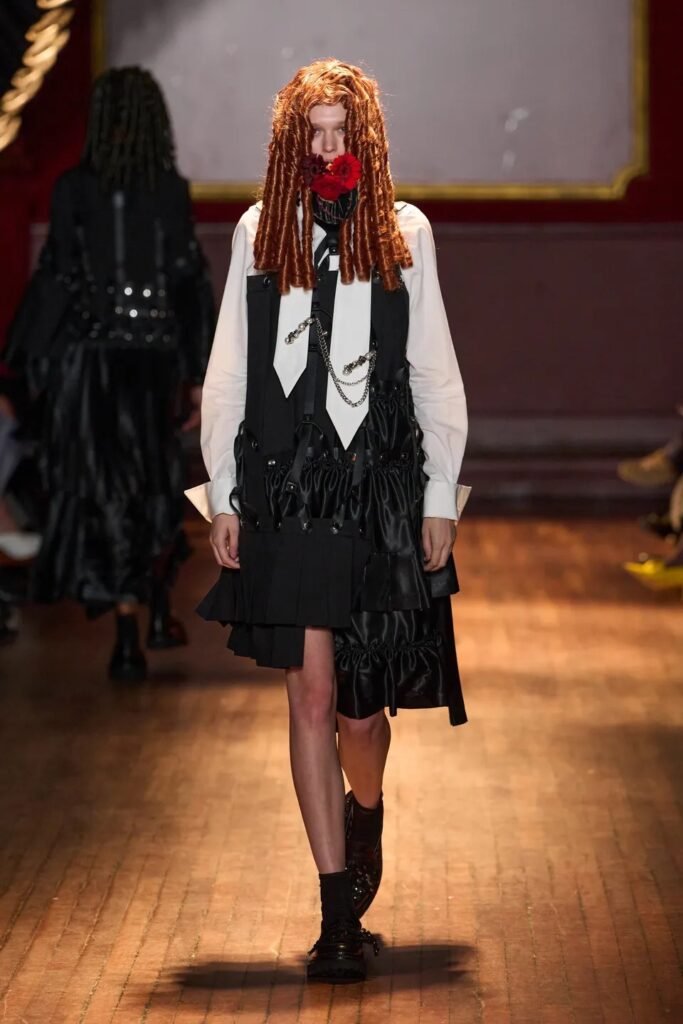
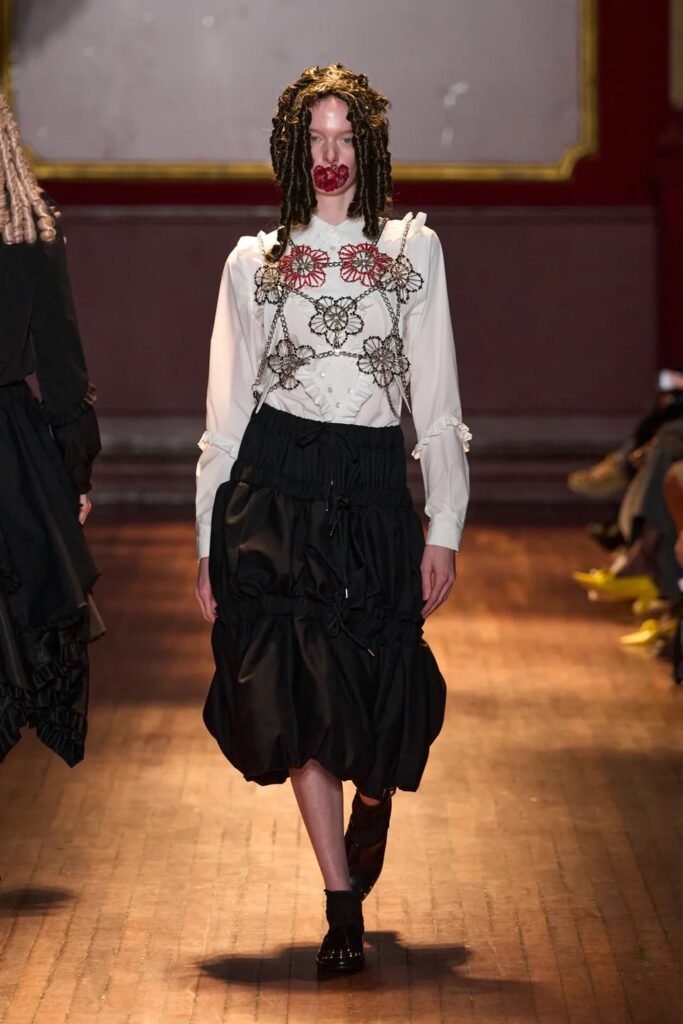
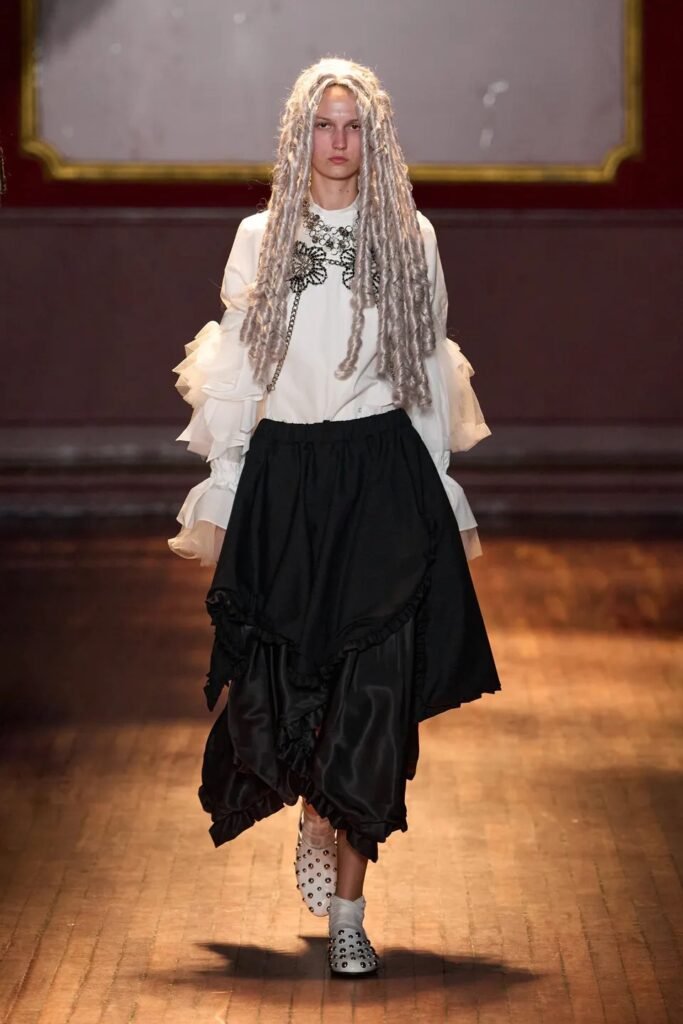
Pearls appeared where one might expect metal hardware. Bows softened collars and cuffs. Ruffles interrupted otherwise structured silhouettes. Shirts became playful through delicate bow details, while skirts were built in layered constructions.
A short-sleeved shirt, for example, was finished with bows along the cuffs and front, transforming a wardrobe basic into something much more theatrical. Tiered skirts featured individual drawstring sections, giving movement and volume to otherwise simple forms.
The effect was not traditionally feminine so much as deliberately childlike.
That distinction matters. The collection was less about conventional romance and more about imagination. Its bows, flowers and pearls felt like objects discovered inside a fantastical wardrobe rather than predictable decorative details.
The Architecture of the Silhouette
Despite the softness, structure remained at the heart of the collection.
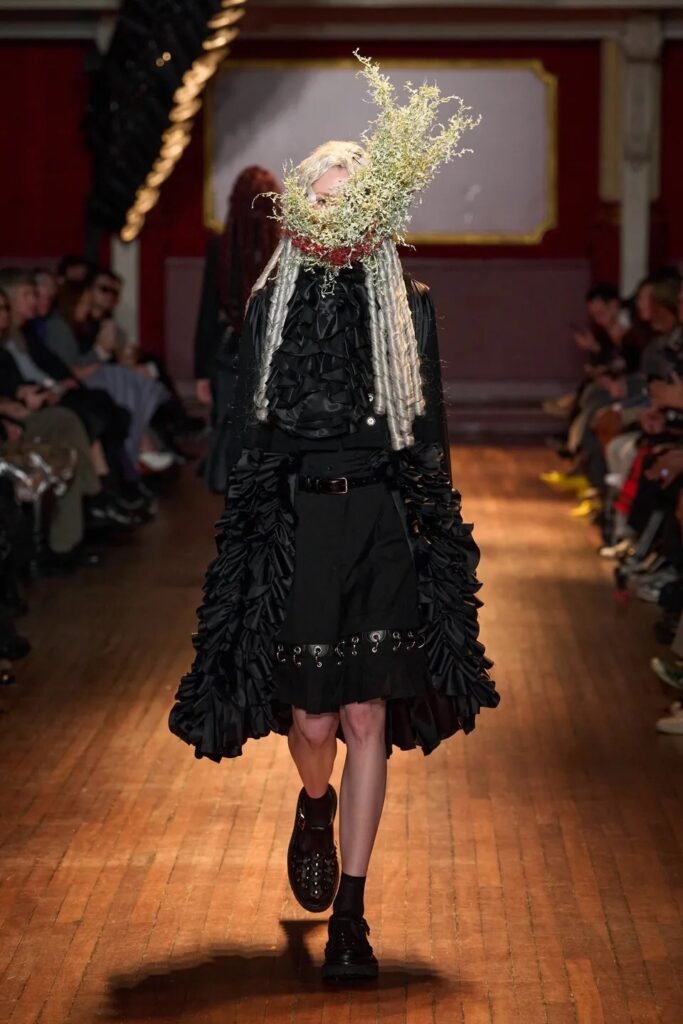
Noir Kei Ninomiya’s approach to clothing is fundamentally architectural, and Spring 2027 continued that tradition with sculptural skirts, geometric volumes, asymmetric shapes and constructed dresses.
Runway imagery showed everything from structured waistlines and geometric cut-outs to layered midi skirts, sculptural tops, asymmetric dresses and dramatic volumes.
There was also an intriguing relationship between the body and the clothes. Rather than simply following the body’s natural proportions, Ninomiya frequently created silhouettes that appeared to build new shapes around it.
That is where Noir differs from many contemporary labels.
The clothing does not merely dress the body. It transforms the body into part of the composition.
Black, White and Unexpected Colour
The colour palette remained strongly connected to Noir Kei Ninomiya’s identity.
Black and white dominated the collection, providing the perfect canvas for the intricate details and sculptural constructions. But flashes of colour, including red, appeared among the darker looks, adding punctuation to the otherwise monochromatic world.
The restraint of the palette allowed the construction to speak louder.
Instead of depending on colour for drama, Ninomiya created drama through texture, proportion and silhouette. Pearls caught the light. Flowers created dimensional surfaces. Transparent materials introduced another layer. Leather brought structure, while lighter fabrics created movement.
The result was visually rich without feeling excessively complicated.
Sheer Layers and Delicate Transparency
Transparency also played an important role.
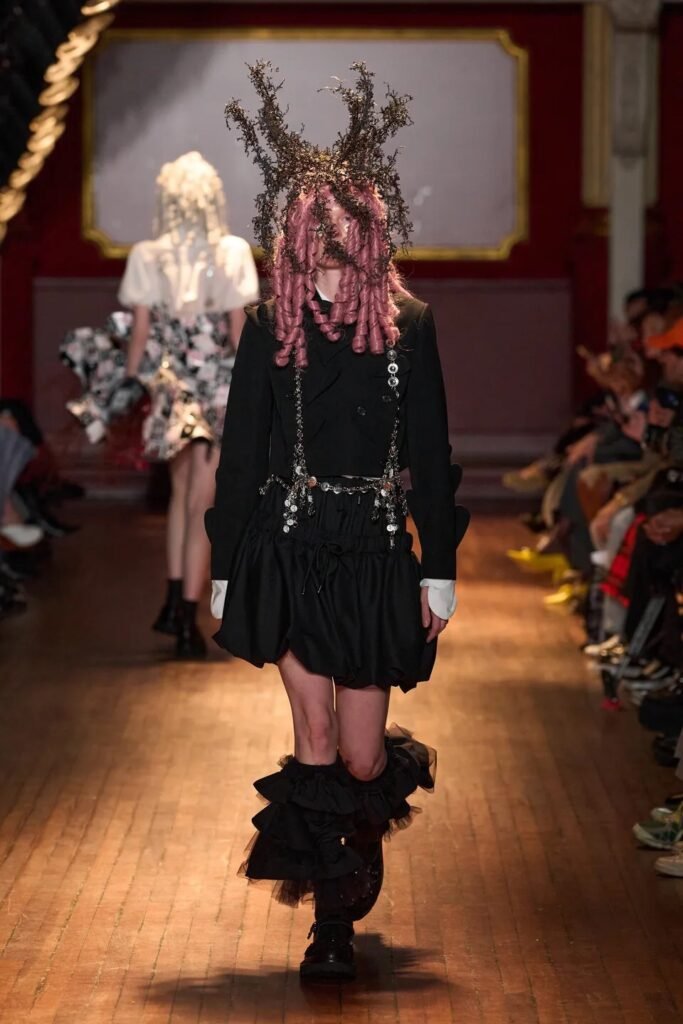
Tulle and sheer materials appeared in layered skirts and dresses, adding lightness to the collection while maintaining its dark romantic mood. The transparency created movement and revealed the construction underneath, allowing the garments to appear almost weightless despite their elaborate surfaces.
This became another important contradiction in the collection: heavy versus light, hard versus soft, structured versus fluid.
A Noir Kei Ninomiya woman does not need to choose one side.
She can wear leather and tulle, pearls and hardware, tailoring and ruffles, all within the same wardrobe.
Tailoring With a Twist
Tailoring provided another grounding element.
Crisp shirts and sharply constructed blazers were among the collection’s more recognizable wardrobe pieces, but Ninomiya disrupted their conventional polish through exaggerated proportions and decorative interventions.
The idea of tailoring became less about corporate dressing and more about creating a framework for experimentation.
A blazer could become sculptural. A shirt could become romantic. A biker jacket could become delicate.
This approach made the collection feel surprisingly wearable despite its more theatrical moments.
Accessories Complete the Fantasy
The accessories continued the collection’s playful spirit.
Statement headwear, ribbons, pearl details and sculptural footwear extended the fantasy beyond the clothing. Footwear was created in collaboration with British specialist Grenson and Japanese footwear maker Haruta, bringing a practical dimension to the otherwise fantastical collection.
The shoes were particularly important because they provided an accessible entry point into Ninomiya’s world.
While some of the collection’s sculptural dresses and elaborate constructions are unmistakably runway pieces, the footwear demonstrated how the Noir aesthetic can be translated into everyday dressing.
A Softer Side of Noir
What makes Noir Kei Ninomiya Spring 2027 particularly compelling is not simply its visual beauty. It is the way Ninomiya allowed himself to explore softness without abandoning the identity of the house.
The collection could have easily become overly sweet. Instead, the darker foundation kept the romantic details grounded.
A bow did not necessarily mean femininity.
A flower did not necessarily mean prettiness.
A pearl did not necessarily mean classic luxury.
In Ninomiya’s hands, each became another component in a larger visual experiment.
That is what gave the collection its personality.
The Beauty of Imperfection
There was also something deliberately imperfect about the collection’s fantasy.
The flowers suggested nature in the process of changing. The playful references suggested childhood imagination. The mismatched textures and exaggerated shapes rejected the idea that fashion needs to be perfectly polished to be beautiful.
This made Spring 2027 feel connected to a larger movement in contemporary fashion: a renewed interest in craft, individuality and visible human intervention.
Rather than pursuing digital perfection, the collection celebrated things that look made, assembled, manipulated and transformed.
Final Thoughts
Noir Kei Ninomiya Spring 2027 Ready-to-Wear was a compelling meeting of opposites.
It was punk without being aggressive. Romantic without becoming conventional. Sculptural without losing movement. Playful without becoming childish.
Most importantly, it showed how much creative potential remains within Ninomiya’s established vocabulary.
The designer took the codes that have come to define Noir Kei Ninomiya—black, structure, leather, tailoring, sculptural construction—and allowed them to bloom into something unexpectedly tender.
Flowers replaced some of the expected hardware. Pearls softened leather. Bows interrupted tailoring. Sheer layers introduced fragility. Playing cards and surreal silhouettes pushed the collection into an Alice in Wonderland universe.
The result was a collection that felt like a journey into a darker kind of fantasy.
For Spring 2027, Noir Kei Ninomiya did not abandon its darkness. It simply discovered that darkness can bloom.
Noir Kei Ninomiya Spring 2027 is fashion as fantasy: part punk wardrobe, part enchanted garden, and part sculptural dream.