
|
Getting your Trinity Audio player ready… |
At Paris Fashion Week, Hermès Spring 2027 Ready-to-Wear offered a compelling study in lightness. Under the creative direction of Nadège Vanhée, the French maison transformed some of its most recognizable codes—leather, silk, craftsmanship, belts and scarves—into a wardrobe that felt airy, sensual and remarkably effortless.
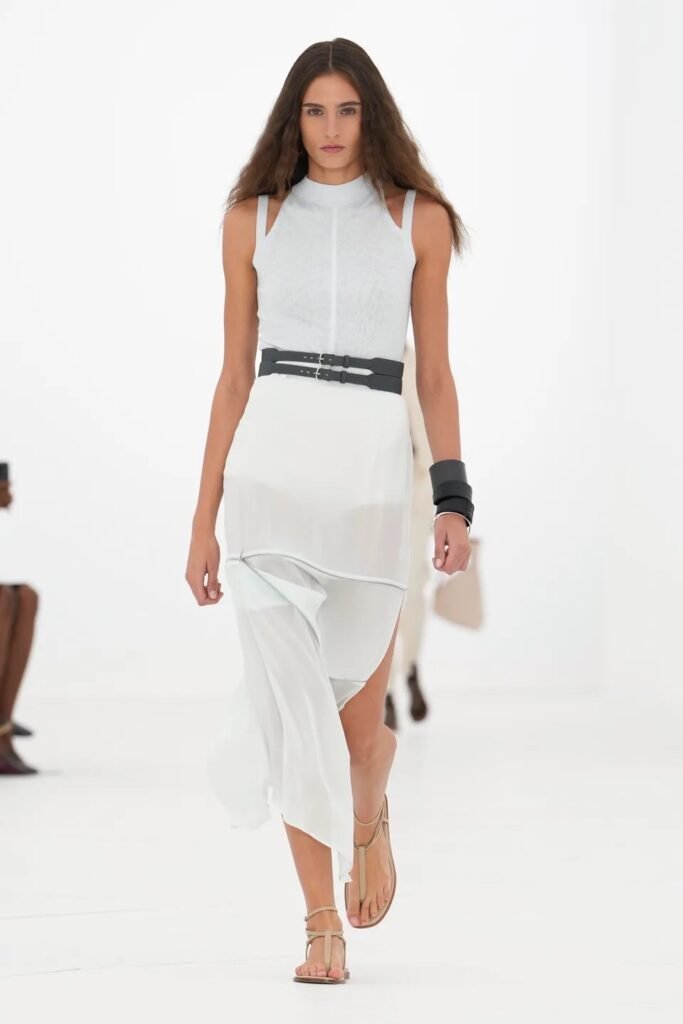
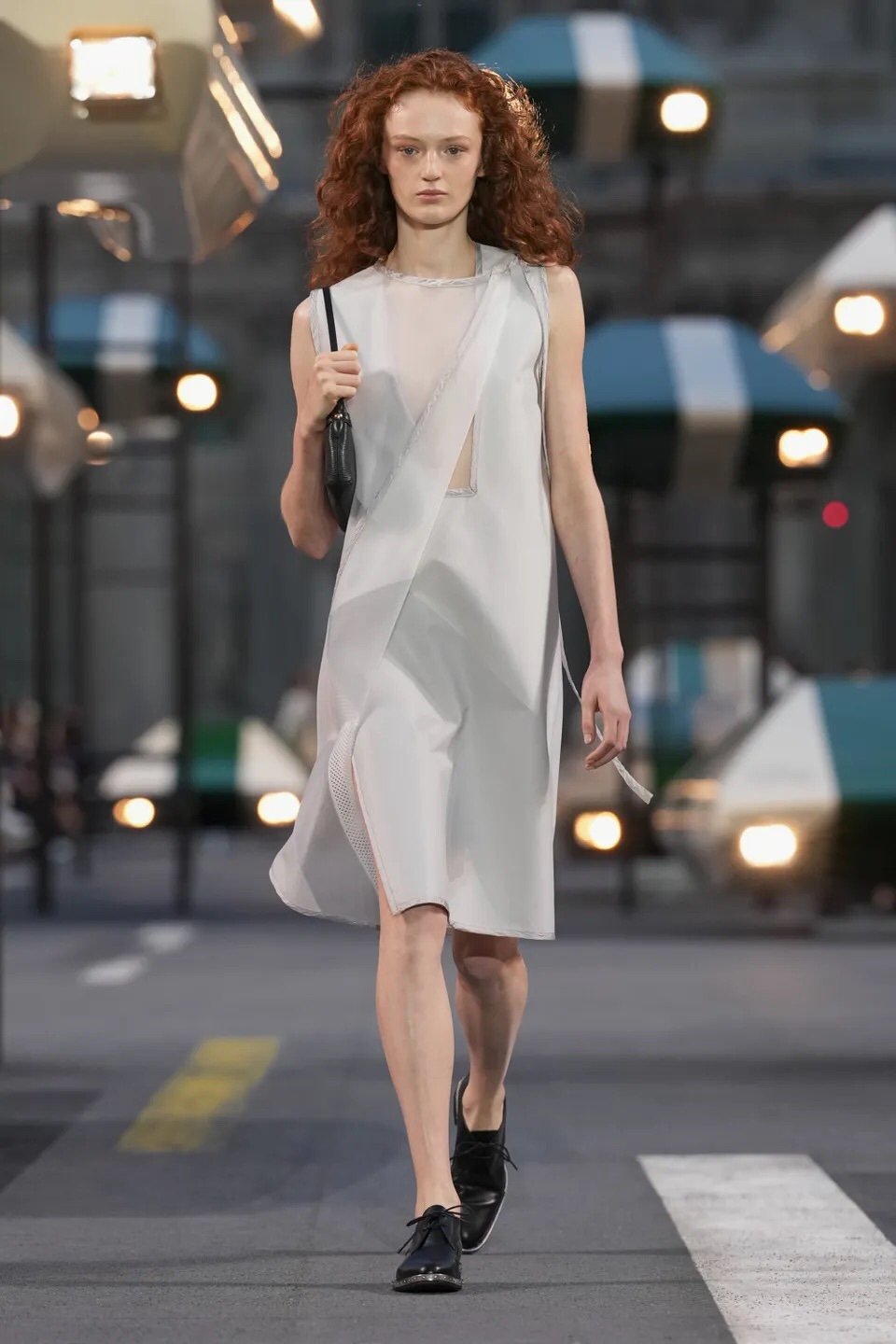
Presented on October 3, 2026, inside the Garde Républicaine in Paris, the collection moved away from the heavier, more grounded character that has defined some of Vanhée’s recent work. Instead, Spring 2027 explored what happens when luxury is allowed to breathe. Sheer knits, openwork leather, fluid silk, lightweight tailoring and strategically placed zippers created silhouettes that seemed to move with the air around them.
The result was quintessentially Hermès, but with a distinctly liberated attitude.
A New Definition of Hermès Luxury
For Spring 2027, Vanhée appeared interested in reducing fashion to its most tactile elements: material, movement, construction and the body.
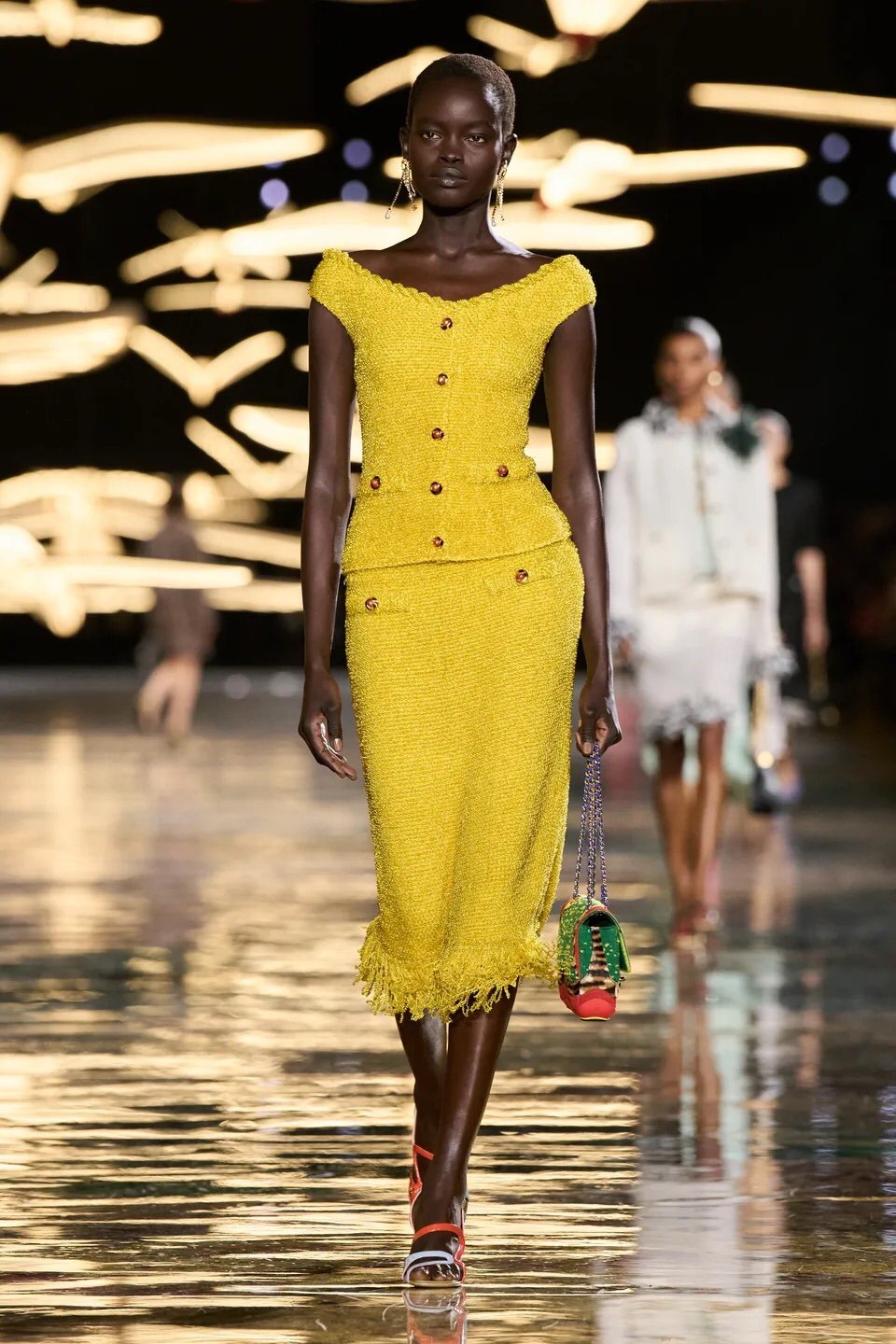
The collection began with a restrained palette of creamy whites, soft neutrals and cool blues before gradually introducing richer shades of camel, brown, terracotta and black. Later, the runway erupted into stronger tones, including Hermès orange, vivid red and sunflower yellow. The progression gave the show the feeling of moving from early morning into the warmth of a summer sunset.
This was luxury without excessive decoration.
Instead of relying on obvious embellishment, Vanhée allowed the quality of the materials and the precision of construction to create the drama.
Fine leather was made almost weightless. Knits became transparent. Silk floated around the body. Tailoring was loosened. And familiar Hermès accessories were integrated into the clothing rather than treated as separate finishing touches.
The collection demonstrated that luxury can be quiet without becoming understated.
Sheer Knits and the Beauty of Transparency
One of the strongest ideas of the Spring 2027 collection was transparency.
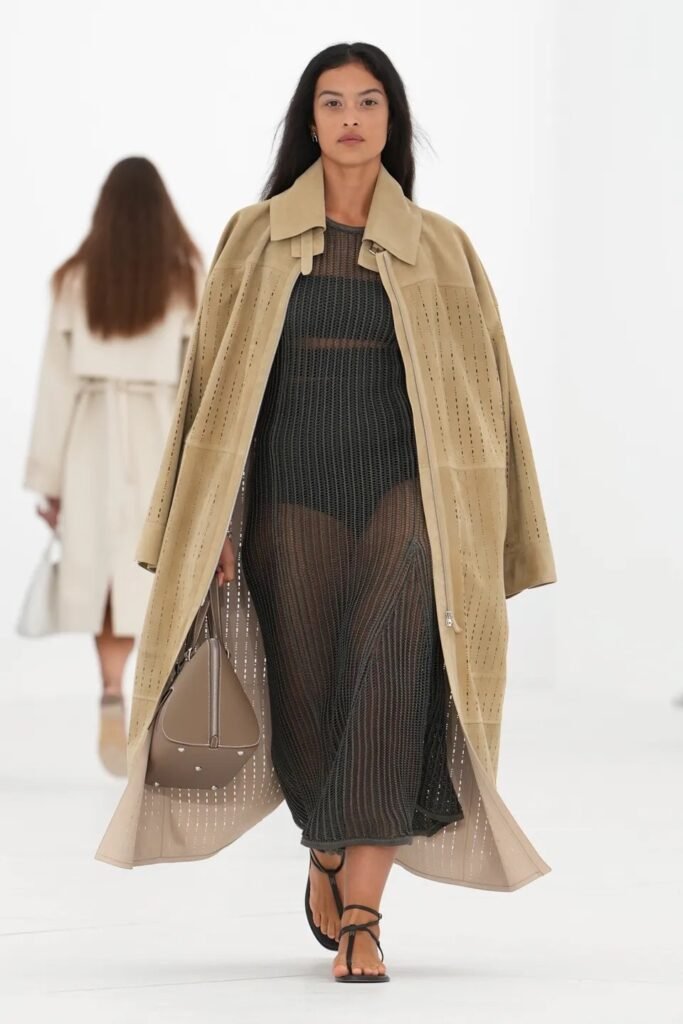
Loose open-knit tops and dresses revealed bandeau layers beneath, while sheer mesh pieces created a delicate relationship between clothing and skin. Rather than presenting transparency as overtly provocative, Hermès treated it as a question of movement and ventilation.
The body became part of the architecture of each look.
Some of the most memorable pieces combined translucent fabrics with strips of leather, creating an intricate contrast between softness and structure. Fine leather strips were embroidered onto delicate mesh, producing a lattice-like effect that demonstrated the maison’s extraordinary relationship with craftsmanship.
It was a particularly modern interpretation of the Hermès woman: sensual, but never overly exposed; sophisticated, but never rigid.
Leather, But Lighter
Leather remains one of Hermès’s defining materials, so its transformation was central to the collection.
Rather than treating leather as something heavy and protective, Vanhée manipulated it into exceptionally fine, lightweight forms. Jackets and coats appeared almost paper-thin, while leather skirts and dresses were sliced with openings that allowed the body and air to become part of the design.
The effect was striking.
A material associated with durability and permanence suddenly felt fluid.
Midi-length leather dresses and skirts were opened with high slits, while trousers featured side zippers that could be adjusted to expose more of the leg. Functional details became sensual styling devices.
This balance between utility and sensuality is one of the collection’s most interesting achievements.
The Zipper Becomes a Styling Tool
Perhaps the most distinctive design element of Hermès Spring 2027 was the zipper.
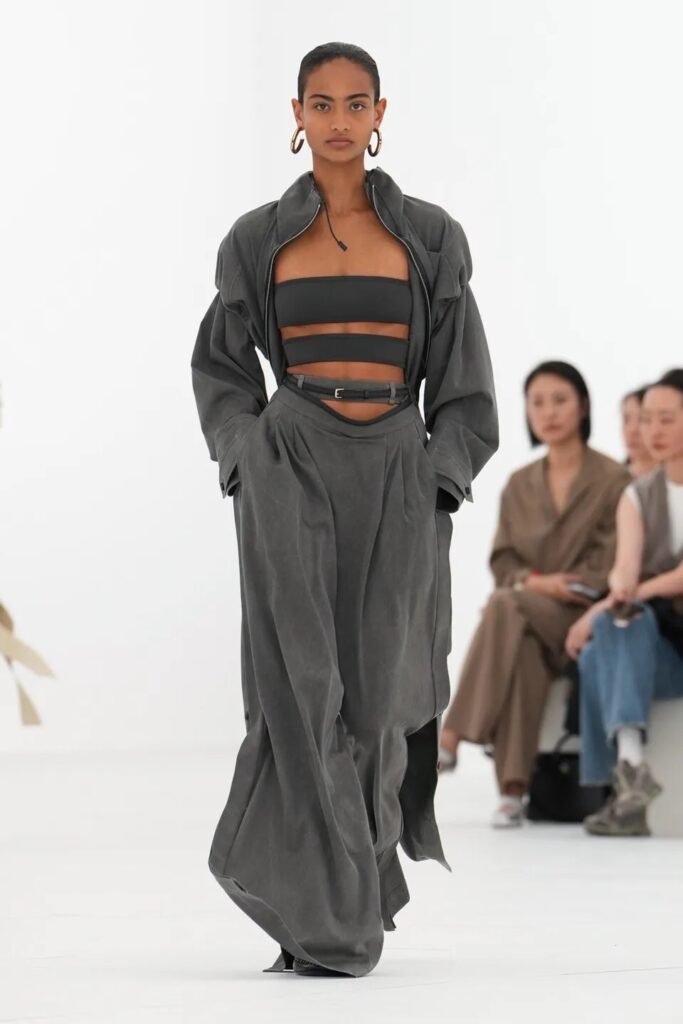
Ordinarily a practical component, the zipper became an instrument of transformation throughout the collection. Pieces could be opened, closed, adjusted or reshaped, giving the wearer greater control over the silhouette.
A skirt could change its drape. A trouser could open at the leg. Sleeves and necklines could be modified. Jackets could shift their proportions.
The clothes were therefore not completely fixed.
They were designed to evolve.
This modular approach gave the collection a sense of spontaneity while reinforcing its functional luxury. Hermès was not simply presenting clothes to be admired on a runway; it was proposing clothes that could be manipulated and interpreted by the wearer.
Tailoring Meets Barely-There Layers
Tailoring remained important, but it was considerably softer than traditional suiting.
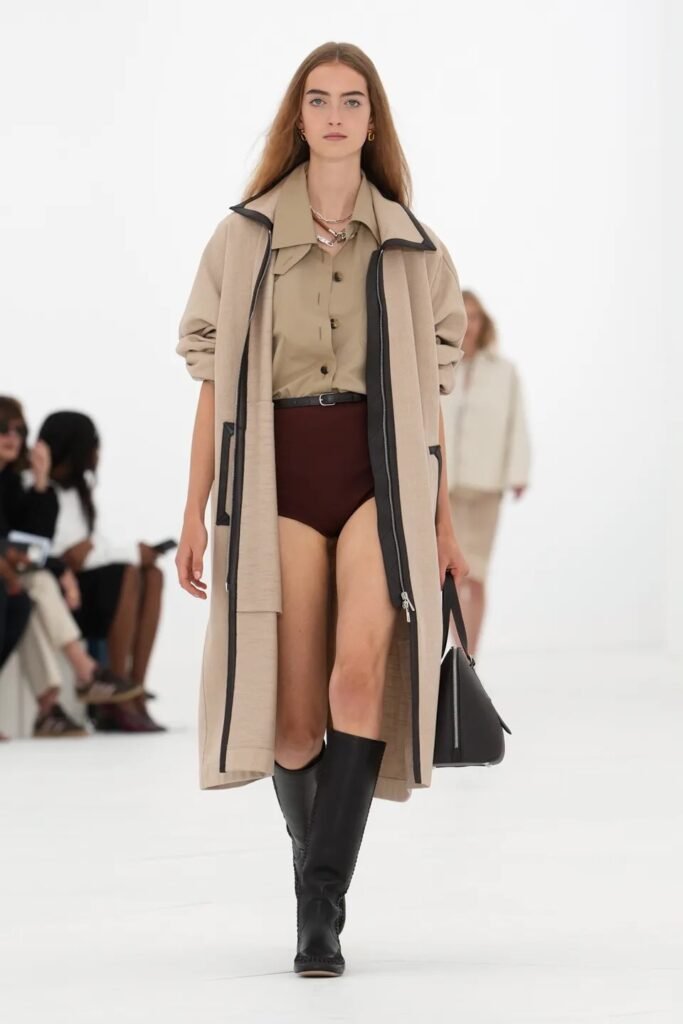
Structured jackets appeared alongside bandeau tops, sheer dresses and short shorts. Lightweight coats floated over the body rather than restricting it, while utilitarian jackets introduced an aviator-inspired quality.
The contrast between tailoring and barely-there pieces gave the collection its tension.
A sharply constructed jacket could be paired with a translucent skirt. A bandeau could sit beneath a loose coat. A structured leather piece could be worn over something almost weightless.
This was Hermès at its most relaxed.
The house’s traditional precision remained visible, but the clothes no longer seemed interested in demonstrating their construction at every opportunity.
They simply moved.
The Return of the Silk Scarf
Few accessories are more synonymous with Hermès than the silk scarf, and Spring 2027 found new ways to incorporate it into the wardrobe.
Rather than simply tying scarves around the neck or carrying them as traditional accessories, Vanhée incorporated them into tops and layered styling. Printed and pleated scarves appeared integrated into the silhouettes, giving familiar Hermès iconography a contemporary interpretation.
Belts received similar attention.
They appeared around waists and in sculptural forms, while belt bags and wide corset-like designs became part of the overall architecture of the looks.
The message was clear: Hermès’s heritage did not need to be abandoned in order to feel new.
It simply needed to be rearranged.
Bags: Quietly Statement-Making
The bags were deliberately controlled.
Cream leather bucket bags with open latticework echoed the collection’s fascination with transparency and negative space. Elsewhere, the accessories moved between larger, roomier silhouettes and slimmer, more structured shapes.
This reflected the broader mood of the collection.
Nothing felt excessively decorated. Instead, shape, leather quality and craftsmanship carried the visual impact.
The bags complemented the clothes rather than competing with them.
Shoes Keep Things Grounded
Footwear followed the collection’s philosophy of functional elegance.
Minimalist leather sandals appeared frequently, reinforcing the sense of summer ease. Knee-high boots in brown suede and smooth black leather introduced a stronger, more grounded element to selected looks.
The contrast worked beautifully.
Bare sandals emphasized the lightness of the clothes, while tall boots brought a touch of structure and sensuality.
A Palette That Moves Like Sunset
Color played an important role in the emotional progression of the show.
The opening looks were restrained, built around creamy white, pale blue and soft neutrals. Gradually, warmer shades entered the collection—camel, sand, brown and terracotta—before the palette became dramatically brighter.
Hermès orange, vivid red and sunflower yellow provided some of the collection’s strongest visual moments.
The transition felt almost atmospheric.
The colors suggested the changing light of a summer day: cool morning tones giving way to warmer afternoon shades and, eventually, the intense glow of sunset.
It was an elegant way of communicating the collection’s central idea without relying on an obvious narrative.
The Hermès Woman for Spring 2027
The Hermès woman of Spring 2027 is confident but not overly polished.
She wears a sheer knit dress with a bandeau underneath. She pairs a structured jacket with micro shorts. She wears leather that moves rather than constrains. She adjusts her clothes with zippers and belts. She carries a structured bag or an oversized leather tote. She moves between sandals and tall boots.
Most importantly, she looks comfortable in her own skin.
There is sensuality throughout the collection, but it comes from movement, openings and proportion rather than overt decoration. The body is revealed selectively, creating a sense of tension between what is concealed and what is visible.
That restraint makes the collection feel sophisticated rather than simply provocative.
Craftsmanship at the Center
For all of its modernity, Spring 2027 remained deeply connected to Hermès’s tradition of craftsmanship.
The collection’s openwork leather, delicate knits, fine silk and precise tailoring all placed material knowledge at the center of the story. Vanhée has consistently pushed Hermès womenswear toward a more fashion-driven vocabulary without abandoning the maison’s commitment to exceptional craftsmanship.
That balance is perhaps the greatest strength of her work at the house.
Hermès does not need to chase every trend.
It can take its own language—leather, silk, equestrian references, belts, scarves, bags and artisanal construction—and reinterpret those elements for a changing generation.
Spring 2027 does exactly that.
Final Verdict
Hermès Spring 2027 Ready-to-Wear is a collection about lightness, movement and freedom.
Nadège Vanhée took materials traditionally associated with luxury and permanence and made them feel almost weightless. Leather became delicate. Knits became transparent. Silk moved like air. Zippers transformed silhouettes. Belts became architectural. Scarves became part of the clothes.
The collection also demonstrates how Hermès can evolve without losing its identity.
There is no need for excessive logos or spectacle when craftsmanship is strong enough to carry the story. Instead, Spring 2027 finds its power in details that reveal themselves gradually: an opening created by a zipper, leather strips dancing over mesh, a scarf emerging from a silhouette, a slit revealing the leg, or a coat moving effortlessly across the body.
It is luxury designed not simply to be seen, but to be experienced.
For Spring 2027, Hermès does not ask fashion to become louder.
It asks fashion to breathe.
And that may be the collection’s most powerful statement yet.