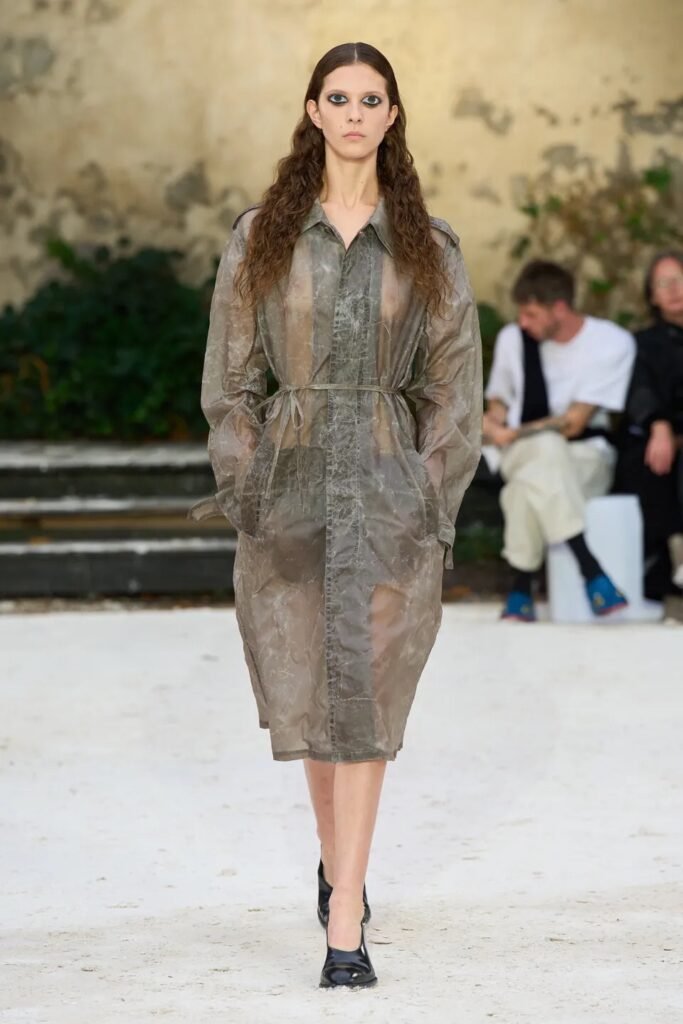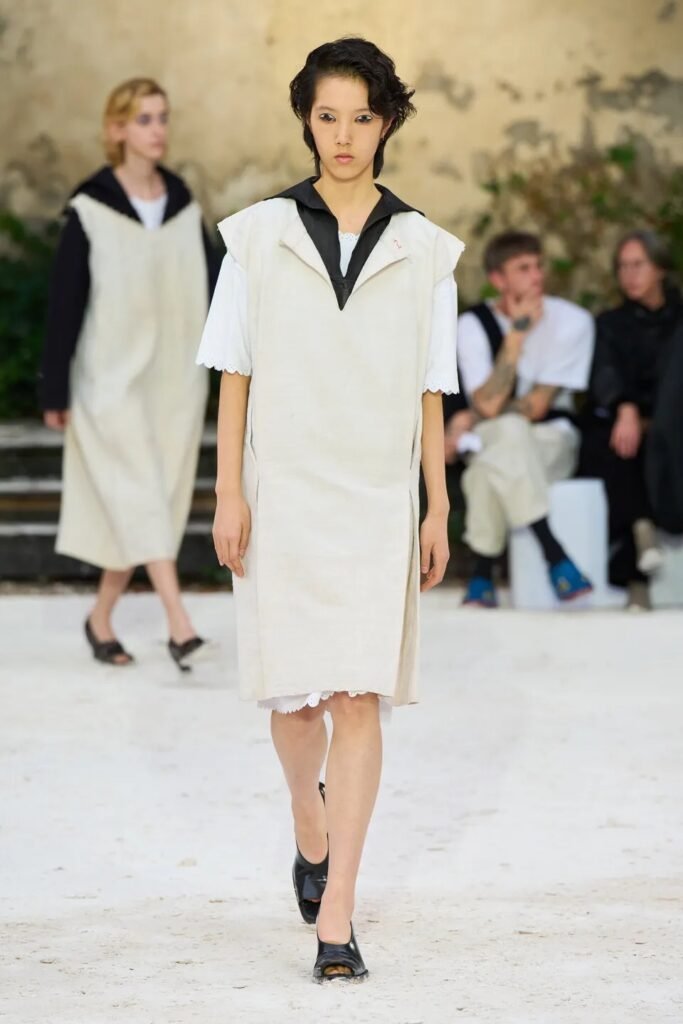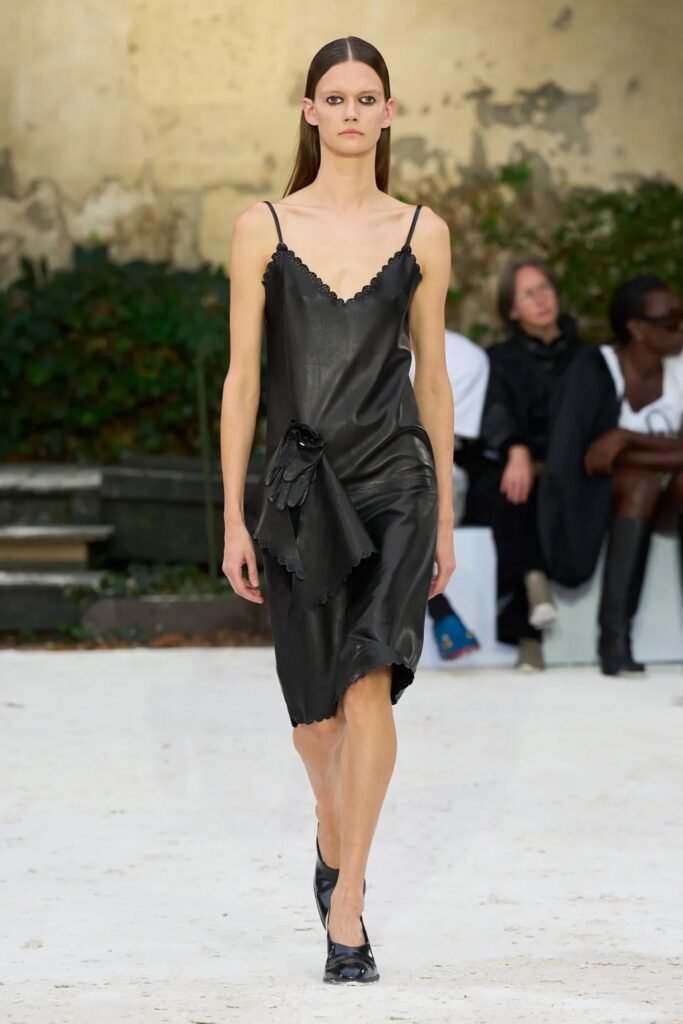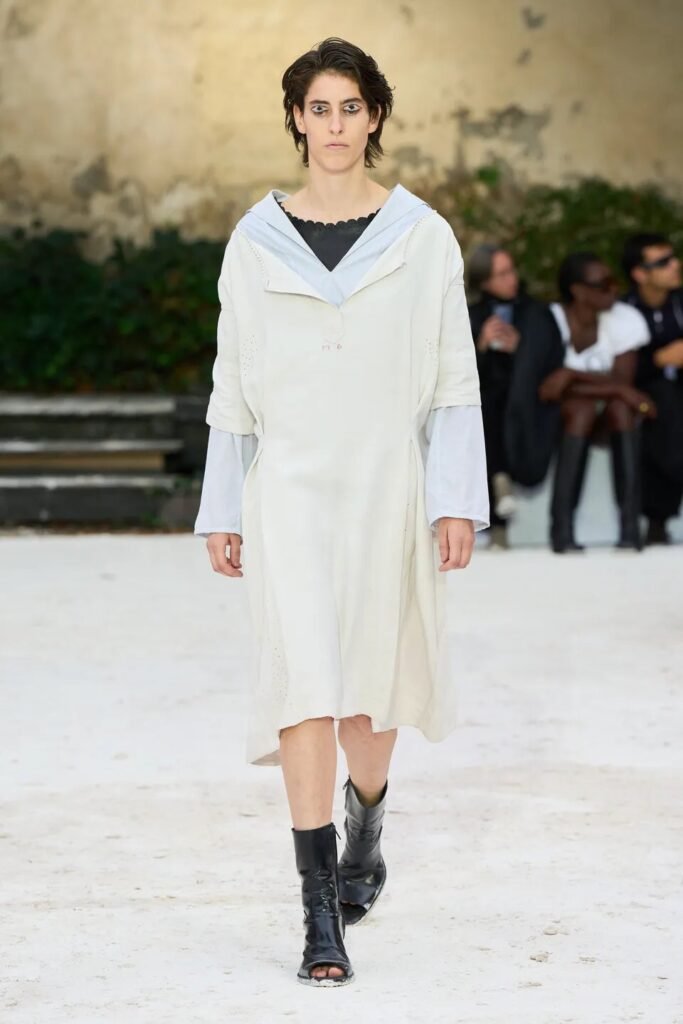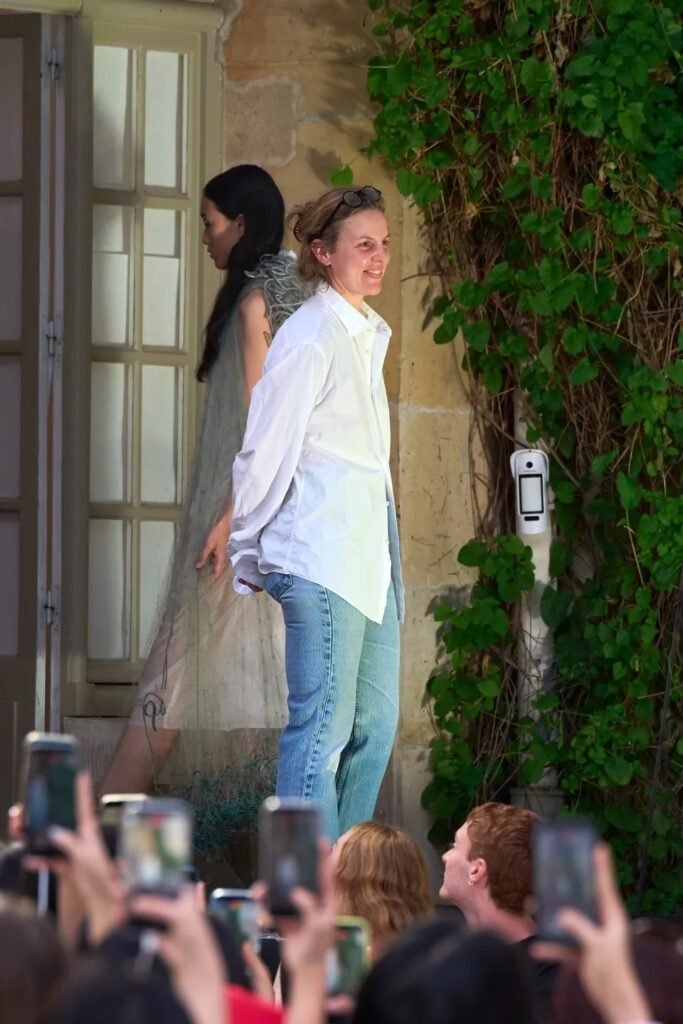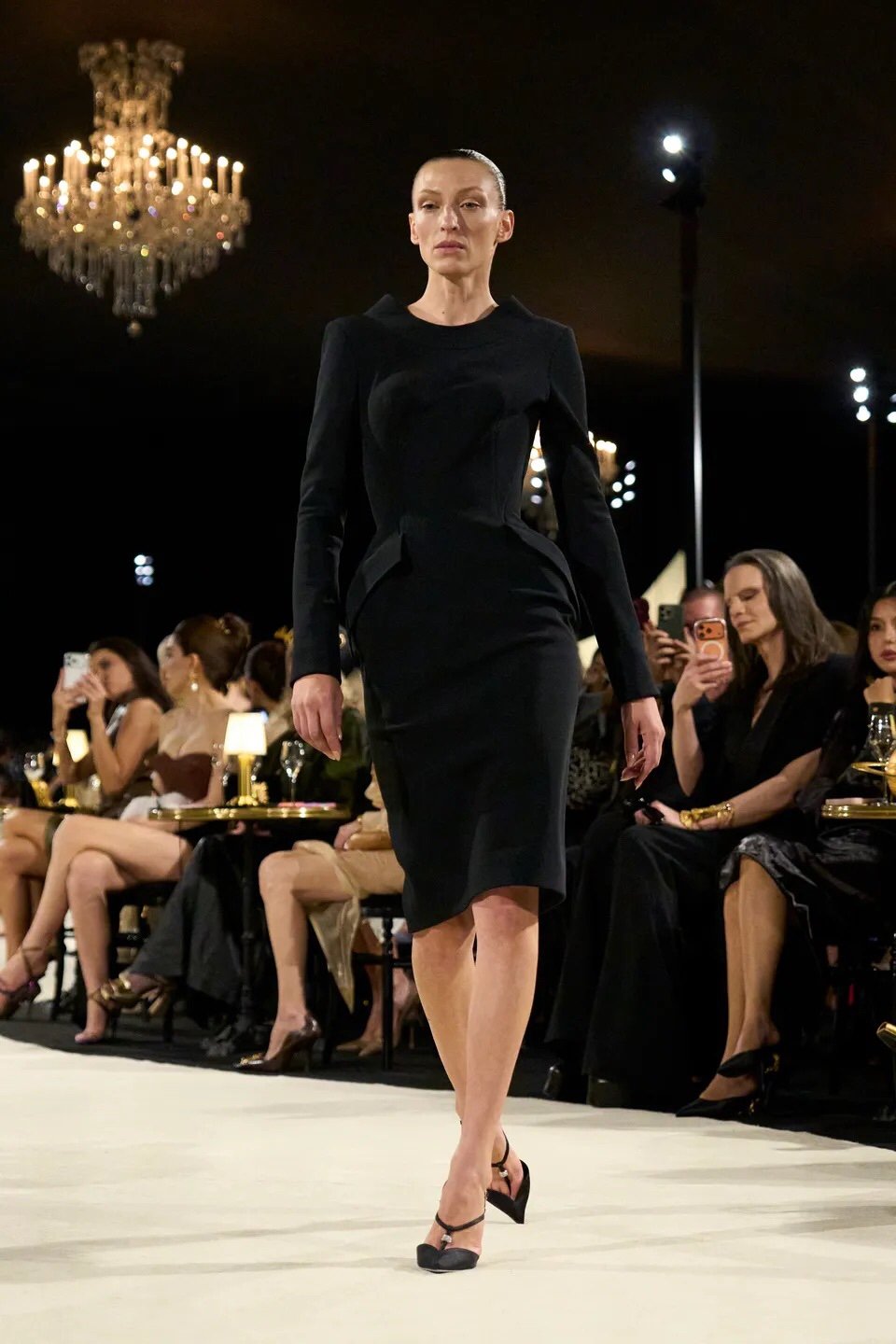
For Spring 2027, Ellen Hodakova Larsson takes Hodakova to the sea.
The Swedish designer, celebrated for her imaginative approach to upcycling and reconstruction, looks toward the ocean as both inspiration and material source. Instead of simply referencing the maritime world through prints or familiar nautical motifs, Larsson brings the sea directly into the clothes, transforming sails, fishing nets, rope, waxed fabrics and leftover leather into striking new forms.
The result is a collection that feels raw, experimental and deeply connected to the natural world while remaining unmistakably fashion-forward.
Hodakova Spring 2027 is less about creating something from nothing and more about discovering what something can become.
A Collection Born at Sea
The starting point for the collection came from Larsson’s own experience on the water. After spending two weeks at sea during the summer, the designer found herself disconnected from the constant noise of everyday life. Her phone died early during the trip, leaving her with an unusual sense of calm and a closer connection to the ocean.
That experience became the emotional foundation for Spring 2027.
The collection explores the aquatic world through materials rather than conventional imagery. The sea is present in the construction, texture and movement of the garments, creating a collection that feels as though it has been shaped by the environment it references.
For Hodakova, sustainability is not an additional message placed on top of the collection. It is embedded within the design process itself.
The Runway Sets the Mood
The presentation immediately established the collection’s connection to the sea.
Sea salt covered the runway, while the soundtrack drew from Luc Besson’s Le Grand Bleu, creating an immersive environment around the clothes. The setting made the collection feel less like a straightforward fashion presentation and more like a journey into another landscape.
That atmosphere was important because the clothes themselves constantly moved between the functional and the fantastical.
Something that once belonged on a boat could become a dress. A piece of rope could become knitwear. A fishing net could become an evening silhouette.
Hodakova’s Spring 2027 woman exists somewhere between land and water.
From Sailing Equipment to Fashion
One of the collection’s most compelling qualities is the way familiar marine materials are stripped of their original purpose and given new identities.
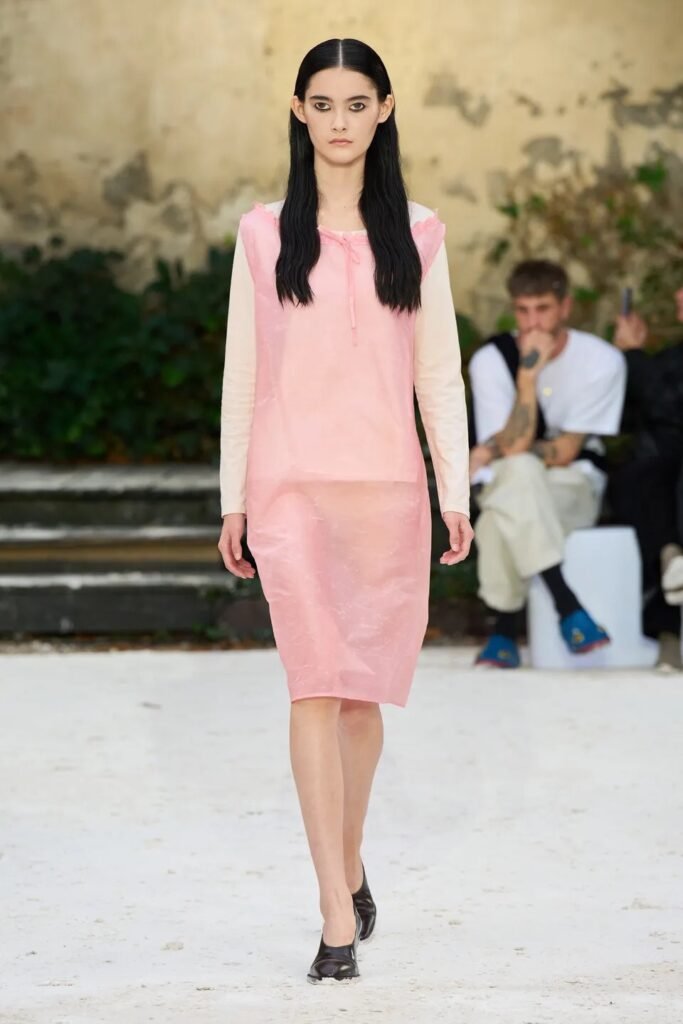
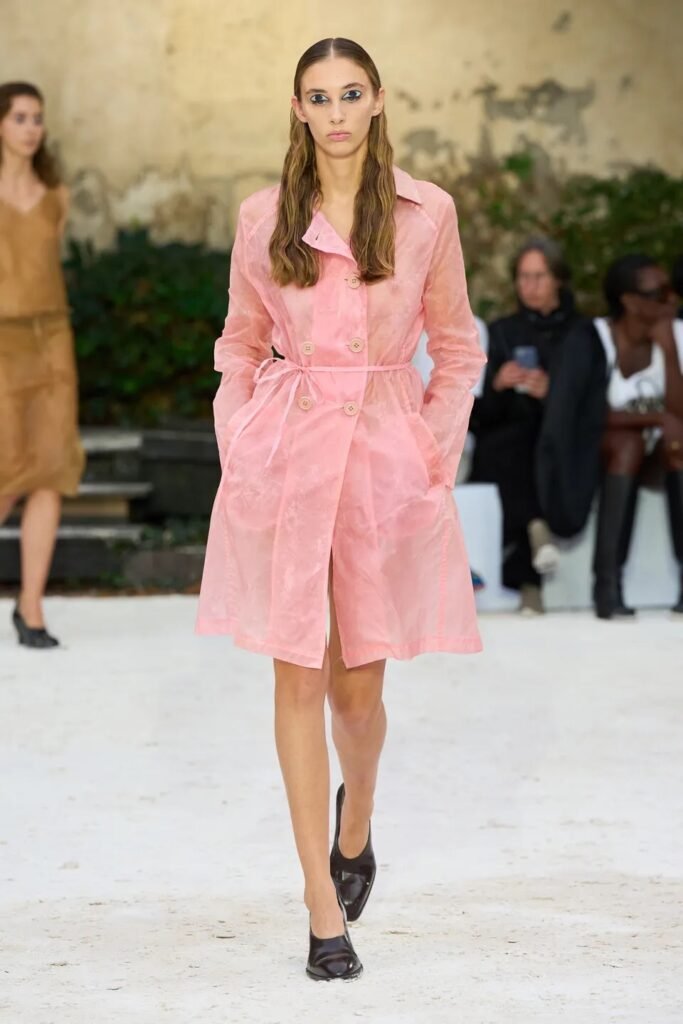
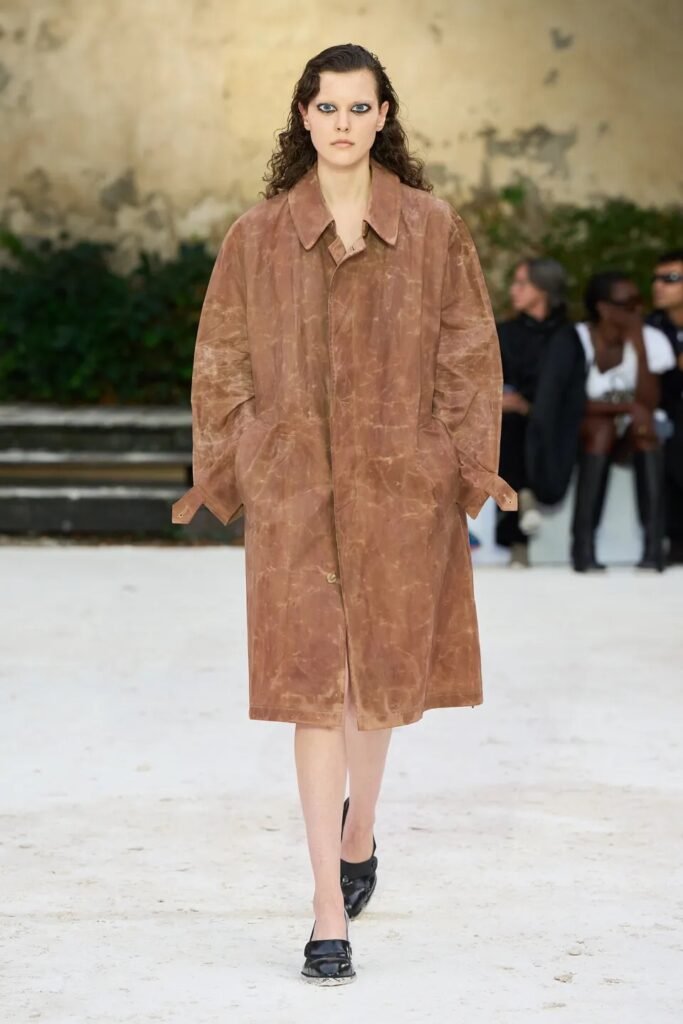
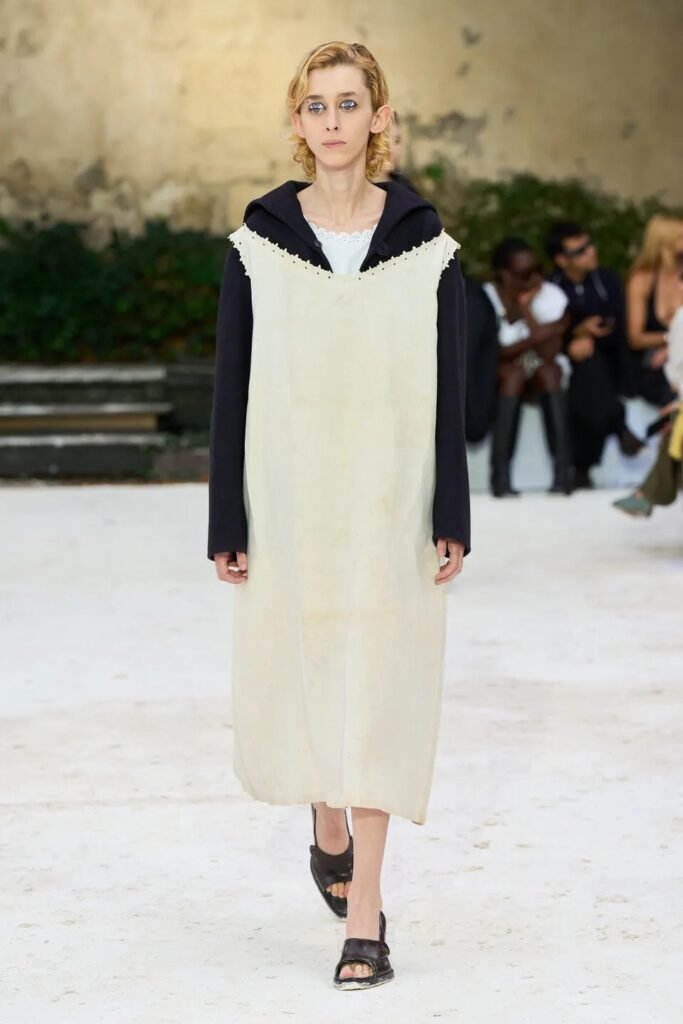
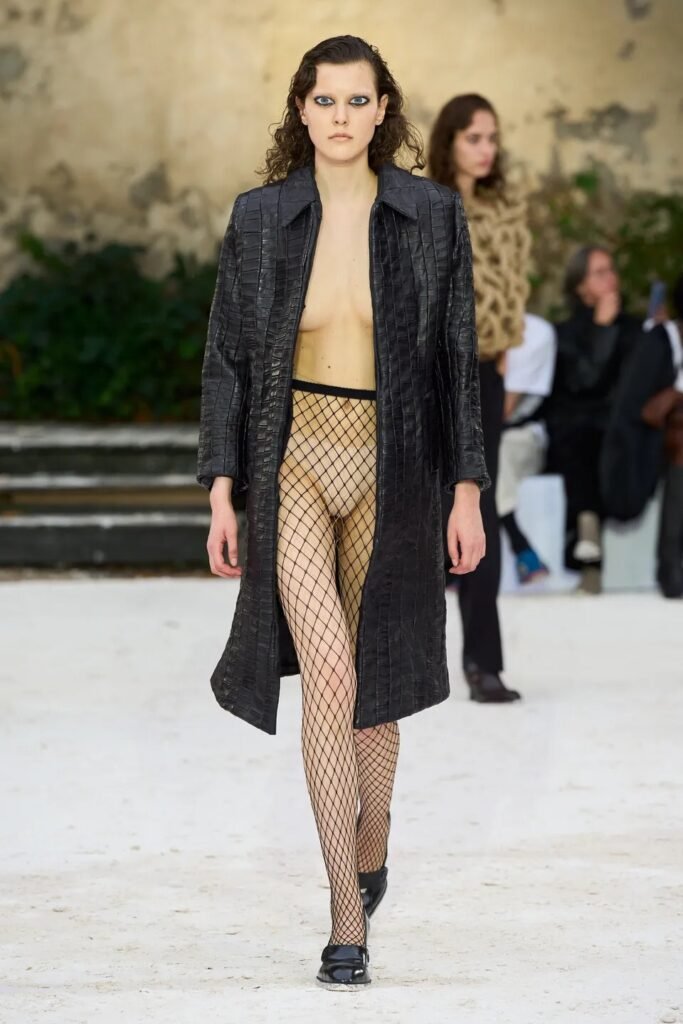
Waxed cloth appears throughout the collection, initially offering a practical, almost utilitarian feeling. Shifts and trench coats are constructed from the material, but their surfaces give them an unexpected delicacy.
The garments look protective yet fragile.
This contrast is central to Hodakova’s design language. The designer takes materials associated with durability and labor and transforms them into silhouettes that can feel elegant, sensual and even romantic.
Sailcloth receives a similar treatment.
Instead of remaining part of a boat, sails are transformed into clothing, allowing their original history to remain visible within the garments. Their texture and structure contribute to silhouettes that feel architectural without losing their connection to the sea.
Deconstructed Tailoring
Tailoring is another important part of the Spring 2027 collection.
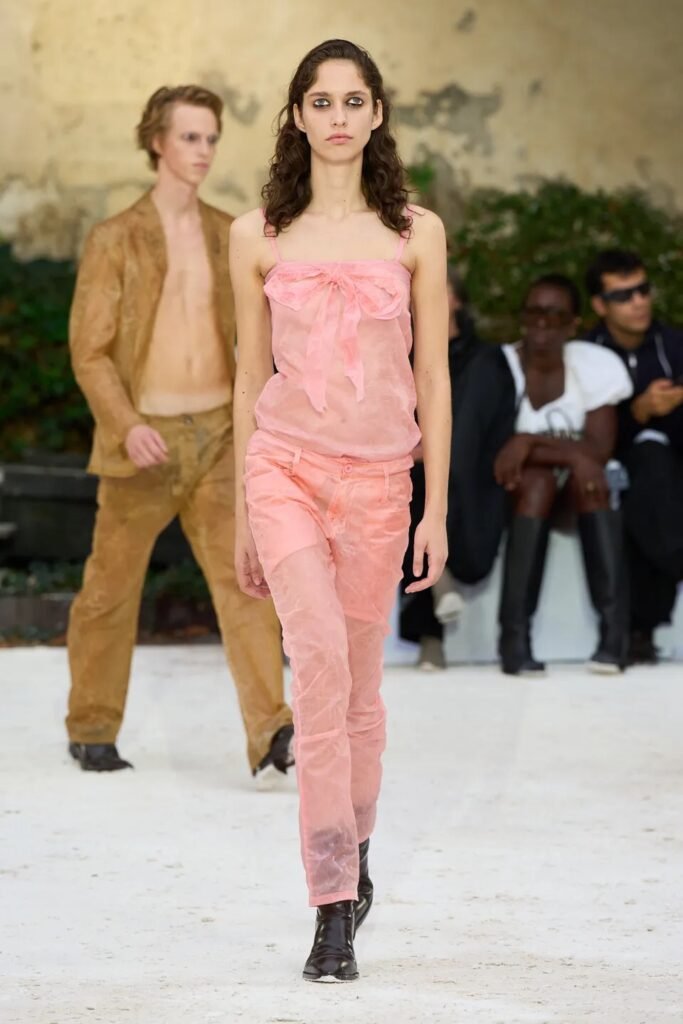
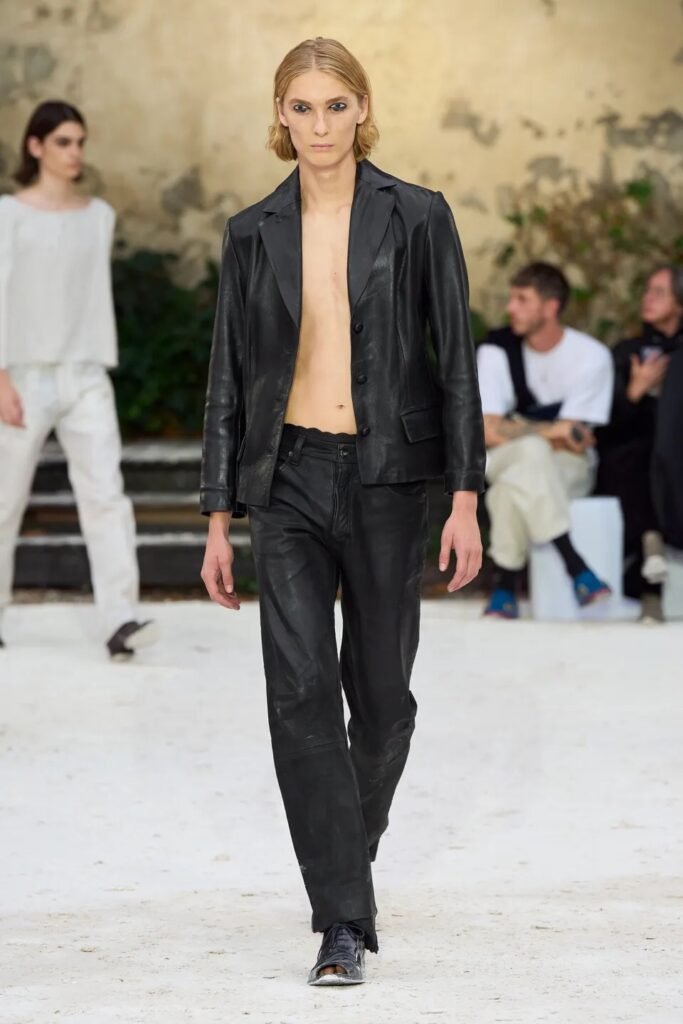
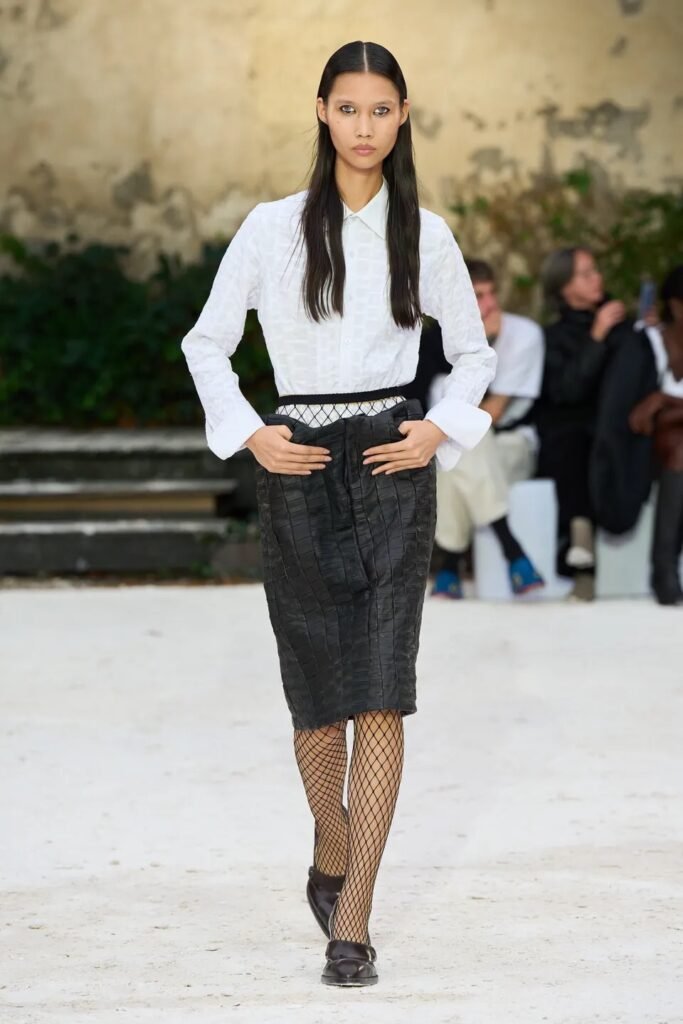
Rather than presenting traditional suits in their expected form, Hodakova takes familiar garments apart and reconstructs them into something new. Trousers become part of dresses and jackets, challenging the conventional relationship between individual pieces in a wardrobe.
The approach feels distinctly Hodakova.
The designer is interested in the possibilities hidden inside existing clothing. A garment is not necessarily finished when it reaches the end of its first life.
It can be dismantled.
Rearranged.
Reimagined.
And ultimately transformed into something that feels entirely different.
The Beauty of Fishing Nets
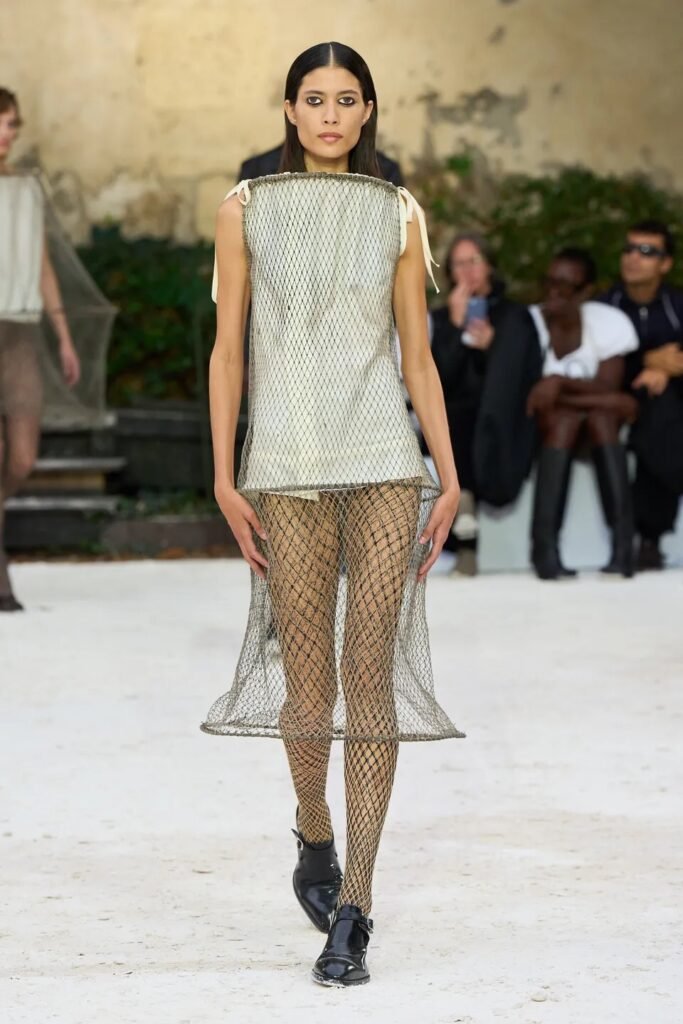
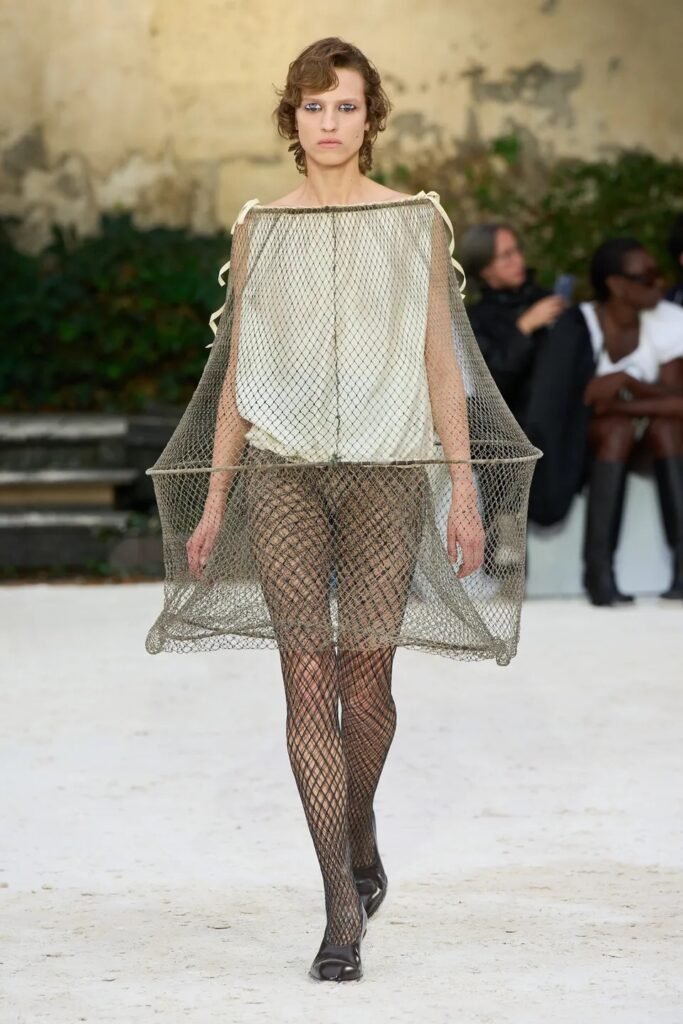
Fishing nets become some of the collection’s most memorable materials.
Both industrial and handmade nets are transformed into dresses and sculptural pieces, with loose edges creating organic shapes around the body. In some looks, the material evokes seaweed, leaves or other forms found in nature.
There is something almost poetic about the transformation.
A material designed to capture life from the ocean is removed from that environment and turned into fashion. Its original function remains part of its story, but its new purpose is aesthetic.
Hodakova does not attempt to make the material appear pristine.
Its roughness and irregularity are part of the appeal.
Rope Becomes Knitwear
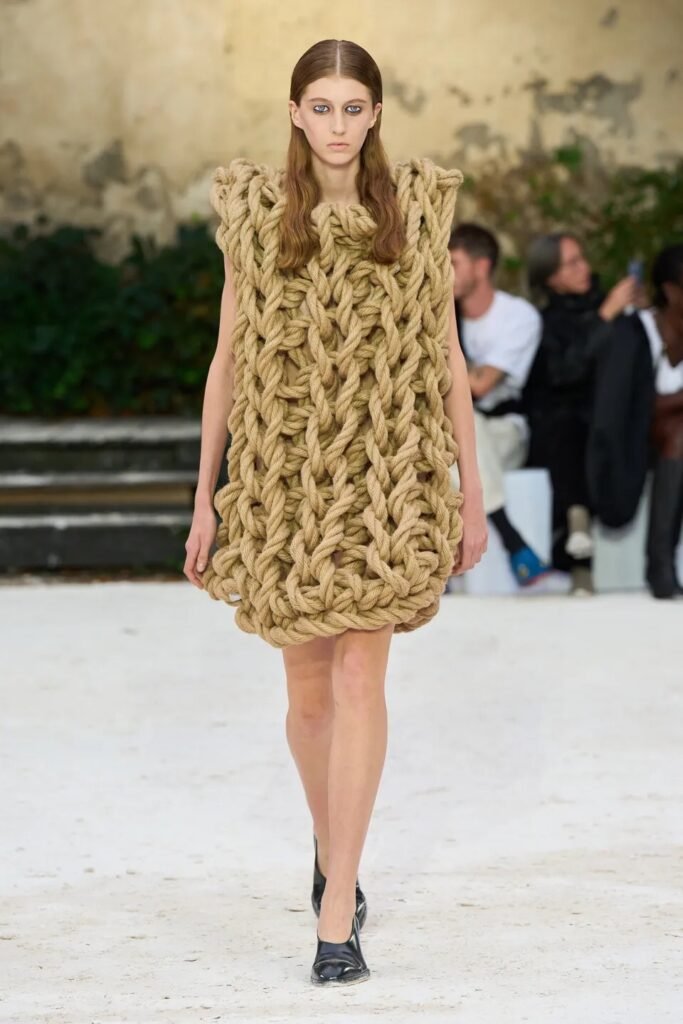
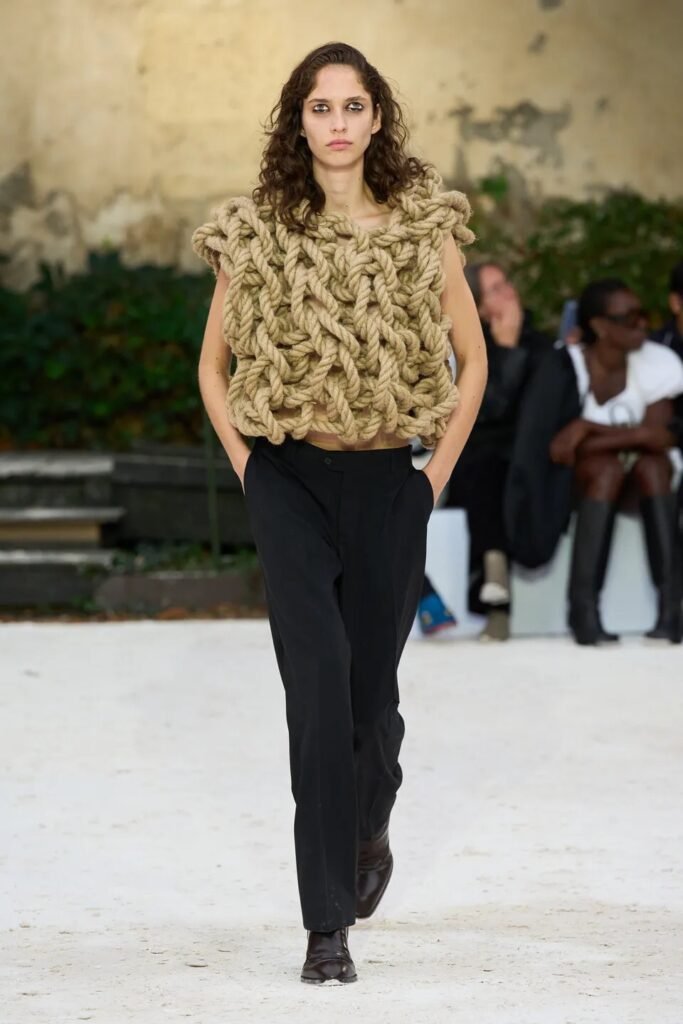
Hawser rope is another unexpected material used throughout the collection.
Its weight and texture are transformed into chunky knitted pieces, giving the clothes a tactile quality that contrasts beautifully with the lighter and more transparent materials elsewhere in the collection.
The rope retains its industrial character while becoming something softer and more intimate.
Once again, Hodakova creates beauty through contradiction.
Heavy becomes delicate.
Functional becomes decorative.
Industrial becomes luxurious.
The Illusion of Wet Clothing
Water also influences the collection through the treatment of the garments themselves.
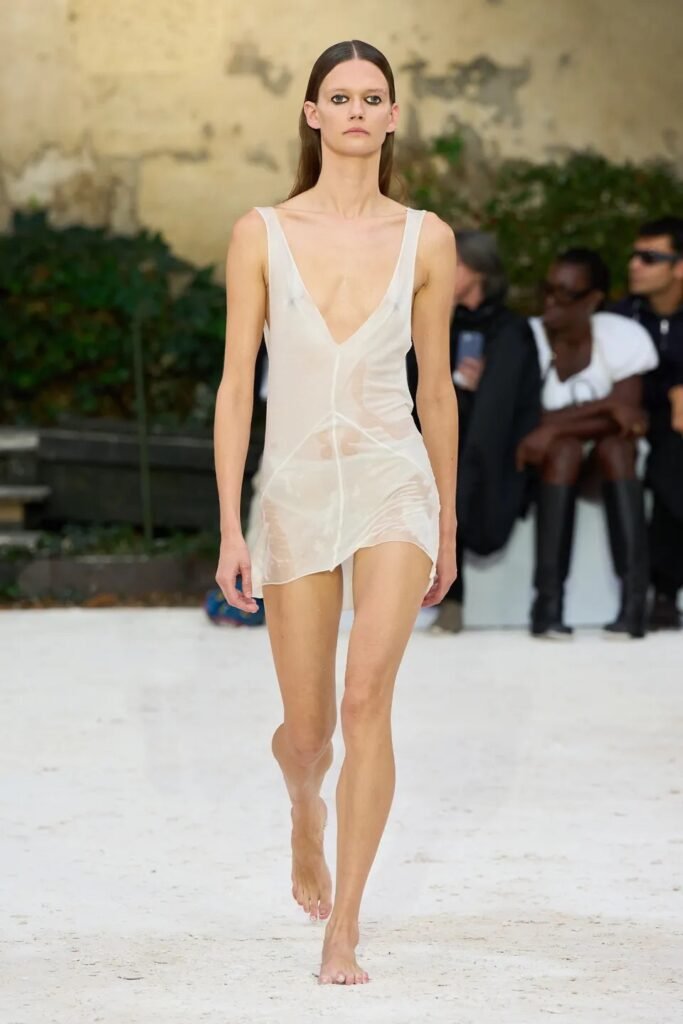
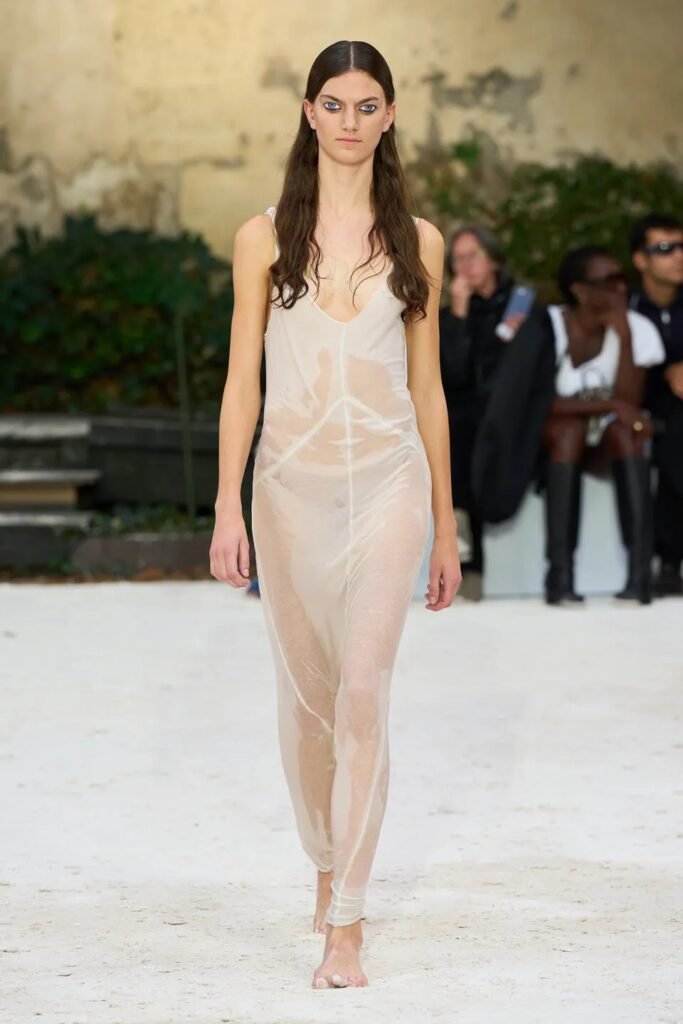
Some pieces were deliberately wetted, creating the appearance of clothing that had just emerged from the sea. The technique makes fabrics cling differently to the body while introducing transparency and movement.
Rather than simply printing waves or marine imagery onto garments, Hodakova allows the clothes to physically respond to water.
It is a subtle but effective way of bringing the collection’s central inspiration into the garments.
The effect is sensual without feeling overly polished.
Reworking Leather
Leather receives an equally inventive treatment.
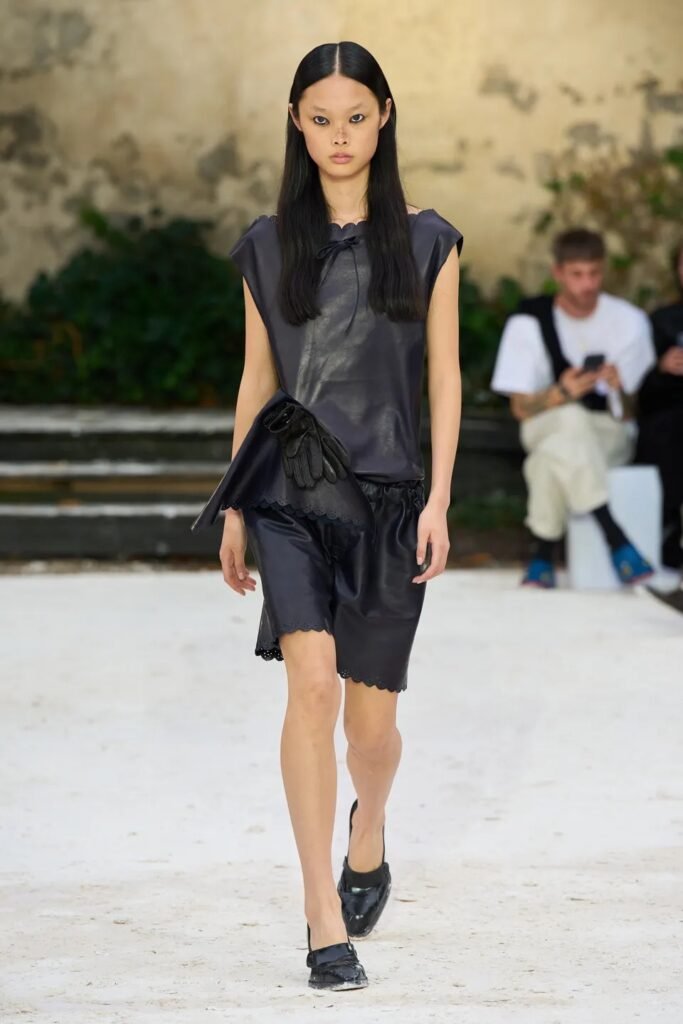
Rather than relying solely on new leather surfaces, Hodakova uses leftover leather pieces to create a black coat with a texture inspired by crocodile skin.
The construction demonstrates the designer’s ability to turn fragments and remnants into something that appears luxurious and highly considered.
The technique also reinforces one of the central principles behind the collection: value does not necessarily come from the newness of a material.
Sometimes it comes from what a designer can do with what already exists.
Fashion’s Relationship With Nature
Although Spring 2027 is visually striking, there is a deeper environmental conversation running underneath the collection.
Hodakova’s practice has long been centered on reusing existing materials and challenging the traditional fashion cycle of producing something new for every season.
Here, that philosophy becomes particularly relevant because the collection directly engages with the ocean.
Fishing nets and marine materials carry associations with human activity and its impact on the natural environment. Some of the looks even create the impression of people caught within nets, suggesting a more complicated relationship between humanity, the sea and the creatures that inhabit it.
The collection therefore moves beyond a simple celebration of the ocean.
It also asks us to consider what happens when human systems interfere with natural environments.
A Different Kind of Luxury
Hodakova’s definition of luxury is different from the conventional idea.
Luxury does not necessarily mean untouched fabrics, elaborate embellishment or expensive new materials.
Instead, luxury can exist in the transformation itself.
It can be found in the hours of work required to reconstruct a garment, in the unexpected beauty of an old material or in the imagination required to see an entirely new possibility in something discarded.
Spring 2027 makes that philosophy visible.
A fishing net can become a dress.
A sail can become a coat.
Rope can become knitwear.
Leather scraps can become a sculptural surface.
The material’s previous life does not disappear. It becomes part of the story.
The Hodakova Woman for Spring 2027
The woman imagined by Hodakova for Spring 2027 is adventurous, independent and unconcerned with conventional definitions of elegance.
She wears garments that are practical and experimental at the same time.
The silhouettes move between structured tailoring and fluid dresses, heavy materials and transparent surfaces, polished construction and visible imperfection.
There is a sense of freedom throughout the collection.
Nothing feels overly restricted.
The garments appear to have been allowed to evolve according to the material itself.
That gives the collection an organic quality that feels particularly appropriate for a season inspired by the ocean.
Final Thoughts
With Hodakova Spring 2027 Ready-to-Wear, Ellen Hodakova Larsson continues to challenge the way we think about materials, sustainability and luxury.
The collection transforms the language of the sea into fashion through sails, fishing nets, rope, waxed cloth, wet fabrics and reconstructed leather. But its greatest strength lies in the way these materials retain traces of their previous lives.
Nothing is simply thrown away and replaced.
Everything has another possibility.
That idea has always been central to Hodakova, but Spring 2027 gives it a new environment. The ocean becomes the collection’s inspiration, setting and metaphor, while the clothes demonstrate what can happen when fashion looks beyond conventional materials.
Hodakova proves once again that sustainability does not have to mean simplicity.
It can be dramatic.
It can be sensual.
It can be experimental.
And, most importantly, it can create a completely new vision of what fashion can be.