
|
Getting your Trinity Audio player ready… |
By Satoshi Kondo
There are few fashion houses that treat fabric as more than simply a material for making clothes. At Issey Miyake, fabric is the beginning of the conversation a living element that moves, expands, folds, twists and interacts with the body.
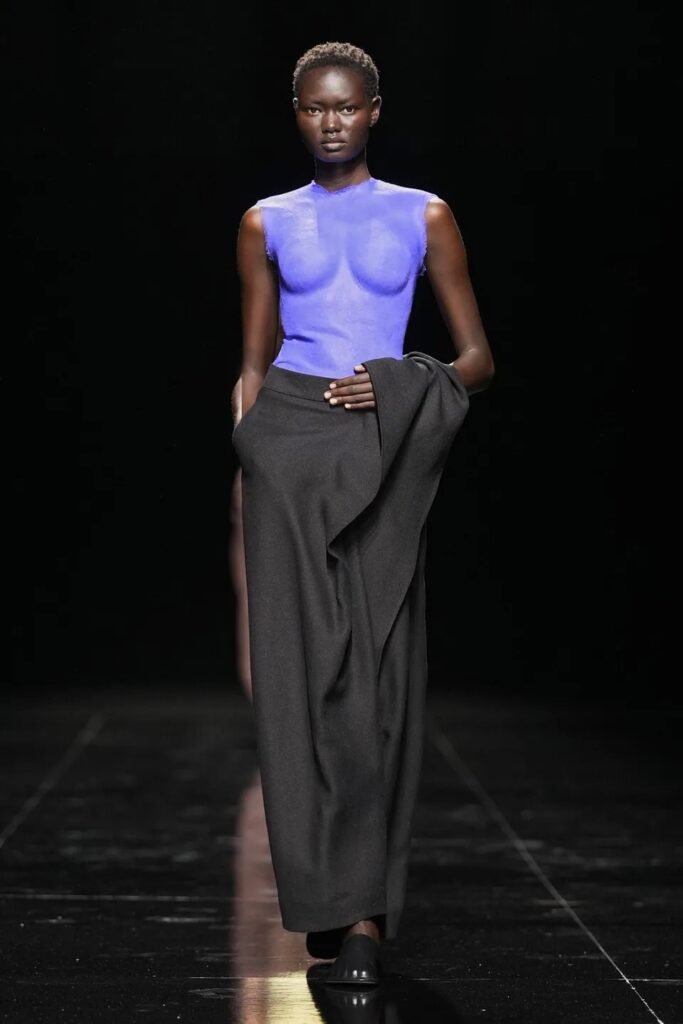
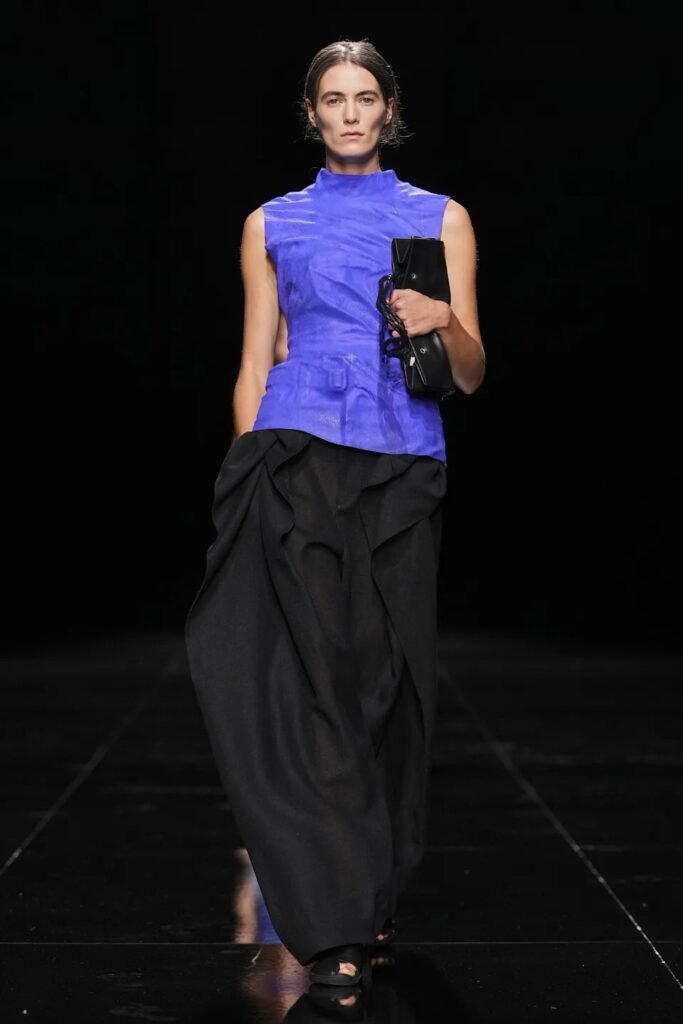
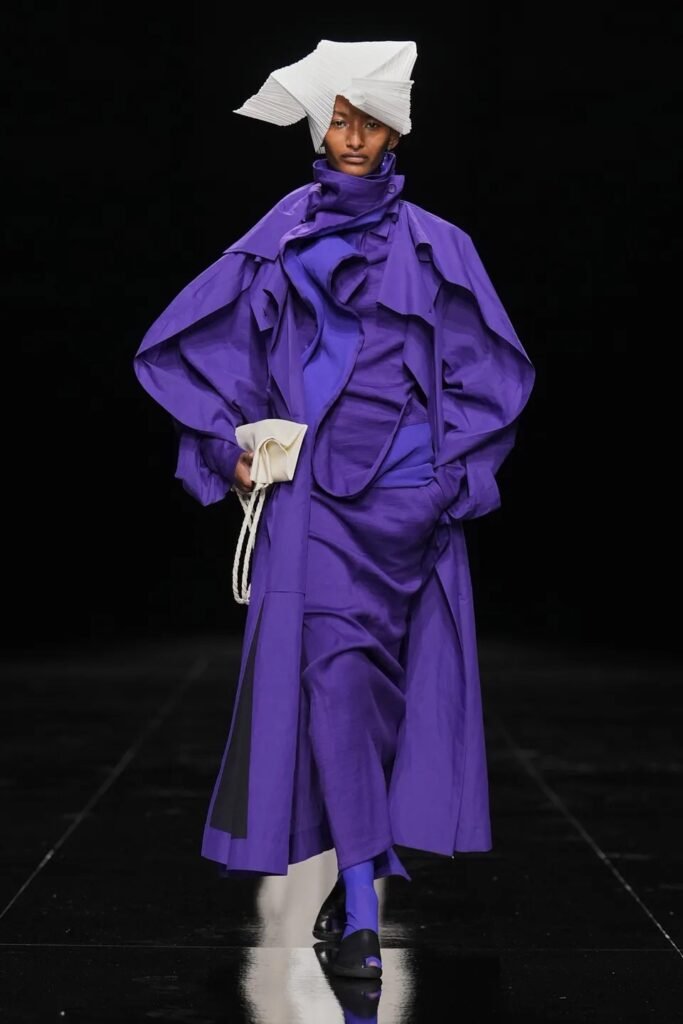
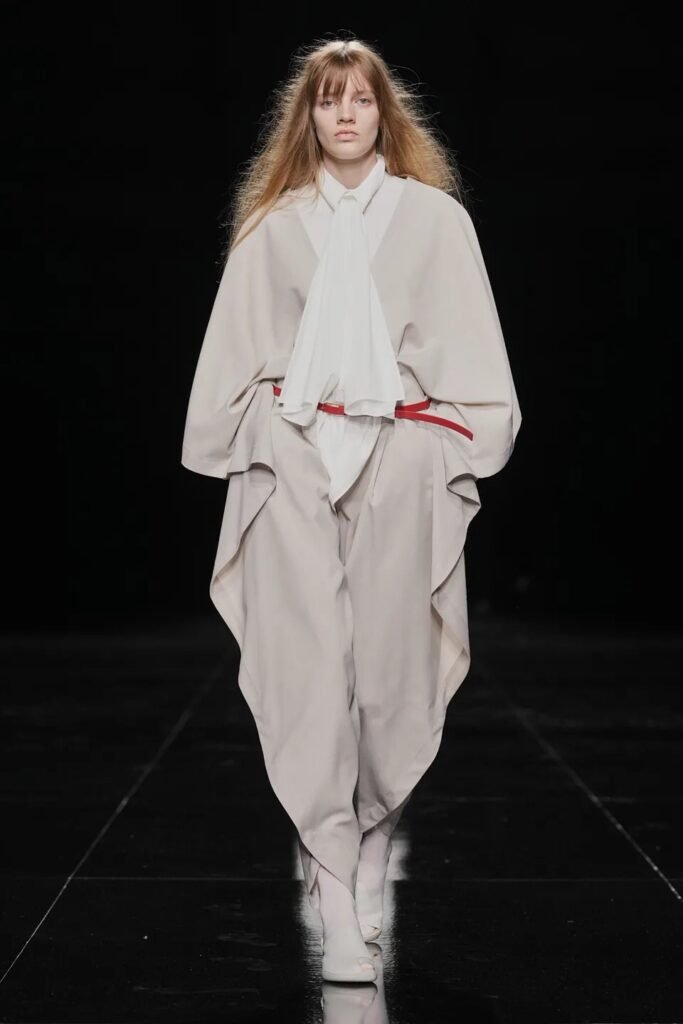
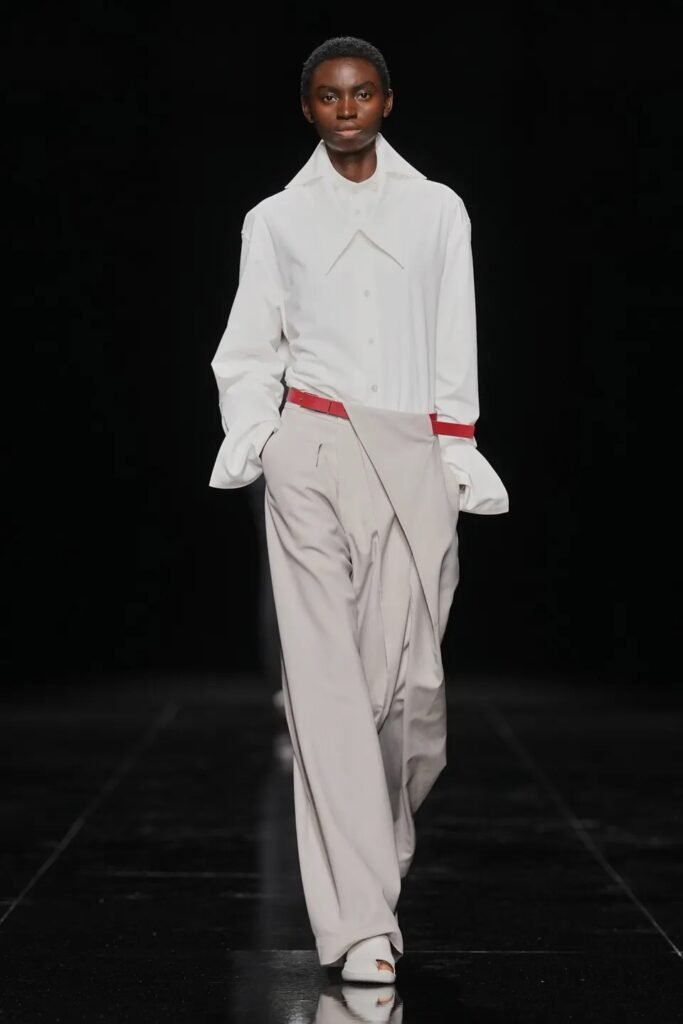
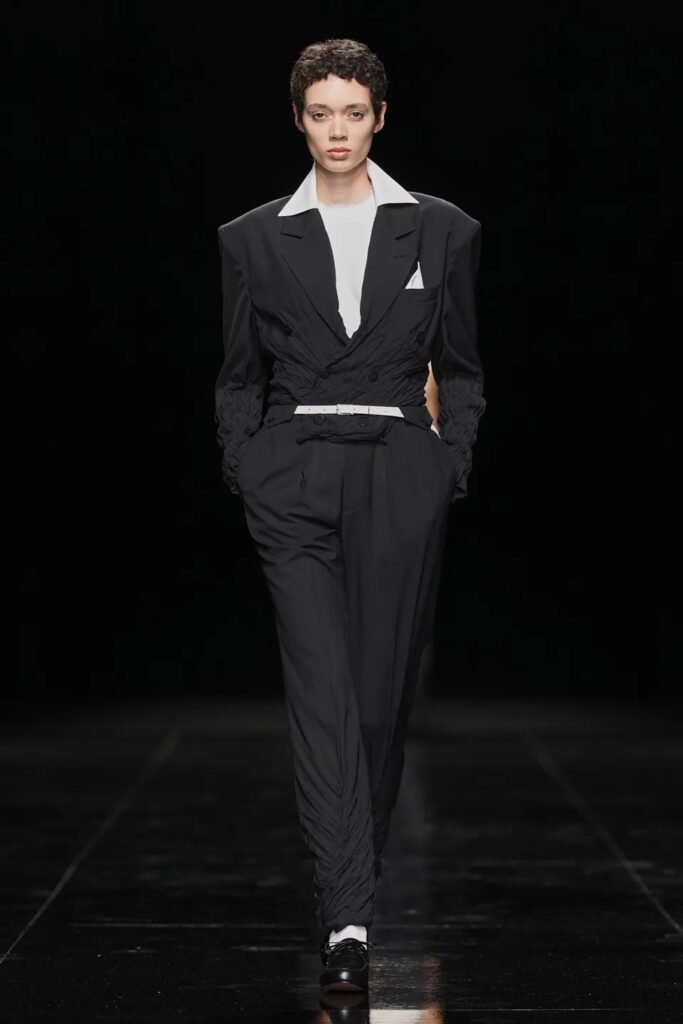
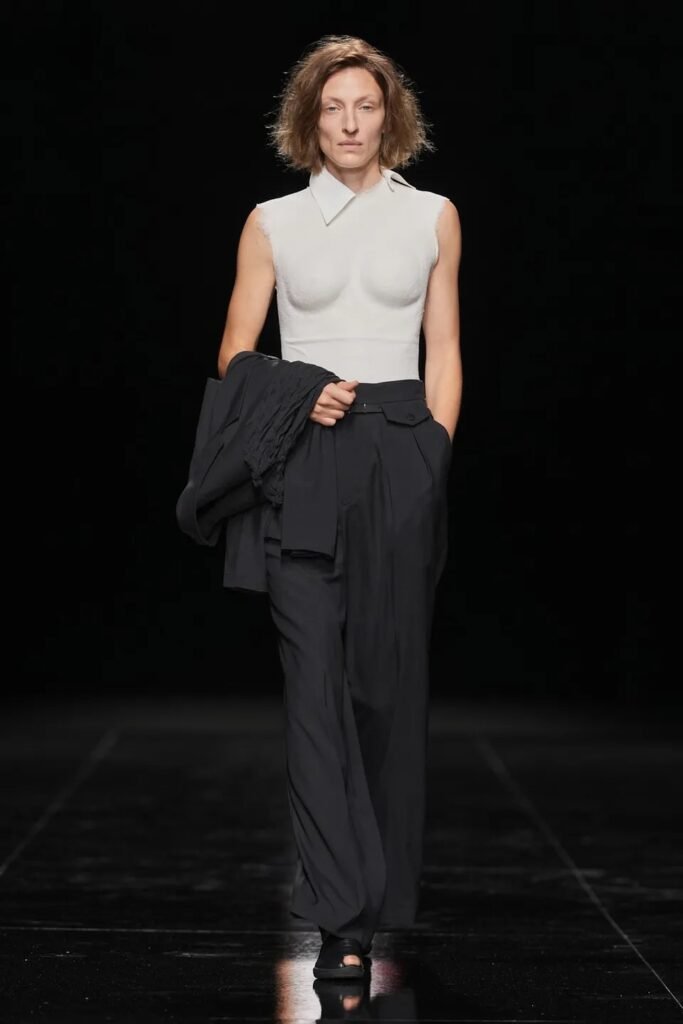
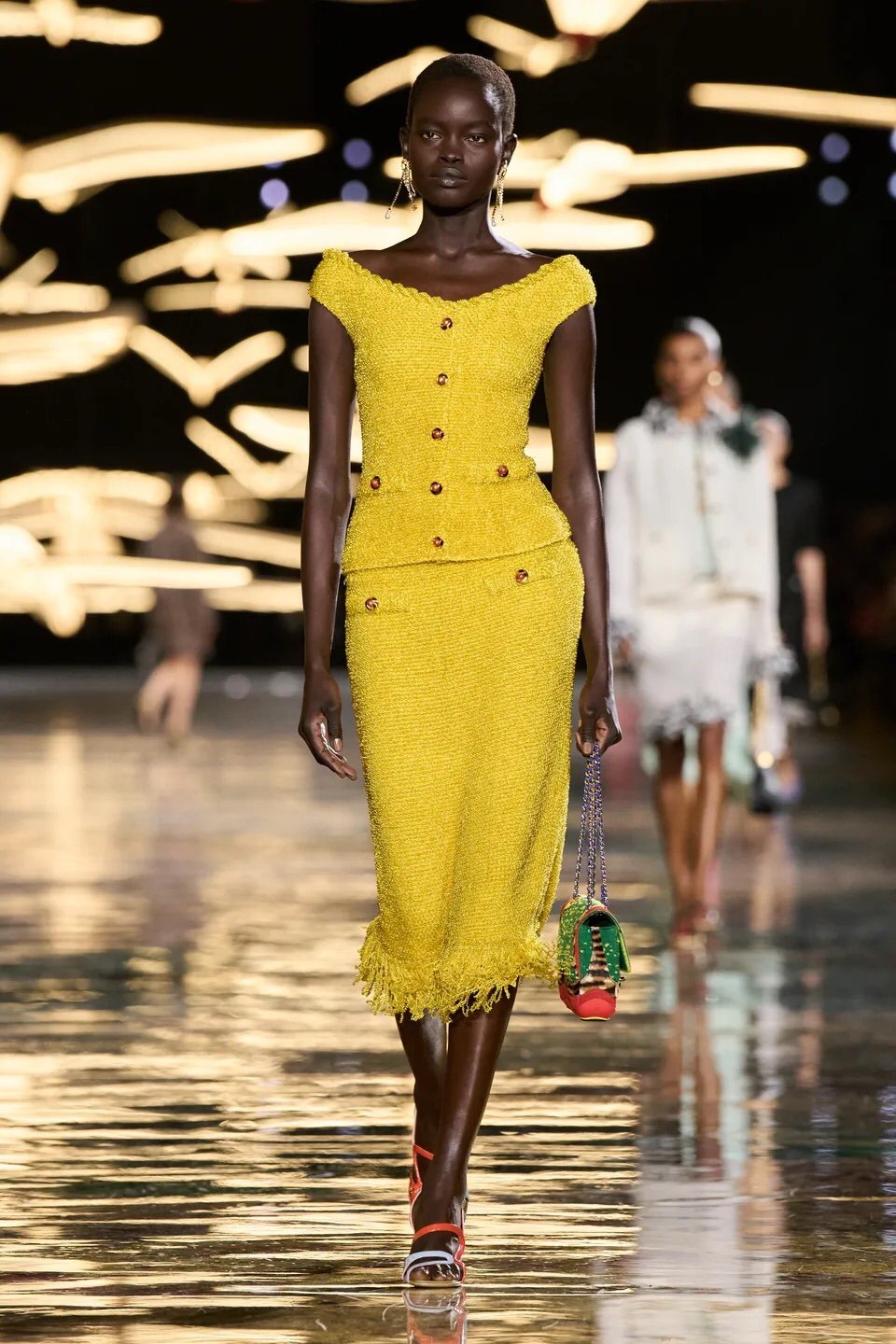
For Spring 2027, creative director Satoshi Kondo continues that philosophy with a collection that places movement, construction and the relationship between the body and clothing at the centre of the Issey Miyake universe. Presented in Paris on October 2, 2026, during Paris Fashion Week, the Spring/Summer 2027 collection arrives as another chapter in the house’s long-running exploration of form and textile innovation.
The result is fashion that feels simultaneously sculptural and effortless — clothing designed not simply to sit on the body, but to move with it.
Satoshi Kondo Continues the Issey Miyake Legacy
Since Issey Miyake presented his first collection in 1971, the house has developed an unmistakable approach to clothing based around the relationship between fabric and the human body.
One of the central ideas behind the house has been the concept of “a piece of cloth” exploring how a single piece of material can become clothing while maintaining a sense of space between fabric and body. The house describes this philosophy as an exploration of the ease and ma, or unfilled space, between the wearer and the garment.
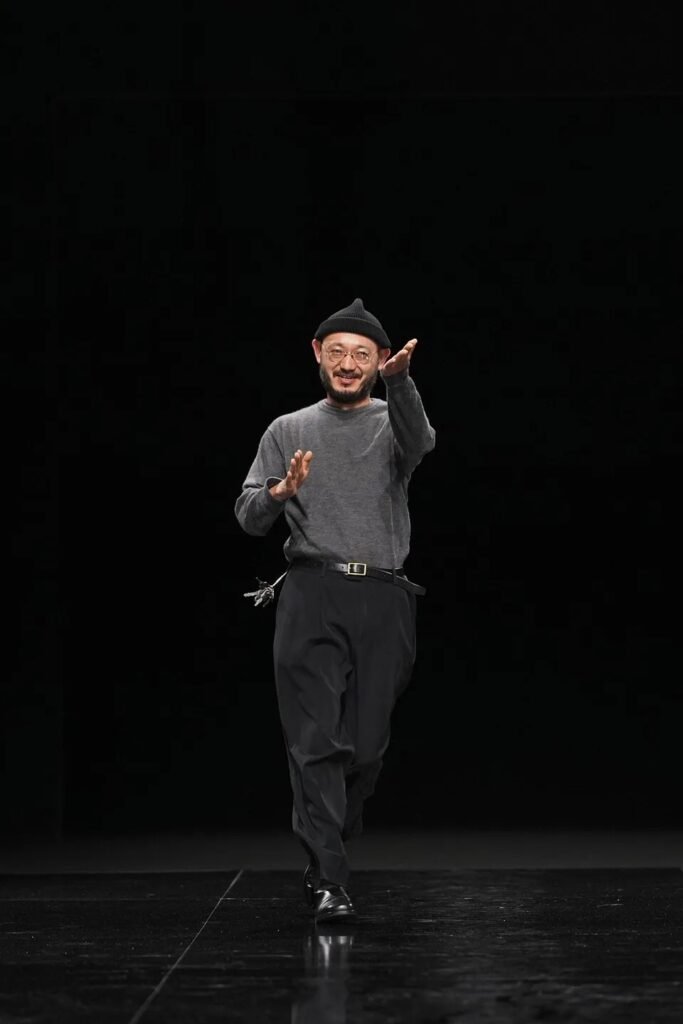
Kondo has continued developing that philosophy since taking over the mainline collection in Spring/Summer 2020. Rather than simply recreating the visual language associated with Issey Miyake, his work has continued to investigate new relationships between textile development, movement, construction and everyday life.
Spring 2027 therefore feels less like a departure from the house’s identity than another evolution of its central question: what can clothing become when fabric itself is treated as the starting point?
Clothing in Motion
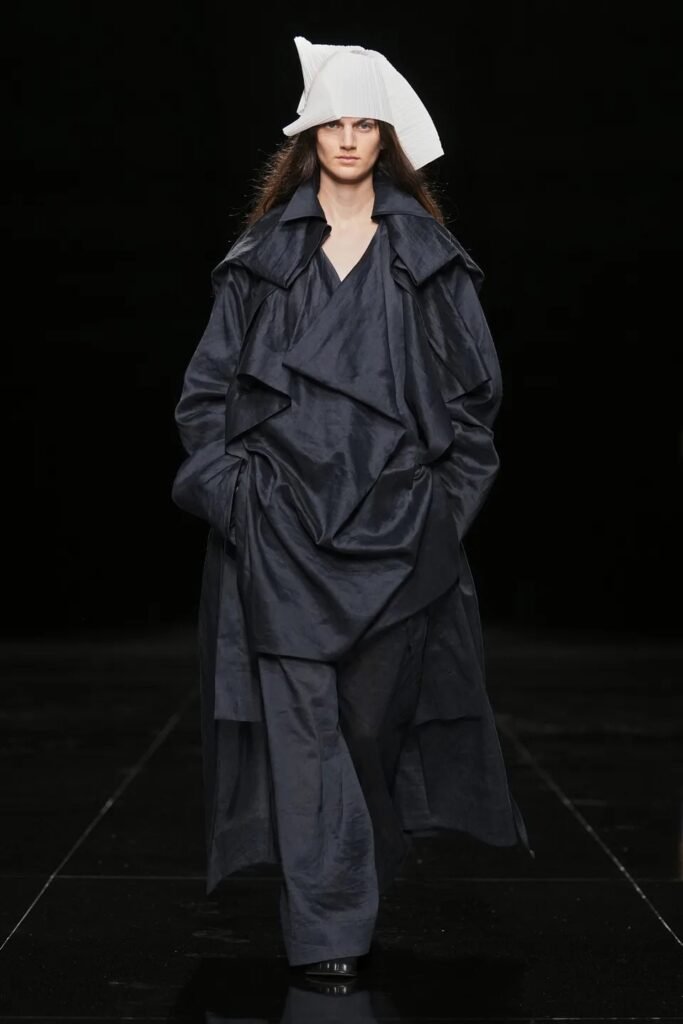
The most compelling aspect of Issey Miyake Spring 2027 is the sense of movement embedded into the clothes.
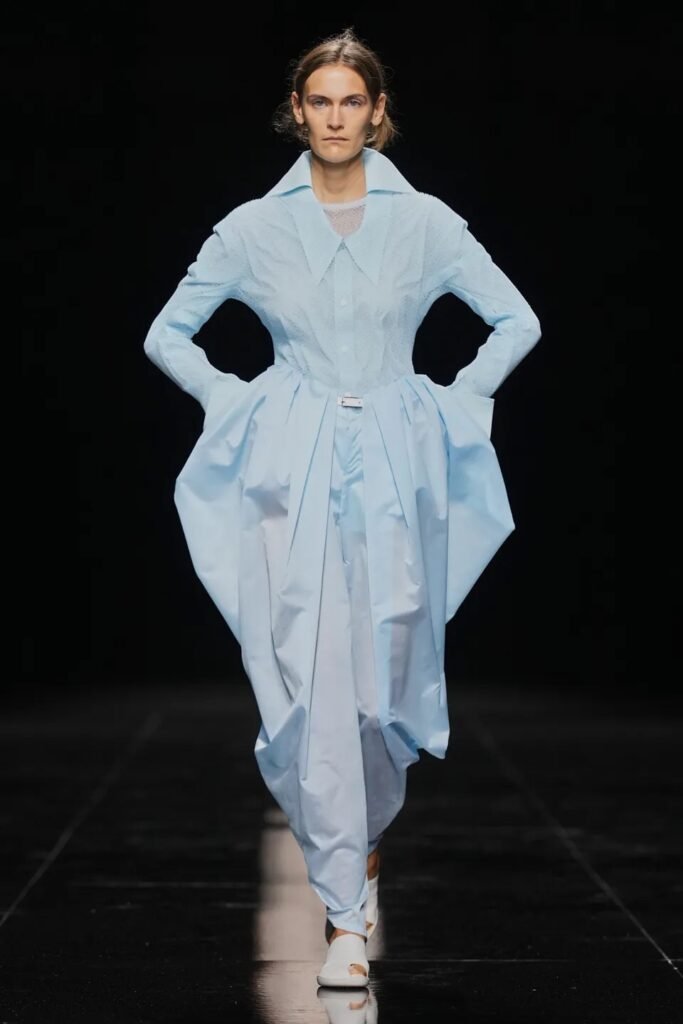
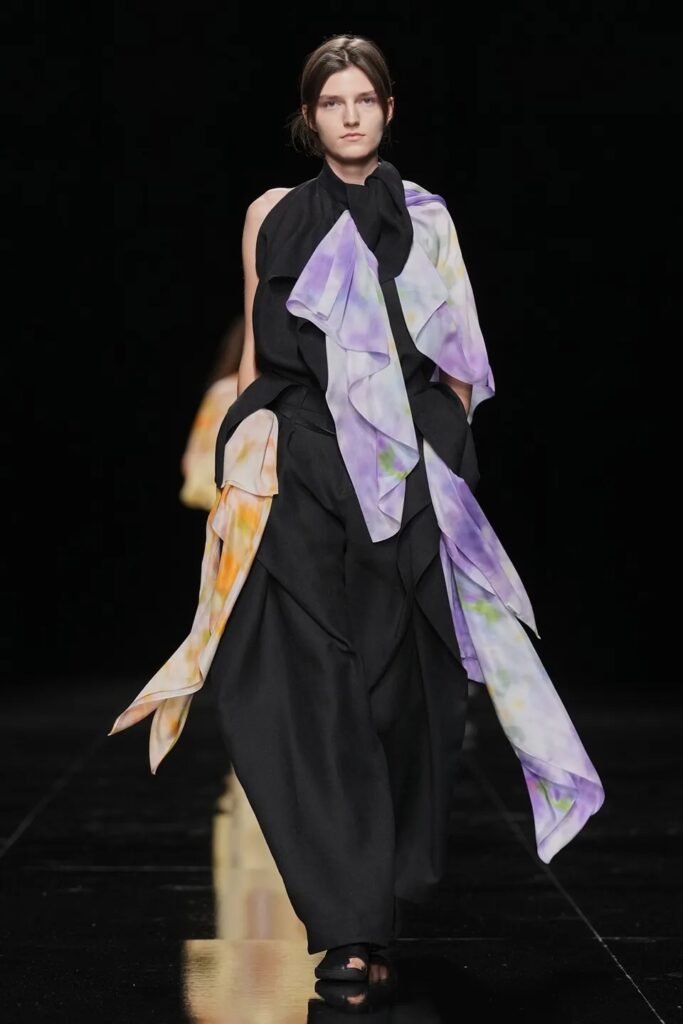
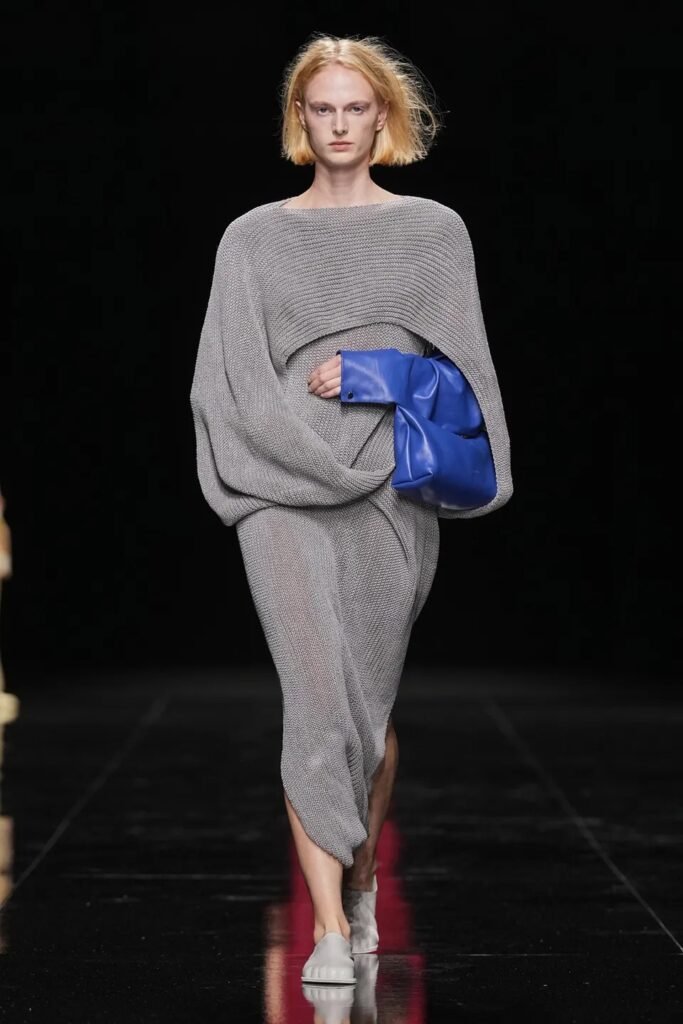
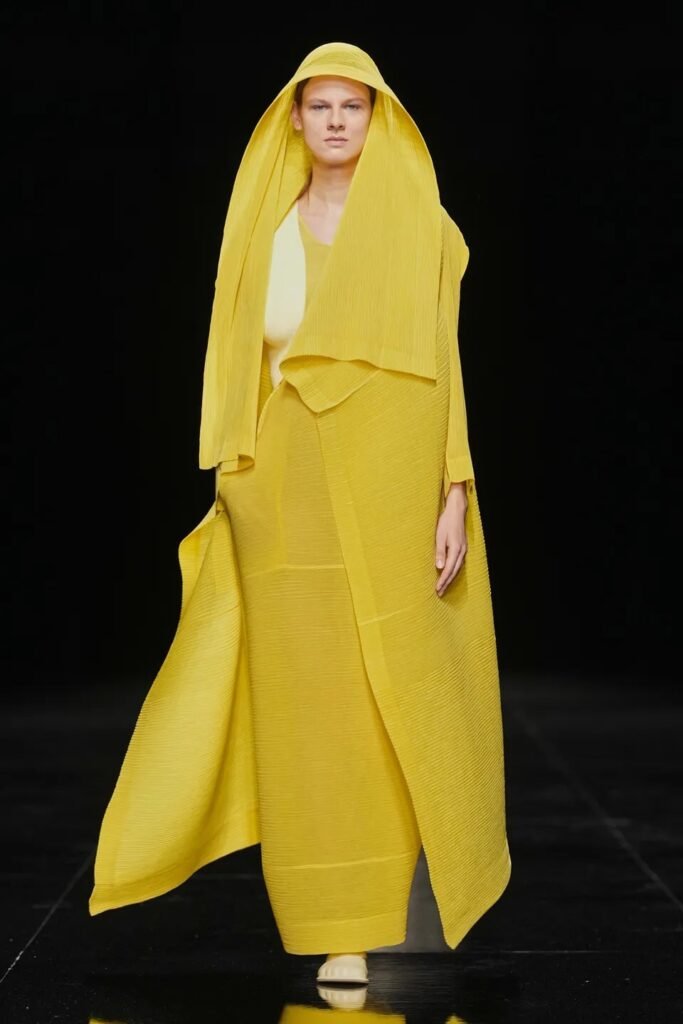
Silhouettes appear to be constructed around the idea that garments should have their own rhythm. Rather than relying on conventional tailoring to define the body, the collection allows fabric to create volume, structure and motion.
This is where Miyake’s approach feels particularly relevant to contemporary fashion. The clothes do not need excessive ornamentation to make an impression. Their impact comes from the way they are constructed and from what happens when the wearer moves.
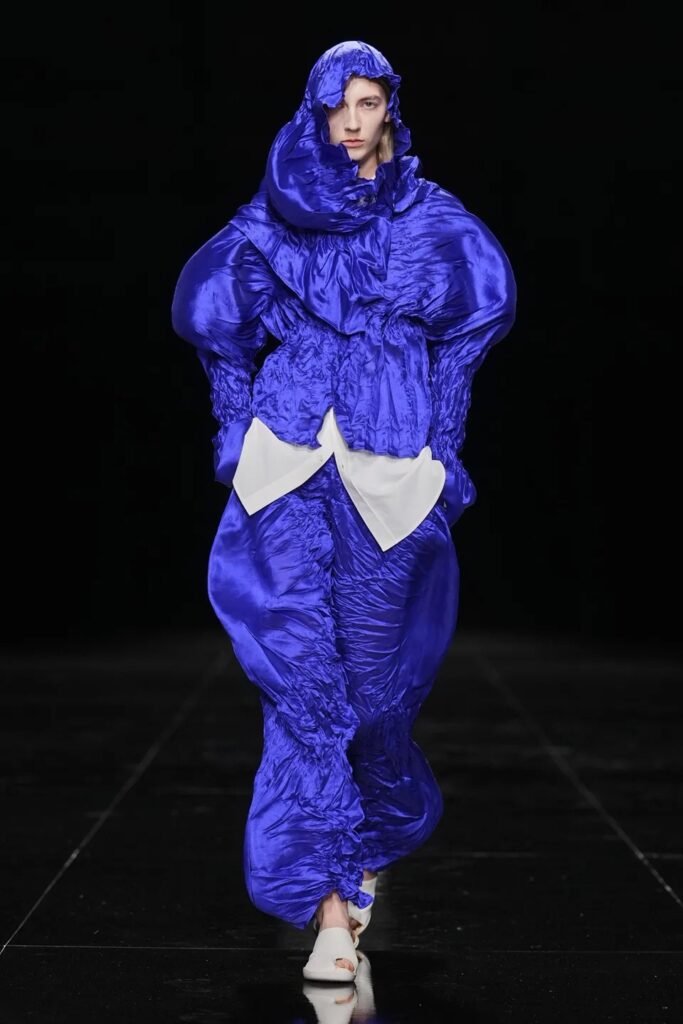
Folds become lines. Volumes expand and contract. Surfaces change as the body moves through them.
The runway therefore becomes less about a succession of static outfits and more about watching textile engineering come alive.
Sculptural Silhouettes With a Sense of Ease
Issey Miyake has long demonstrated that sculptural fashion does not necessarily have to feel rigid.
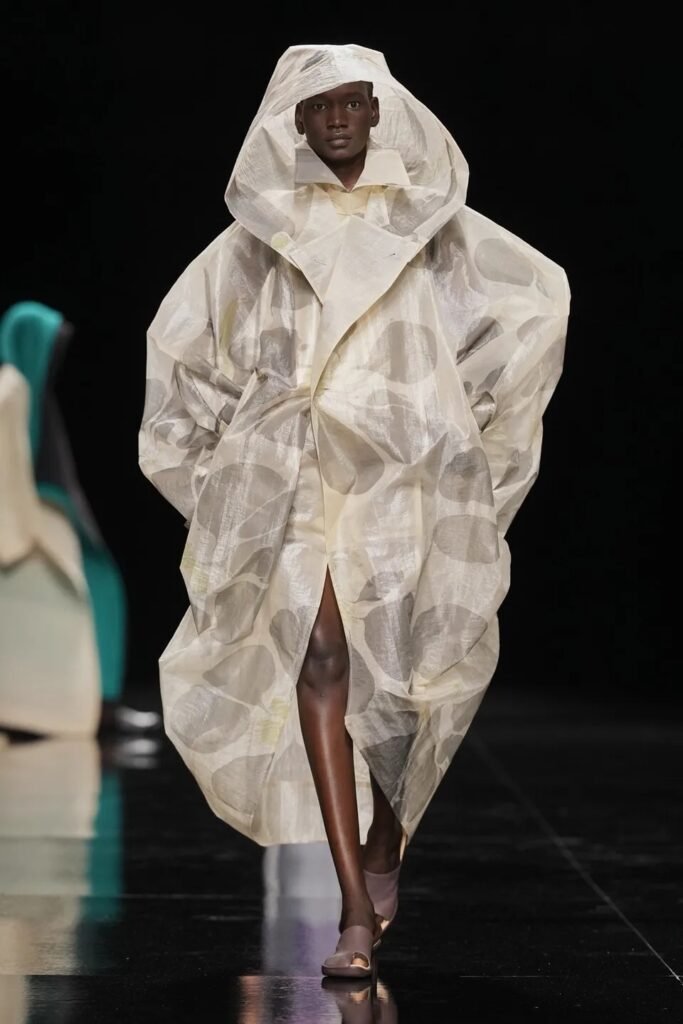
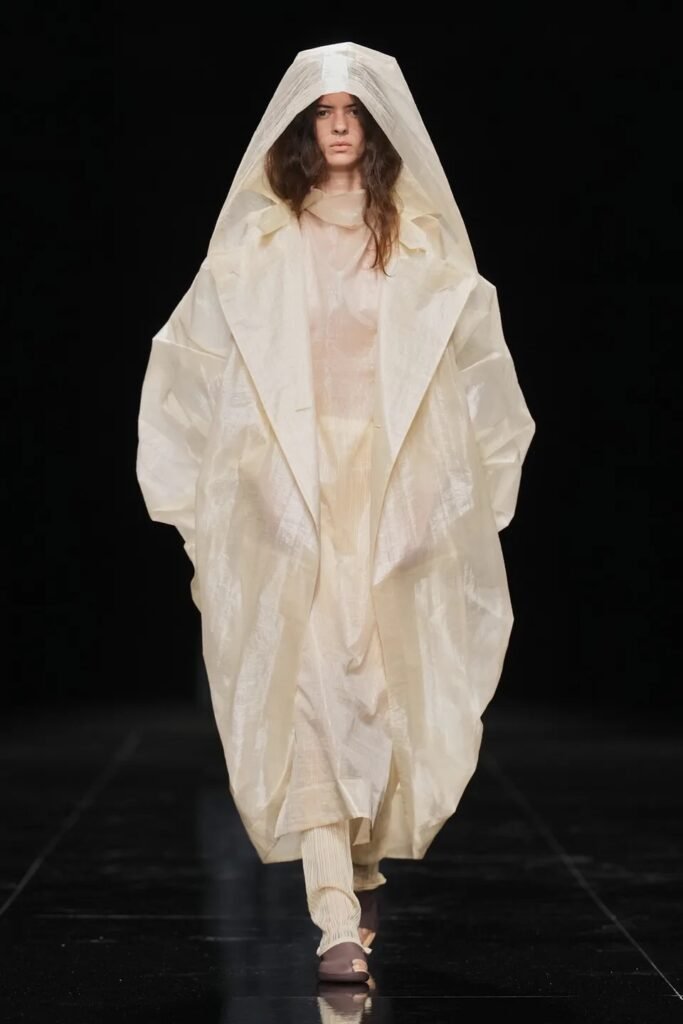
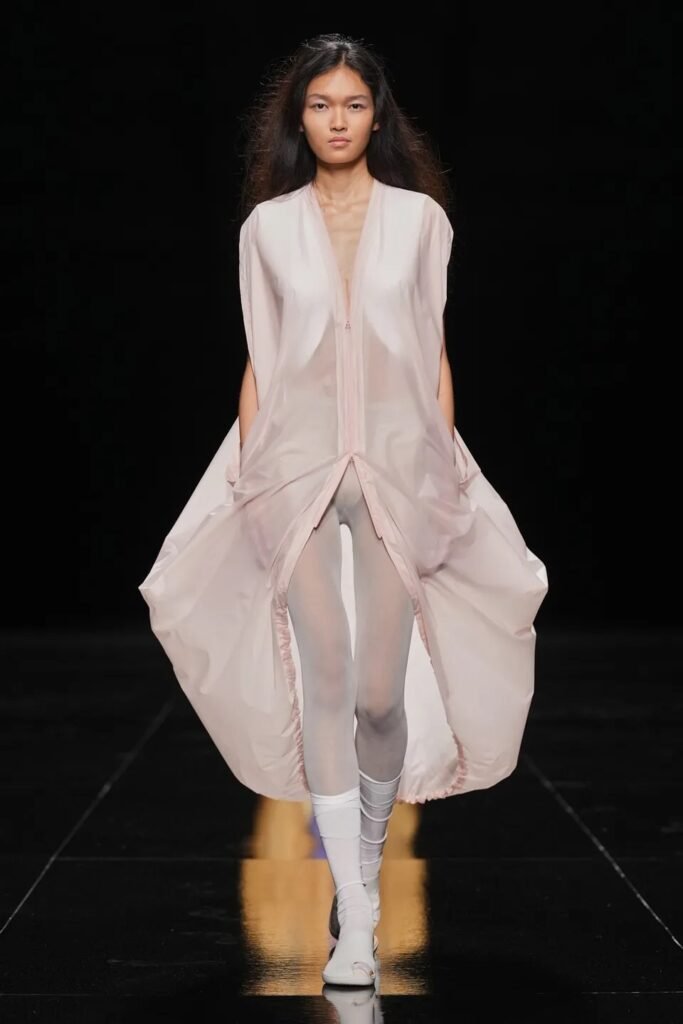
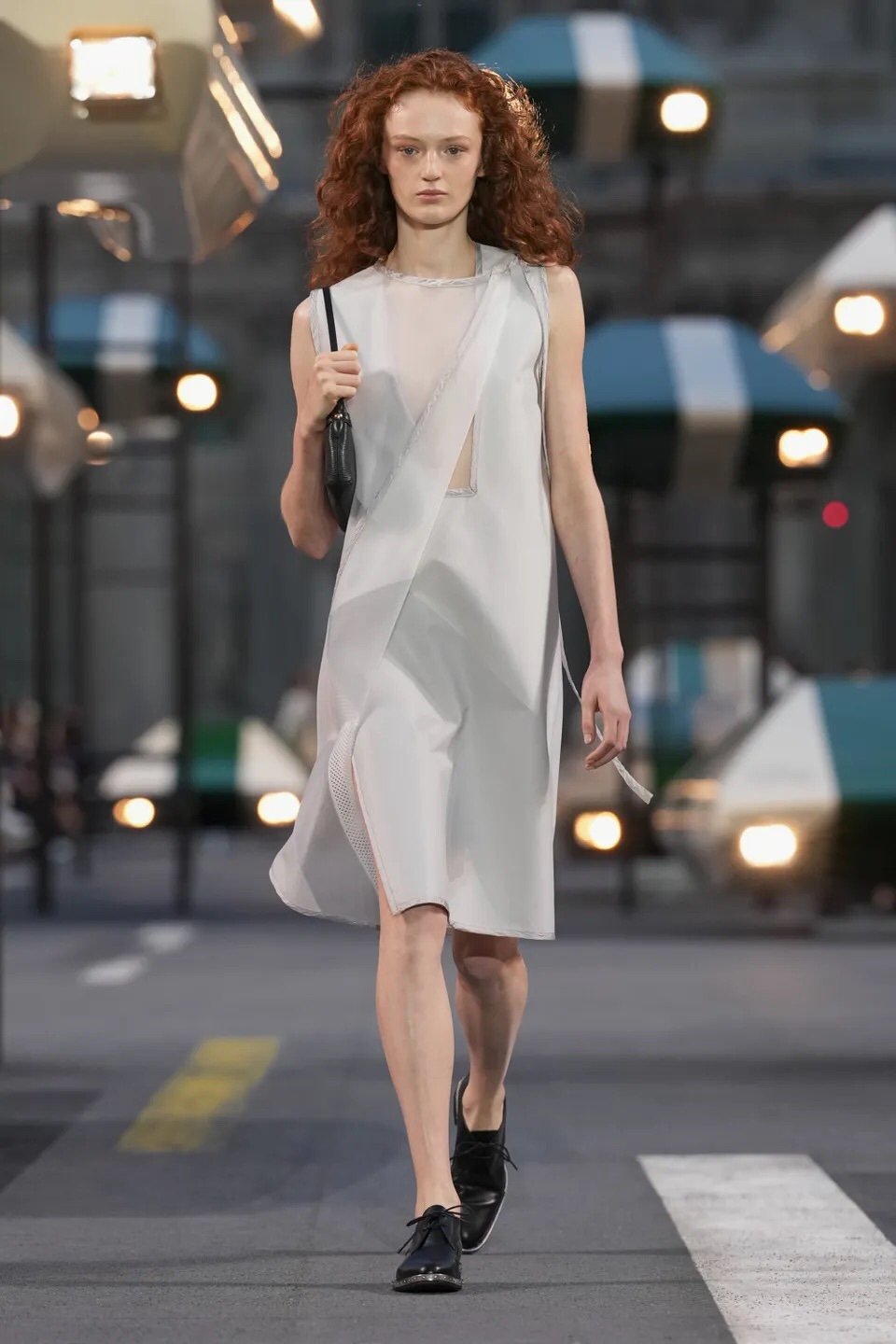
For Spring 2027, that idea remains central. Shapes are exaggerated without appearing unnecessarily heavy, creating silhouettes that occupy space while retaining a sense of lightness.
This balance between structure and freedom is one of the defining characteristics of the collection.
Instead of forcing the body into a predetermined shape, the garments appear to create a surrounding architecture. Fabric can extend away from the body, gather around it or fall into new shapes as the wearer walks.
It is an approach that makes the clothes feel almost kinetic.
The collection’s silhouettes are particularly interesting because they resist the conventional distinction between fitted and oversized dressing. The body remains present, but it is not necessarily the only focal point. The space around the body becomes equally important.
The Continuing Language of Pleating
Any conversation about Issey Miyake inevitably leads back to pleating.
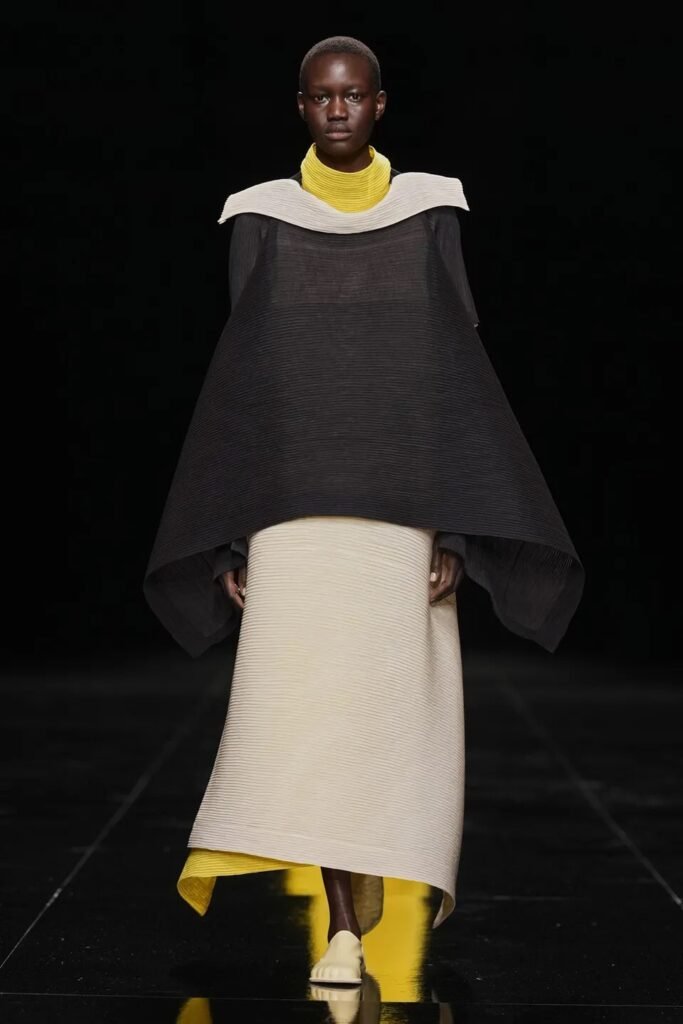
Pleats have become one of the most recognizable elements associated with the house, but Miyake’s approach has always been about more than creating a decorative surface.
Pleating transforms the behaviour of fabric.
It allows a relatively simple piece of material to acquire volume, flexibility and movement. It can also make clothing adaptable, lightweight and visually dynamic.
That philosophy has been developed across the wider Issey Miyake universe, alongside other textile experiments and technologies. The house continues to describe its approach as beginning with research into yarn and the development of original fabrics.
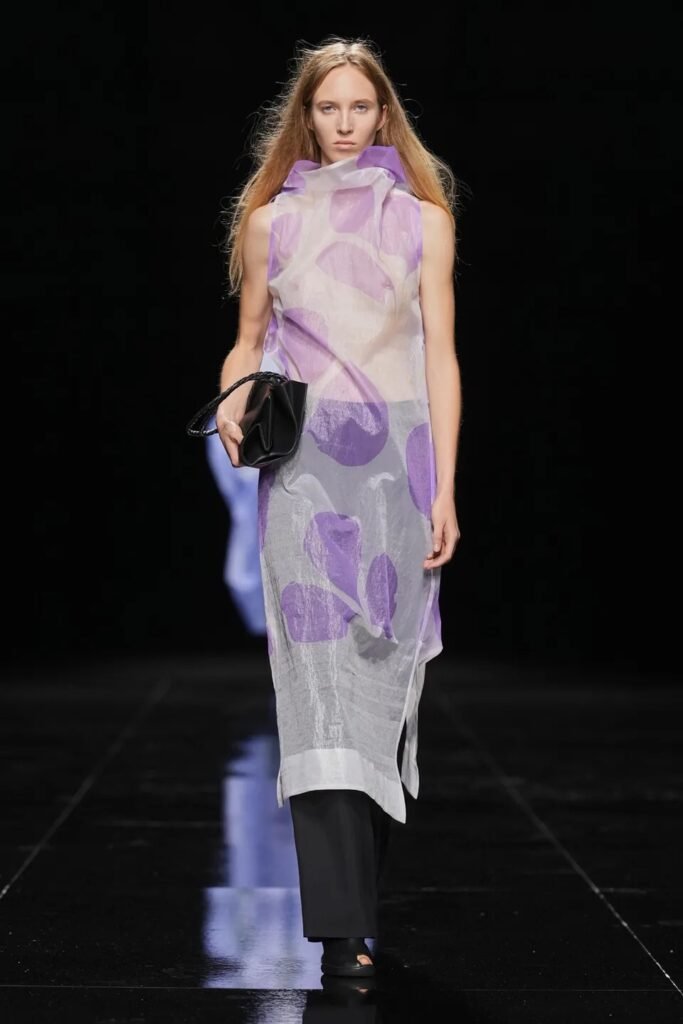
For Spring 2027, this broader philosophy remains important. Rather than treating textile innovation as a separate technical exercise, Kondo incorporates it directly into the visual language of the collection.
The fabric is the design.
A Modern Interpretation of Japanese Design Philosophy
Issey Miyake’s work has always existed somewhere between Japanese design philosophy and an international fashion vocabulary.
The house deliberately avoids being confined by a simple East-versus-West interpretation of clothing. Its own history describes the development of garments that are universal and not restricted by conventional Western or Eastern categories of dress.
Spring 2027 continues that openness.
There is a sense of Japanese restraint in the collection’s attention to material, proportion and construction, but the clothes do not feel traditional in a literal sense. Instead, tradition becomes a starting point for experimentation.
That distinction is important.
Kondo is not simply looking backward. He is taking ideas about space, material and movement and translating them into contemporary clothing.
When Technology Becomes Fashion
Innovation has always been part of the Issey Miyake story.
From Pleats Please to A-POC and the house’s continuing textile research, technological experimentation has played a major role in expanding what clothing can do. The wider Issey Miyake group today includes several labels and projects dedicated to different approaches to textiles, accessories, footwear and design.
That spirit makes the Spring 2027 collection particularly significant.
In an industry increasingly interested in digital design, artificial intelligence and technological manufacturing, Issey Miyake offers another definition of fashion technology: understanding the physical behaviour of materials deeply enough to make them perform differently.
It is technology that remains tangible.
You can see it in the folds, the volume and the movement of the clothes.
Fashion Designed for Movement
One of the most enduring ideas in Issey Miyake’s work is that clothing should exist in relationship with the person wearing it.
That sounds simple, but it represents a significant departure from fashion that is primarily concerned with a fixed silhouette.
The Spring 2027 collection feels designed for bodies that walk, turn, stretch and move.
This gives the collection an almost architectural quality. A garment can look dramatically different from one moment to another because its relationship with the body is constantly changing.
The runway becomes the perfect environment for that idea.
As models move, the clothes reveal different proportions, surfaces and layers. What looks compact from one angle can become expansive from another.
The clothes are never completely still.
The Beauty of Restraint
While many Spring 2027 collections across Paris Fashion Week have explored glamour, sensuality, historical references and dramatic silhouettes, Issey Miyake operates according to a different rhythm.
The drama is in the construction.
There is no need to overwhelm the viewer when a garment can create its own visual language through shape and movement.
That restraint is part of what makes the collection feel contemporary.
Fashion can be spectacular without being excessive. It can be experimental without becoming disconnected from the realities of dressing.
And it can be technically sophisticated while remaining visually poetic.
These qualities have helped make Issey Miyake one of the most distinctive names in modern fashion.
A Legacy Still in Motion
The passing of Issey Miyake in 2022 inevitably changed the emotional context surrounding the house, but the brand’s creative language continues to evolve under Kondo.
Spring 2027 demonstrates why that legacy is larger than any single silhouette or signature technique.
The most important inheritance is an attitude toward clothing: question the material, question the construction, question the relationship between body and garment, and never assume that clothing has to behave in the conventional way.
That philosophy remains visible in the house’s contemporary work.
Kondo’s role is therefore not simply to preserve an archive. It is to keep the questions alive.
Issey Miyake Spring 2027: Where Fabric Becomes Form
Issey Miyake Spring 2027 is a reminder that innovation in fashion does not always need to announce itself loudly.
Sometimes it exists in a fold.
Sometimes it is hidden inside the construction of a garment.
Sometimes it appears only when the wearer begins to move.
Under Satoshi Kondo, Issey Miyake continues to explore those possibilities with a collection that places textile, body and movement at the heart of the Spring 2027 conversation.
The clothes feel sculptural without becoming static, experimental without losing their sense of wearability, and distinctly Issey Miyake without simply repeating the past.
More than anything, Spring 2027 reinforces the idea that fabric can be architecture, movement can be design, and clothing can exist as a constantly changing space between the body and the world.
That is the enduring power of Issey Miyake.