
|
Getting your Trinity Audio player ready… |
By Junya Watanabe
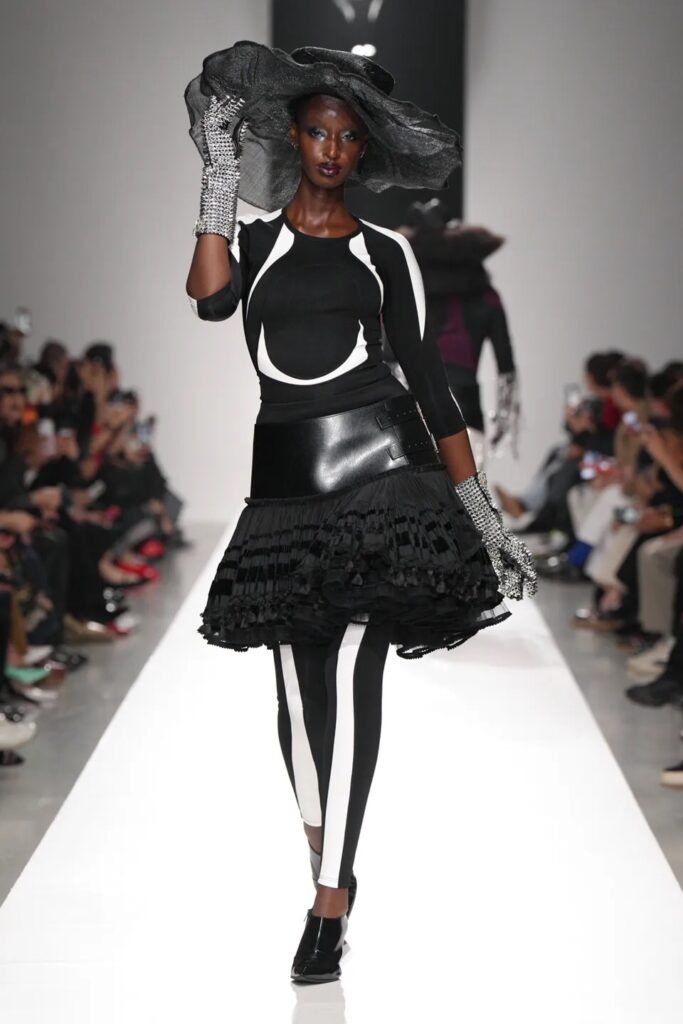
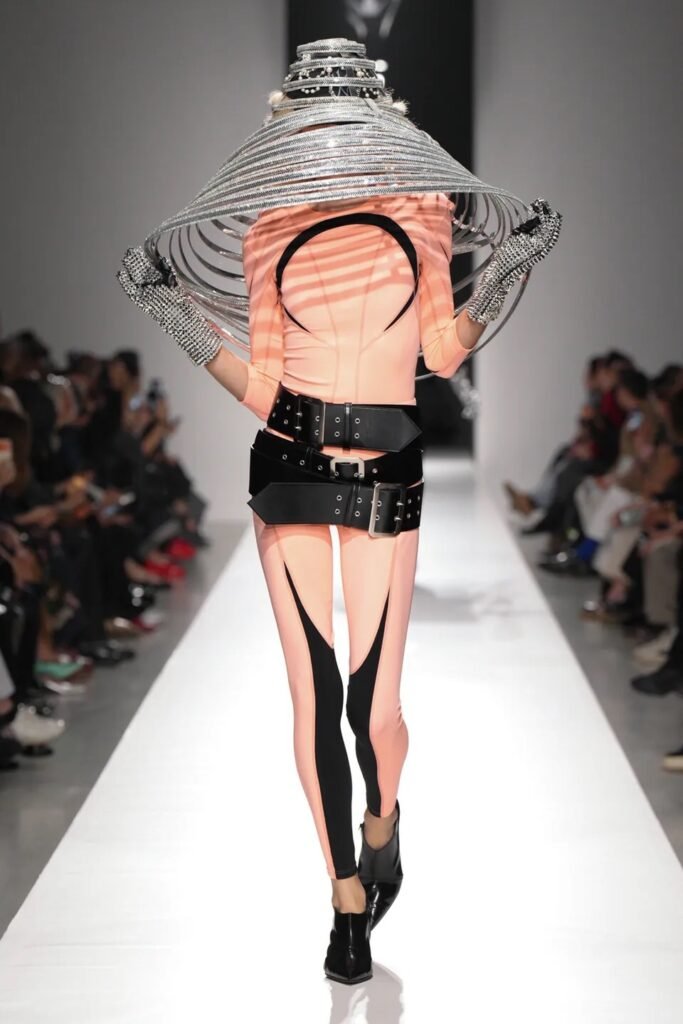
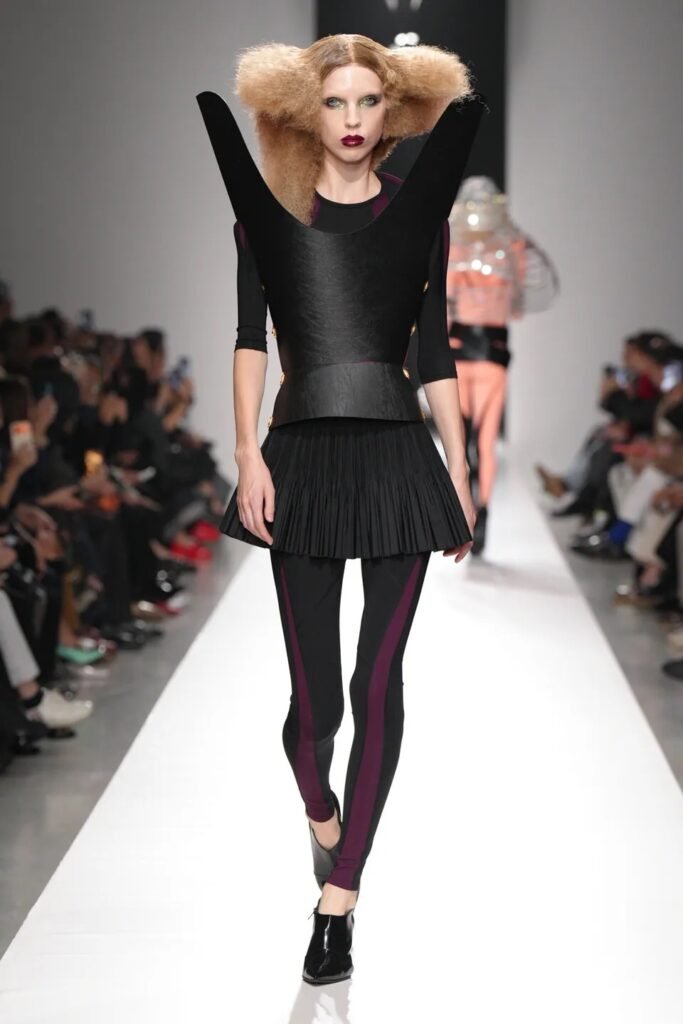
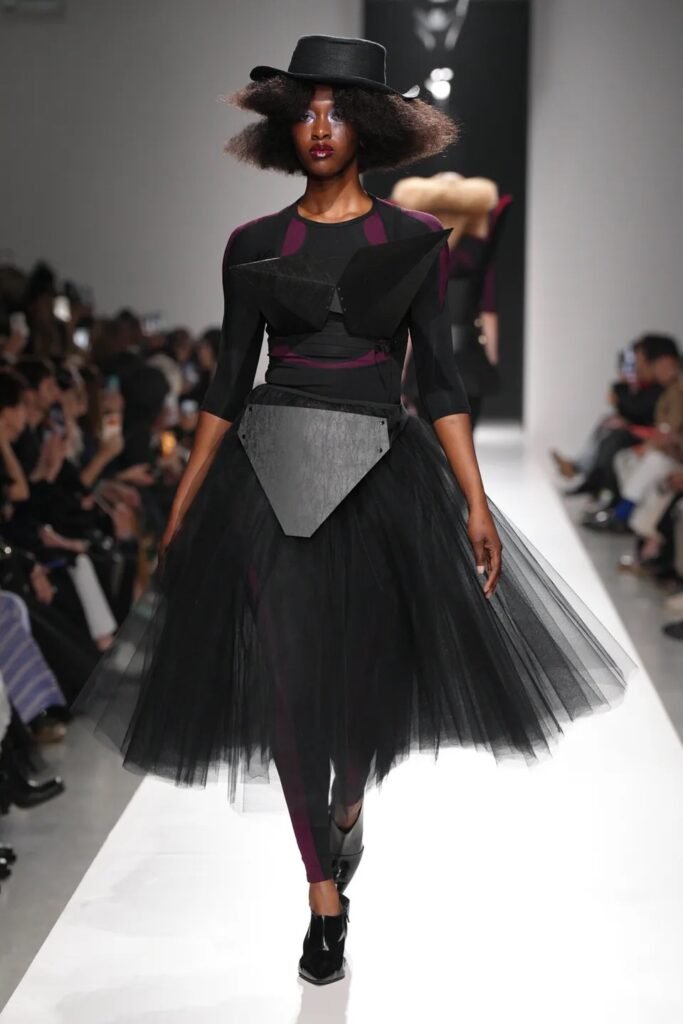
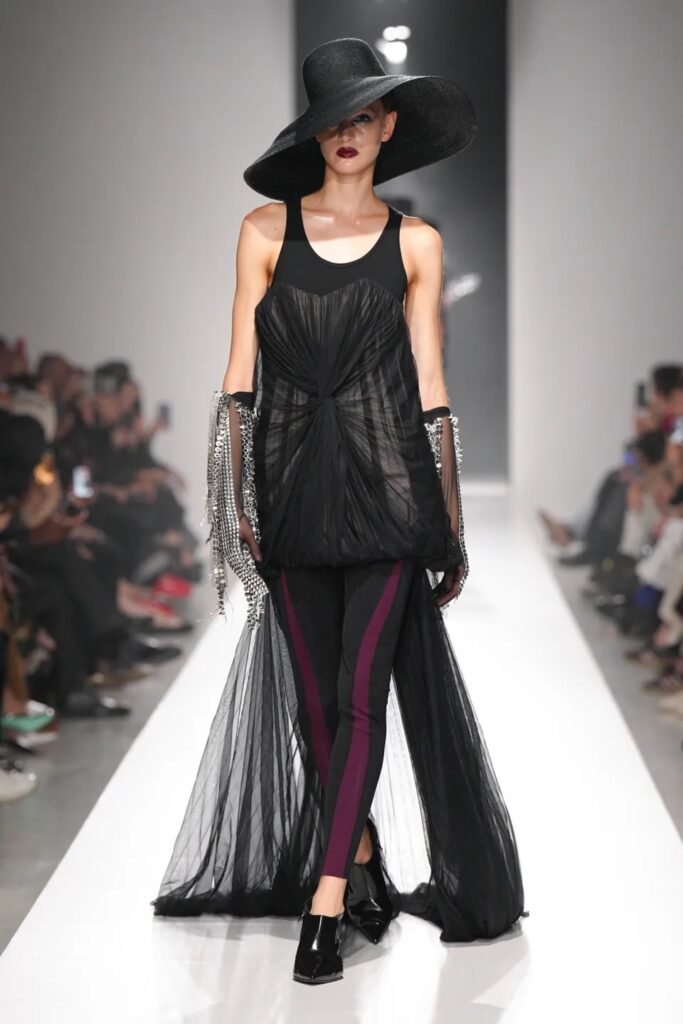
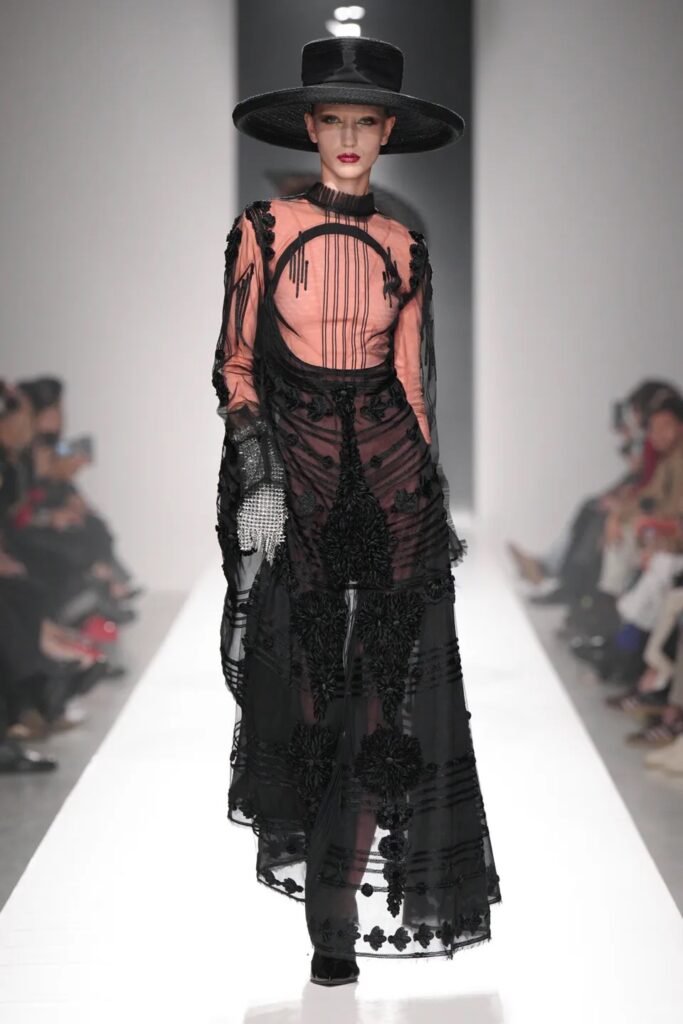
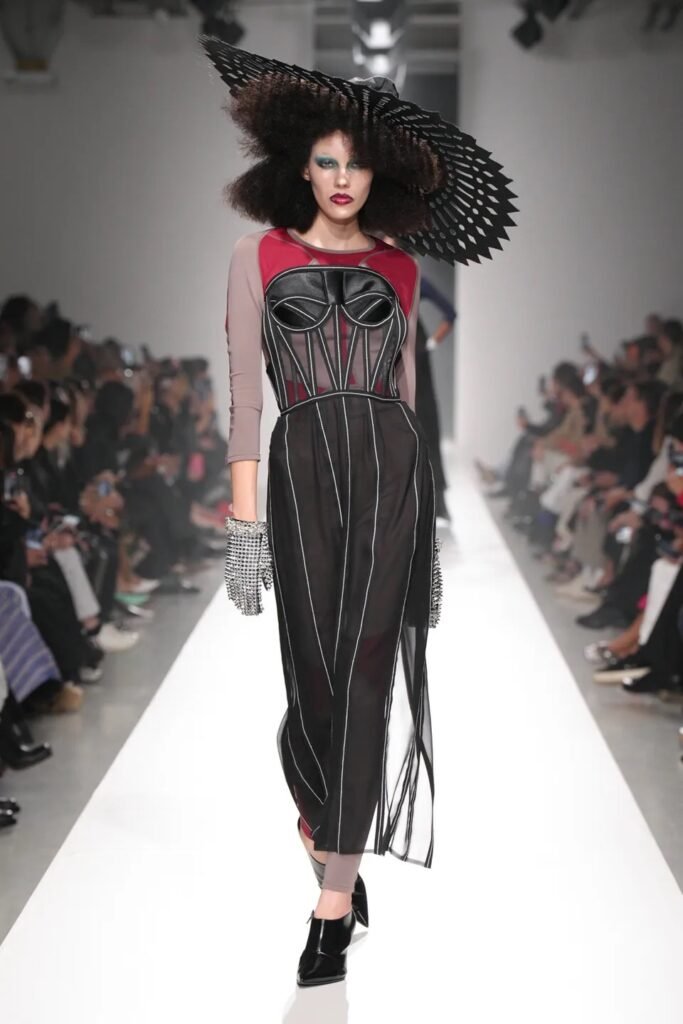
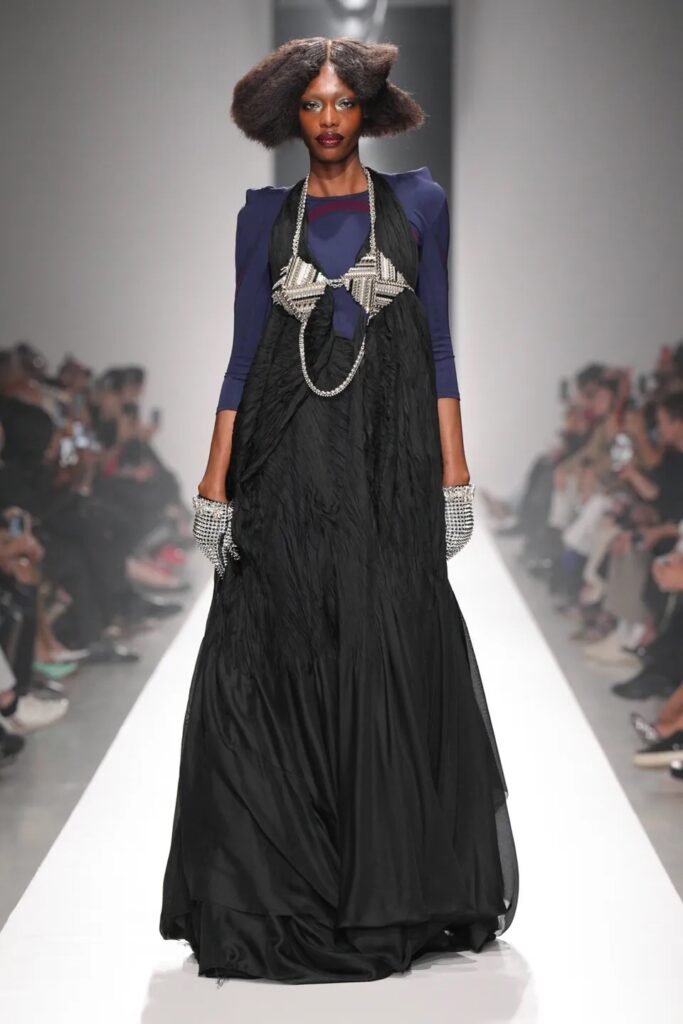
Junya Watanabe Spring 2027 Ready-to-Wear arrived in Paris with a provocative collision of punk attitude, couture drama, experimental construction and high-glamour theatrics. Titled “Funky,” the collection transformed familiar fashion codes into something radically new, proving once again that Watanabe’s greatest strength lies in his ability to dismantle the expected and rebuild it into something extraordinary.
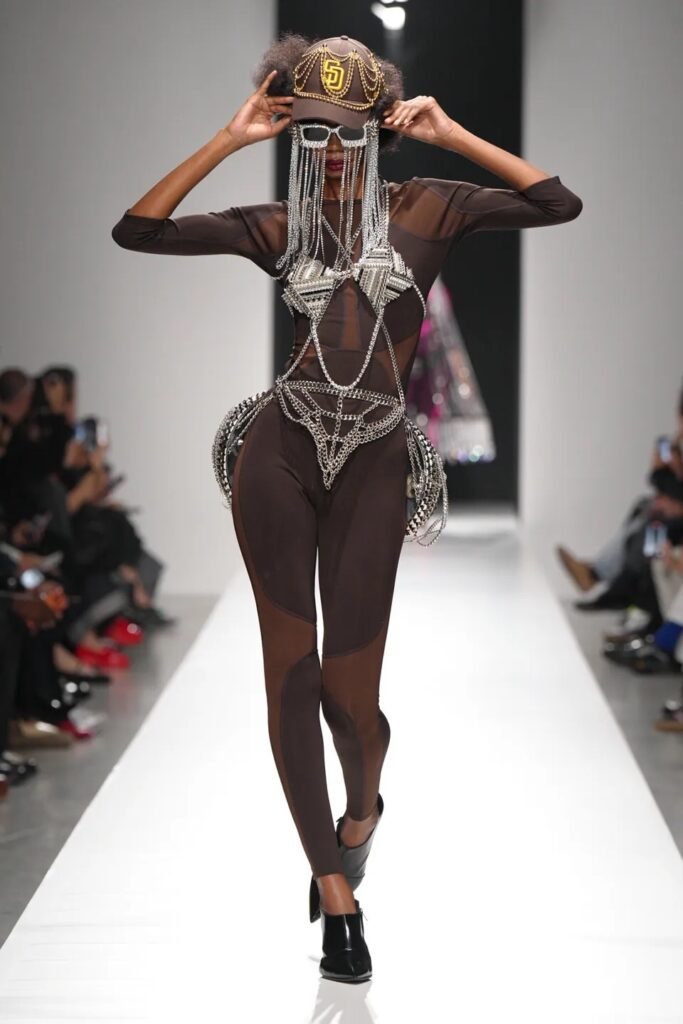
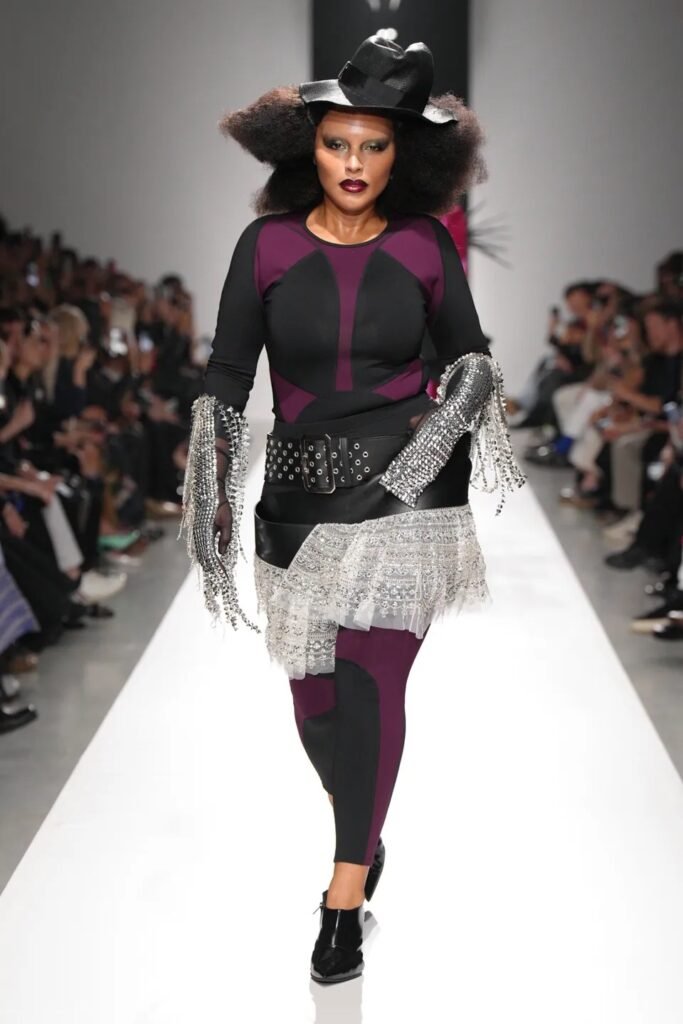
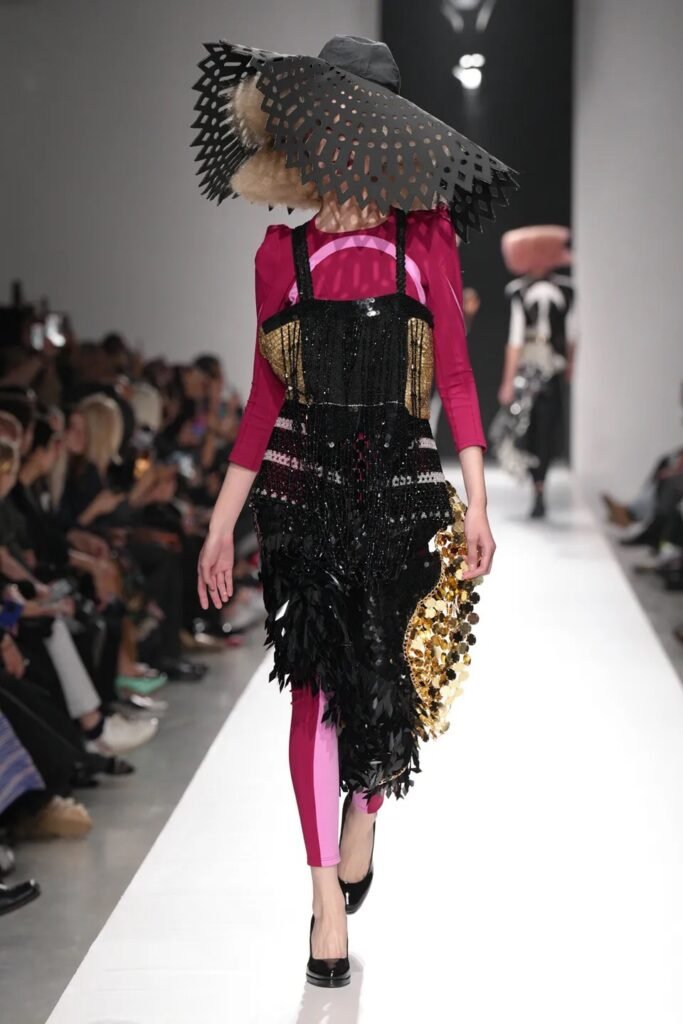
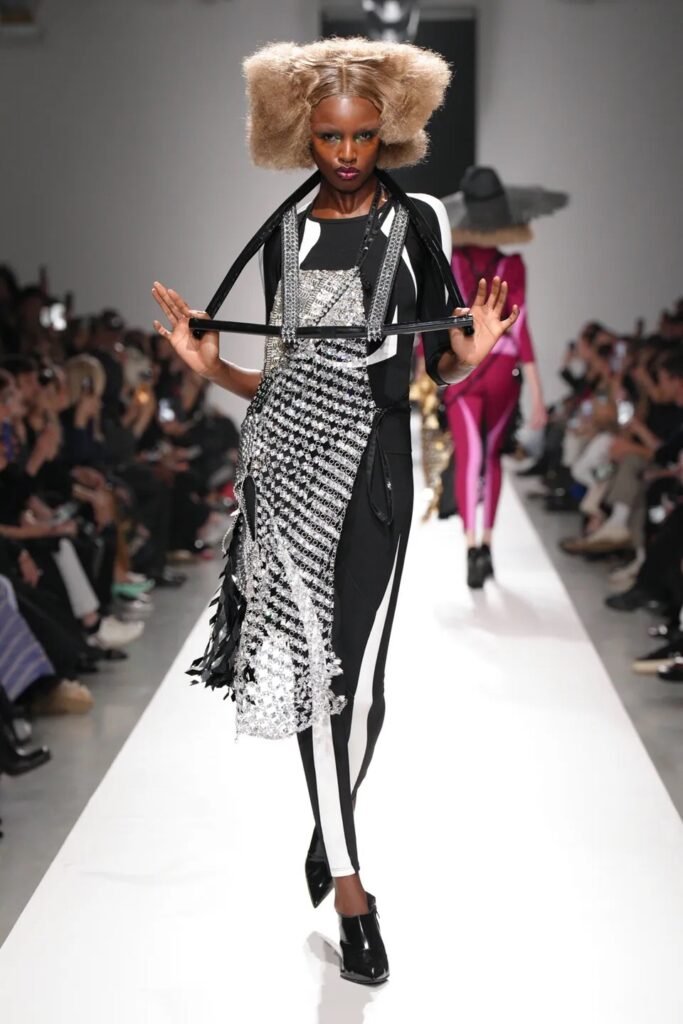
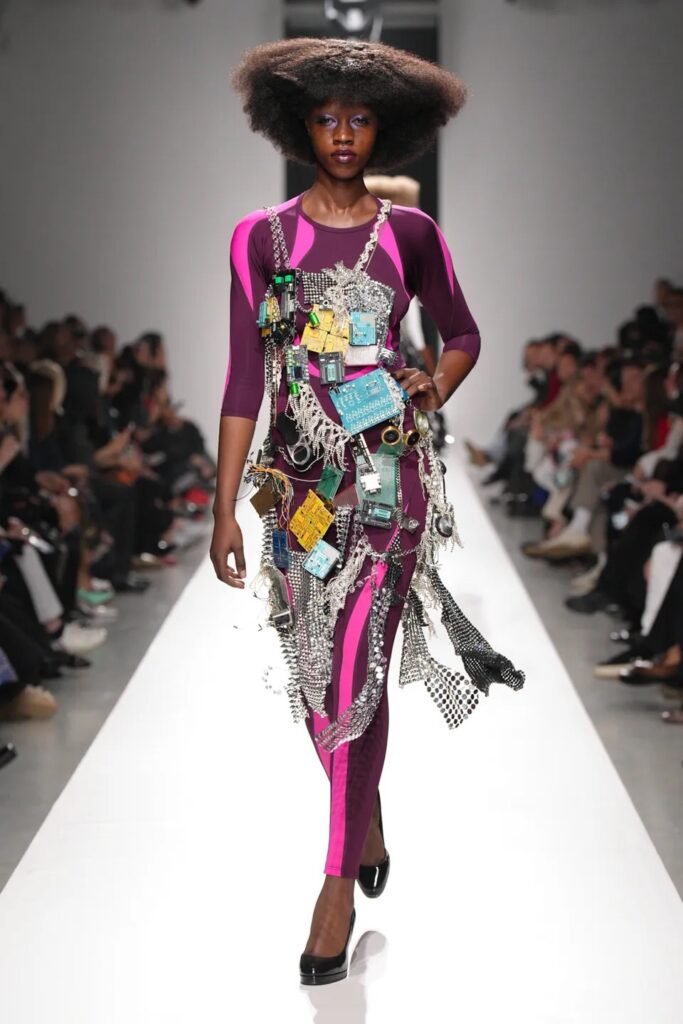
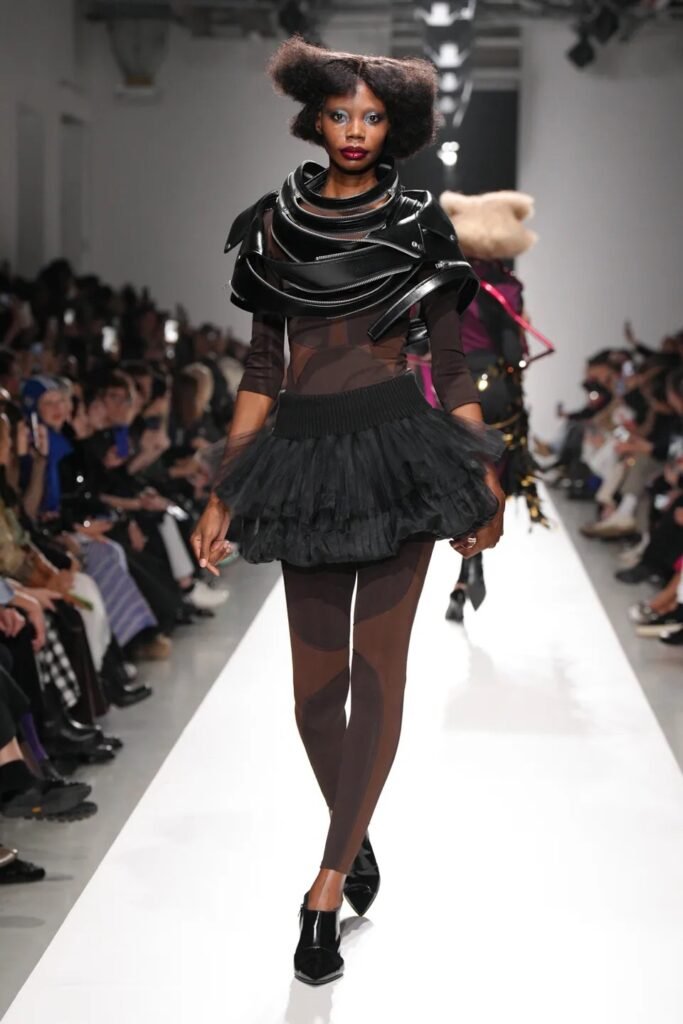
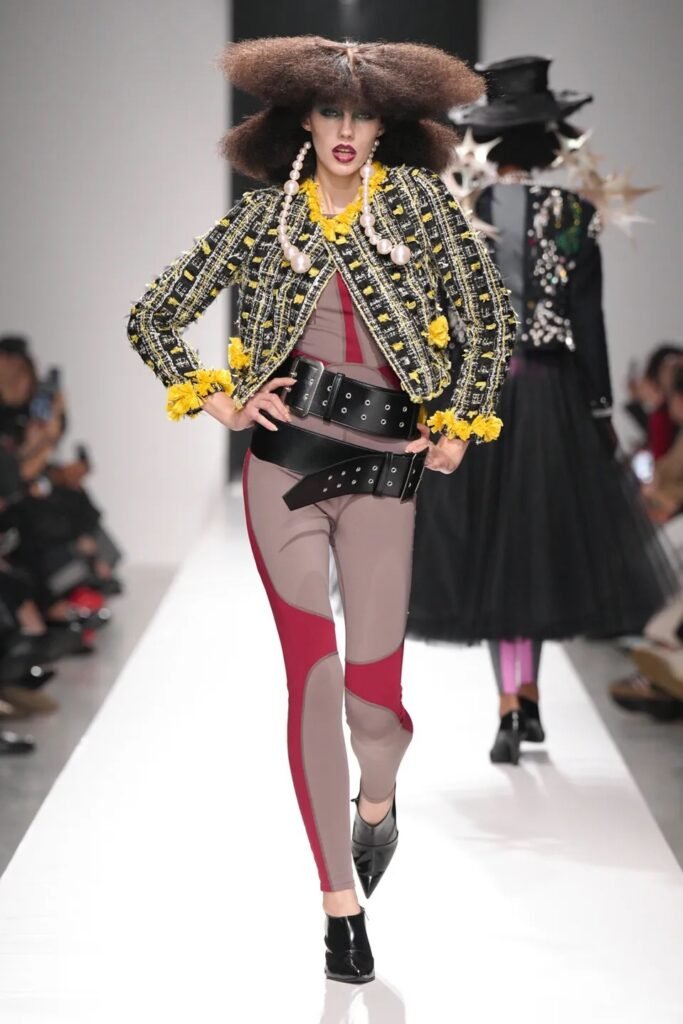
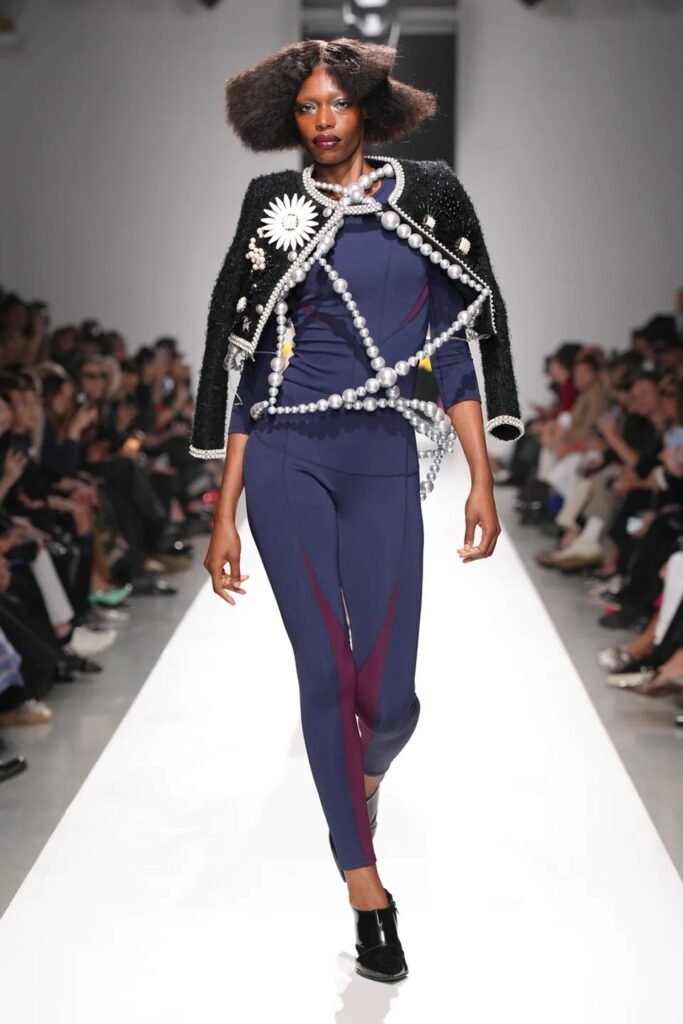
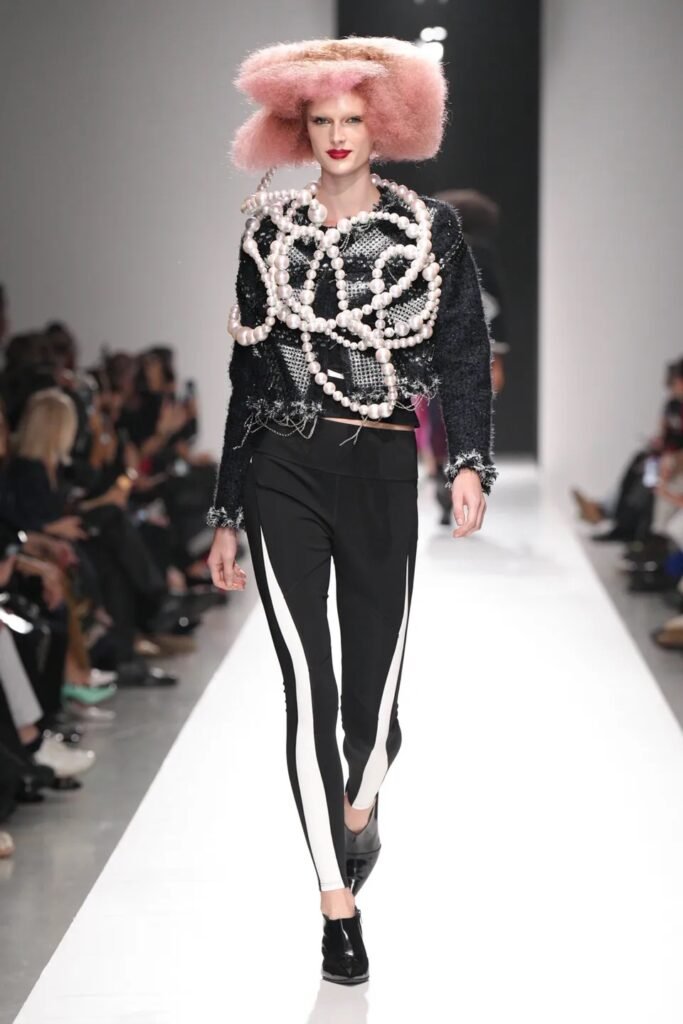
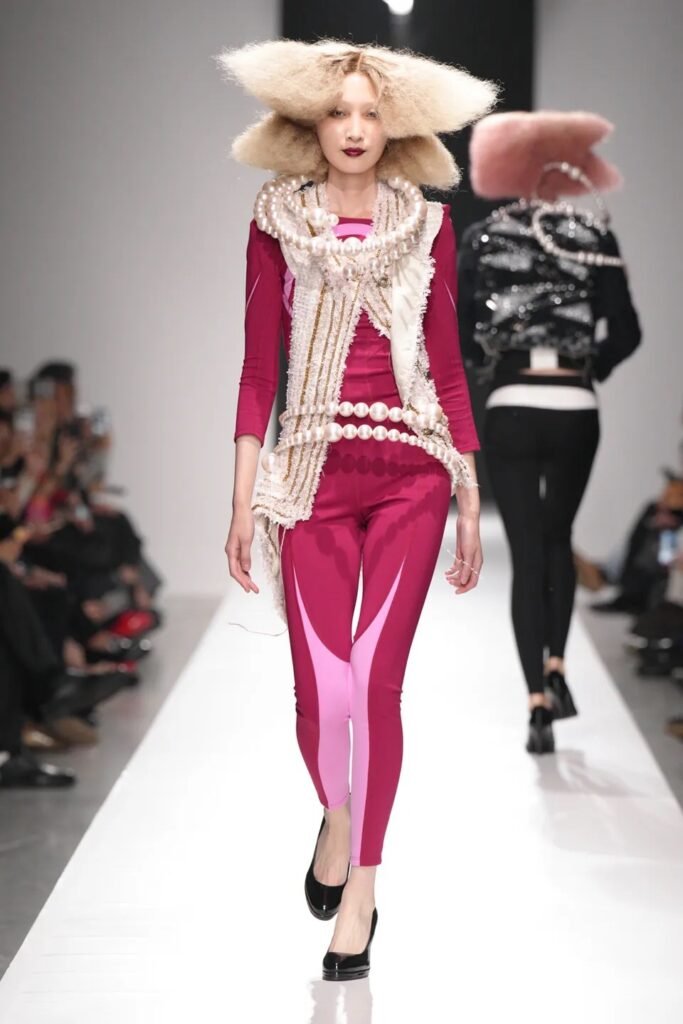
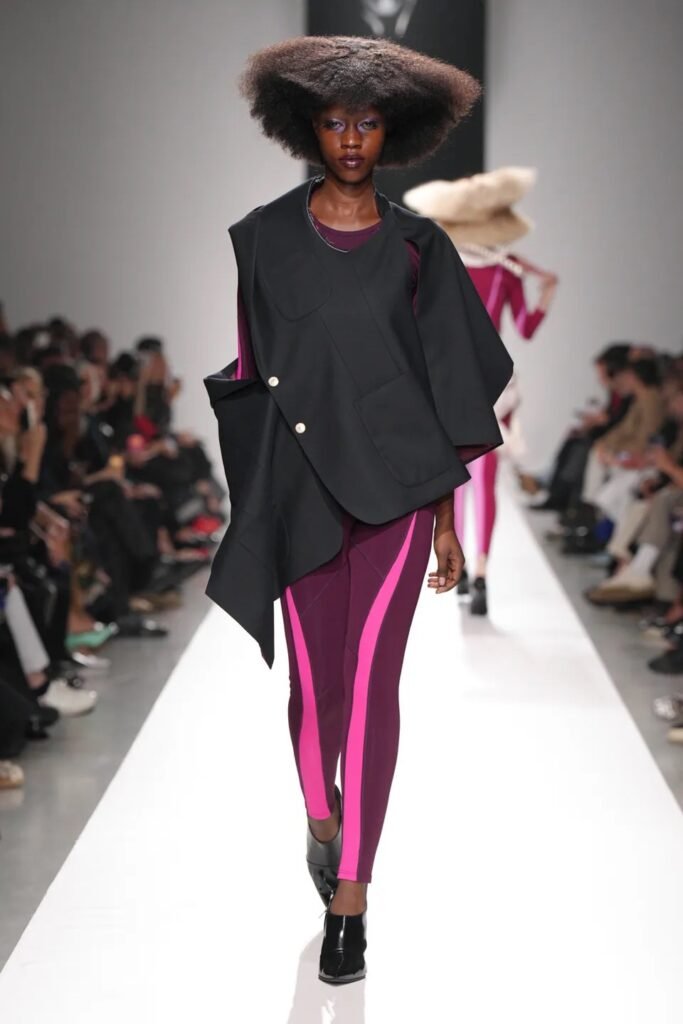
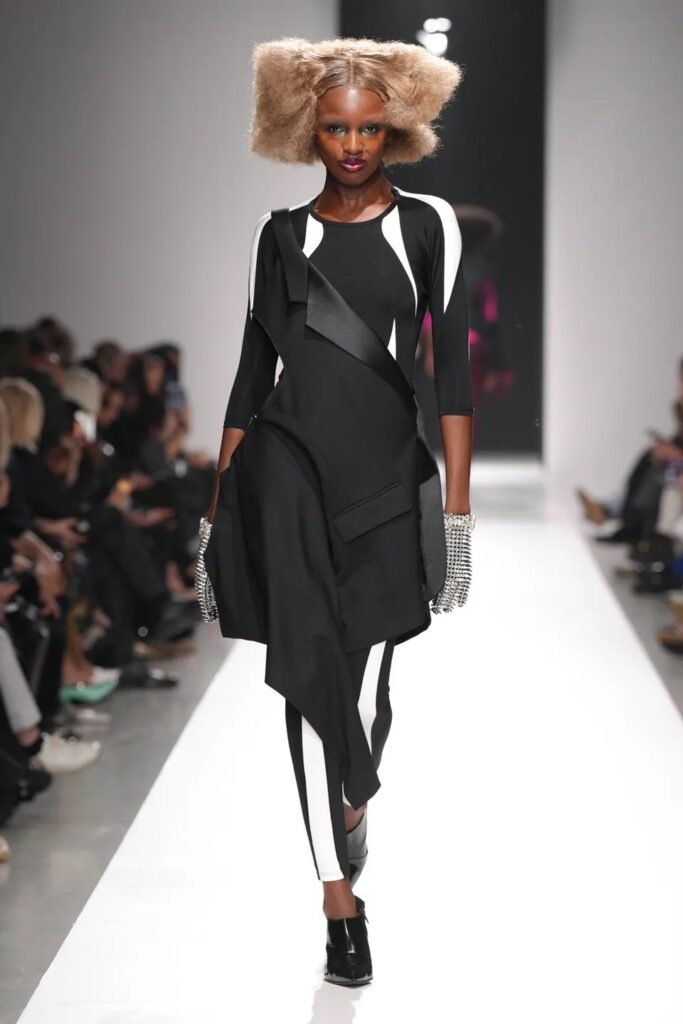
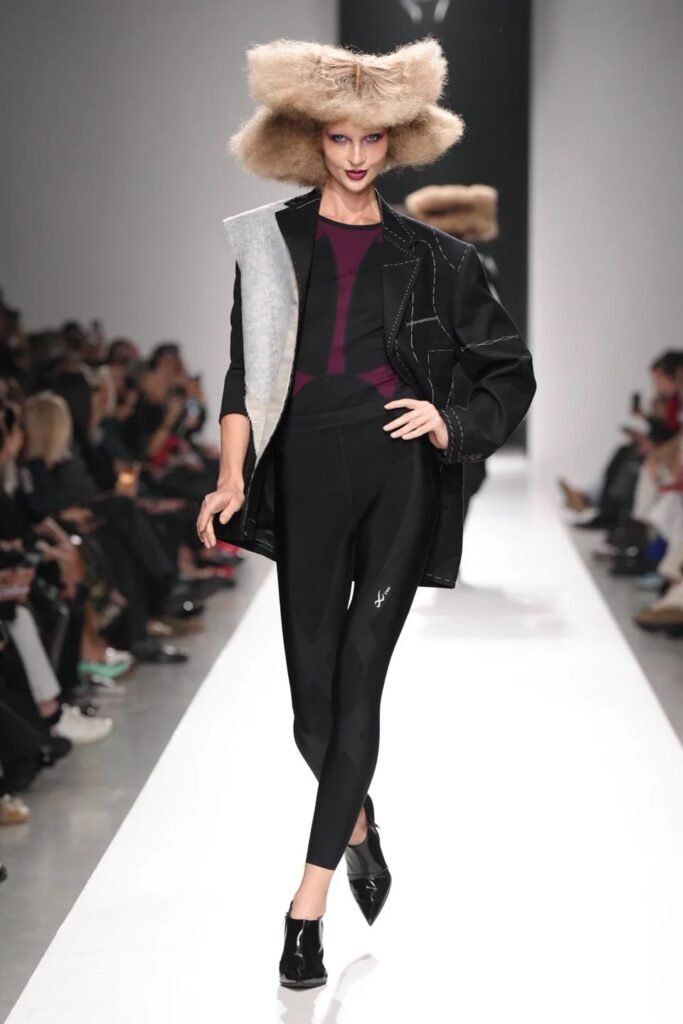
Presented during Paris Fashion Week, the Spring 2027 collection unfolded as a spectacular study in reconstruction. Catsuits became canvases, biker jackets were deconstructed, tailoring was pulled apart and reconfigured, while pearls, chains, metal, mesh and circuitry turned conventional garments into sculptural objects.
The result was a collection that felt simultaneously rebellious and glamorous—part punk wardrobe, part futuristic armor, part couture fantasy.
A Collection Called “Funky”
Junya Watanabe has always approached fashion as a process of transformation. Rather than simply creating beautiful clothes, the Japanese designer questions what garments can become when their familiar structures are disrupted.
For Spring 2027, that philosophy was pushed into especially theatrical territory.
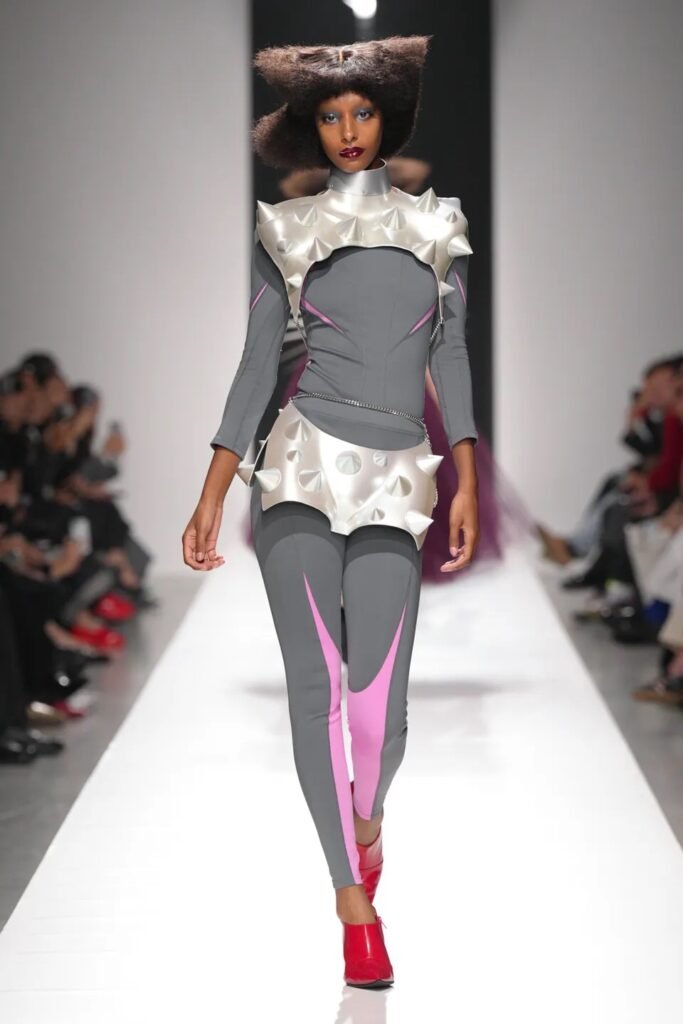
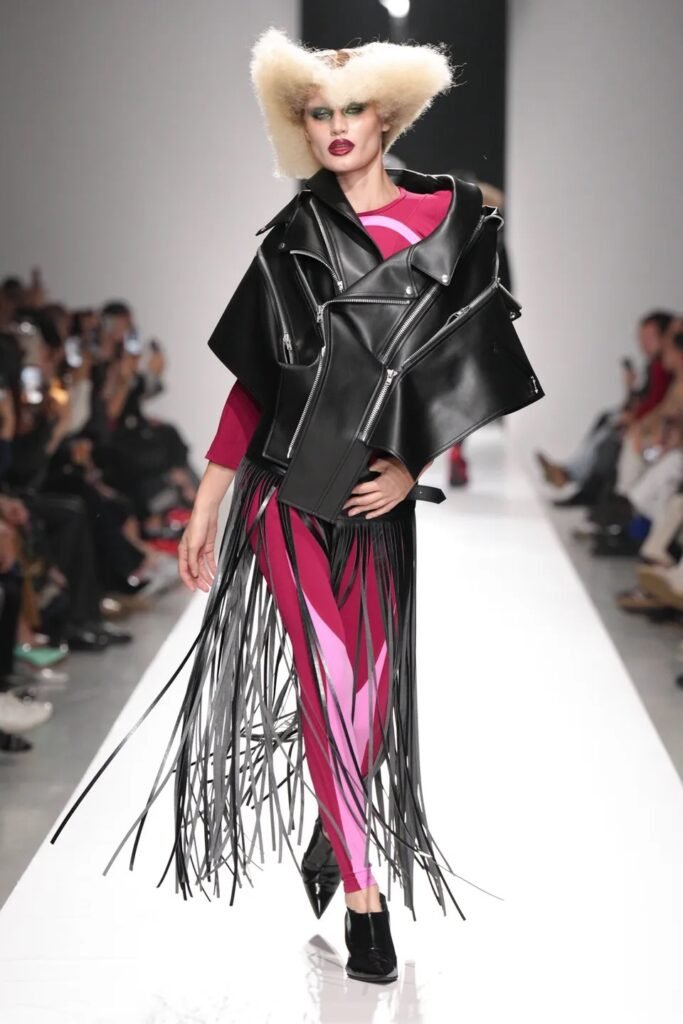
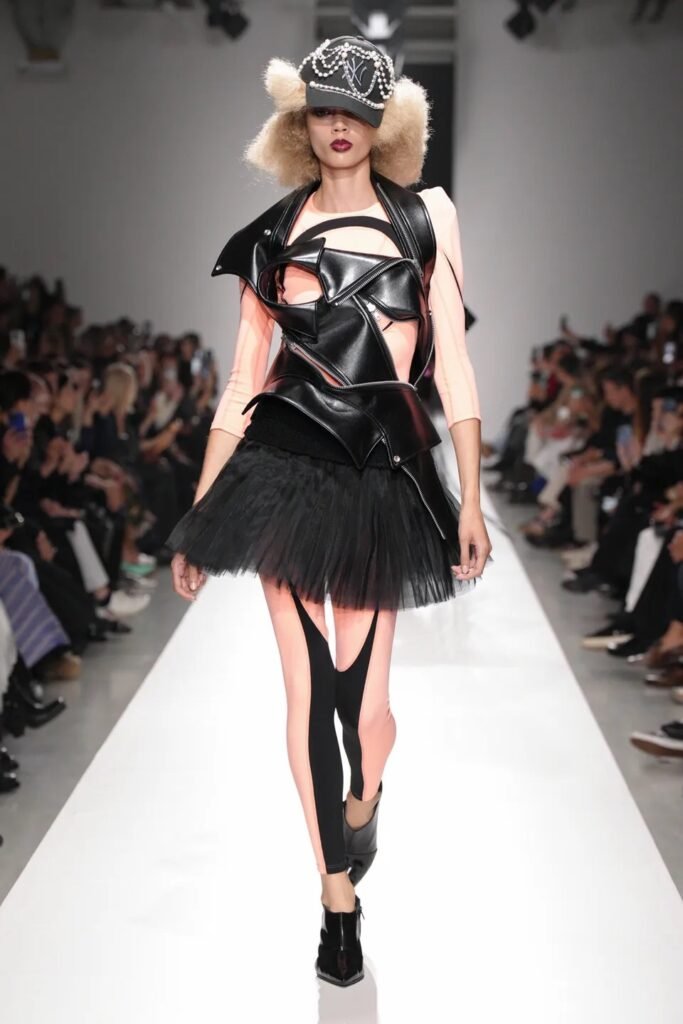
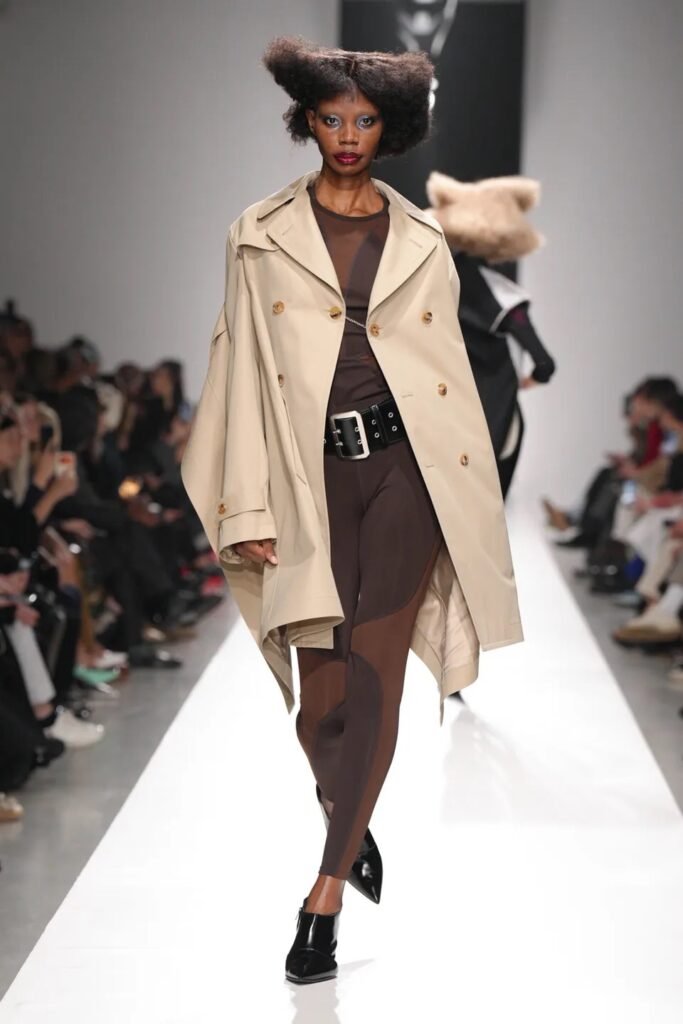
The collection was titled “Funky,” and its spirit was immediately apparent. Watanabe took recognizable garments and objects and challenged their traditional identities. Catsuits served as foundations for new silhouettes, while conventional biker jackets, trench coats, tailored jackets and tweed were stripped of their expected proportions and reconstructed.
It was fashion as creative destruction.
Yet there was nothing careless about the experimentation. Every exaggerated proportion, exposed construction and unexpected material felt carefully engineered.
Punk Meets Couture
One of the collection’s most compelling ideas was its tension between punk and couture.
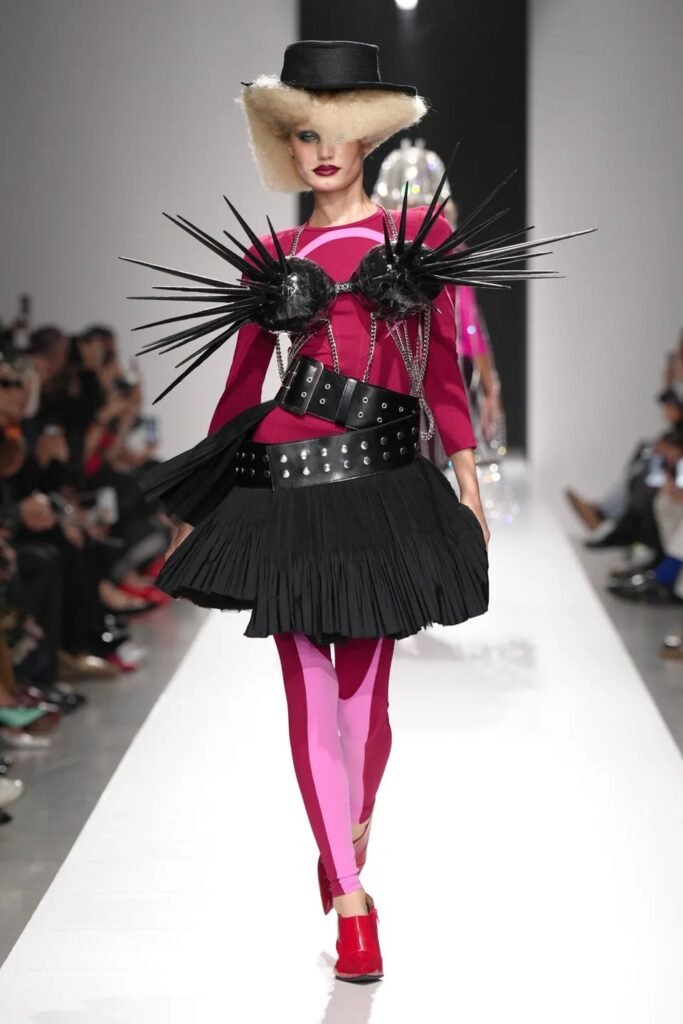
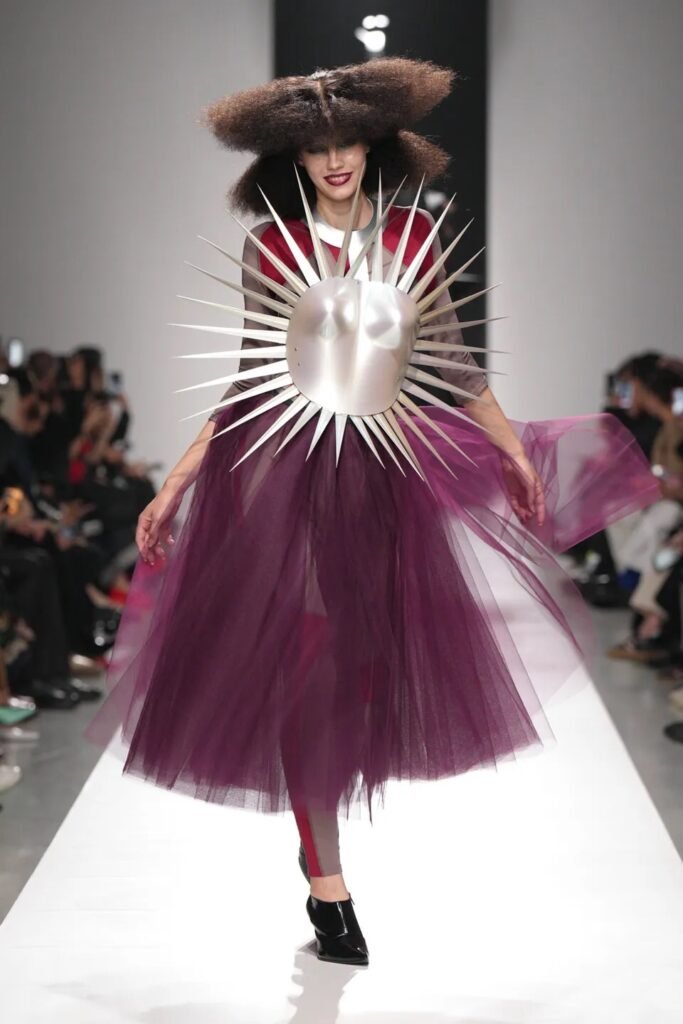
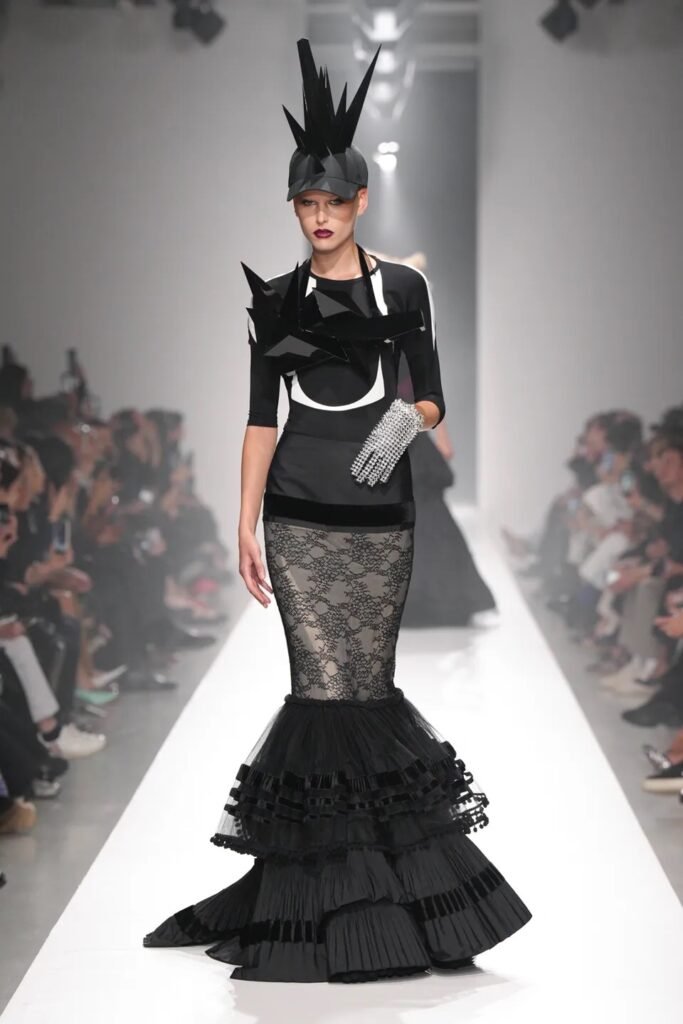
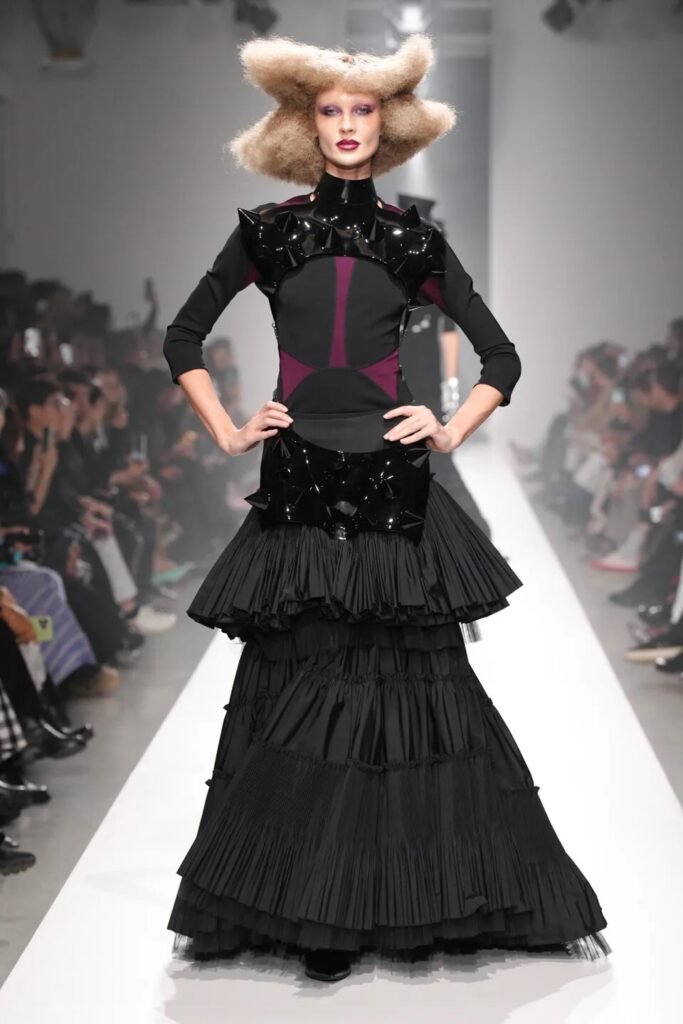
Watanabe has never been interested in keeping those worlds separate. Instead, Spring 2027 brought them together through oversized hardware, dramatic silhouettes, corsetry, metallic surfaces and elaborate embellishment.
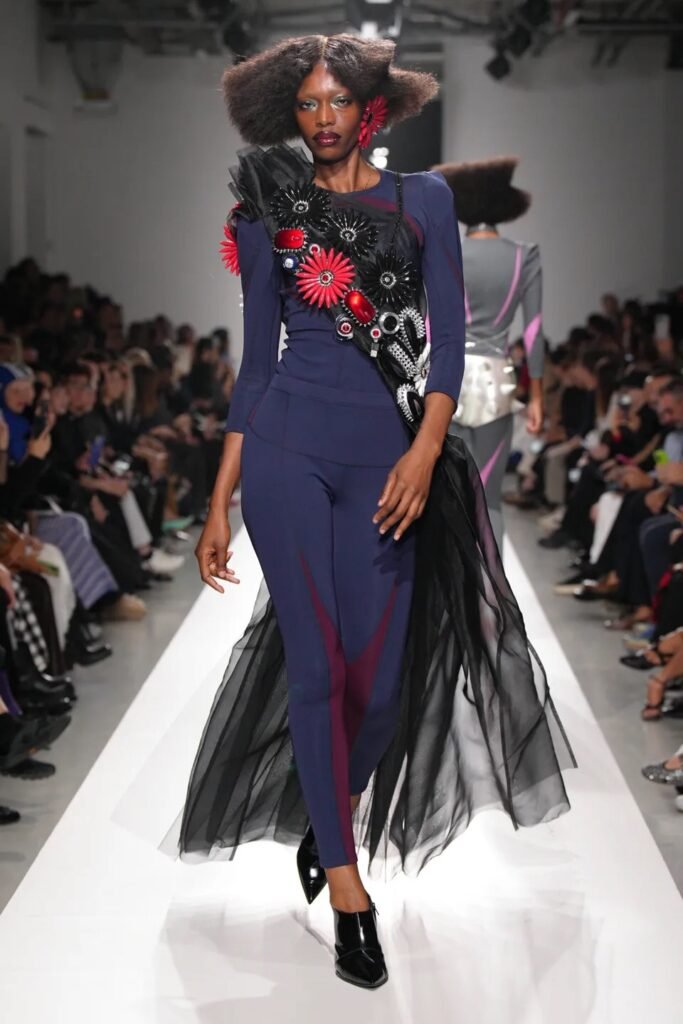
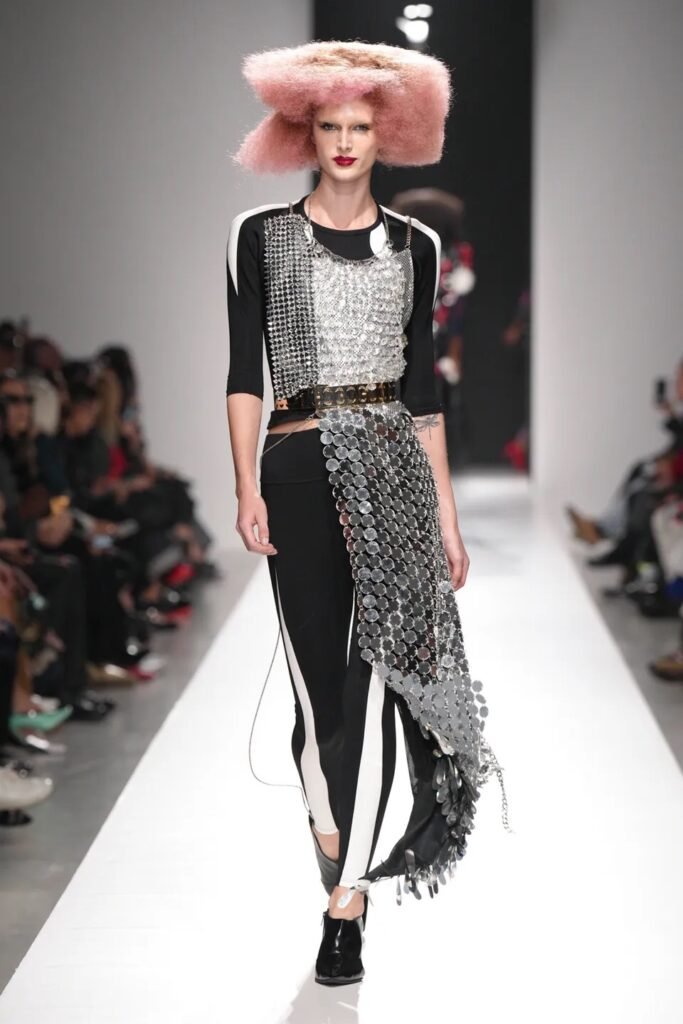
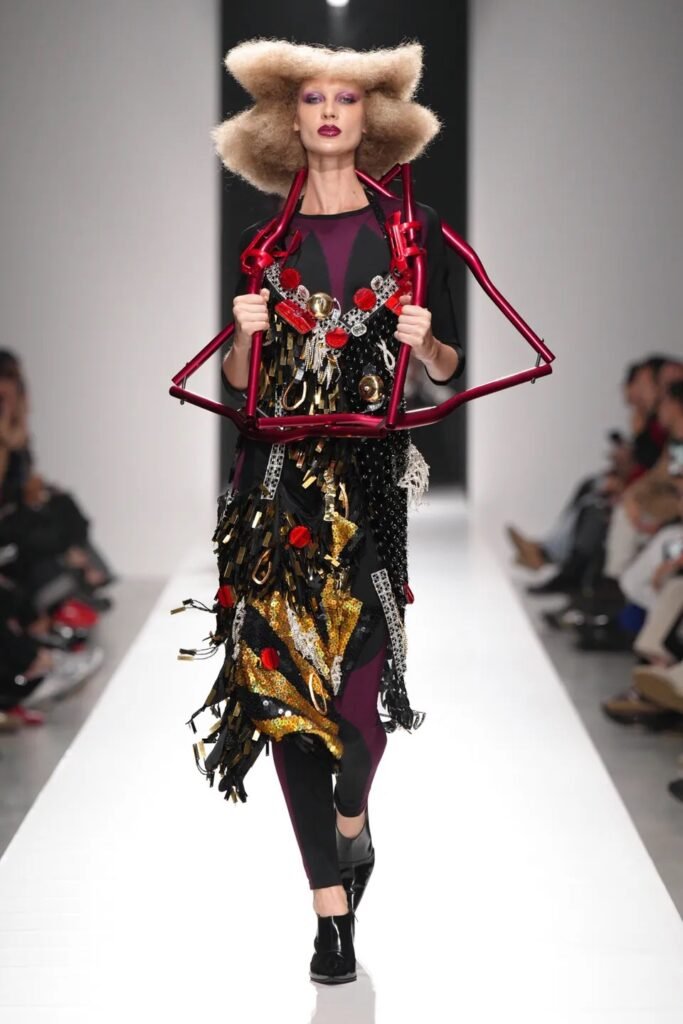
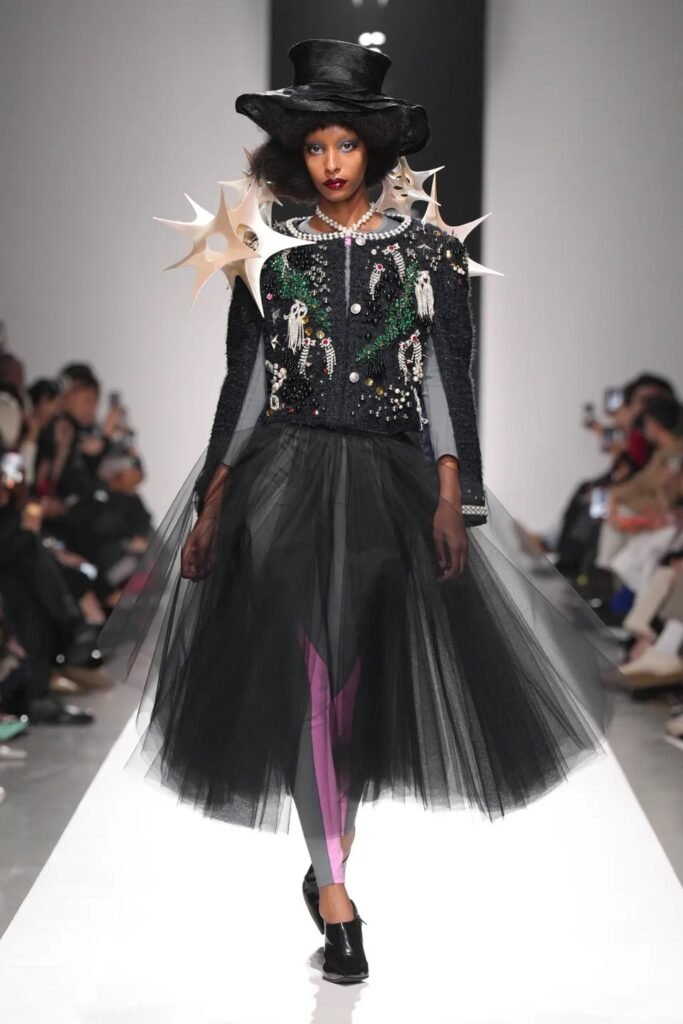
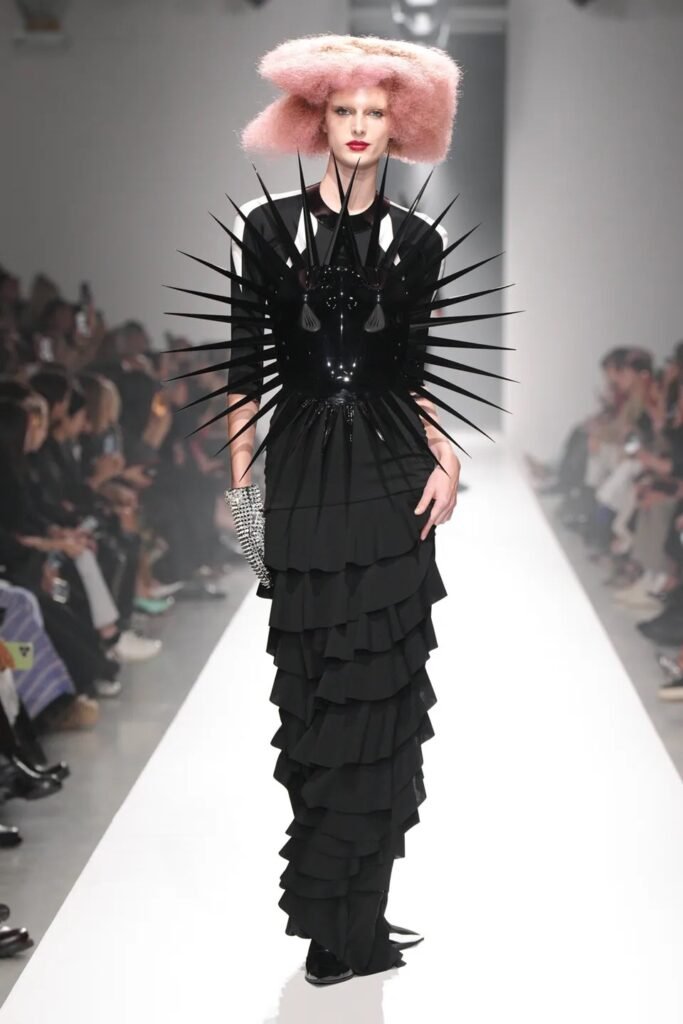
A metallic breastplate erupted into a spectacular starburst of spikes, transforming the body into something resembling futuristic armor. Elsewhere, what looked like the framework of a bicycle wrapped around the torso, while circuit boards, wires, chains and mesh were assembled into an entirely new kind of dress.
These weren’t simply decorative details. They became structural elements.
That distinction is important to understanding Watanabe’s work: decoration becomes architecture, and architecture becomes fashion.
The Reinvention of the Biker Jacket
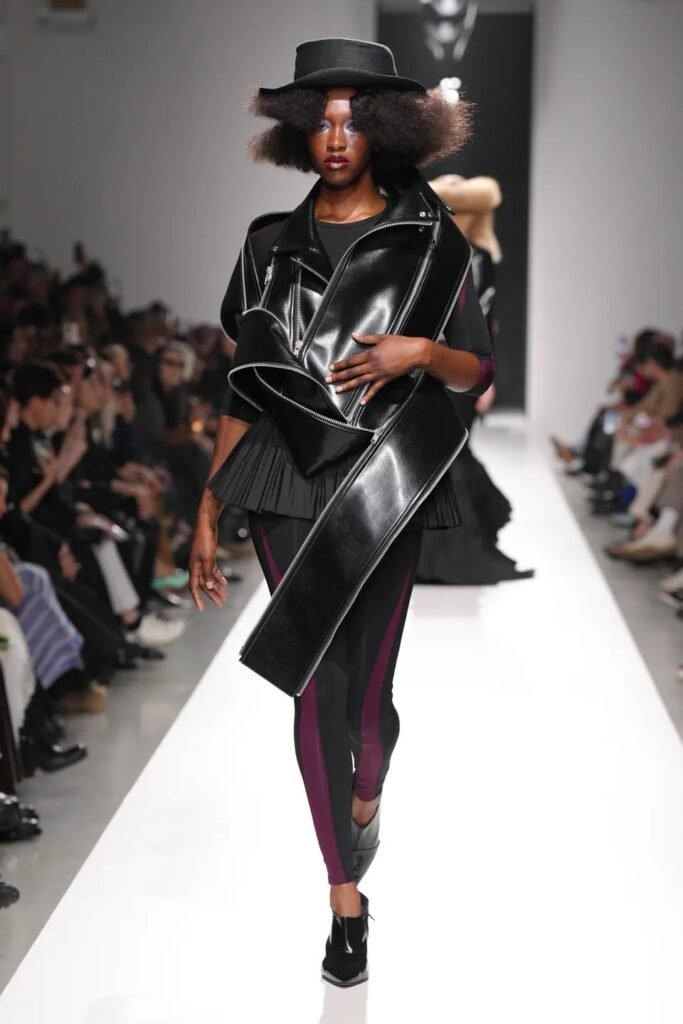
The biker jacket—one of fashion’s most enduring symbols of rebellion—received a particularly Watanabe-like treatment.
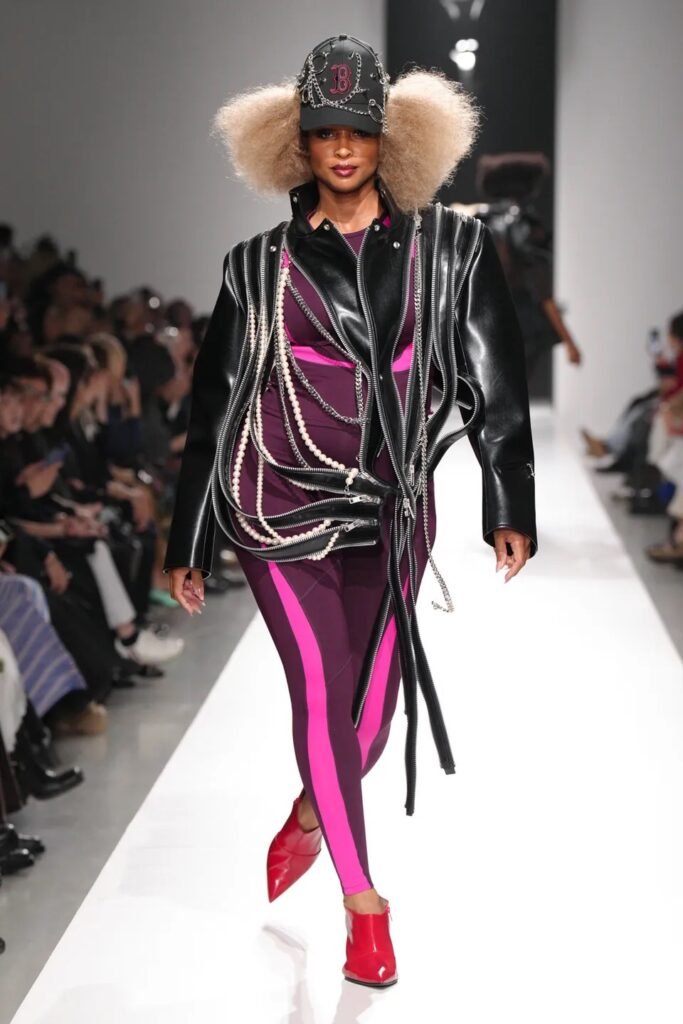
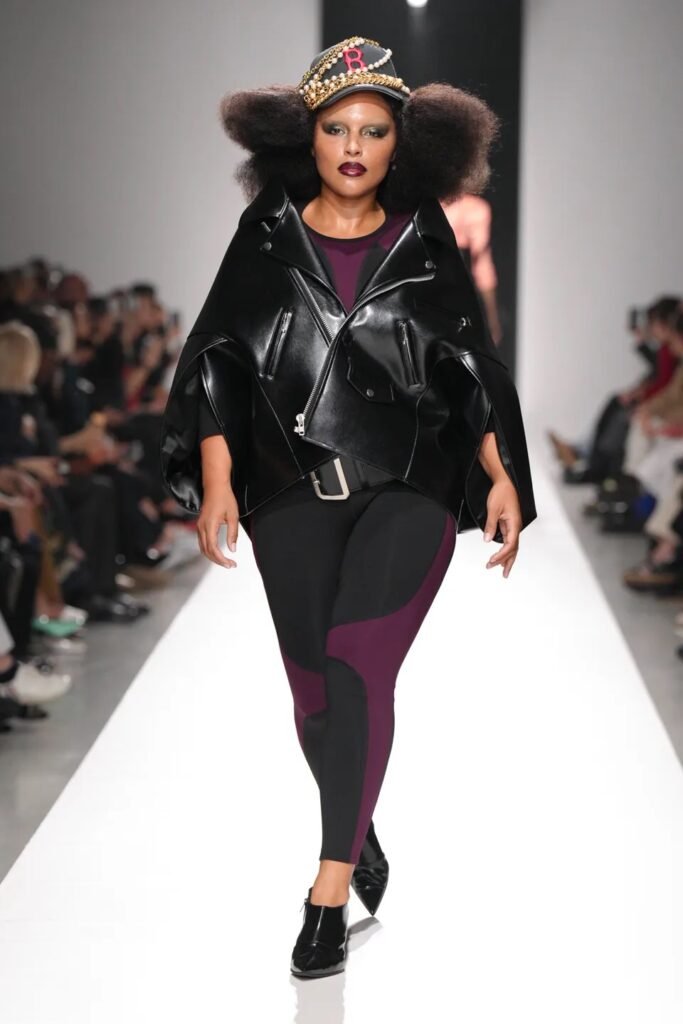
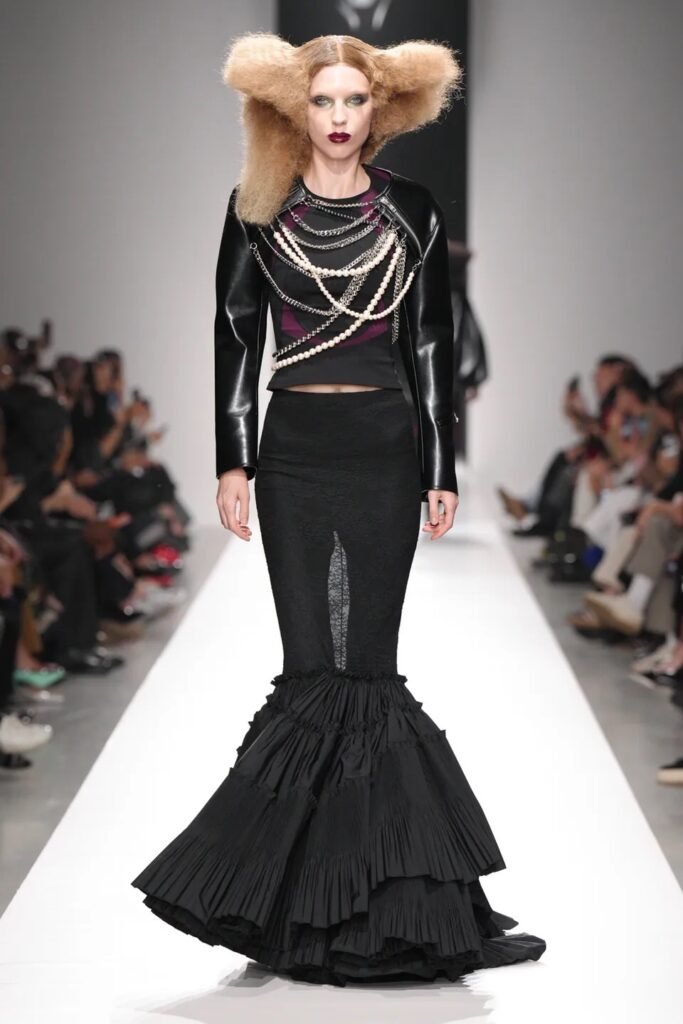
Rather than leaving the familiar leather jacket intact, the designer dismantled its traditional construction. Zippers and panels were shifted away from their functional positions, while pearls were applied in unexpected quantities and proportions.
The result was a garment that still communicated the rebellious spirit of the biker jacket while appearing almost alien.
This approach perfectly captured the philosophy of the collection: take something everyone recognizes and make them see it differently.
Pearls Get Punk
Pearls traditionally communicate refinement, femininity and old-world luxury. Watanabe turned that language upside down.
Cropped tweed jackets reminiscent of classic Chanel-inspired tailoring were covered with dramatically oversized pearls. Pearls also migrated onto biker jackets, creating an unexpected meeting between polished elegance and underground rebellion.
It was one of the collection’s smartest visual contradictions.
The pearl was no longer merely a jewel. It became hardware.
The familiar codes of luxury were retained but radically altered, giving the garments an almost industrial quality.
From Fast and Funky to Dramatic and Romantic
The Spring 2027 show was divided into two distinct sections, with the music helping establish the transition.
The first section was energized by Chaka Khan’s “Like Sugar,” creating a lively, glamorous atmosphere. Models embraced exaggerated runway attitudes, playful expressions and theatrical gestures reminiscent of the high-glamour runway era associated with Pat Cleveland.
The second section shifted into a slower, more elegant mood with Michael Jackson’s “I Just Can’t Stop Loving You.”
The change in soundtrack transformed the atmosphere.
What began as energetic punk glamour gradually evolved into something more stately and couture-like. The silhouettes became longer, more dramatic and more restrained, demonstrating Watanabe’s ability to move between extremes without losing the identity of the collection.
Trench Coats Become Sculptural Dresses
Watanabe also revisited classic tailoring.
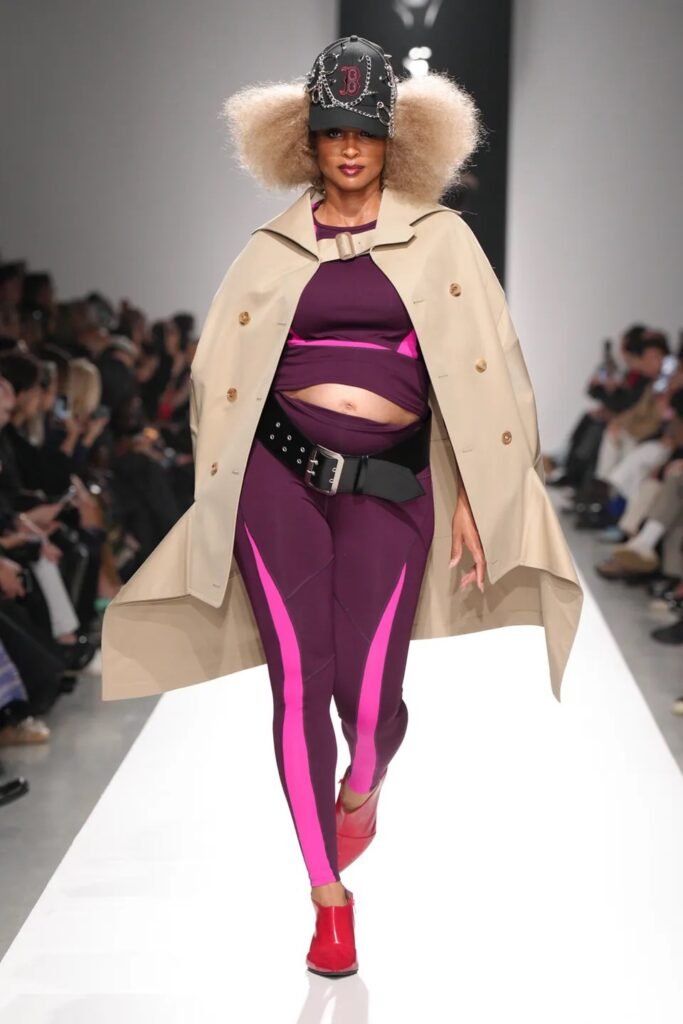
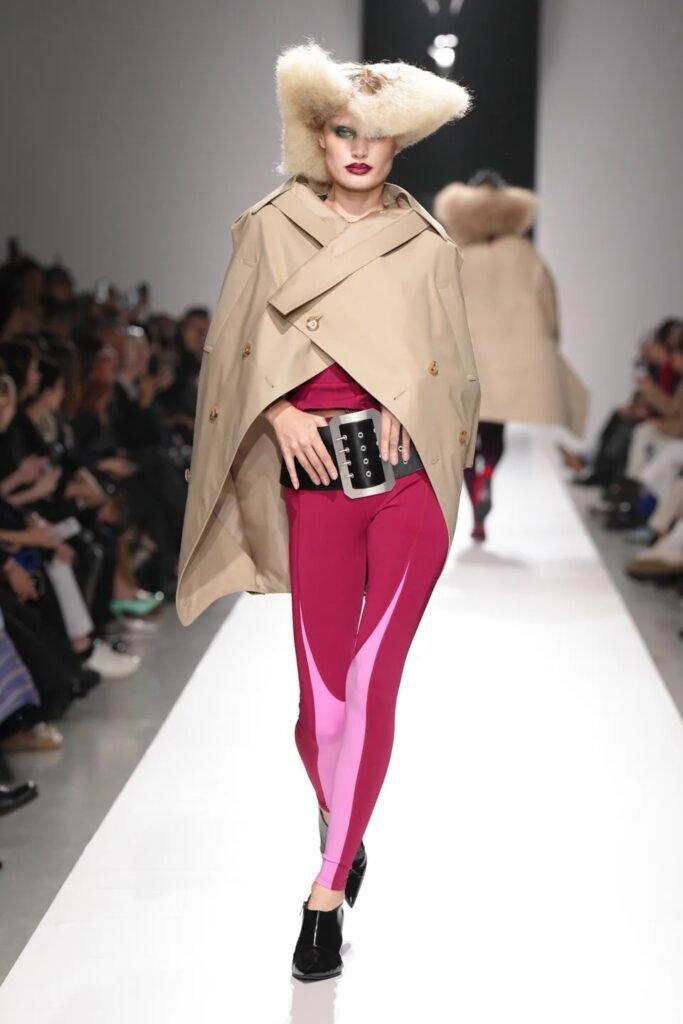
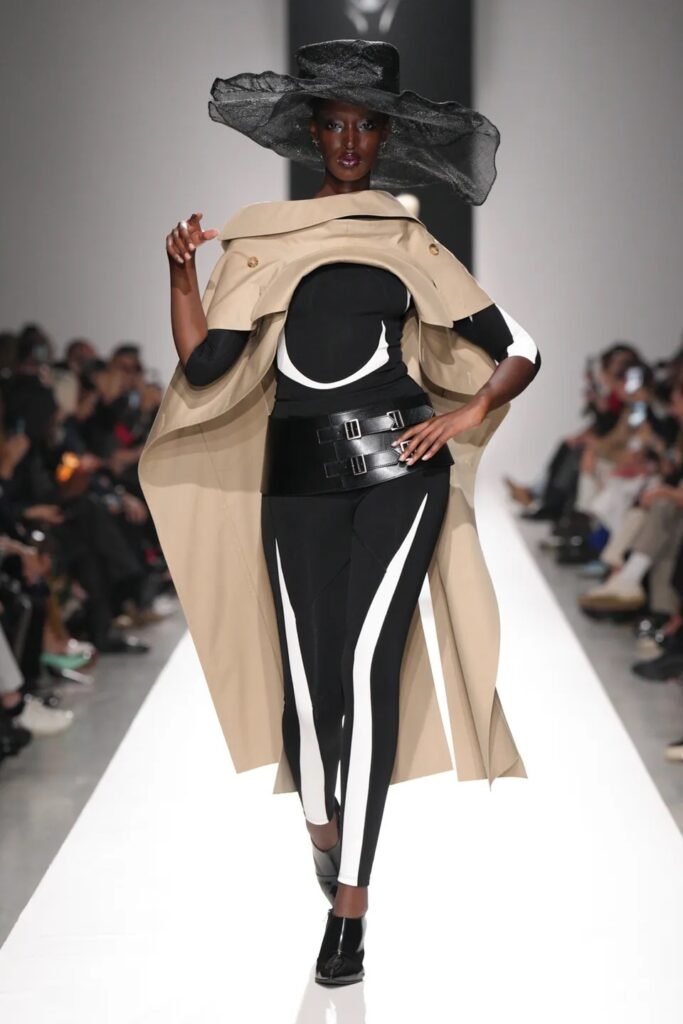
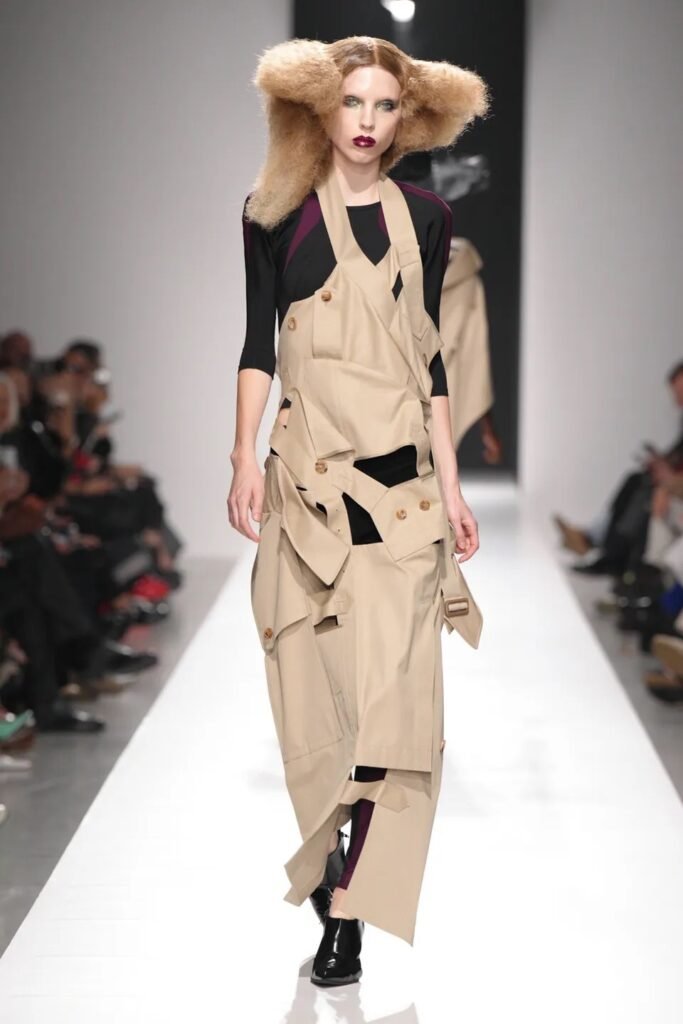
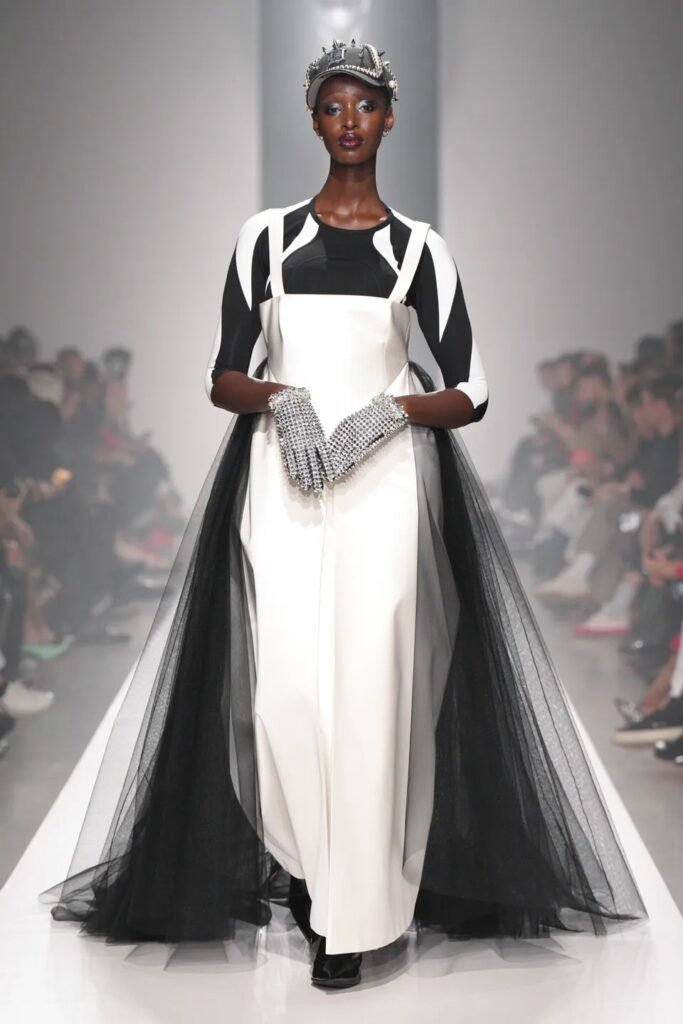
Trench coats were transformed into dresses and capes, while tailored jackets were dismantled and reconstructed into new silhouettes. Familiar pieces were therefore stripped of their conventional functions and given entirely different identities.
The transformation was especially striking because these garments remained recognizable.
You could still see the trench coat.
You could still identify the tailored jacket.
But they had become something else.
That tension between recognition and reinvention is at the heart of Junya Watanabe’s design language.
Exposed Corsetry and the Body
The second half of the collection introduced a more dramatic exploration of the body.
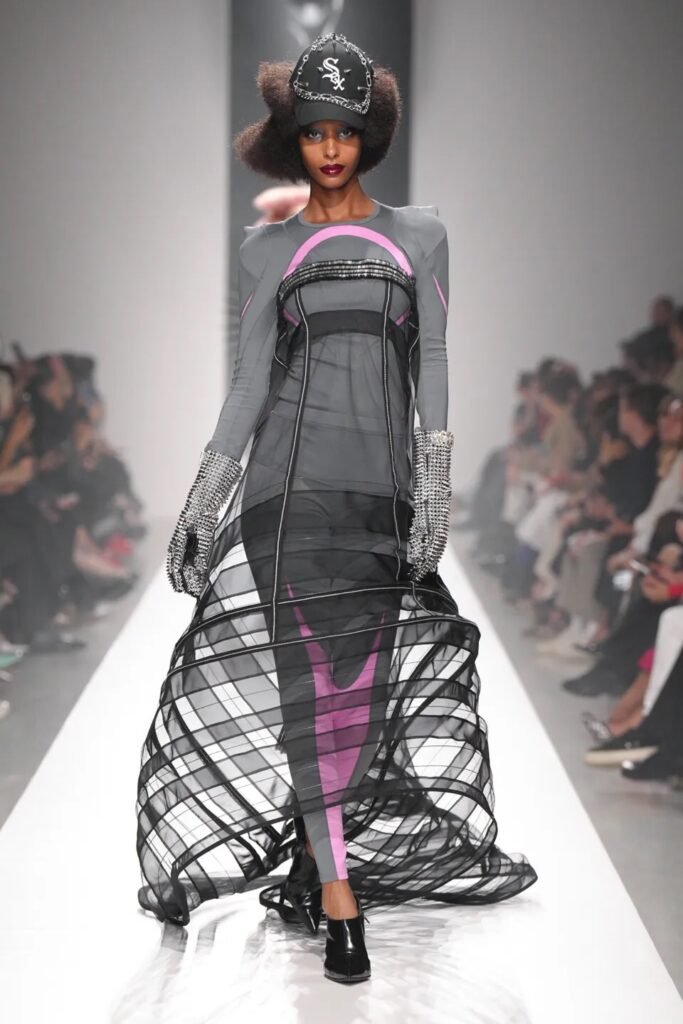
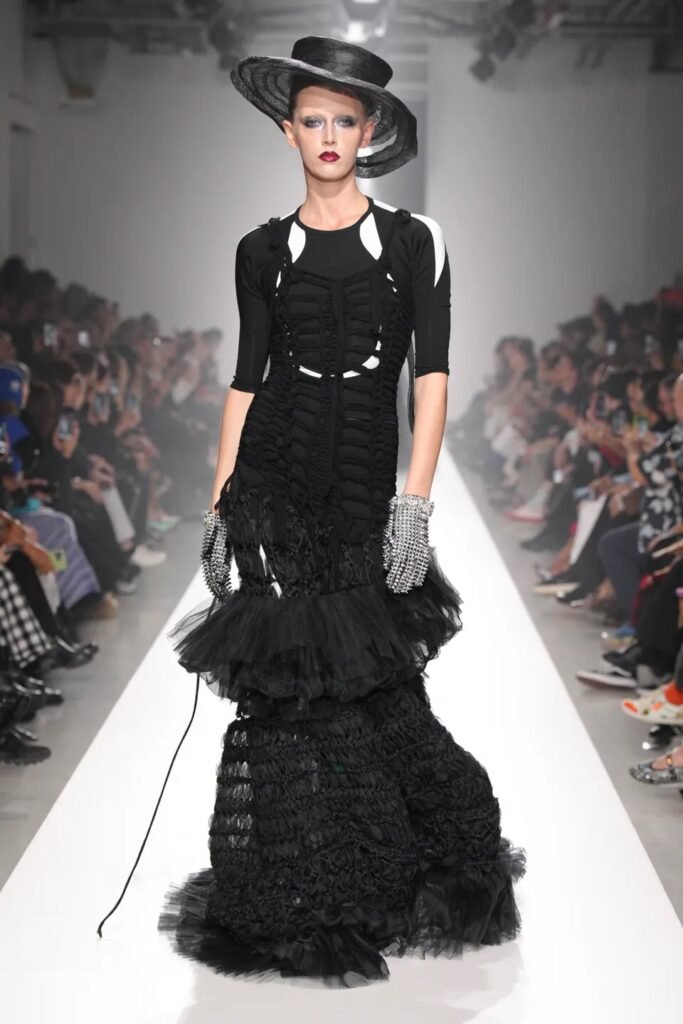
Long dresses appeared almost as though they had been X-rayed, with corsetry and boning visibly defining the silhouettes. Crochet knits traced the torso like an external rib cage, emphasizing the relationship between clothing and anatomy.
Rather than hiding construction, Watanabe celebrated it.
The internal architecture of clothing became the visual focus.
This made the garments feel simultaneously delicate and powerful—almost like fashion specimens placed under examination.
Ciara Steals the Runway
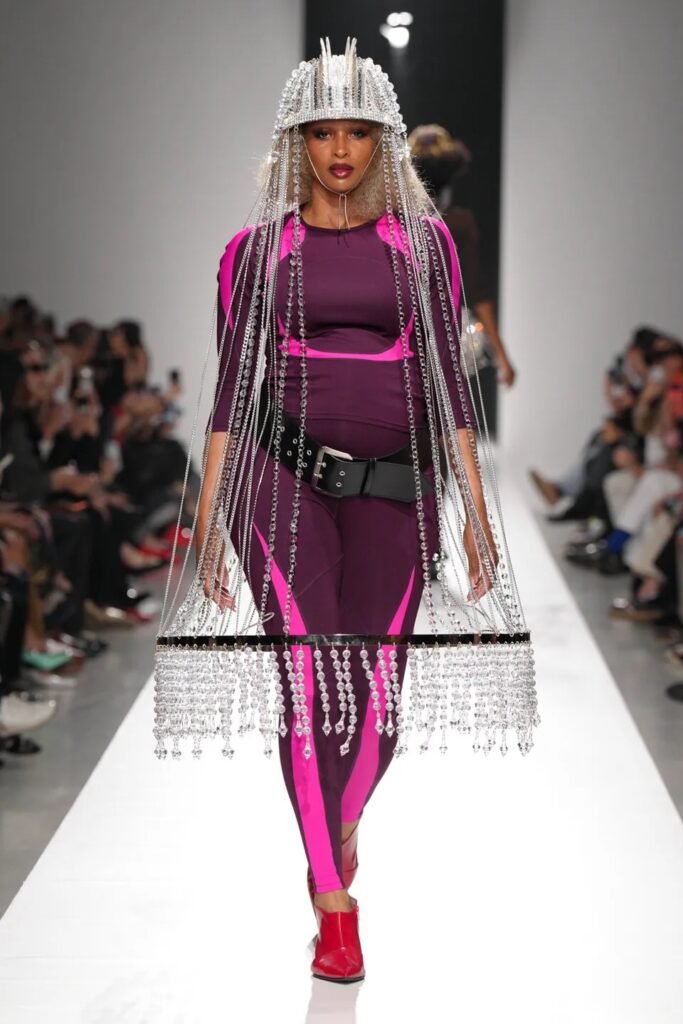
One of the biggest moments of the show came courtesy of Ciara, who made a memorable runway appearance while pregnant.
Her three looks demonstrated the collection’s extraordinary range.
She appeared first in a chandelier-inspired harness dress, followed by a dramatically deconstructed biker jacket and finally a trench-inspired cloak.
The appearance quickly became one of the standout moments of Paris Fashion Week.
Ciara’s presence also reinforced the collection’s central idea: strength, glamour and transformation can exist simultaneously.
Her confident runway presence brought an unmistakable celebrity energy to Watanabe’s experimental world.
A Continuation of Watanabe’s Creative Universe
Spring 2027 did not exist in isolation.
The collection felt connected to Watanabe’s recent womenswear and menswear explorations. Vogue described it as an evolution of the ideas behind the previous womenswear collection, “The Art of Assemblage Couture,” and the Spring 2027 menswear collection, “Bling.”
That connection becomes particularly interesting when looking at the accessories.
The embellished Red Sox cap worn by Ciara, customized by Kota Okuda, echoed the extravagant baseball-cap language explored in the designer’s Spring 2027 menswear collection.
Across both collections, Watanabe has been exploring how seemingly unrelated cultural references can coexist.
Sportswear meets tailoring.
Punk meets couture.
Streetwear meets luxury.
Functional garments become sculptural objects.
And everyday materials become extraordinary fashion.
Eugene Souleiman and Isamaya Ffrench Complete the Vision
The clothes were only one part of the visual language.
Hair by Eugene Souleiman and makeup by Isamaya Ffrench helped heighten the collection’s theatrical quality. The beauty direction reinforced the show’s movement between exaggerated glamour and more controlled, almost artificial elegance.
Together with the dramatic clothing, the beauty looks made the runway feel less like a conventional fashion presentation and more like a carefully constructed performance.
This was especially important because Watanabe was not only experimenting with clothes—he was experimenting with the language of the runway itself.
Why Junya Watanabe Spring 2027 Matters
At a time when fashion can sometimes feel increasingly repetitive, Watanabe’s Spring 2027 collection offered something different: genuine reinterpretation.
Instead of simply revisiting archival codes, the designer questioned what those codes could become.
The Chanel-inspired tweed jacket became punk.
The pearl became hardware.
The biker jacket became sculpture.
The trench coat became a dress.
Corsetry became visible architecture.
And industrial components became embellishment.
That approach gives the collection its relevance.
Watanabe isn’t interested in nostalgia for nostalgia’s sake. He takes familiar ideas and forces them into unfamiliar territory.
The Future of Fashion Through Reconstruction
Junya Watanabe Spring 2027 ultimately feels like an argument for experimentation.
Its brilliance comes from the designer’s refusal to accept clothing at face value. A jacket does not have to remain a jacket. A pearl does not have to remain delicate. A trench coat does not have to remain outerwear.
Everything can be taken apart.
Everything can be reconstructed.
Everything can become something new.
That philosophy has been central to Watanabe’s career, but Spring 2027 gives it an especially expressive form. The collection’s mixture of punk hardware, couture references, futuristic materials, exaggerated proportions and glamorous performance created a world that felt both familiar and completely unexpected.
In a fashion landscape increasingly fascinated by archives and heritage, Junya Watanabe offered another possibility: don’t simply reproduce the past—destroy it, rebuild it and make it yours.
And that is precisely what made his Spring 2027 collection one of the most exciting shows of Paris Fashion Week.
Junya Watanabe Spring 2027 Ready-to-Wear proves that the future of fashion may not be about inventing entirely new ideas, but about seeing familiar ones in an entirely new way.