
By Nkwo Onwuka
At a time when the fashion industry is increasingly reconsidering its relationship with consumption, waste, and craftsmanship, Nigerian designer Nkwo Onwuka continues to explore how fashion can become part of a more sustainable future. For Spring 2027, the designer presents a collection that places innovation, personal storytelling, and textile transformation at the centre of its creative direction.
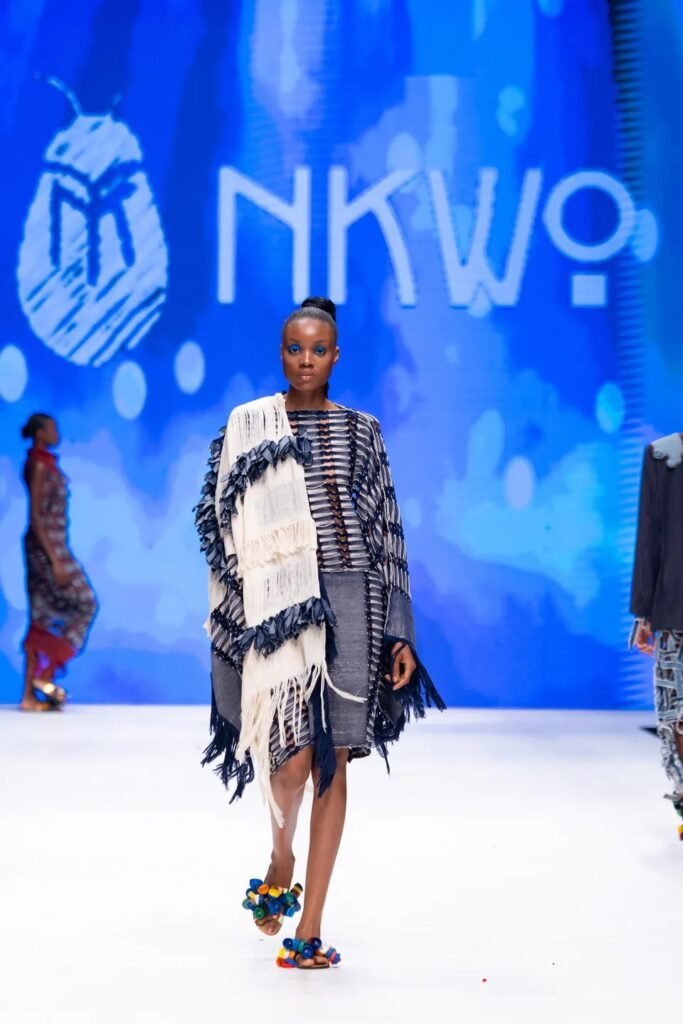
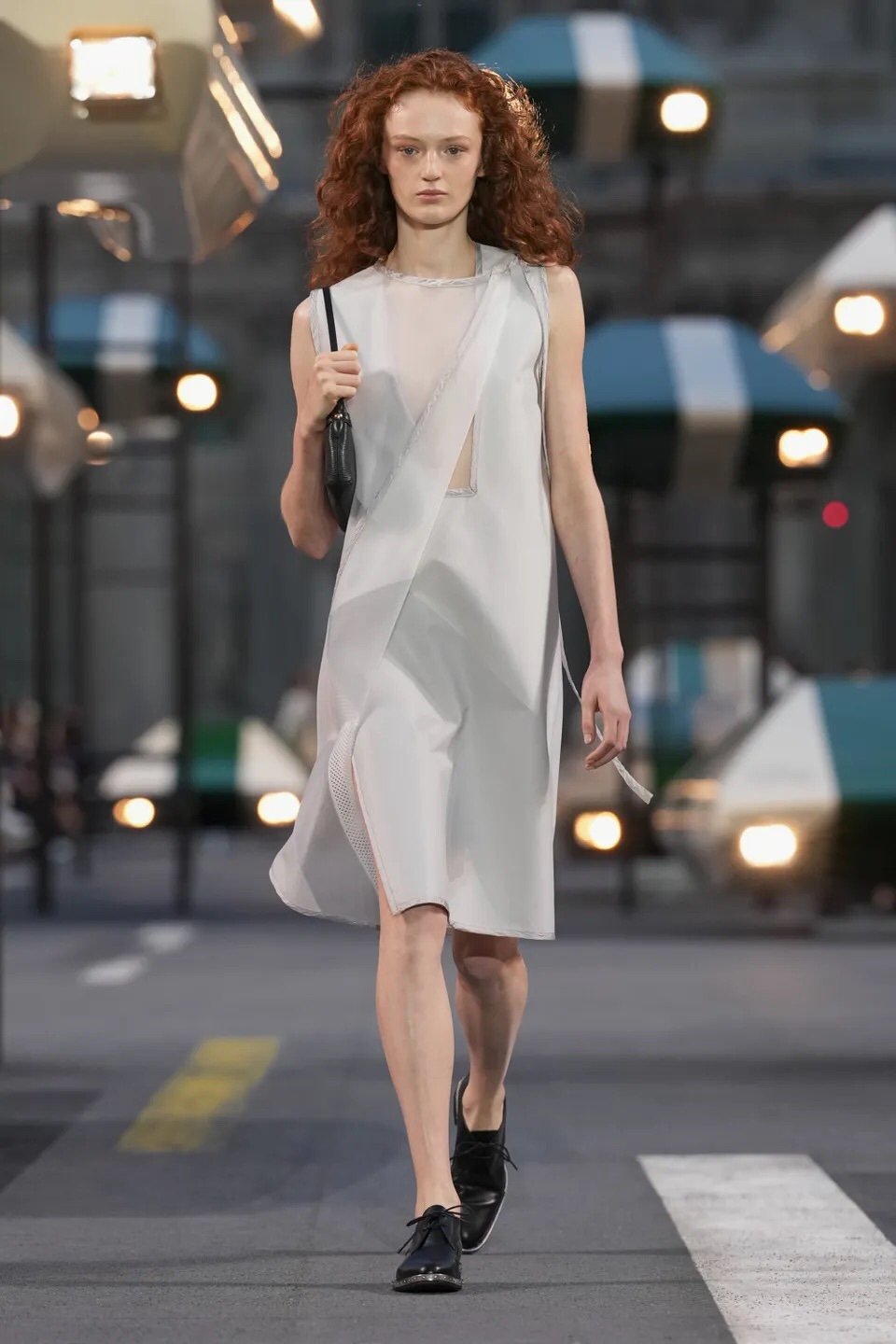
Presented during Lagos Fashion Week, the collection, titled Journey to Less, is an exploration of movement, resourcefulness, and the possibilities of giving existing materials a new identity. Rather than approaching sustainability as a limitation, Nkwo uses it as an opportunity to reconsider how garments are created, constructed, and experienced.
The result is a thoughtful collection that brings together upcycled denim, traditional Nigerian textile techniques, reconstructed garments, and contemporary silhouettes, demonstrating how responsible design can coexist with a strong fashion identity.
The Inspiration Behind Journey to Less
The creative direction of Nkwo‘s Spring 2027 collection began with a personal story. The designer drew inspiration from her nephew’s remarkable 40 day road trip from Amsterdam across 13 countries before arriving at his ancestral village in southeastern Nigeria.
Beyond the physical journey, the experience became a starting point for exploring connections between different places, cultures, and systems. It also encouraged Onwuka to consider how resources move, how existing materials can be repurposed, and how the fashion industry might rethink its relationship with waste.
For the designer, Journey to Less is ultimately about creating systems that make sustainability more practical and accessible.
One of the central ideas behind the collection is what Onwuka describes as reverse retail: a model in which customers can send unwanted garments to the brand and have them transformed into new designs and silhouettes.
The concept challenges the traditional relationship between consumers and their wardrobes. Instead of constantly purchasing new clothing and discarding older pieces, the designer encourages a more thoughtful approach to personal style, where existing garments can become the starting point for something entirely different.
It is an interesting proposition for an industry that continues to grapple with textile waste and overproduction.
Reimagining Denim Through Upcycling
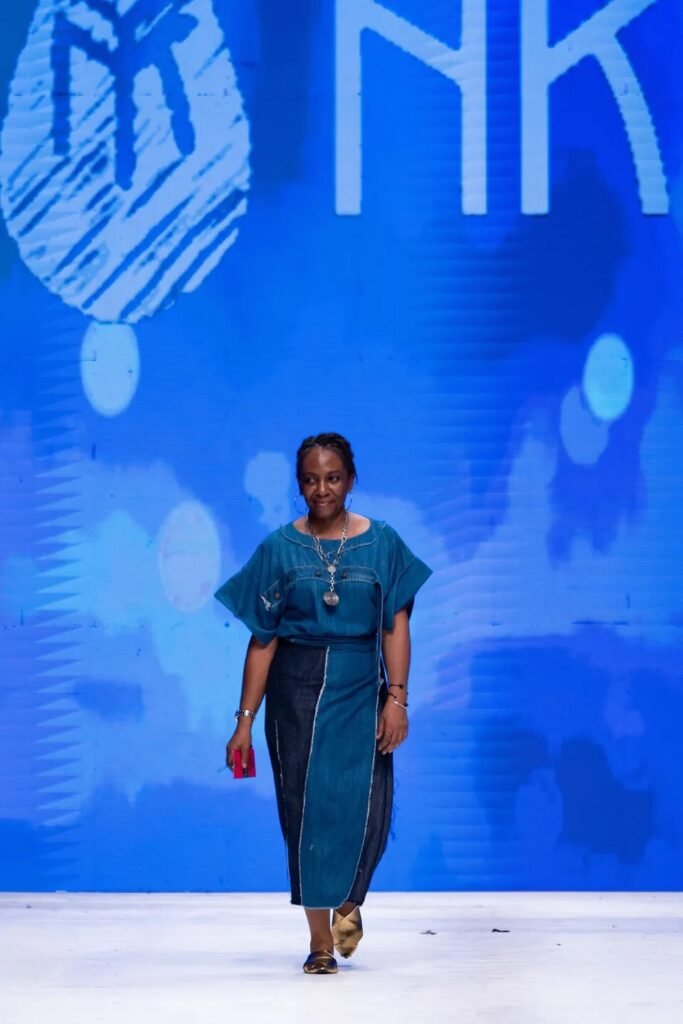
Denim takes on an important role throughout Nkwo’s Spring 2027 collection, appearing in several unexpected forms.
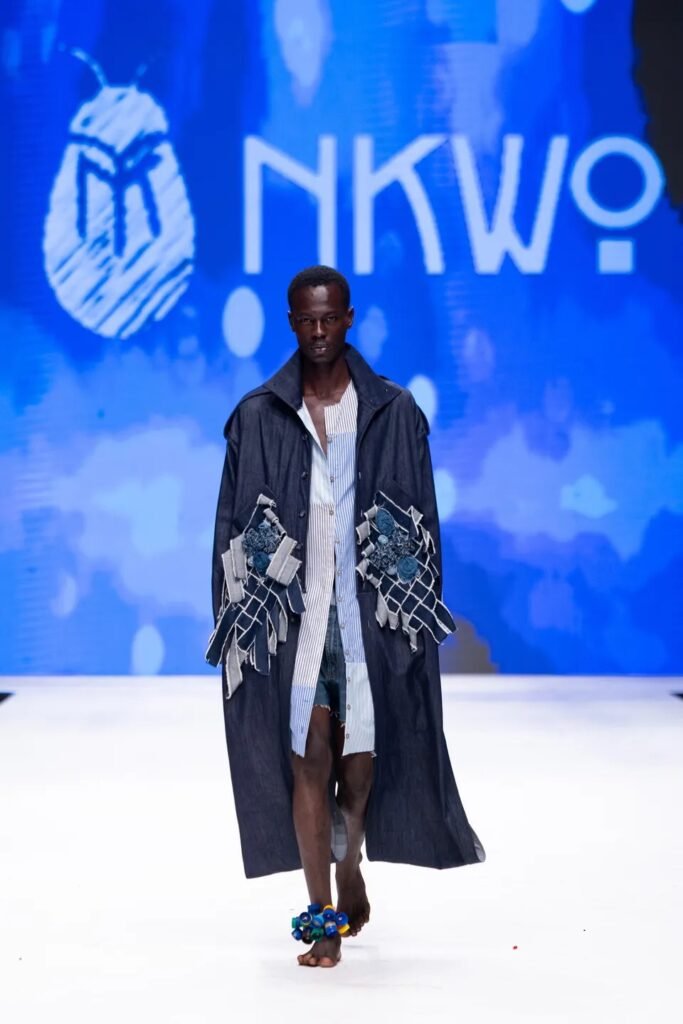
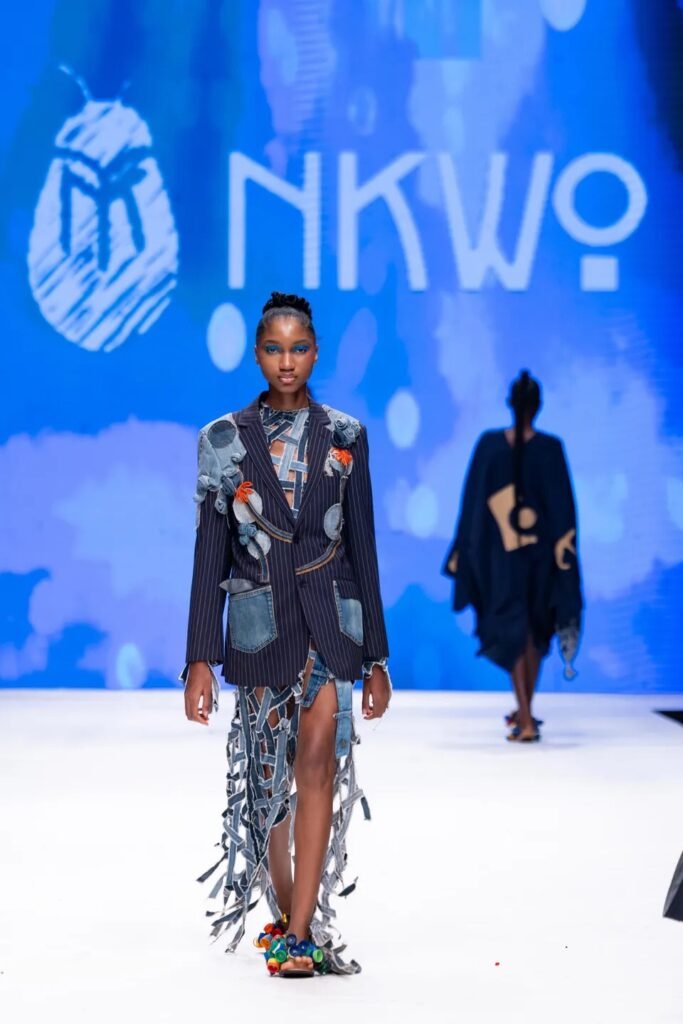
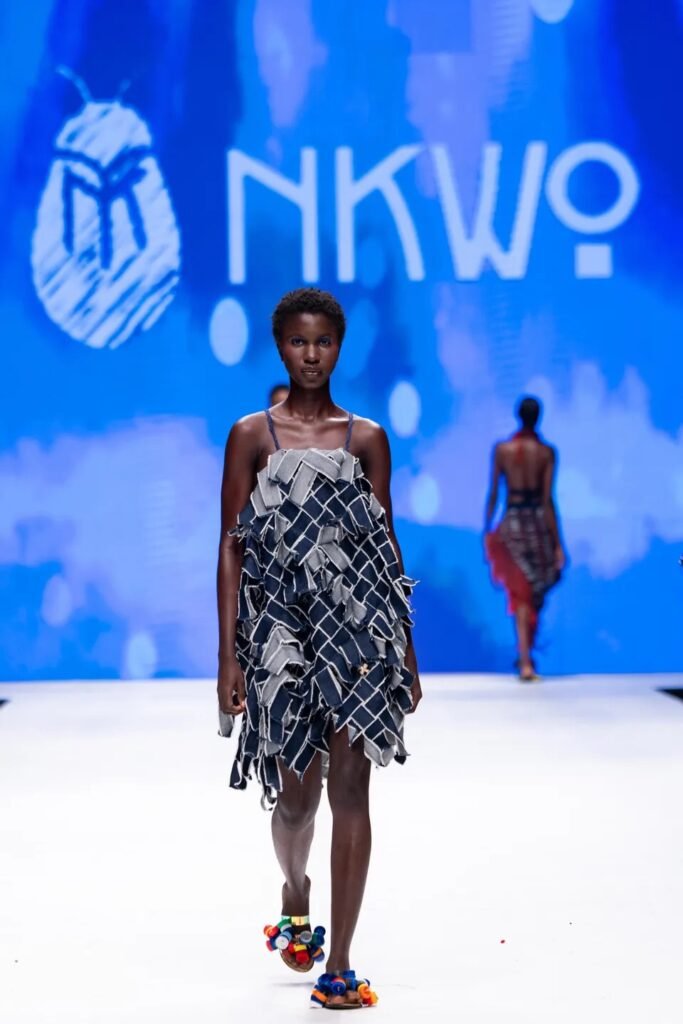
Rather than treating the material as a conventional wardrobe staple, Onwuka experiments with its construction, texture, and possibilities. Previously used denim is transformed into dresses, skirts, jackets, and other contemporary pieces, giving familiar fabrics a renewed sense of purpose.
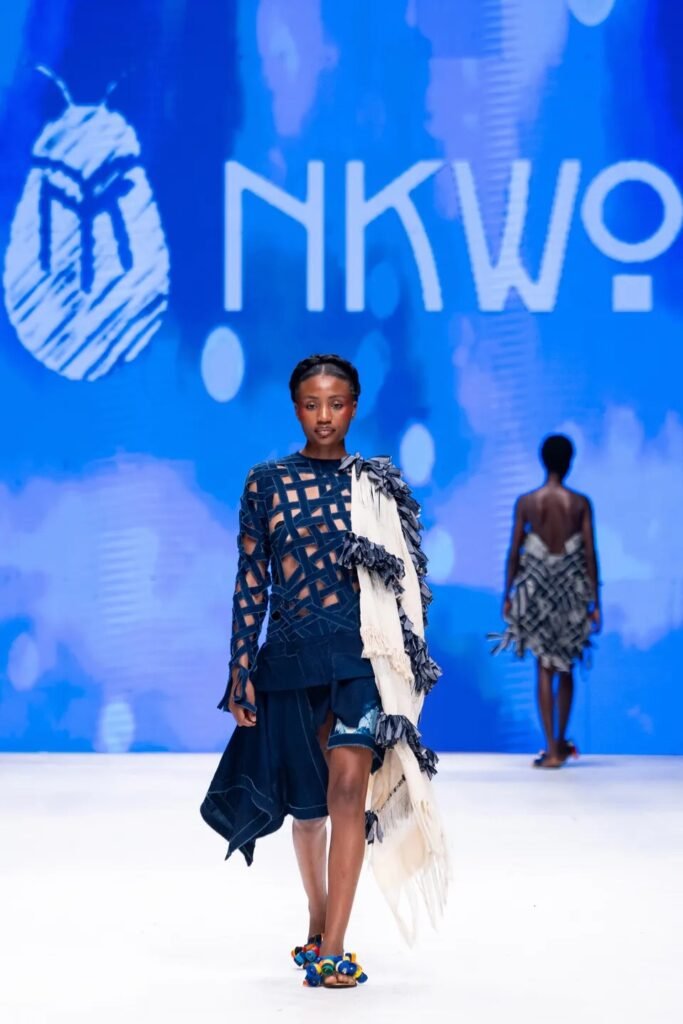
Deconstructed patchwork designs introduce irregular shapes and contrasting shades of blue, while reconstructed denim jackets demonstrate how traditional tailoring can be reconsidered through upcycling.
Some pieces combine different denim textures and finishes, creating garments that feel deliberately unconventional without losing their wearability.
The collection also explores the relationship between denim and knitwear, with the designer interested in techniques that can reengineer familiar materials into entirely different textile expressions.
These experiments reinforce the collection’s central message: clothing does not necessarily need to begin with new materials to feel relevant or desirable.
Indigo, Craftsmanship and Nigerian Textile Heritage
Alongside its reconstructed denim pieces, the collection highlights the importance of local craftsmanship and traditional textile production.
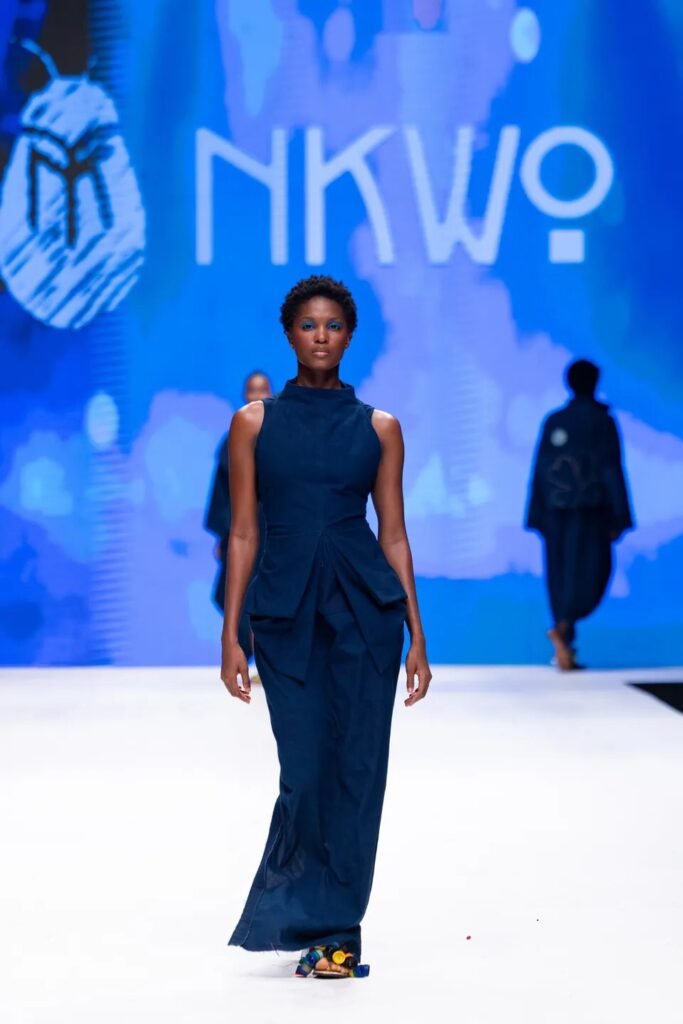
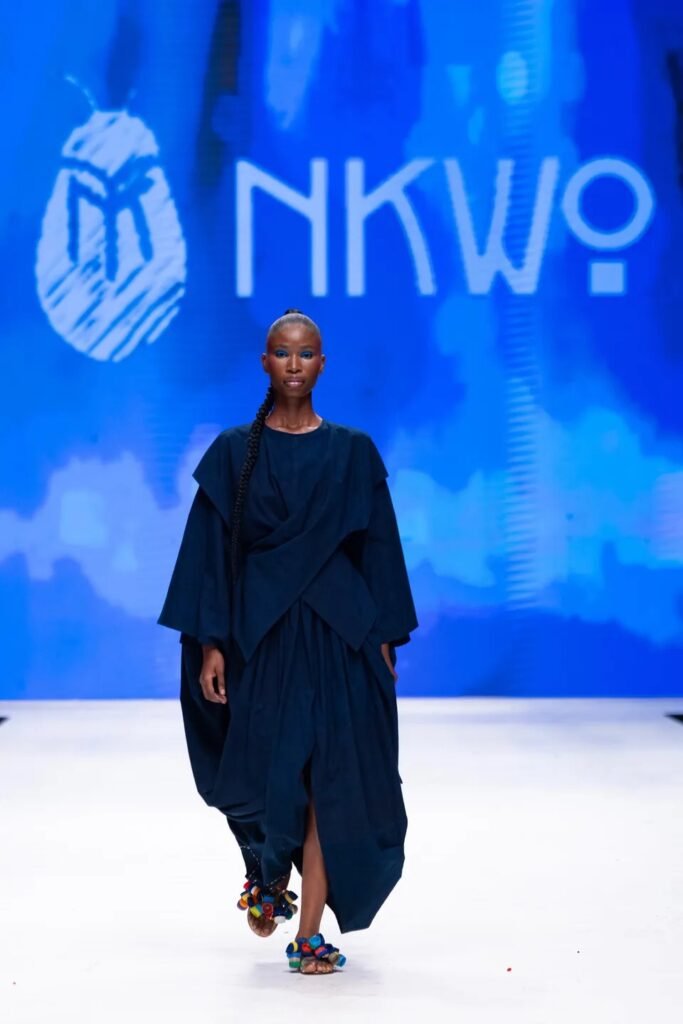
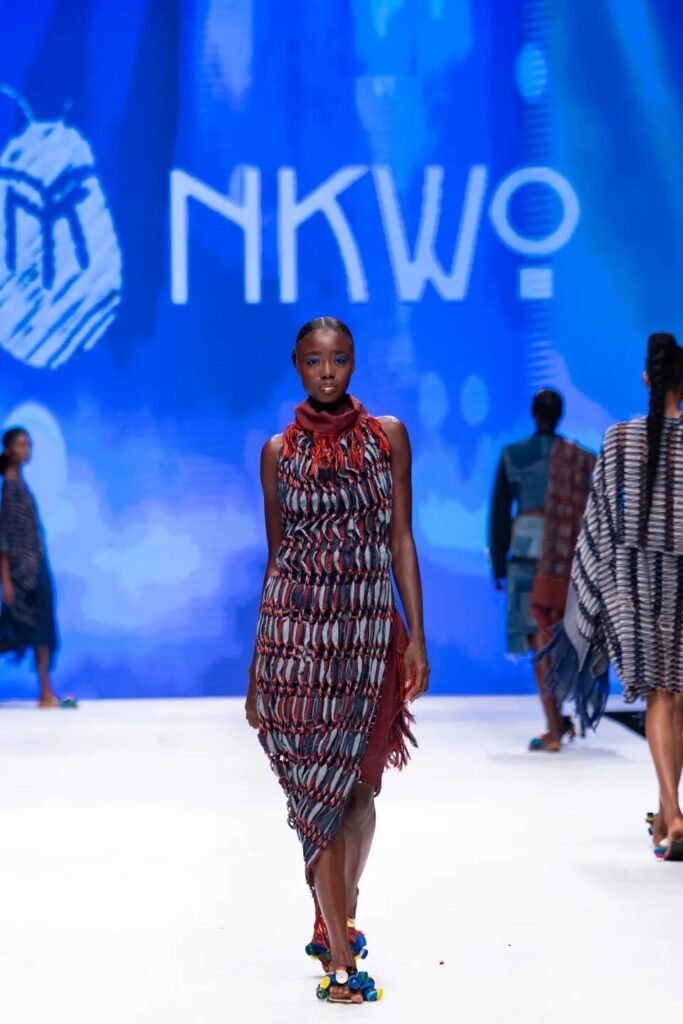
Several indigo looks were produced locally using Nigeria’s traditional dyeing pits, connecting contemporary fashion design with established artisanal practices.
The deep blue shades create a visual connection between the different pieces, while the variations in texture and finish give individual garments their own character.
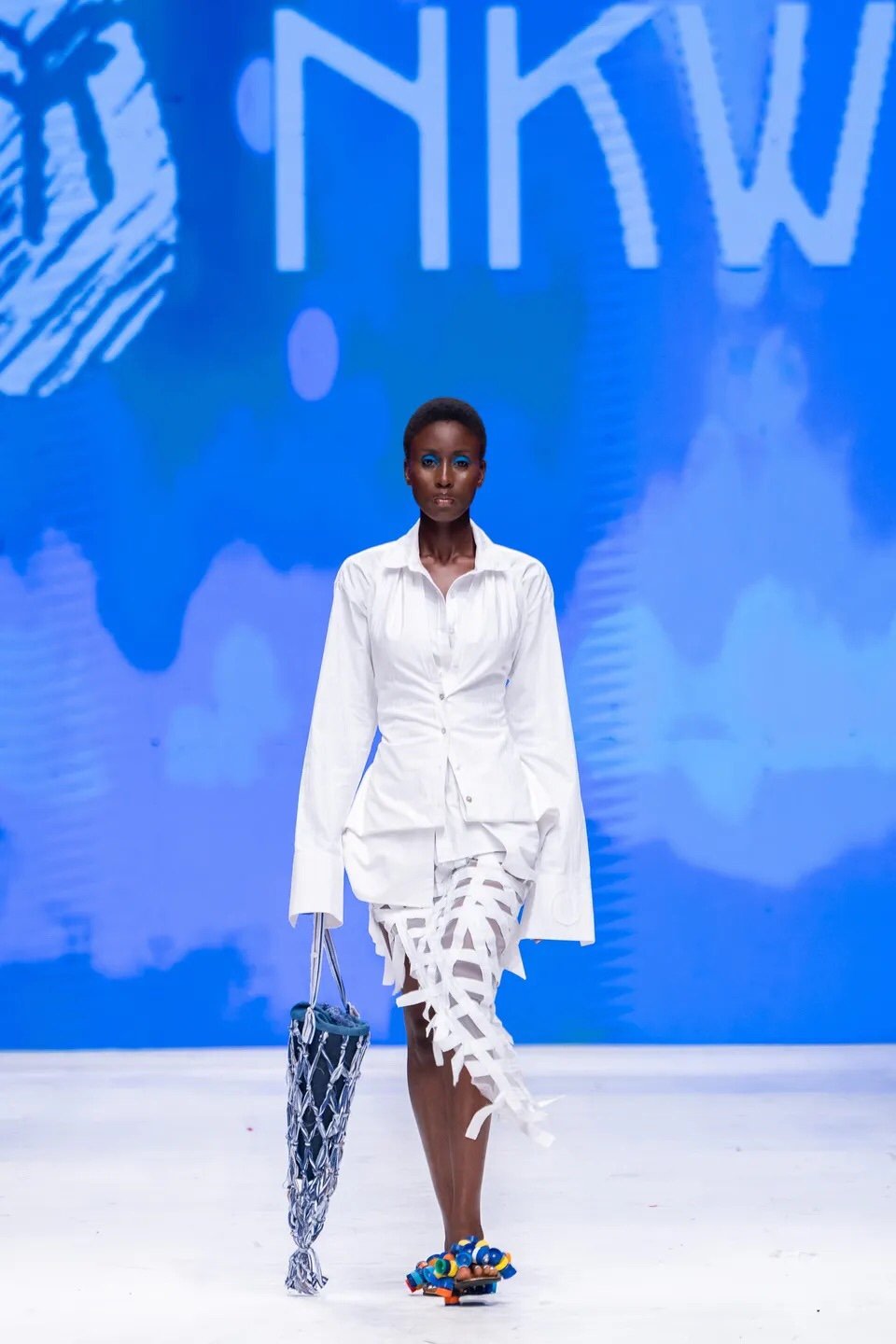
Elsewhere, lattice inspired details appear across selected shirts, referencing the mapping systems associated with the journey that inspired the collection.
These details introduce another dimension to the narrative, translating the idea of movement and geographical connection into garment construction.
Nkwo’s approach demonstrates how traditional techniques can remain relevant within contemporary fashion when approached with experimentation and a willingness to challenge familiar design conventions.
Relaxed Silhouettes and Contemporary Wardrobe Staples
While the collection carries a strong conceptual foundation, it does not rely entirely on experimental or statement garments.
For Spring 2027, Onwuka also explores more commercially accessible pieces, bringing a stronger sense of everyday wearability into the collection.
Relaxed dresses, reconstructed blazers, contemporary skirts, and versatile separates create a wardrobe that feels connected to modern dressing.
There is an appealing balance between the artisanal character of the collection and its more accessible silhouettes. The pieces retain the individuality associated with Nkwo’s design language while considering how people might incorporate them into their everyday wardrobes.
This balance is particularly important to the designer’s broader vision. Sustainable fashion, in her view, should not be restricted to highly conceptual pieces that consumers admire from a distance but rarely feel comfortable wearing.
Instead, it should offer garments that people genuinely want to wear, keep, and return to.
A New Emblem of Resilience
Another notable introduction for Spring 2027 is the brand’s new emblem, inspired by a desert bug known for its ability to extract moisture from the air and convert it into water.
The creature’s remarkable survival mechanism carries a symbolic meaning within the collection.
For Onwuka, it represents resilience, resourcefulness, and the ability to find possibilities even in challenging environments.
The symbolism connects naturally with the designer’s approach to sustainable fashion. Just as the desert bug finds ways to survive with limited resources, Nkwo explores how discarded textiles and existing materials can be transformed into something valuable.
It is a fitting visual identity for a collection built around making more with less.
Nkwo’s Continued Contribution to Sustainable African Fashion
Since its establishment in 2012, Nkwo has developed a distinctive identity around artisanal production, textile innovation, and environmental responsibility.
The label is particularly recognised for its work with upcycled denim, locally produced cotton, end of line fabrics, and cutting table waste. Its commitment to textile innovation has also resulted in the development of Dakala Cloth, an African textile created through the transformation of discarded fabric materials.
These practices have helped position Nkwo as an important voice within conversations about sustainable fashion in Nigeria and beyond.
With Journey to Less, the brand continues to expand that conversation, moving beyond the idea of simply creating garments from recycled materials and exploring the larger systems that could make circular fashion more accessible.
The collection also arrives at an important moment for African fashion, as designers increasingly explore ways to combine local production, traditional craftsmanship, and contemporary international appeal.
The Verdict
Nkwo’s Spring 2027 collection is a thoughtful reminder that fashion’s future does not always depend on producing more. Sometimes, it begins with looking at what already exists and recognising its potential.
Through reconstructed denim, locally dyed indigo textiles, repurposed tailoring, and contemporary silhouettes, Journey to Less presents sustainability as both a creative philosophy and a practical direction for the fashion industry.
What makes the collection particularly compelling is its willingness to consider the systems behind fashion, not just the finished garments. From its proposed reverse retail concept to its celebration of Nigerian artisanal techniques, Onwuka presents a vision that connects environmental responsibility with cultural identity and contemporary design.
Ultimately, Nkwo’s Spring 2027 collection is less about having less fashion and more about creating greater value from what we already have.