By Susan Fang
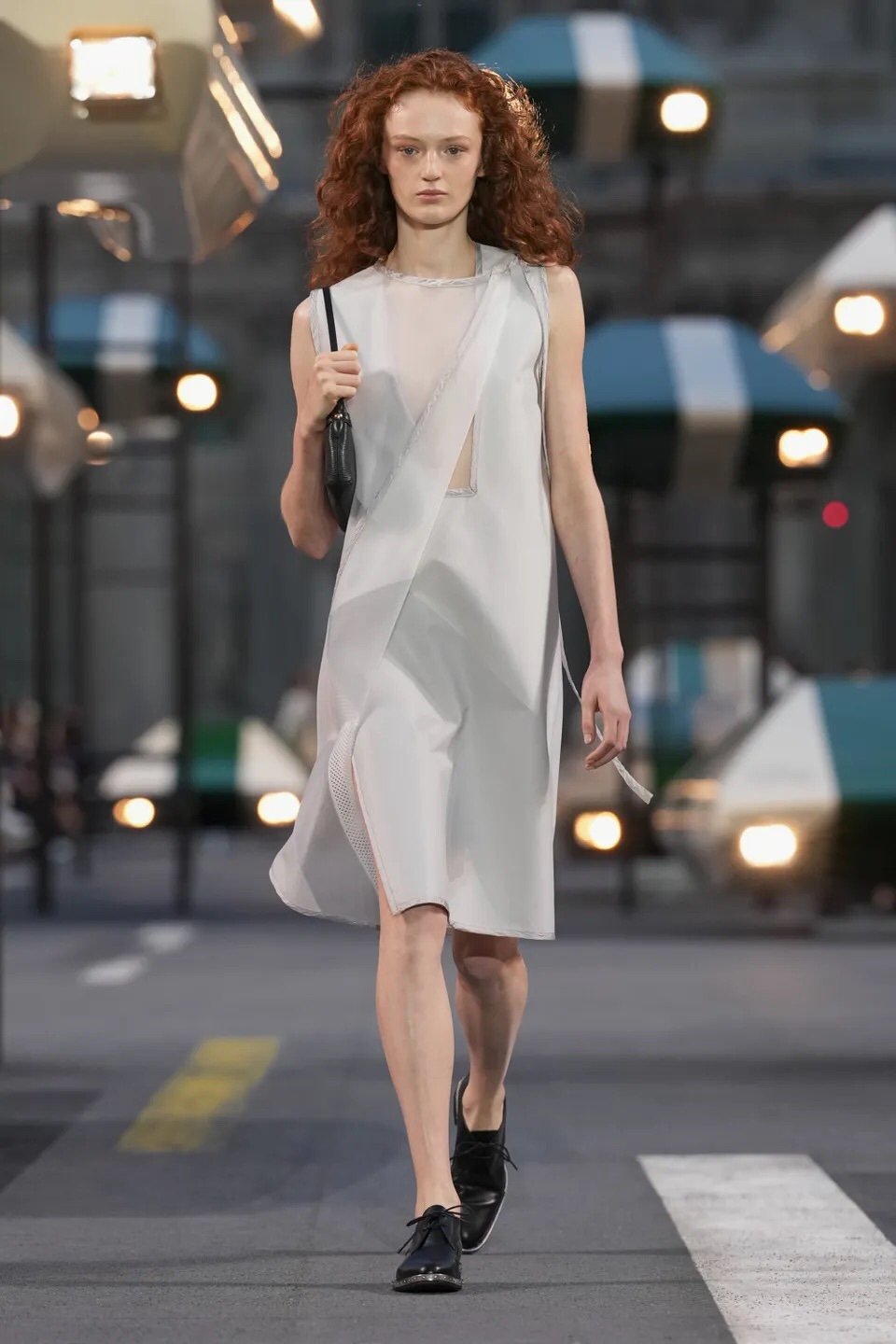
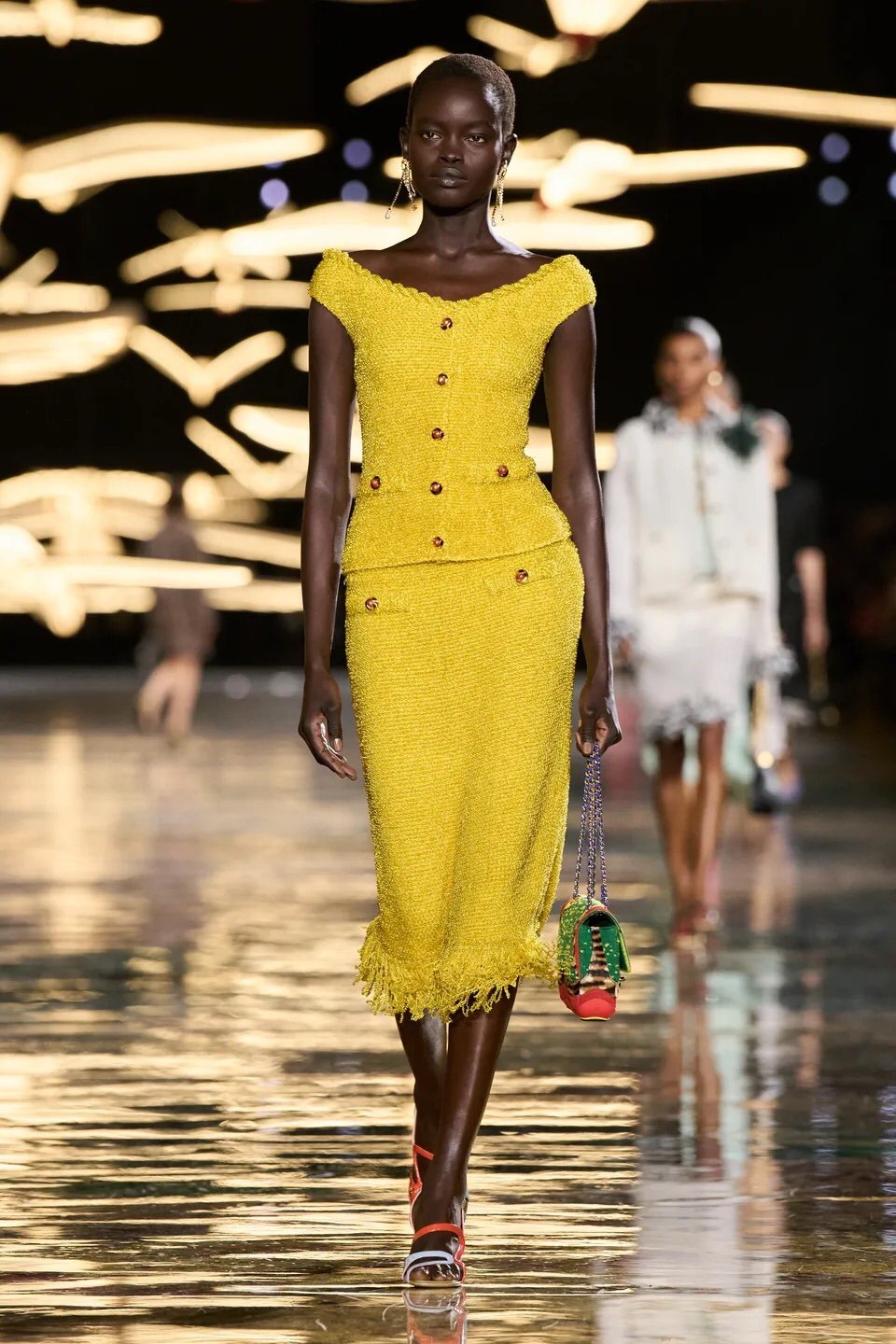
Susan Fang returned to the London Fashion Week runway for Spring 2027 with a collection that blurred the boundaries between romance, craftsmanship, technology, and fantasy. Presented on September 18, 2026, the collection continued the designer’s fascination with creating immersive fashion worlds, this time exploring the imagined worlds people create around love.
For Spring 2027, Susan Fang found inspiration while simultaneously working on costumes for M. Butterfly, an opera by Huang Ruo scheduled to be presented at La Monnaie / De Munt in Brussels next year. Rather than directly translating the opera’s narrative into clothing, Fang drew from its emotional atmosphere and ideas surrounding love, fantasy, and the worlds people construct around their feelings.
The result was a collection that felt unmistakably Susan Fang: romantic, experimental, highly detailed, and filled with an otherworldly quality.
A Fashion World Built Around Love
Love became an abstract starting point for the Spring 2027 collection. Instead of treating romance through traditional symbols alone, Fang approached it as an imagined environment—an emotional space where reality and fantasy can coexist.
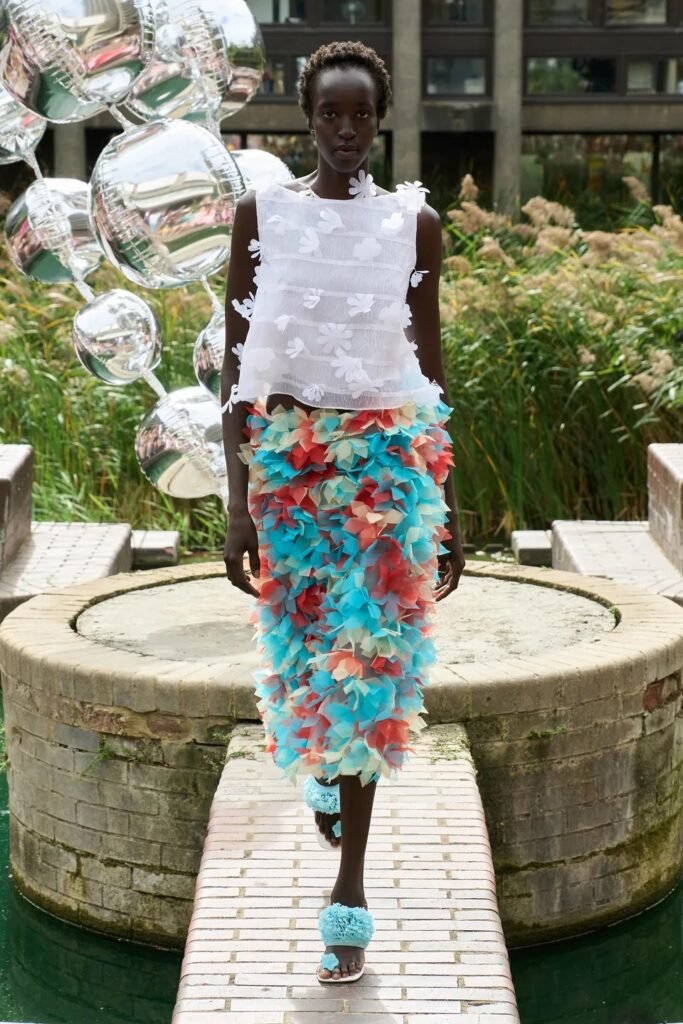
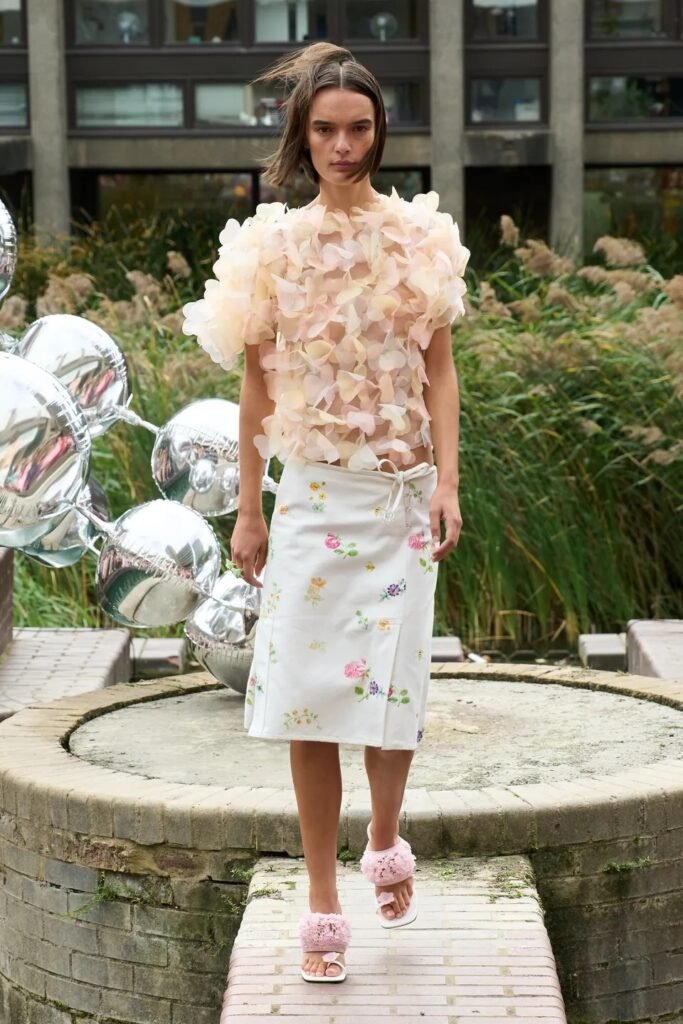
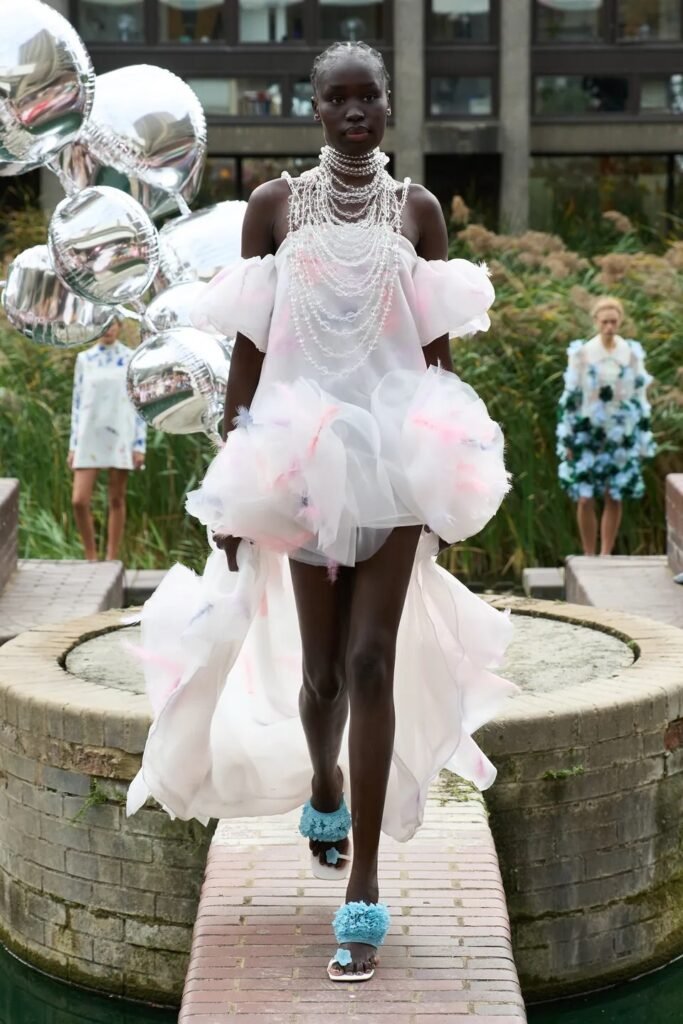
That idea was reflected in the collection’s silhouettes and elaborate surface treatments. Longline dropped-waist dresses falling toward the ankle appeared alongside relaxed T-shirt-like shapes, fitted pencil skirts with slits, and sharply proportioned trapezoid minidresses.
The variety of silhouettes gave the collection a sense of movement between everyday dressing and fantasy fashion. Some looks appeared commercially accessible, while others pushed toward the theatrical and sculptural side of Fang’s creative universe.
Porcelain, Kintsugi and Digital Art
One of the most striking elements of the collection was Fang’s treatment of traditional decorative references.
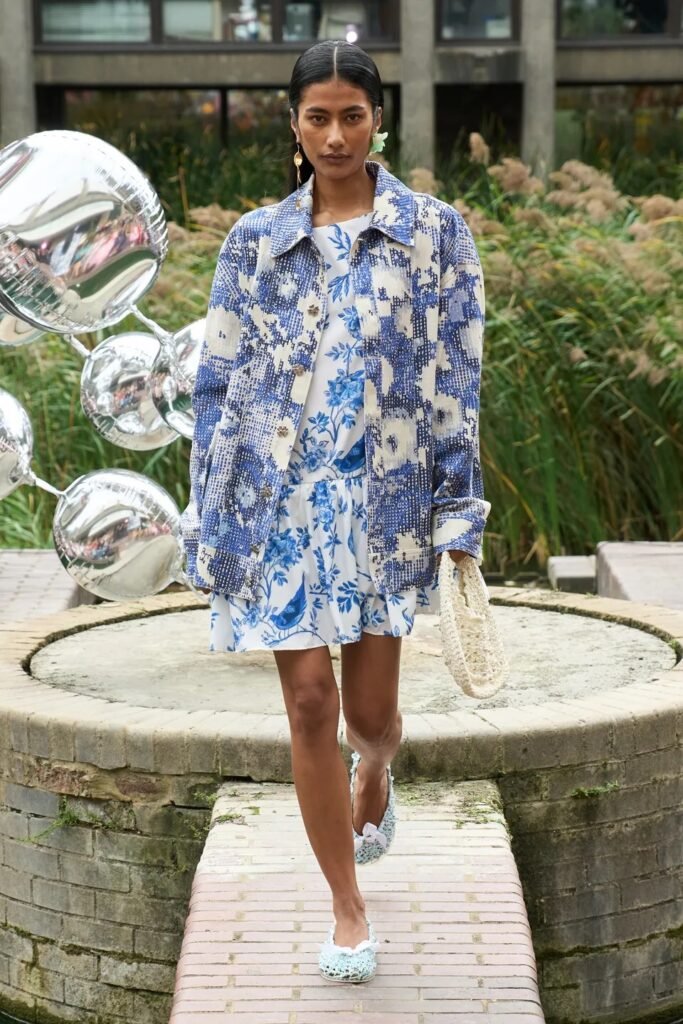
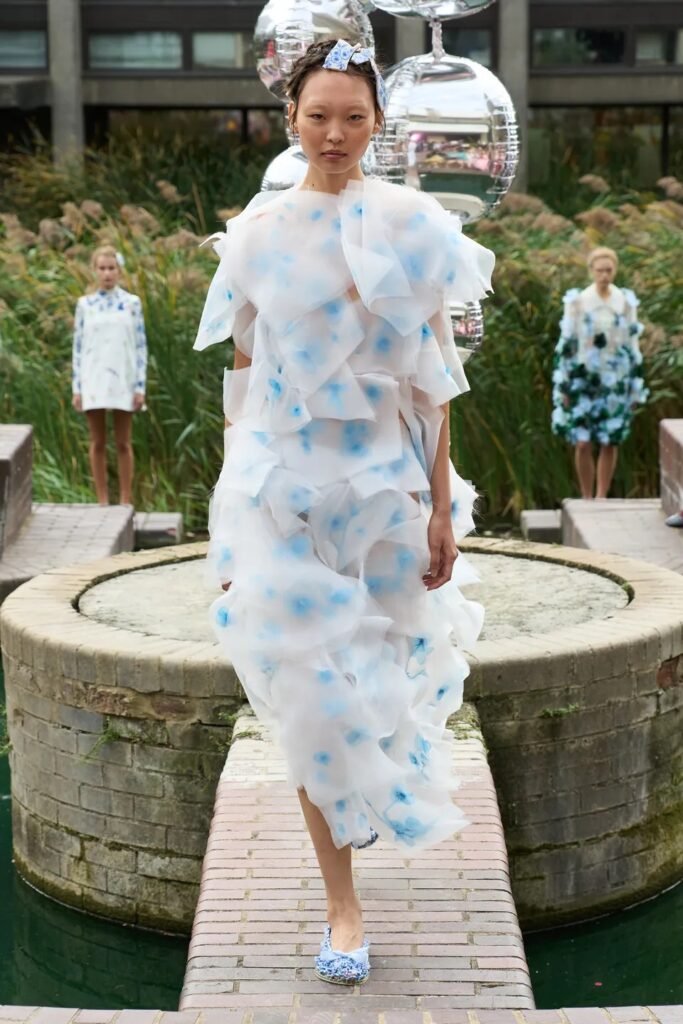
Ceramic-inspired finishes, including kintsugi and blue-and-white Chinese porcelain, were hand-drawn by Fang’s team before being digitally manipulated by her husband, Orelio. The resulting patterns were printed, painted, or placed between layers of organza, creating surfaces that appeared delicate while carrying a distinctly contemporary character.
The contrast between traditional craft and digital manipulation became one of the collection’s defining ideas.
Some patterns were deliberately pixelated, created through a coding program capable of generating designs from numbers, letters, and shapes. The approach continued an idea introduced in Fang’s previous work while pushing it into a more developed visual language for Spring 2027.
It is this collision of old and new that makes the collection particularly compelling: porcelain-inspired imagery can exist alongside code-generated patterns, while handmade techniques meet advanced production methods.
Pastels Meet Electric Color
Color played an equally important role.
Susan Fang’s familiar pastel palette remained central to the collection, reinforcing its dreamy and romantic character. But those soft shades were interrupted by flashes of expressive neon.
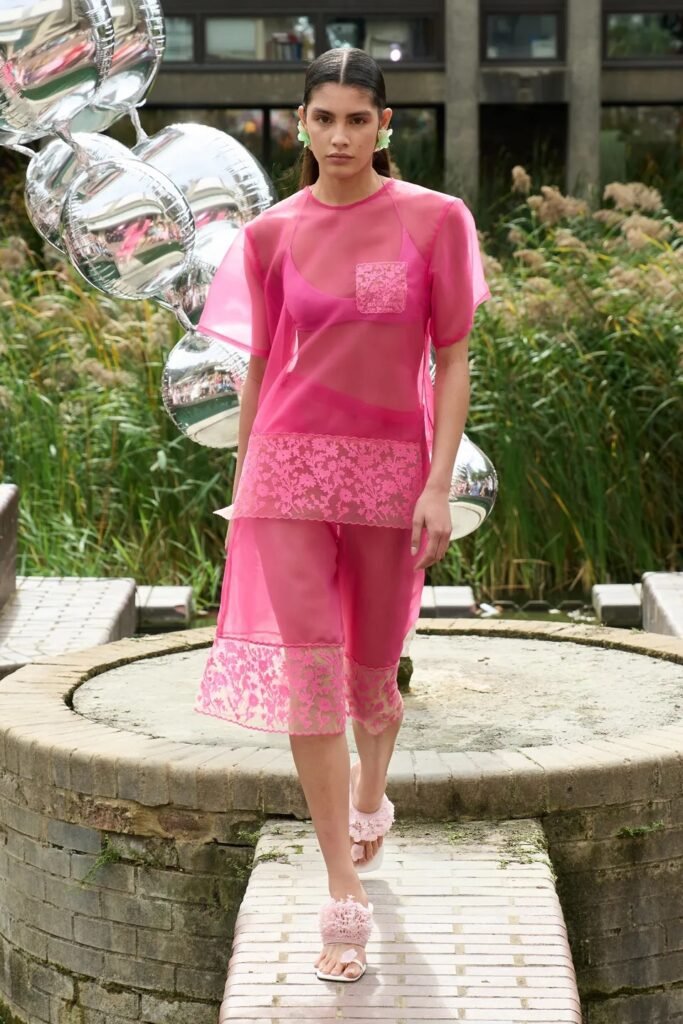
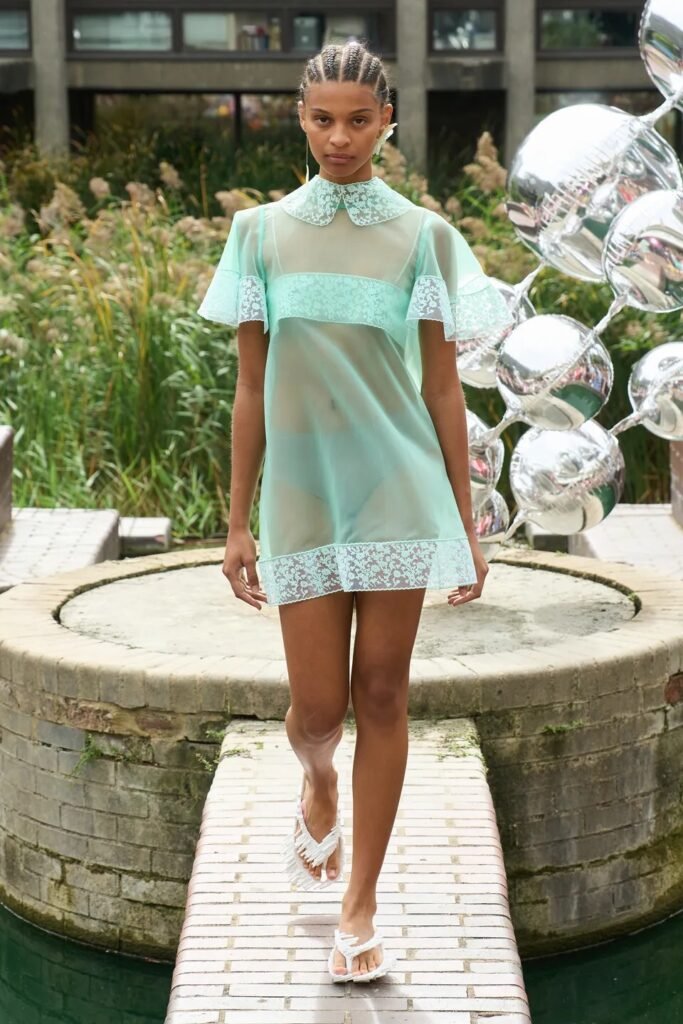
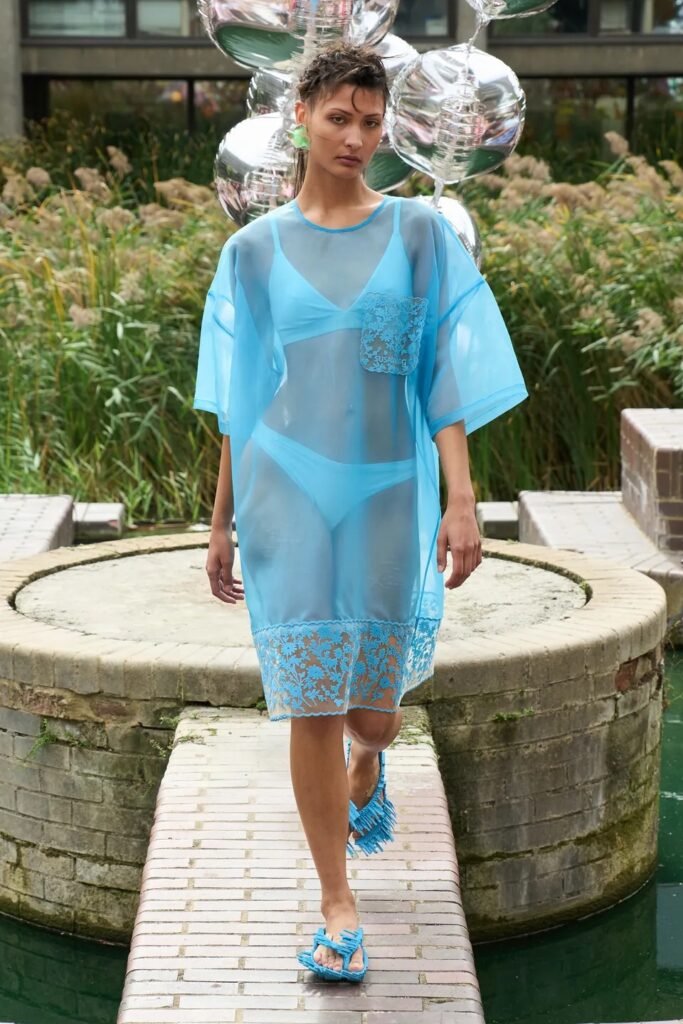
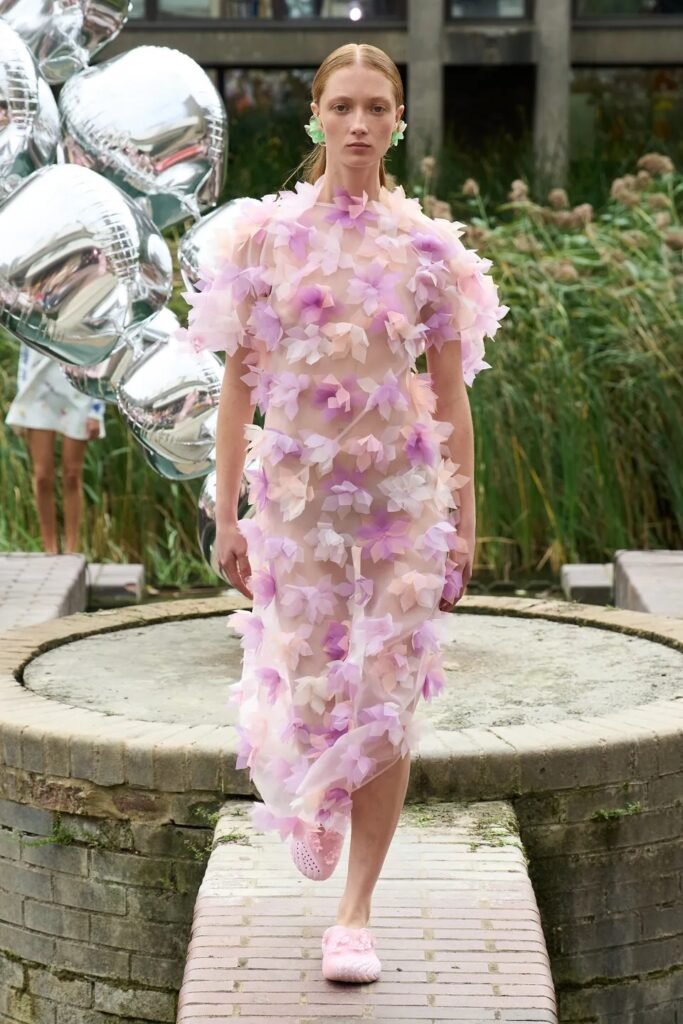
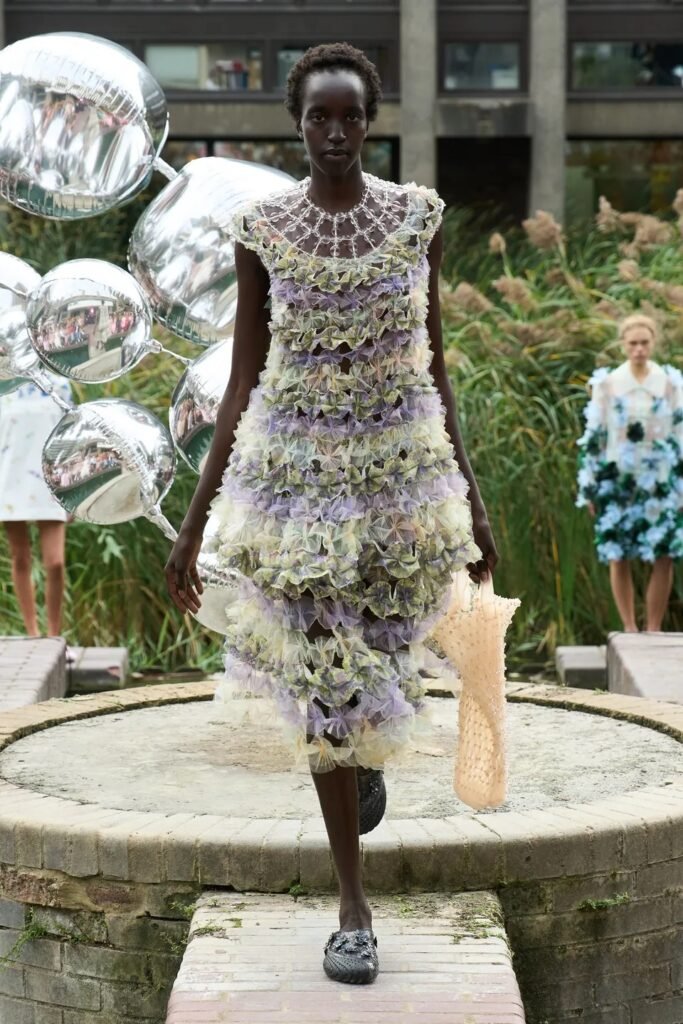
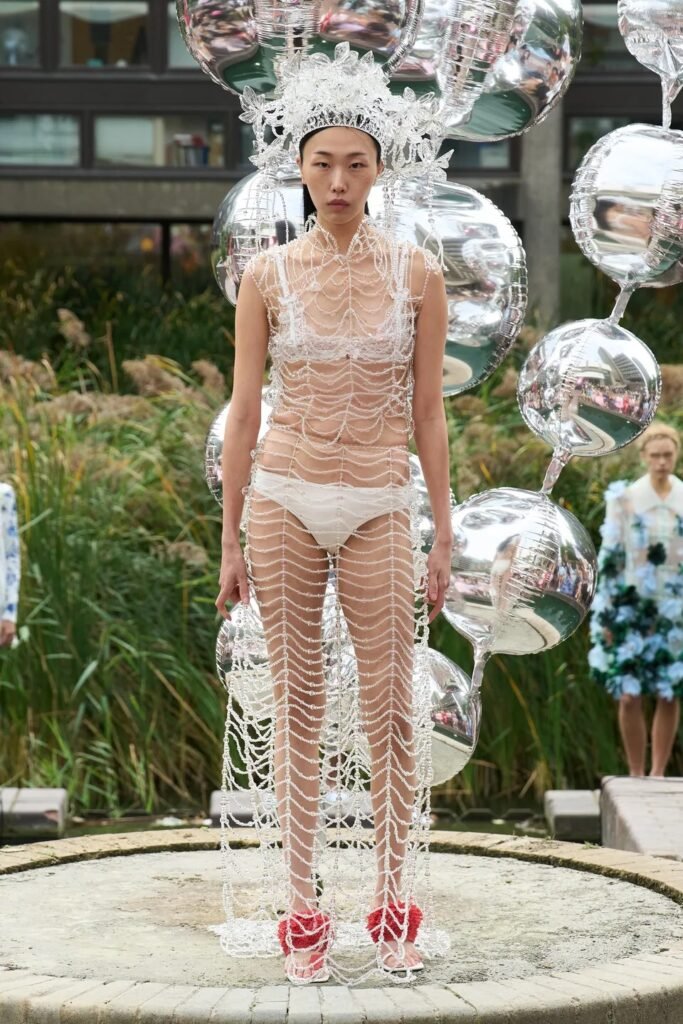
Three-dimensional printed lace appeared in vibrant shades, including electric and sour-toned colors, adding a futuristic energy to otherwise delicate looks. The neon elements were used as trims on completely sheer tops and dresses, creating a striking contrast between transparency, softness, and technological precision.
This combination prevented the collection from becoming purely nostalgic or traditionally feminine. Instead, Fang created a visual language where softness could feel futuristic.
The Evolution of the Air Flower
Fang also revisited one of her signature techniques: the “air flower.”
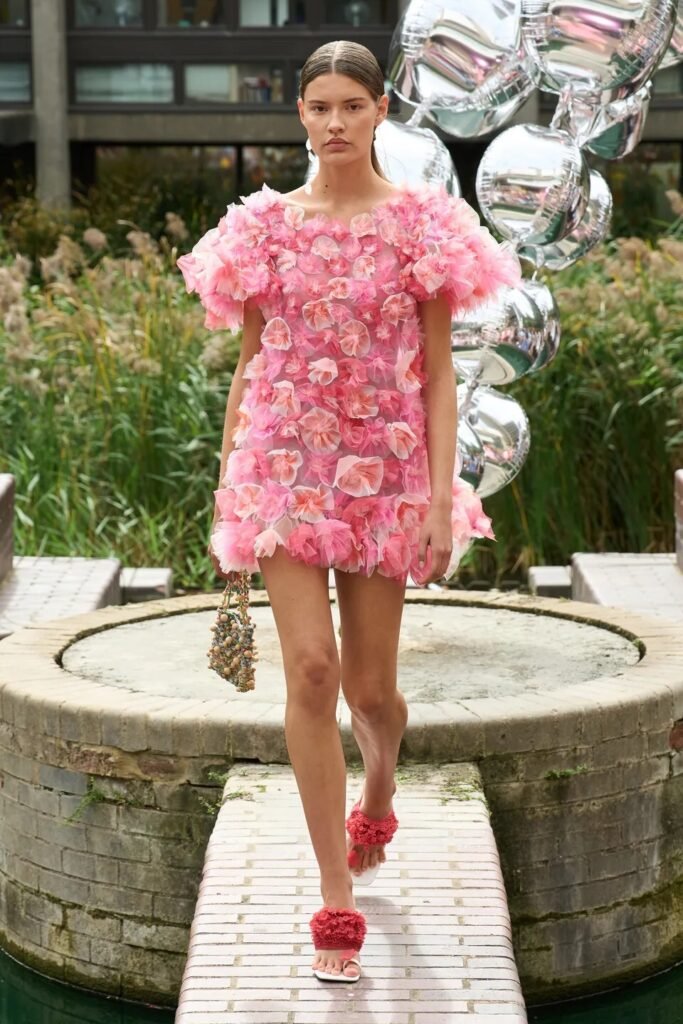
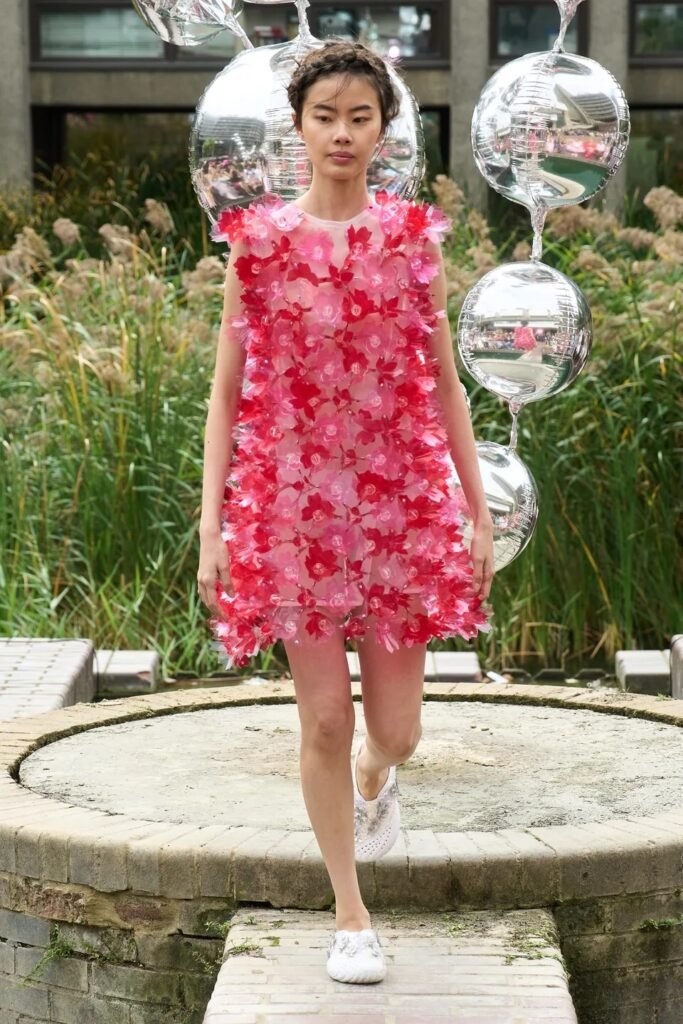
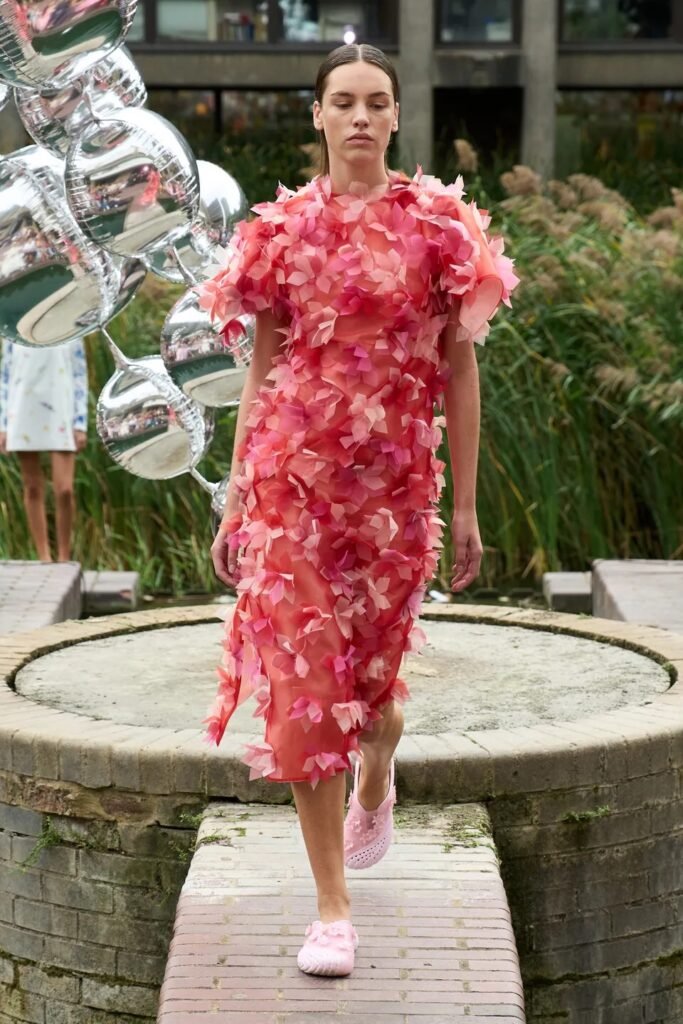
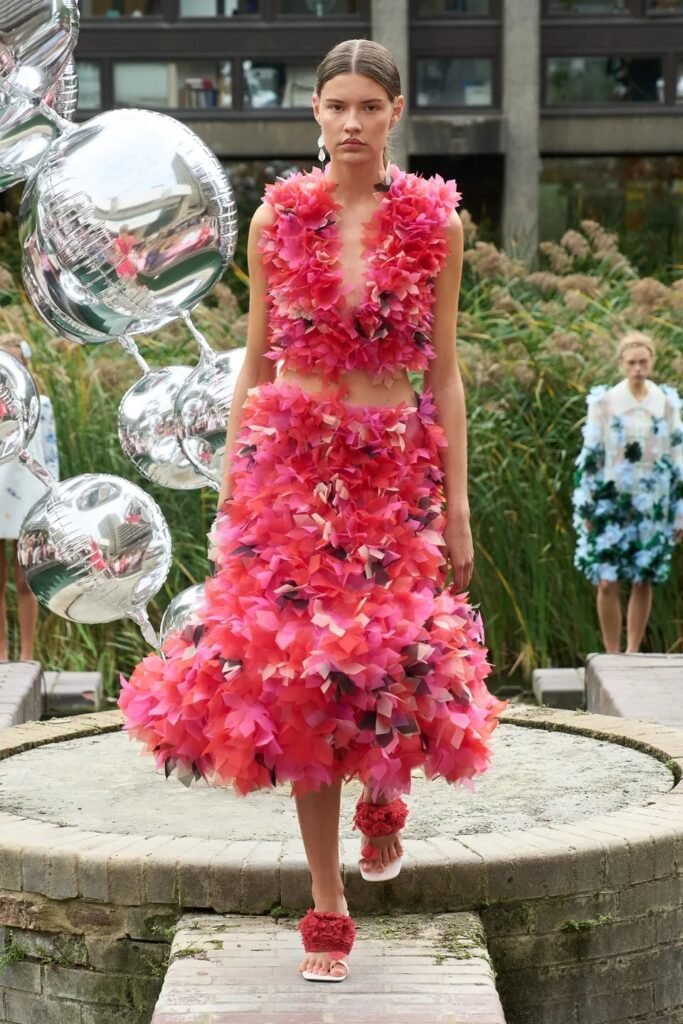
For Spring 2027, the technique appeared in a new red colorway and was accompanied by silver foiling. The dimensional floral treatment added movement to the garments, giving the impression that petals had been captured in motion.
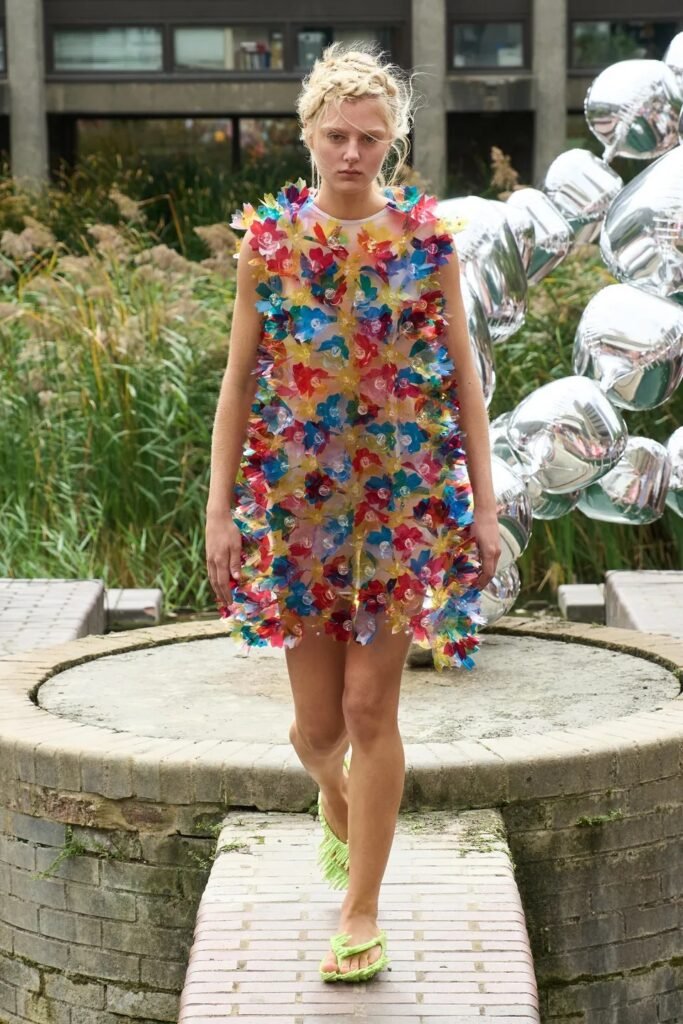
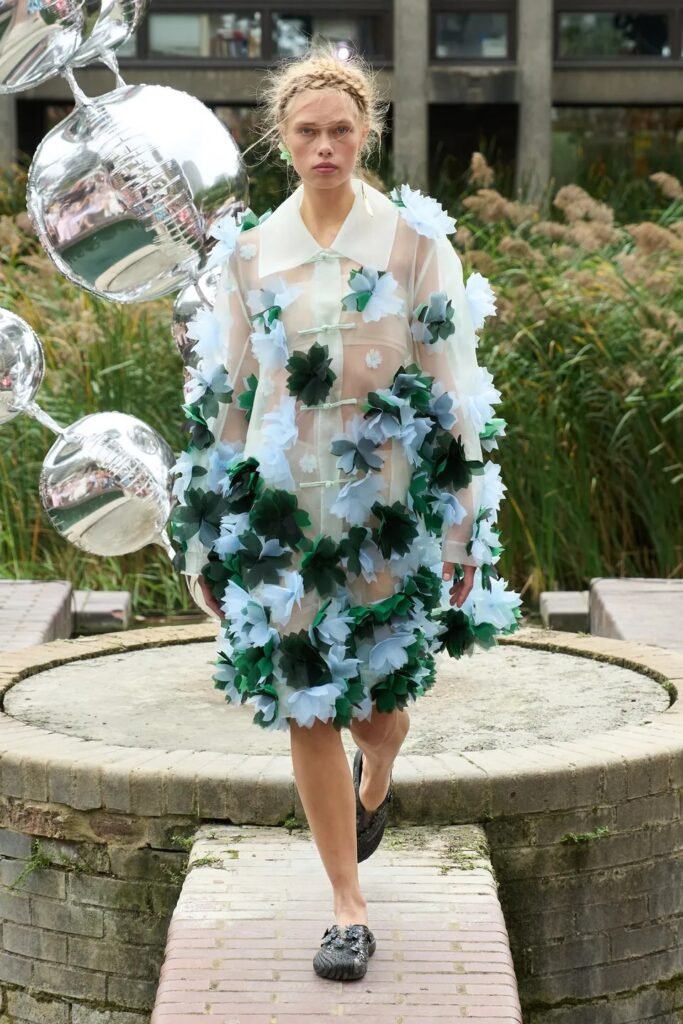
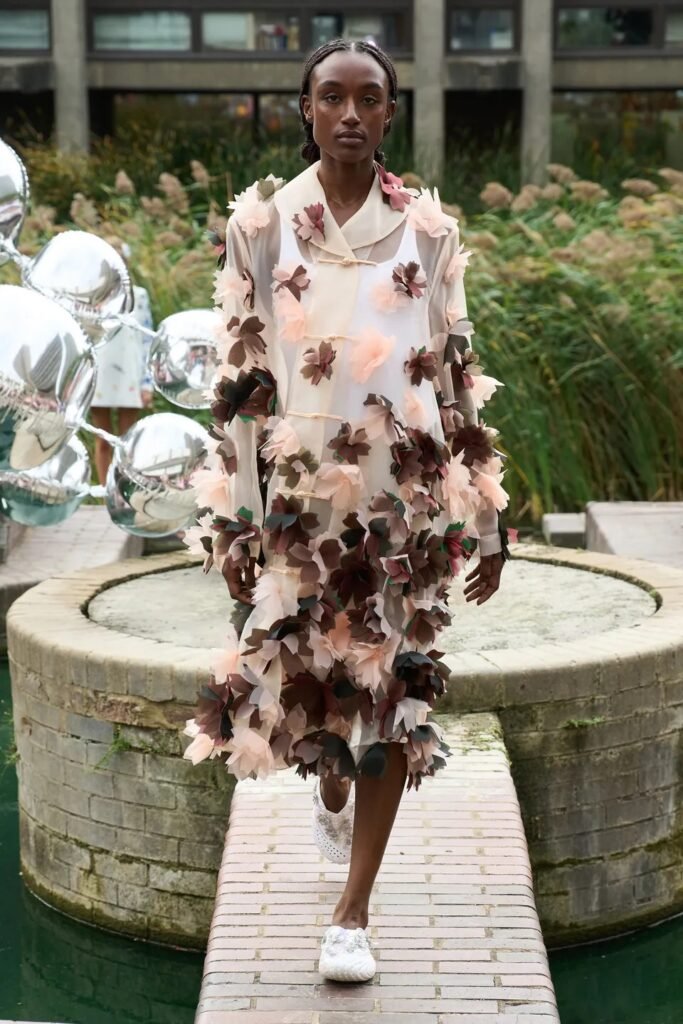
Flowers appeared throughout the collection, but they were not simply decorative motifs. They became part of Fang’s larger exploration of nature, technology, and fantasy.
The designer’s approach to florals has increasingly involved transforming familiar organic forms into unusual three-dimensional objects, allowing something traditionally delicate to become architectural and experimental.
3D Printing and the Future of Craft
Technology remained an important component of Susan Fang’s Spring 2027 vision.
The collection incorporated 3D-printed elements, including flowers and footwear, while transparent resin bubbles were assembled into elaborate accessories. The technology was not presented as something cold or industrial. Instead, Fang used it to create objects that still carried a sense of romance and craftsmanship.
This relationship between technology and handmade design has become increasingly important to the Susan Fang label. The designer’s work demonstrates that technological experimentation does not necessarily have to replace traditional craft—it can become another tool for creating tactile and emotional fashion.
That philosophy was especially visible in the collection’s intricate lace experiments. Some of the highly detailed pieces required weeks of production on a specialized machine.
Sheer Dressing Takes a Romantic Turn
Transparency was another recurring element.
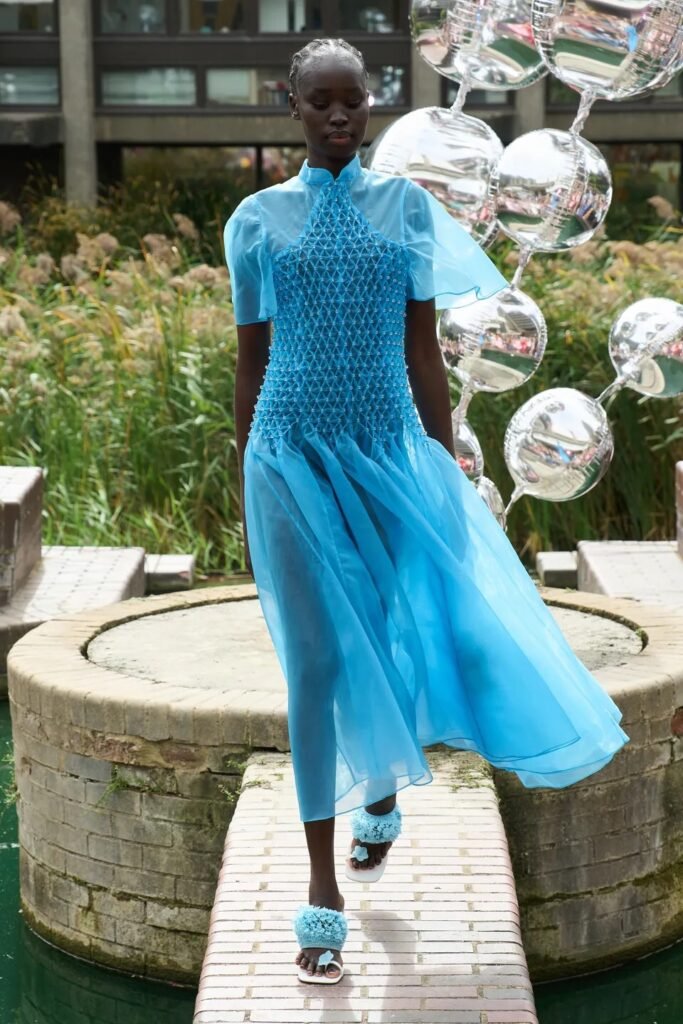
Sheer tops and dresses provided a lightweight foundation for Fang’s three-dimensional trims and decorative treatments. Rather than relying on minimalism, the designer layered transparency with flowers, lace, embellishment, and sculptural details.
The result was a form of romantic dressing that felt simultaneously fragile and futuristic.
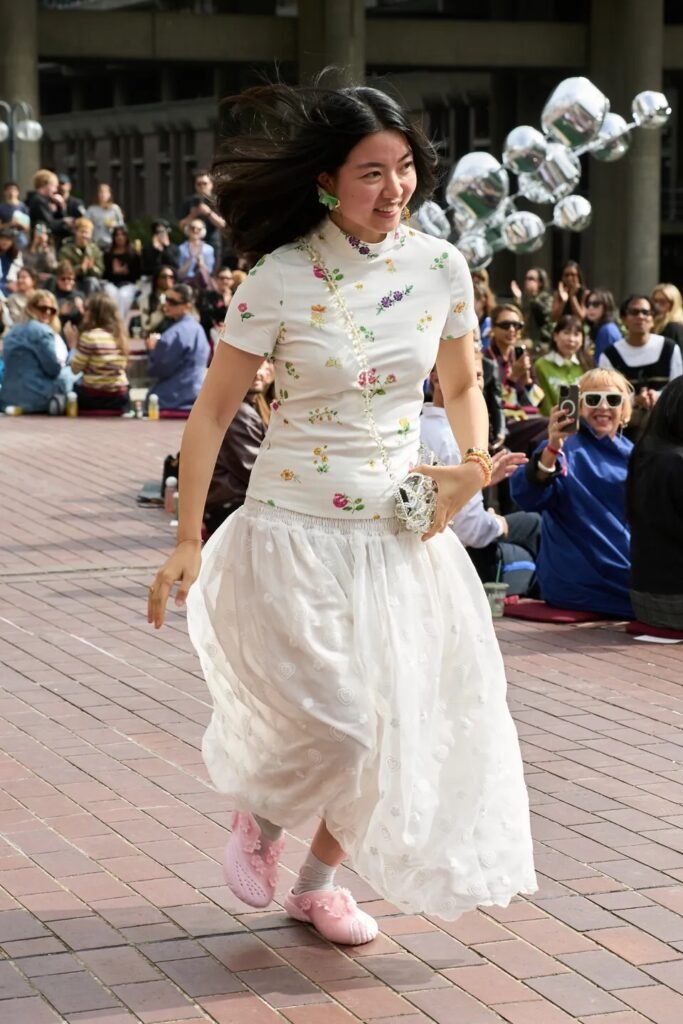
Alongside the more experimental pieces were “cloud” and “bubble” smocked dresses and tops, giving the collection a softer and more commercially approachable side. An illusion-print jacket also translated the collection’s fantasy-driven visual language into a more everyday wardrobe piece.
From Runway Fantasy to Everyday Fashion
Despite the theatrical quality of the collection, Fang also considered how elements of her fantasy world could translate into products customers can actually wear.
The “cloud” and “bubble” pieces offered an accessible entry point into the collection, while the illusion-print jacket provided another way to incorporate Fang’s surreal aesthetic into everyday dressing.
The collection also featured a collaboration with Crocs, further expanding the designer’s experimental approach beyond clothing.
This balance between fantasy and functionality is important to Fang’s work. The runway can operate as a space for extreme experimentation, while selected ideas are transformed into pieces that can become part of a customer’s wardrobe.
A Future Where Romance Meets Technology
Susan Fang’s Spring 2027 Ready-to-Wear collection ultimately presents a vision of fashion where technology does not eliminate emotion or craftsmanship.
Instead, the two exist together.
Porcelain-inspired patterns become digitally manipulated prints. Coding generates patterns inspired by numbers and letters. 3D printing produces flowers and lace. Traditional decorative references are transformed into contemporary fashion objects.
At the center of it all is Fang’s fascination with romance and the imaginary worlds surrounding love.
The collection feels like an invitation into one of those worlds—a place where pastel dresses, porcelain patterns, neon flowers, transparent materials, futuristic accessories, and handmade details coexist.
For Spring 2027, Susan Fang once again proves that fashion can be more than clothing. It can be an environment, a fantasy, and a constantly evolving conversation between the past and the future.