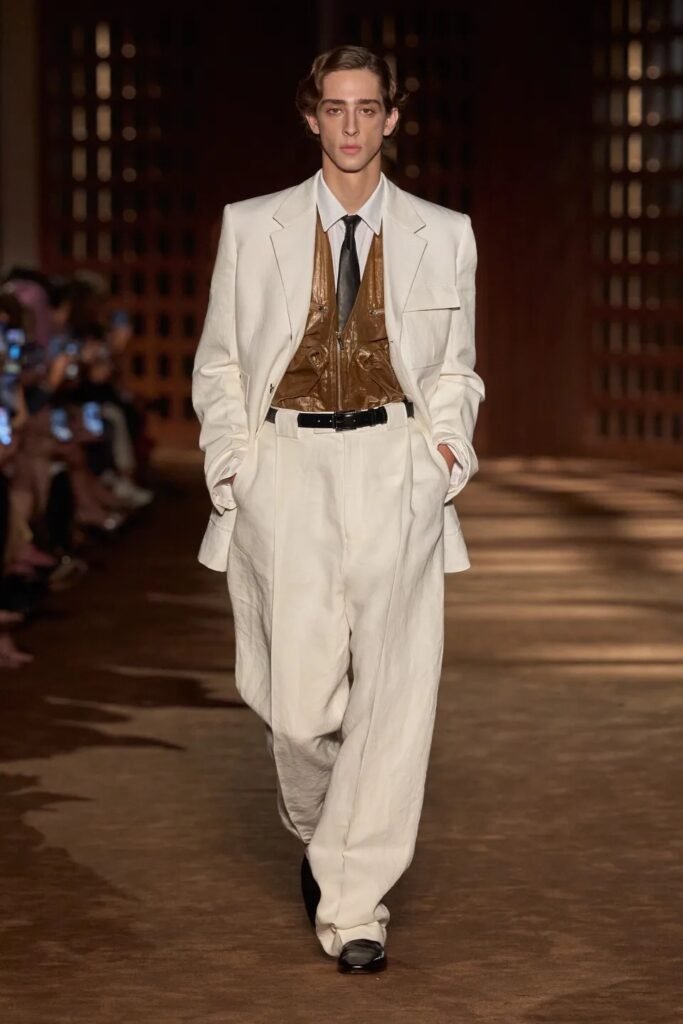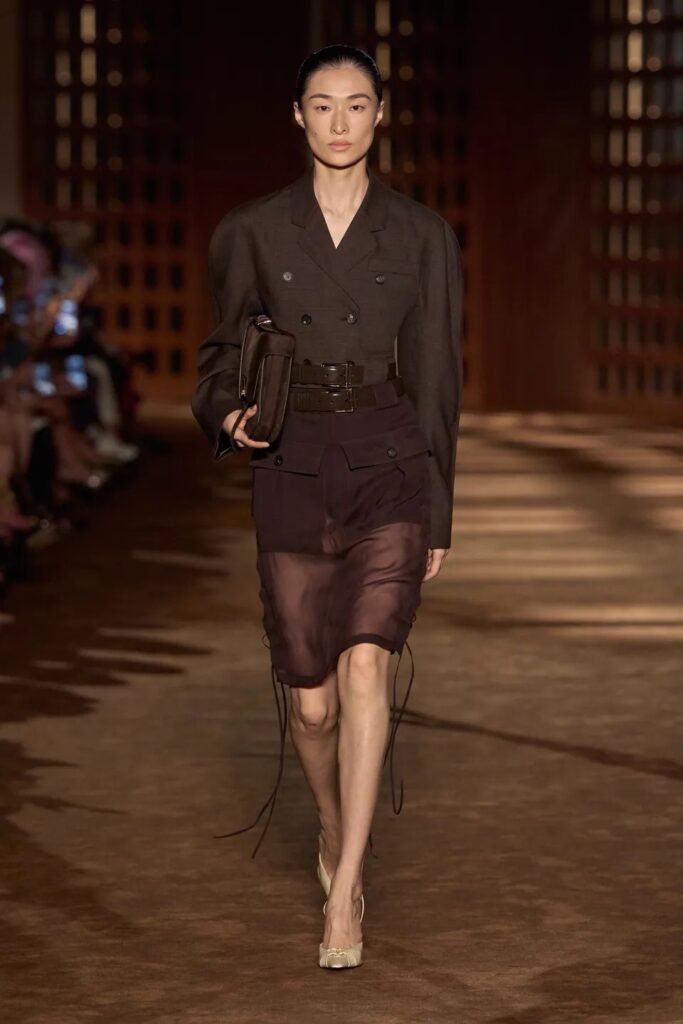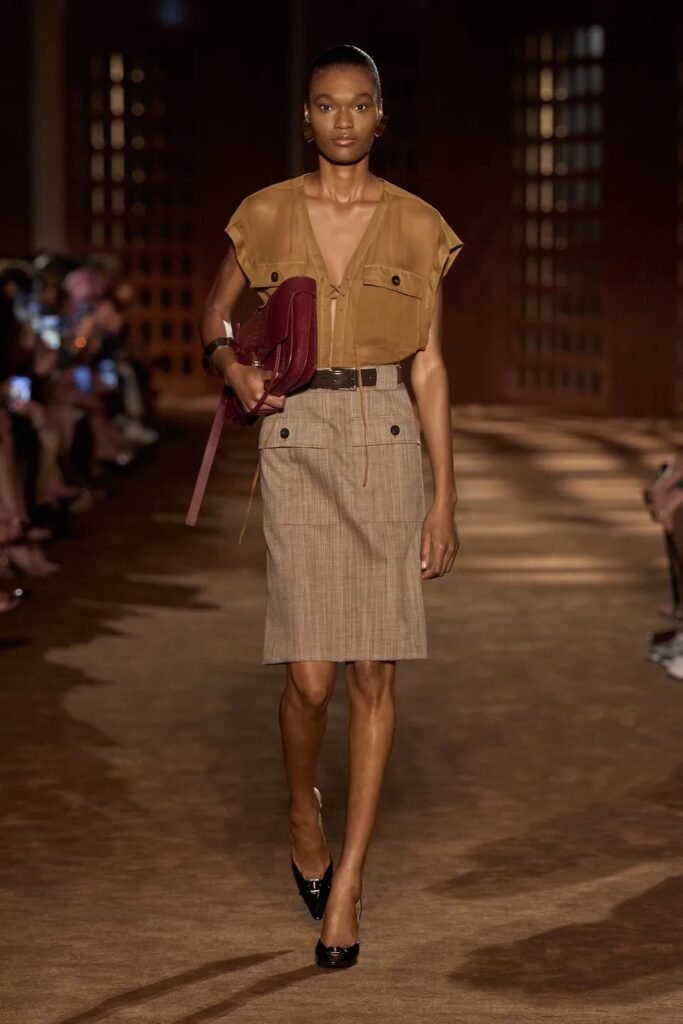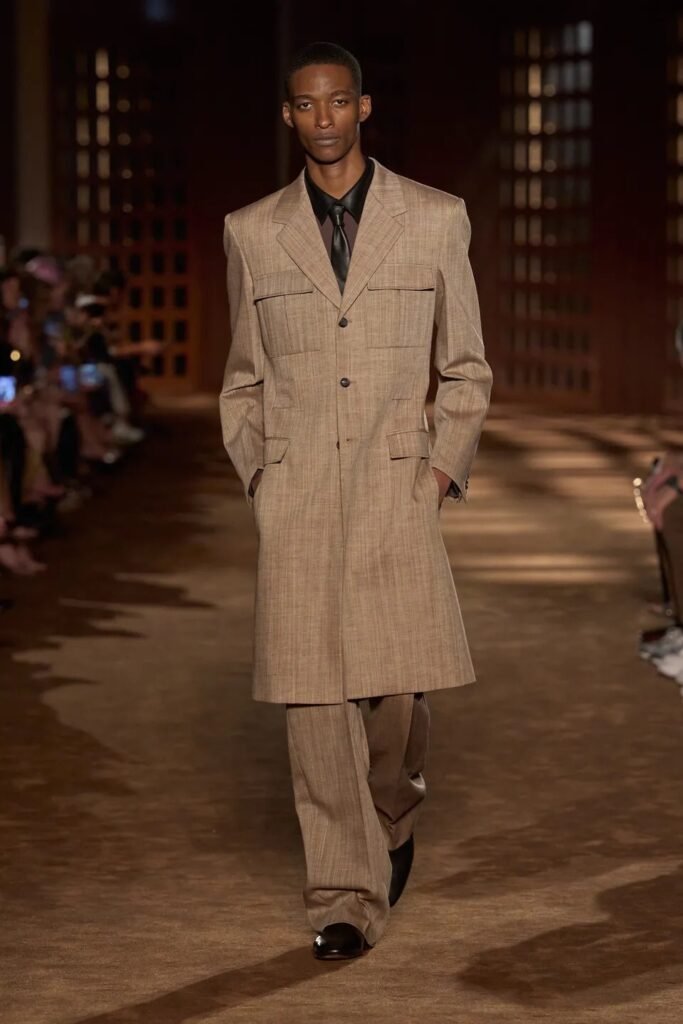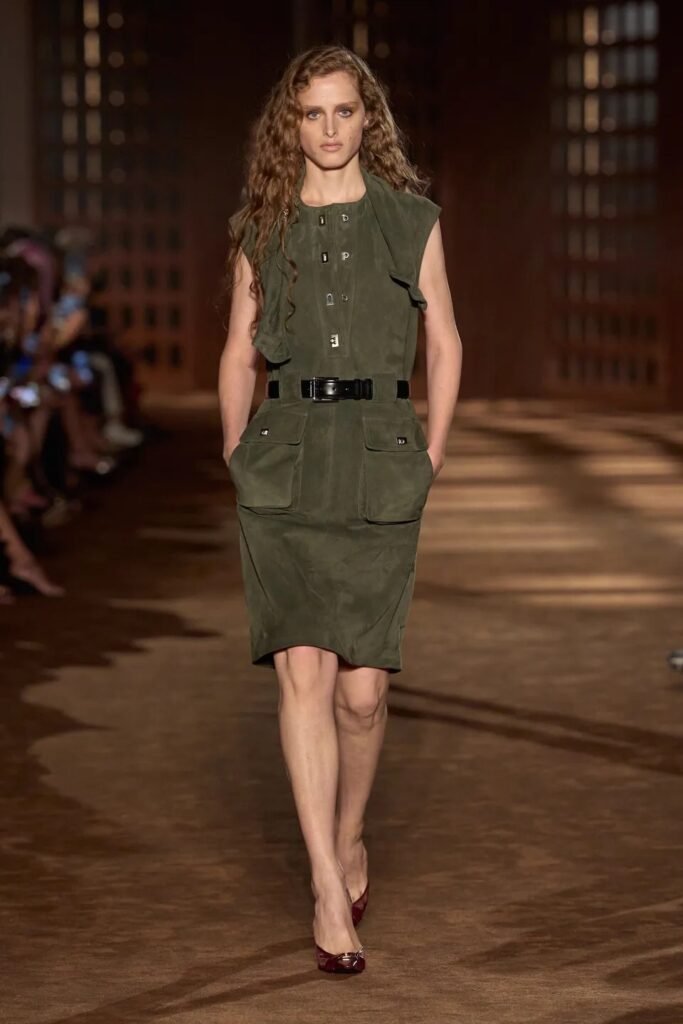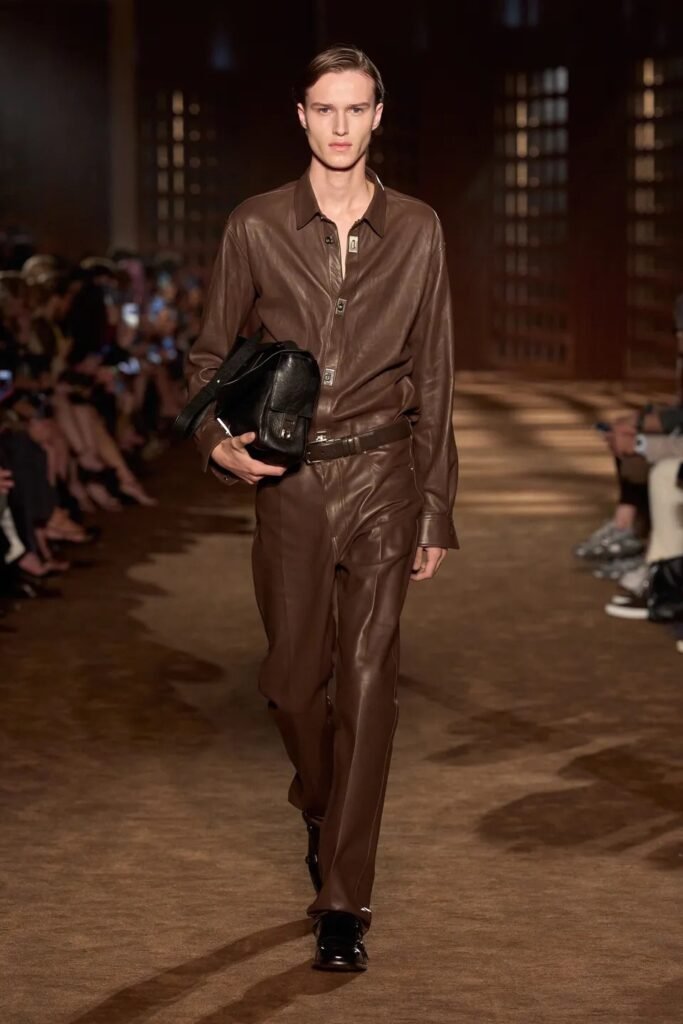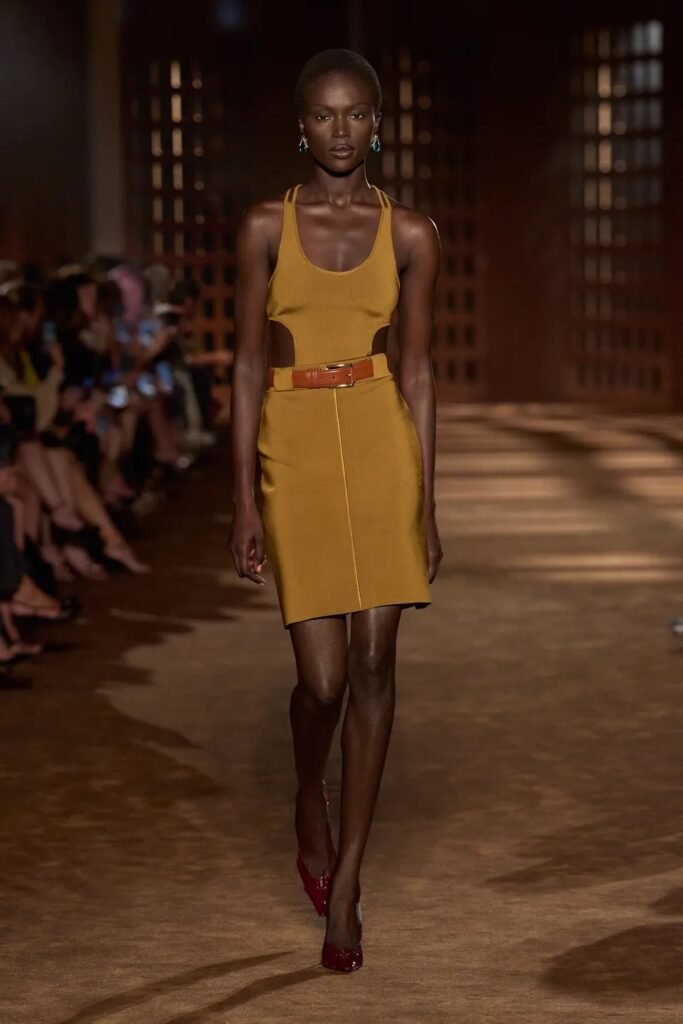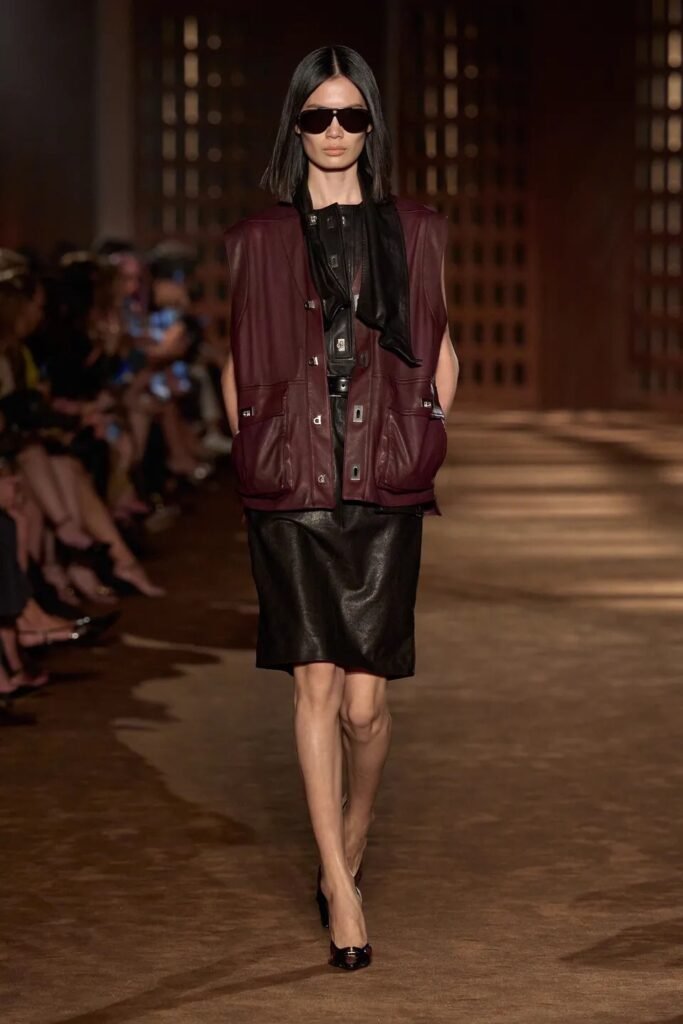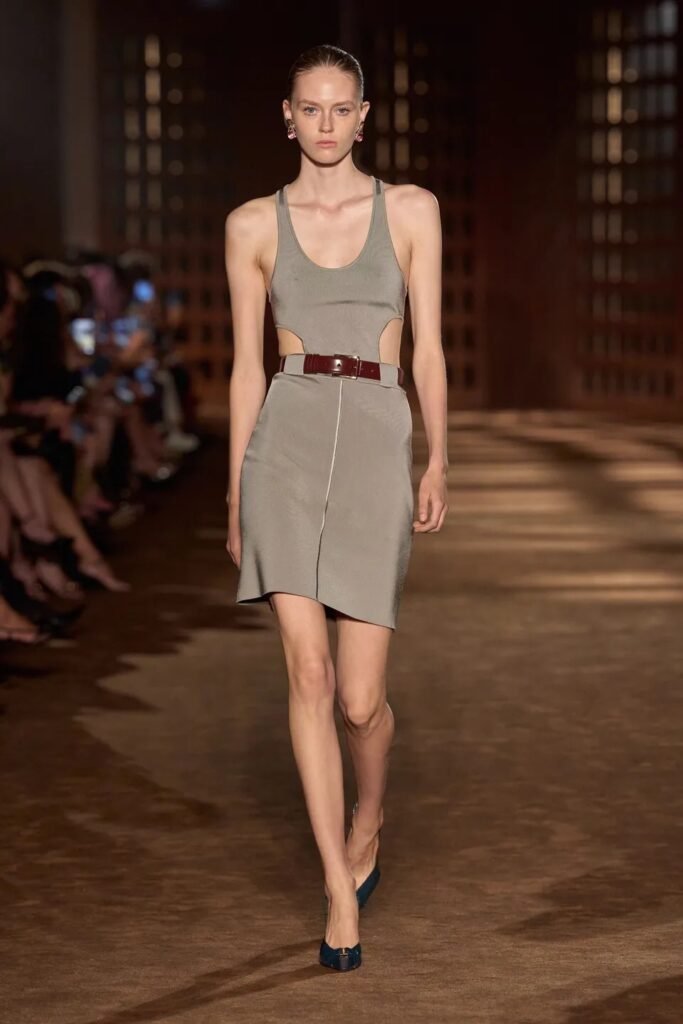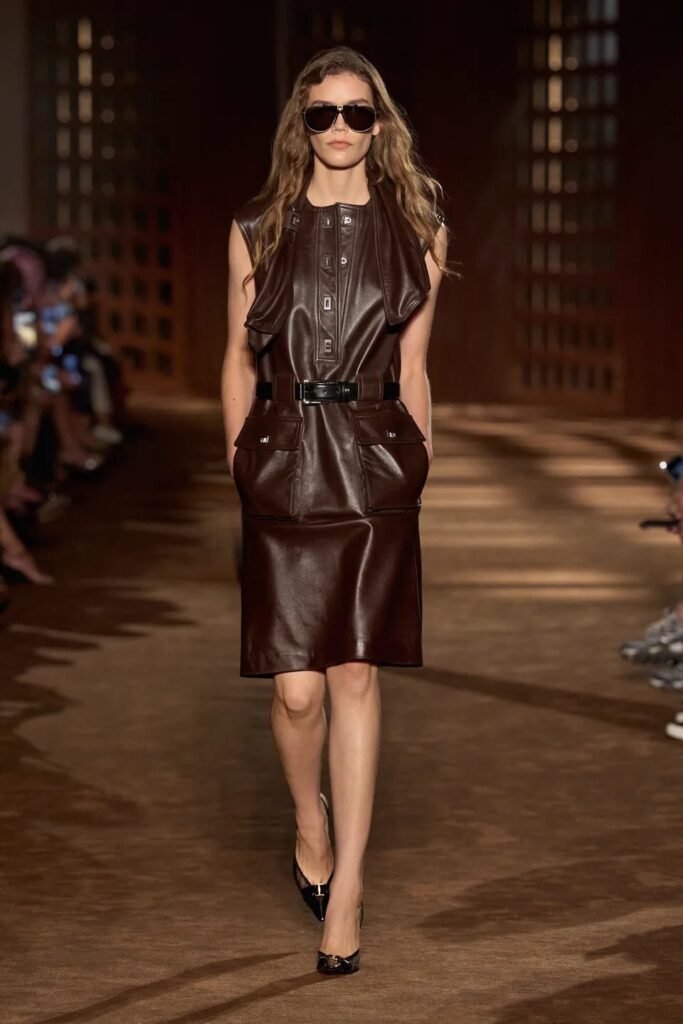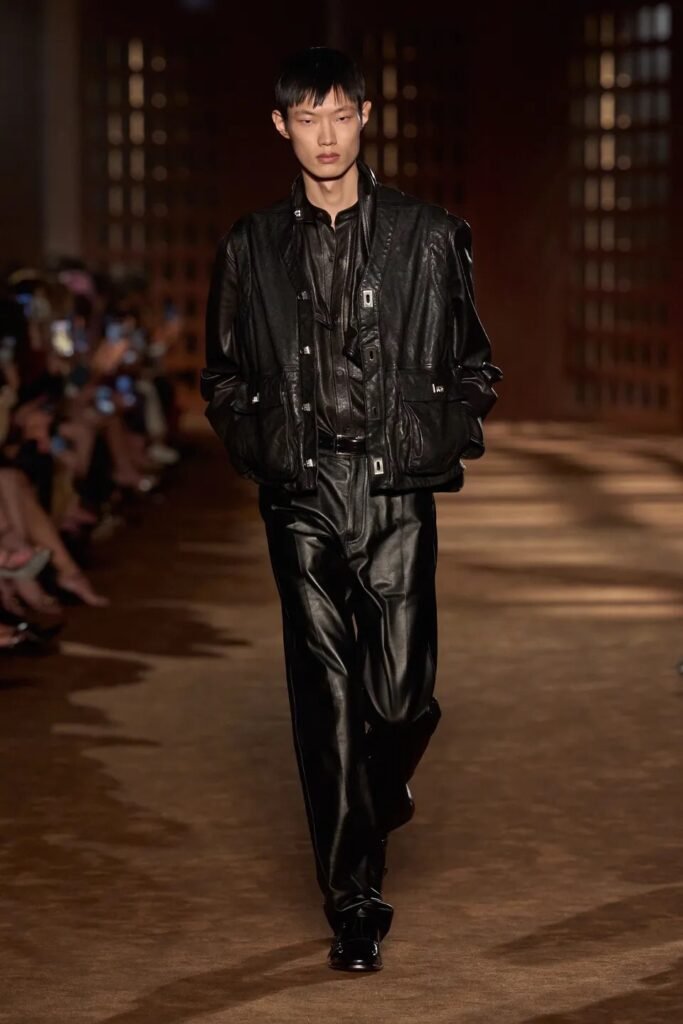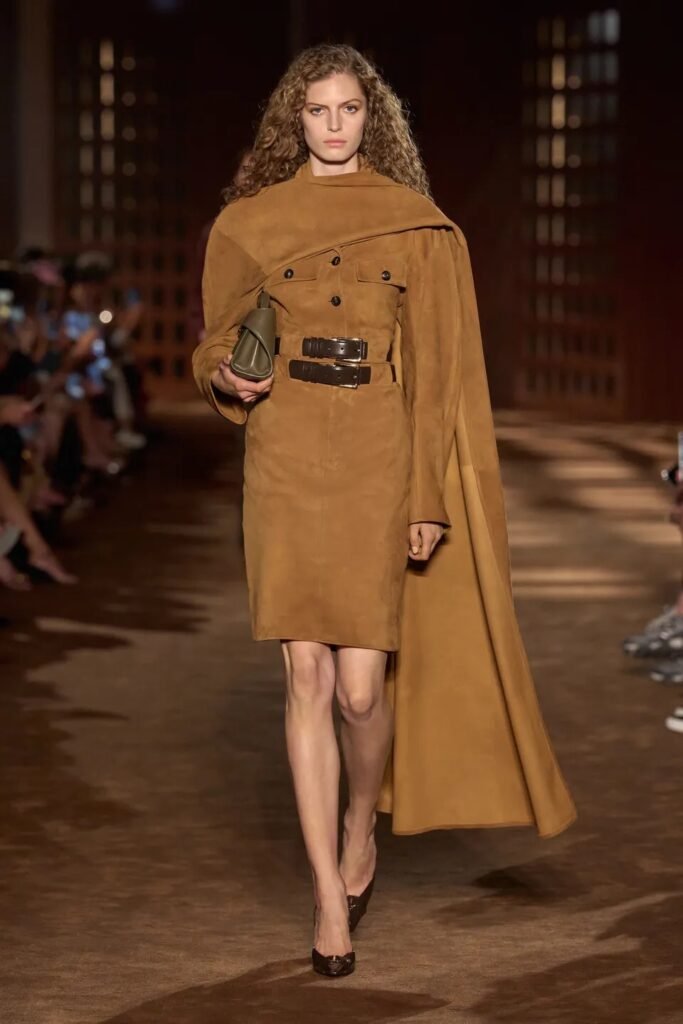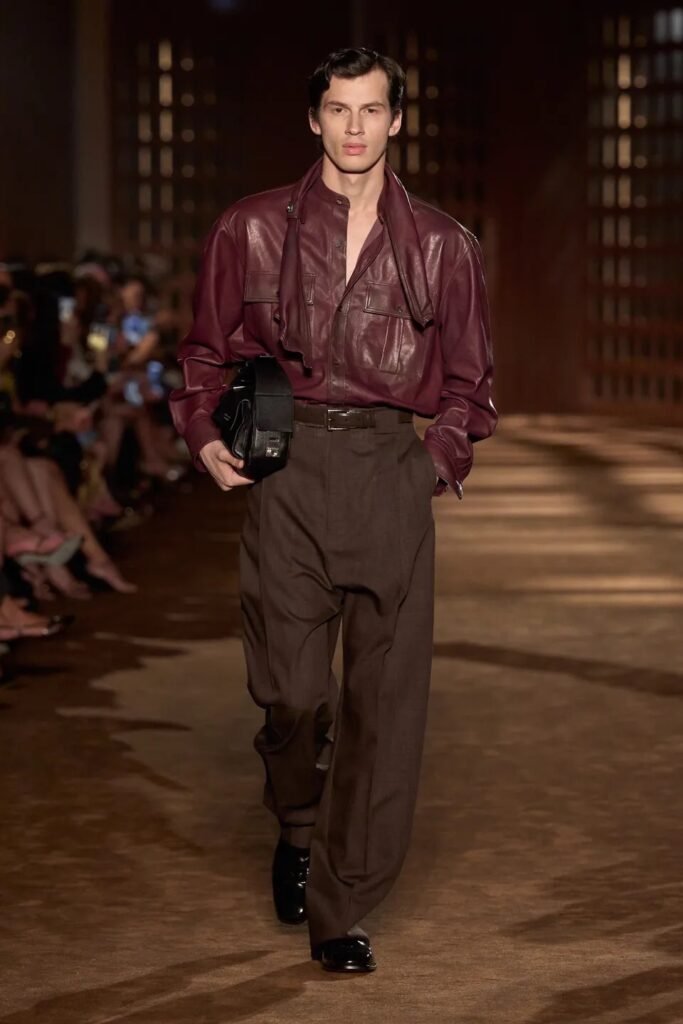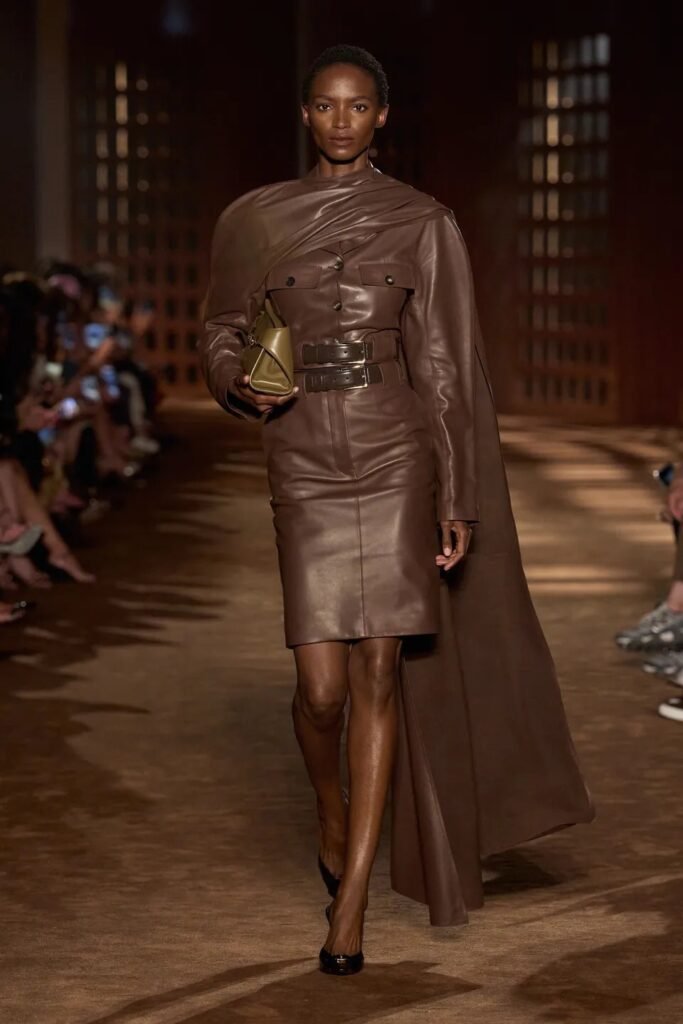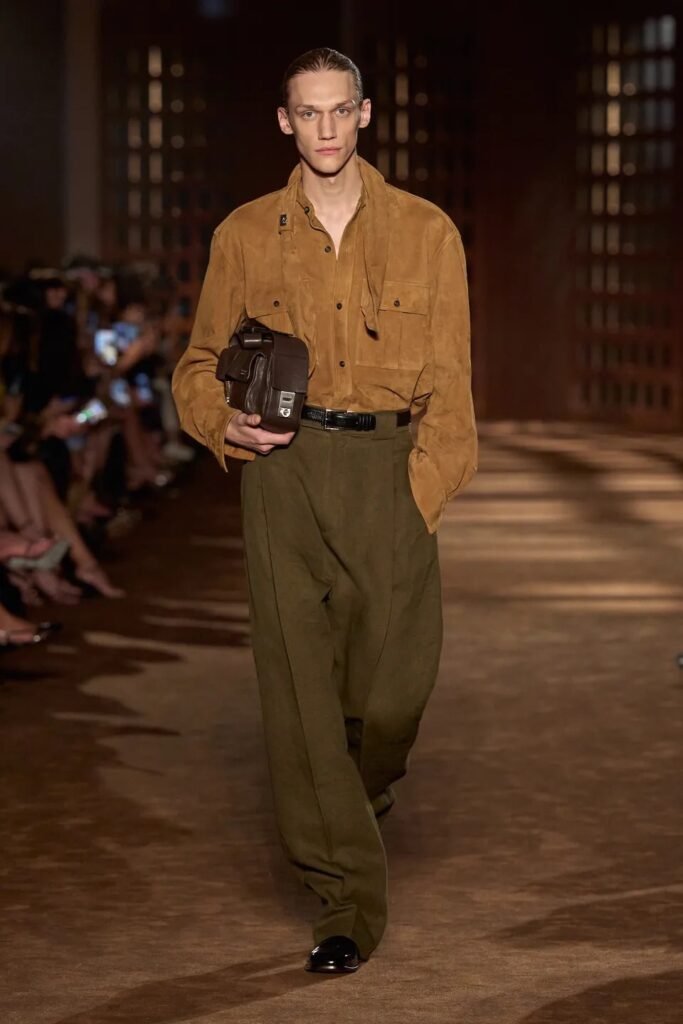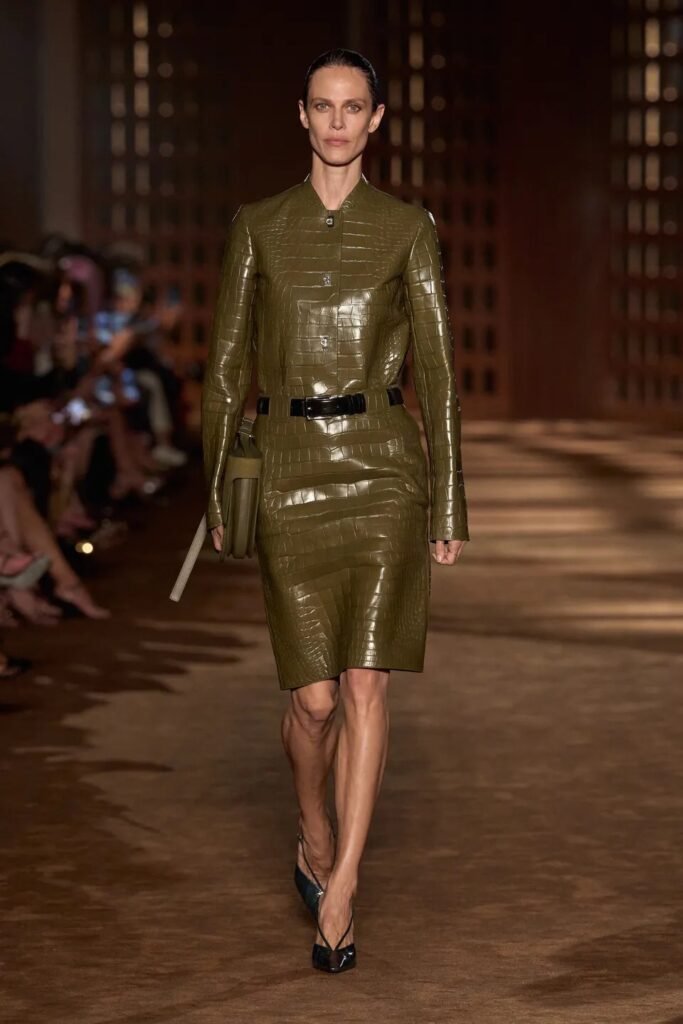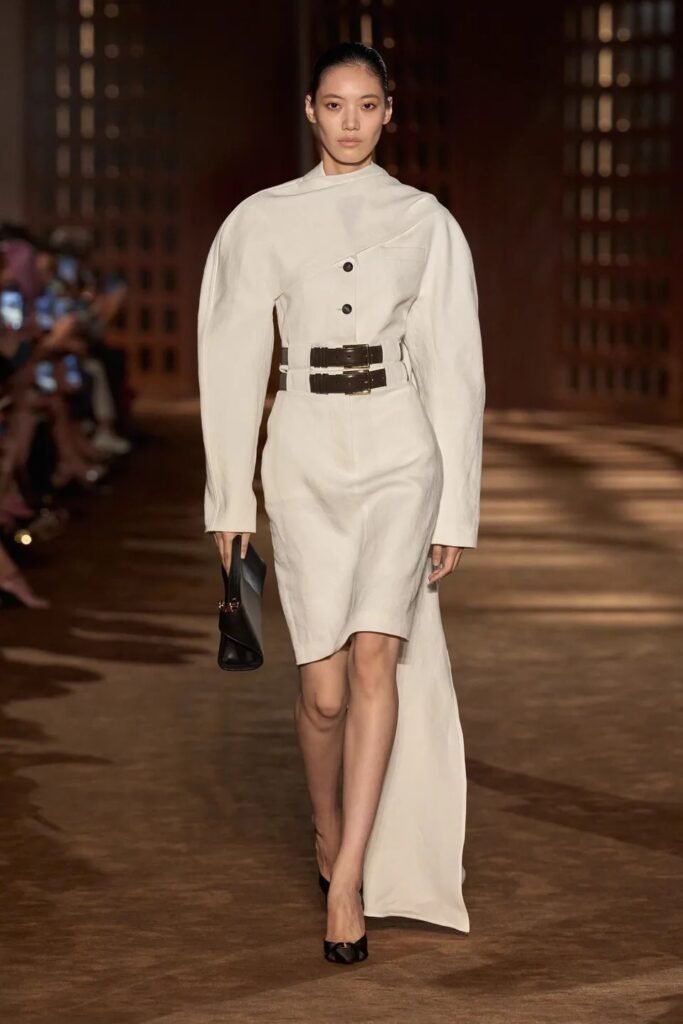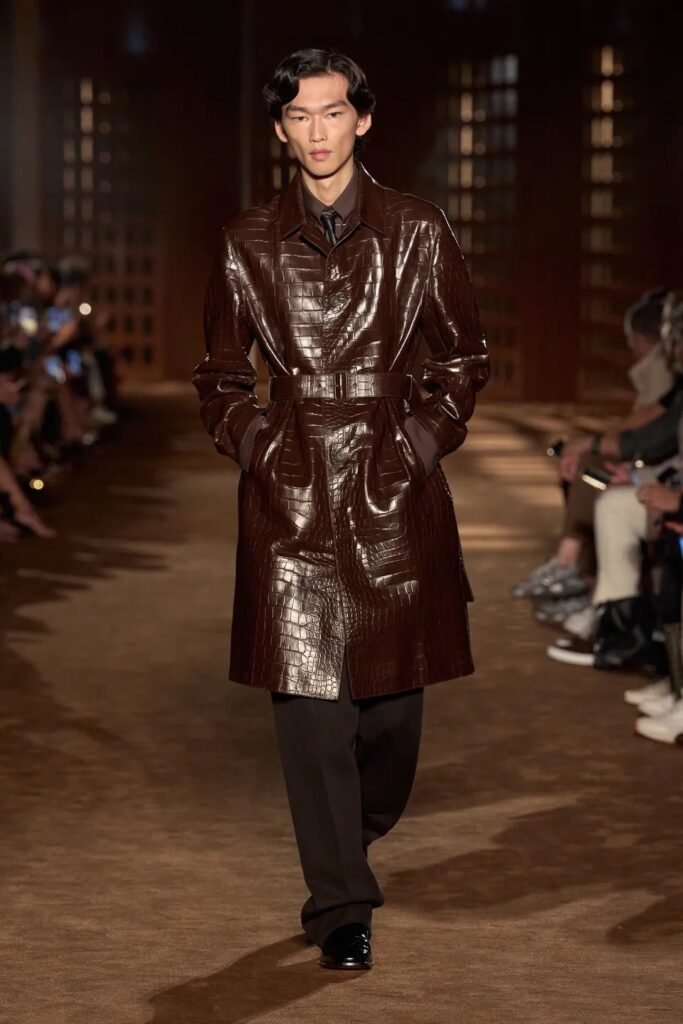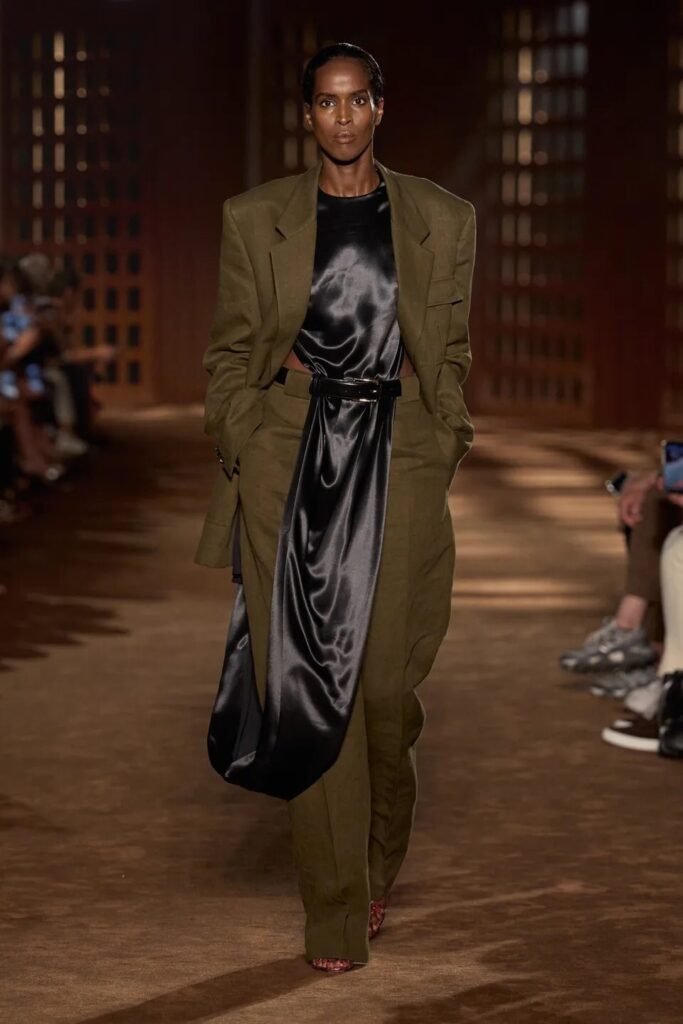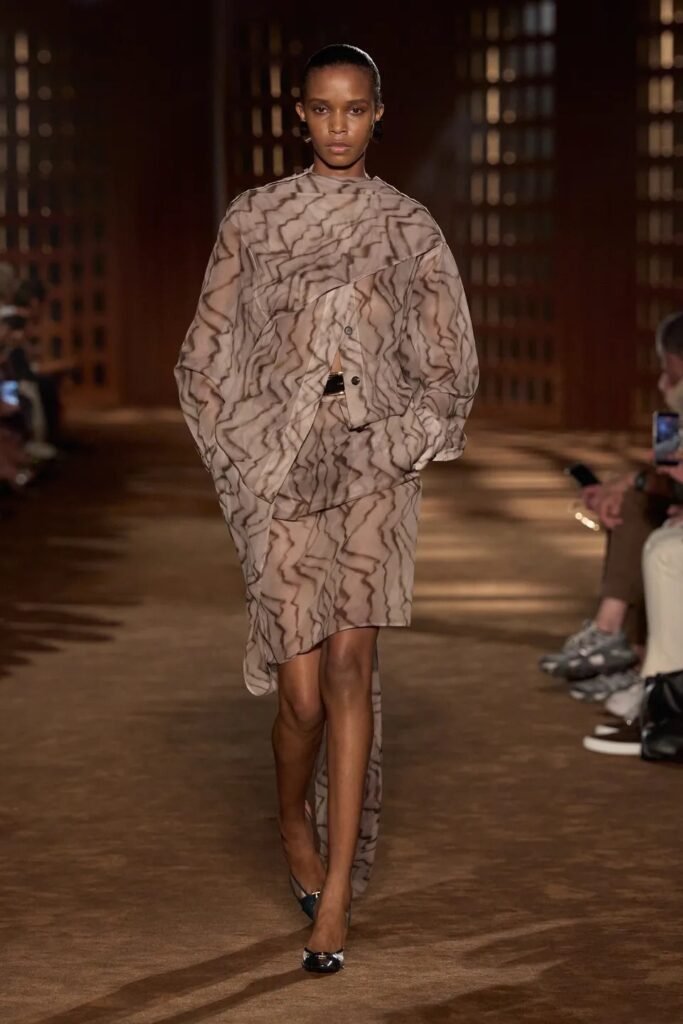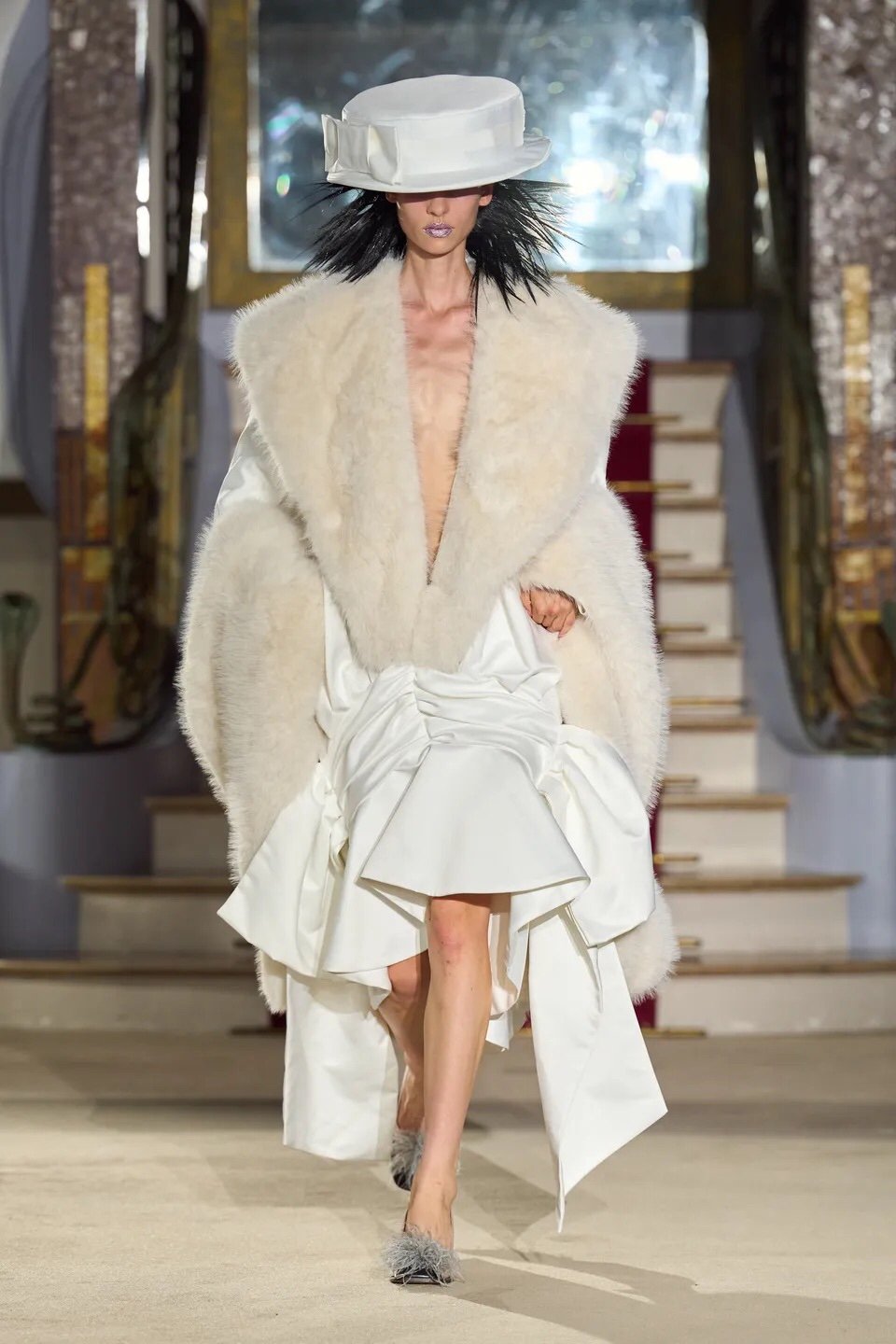
Ferragamo Spring 2027 Ready-to-Wear takes a journey through photography, surrealism, 1940s tailoring, and the inventive spirit of Salvatore Ferragamo. For Spring 2027, Creative Director Maximilian Davis looks back to one of the Italian house’s most fascinating creations—the Invisible Sandal—using it as a starting point for a collection where craftsmanship, sensuality and modern luxury meet.
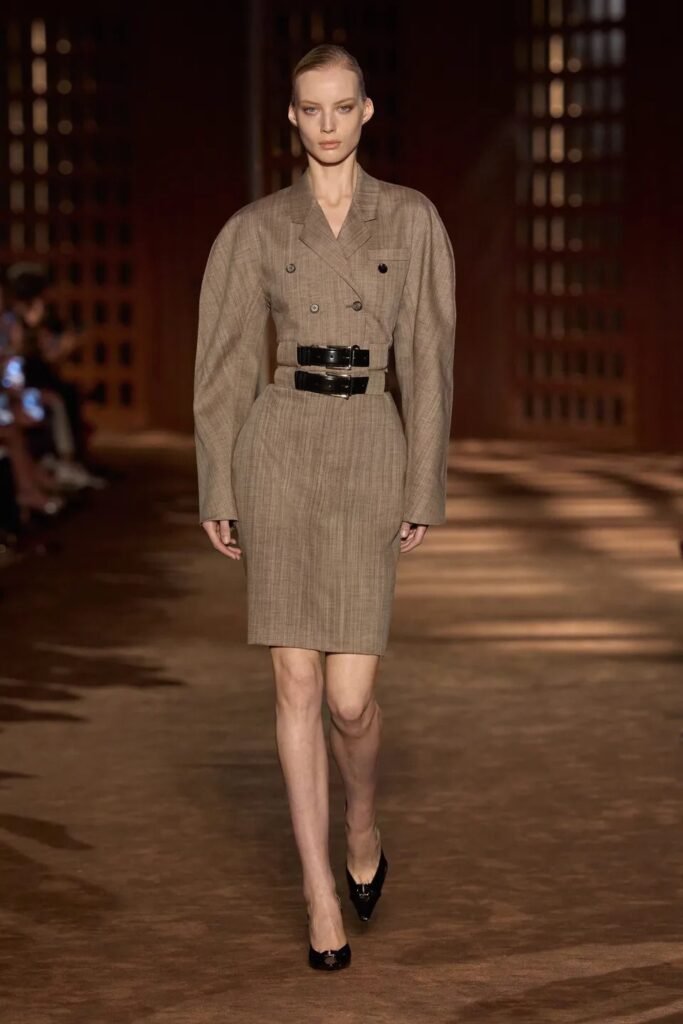
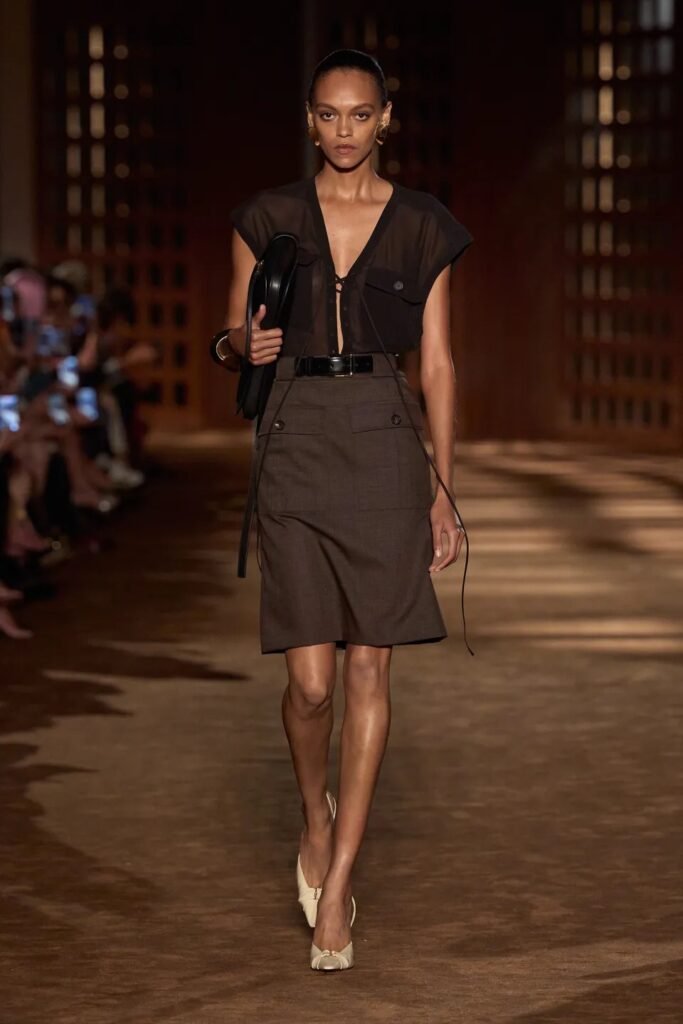
Presented during Milan Fashion Week on September 26, 2026, the collection continues Davis’s exploration of Ferragamo’s rich history while pushing the house further into a contemporary fashion language. The result is a wardrobe built around defined waists, sculptural tailoring, transparent materials, softly draped silhouettes, utilitarian details and accessories that underline Ferragamo’s historic mastery of footwear.
The Invisible Sandal as a Starting Point
The story begins with the Invisible Sandal, a remarkable 1947 Ferragamo design that combined the designer’s F-shaped wedge with transparent nylon monofilament. Nearly eight decades later, Davis returned to that idea of making the seemingly impossible tangible.
The original sandal was an example of Salvatore Ferragamo’s fascination with technology and experimentation. For Spring 2027, its transparent construction becomes a conceptual reference rather than a literal reproduction.
Davis used the shoe’s surreal appearance to explore the work of photographers Lee Miller and Man Ray, particularly their experiments with solarization. That photographic influence gave the collection an intriguing tension between what is visible and what remains hidden.
It is a fitting idea for Ferragamo. The house has always occupied the space between fashion and invention, particularly through its founder’s extraordinary approach to footwear.
A New Vision of the 1940s
The 1940s provide another important foundation for the collection.
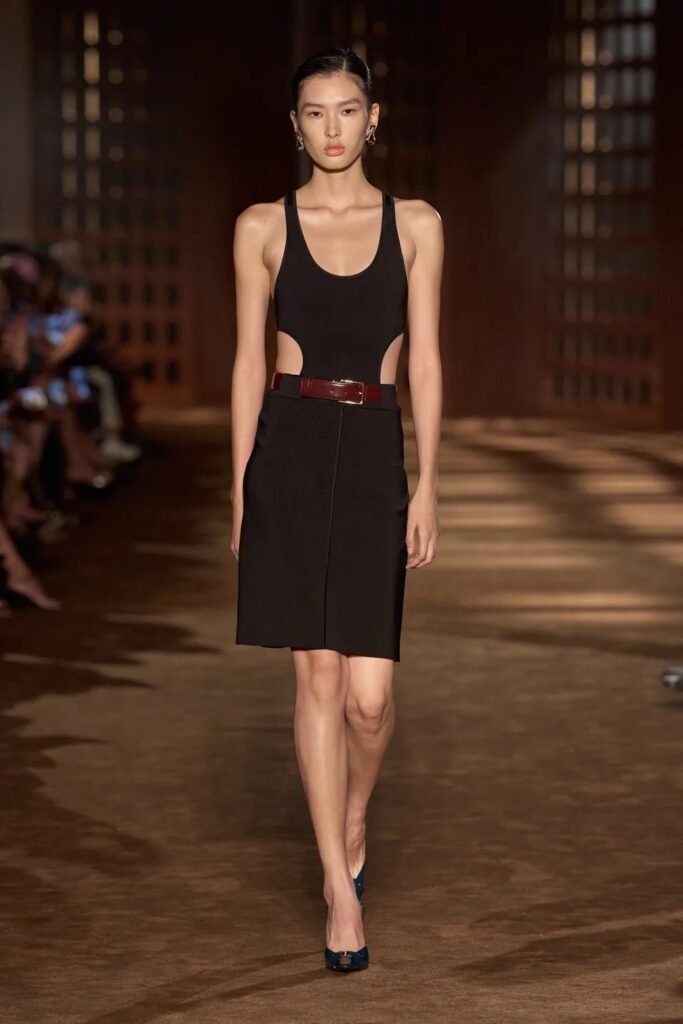
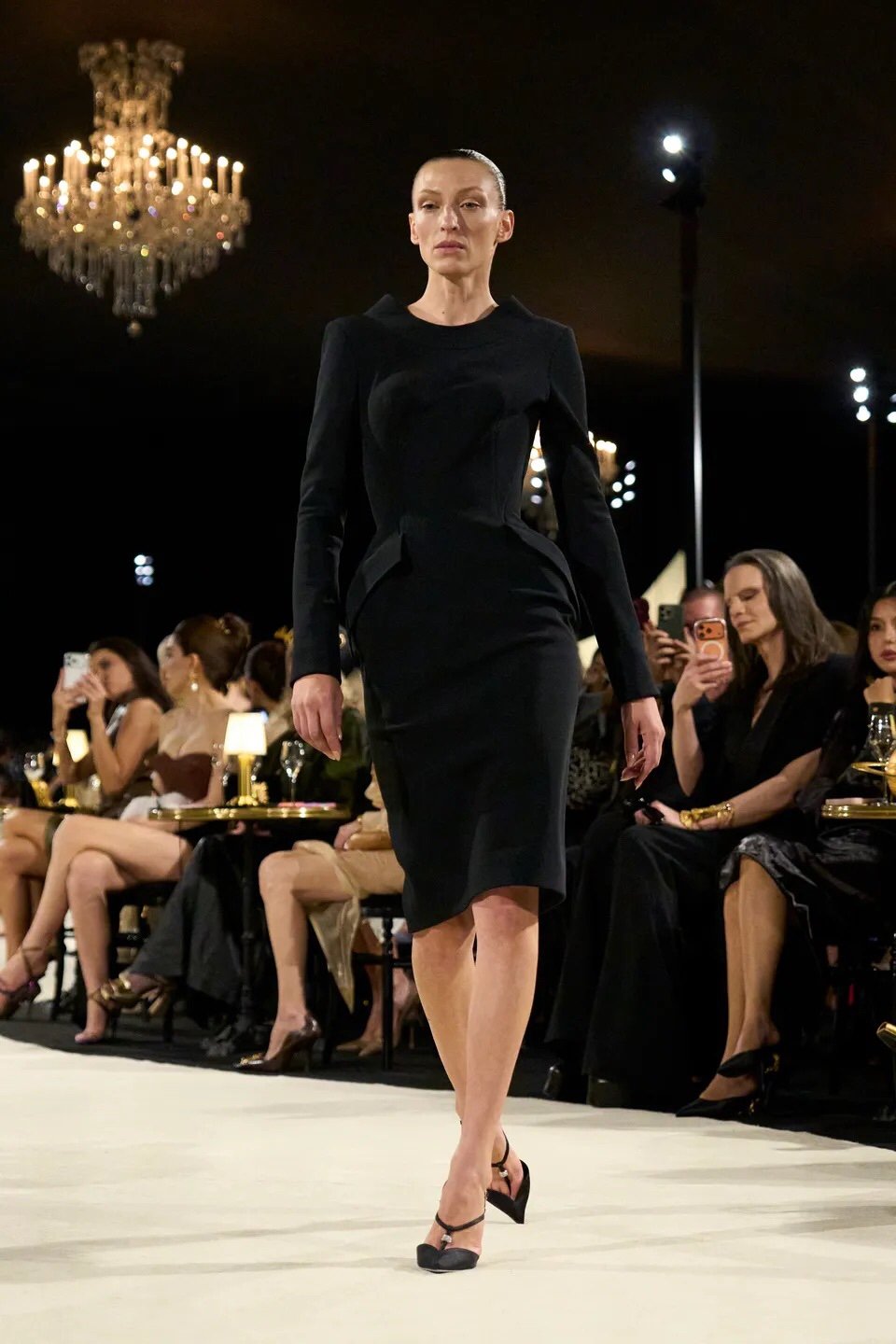
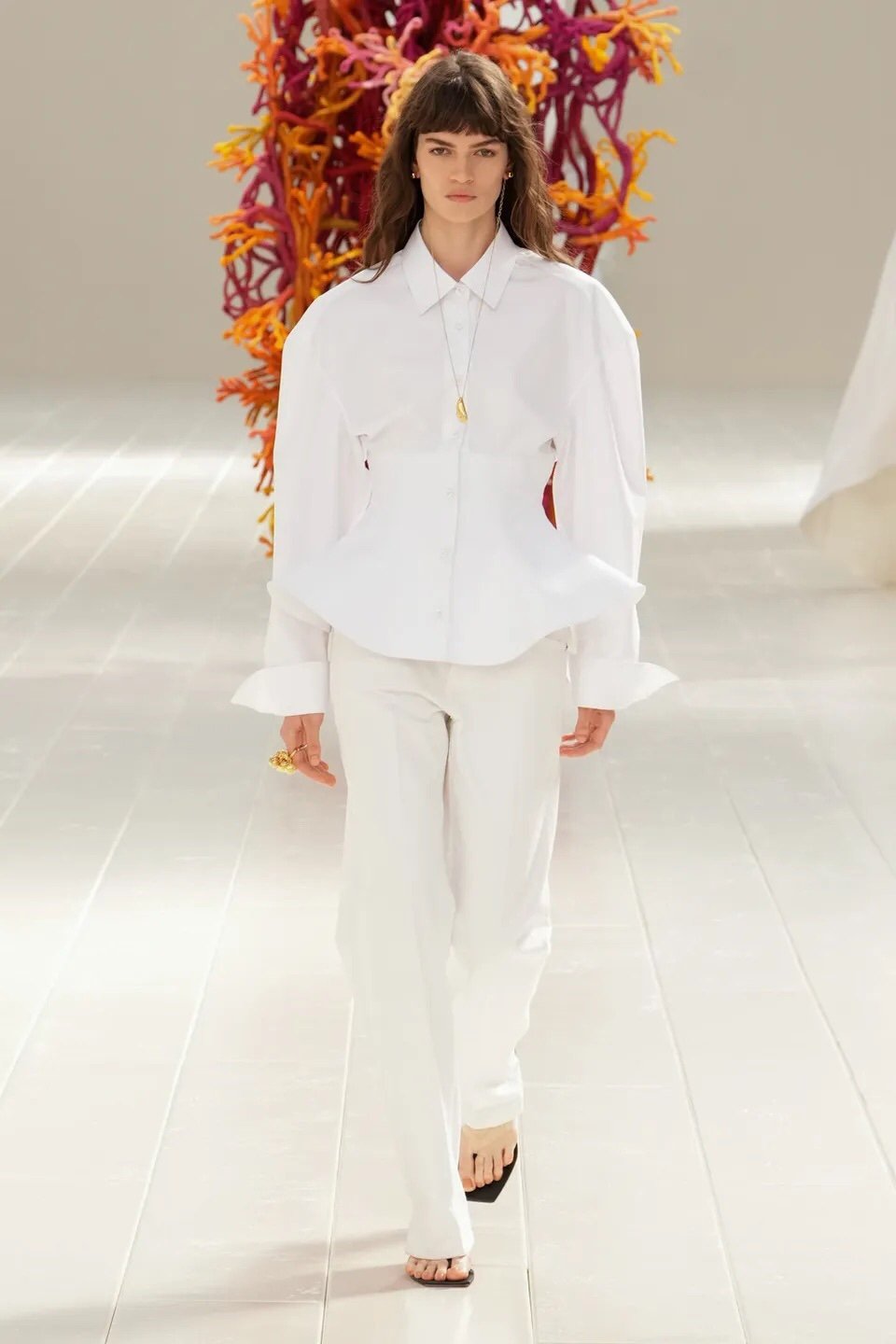
Rather than reproducing the decade literally, Davis extracted particular elements from the era and translated them into a more streamlined modern wardrobe. The waist became one of the most important points of emphasis.
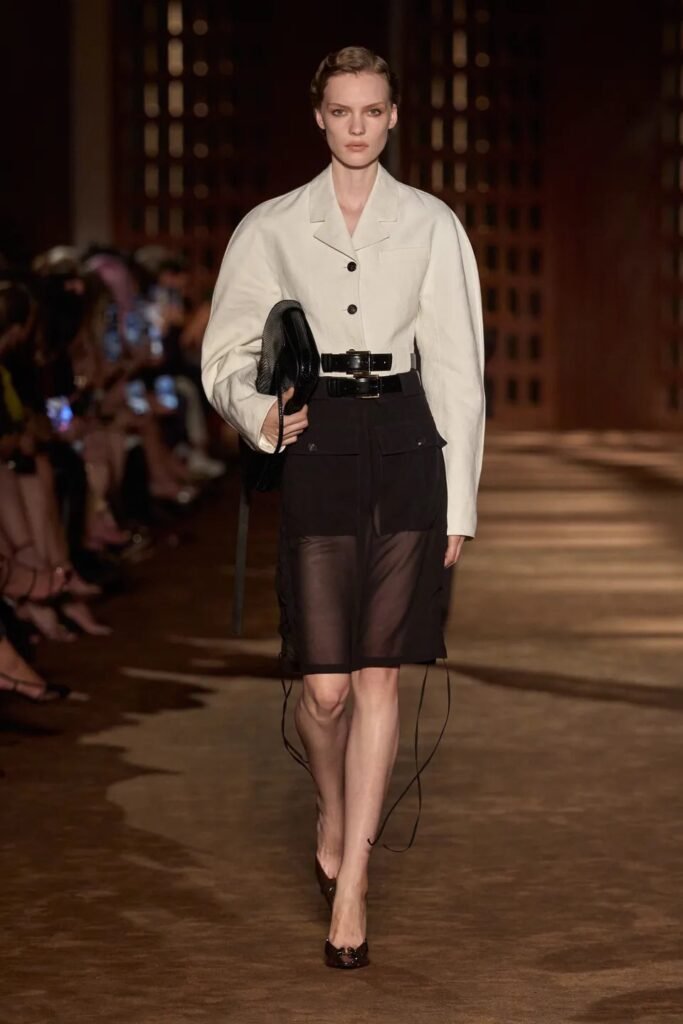
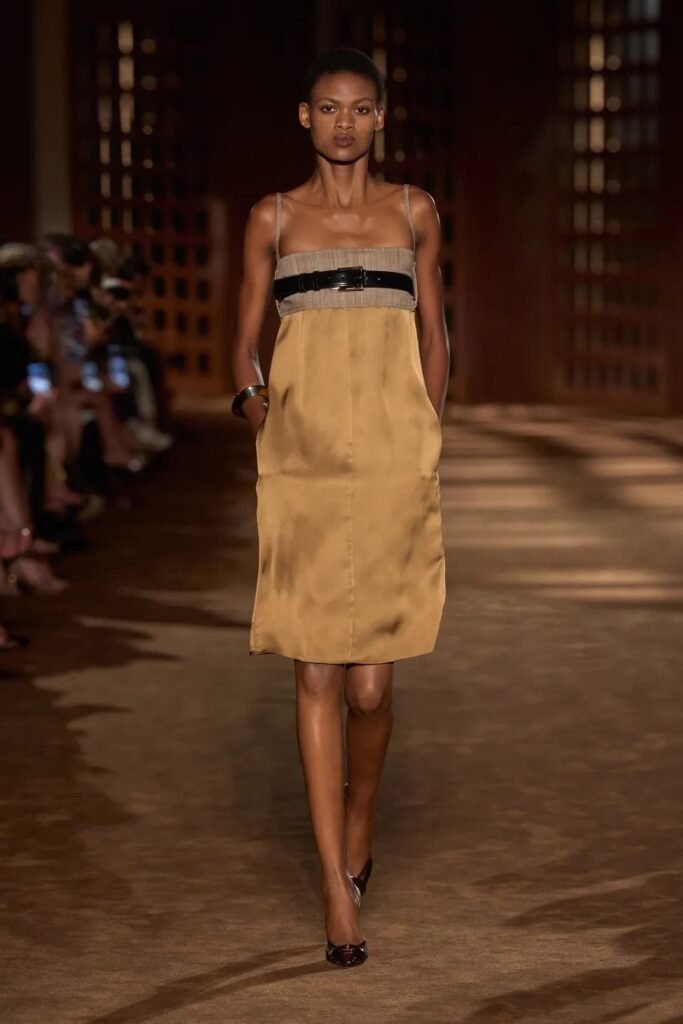
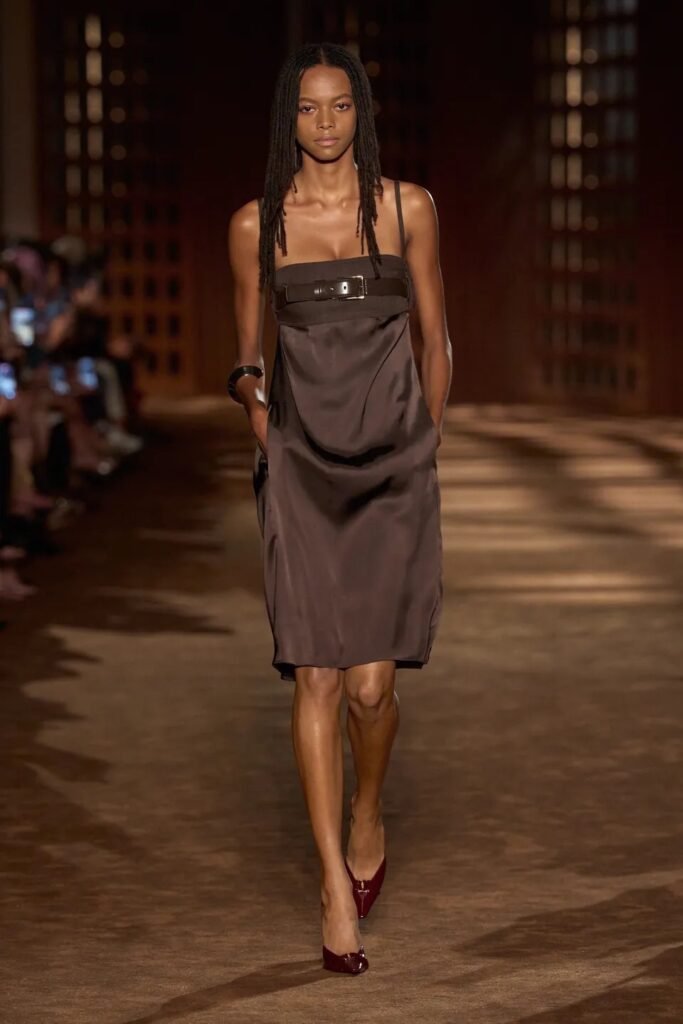
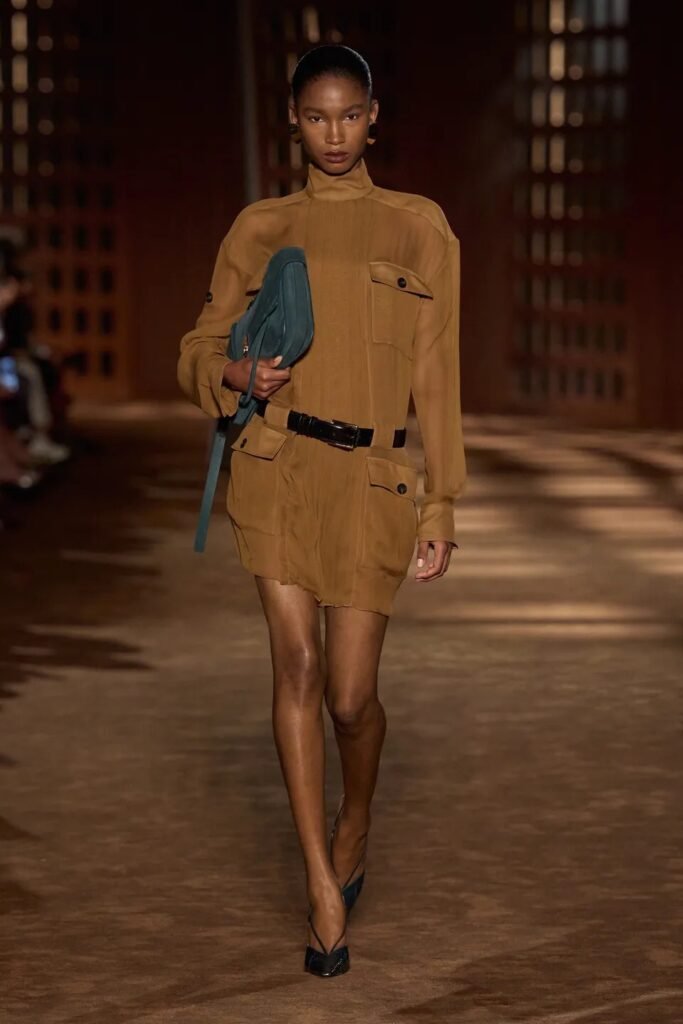
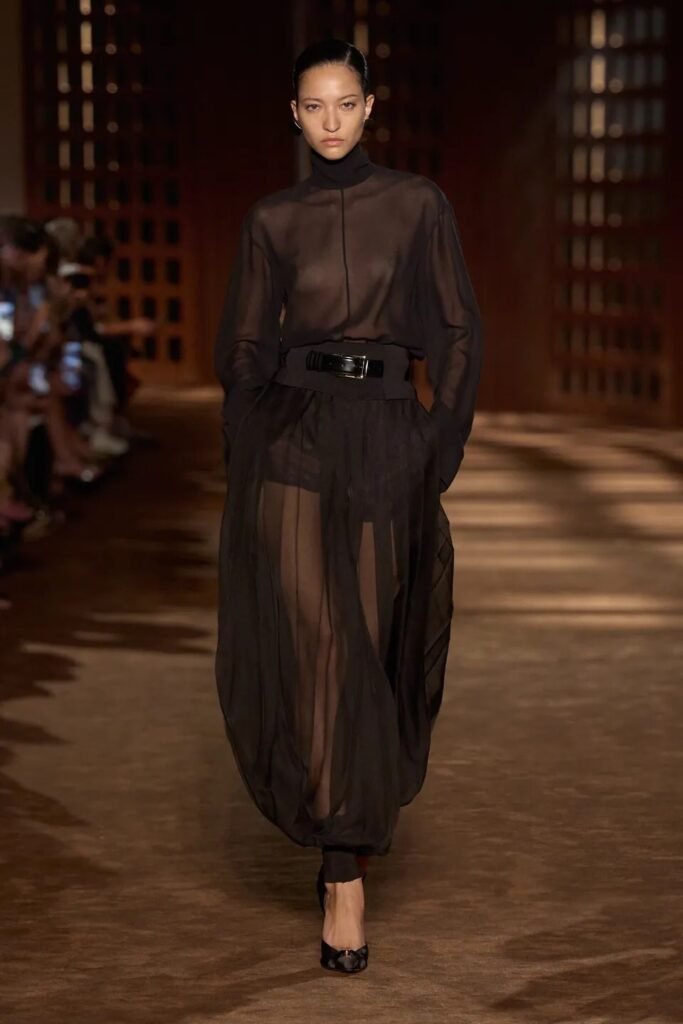
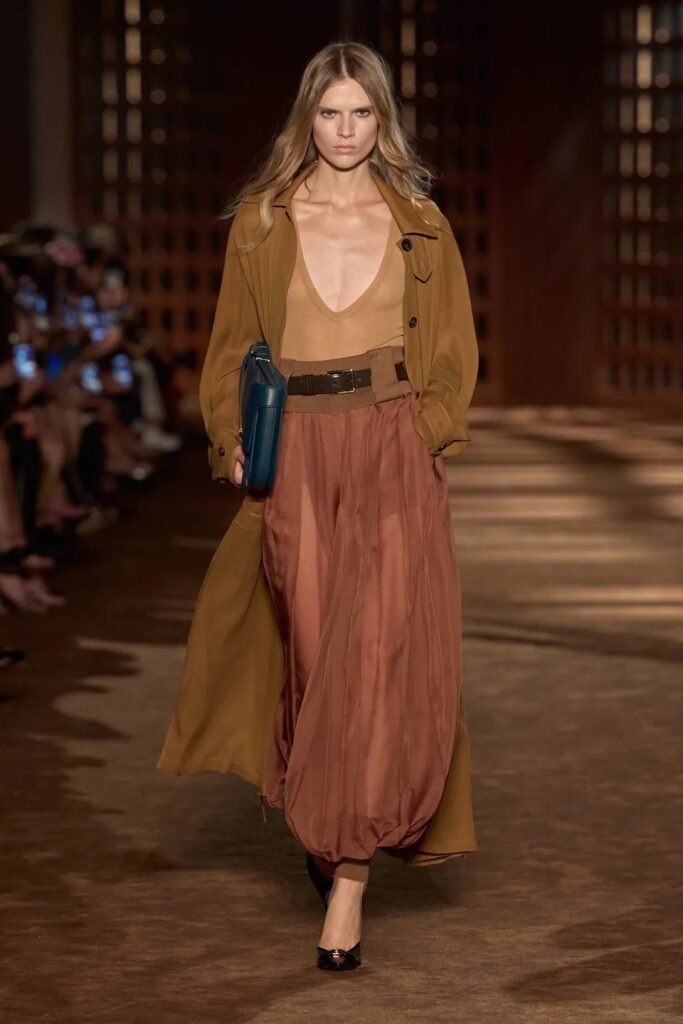
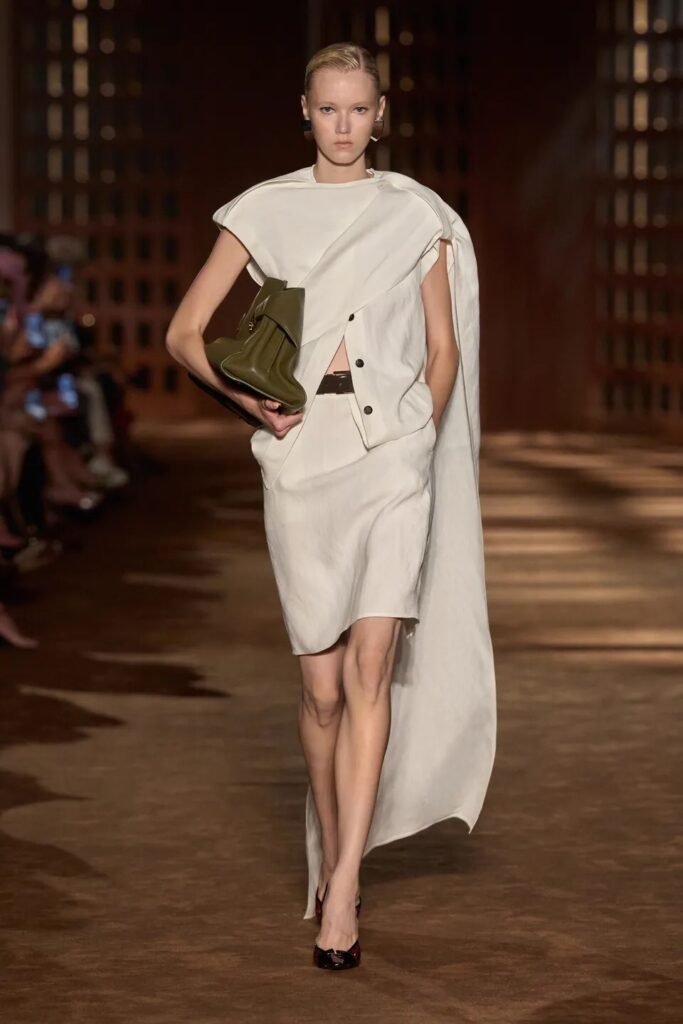
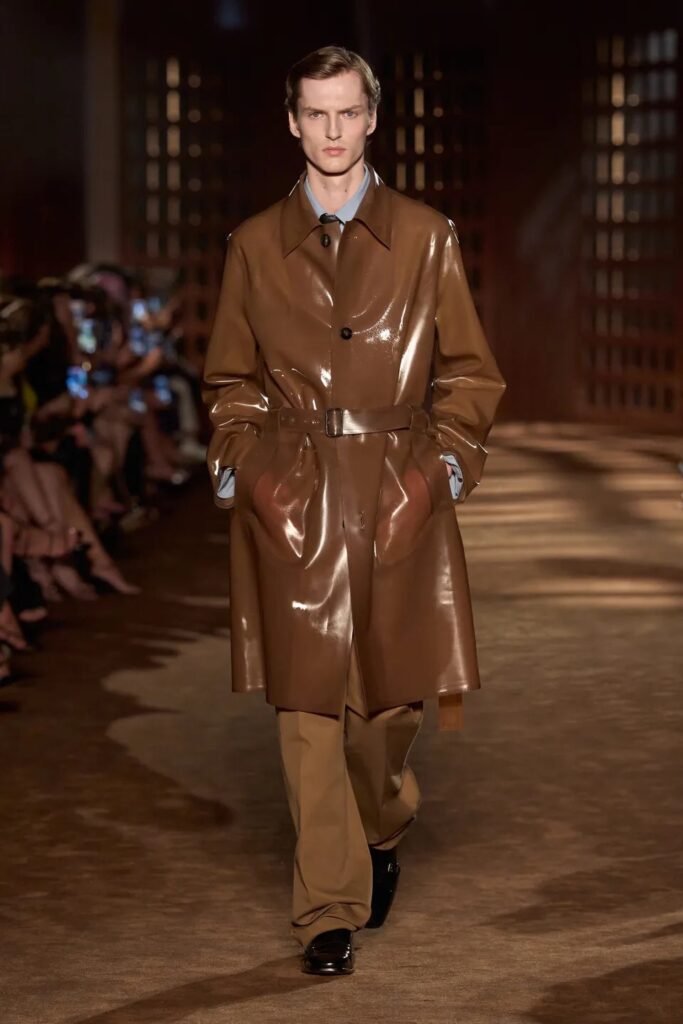
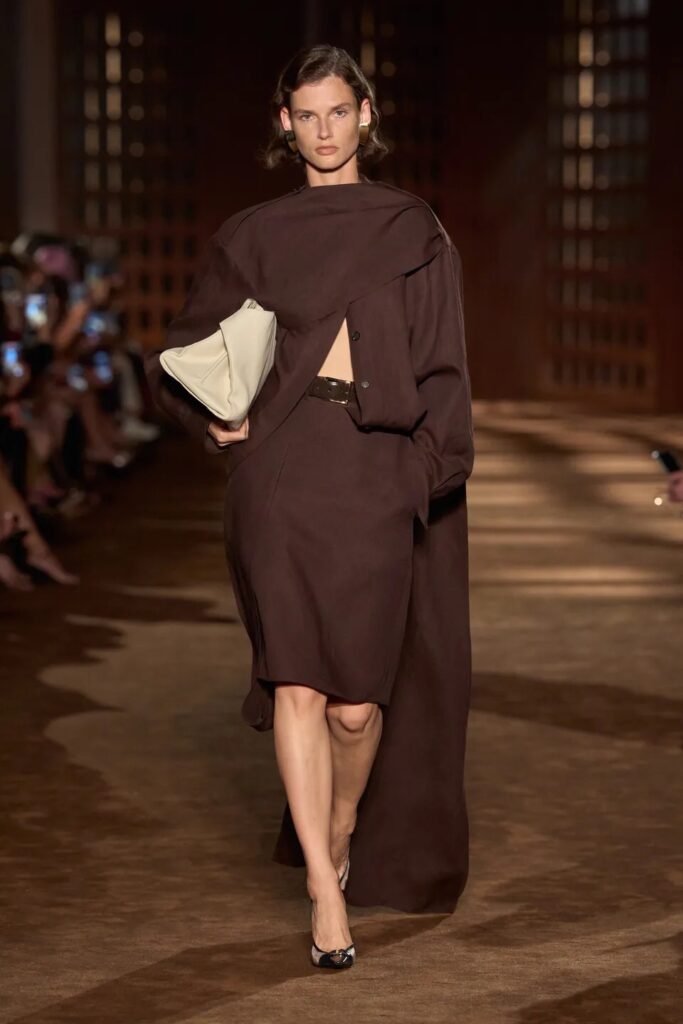
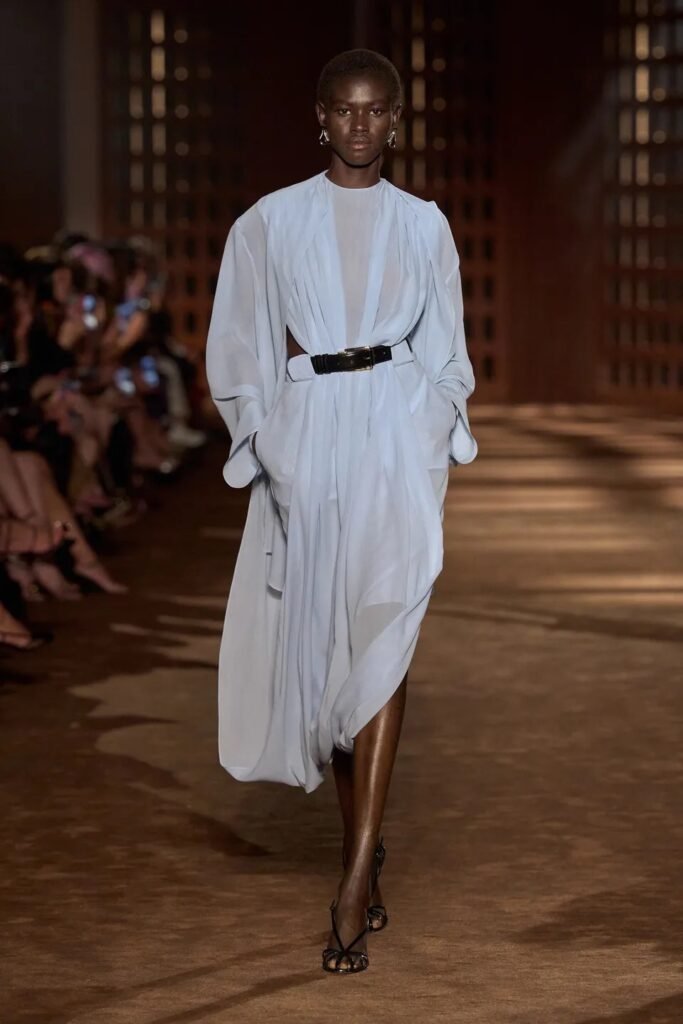
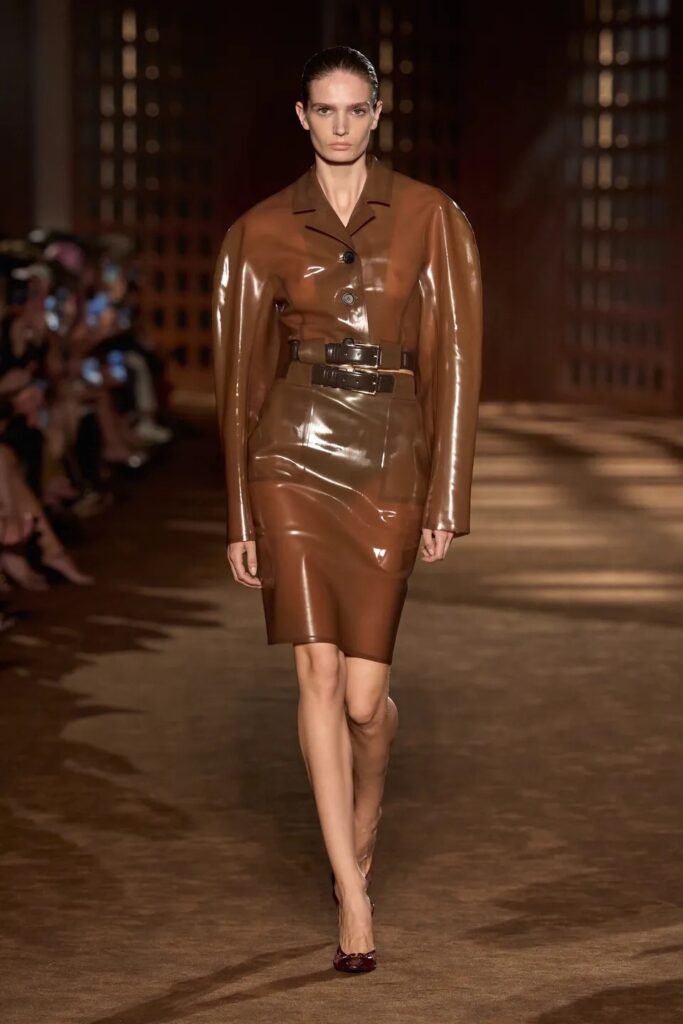
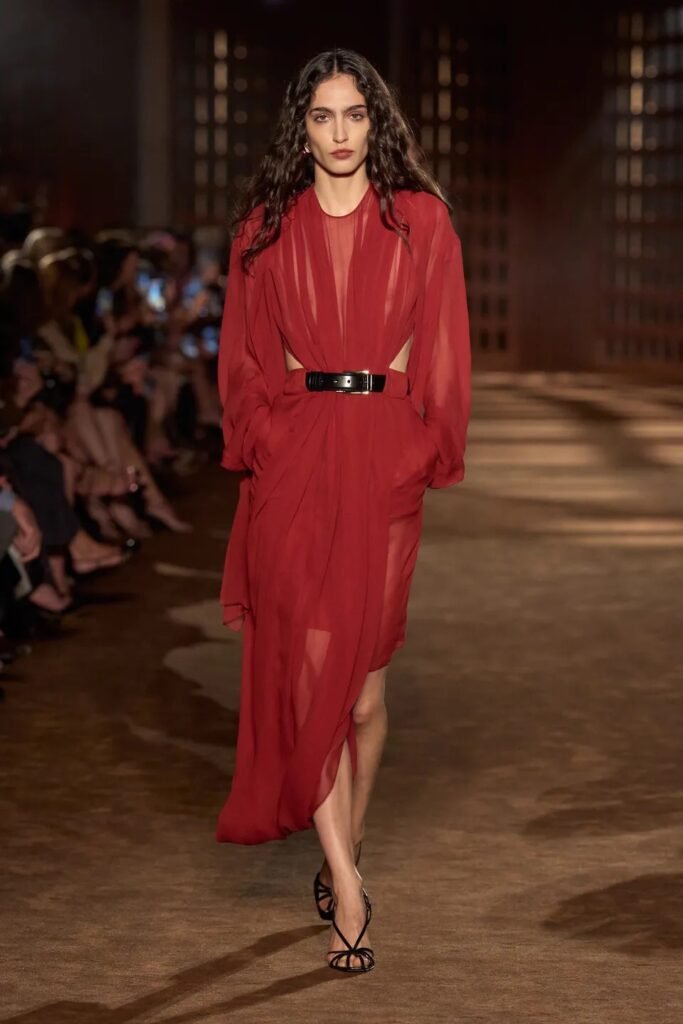
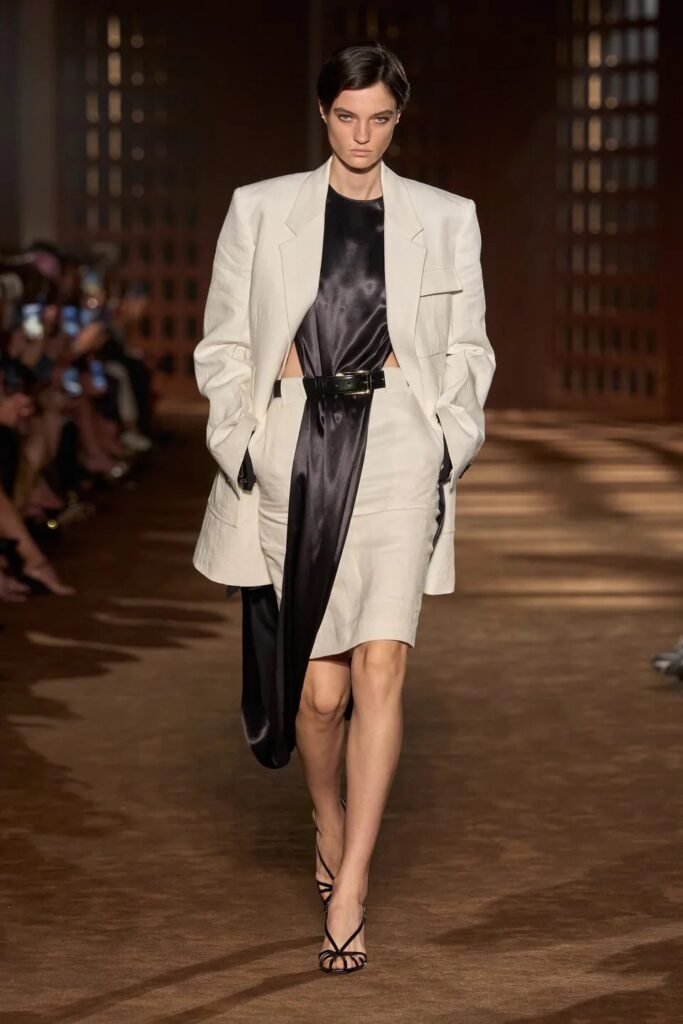
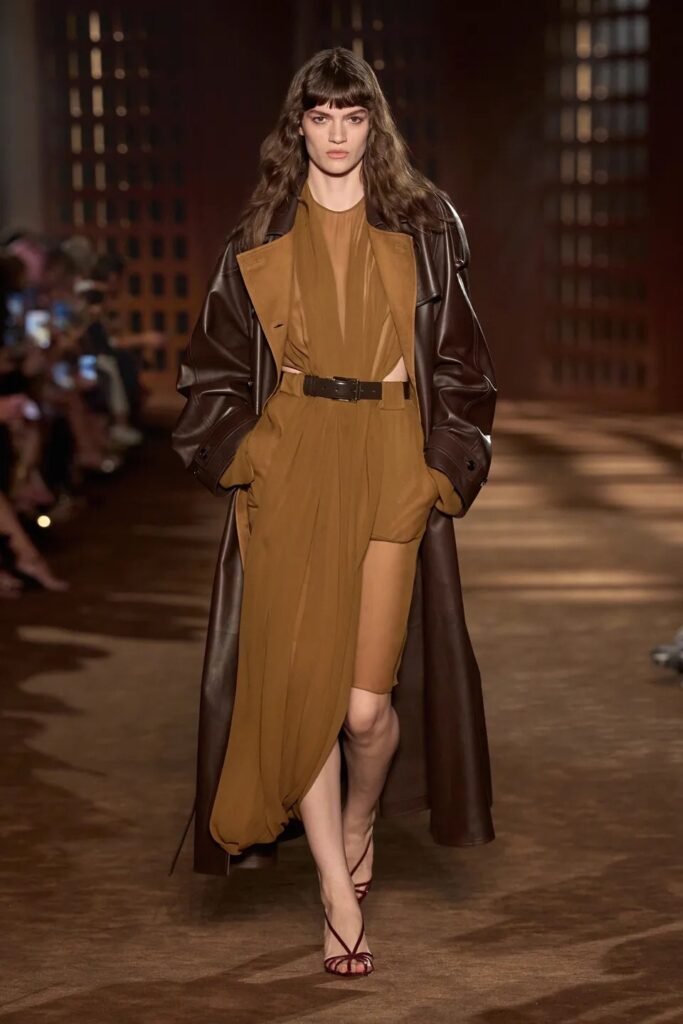
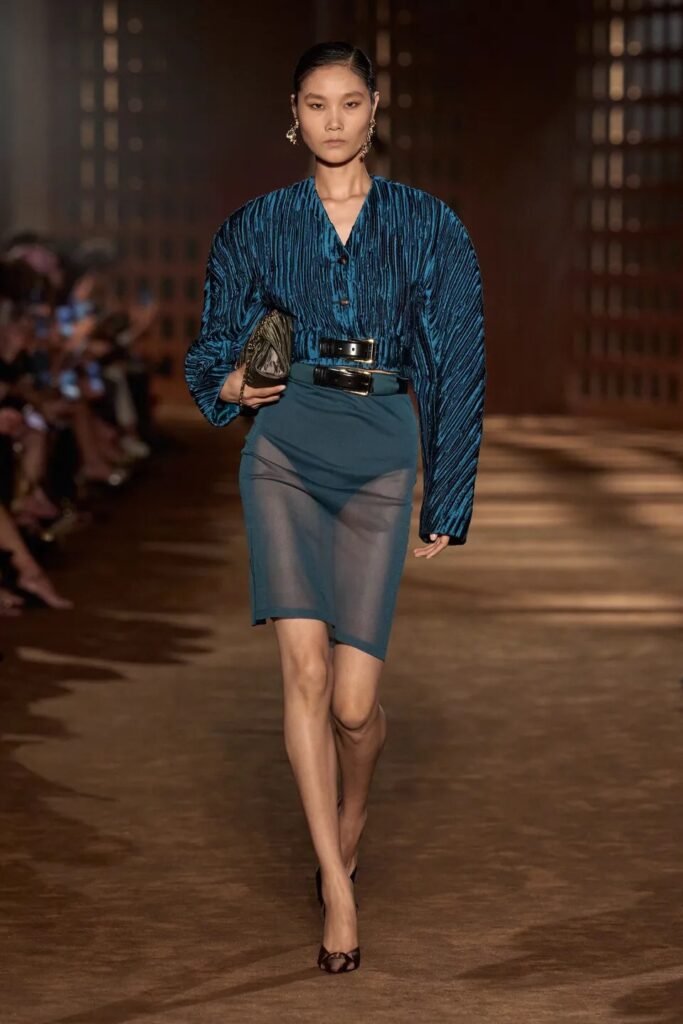
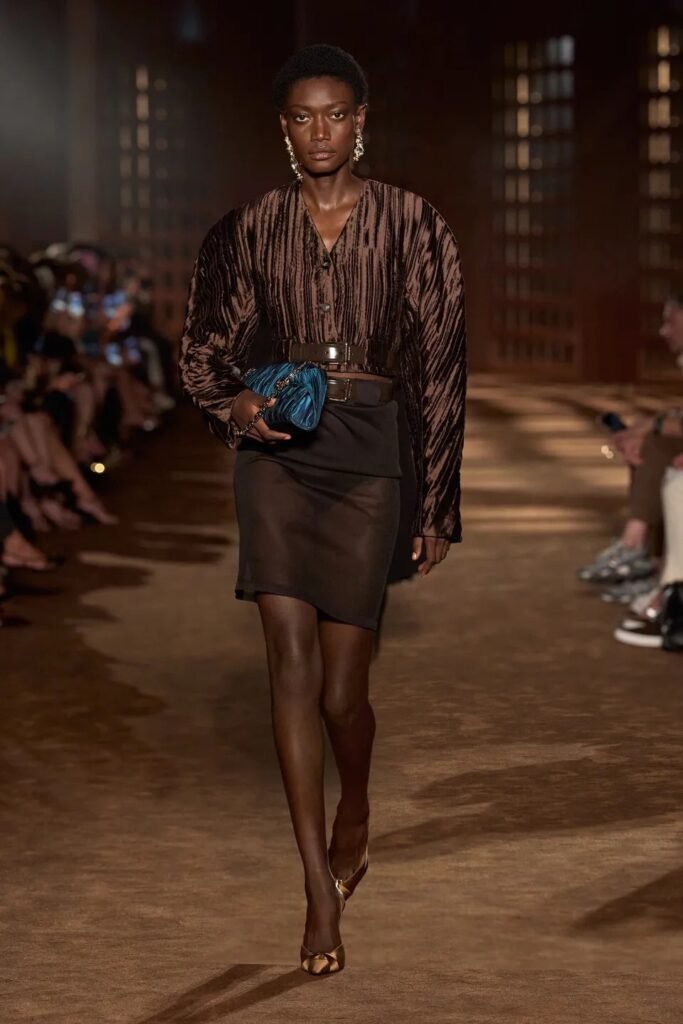
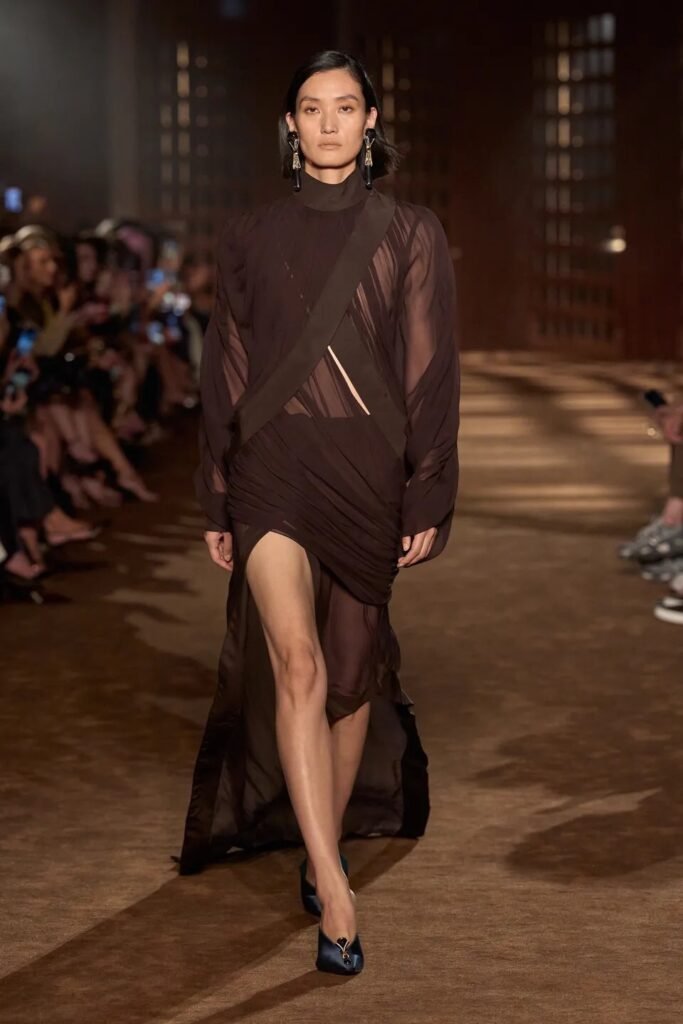
Belts appear throughout the collection, sometimes functioning traditionally around the waist and at other times taking on more unexpected positions. In several looks, belts cross the bust or become structural elements within dresses.
The effect is simultaneously practical and sensual.
Davis described his interest in the 1940s silhouette as a way of emphasizing the waist, creating a strong central point around which the clothing could be constructed.
Instead of the exaggerated shoulders often associated with wartime dressing, Ferragamo’s Spring 2027 woman is given a softer, rounded shoulder. The silhouette feels cleaner, more fluid and considerably more contemporary.
Tailoring With a Sense of Movement
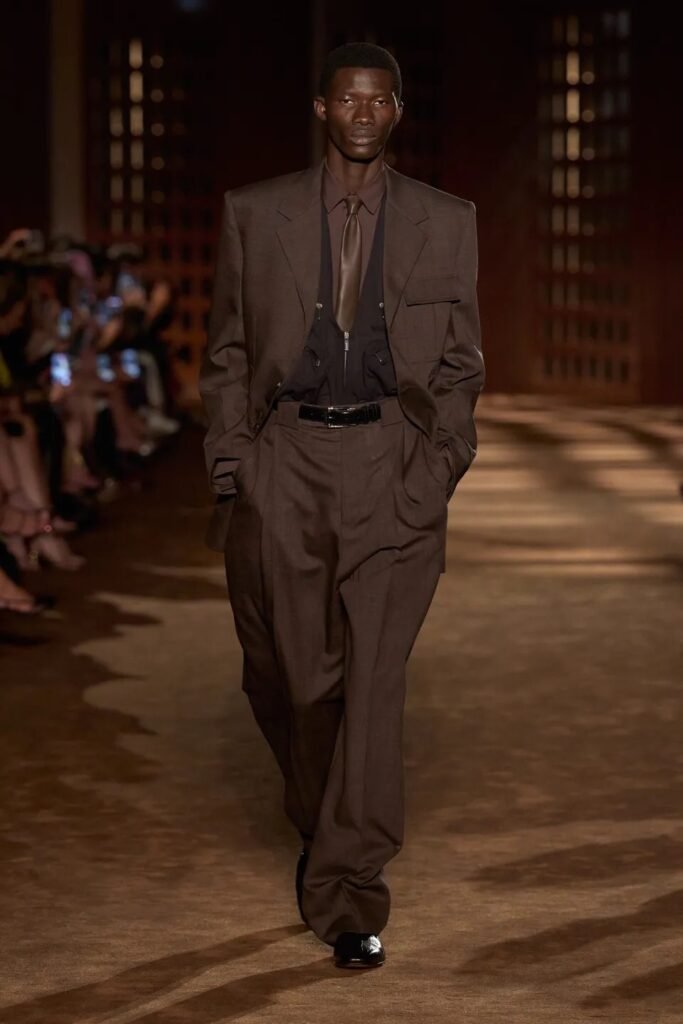
Tailoring remains one of the collection’s strongest elements.
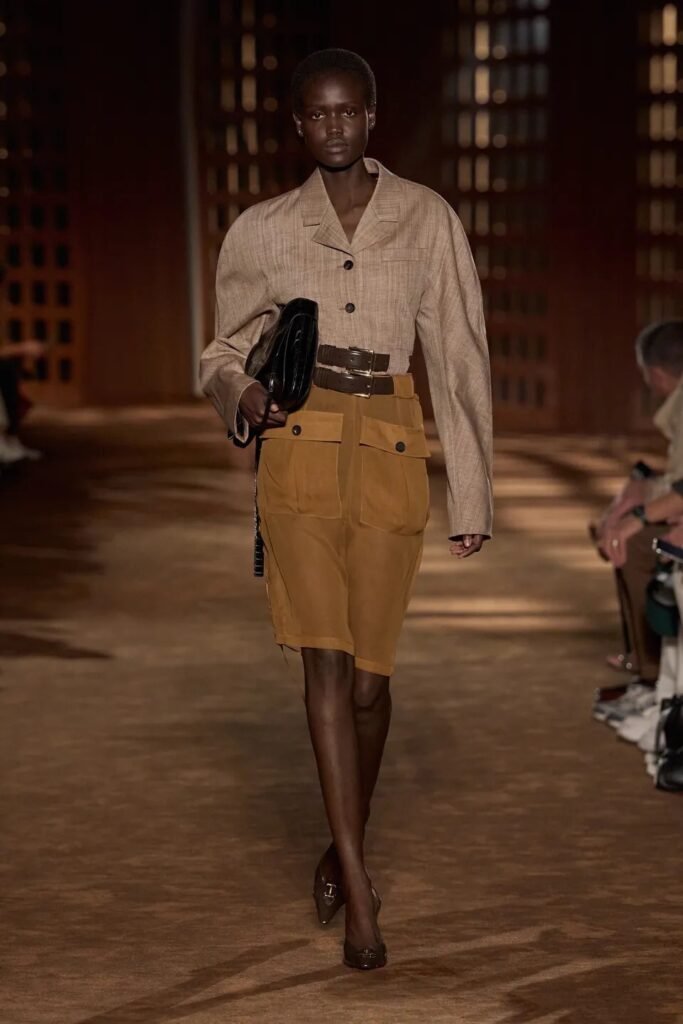
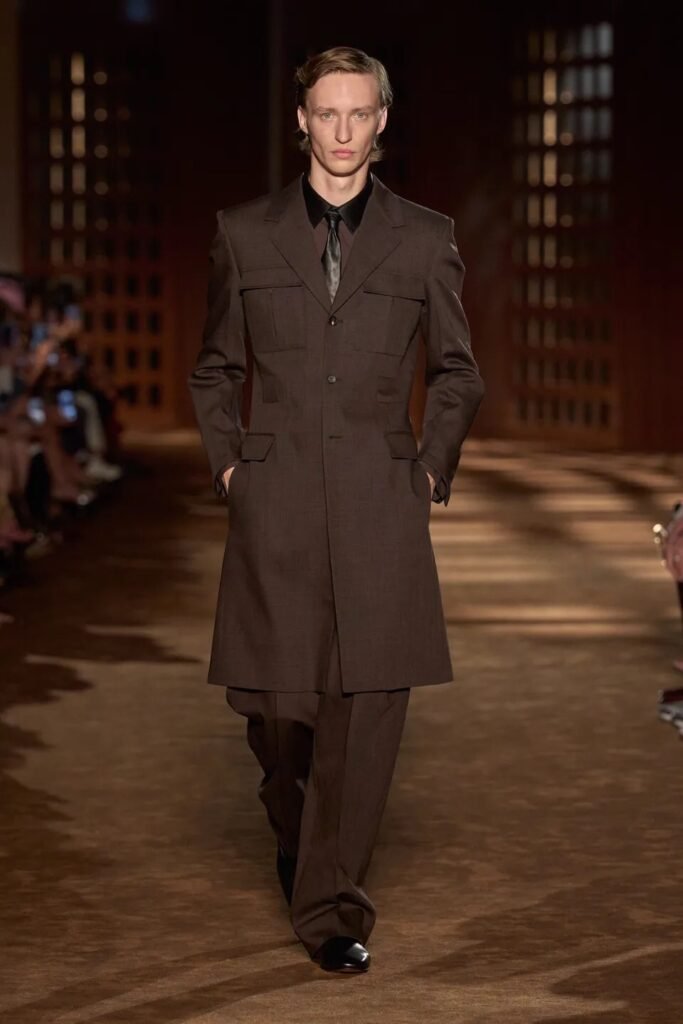
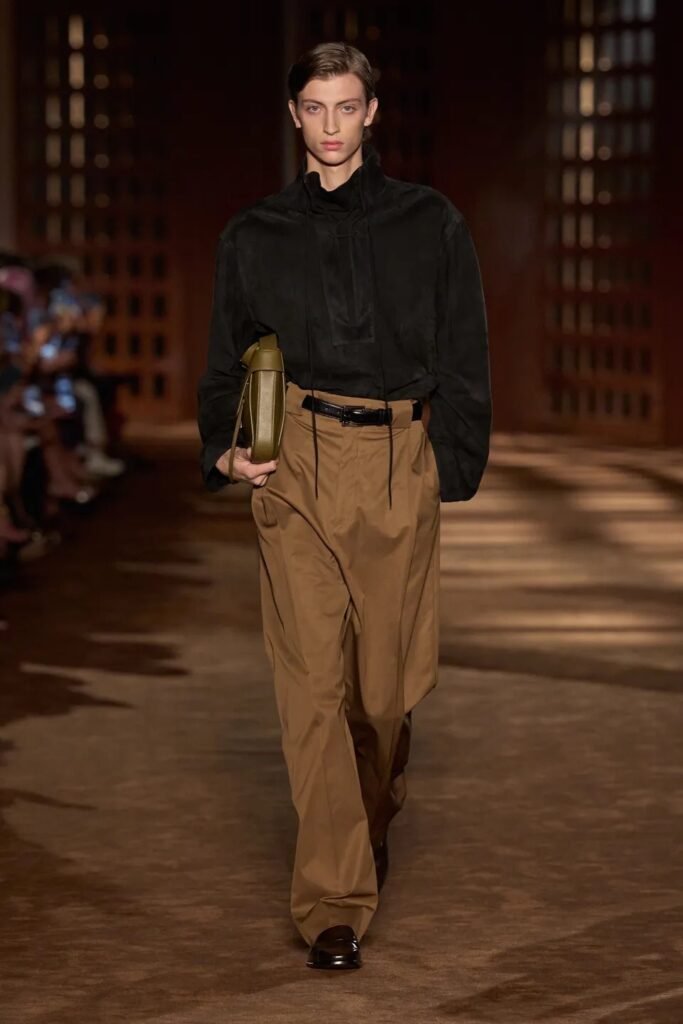
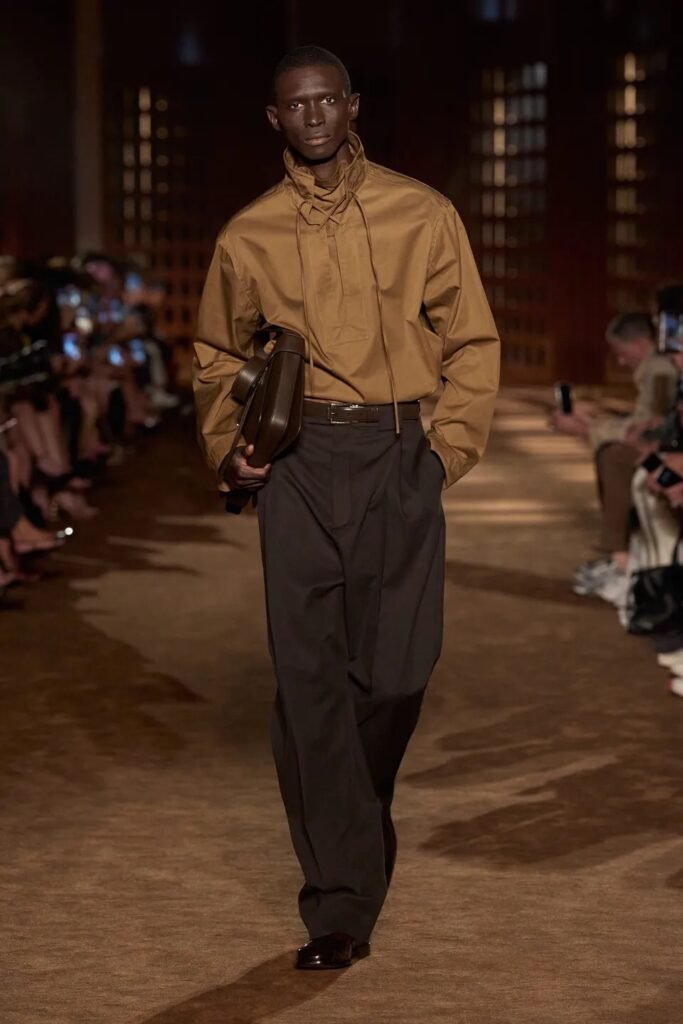
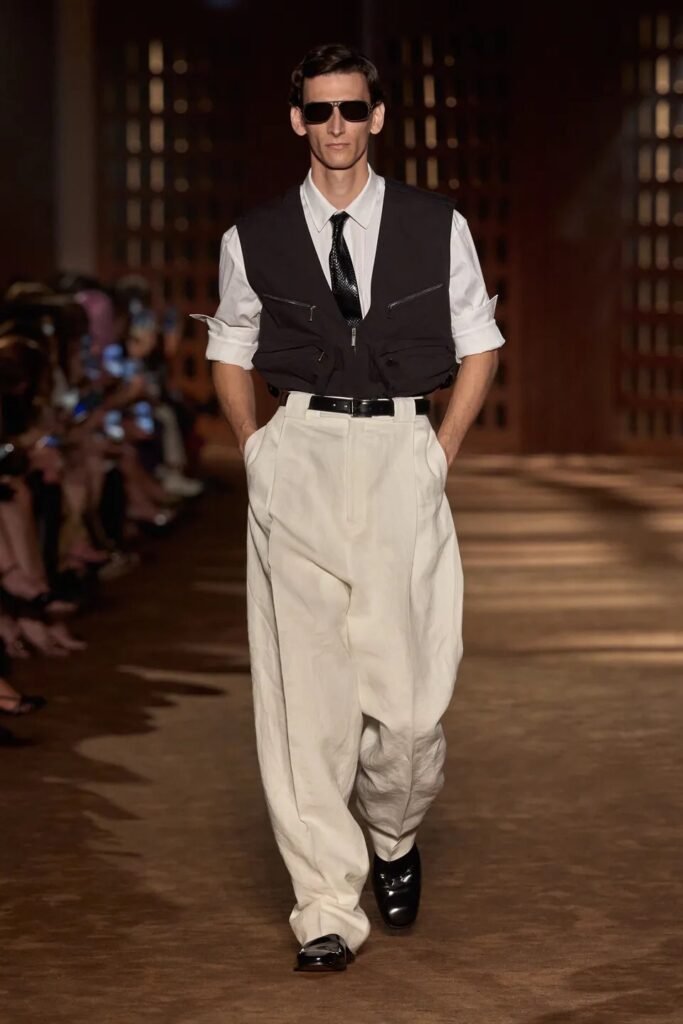
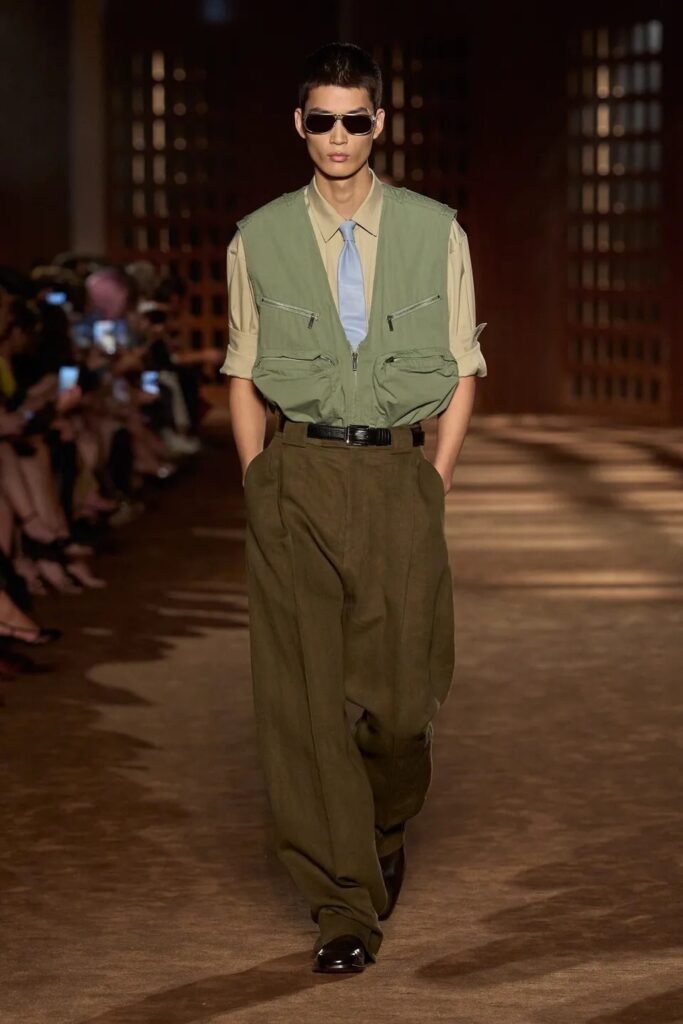
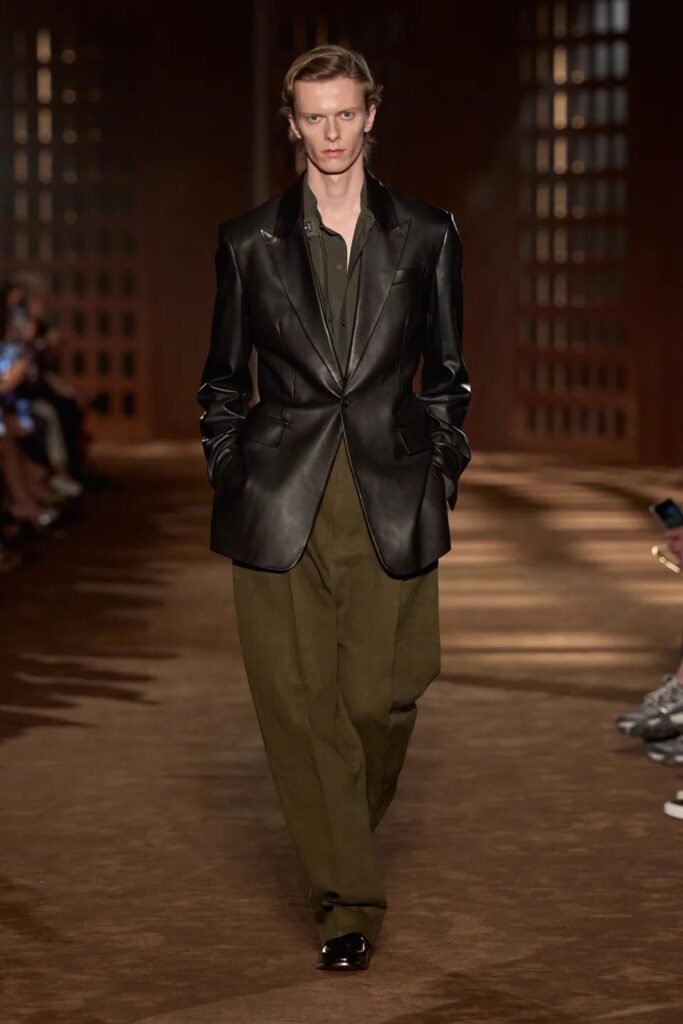
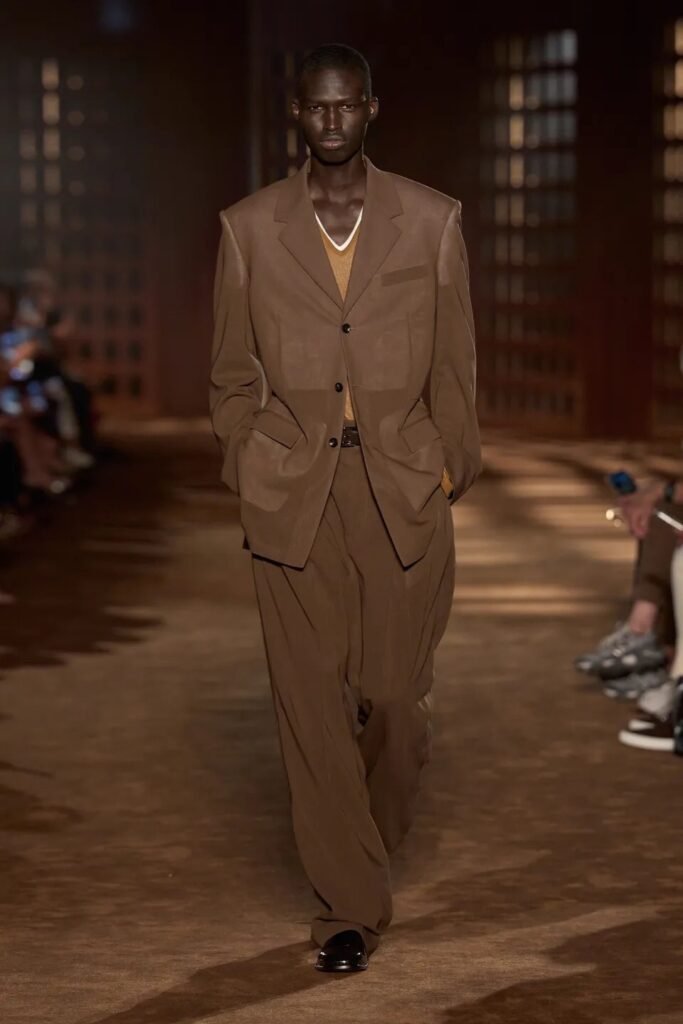
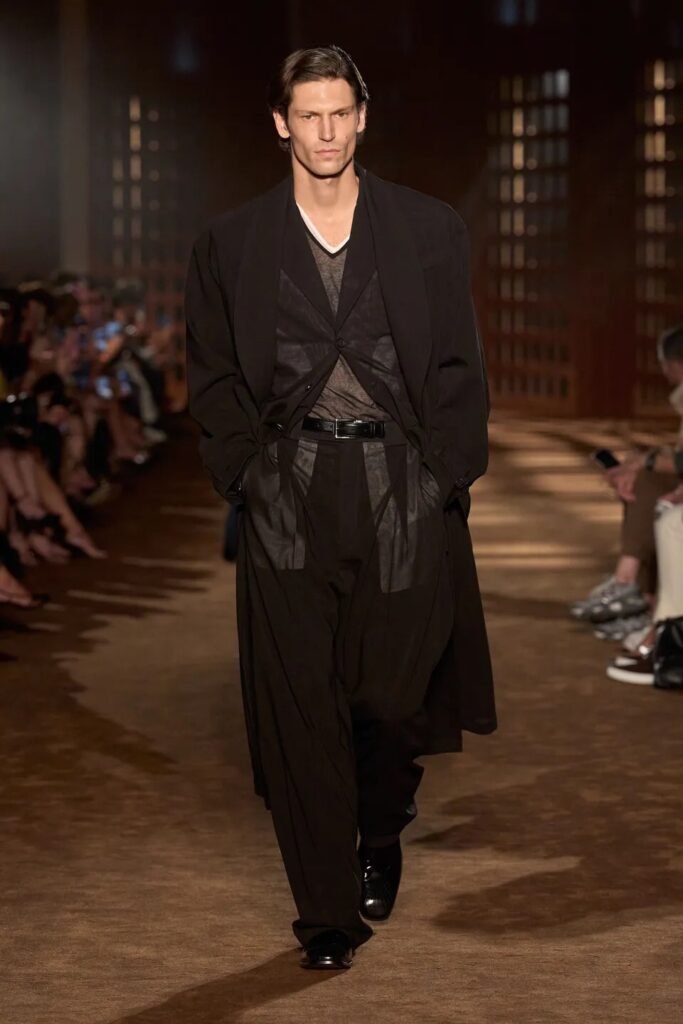
Jackets and coats have elongated proportions, while trousers are given generous volume. In menswear, Davis explores the long, draped shapes associated with the 1940s, creating pieces that feel relaxed without losing their precision.
But the tailoring is never completely conventional.
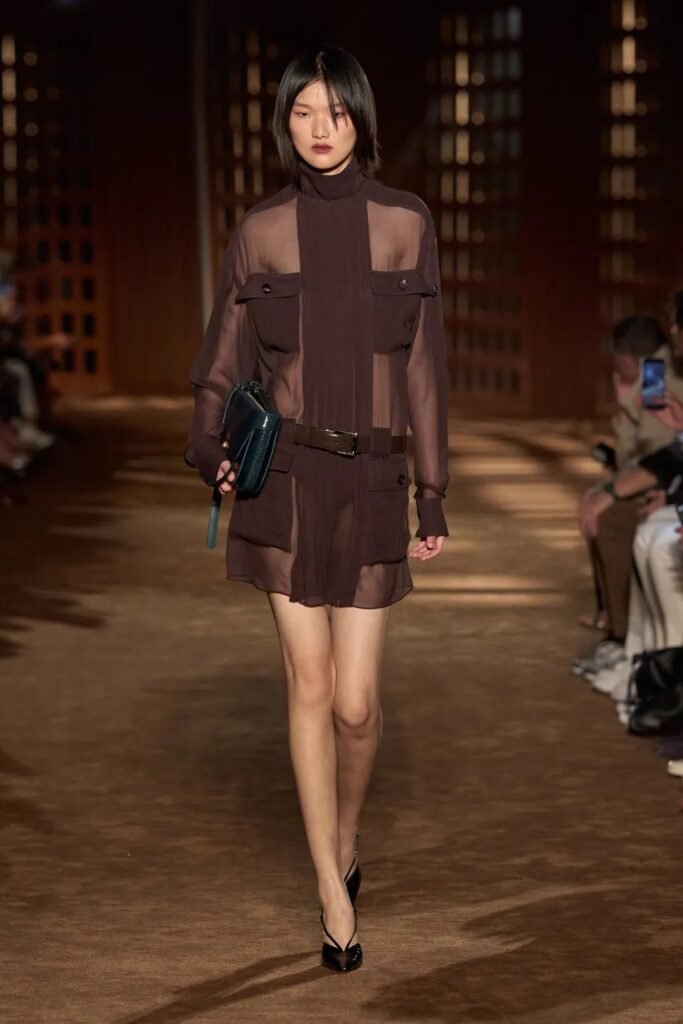
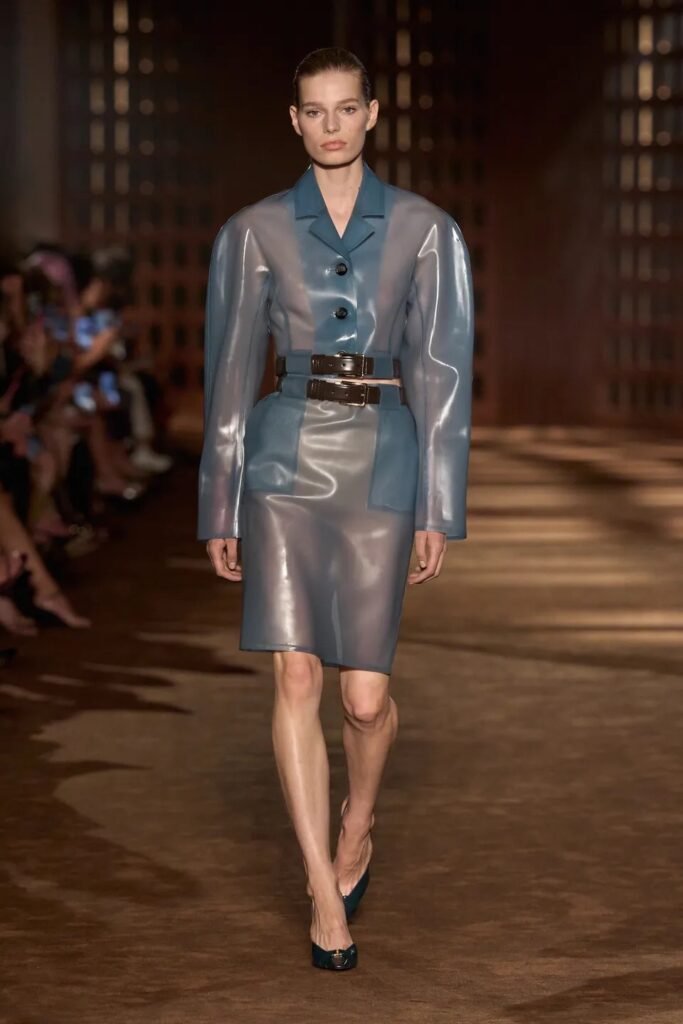
One of the most intriguing techniques is the use of double-layered transparent silk-wool, allowing elements normally hidden inside a garment—such as canvassing and pockets—to become part of the visual language.
It is an unusually revealing approach to tailoring.
Instead of hiding the construction of a garment, Davis allows the viewer to see it. The result reinforces Ferragamo‘s longstanding relationship with craftsmanship while making traditional tailoring feel almost architectural.
Transparency and the Art of Illusion
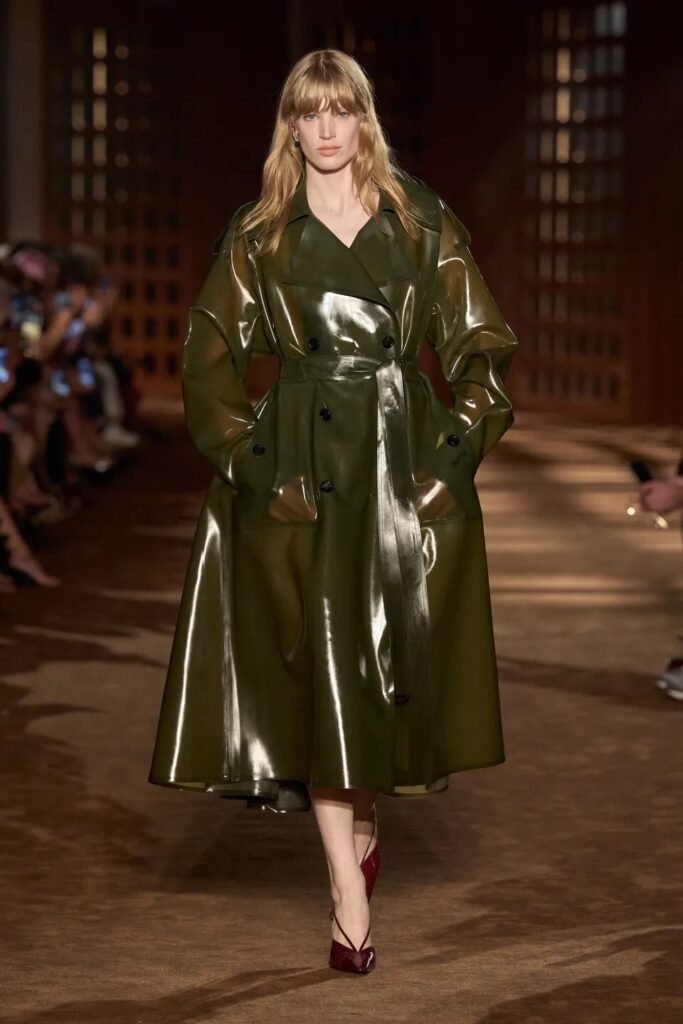
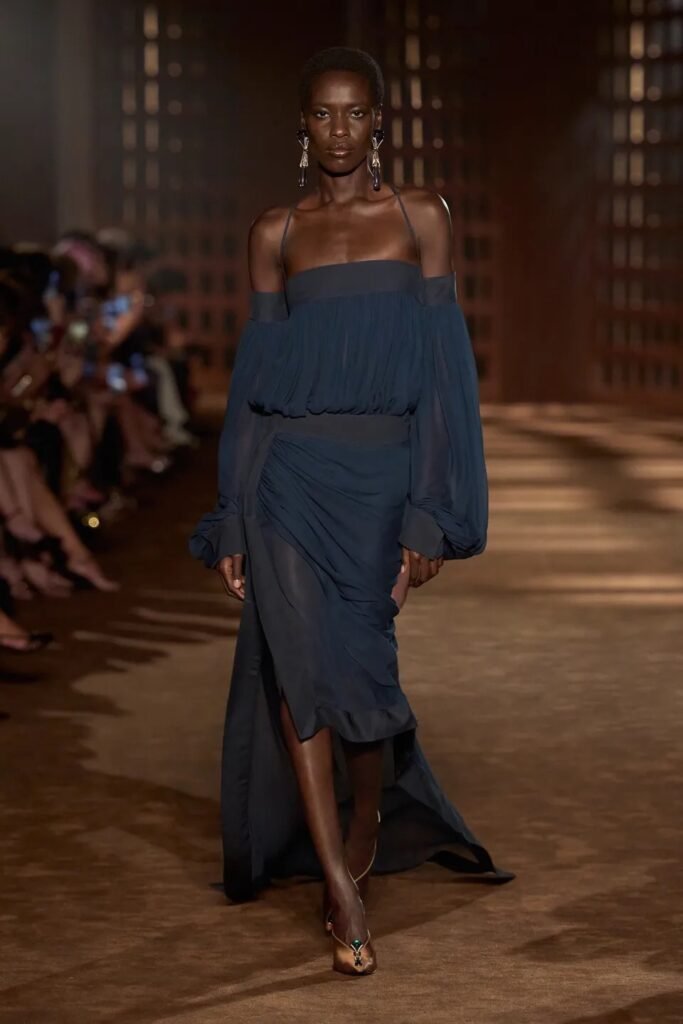
Transparency appears throughout the collection, but it is handled with considerably more subtlety than simple sheer dressing.
Silk-wool fabrics create a cloudy transparency, while other pieces wrap around the body in ways that make clothing appear almost weightless.
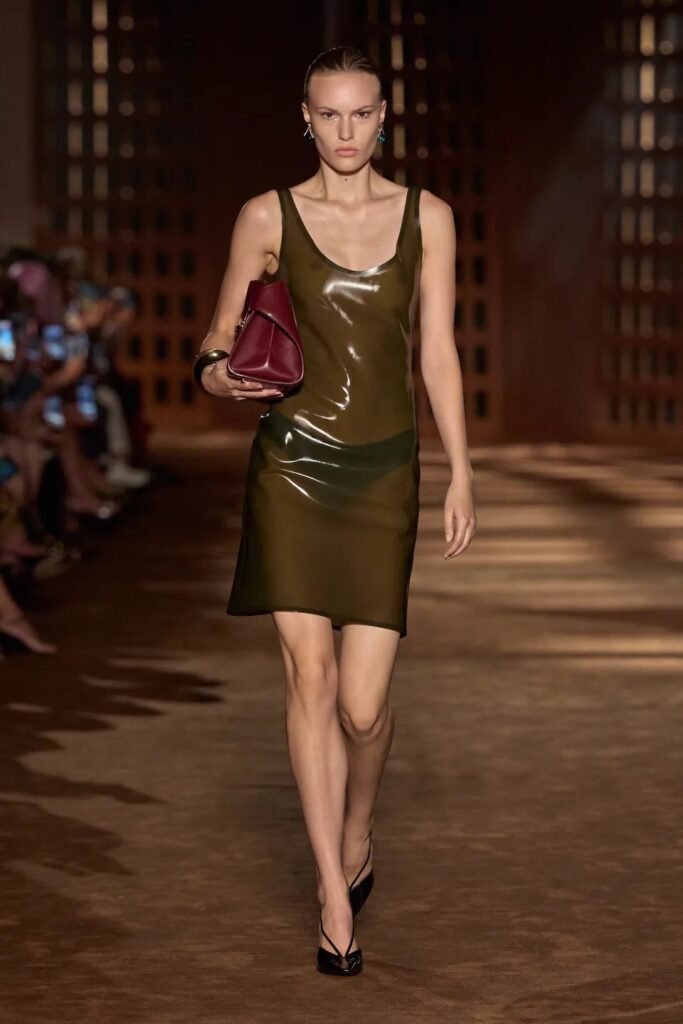
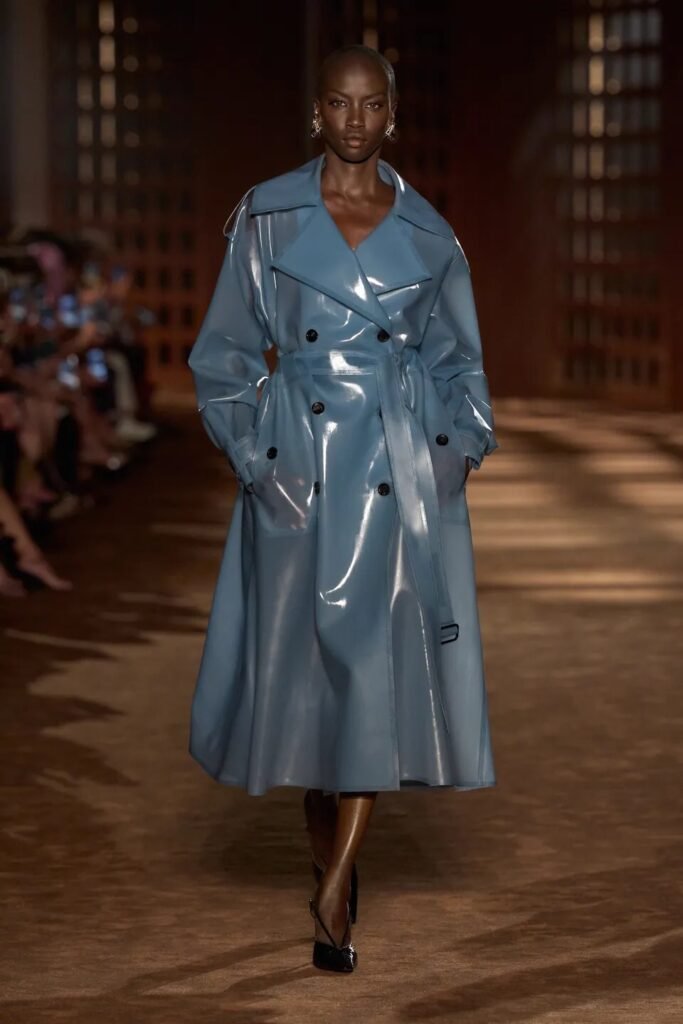
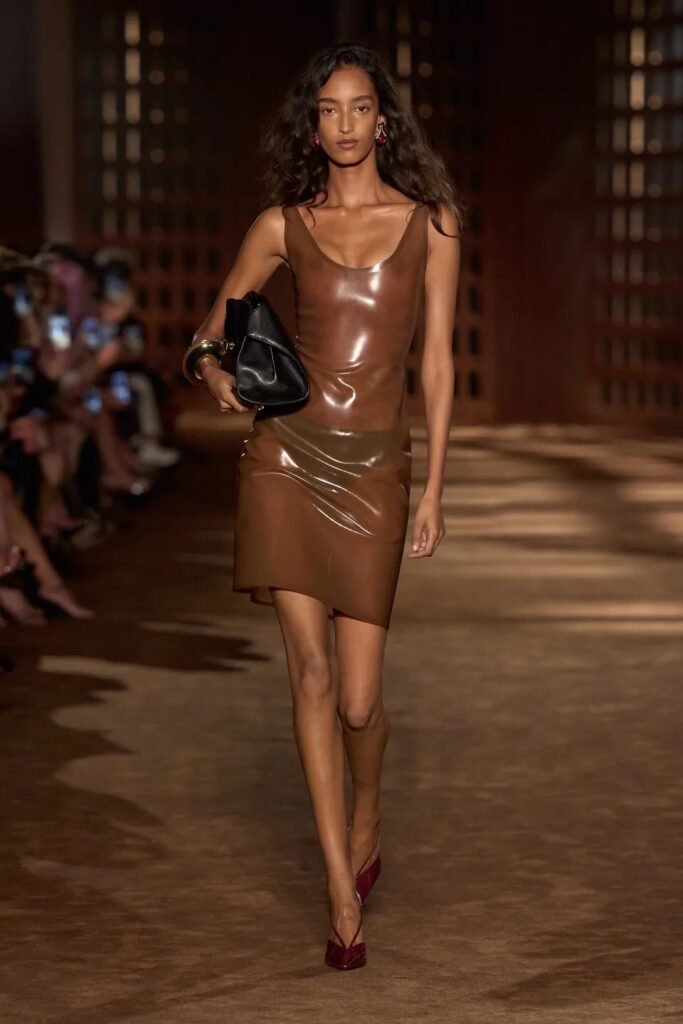
Rubber becomes particularly interesting in this context.
Davis uses richly colored rubber for trenches and dresses, creating pieces that simultaneously reveal and obscure the body. As the material comes into contact with the figure, its surface changes, emphasizing certain contours while allowing others to disappear.
The effect recalls the photographic experimentation that inspired the collection.
It also introduces a slightly provocative quality to the otherwise refined wardrobe.
Desert Tones and Lee Miller’s Egypt
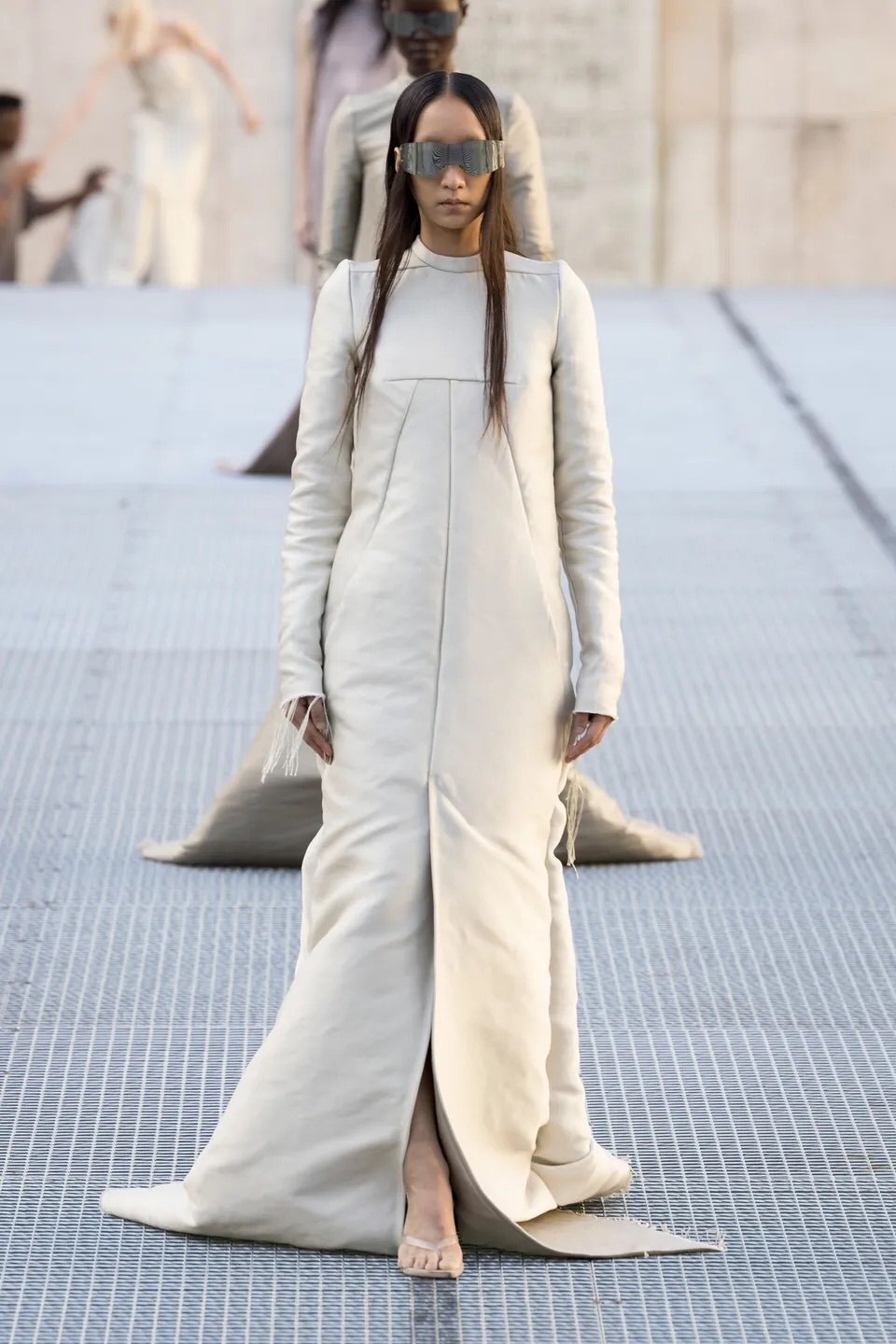
The collection‘s palette takes another significant turn through the influence of Lee Miller’s time in Egypt.
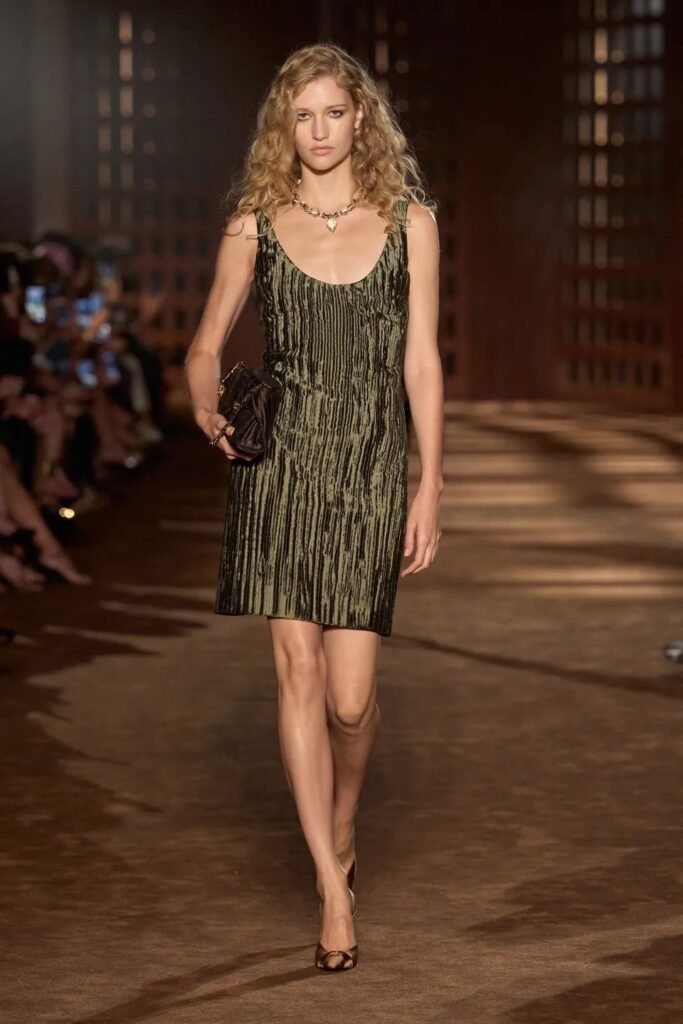
Davis looked toward neutral, sun-washed colors and fabrics with a dry, tactile quality. Cotton-linen blends, viscose and silk contribute to a wardrobe that feels connected to heat, sand and sunlight.
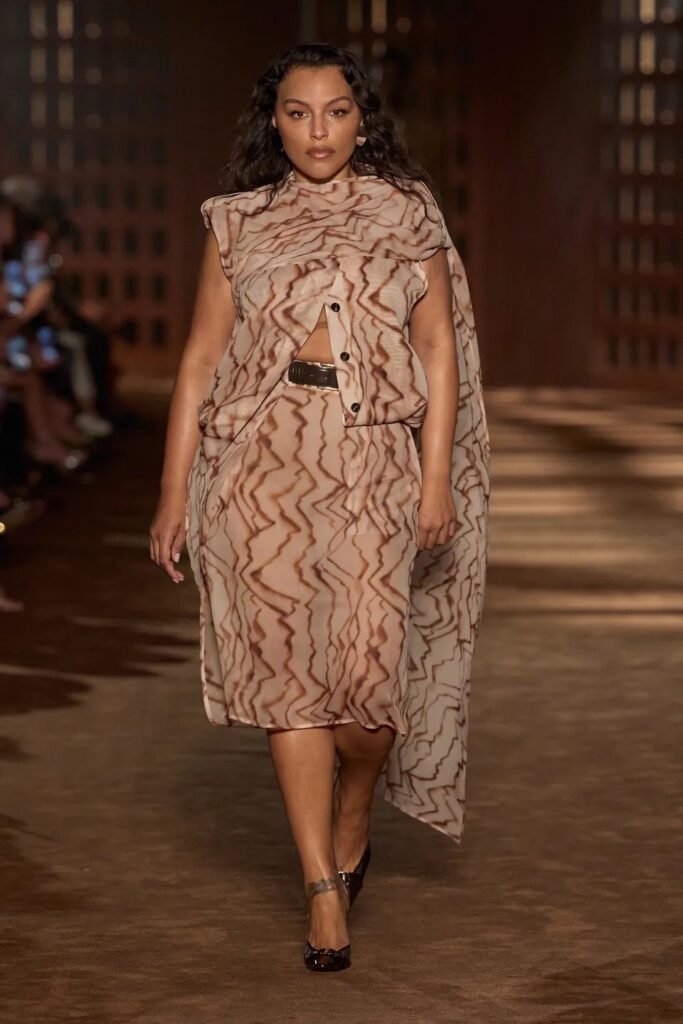
Rather than reproducing literal desert imagery, the collection interprets the movement of sand.
This appears in abstracted patterns and earthy surfaces, while some of Ferragamo’s leather pieces look weathered and cracked, almost as though they have been exposed to intense sunlight.
The approach gives the collection an organic quality.
There is luxury here, but it is not overly polished. Materials appear aged, weathered, softened or manipulated, giving them a sense of history.
Leather, Gancini Details and Ferragamo Craft
Leather remains essential to the Ferragamo vocabulary.
The house’s signature Gancini appears across accessories and leather pieces, reinforcing the relationship between the Spring 2027 collection and Ferragamo’s heritage.
Some leather garments have a dry, cracked appearance, echoing the collection’s desert references. Others are cut with a more polished precision, providing contrast against the softer textiles.
The accessories are particularly important because they demonstrate how Davis continues to connect Ferragamo’s past with its future.
The collection features new interpretations of the house’s footwear codes, including pumps, wedges, sandals and slingbacks. The distinctive F-shaped construction associated with Ferragamo’s footwear history is abstracted into contemporary designs that sometimes make the shoes appear almost weightless.
The Vara Pump Gets a New Attitude
The Vara pump, one of Ferragamo’s most recognizable styles, also receives a new interpretation.
Its familiar bow is streamlined into something more sculptural and restrained, giving the shoe a more modern character.
This is an important detail within Davis’s approach to Ferragamo.
Rather than abandoning recognizable house signatures, he repeatedly asks how they can be transformed.
The result is a collection that feels distinctly Ferragamo without becoming trapped by the archive.
Bags as Modern Icons
The accessories extend beyond footwear.
The Cara bag, one of the more recent additions to the Ferragamo universe, receives renewed attention within the collection, while leather accessories reinforce the broader emphasis on craftsmanship.
The bags function as more than finishing touches. They contribute to the collection’s balance between practicality and luxury.
That balance is especially important to Davis’s vision of Ferragamo.
The clothes can be conceptual, but they remain grounded in pieces that can exist within a modern wardrobe.
Eveningwear and the Joy of Light
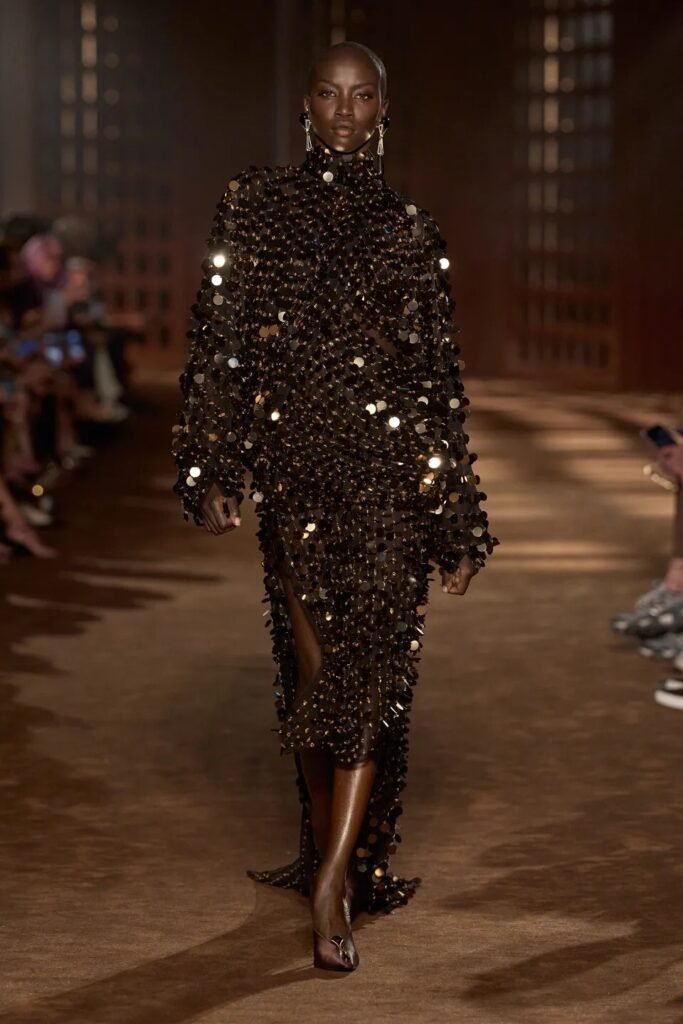
As the collection progresses, the neutral daytime palette gradually gives way to pieces with greater luminosity.
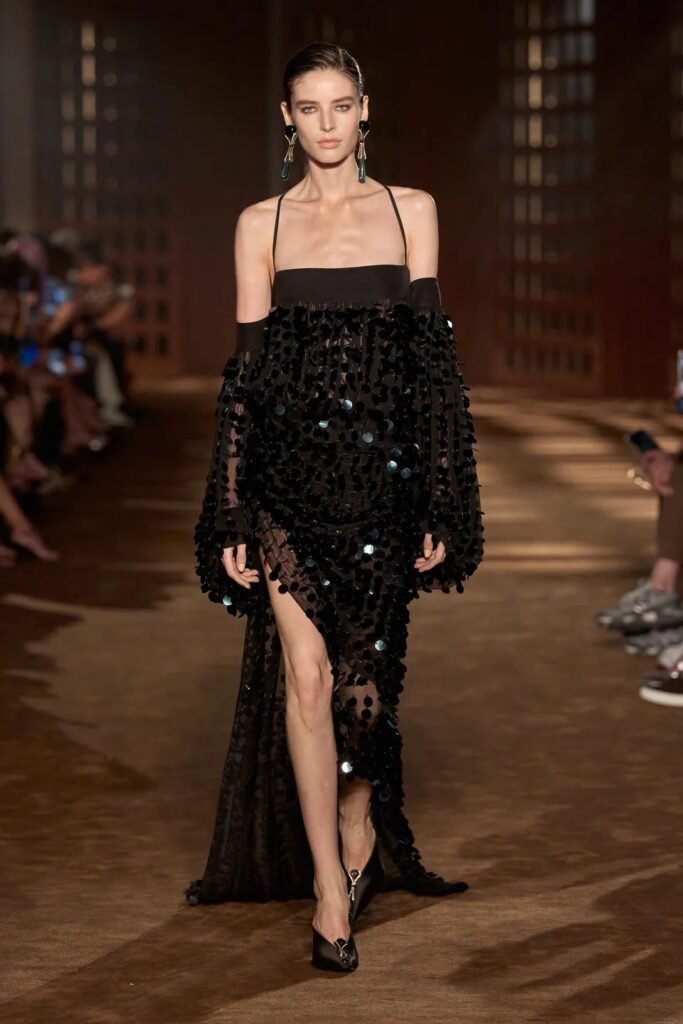
Paillettes introduce a reflective quality that connects back to Miller and Man Ray’s experiments with light and film.
The effect is less about traditional evening glamour and more about movement.
As the wearer moves, light changes across the surface of the clothing. The garments become almost photographic objects, shifting between brightness, shadow and reflection.
This gives the finale a sense of celebration.
After the collection’s more restrained tailoring, dry textures and utilitarian references, the shimmering pieces introduce a lighter emotional note.
Davis described this element as connected to the pleasure of photography and the joy of love.
Ferragamo’s Future Through Its Past
Maximilian Davis’s Ferragamo Spring 2027 collection is ultimately a study in transformation.
The Invisible Sandal becomes an entry point into a much larger conversation about technology, photography and the history of the house. Lee Miller and Man Ray introduce a surrealist perspective, while 1940s tailoring provides the structural foundation.
From there, Davis moves into transparent fabrics, rubber, weathered leather, desert-inspired neutrals, sculptural belts and shimmering evening pieces.
Yet the collection never loses sight of what makes Ferragamo distinctive.
Shoes remain central.
That is perhaps the most important aspect of the Spring 2027 collection. Salvatore Ferragamo built his reputation through footwear, and Davis understands that the house’s future can be constructed by returning to that fundamental strength while continually reinventing it.
The Spring 2027 collection therefore feels less like an exercise in nostalgia and more like an ongoing conversation between Ferragamo’s archive and contemporary fashion.
It is a collection about what can be seen—and what can remain hidden.
About transparency and structure.
About technology and craftsmanship.
About the past becoming something entirely new.
And through Maximilian Davis’s lens, Ferragamo continues to find modernity in the most unexpected corners of its history.
Ferragamo Spring 2027 Ready-to-Wear
Creative Director: Maximilian Davis
Season: Spring 2027 Ready-to-Wear
Presented: Milan Fashion Week, September 2026
Key inspirations: Salvatore Ferragamo’s Invisible Sandal, Lee Miller, Man Ray, solarization, 1940s silhouettes and Egyptian landscapes
Key elements: Defined waists, belts, tailored coats, wide trousers, transparent fabrics, rubber, weathered leather, Gancini details, sculptural footwear and shimmering eveningwear