By Daniel Roseberry
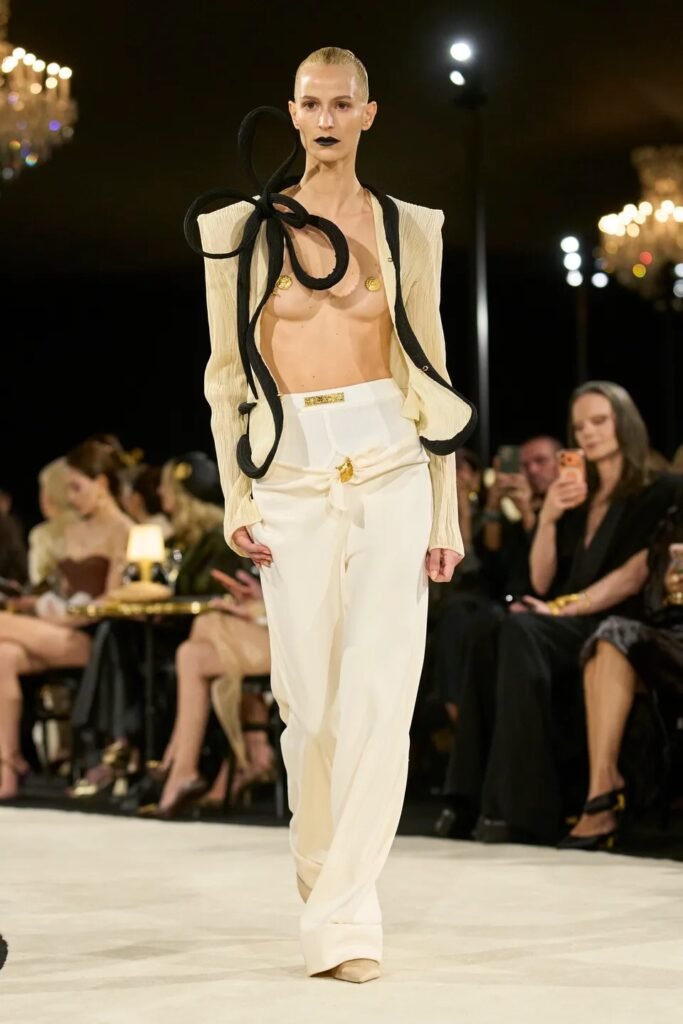
The boundary between high fashion and everyday dressing takes on a new dimension at Schiaparelli for Spring 2027. Under the creative direction of Daniel Roseberry, the Parisian maison explores a more distilled expression of its extravagant identity, translating the artistic imagination and sculptural language of its haute couture into a wardrobe designed for contemporary life.
Titled “Going Clear,” the Spring 2027 ready-to-wear collection reflects a period of rapid transformation, both within the fashion industry and beyond. Presented during Paris Fashion Week, the collection examines the relationship between creativity, personal expression and the increasingly complex demands of modern dressing. Rather than relying entirely on the theatrical spectacle associated with Schiaparelli, Roseberry looks toward a more versatile wardrobe, one that retains the house’s unmistakable visual identity while giving the wearer greater freedom.
For the designer, the challenge was to define what Schiaparelli ready-to-wear could become in a luxury market crowded with familiar ideas of effortless glamour. His response was to focus on the essence of the maison: its distinctive silhouettes, artistic details, unusual proportions and ability to transform familiar garments into extraordinary fashion statements.
The result is a collection that moves between precision and softness, structure and fluidity, and the extraordinary and the everyday.
Schiaparelli’s Surrealist Heritage Meets Modern Dressing
Founded by Elsa Schiaparelli, the house has long occupied a distinctive position in fashion history. Its identity was shaped by an unconventional approach to design, one that challenged traditional ideas of beauty and brought fashion into conversation with art.
Elsa Schiaparelli’s collaborations with artists such as Salvador Dalí, Jean Cocteau and Man Ray helped establish a creative language rooted in surrealism, experimentation and unexpected visual contrasts. From trompe-l’œil knitwear to imaginative accessories, her designs demonstrated that clothing could become a medium for artistic expression.
Daniel Roseberry has continued to explore this legacy since becoming creative director in 2019. His work has brought renewed attention to the maison through sculptural silhouettes, dramatic accessories, anatomical references and elaborate couture craftsmanship.
For Spring 2027, however, the designer approaches the house’s heritage through a different perspective. Instead of translating the full theatricality of couture directly into ready-to-wear, he extracts its most recognizable elements and reimagines them as individual wardrobe pieces.
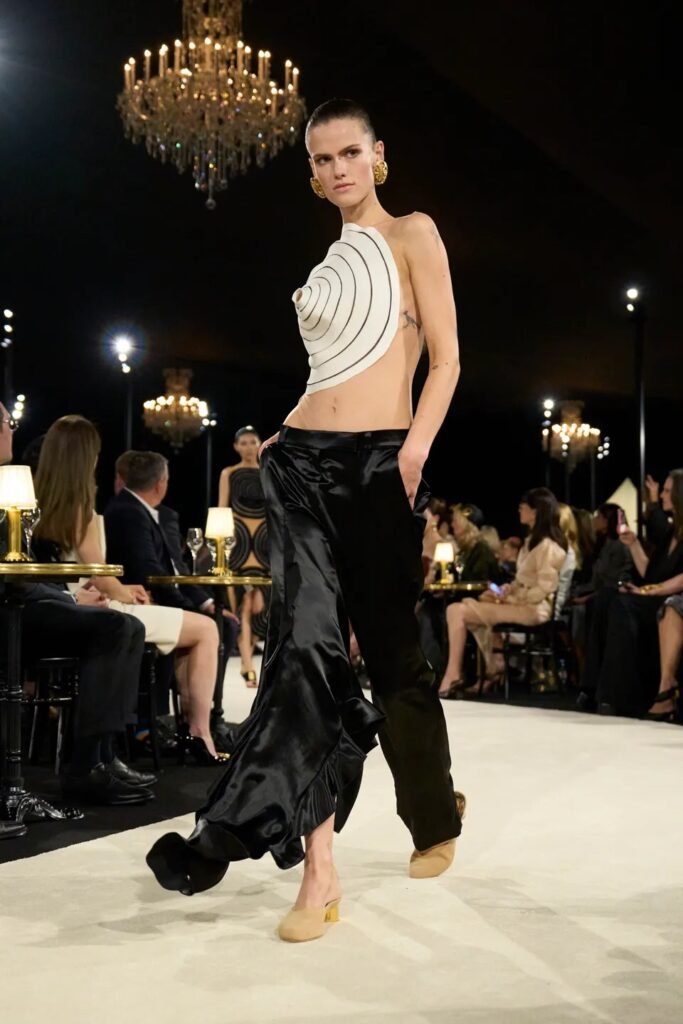
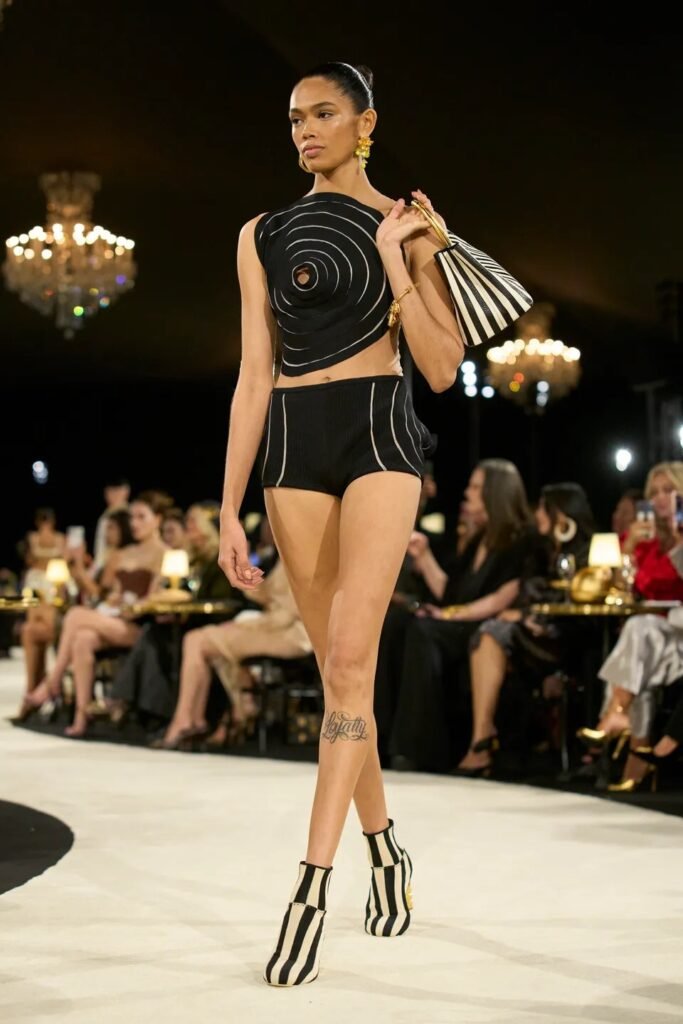
This approach creates room for experimentation without sacrificing functionality. A signature neckline can become a versatile top, a dramatic silhouette can be separated into distinct pieces, and an elaborate design detail can transform a comparatively simple outfit.
The collection demonstrates how Schiaparelli’s artistic identity can exist beyond the red carpet and the couture runway.
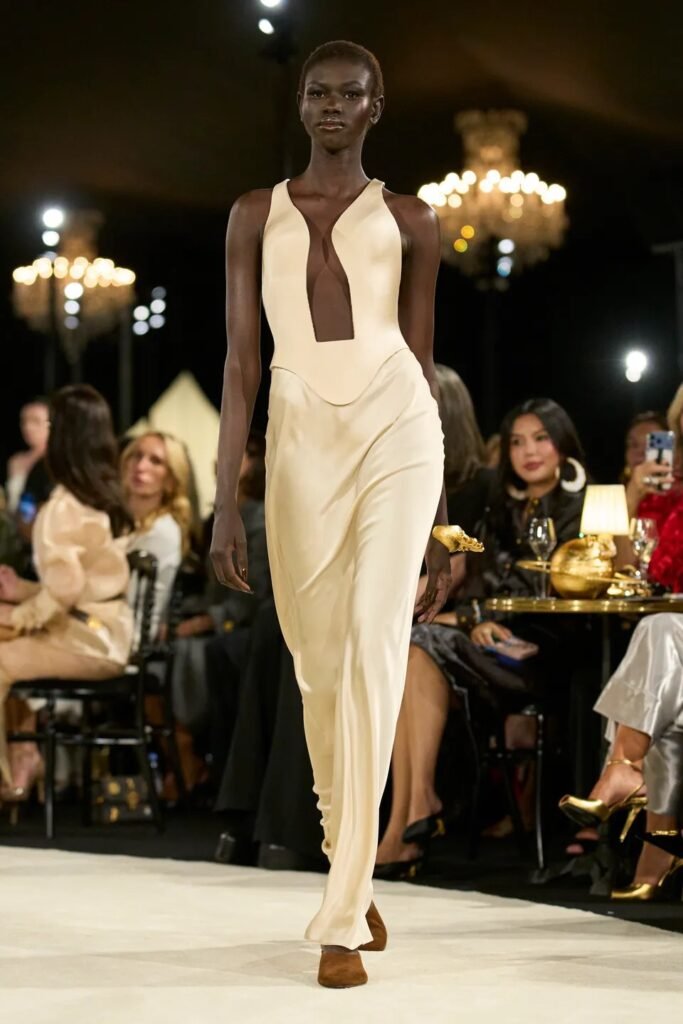
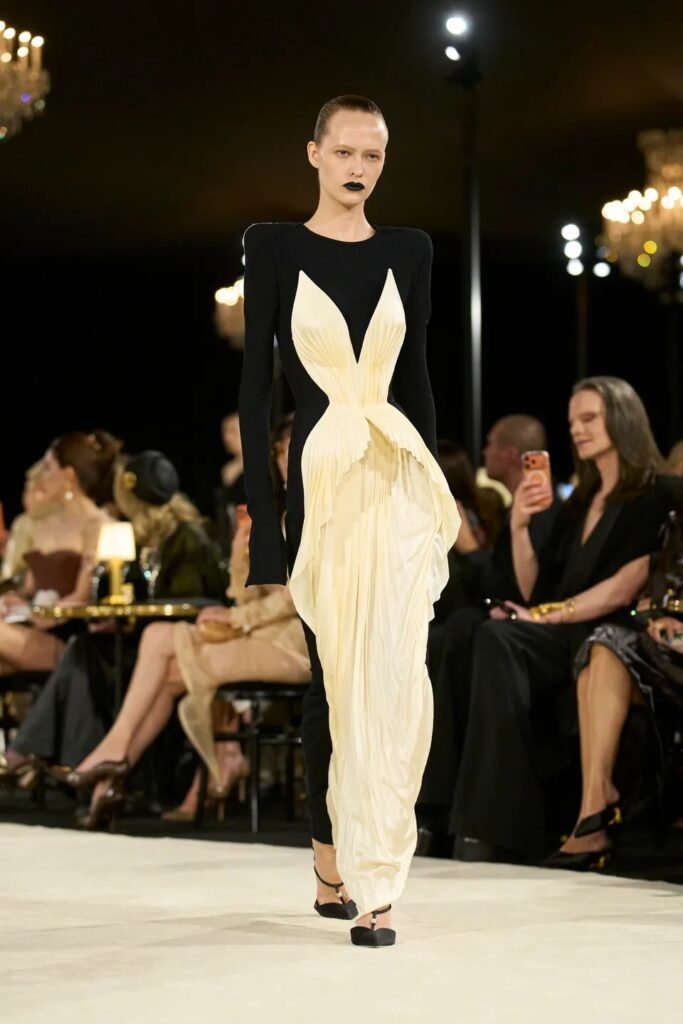
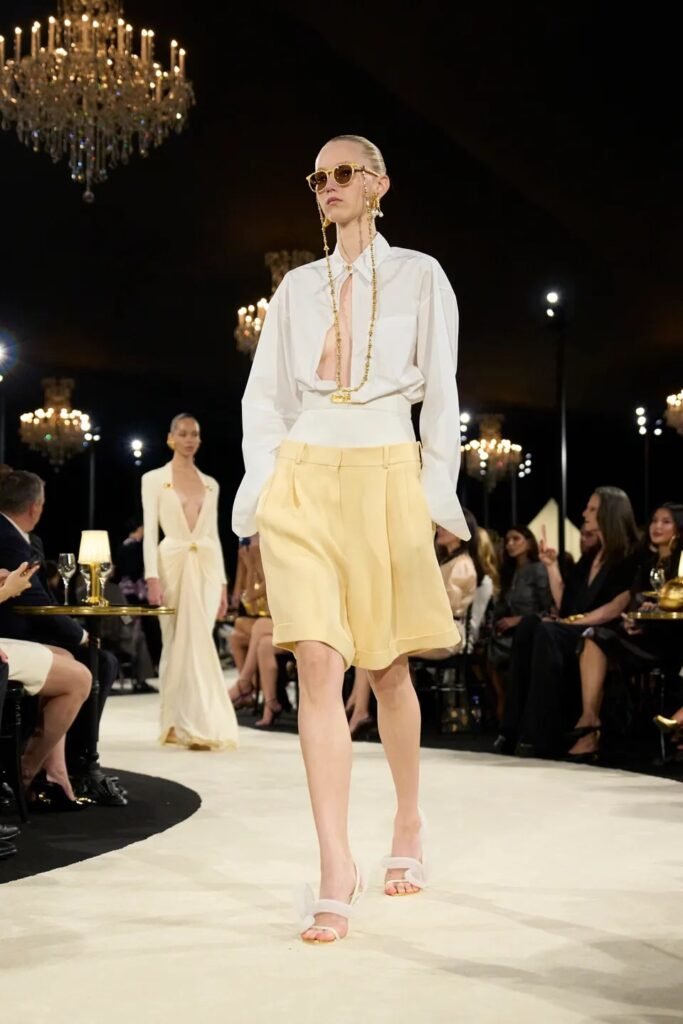
A Refined Palette of Black, Bone and Butter Yellow
Color plays an important role in establishing the visual identity of Schiaparelli Spring 2027.
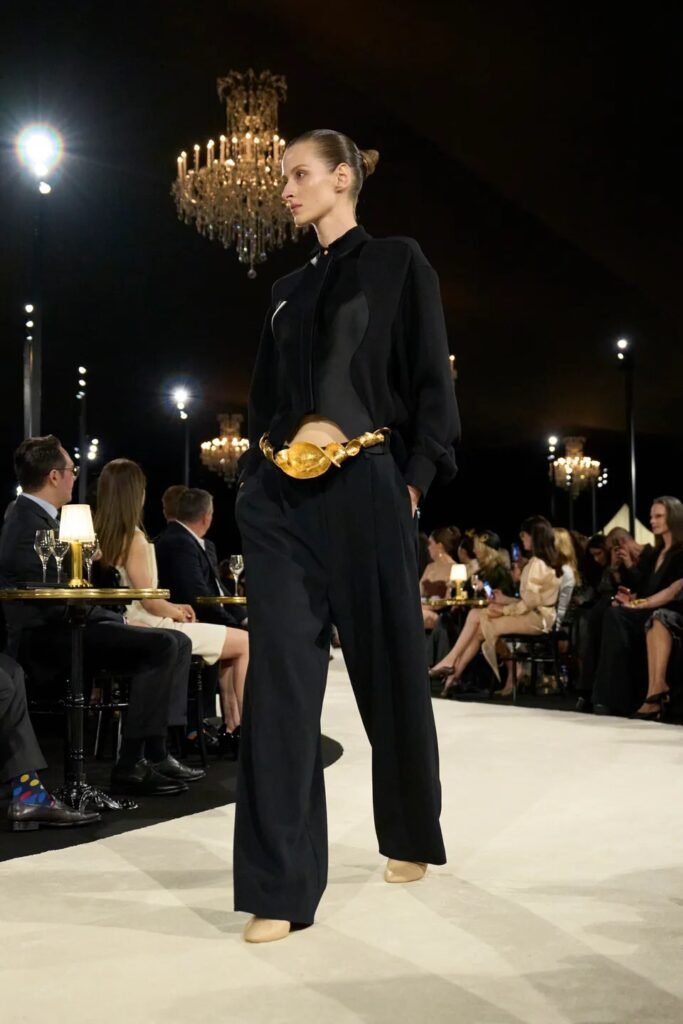
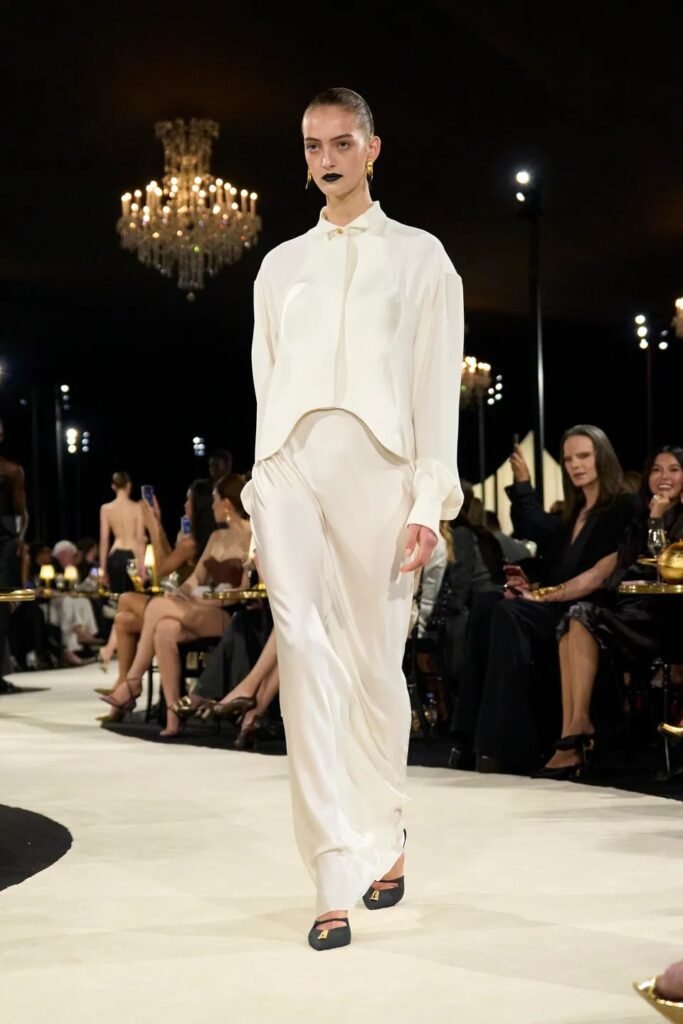
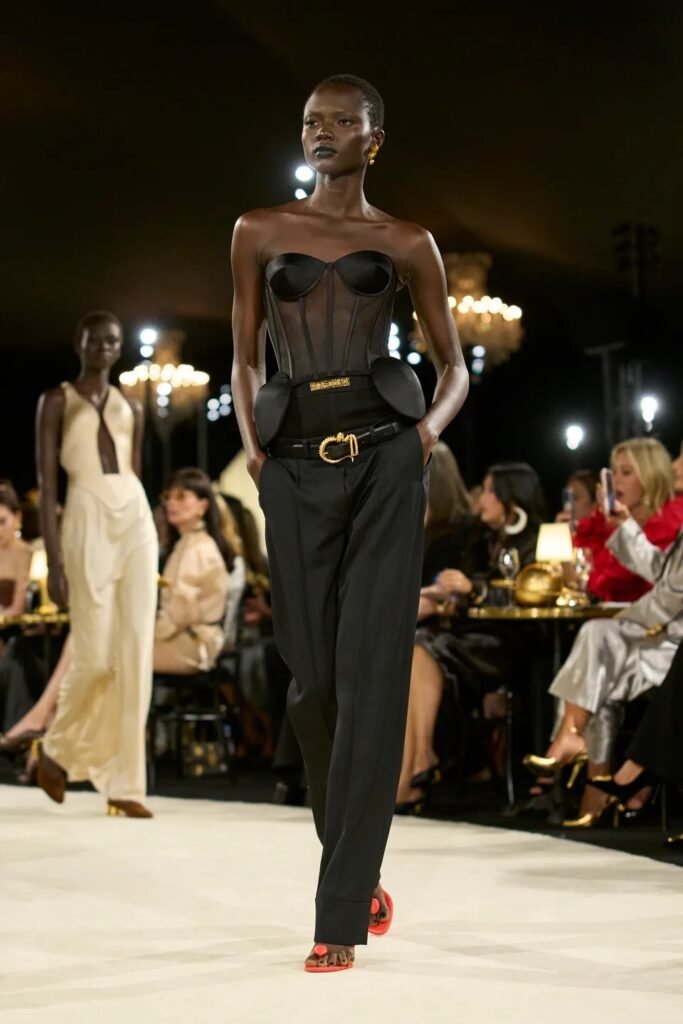
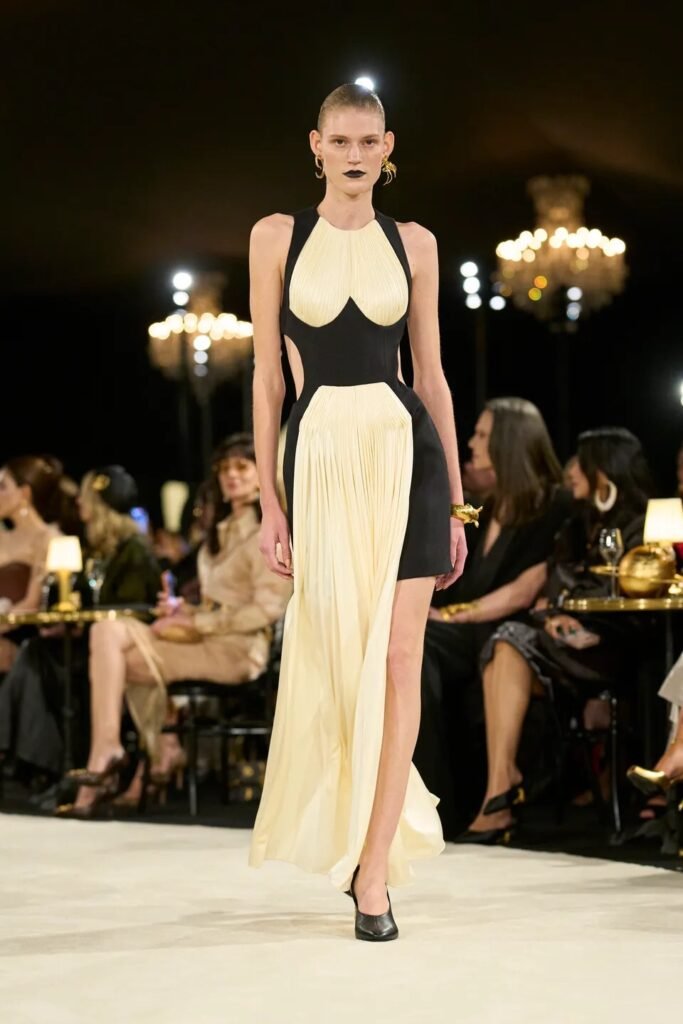
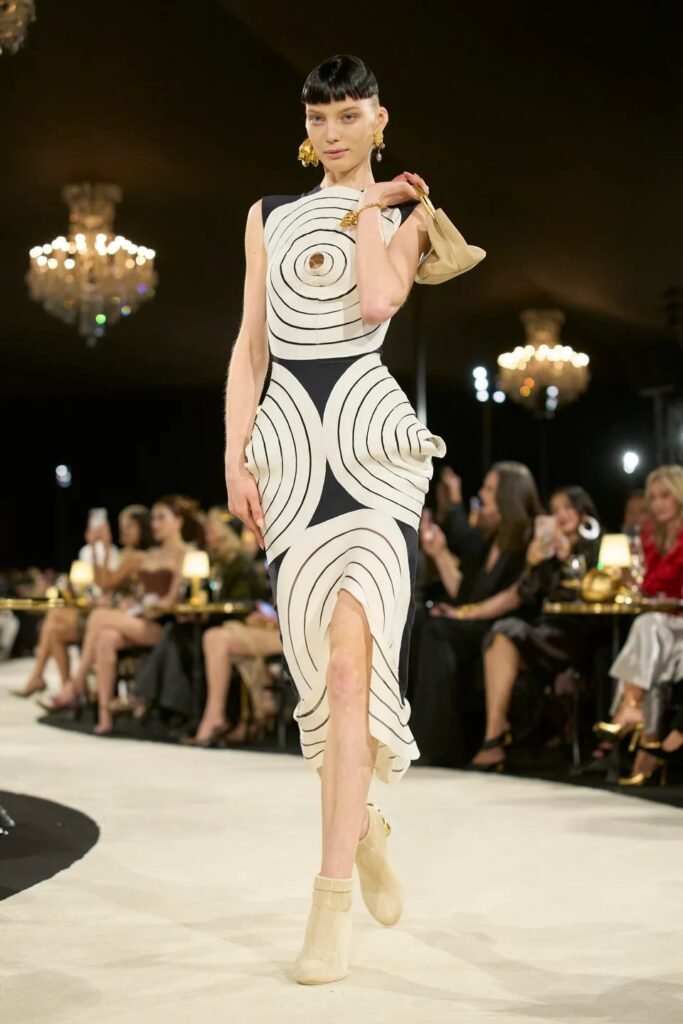
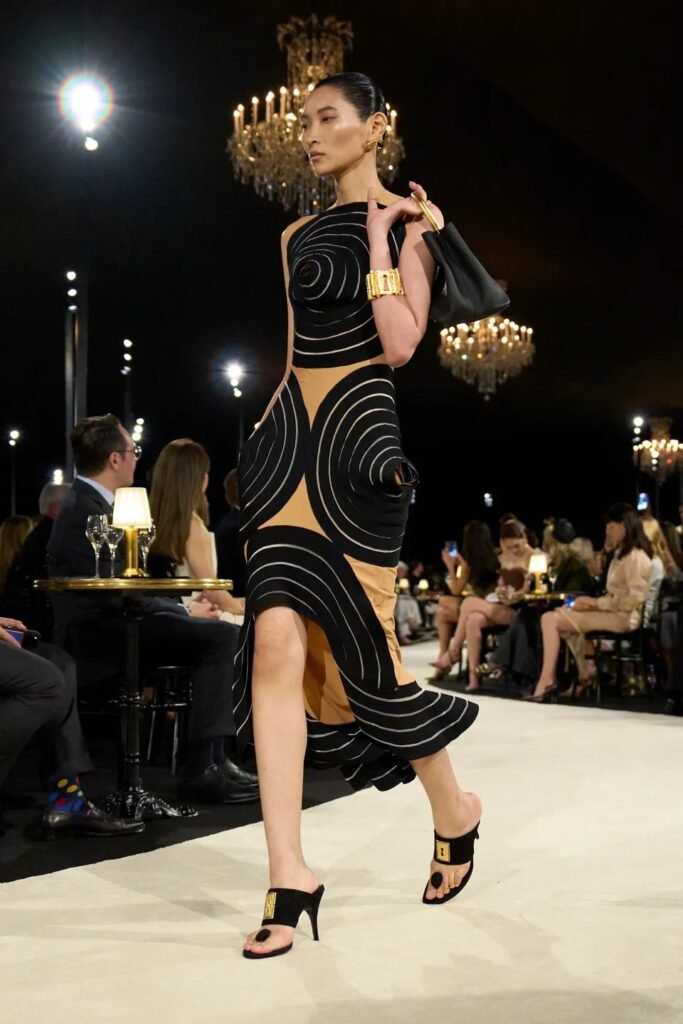
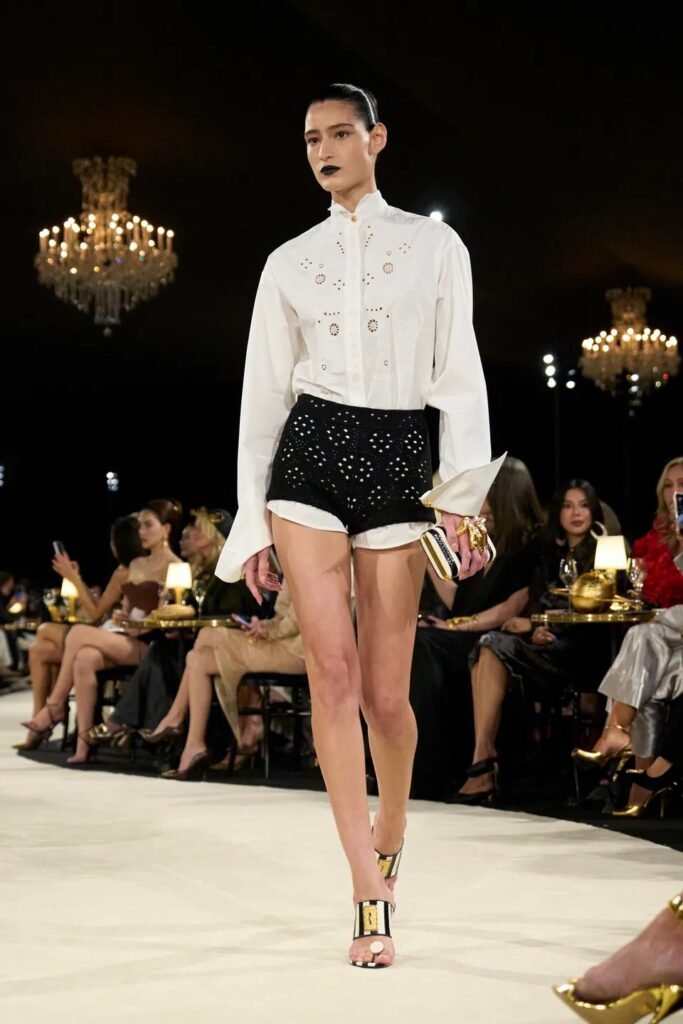
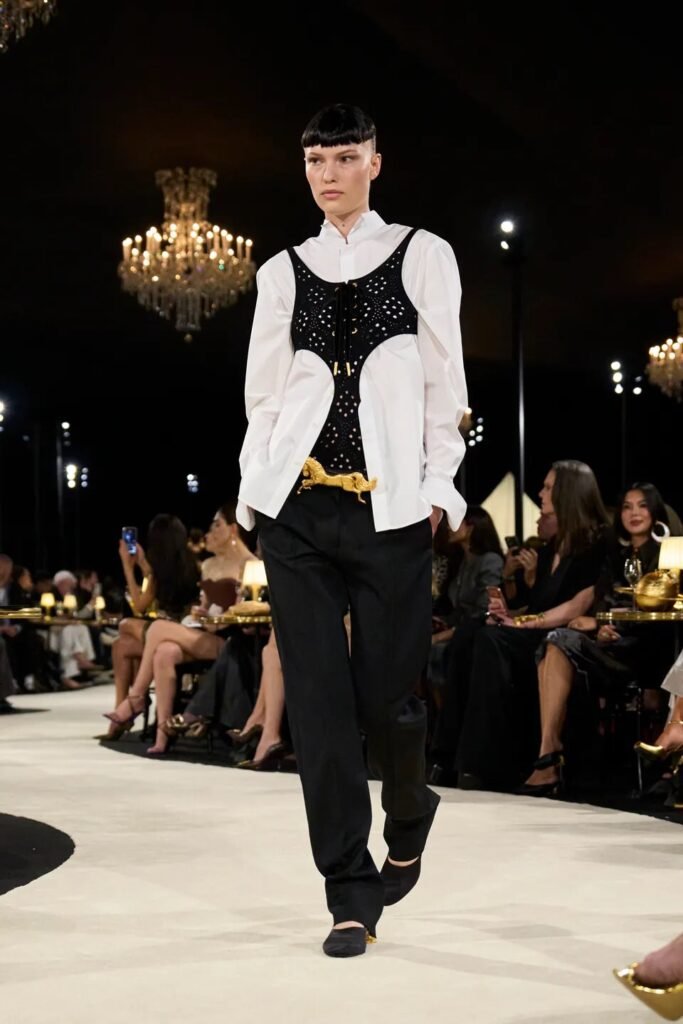
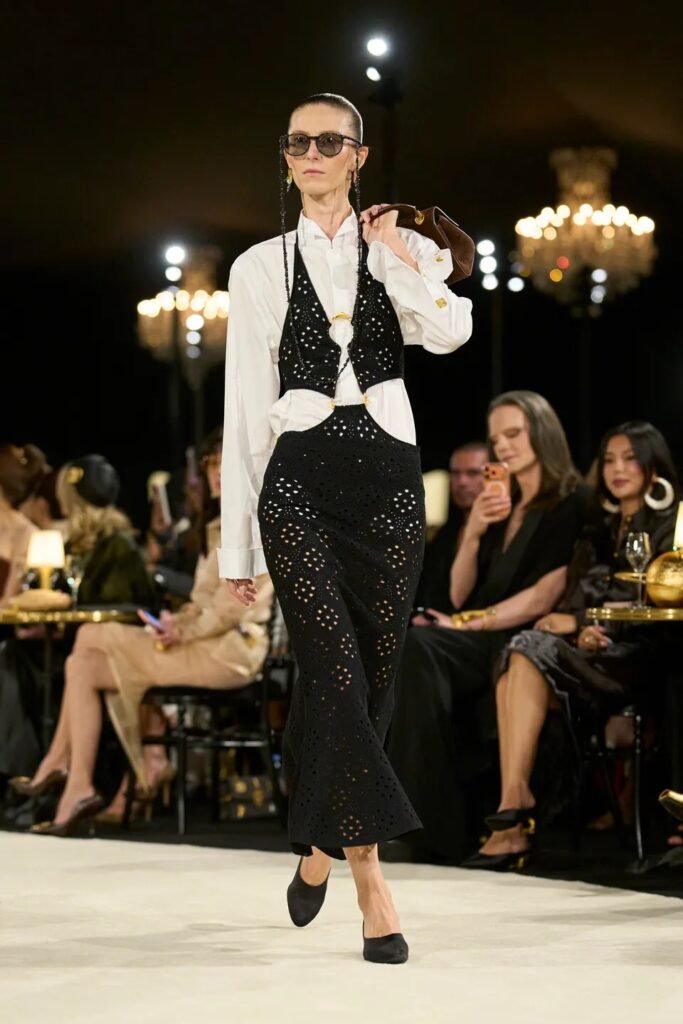
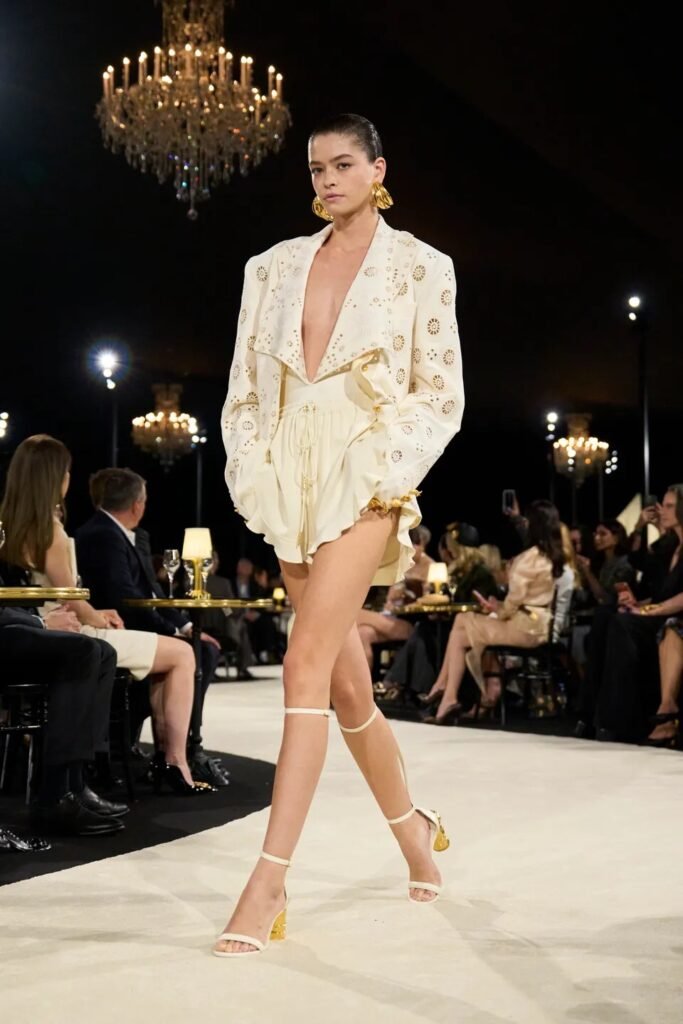
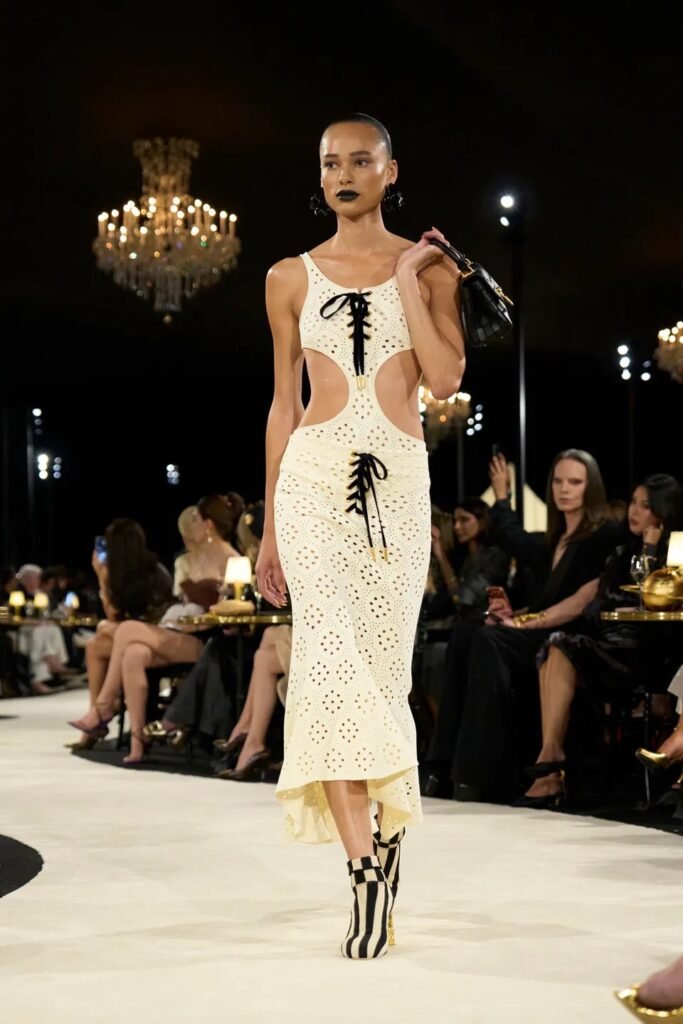
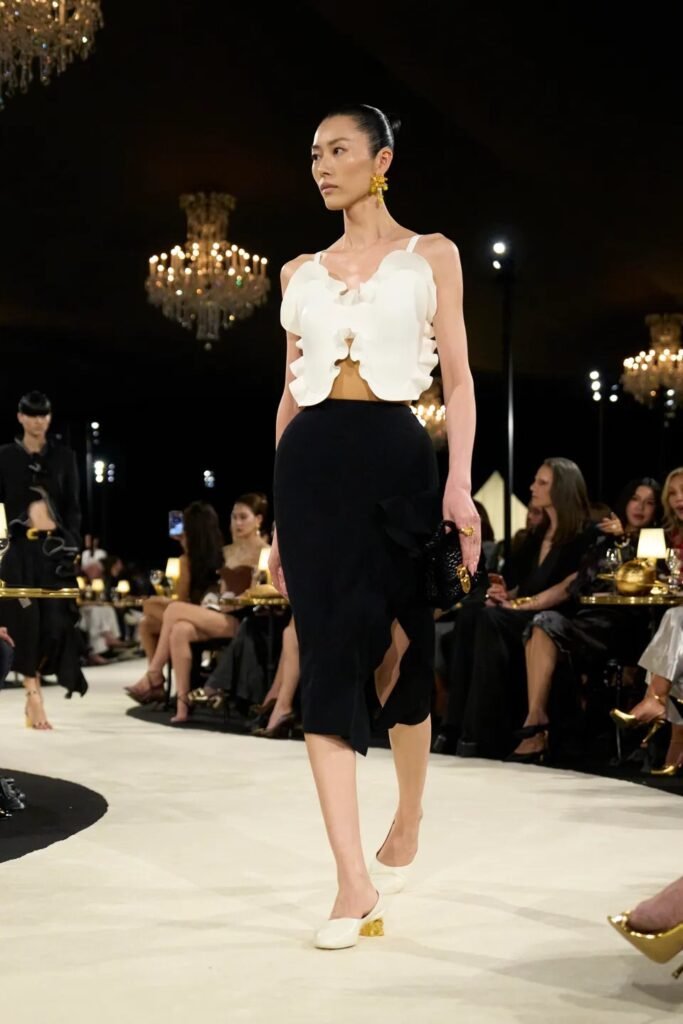
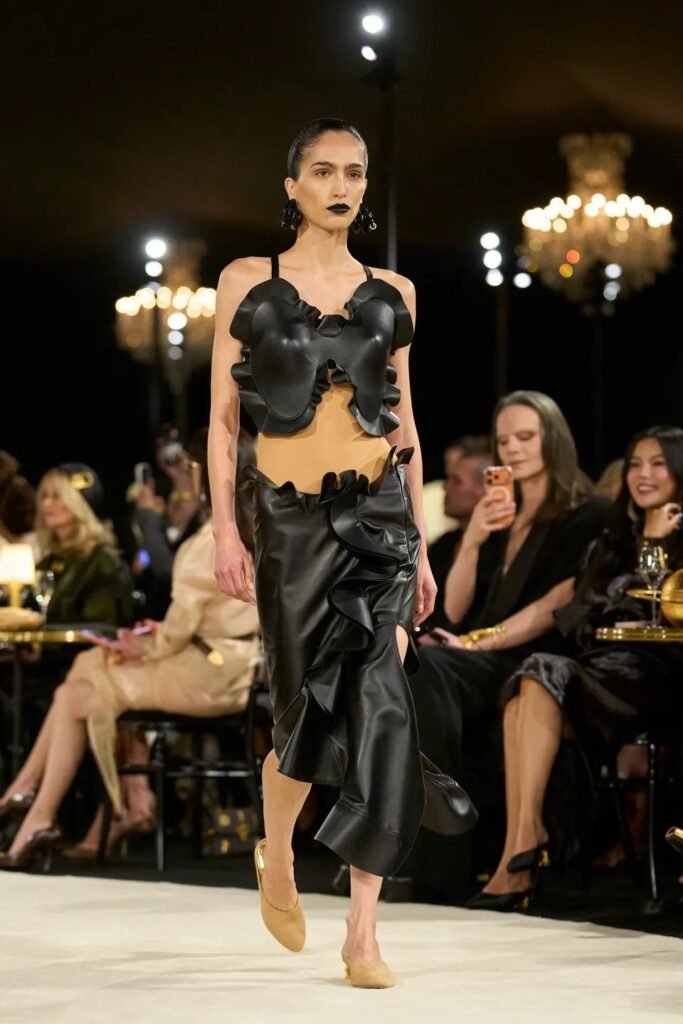
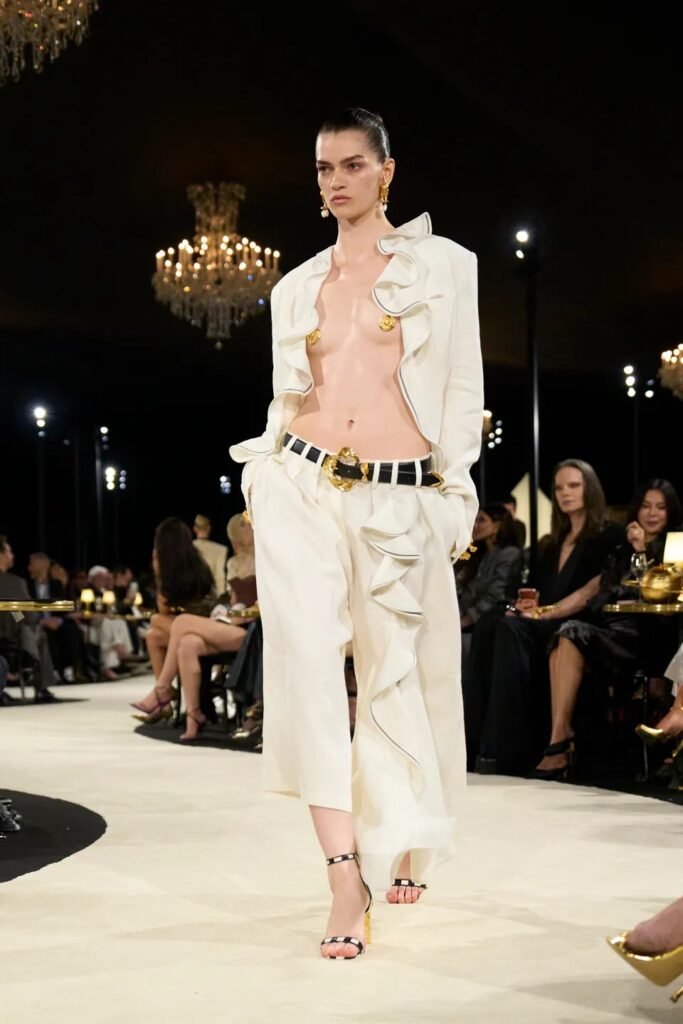
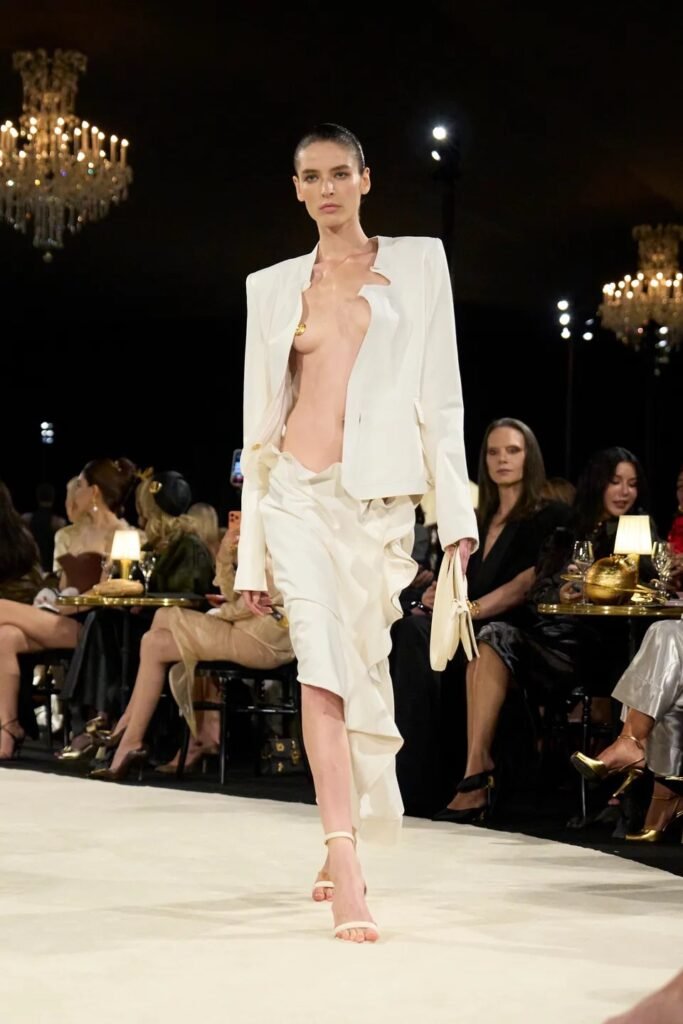
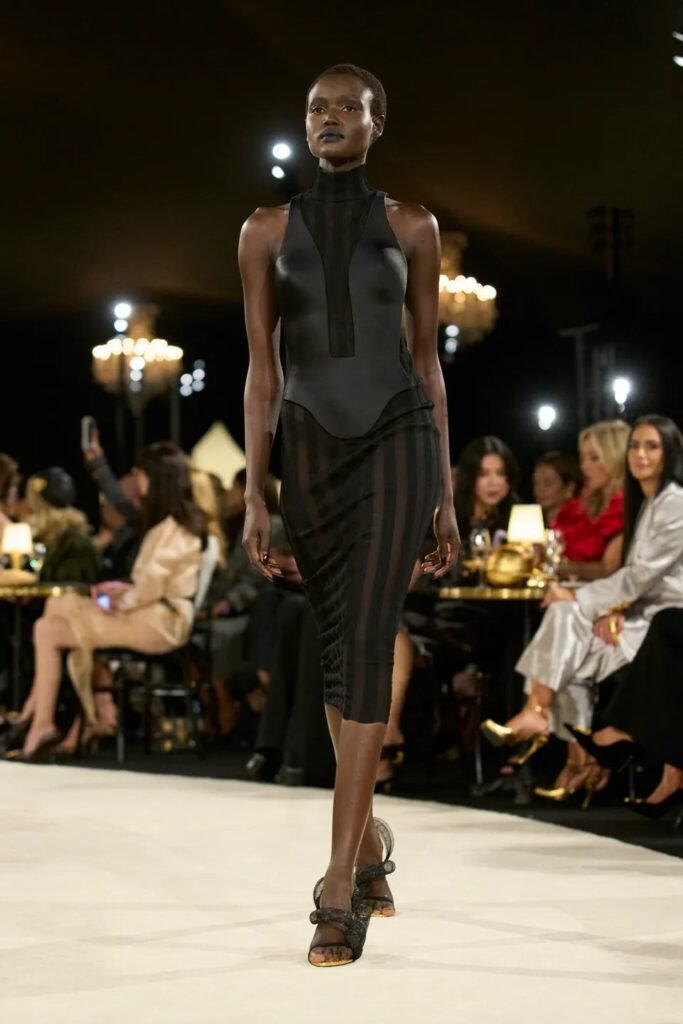
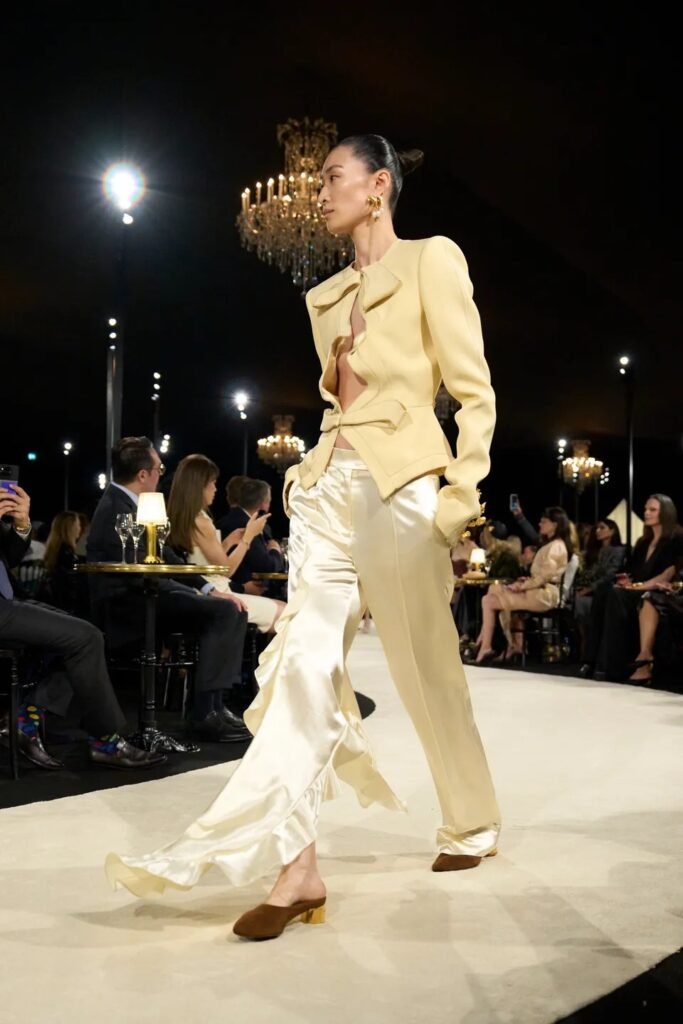
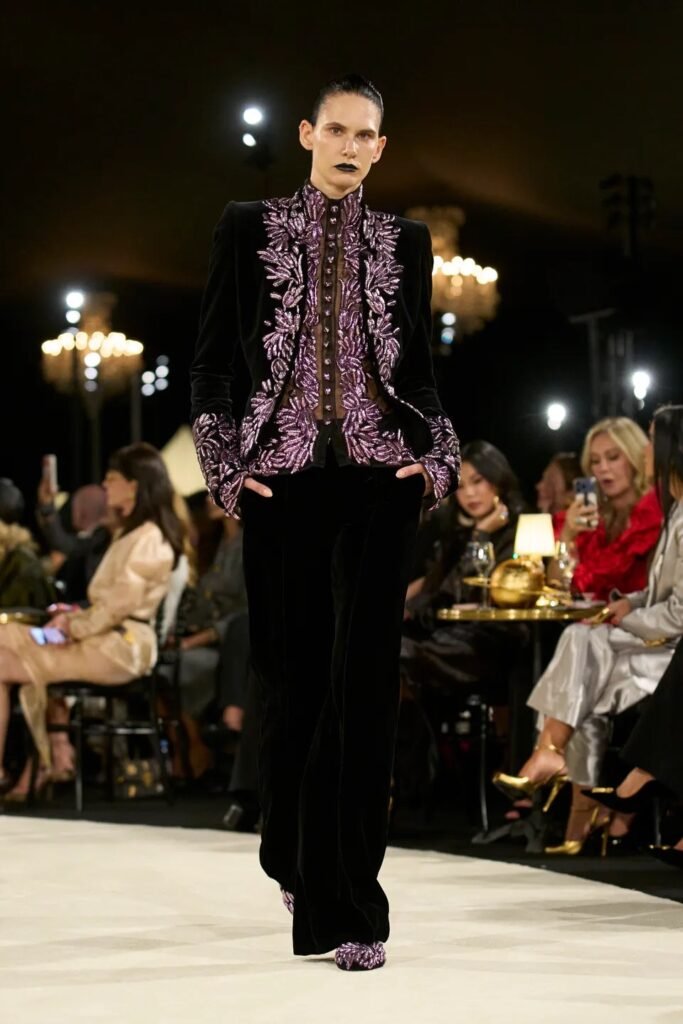
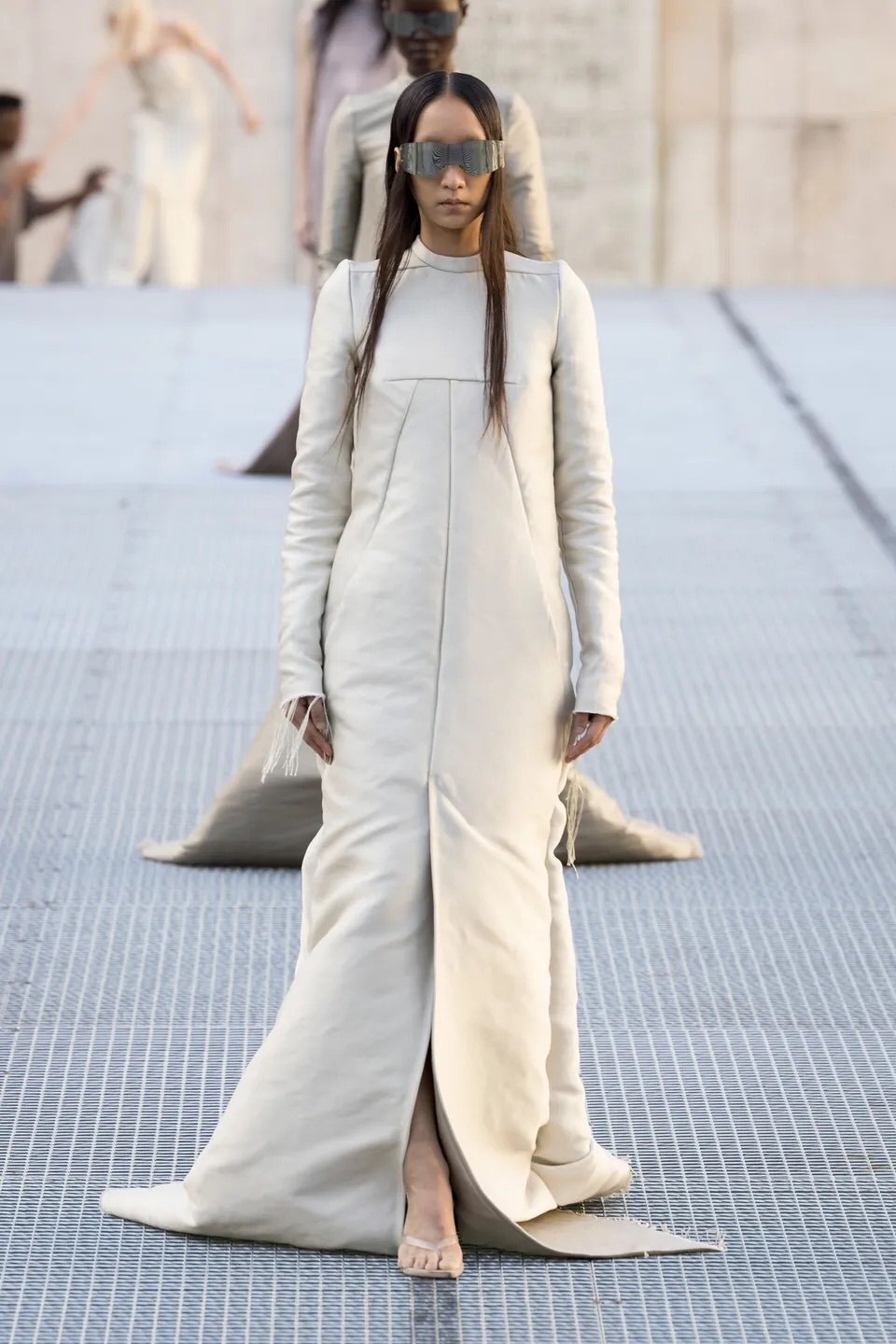
Roseberry builds the collection around a deliberately restrained palette of black, bone and butter yellow, introducing occasional brighter shades to create contrast. The combination allows the garments’ textures, silhouettes and embellishments to take center stage.
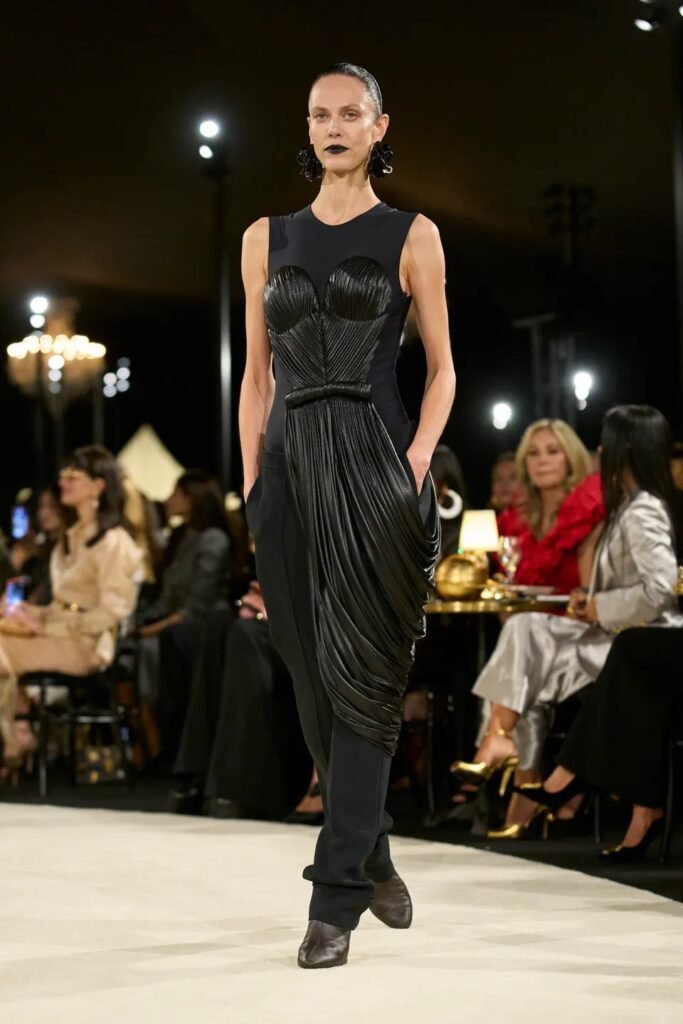
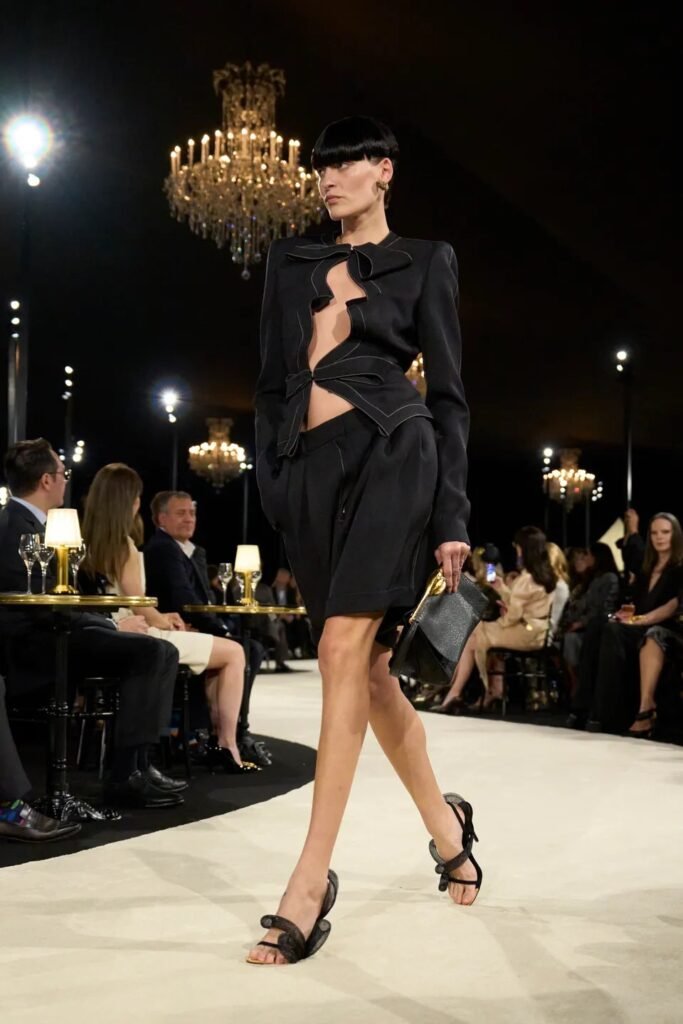
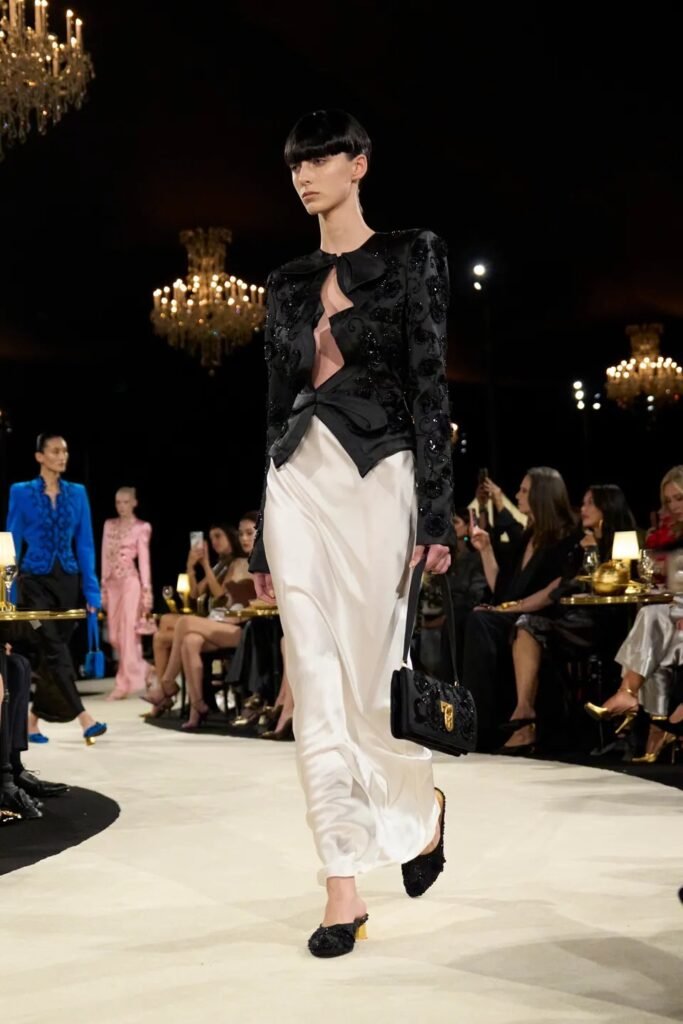
Black provides a foundation for the collection’s more dramatic expressions. Its association with eveningwear and classic Parisian dressing makes it particularly effective for sculptural dresses, sharply constructed separates and elegant wardrobe essentials.
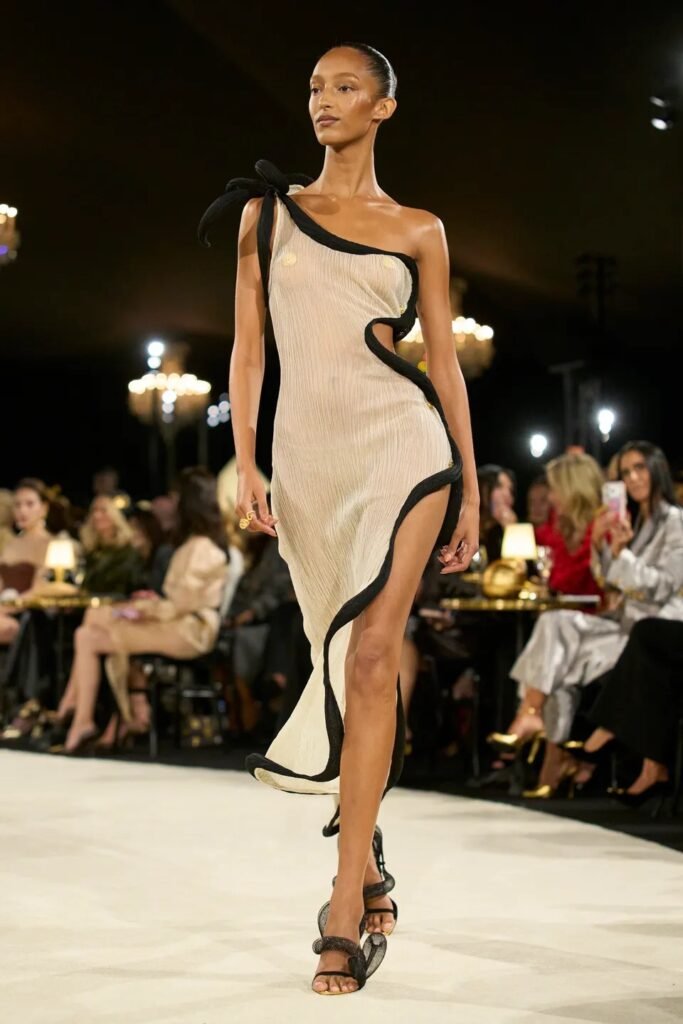
Bone introduces a softer visual dimension. Its understated quality highlights the intricate craftsmanship and delicate textures found throughout the collection, offering a lighter alternative to the intensity of black.
Butter yellow brings warmth and freshness to the palette. Its gentle brightness introduces a distinctly springlike character while maintaining the collection’s overall sense of refinement.
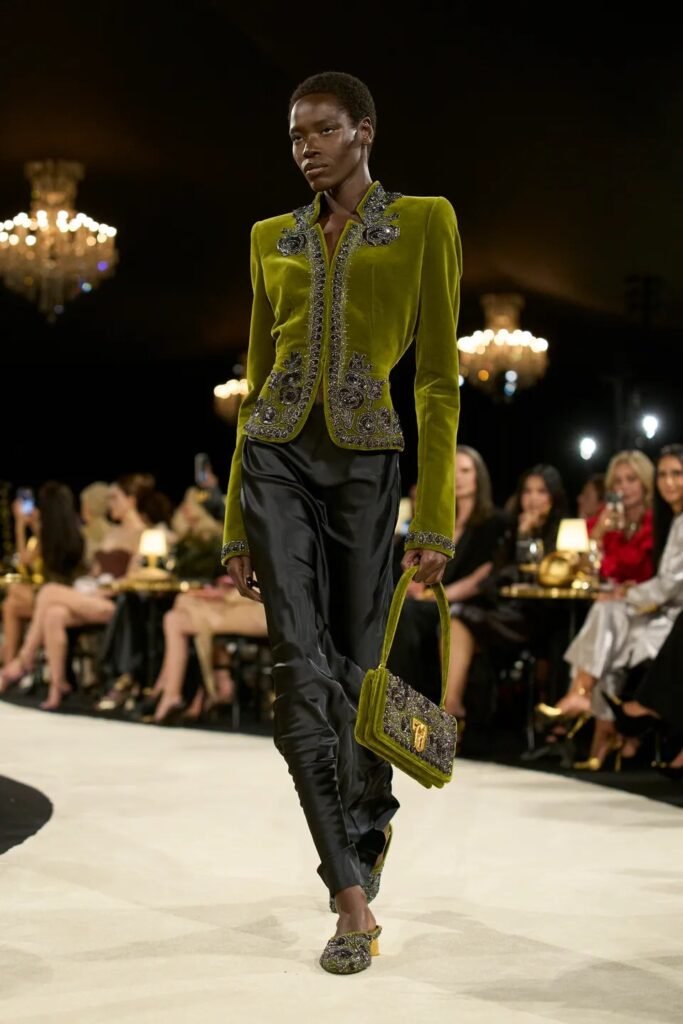
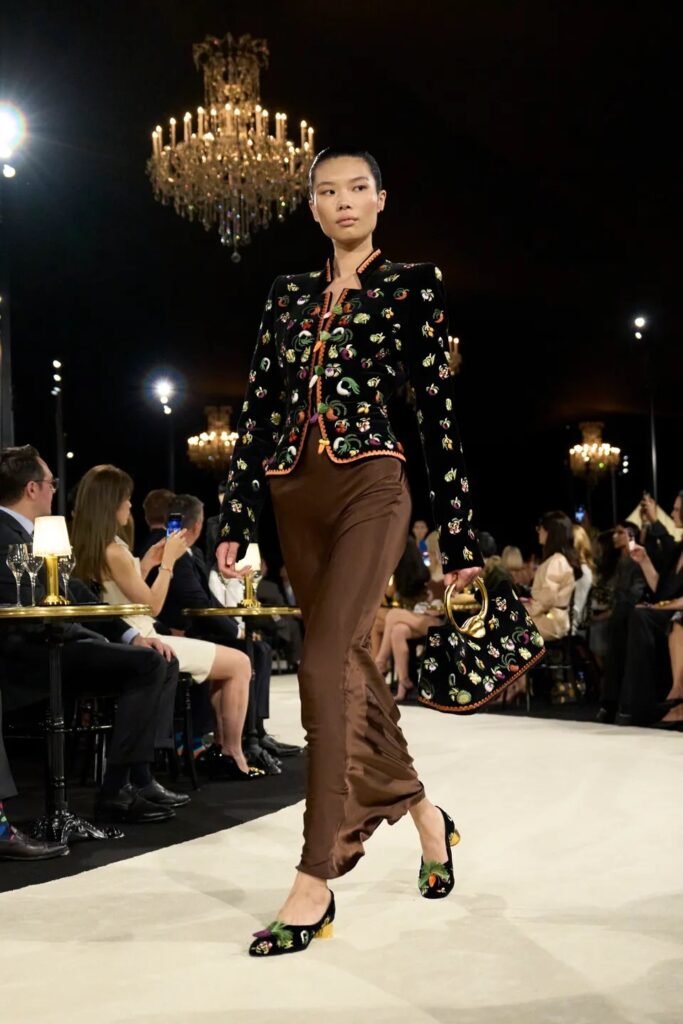
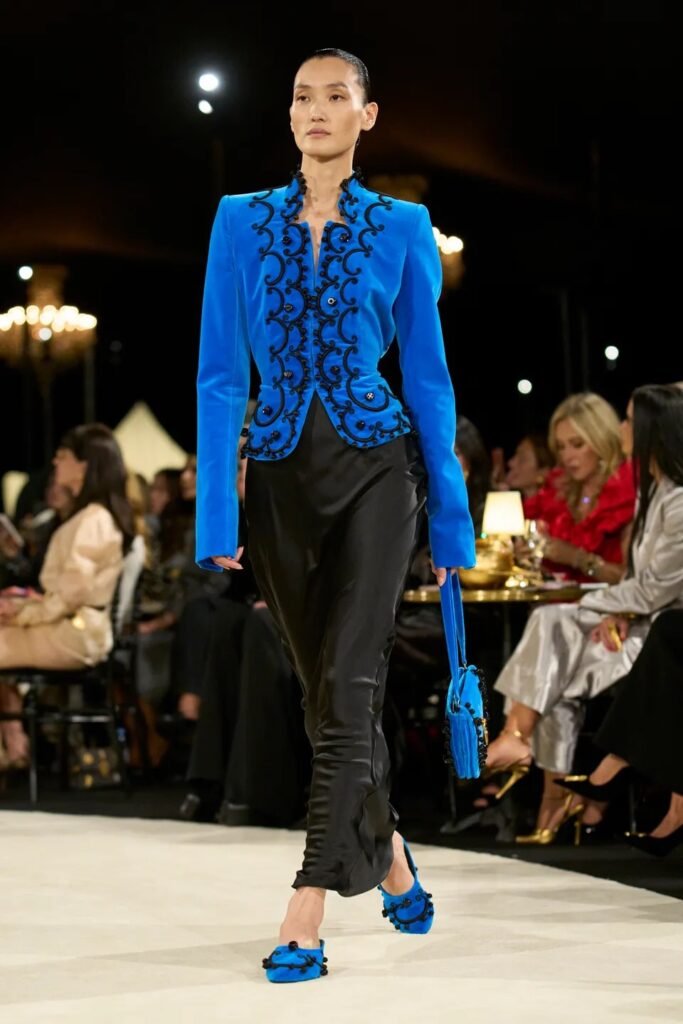
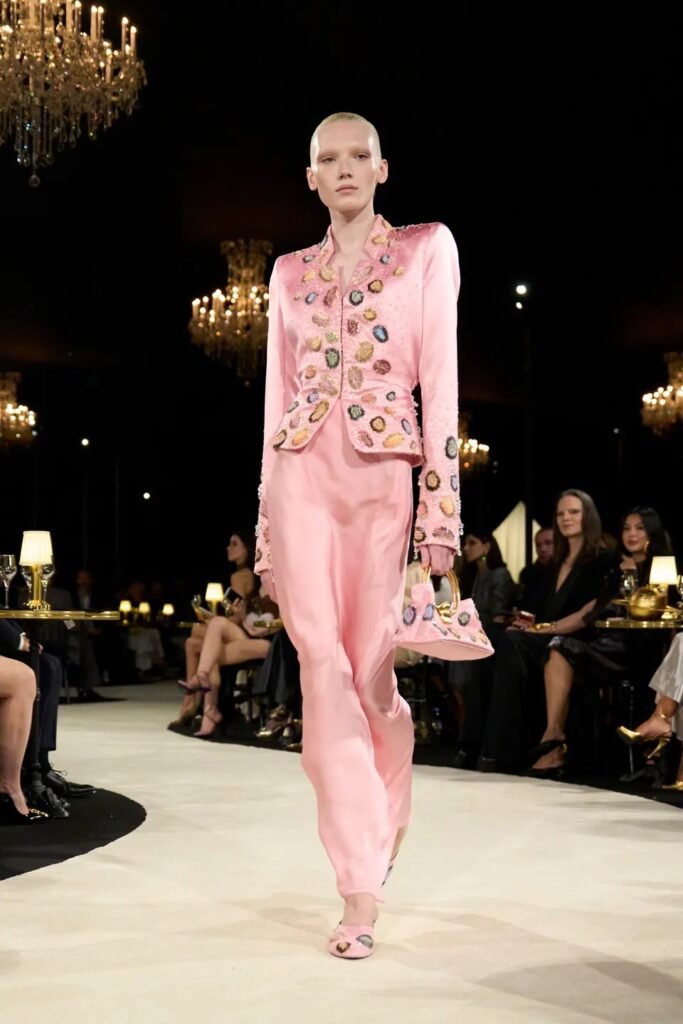
Elsewhere, archival-inspired colors such as kingfisher blue, moss green and salmon pink appear in reinterpretations of the house’s signature jacket.
Together, these shades establish a balance between consistency and individuality. Rather than presenting an overwhelming assortment of colors, Roseberry creates a coordinated wardrobe in which different pieces can be combined according to the wearer’s preferences.
The Evolution of Schiaparelli’s Signature Silhouettes
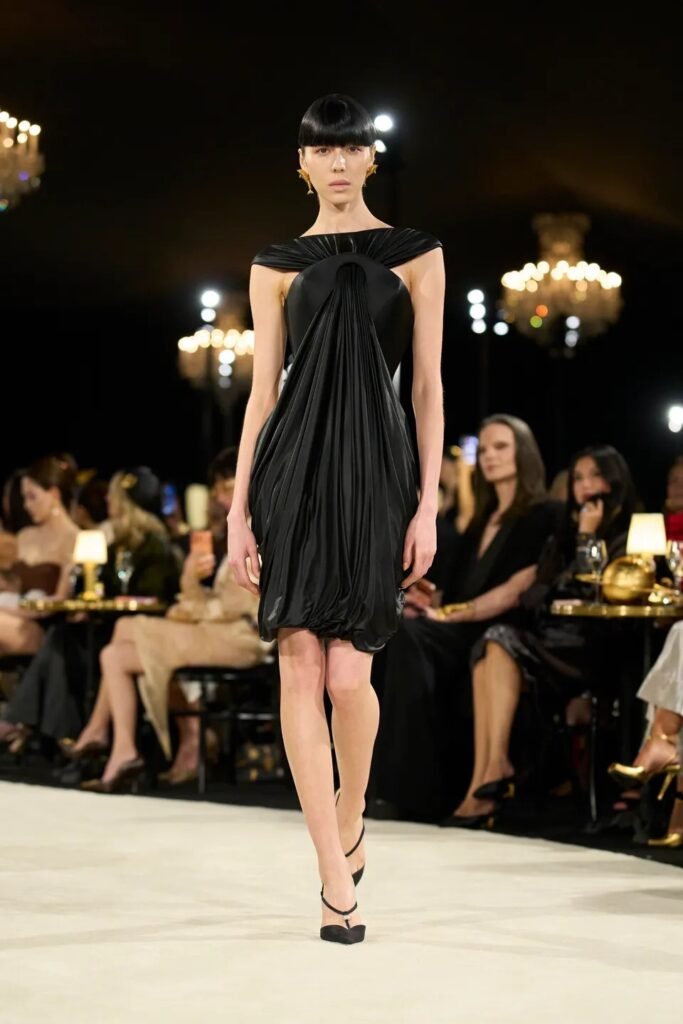
One of the central ideas behind Spring 2027 is the transformation of recognizable couture silhouettes into separate garments.
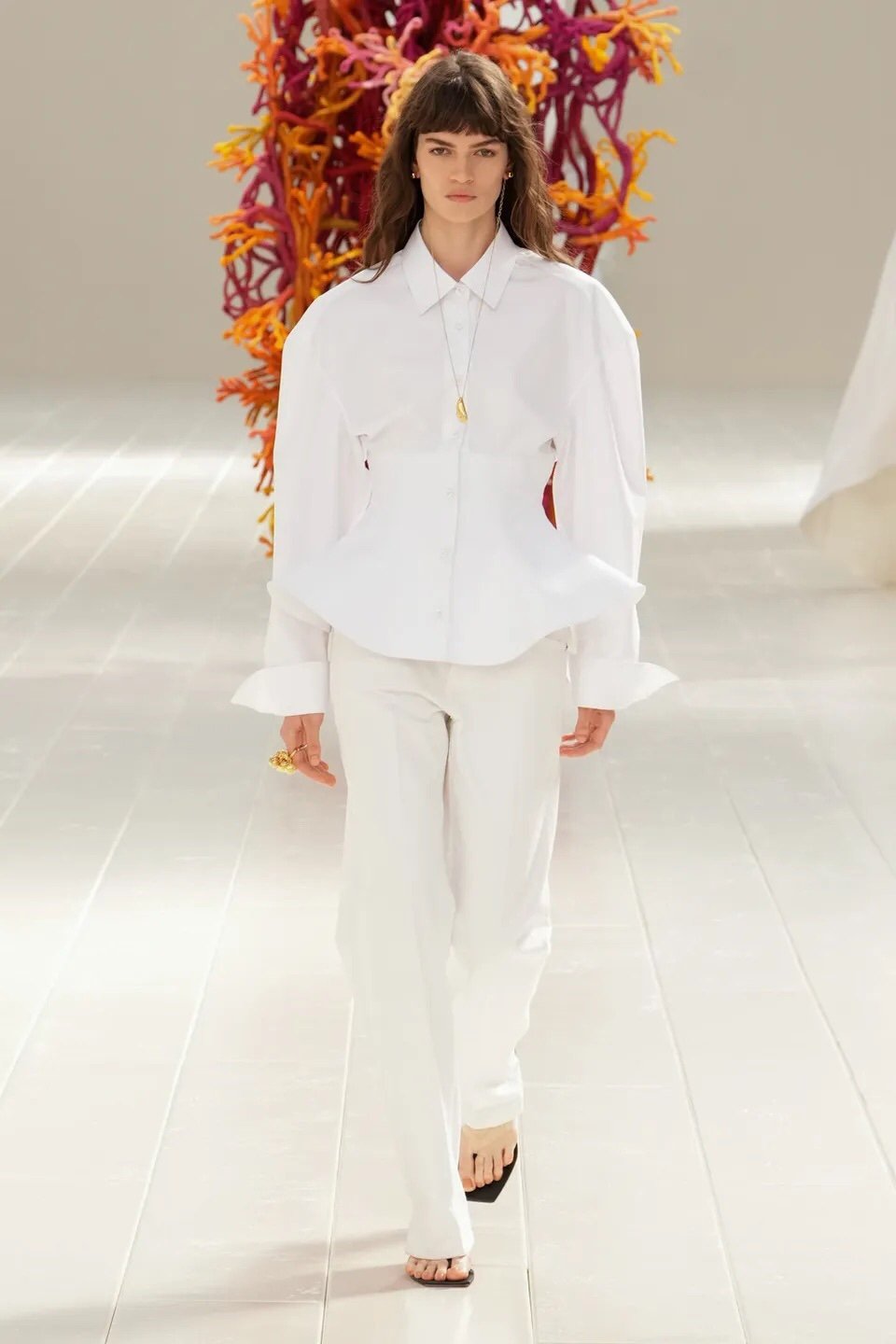
Roseberry explores how the house’s signature gowns, necklines and architectural forms can be reinterpreted as tops and bottoms. This approach introduces a modular quality to the collection, encouraging the wearer to build different outfits from individual pieces.
The concept reflects a broader interest in versatility. A garment no longer needs to be understood as part of a fixed look. Instead, it becomes an independent expression of personal style.
The collection’s silhouettes also explore the distinction between precision and sharpness. Although Schiaparelli is known for its sculptural approach to design, Roseberry moves away from excessively severe lines, introducing softer shapes and unexpected openings.
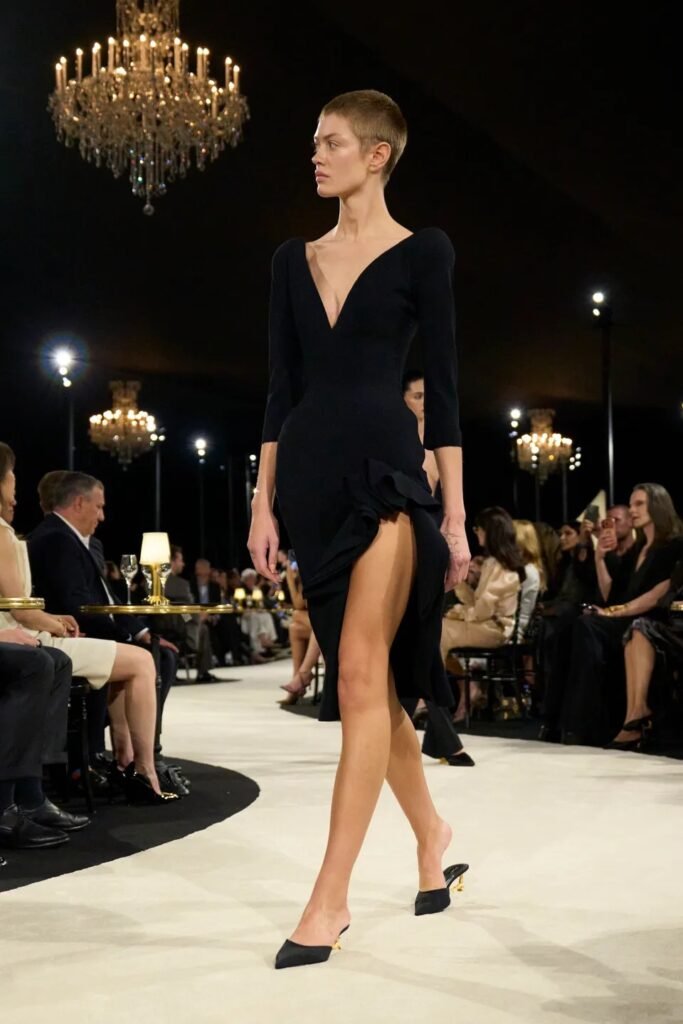
Asymmetrical details and delicate lettuce hems provide movement, while carefully considered proportions maintain a sense of structure.
This interplay between architectural design and fluid construction is particularly significant for a house whose couture identity is closely associated with dramatic shapes.
Rather than abandoning that heritage, the designer finds new ways to make it relevant to a broader wardrobe.
Knitwear Takes Center Stage
Among the collection’s most significant elements is its exploration of knitwear.
For Spring 2027, knitwear becomes more than a supporting category. It emerges as one of the defining expressions of Roseberry’s creative vision, combining the maison’s historical references with contemporary textile experimentation.
A standout development is the use of sheer viscose knitwear inspired by a tree-bark texture. The material references a fabric developed by Elsa Schiaparelli, connecting the contemporary collection to the founder’s history of textile innovation.
The delicate, almost transparent quality of the knit introduces an intriguing relationship between coverage and exposure. Rather than relying on heavy embellishment or elaborate construction, the garments create visual interest through texture and material.
The collection also explores the possibilities of broderie anglaise, a traditional embroidery technique associated with delicate cutwork and decorative patterns.
Here, the technique moves beyond its conventional associations with romantic summer dressing. Its incorporation into Schiaparelli’s design language introduces a fresh interpretation of craftsmanship, allowing intricate details to coexist with the house’s more unconventional aesthetic.
The emphasis on knitwear also reinforces the collection’s broader philosophy: luxury can be expressed through the quality and imagination of a garment rather than through excessive ornamentation alone.
Unexpected Embroidery and the Art of Playfulness
Playfulness remains an essential part of Schiaparelli’s identity, and Spring 2027 finds new ways to express it through embroidery.
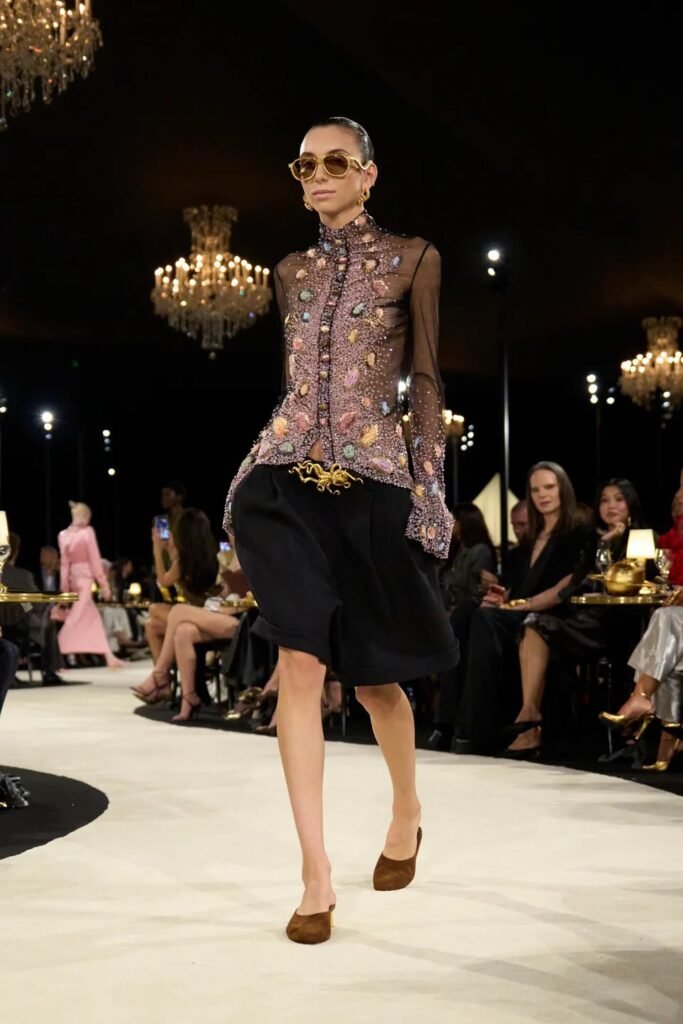
Roseberry introduces intricate vegetable and feather motifs across sheer shirts and other garments, bringing decorative artistry into lighter, more transparent fabrics.
The choice of motifs reflects the maison’s longstanding interest in transforming ordinary references into unexpected visual statements.
Vegetable-inspired embroidery, in particular, introduces an unusual contrast between natural imagery and the precision of luxury craftsmanship. Meanwhile, feather motifs contribute a sense of movement and delicacy.
These details also represent a shift in how embellishment is approached. Rather than reserving elaborate decoration exclusively for luxurious fabrics such as silk and velvet, the collection introduces intricate workmanship to lighter materials.
The result is a more relaxed interpretation of Schiaparelli’s decorative traditions.
The embroidered designs also appear on one of the collection’s eight reinterpretations of the classic Schiaparelli jacket. Drawing inspiration from the maison’s archives, these versions explore different colors and decorative treatments while retaining the jacket’s recognizable identity.
It is a thoughtful way of celebrating the house’s history without treating its archival designs as untouchable objects.
Ruffles, Leather and the Beauty of Imperfection
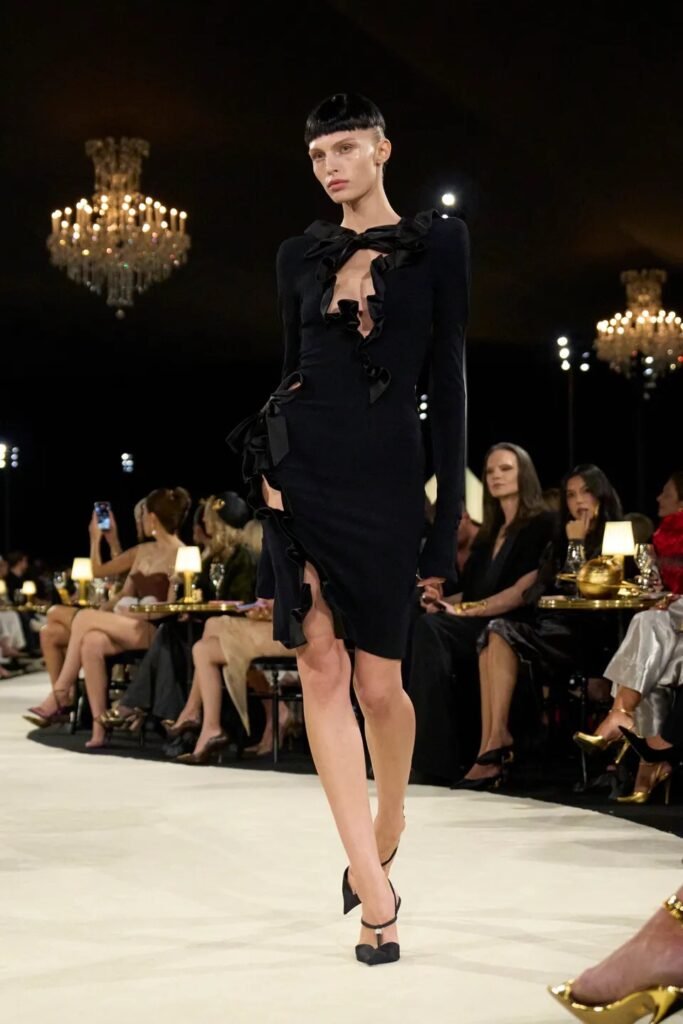
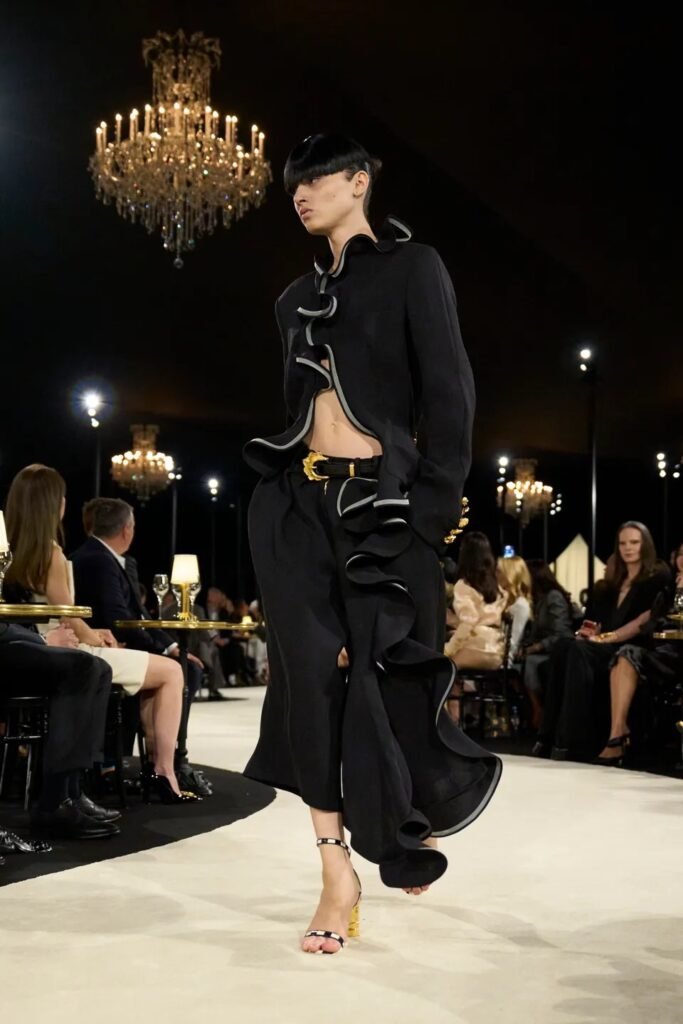
Another distinctive feature of Schiaparelli Spring 2027 is its exploration of ruffles.
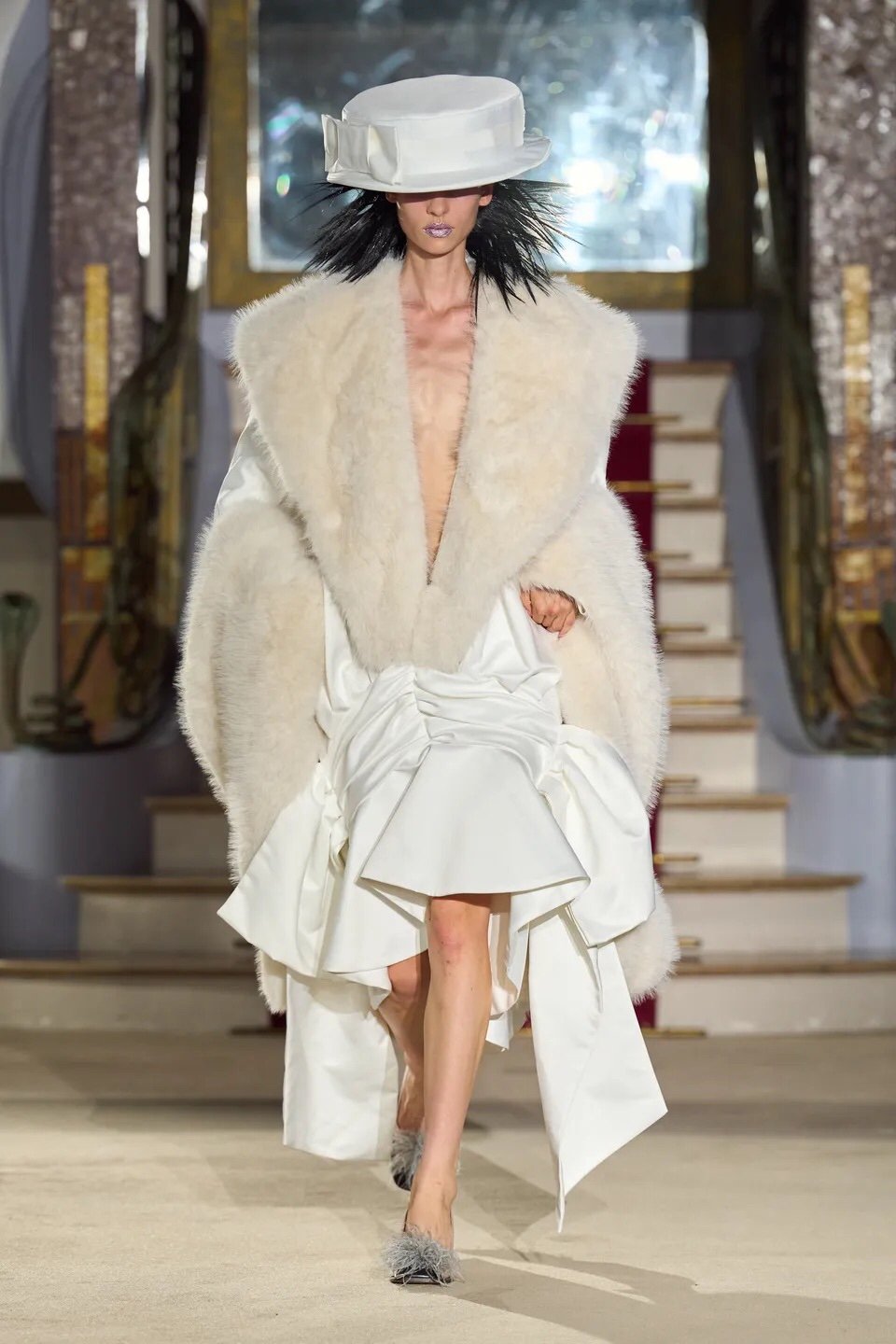
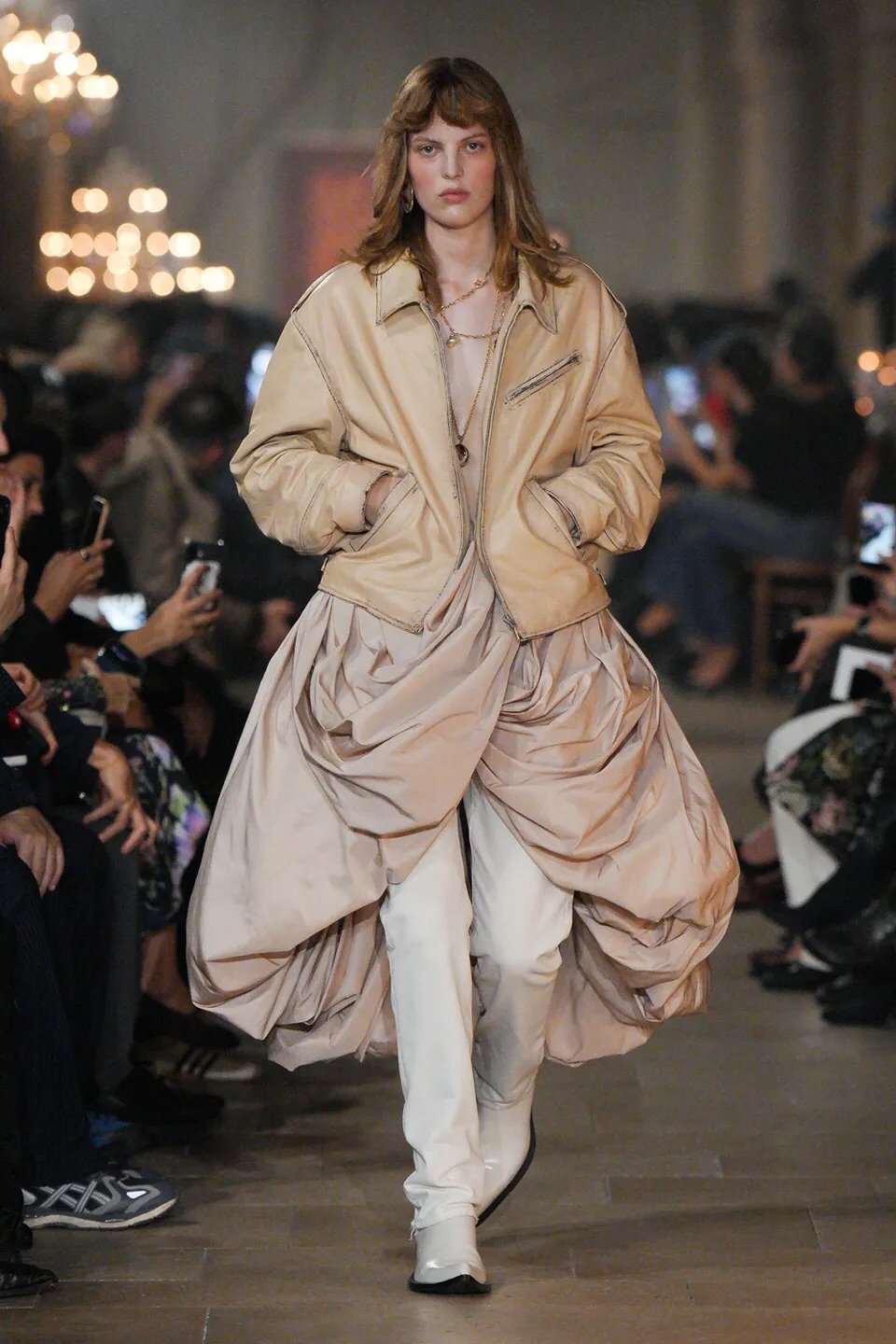
Inspired by the original curtains that lined the windows of Elsa Schiaparelli’s Place Vendôme atelier, the collection introduces ruffled details rendered in leather and linen.
The reference is particularly interesting because of its unconventional origin. Instead of drawing inspiration exclusively from garments or historical fashion silhouettes, Roseberry looks toward the interior environment of the original atelier.
The resulting designs embrace an unexpected visual language. Ruffles, traditionally associated with romantic dresses, delicate fabrics and decorative femininity, acquire a different character when translated into leather.
Linen offers another interpretation, bringing a lighter and more relaxed quality to the same design vocabulary.
These contrasting materials demonstrate the collection’s interest in challenging familiar expectations.
The ruffles are not necessarily intended to appear perfectly delicate or traditionally elegant. Their slightly unusual proportions and material combinations introduce a sense of creative tension.
It is this willingness to embrace details that feel a little unexpected that connects the collection so closely to Elsa Schiaparelli’s original artistic philosophy.
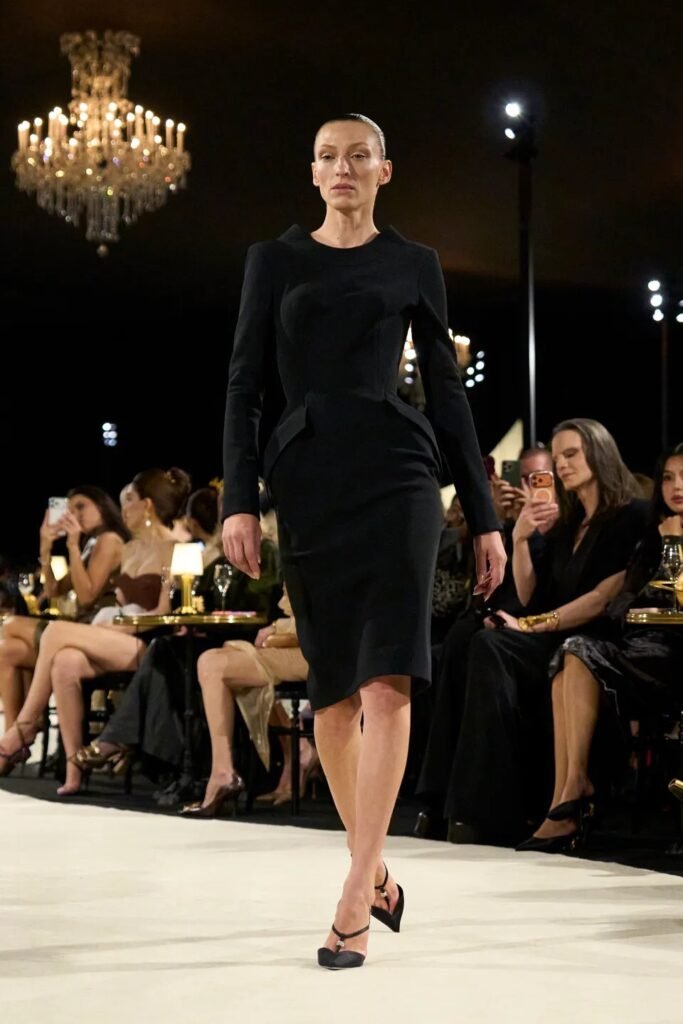
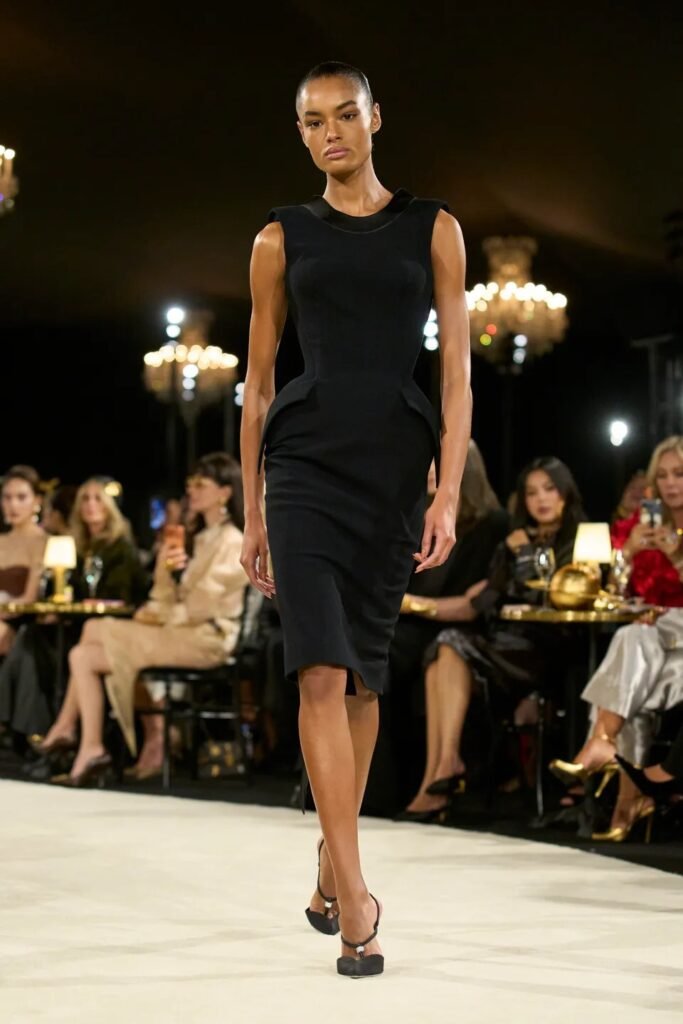
The Return of the Little Black Cocktail Dress
Even within a collection focused on versatility and everyday dressing, eveningwear remains an important part of Schiaparelli’s identity.
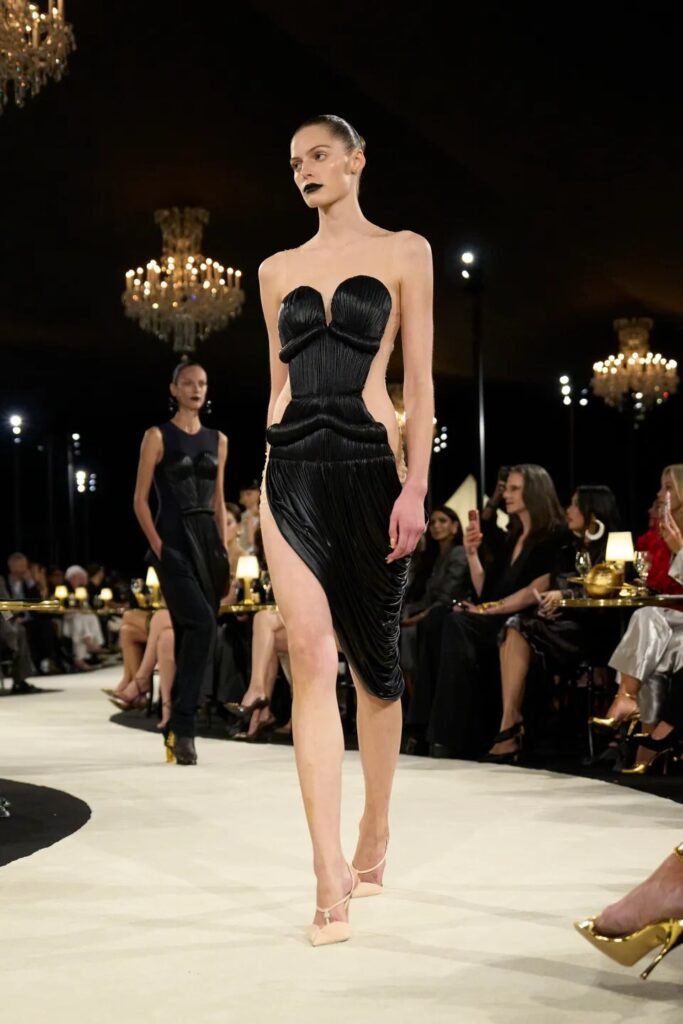
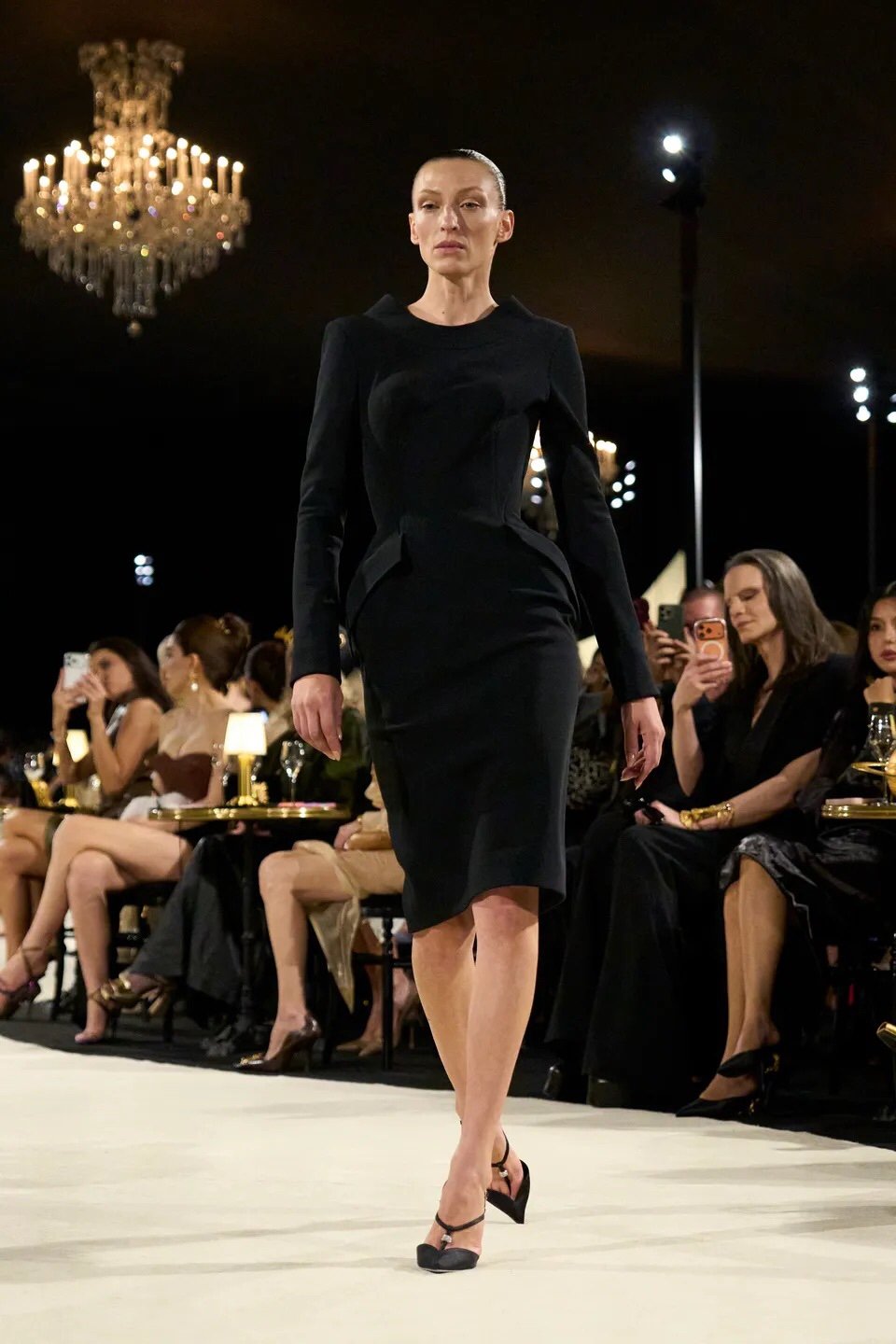
For Spring 2027, Roseberry explores what he describes as a form of revenge dressing through his interpretation of the perfect little black cocktail dress.
The idea draws inspiration from the simplicity of a look in the maison’s recent haute couture collection, The Abyss. Rather than relying on excessive decoration, the designer considers how a carefully constructed silhouette can create a memorable impression.
The little black dress has occupied a central place in fashion history for decades. Its enduring appeal lies in its ability to adapt to different occasions, personal styles and interpretations of elegance.
At Schiaparelli, the familiar garment becomes an opportunity to explore the relationship between simplicity and visual impact.
The approach also reinforces one of the collection’s central ideas: sophistication does not always require elaborate construction or dramatic embellishment.
Sometimes, a precise silhouette and a confident sense of proportion are enough.
Sculptural Accessories and the New Schiaparelli Handbag
Accessories continue to play a defining role in the collection, particularly through the maison’s distinctive approach to handbags.
Roseberry describes the house’s accessories philosophy as a combination of recognizable shapes and unexpected artistic details.
For Spring 2027, familiar handbag silhouettes, including the hobo and pocketbook, receive imaginative reinterpretations.
One particularly distinctive detail is a brass mouth that doubles as a handle. The feature captures the maison’s fascination with transforming familiar objects and anatomical references into functional design elements.
It is an approach that recalls Elsa Schiaparelli’s surrealist collaborations and her ability to introduce unexpected imagery into everyday accessories.
The collection also explores the relationship between decorative craftsmanship and practicality.
Rather than treating handbags simply as complementary objects, Roseberry approaches them as independent expressions of the maison’s creative identity.
The resulting designs occupy an interesting space between fashion accessories and collectible objects, demonstrating how even a familiar handbag shape can become a vehicle for artistic experimentation.
Shoes That Balance Comfort and Creativity
Footwear receives a similarly considered treatment.
For Spring 2027, Schiaparelli introduces several lower-profile shoe styles, expanding the maison’s footwear vocabulary beyond its more dramatic sculptural heels.
Among the designs are a babouche-inspired shoe, a knitted bootie referencing a style worn by Elsa Schiaparelli in the late 1930s, and a mule featuring a spherical detail at the toe.
The collection also includes a lower interpretation of the house’s distinctive totem heel.
These designs demonstrate an interest in making the maison’s creative language more adaptable to everyday dressing.
The knitted bootie is particularly notable for its historical reference. By revisiting a style associated with Elsa Schiaparelli, Roseberry creates a connection between the founder’s personal fashion history and the contemporary collection.
Meanwhile, the spherical-toe mule introduces a playful reference to photographs of American film stars from the 1950s, including Marilyn Monroe.
Together, these designs highlight the collection’s interest in combining archival inspiration, artistic details and practical considerations.
A Menagerie of Jewelry Inspired by Spirit Animals
Jewelry provides another opportunity for Schiaparelli to explore its surrealist imagination.
For Spring 2027, Roseberry introduces a collection of animal-inspired accessories, including earrings, cuffs and brooches shaped like horses, dolphins, pigs, dogs, cats and spiders.
The designs are conceived around the idea of spirit animals, encouraging wearers to select pieces that reflect their personalities or individual sensibilities.
The concept introduces an element of personal storytelling into the collection.
Rather than presenting jewelry exclusively as a symbol of status or decorative luxury, Schiaparelli approaches it as a form of self-expression.
The animal motifs also connect naturally with the maison’s broader artistic vocabulary. Their unusual forms and unexpected references recall the surrealist tradition of finding beauty and meaning in unconventional subjects.
Elsewhere, familiar Schiaparelli codes, including the iconic keyhole and lips, appear in unexpected locations.
These recognizable motifs continue the house’s tradition of transforming its visual signatures through new applications, ensuring that its heritage remains visible without becoming repetitive.
Daniel Roseberry’s Vision for the Future of Schiaparelli
Schiaparelli Spring 2027 represents an important moment in Daniel Roseberry’s ongoing exploration of the maison’s identity.
Since his appointment as creative director, Roseberry has helped bring the house back into the center of contemporary fashion conversations, particularly through his dramatic haute couture creations and the celebrity appearances that have amplified their visibility.
His ready-to-wear collections, however, present a different creative challenge.
The objective is not simply to reproduce the spectacle of couture in more accessible forms. Instead, it is to identify the essential elements of the maison’s design language and determine how they can function within a modern wardrobe.
Spring 2027 offers a clear expression of that approach.
Through modular separates, experimental knitwear, archival references, playful embroidery and imaginative accessories, Roseberry explores the relationship between artistic identity and personal freedom.
The collection also reflects a broader understanding of luxury. In a fashion environment where consumers encounter an overwhelming number of trends and visual messages, a recognizable creative identity can become particularly valuable.
For Schiaparelli, that identity is built on a combination of surrealist imagination, technical craftsmanship and an unmistakable sense of play.
The Spring 2027 collection demonstrates how these qualities can be preserved while allowing the wearer to participate more actively in the creative process.
The Final Word
With Schiaparelli Spring 2027 Ready-to-Wear, Daniel Roseberry presents a collection that looks beyond the traditional boundaries of luxury dressing.
Titled Going Clear, the collection explores the possibilities of a more flexible wardrobe without losing the distinctive artistic spirit that defines the maison.
Its restrained color palette, inventive knitwear, unexpected embroidery, sculptural accessories and reinterpretations of archival silhouettes reveal a designer interested in finding new expressions for familiar creative codes.
What makes the collection particularly compelling is its emphasis on choice. Rather than dictating a single vision of how Schiaparelli should be worn, Roseberry presents individual pieces that invite experimentation and personal interpretation.
It is a vision of modern luxury in which creativity and functionality are not opposing forces but complementary elements of a contemporary wardrobe.
For a maison founded on the belief that fashion can be art, Spring 2027 offers another reminder that extraordinary design does not always have to announce itself through spectacle. Sometimes, its most interesting expressions emerge through the smallest details.