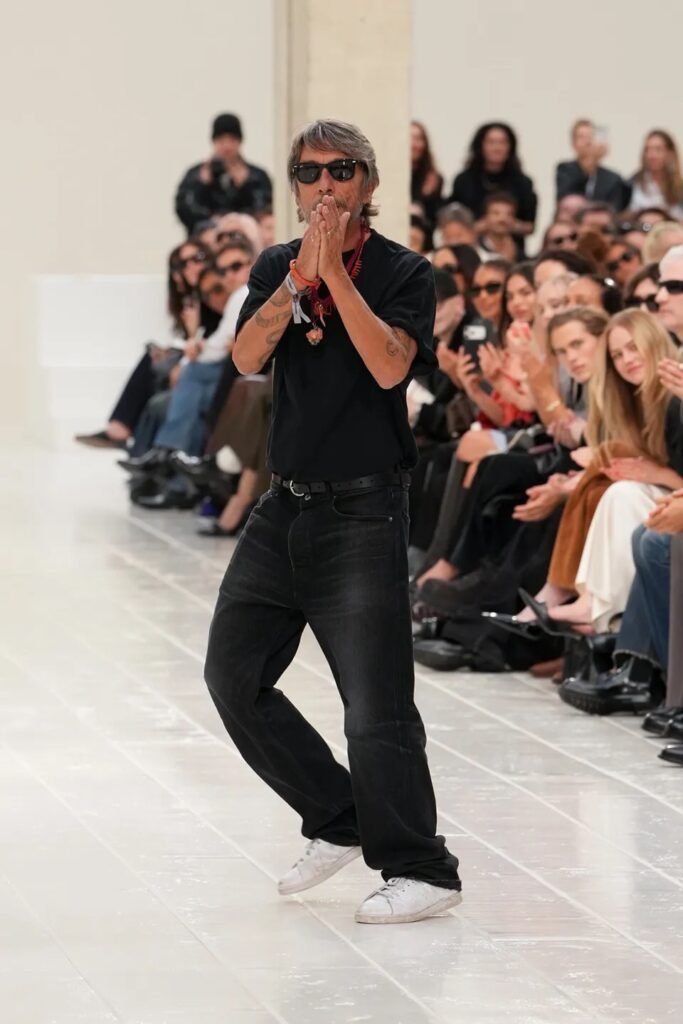
By Pierpaolo Piccioli
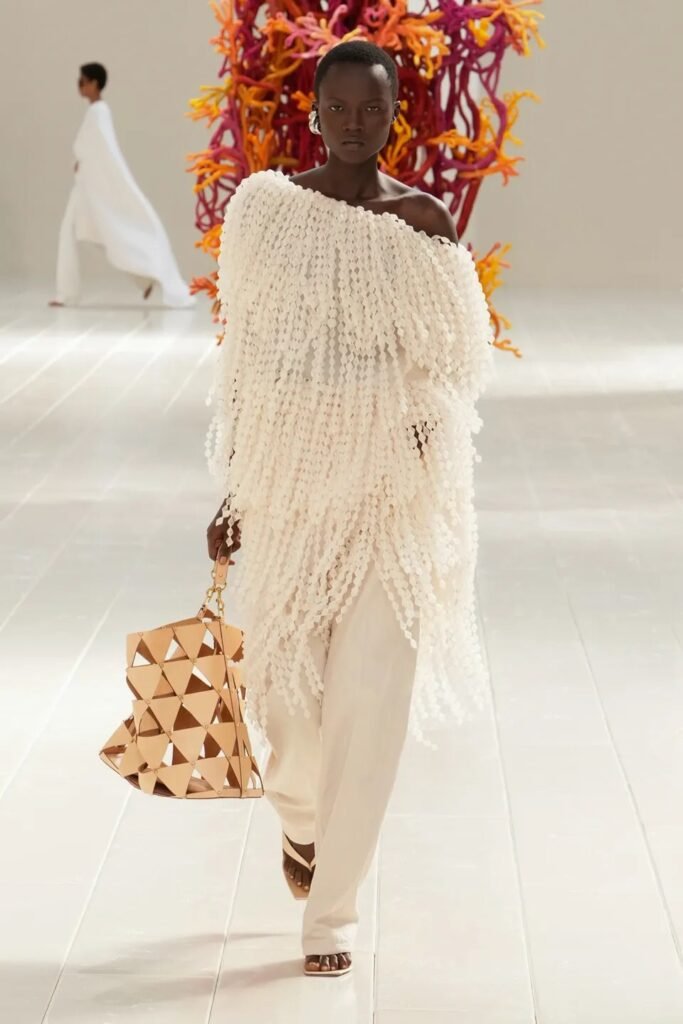
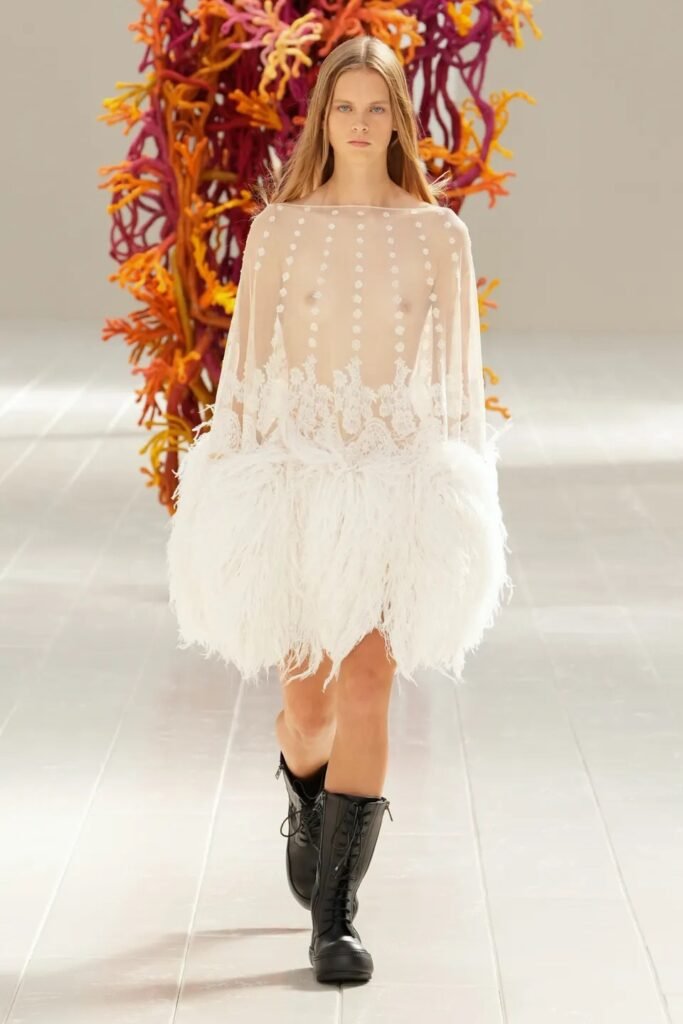
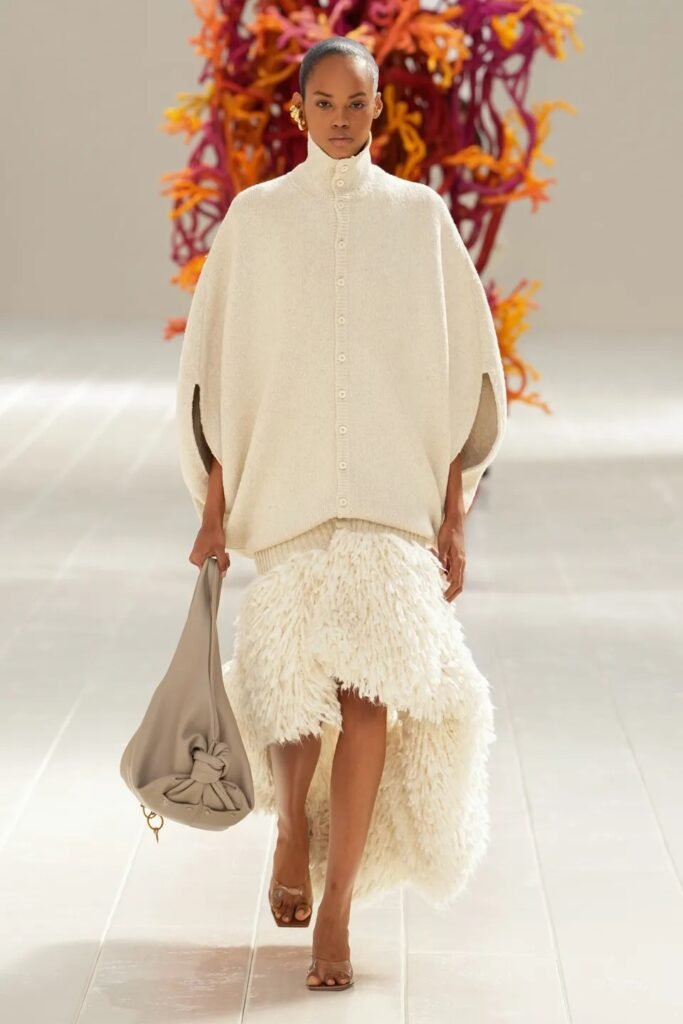
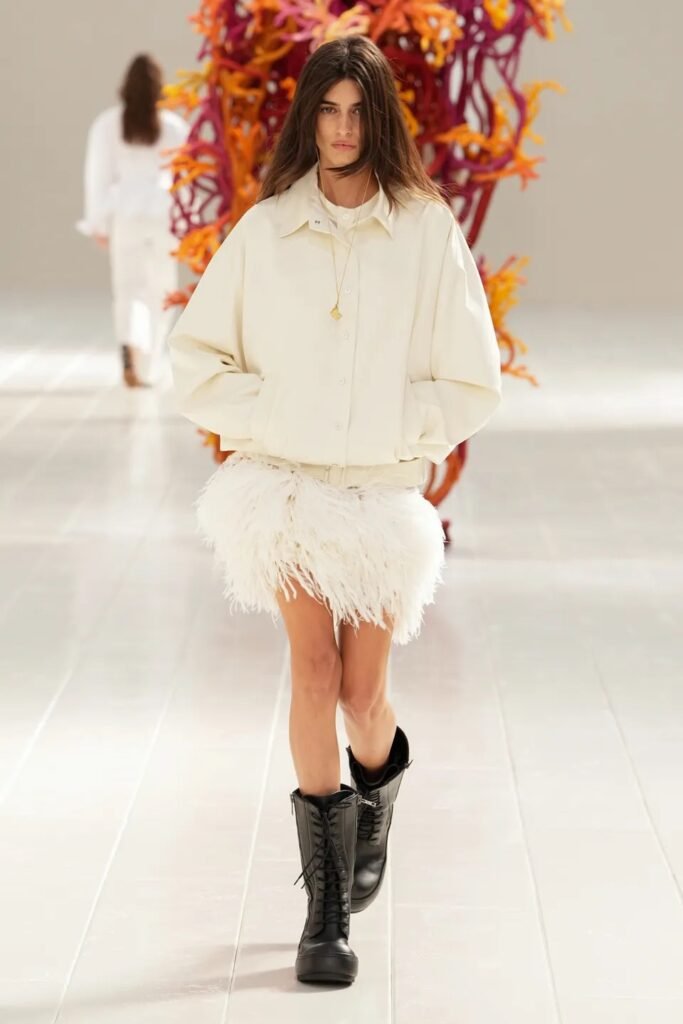
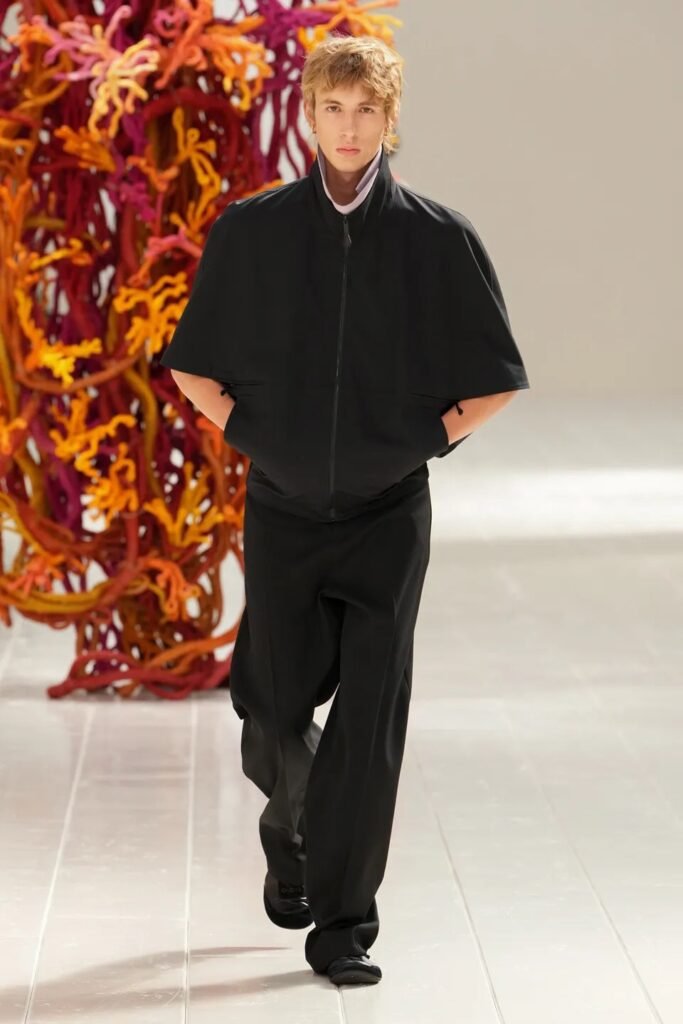
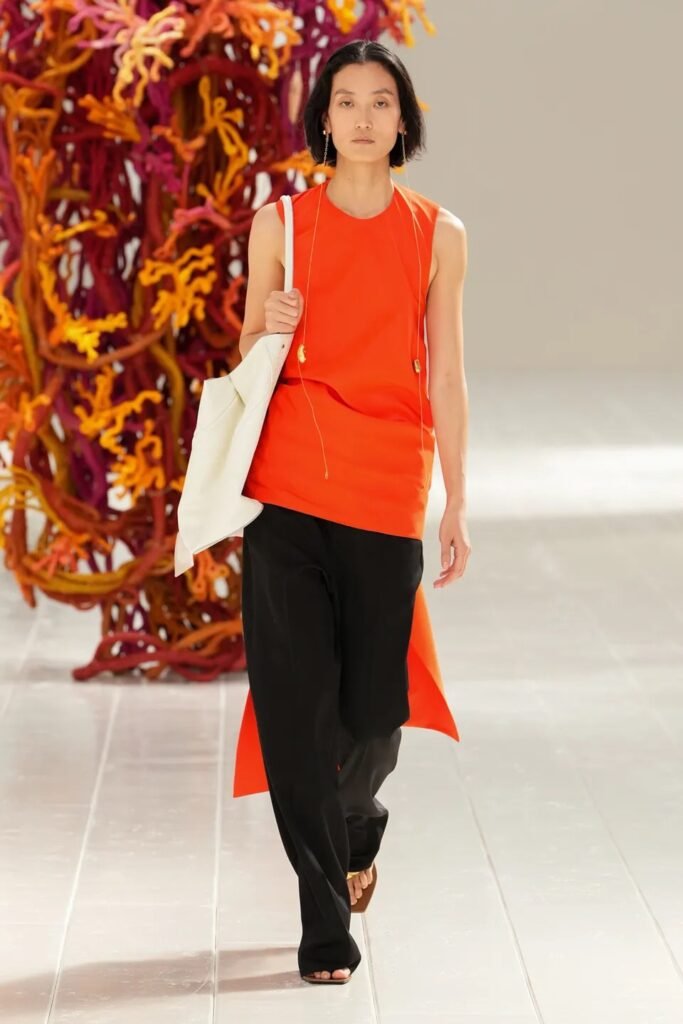
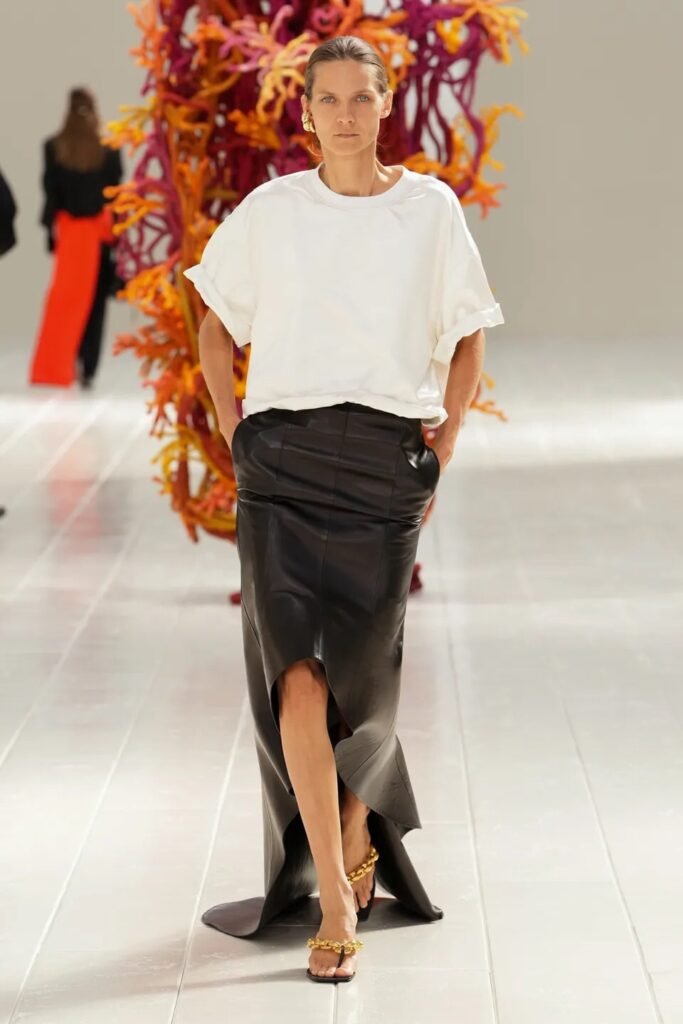
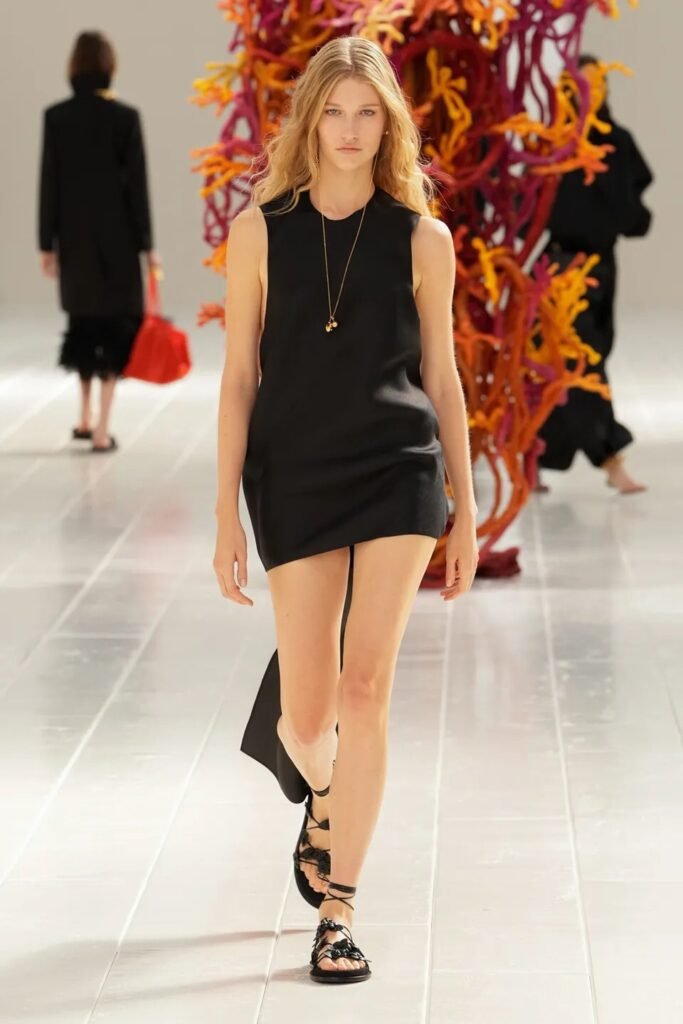
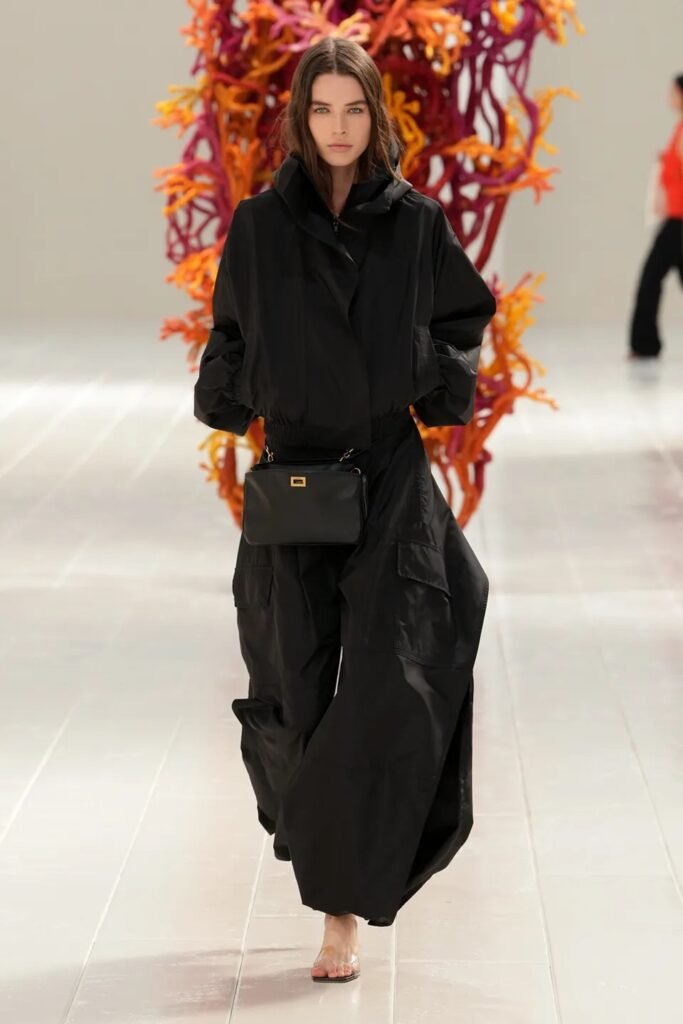
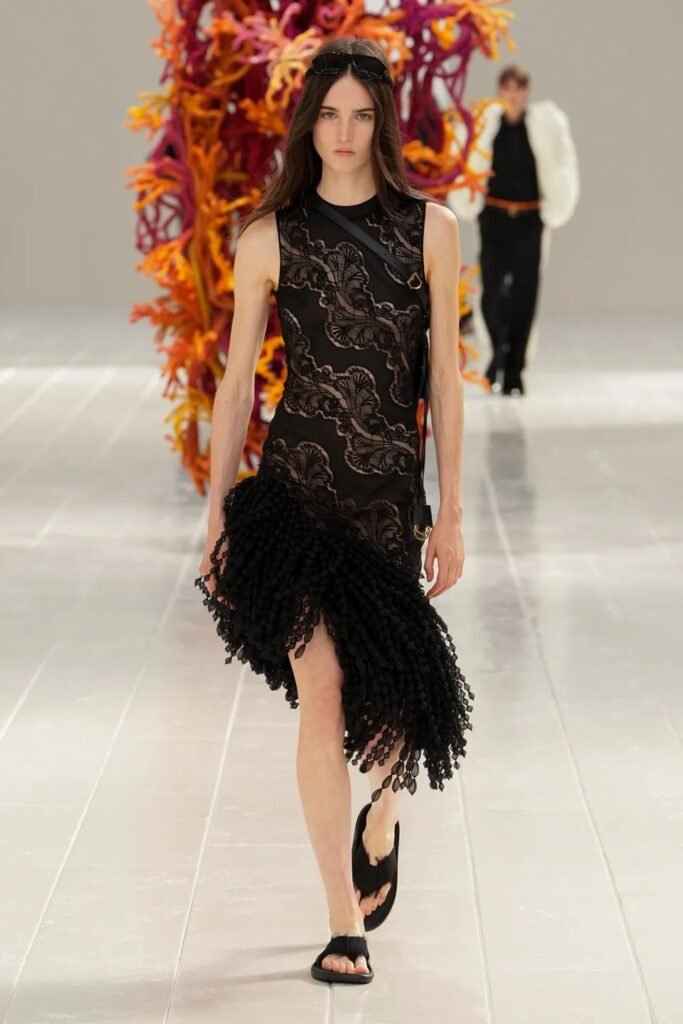
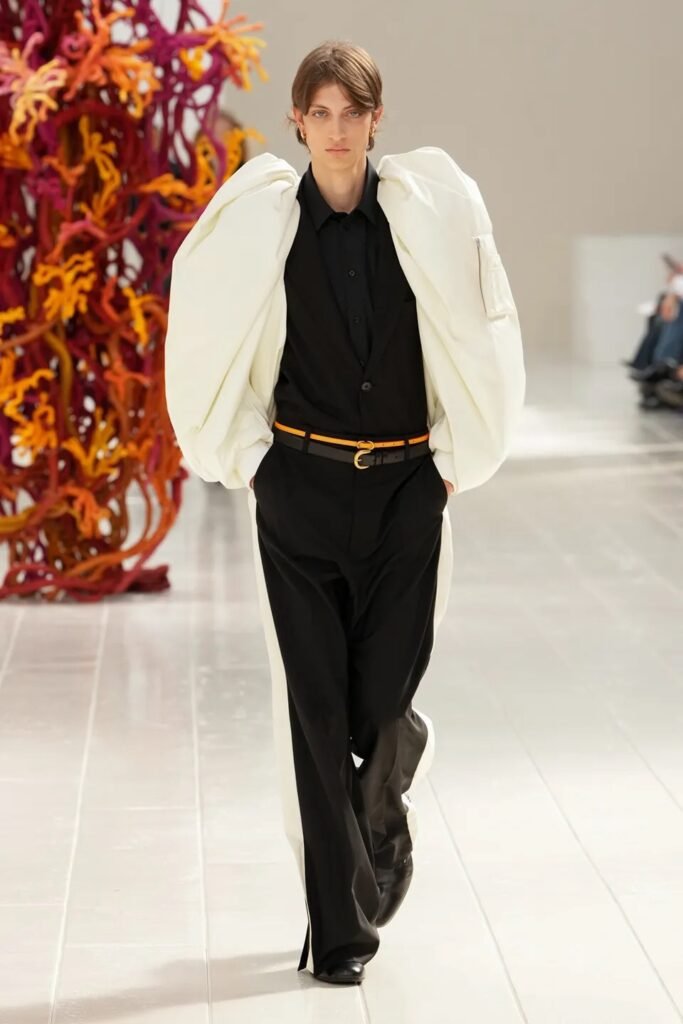
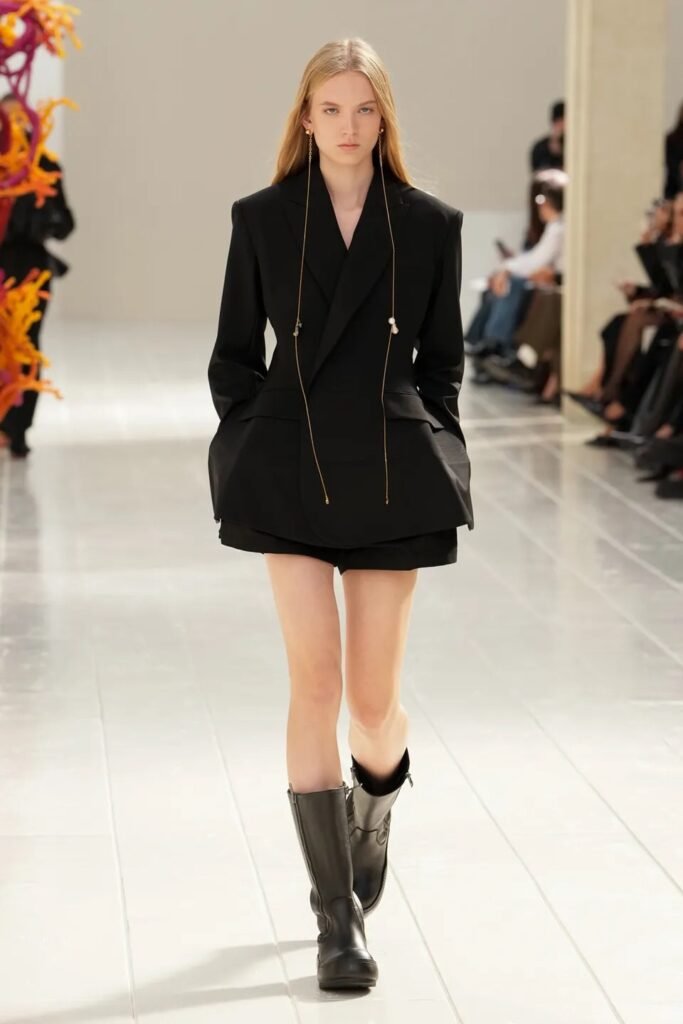
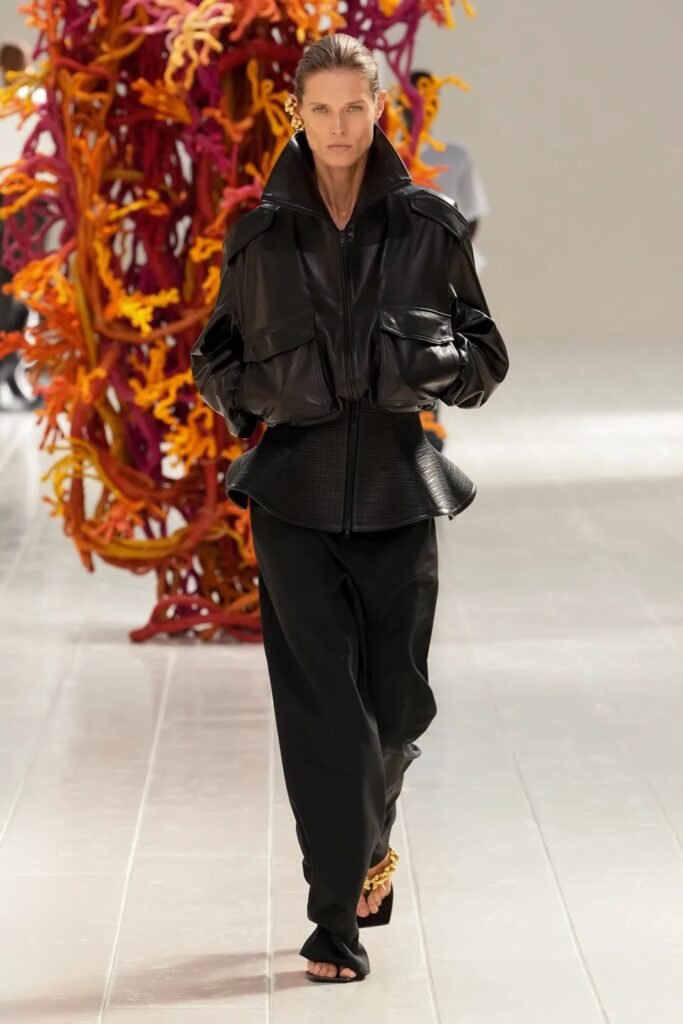
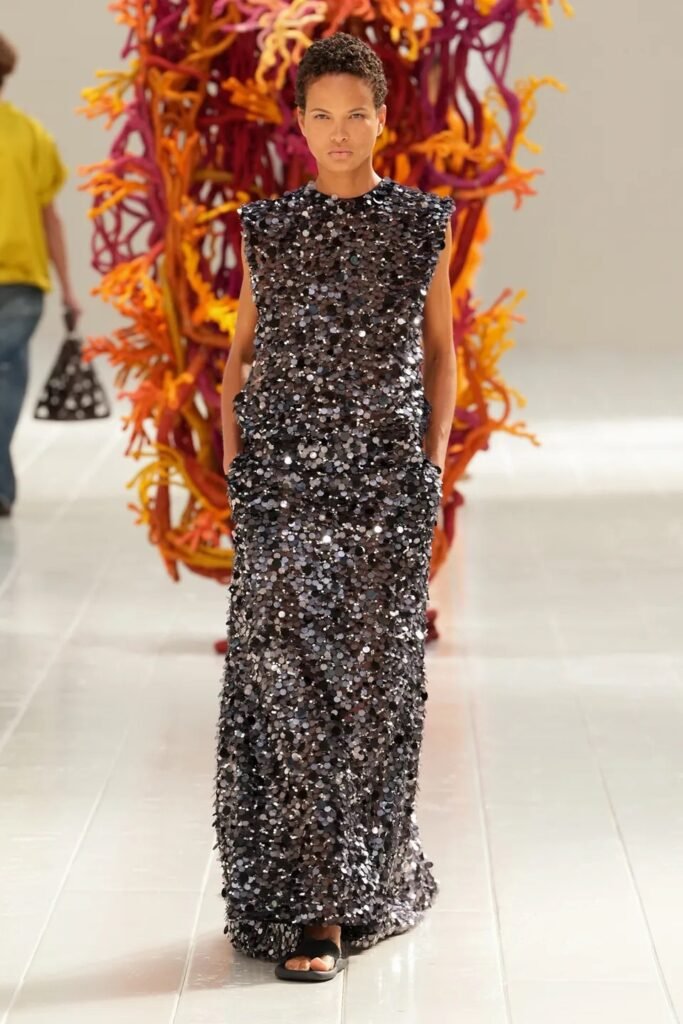
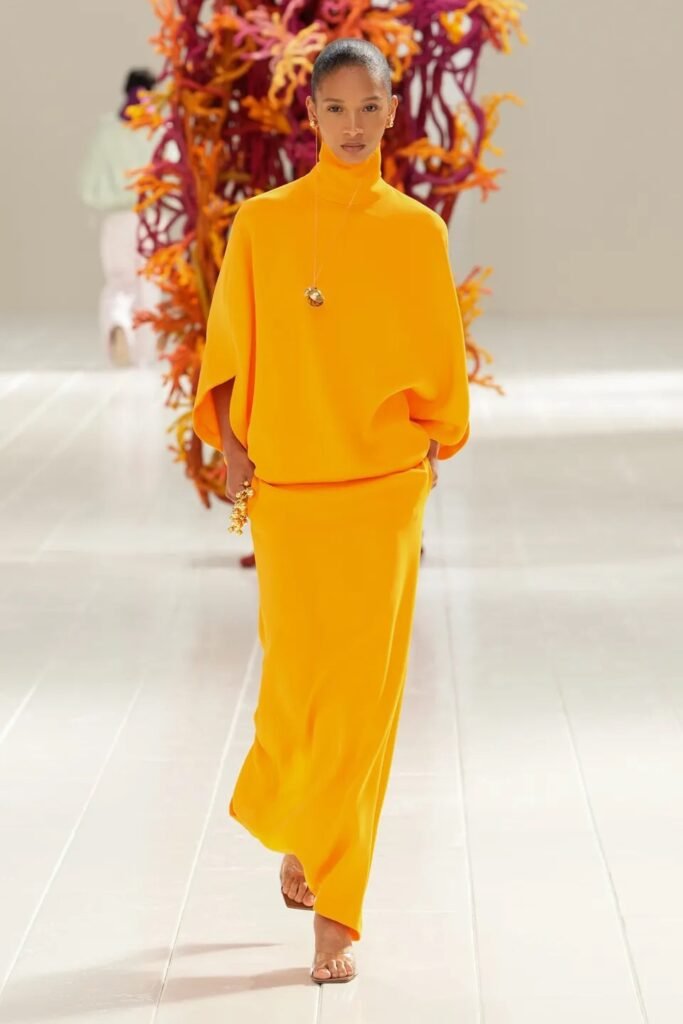
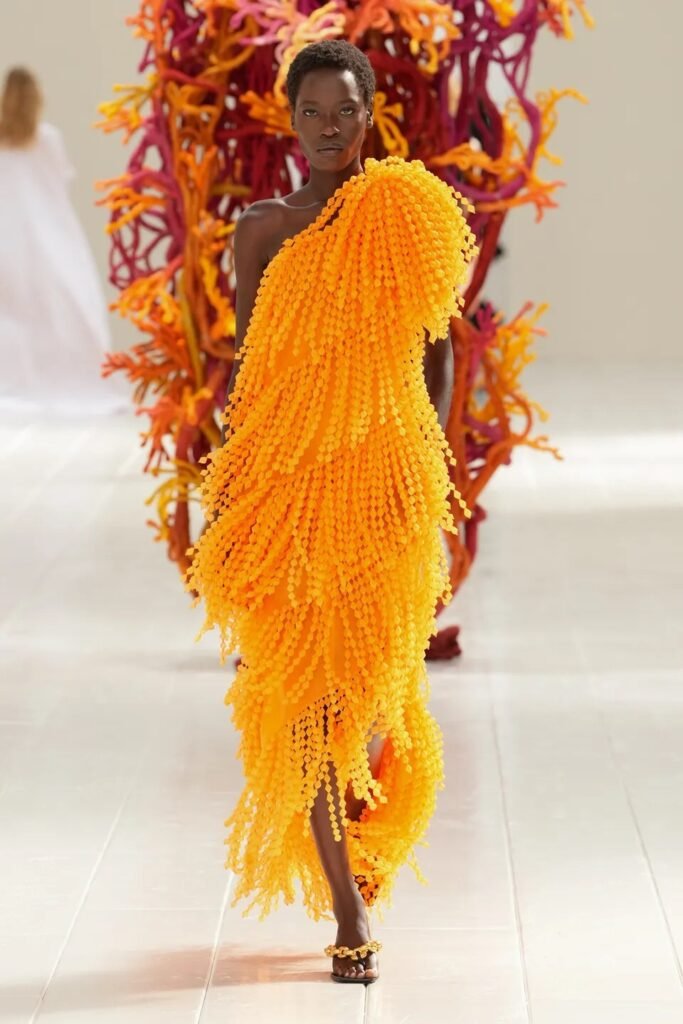
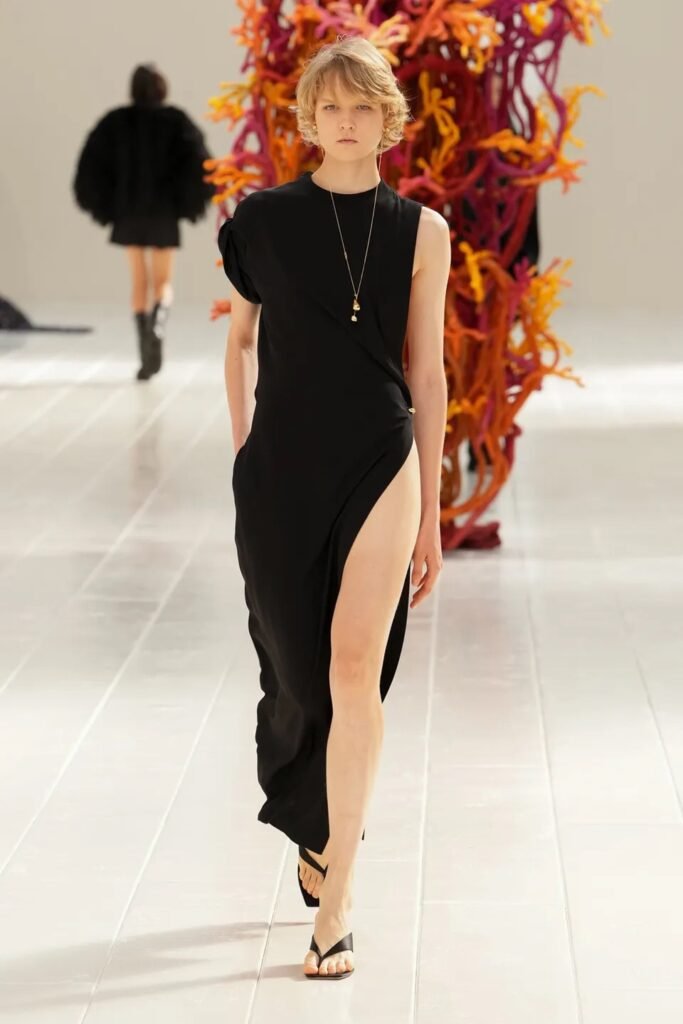
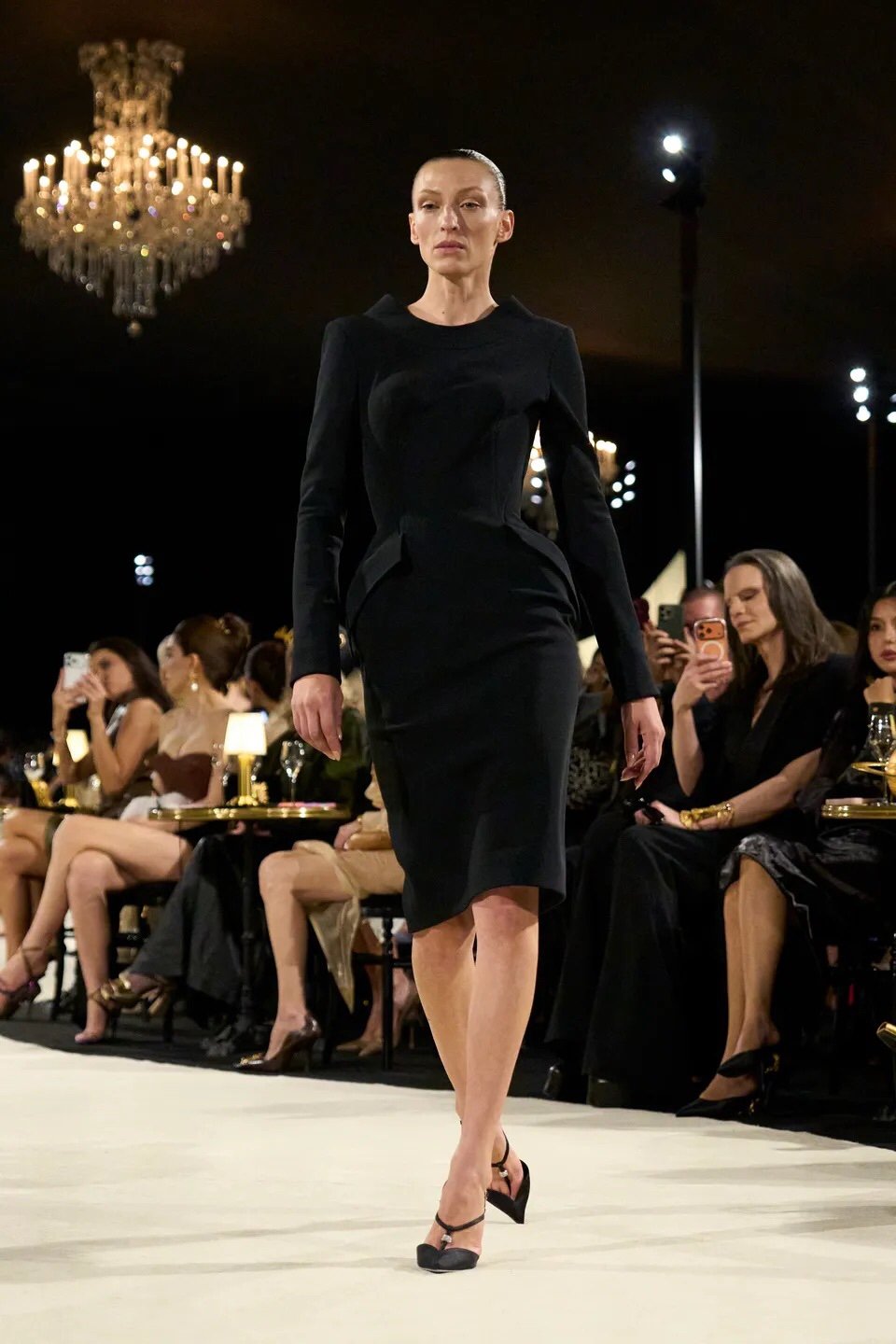
Balenciaga Spring 2027 Ready-to-Wear marks another defining chapter in Pierpaolo Piccioli’s ongoing transformation of the house. For his latest collection, Piccioli turns toward one of Balenciaga’s deepest foundations: couture, and specifically the relationship between clothing, the human body, and freedom.
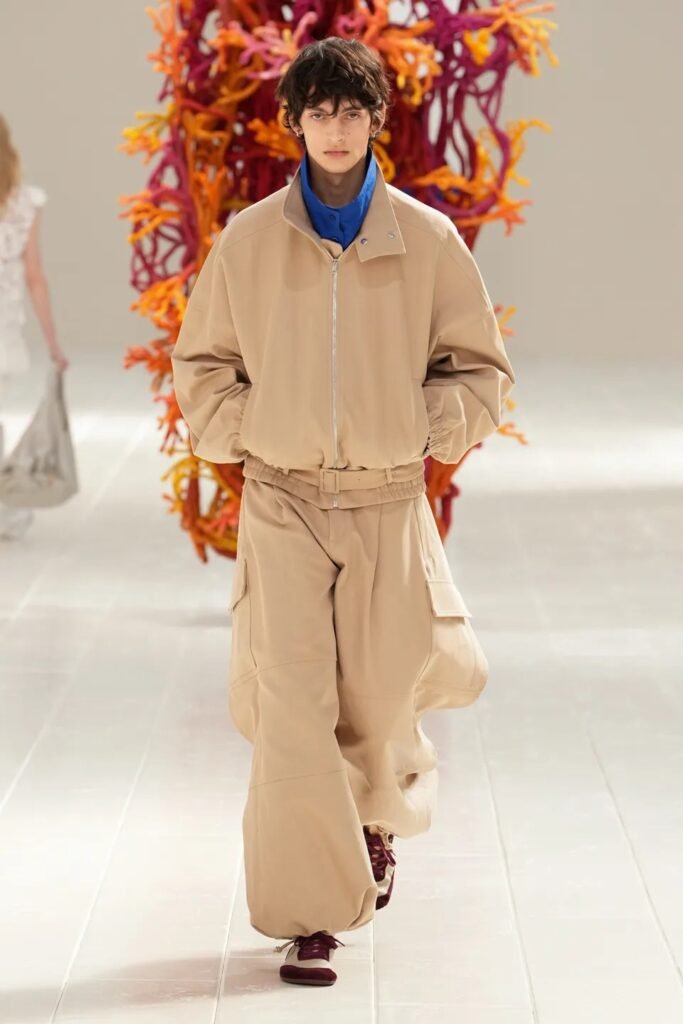
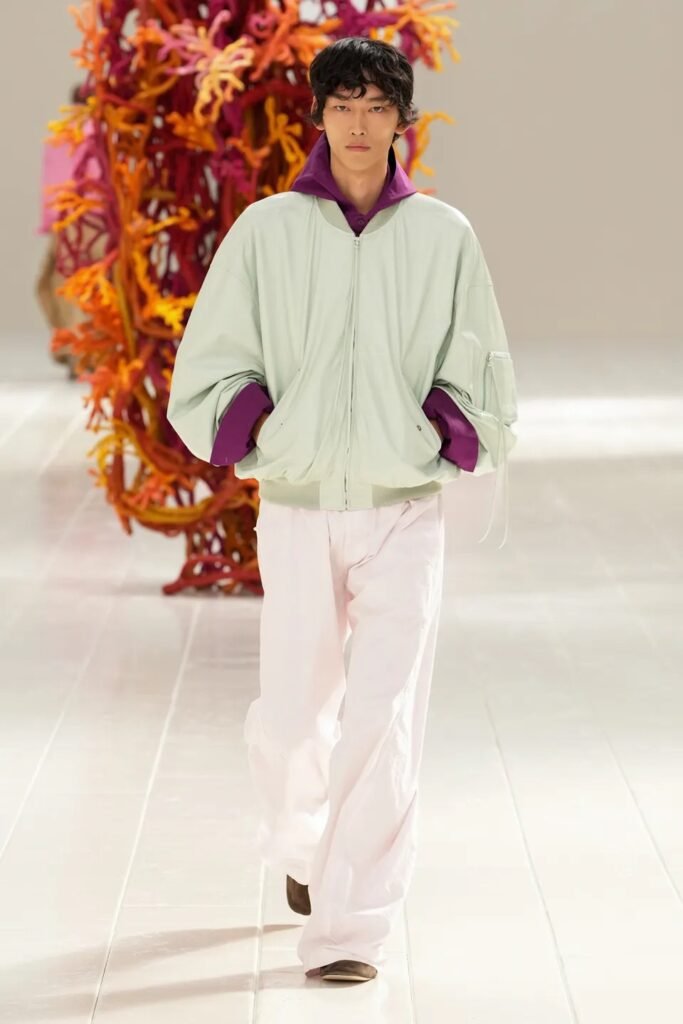
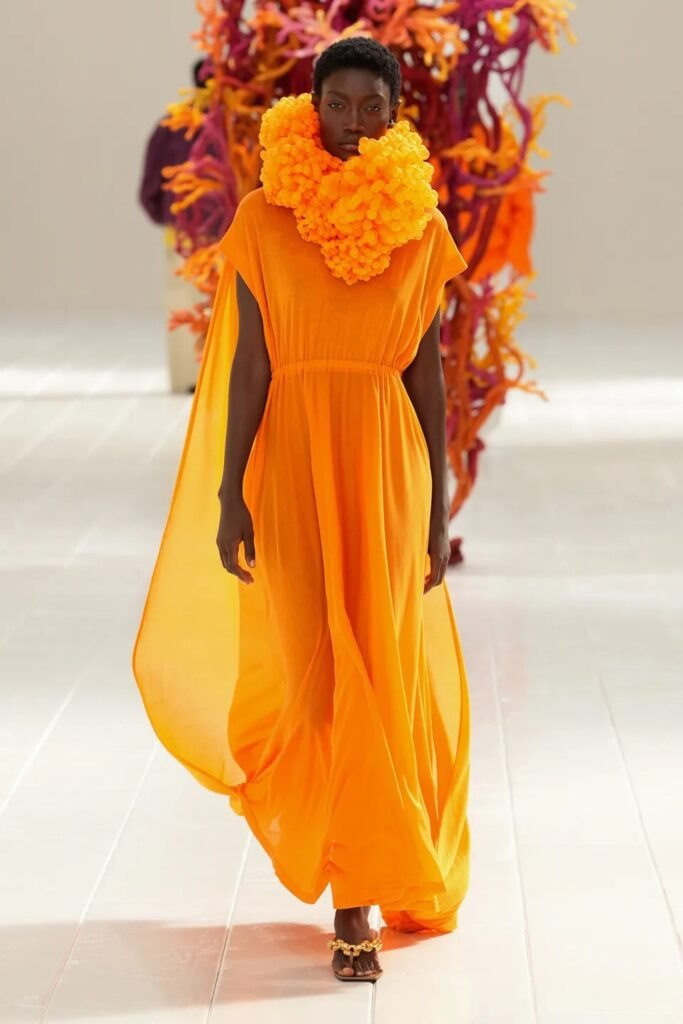
Rather than treating couture as something distant from everyday life, the designer asks how its principles can become part of the modern wardrobe. The result is a collection built around movement, lightness, fluidity and adaptable silhouettes—an approach Balenciaga describes through the concept of “unsized.”
The Spring 2027 collection continues Piccioli’s exploration of the house following his appointment as Balenciaga’s creative director. His vision has increasingly brought the architectural vocabulary associated with Cristóbal Balenciaga into conversation with contemporary dressing, creating clothes that feel sophisticated without losing their connection to everyday life.
Balenciaga’s “Unsized” Philosophy
At the heart of Spring 2027 is the idea of “unsized” clothing.
For Piccioli, the concept begins with the body rather than a predetermined size. Garments are constructed around the wearer and adjusted through ribbons and fabric, echoing techniques associated with traditional couture construction. Instead of forcing the body into a fixed silhouette, the clothes respond to it.
This creates an unusually fluid relationship between garment and wearer.
The idea is particularly significant within Balenciaga, a house historically associated with sculptural construction and an understanding of clothing as architecture. Cristóbal Balenciaga famously approached the body in three dimensions, creating silhouettes that could appear almost independent of conventional tailoring.
Piccioli takes that philosophy into the present.
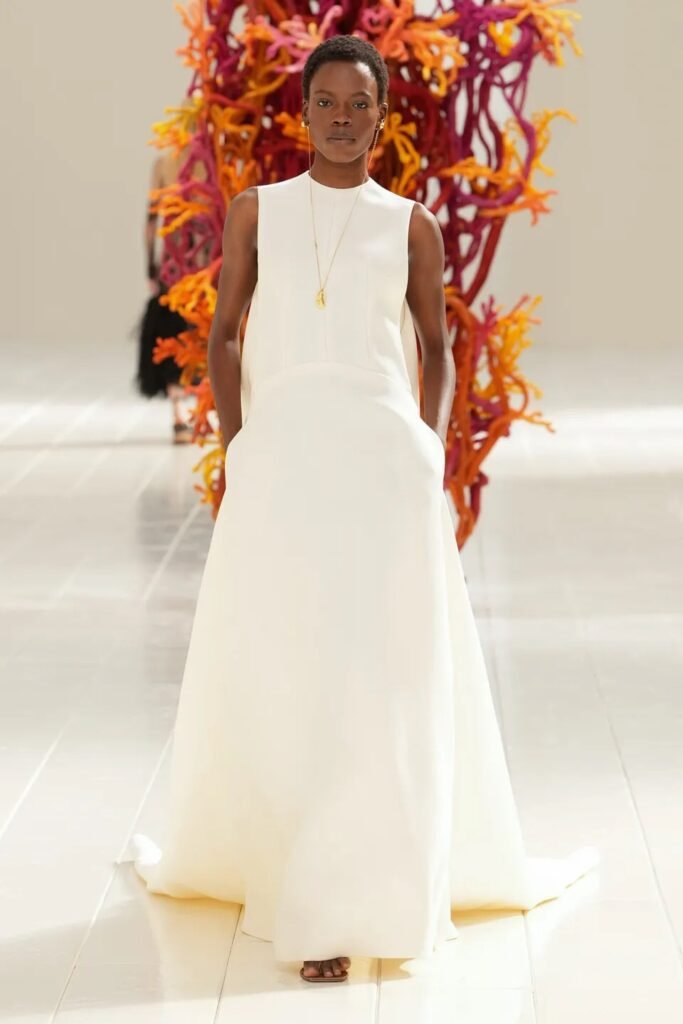
The Spring 2027 wardrobe is therefore less about rigidly defining the body and more about allowing fabric to move around it. The result is clothing that can shift, expand, drape and transform as the wearer moves.
Couture Meets Everyday Dressing
One of the collection’s most compelling ideas is its refusal to separate couture from ordinary clothing.
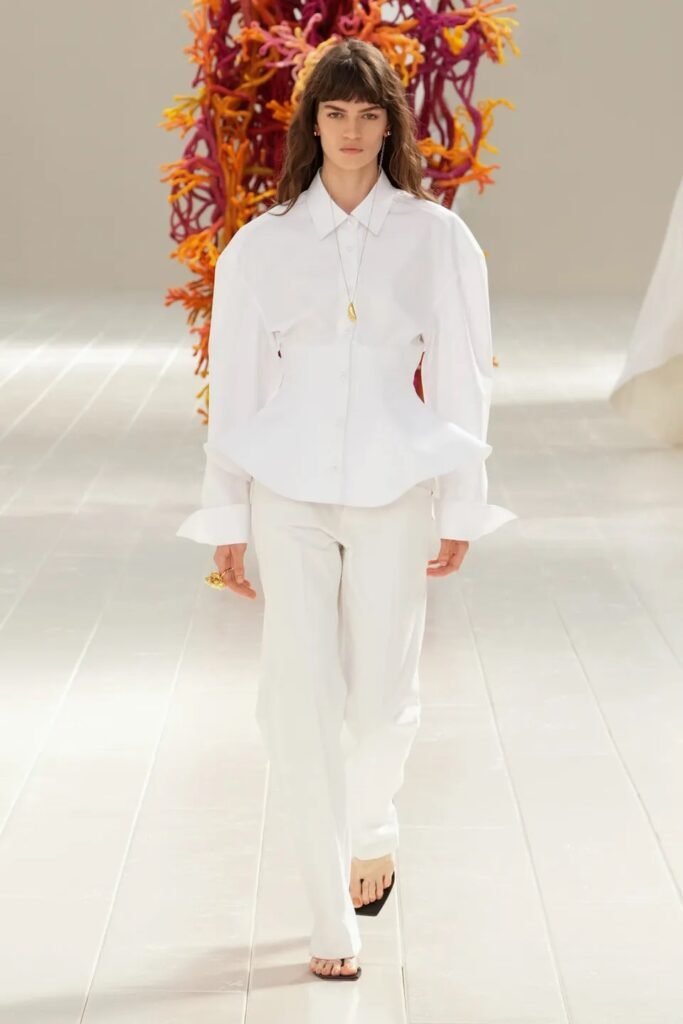
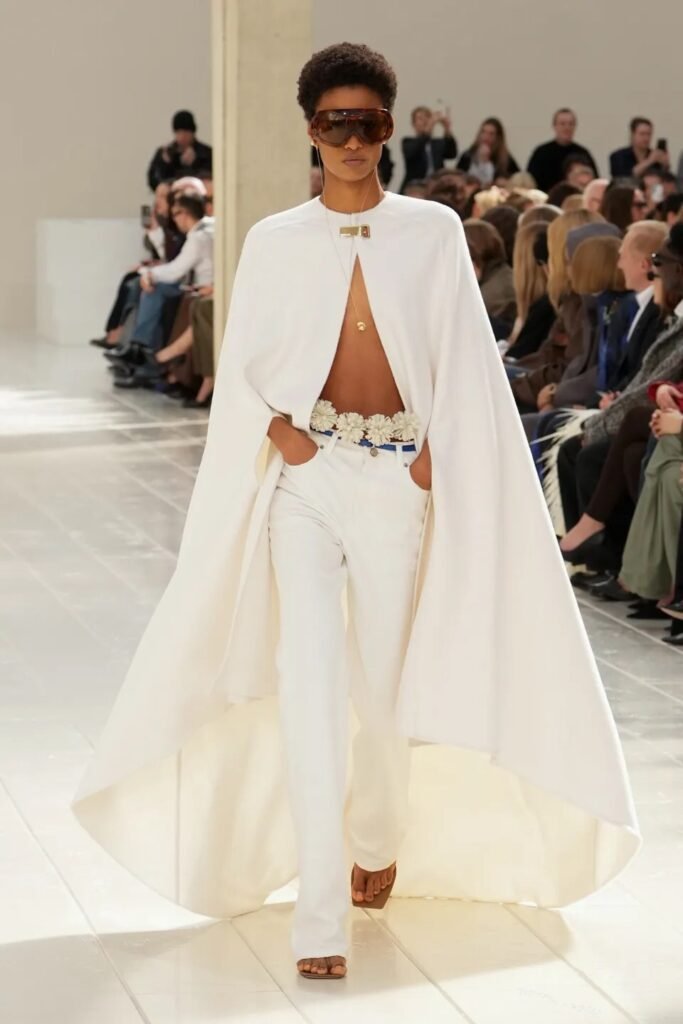
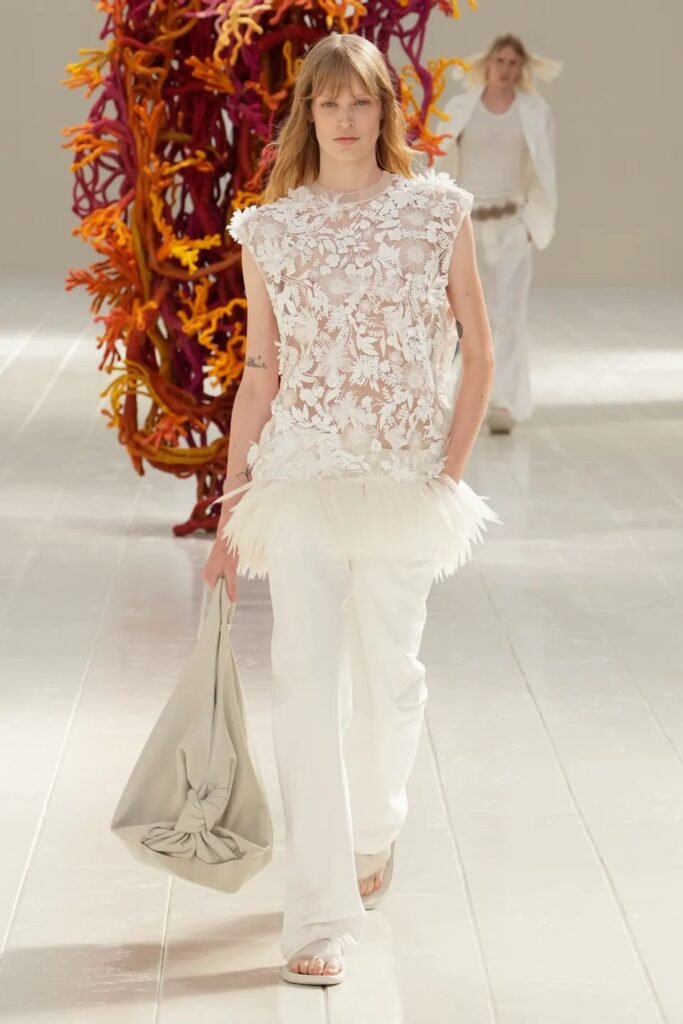
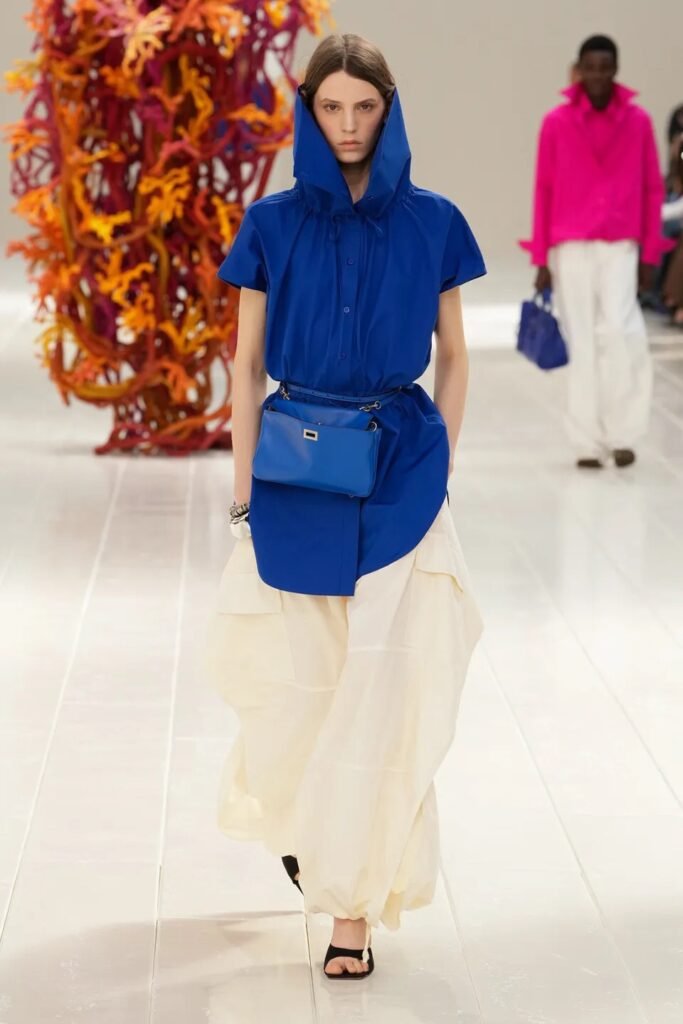
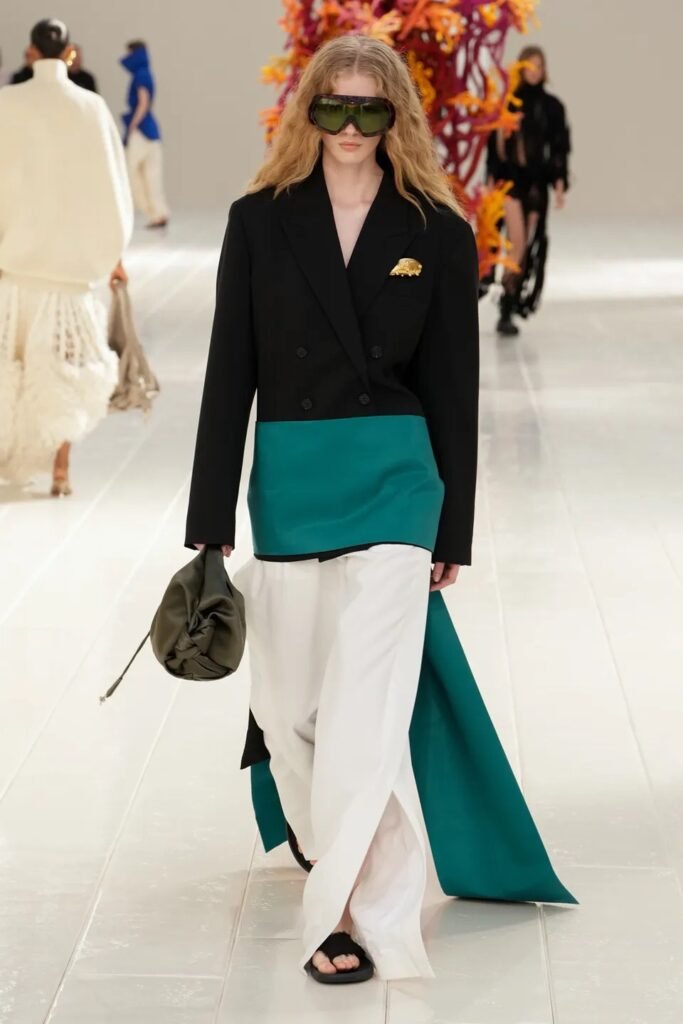
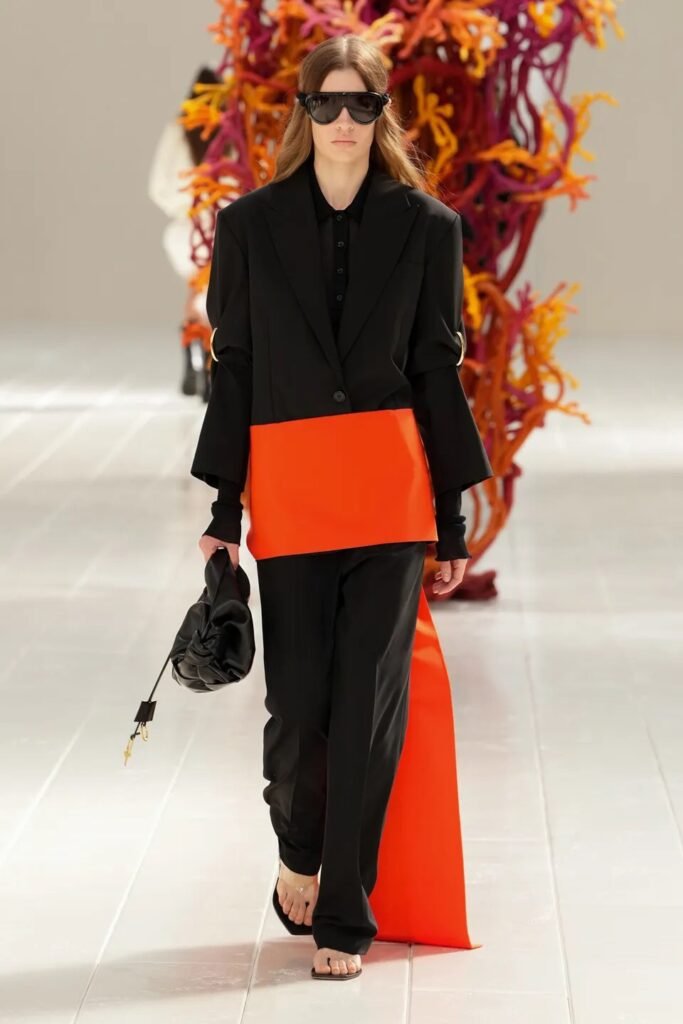
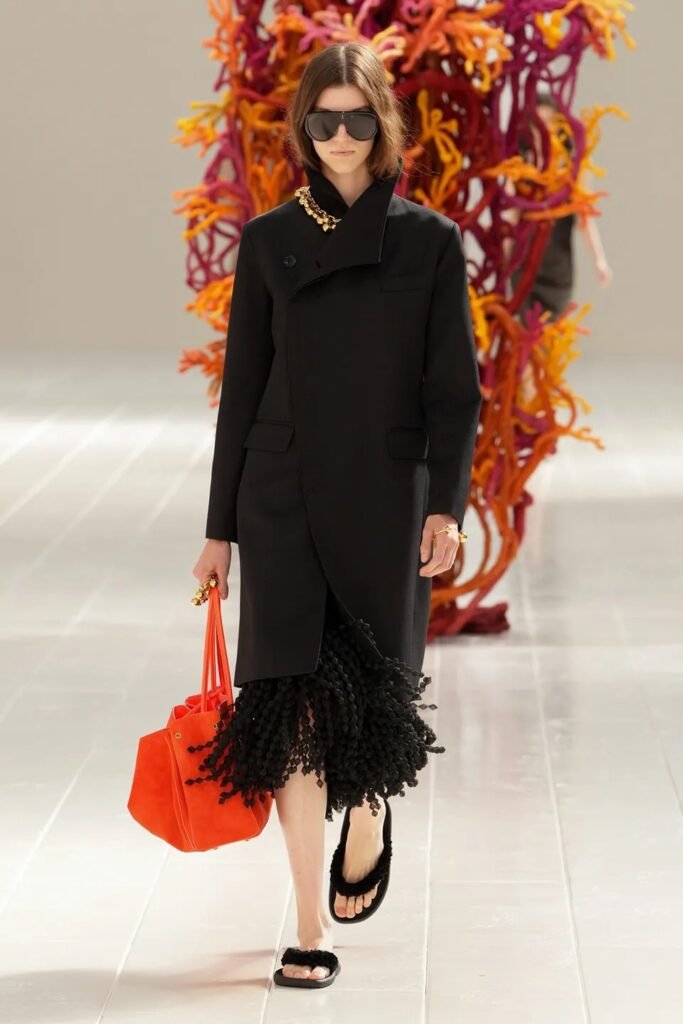
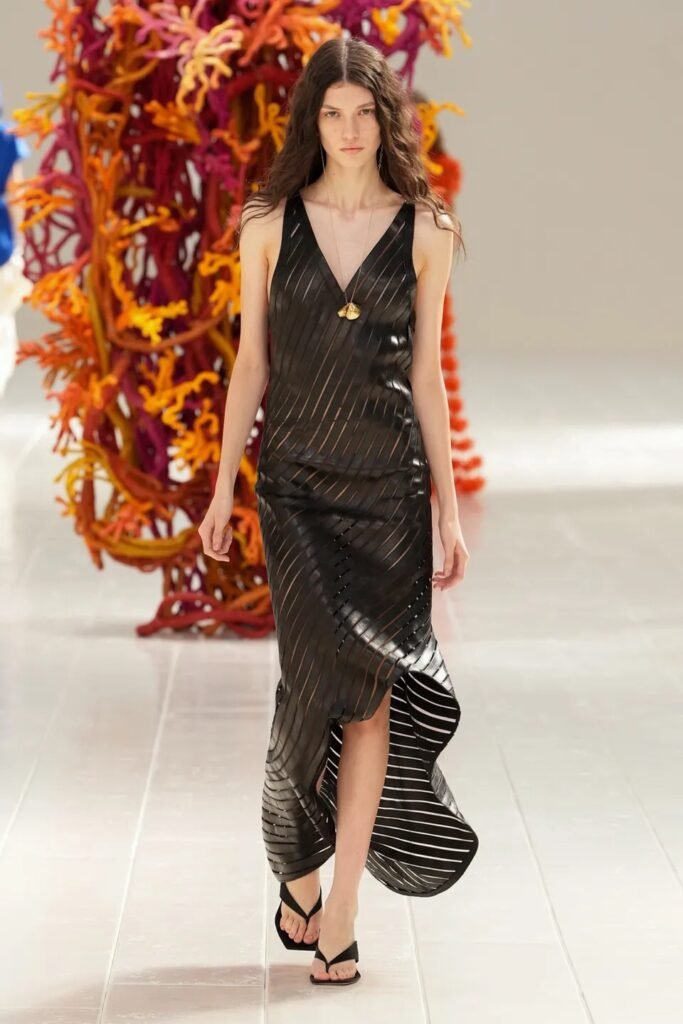
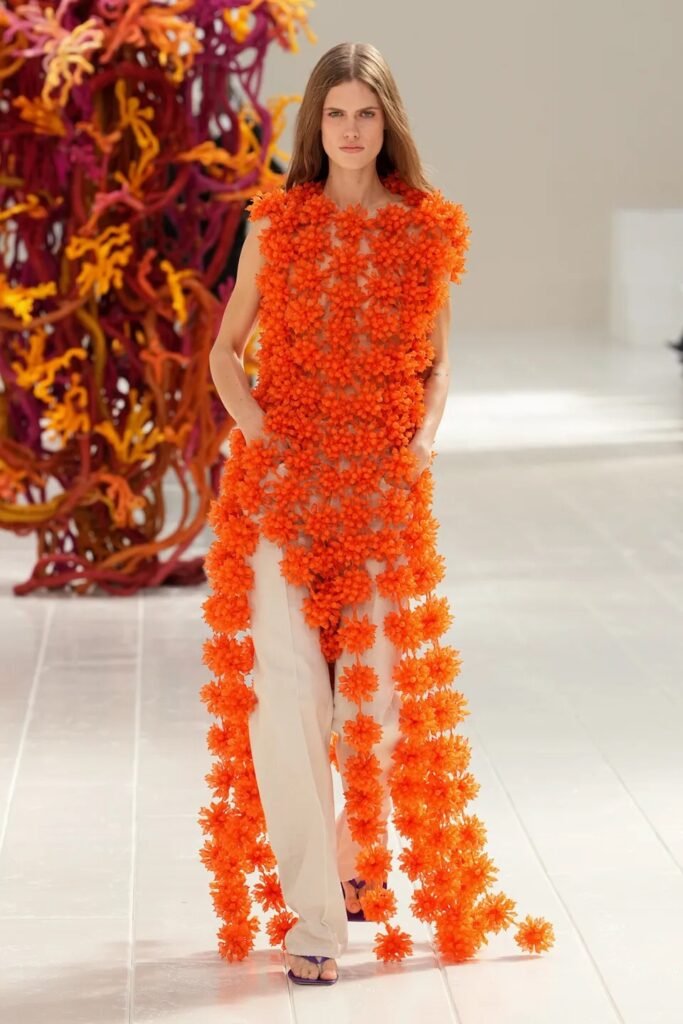
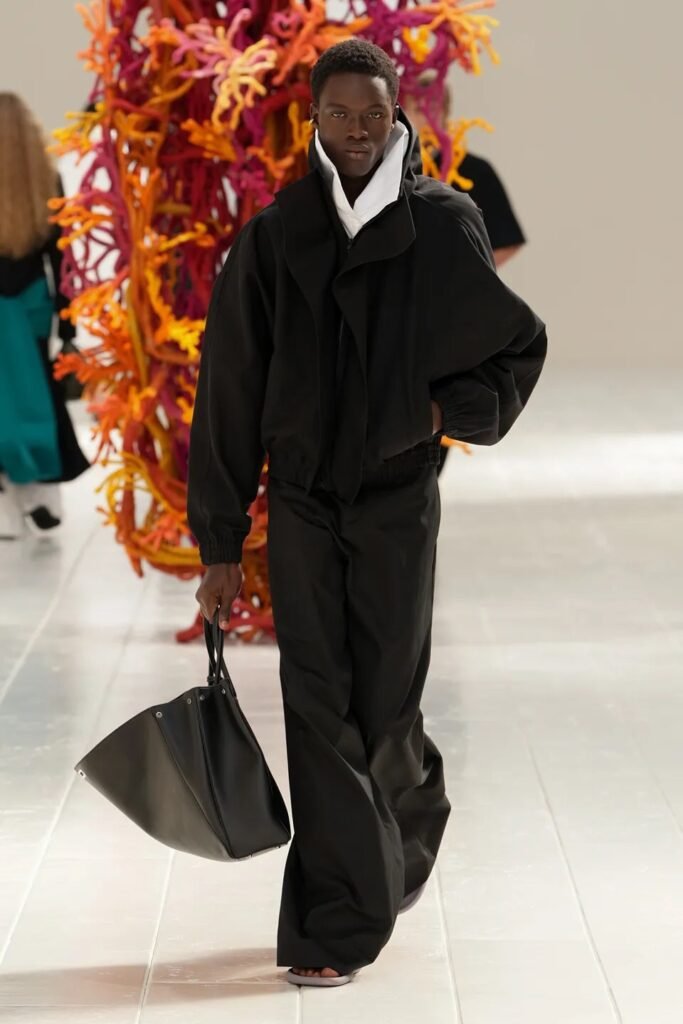
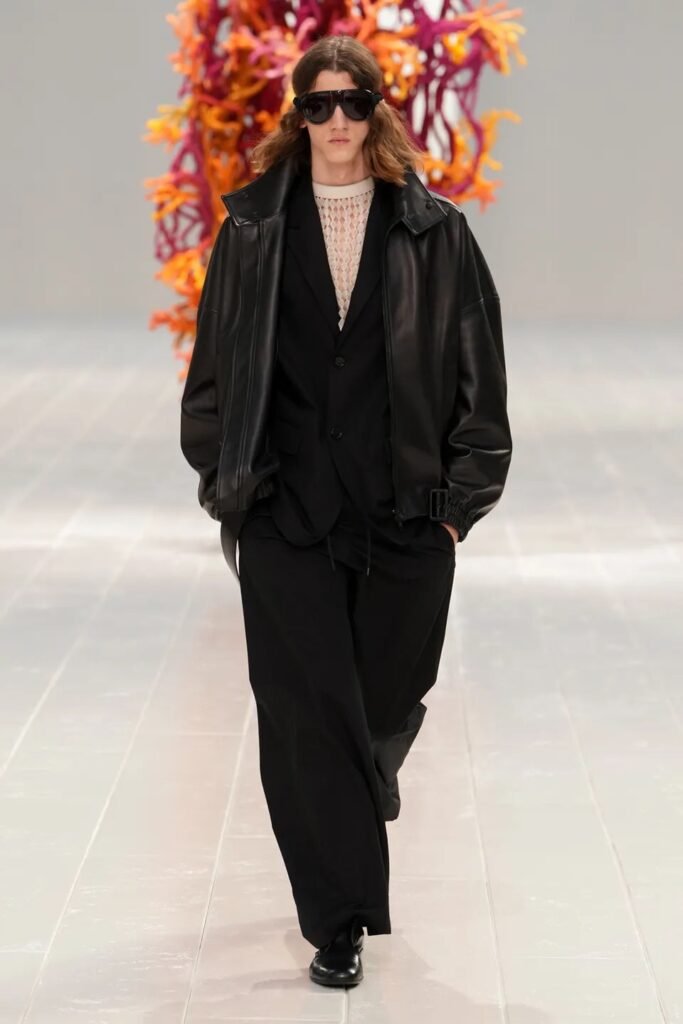
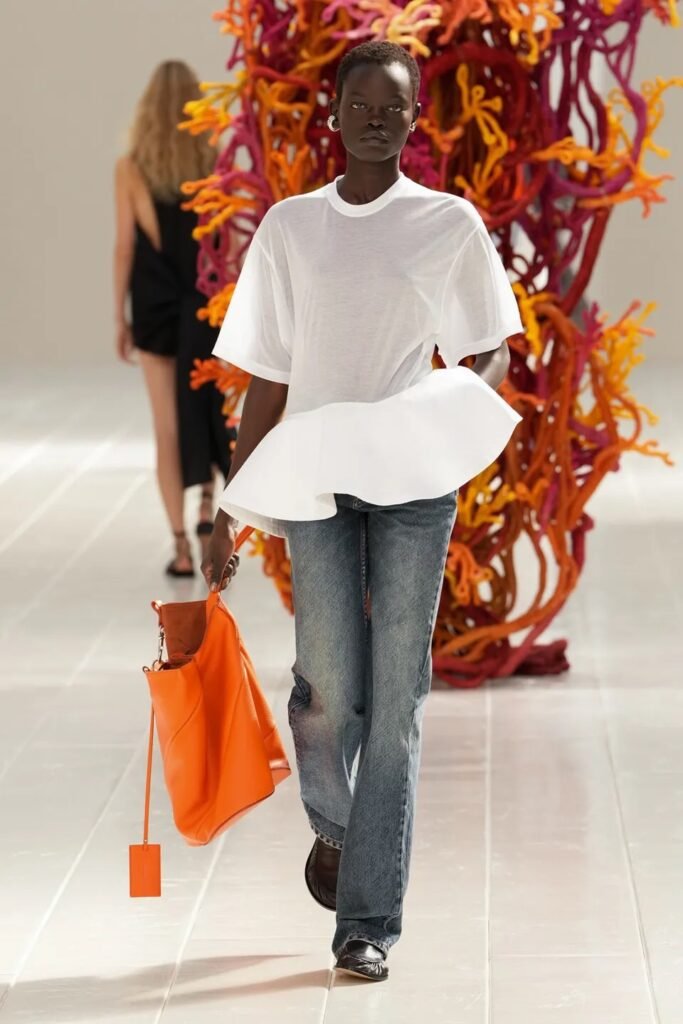
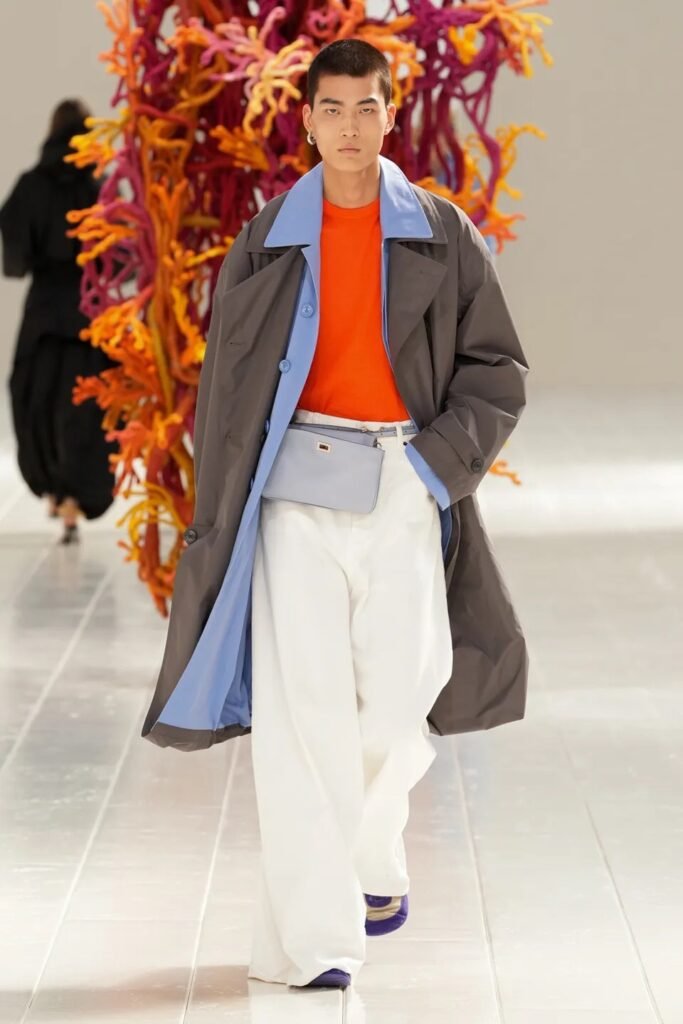
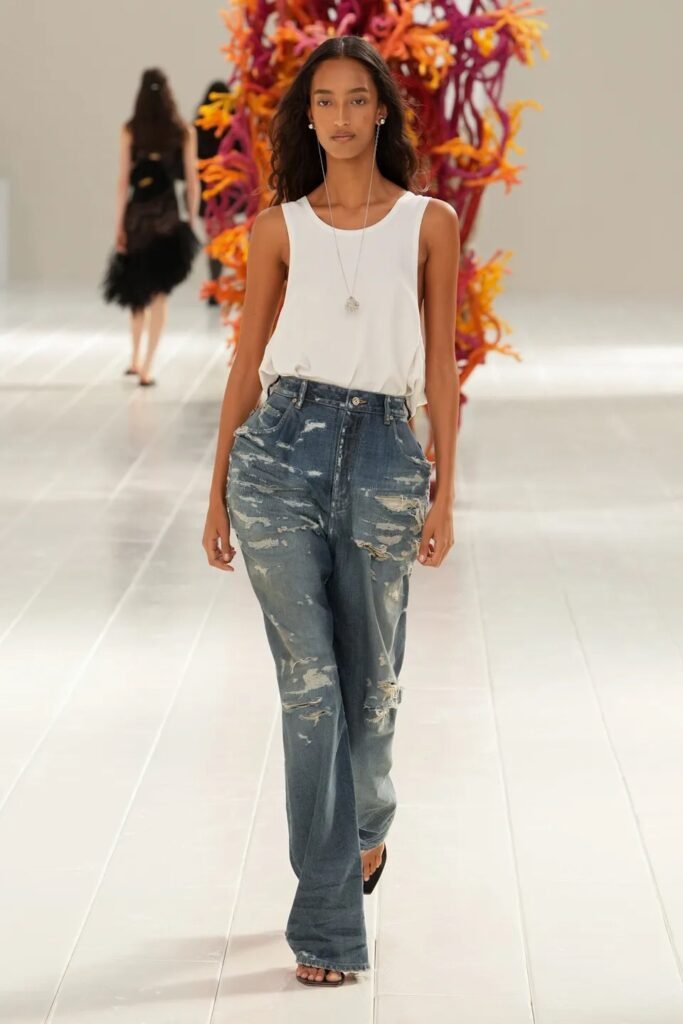
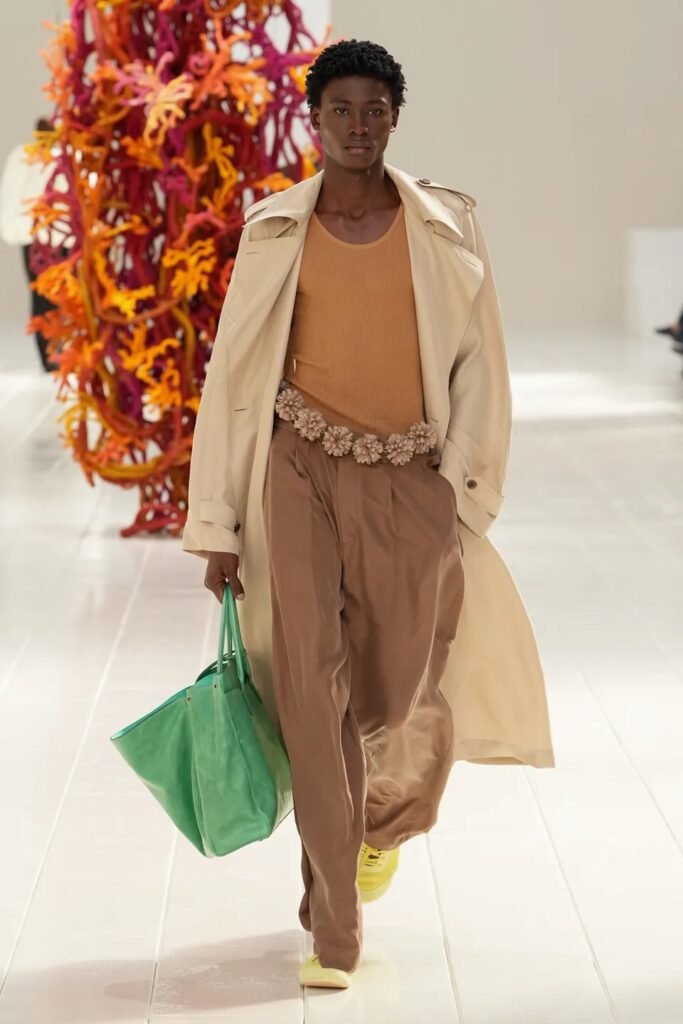
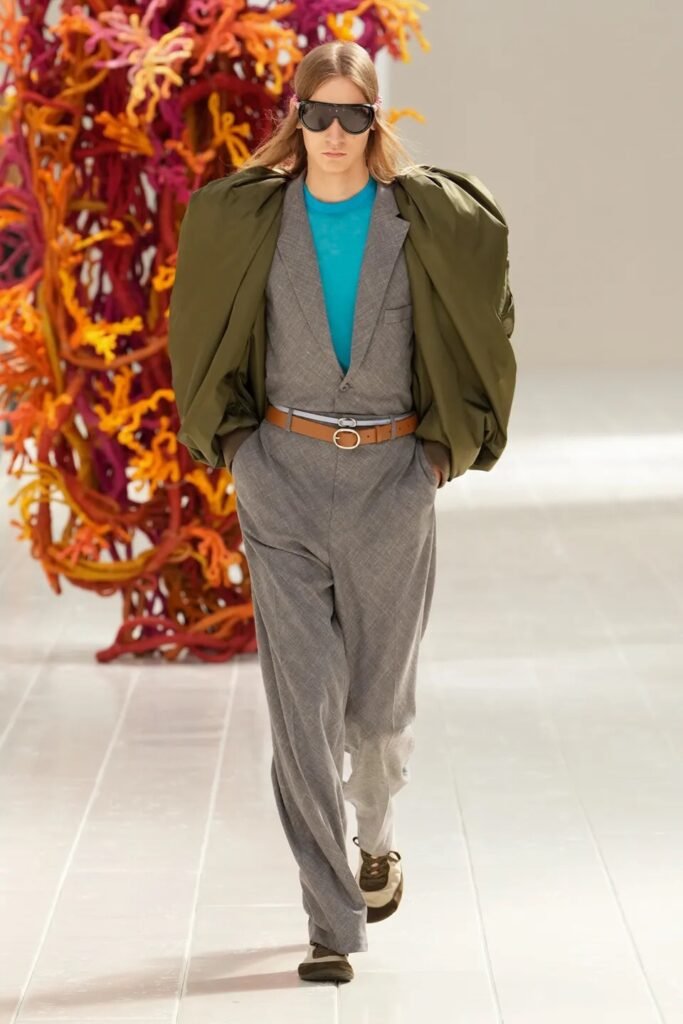
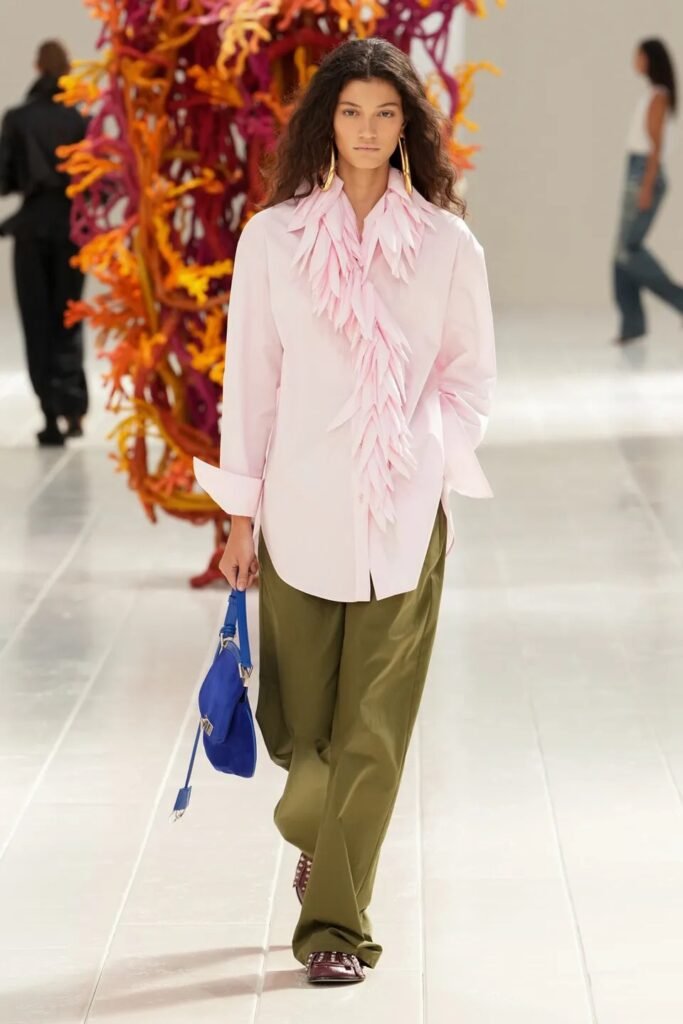
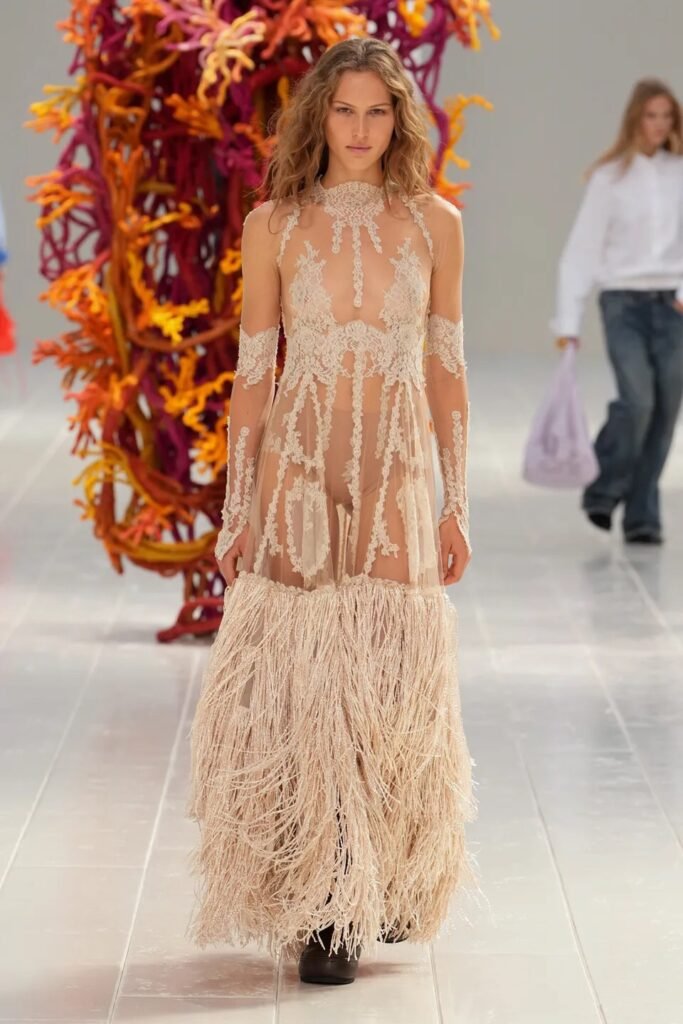
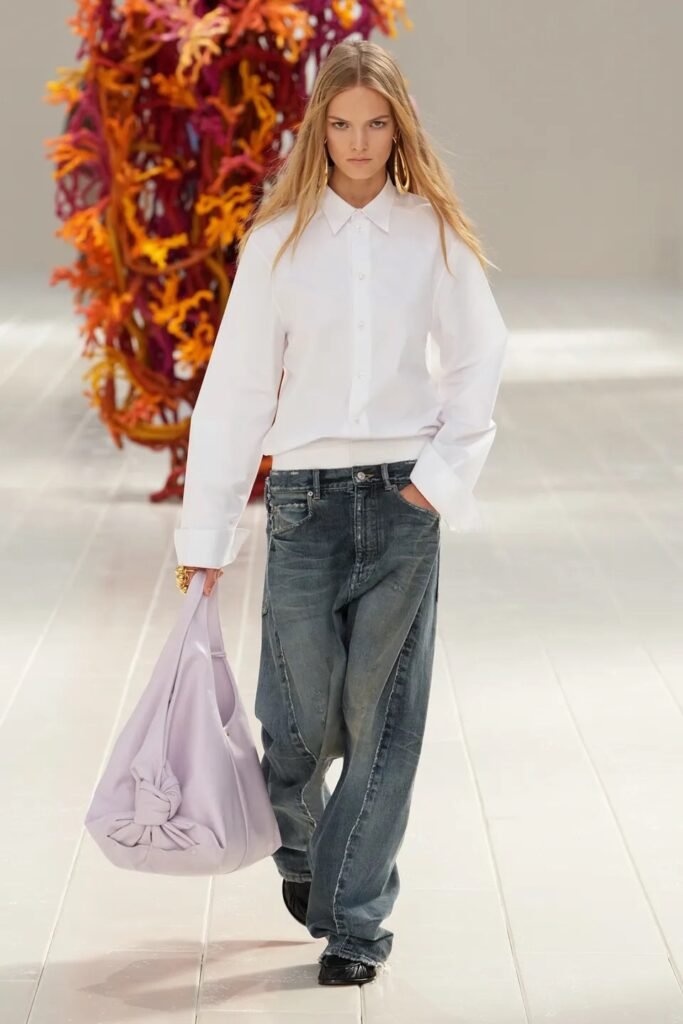
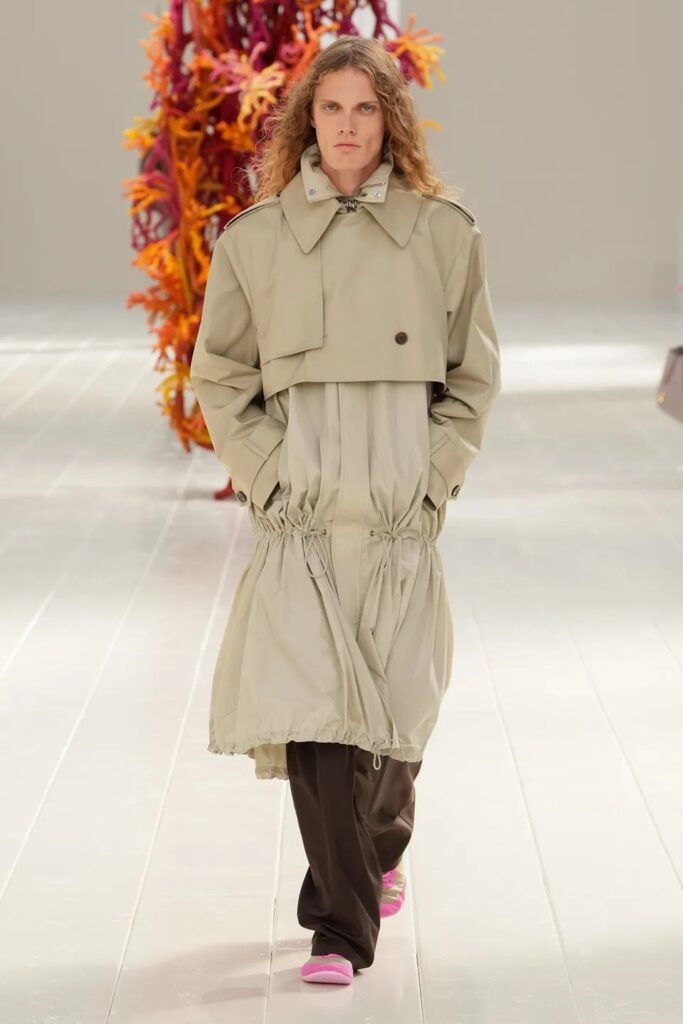
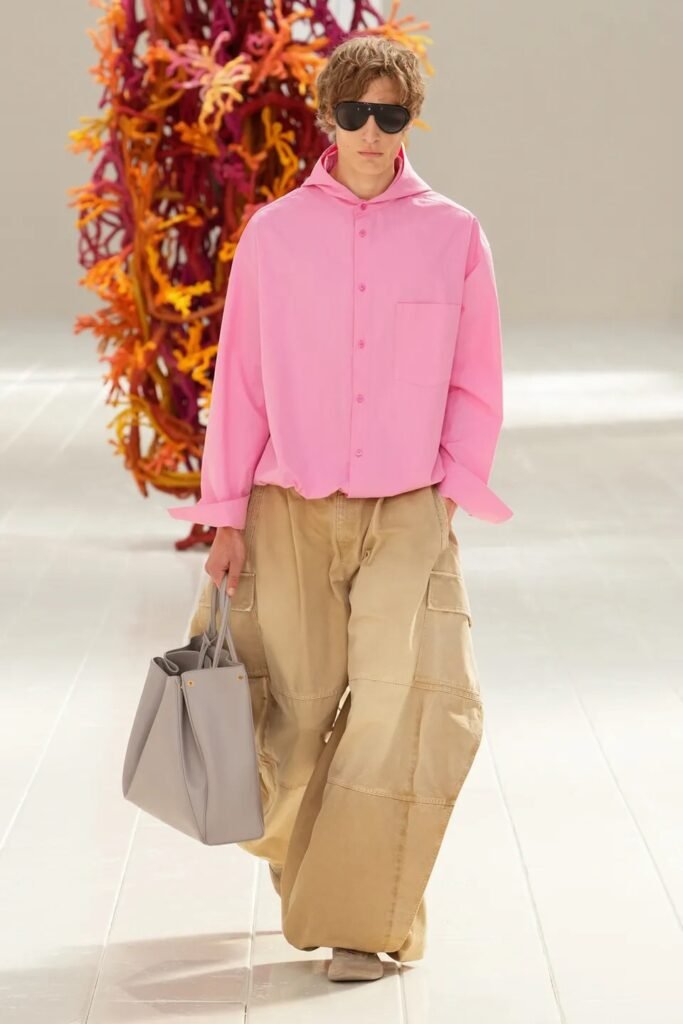
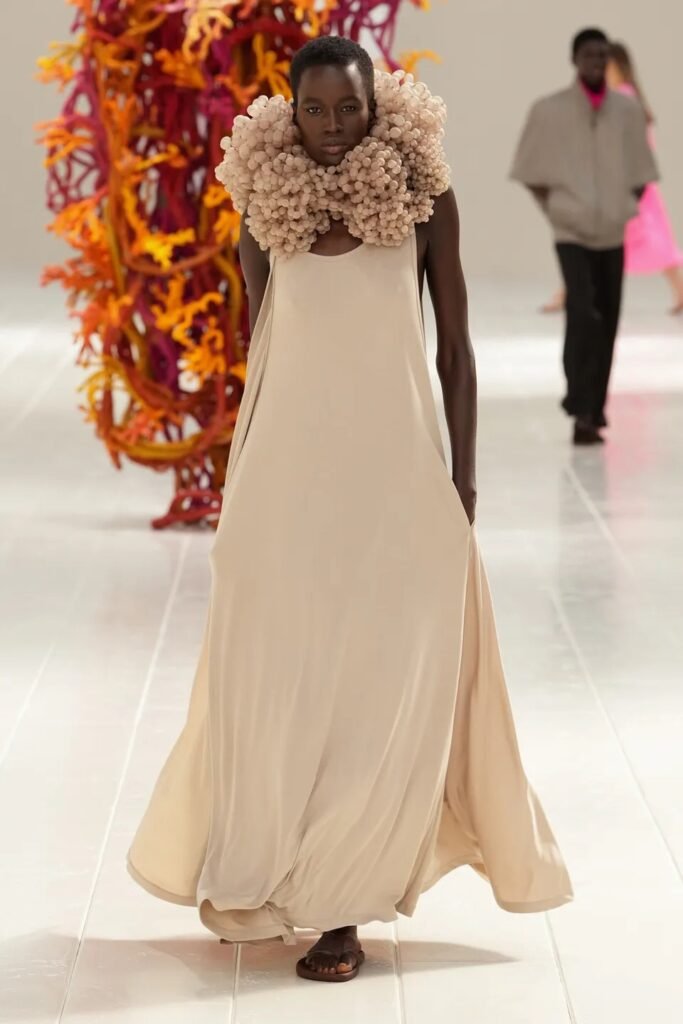
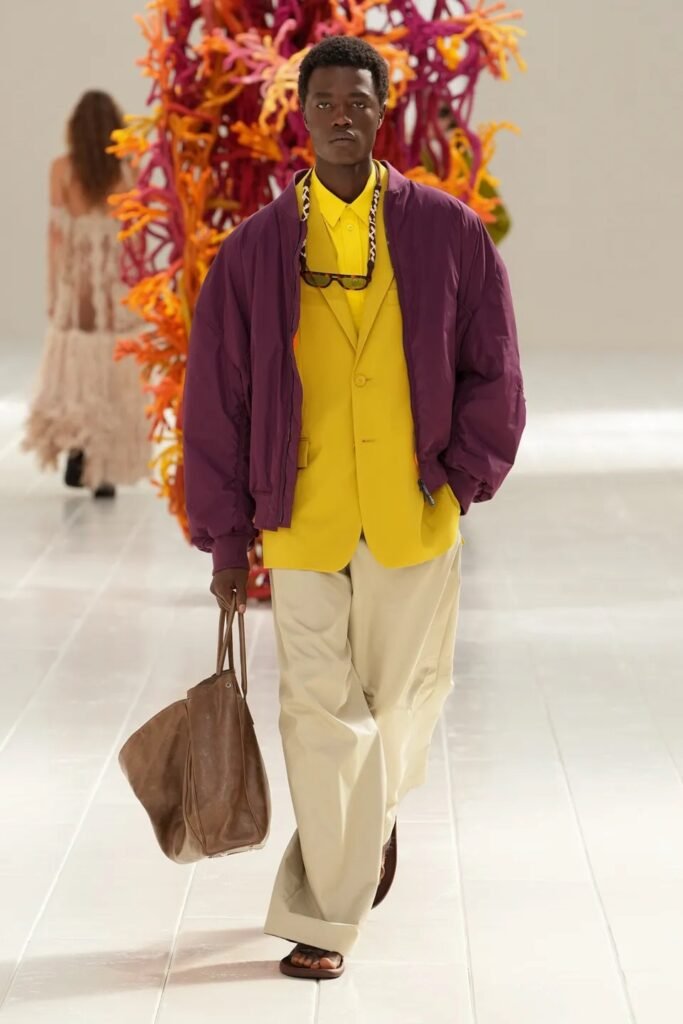
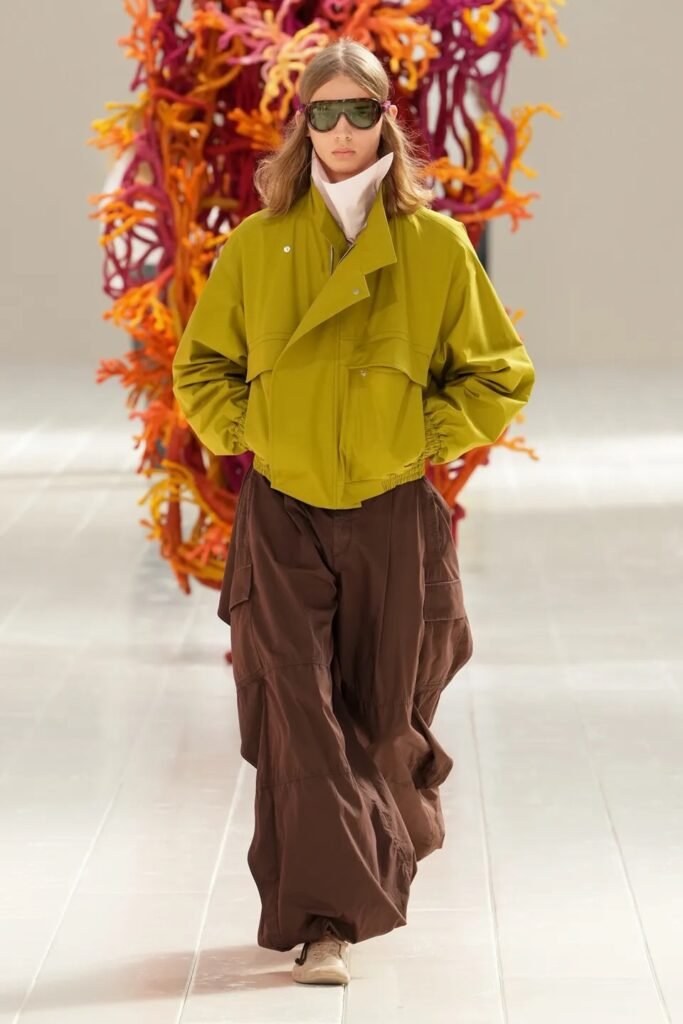
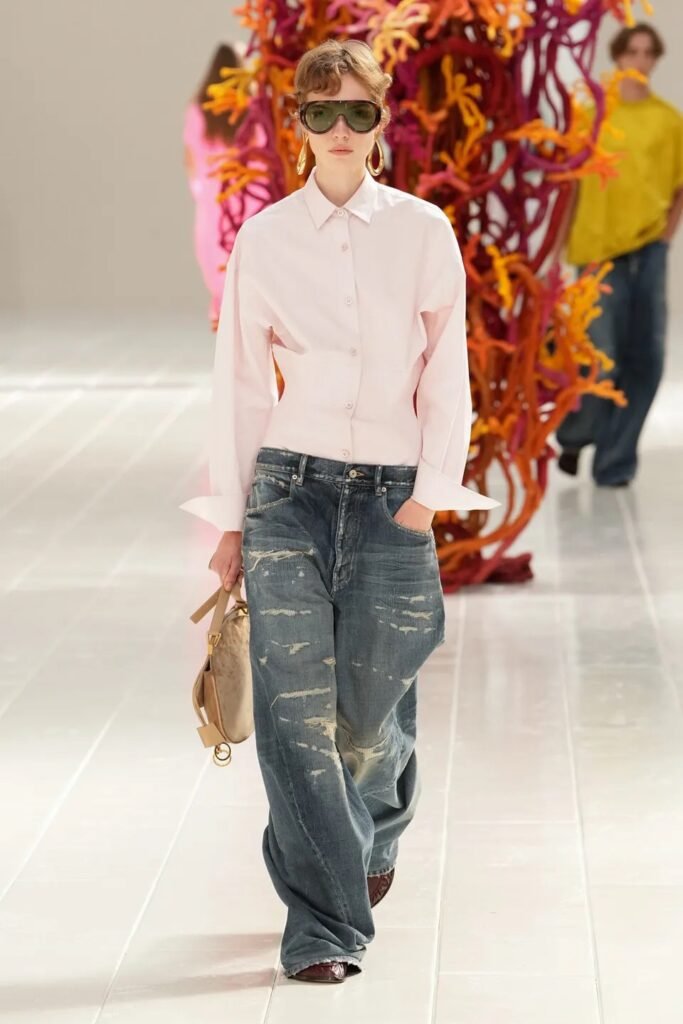
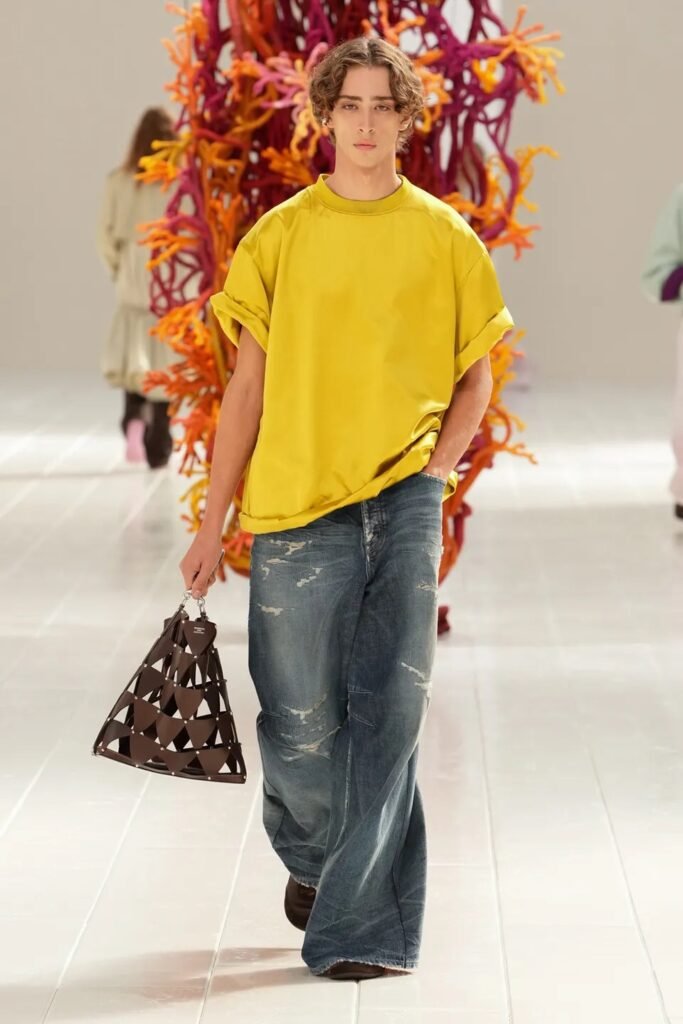
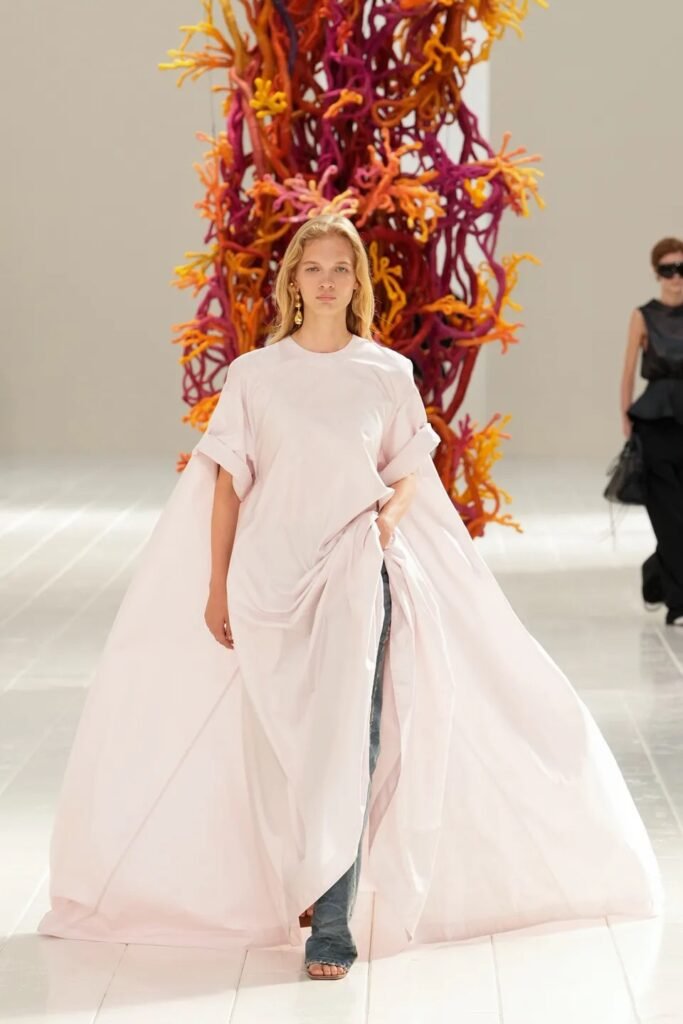
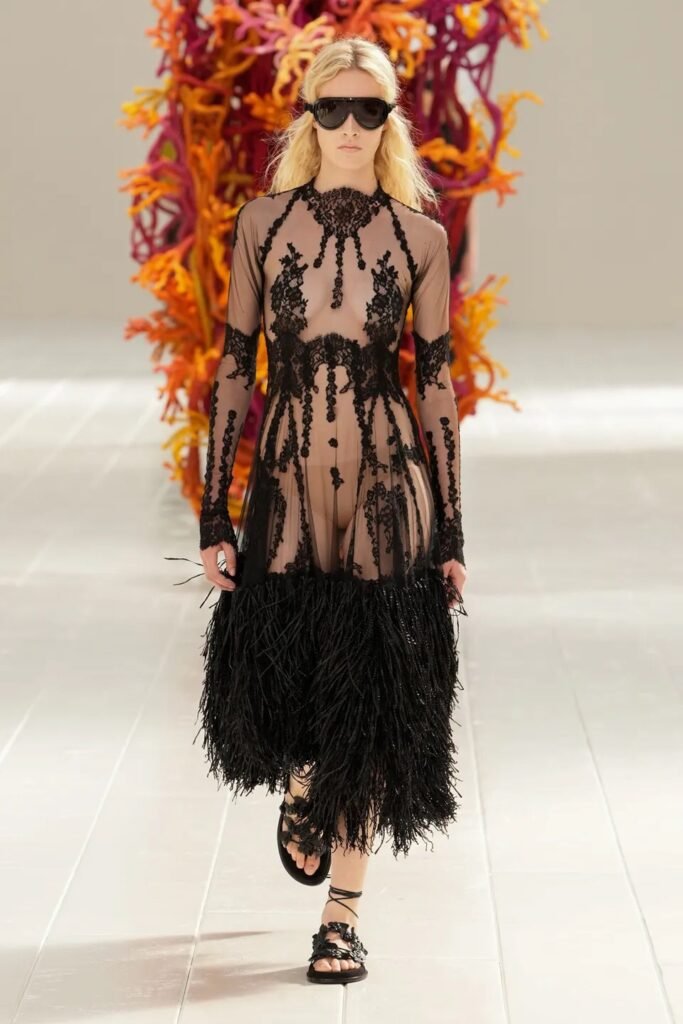
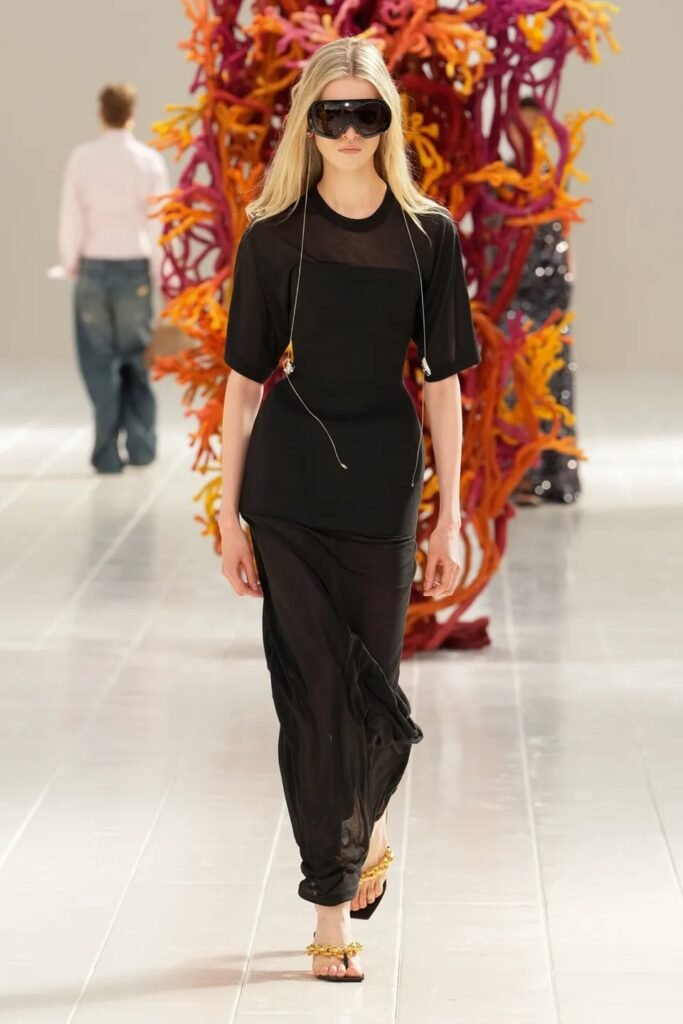
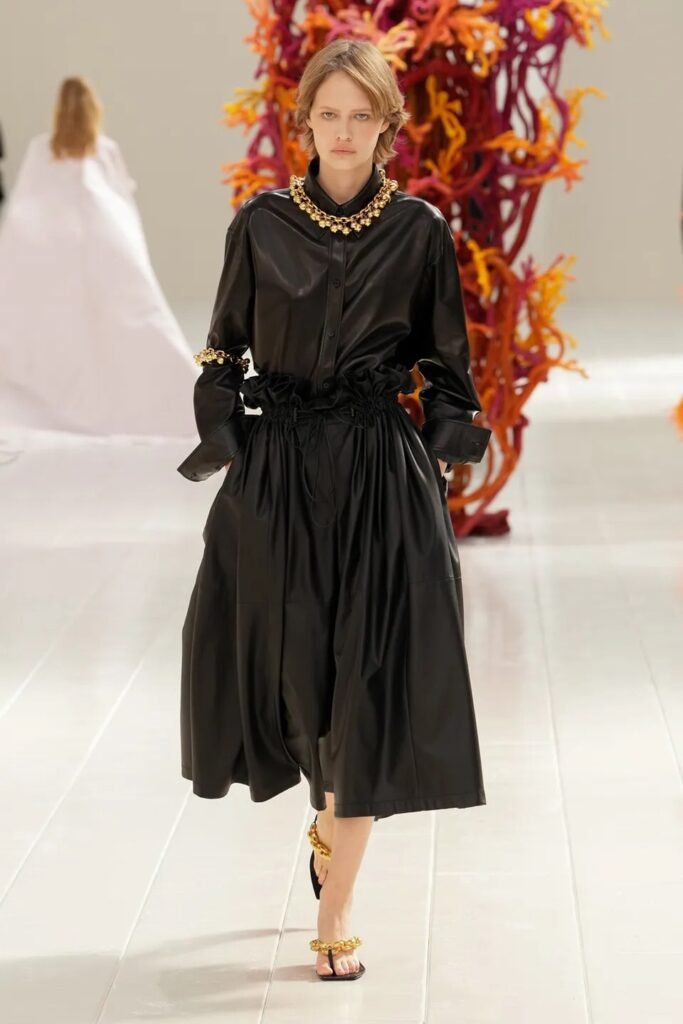
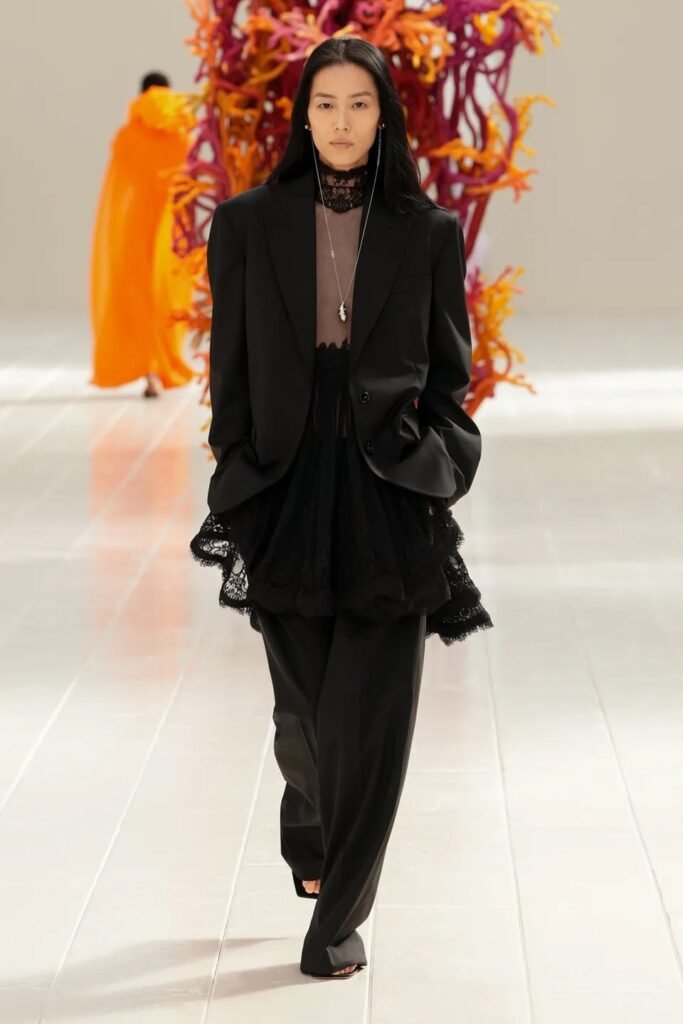
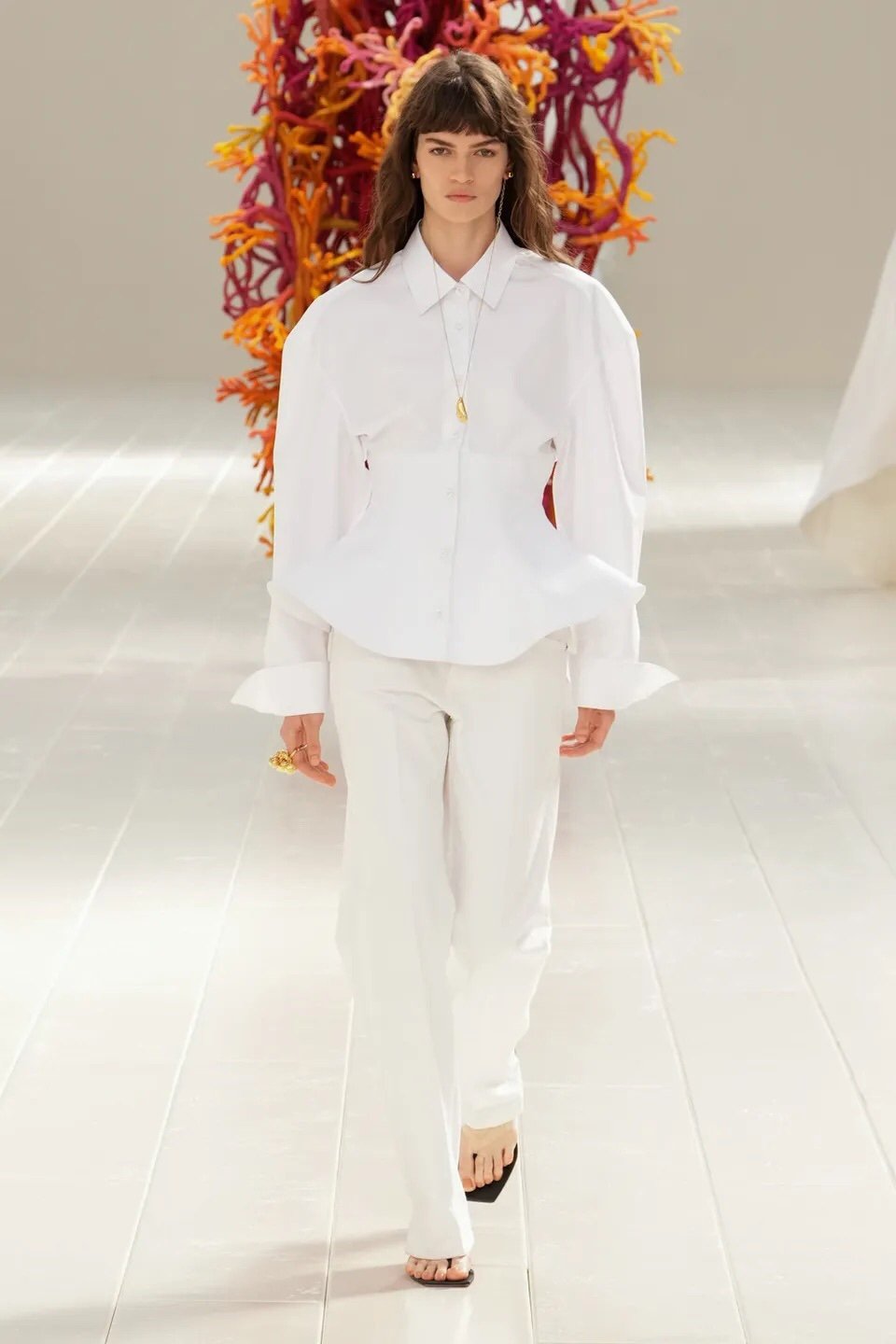
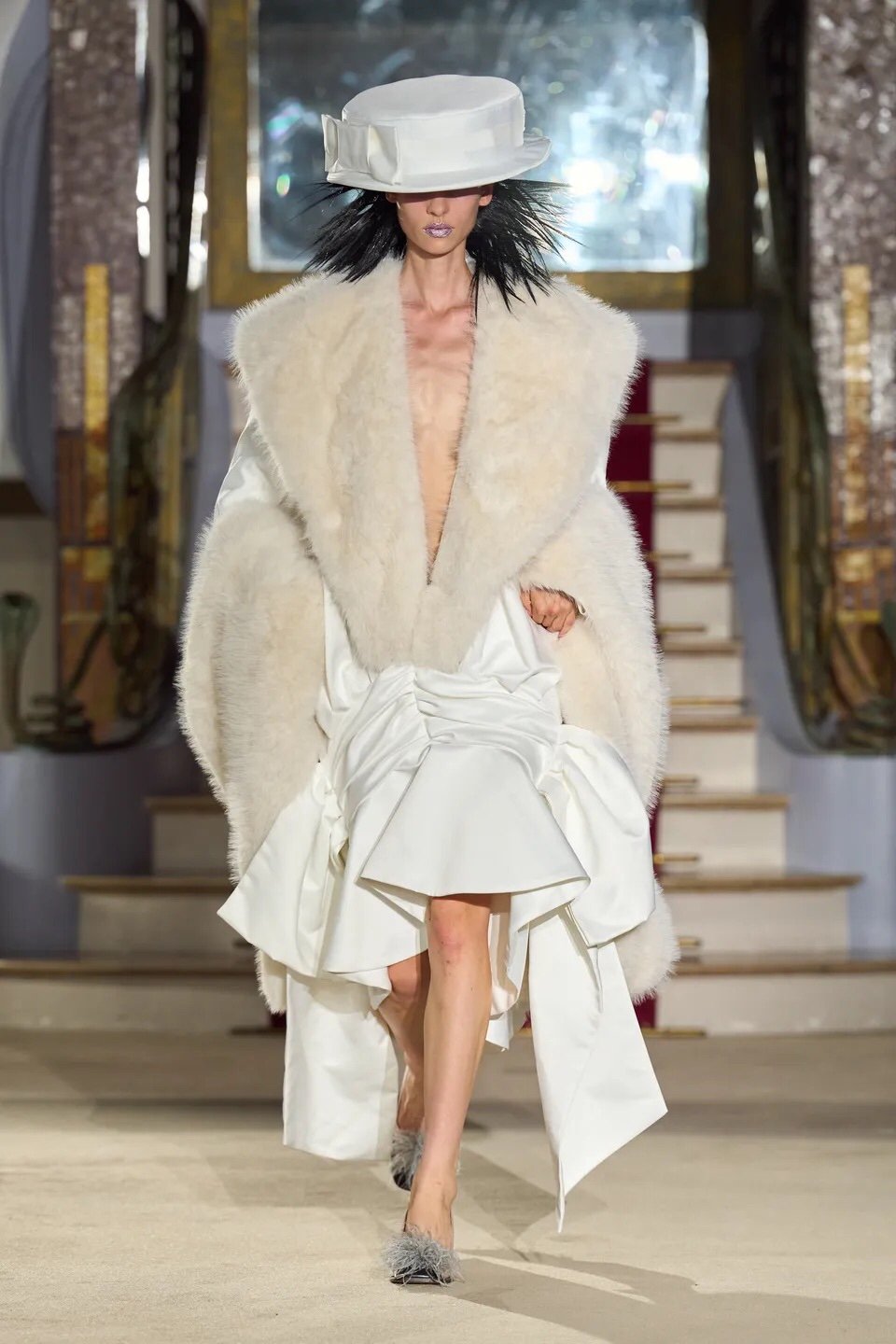
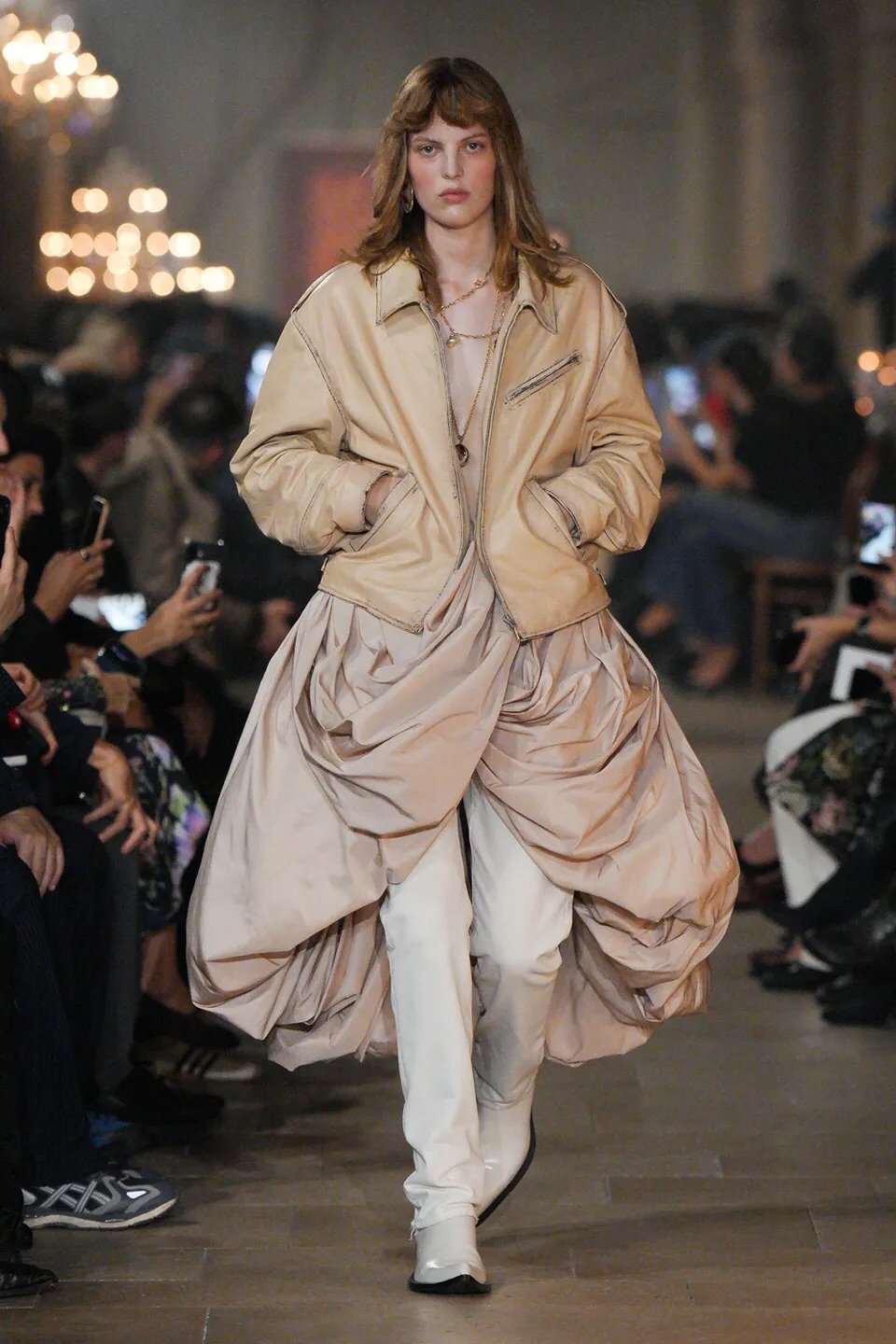
A pair of jeans can sit underneath an evening gown. TechWear pieces can appear alongside tailoring. A shirt can acquire the dramatic train of an evening dress, while an elaborate gown can take on the attitude of a simple T-shirt.
These combinations create a wardrobe where traditional categories begin to dissolve.
It is a distinctly contemporary approach to luxury. Rather than suggesting that couture belongs only to special occasions, Piccioli proposes that couture techniques and ideas can influence the way people dress every day.
Balenciaga’s own description of the collection emphasizes this dialogue between the couture salon and the street. The Spring 2027 lookbook was photographed by Robin Galiegue around the house’s historic address at 10 Avenue George V, reinforcing the relationship between Balenciaga’s heritage and contemporary life.
Lightness Becomes the New Luxury
The title surrounding the collection—“Unsized – A Lightness of Being”—is more than a poetic phrase.
Weight is an important part of the collection’s construction.
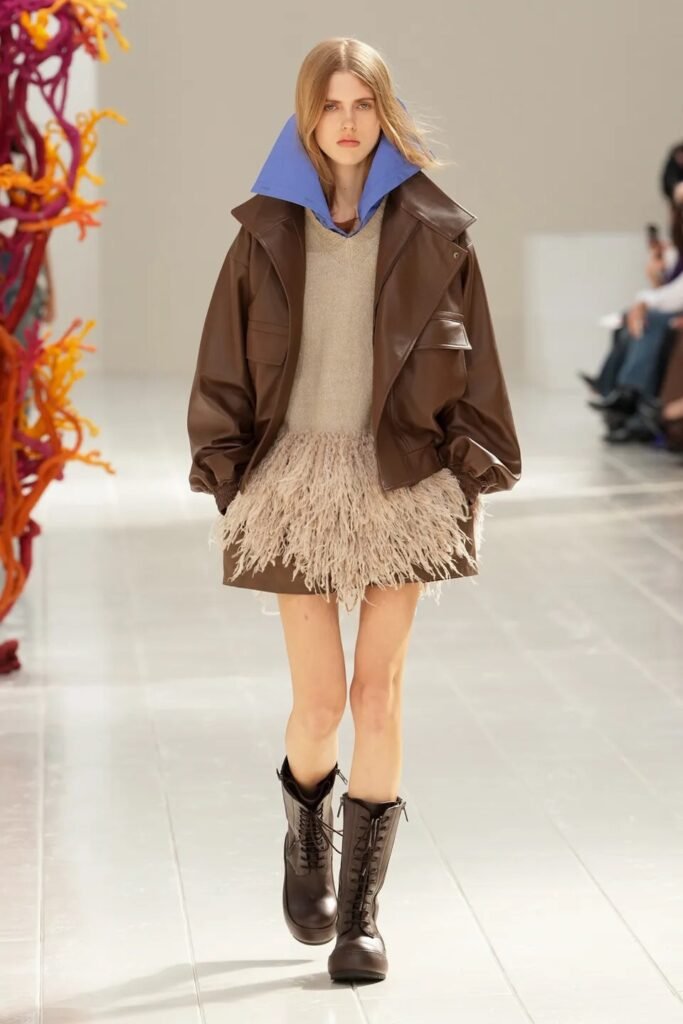
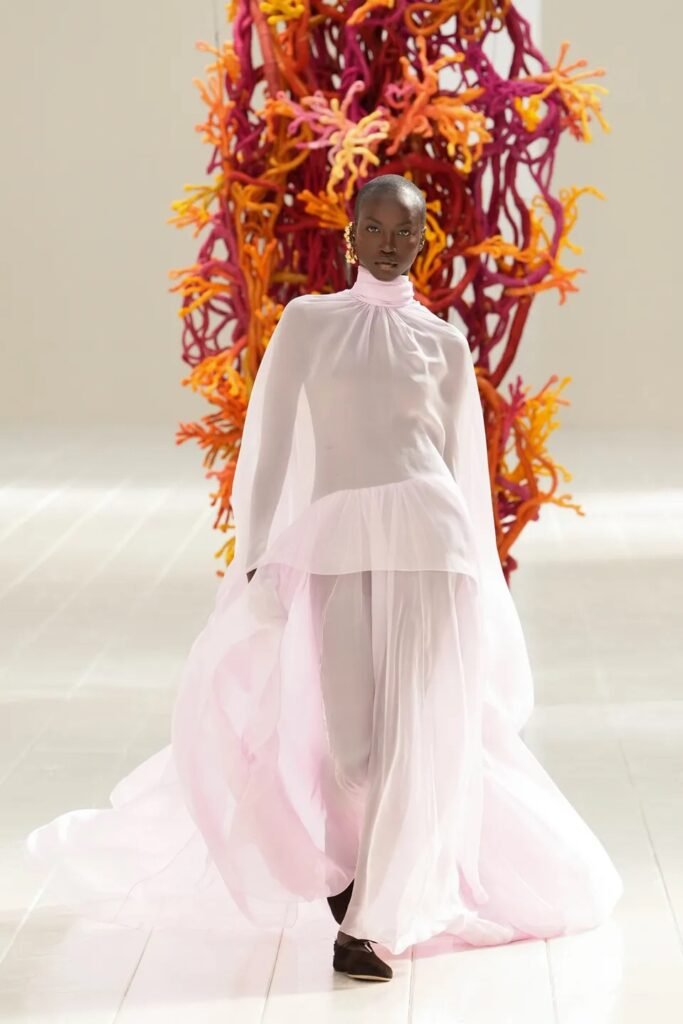
Balenciaga worked with an innovative featherweight techno taffeta alongside materials including double cashmere, kid mohair, poplin and denim. According to the house, entire ensembles can weigh less than one kilogram.
This creates an interesting contradiction: garments can appear visually substantial while physically feeling remarkably light.
That contrast is particularly appropriate for a house famous for volume.
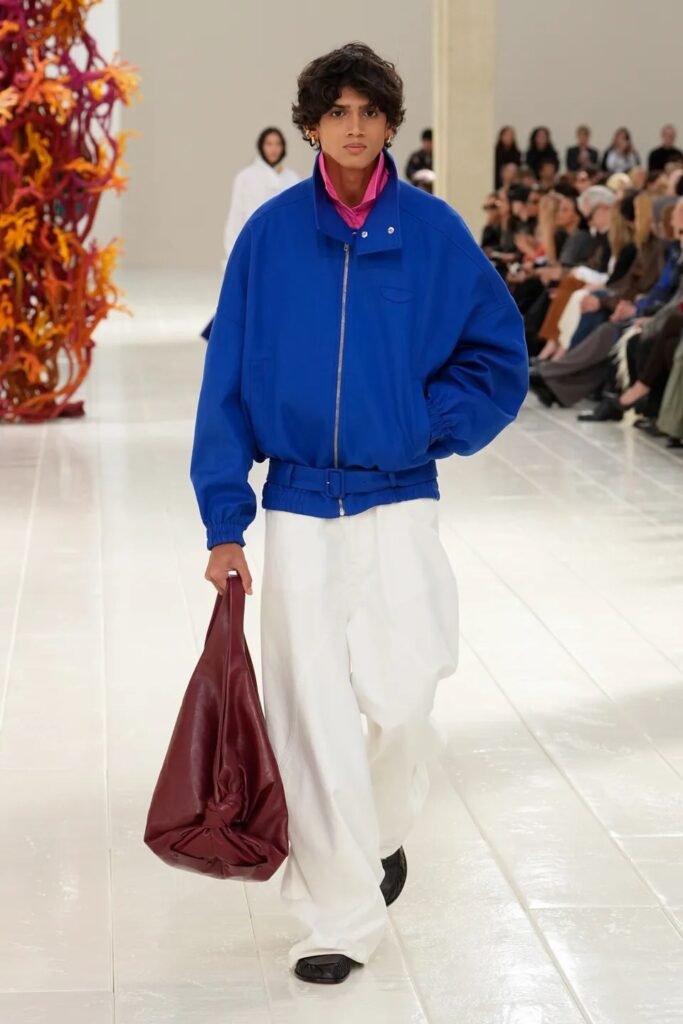
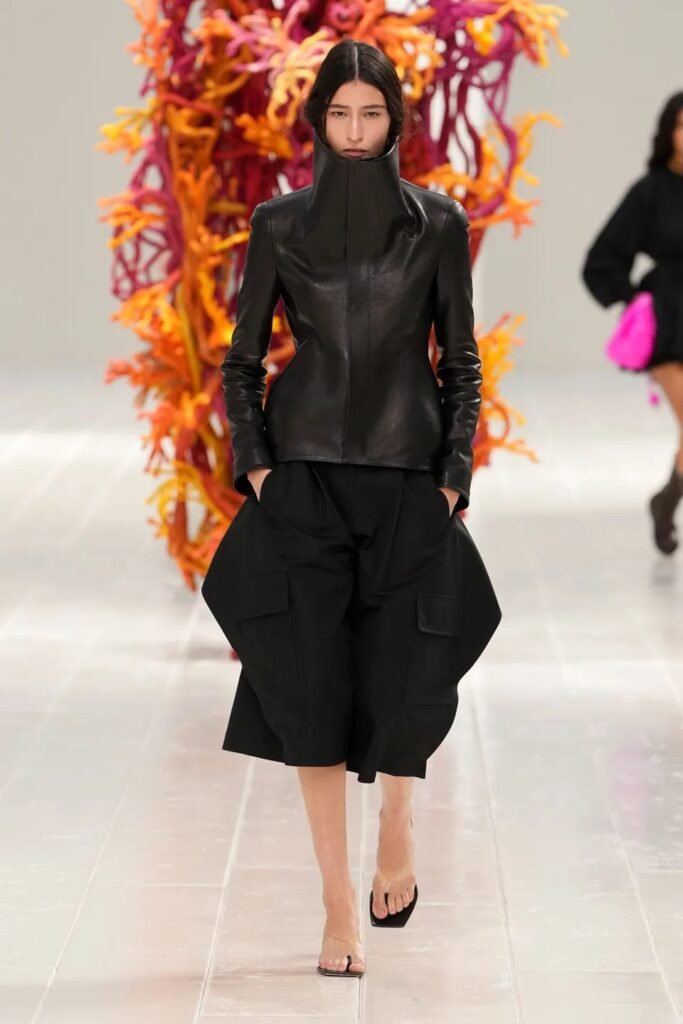
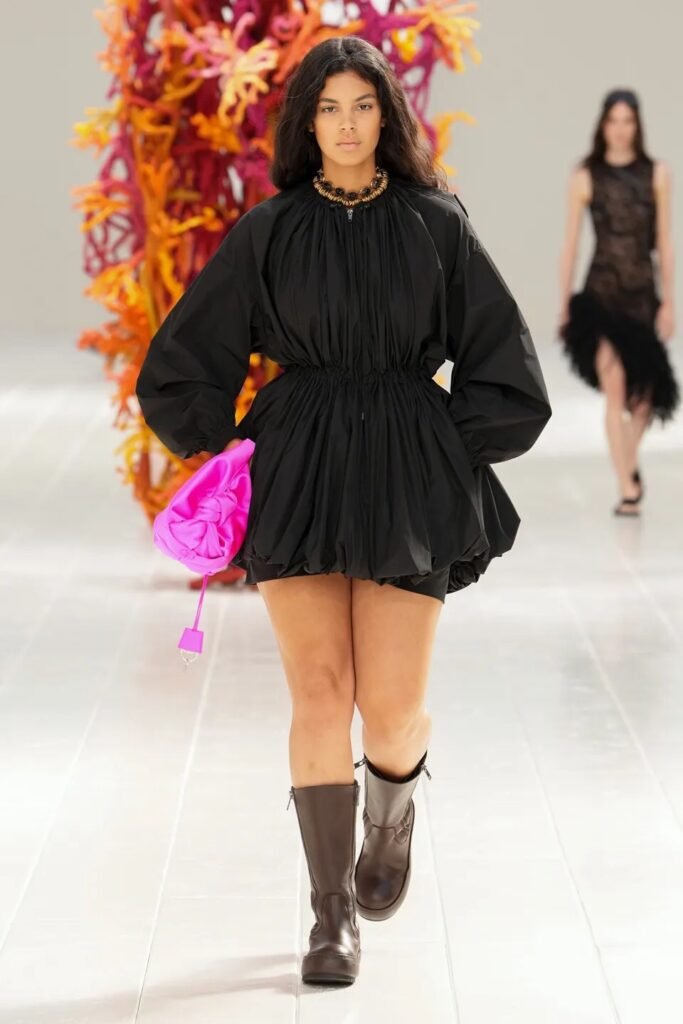
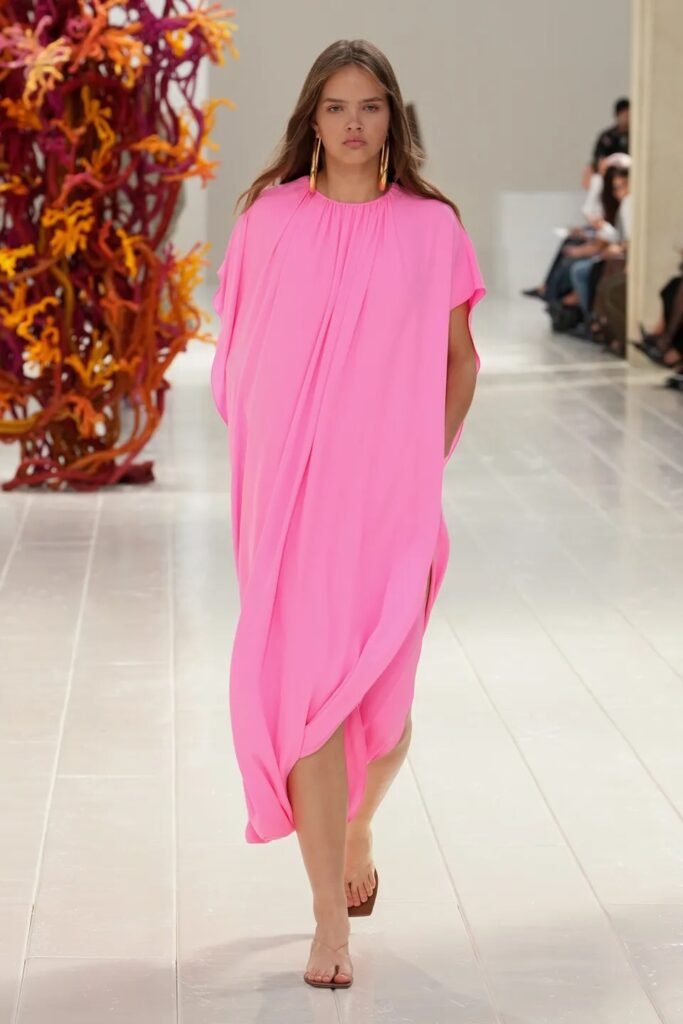
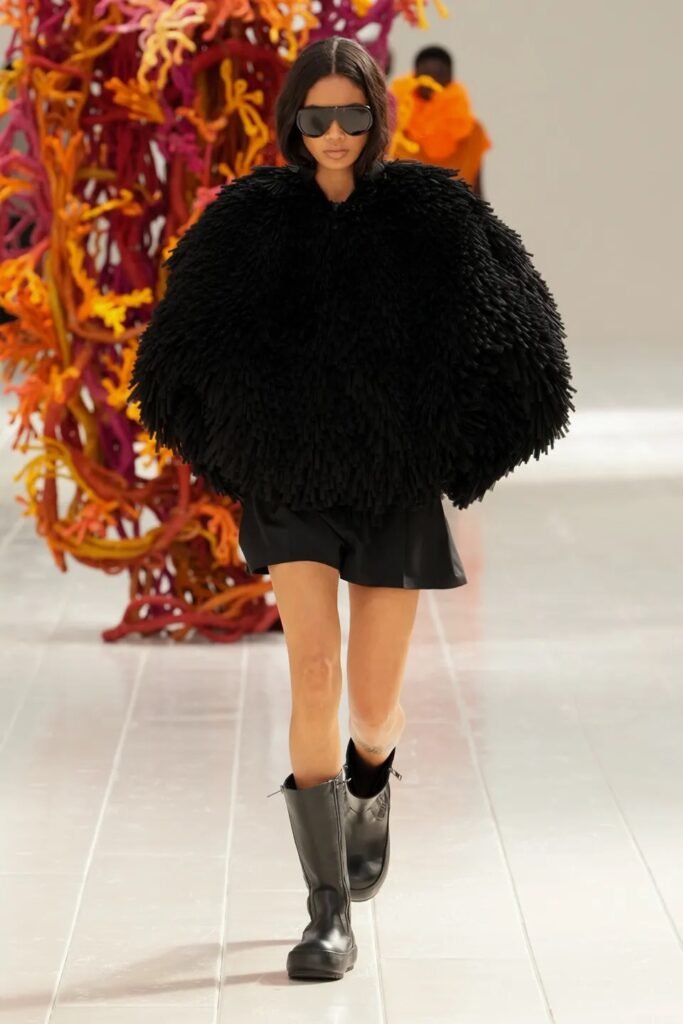
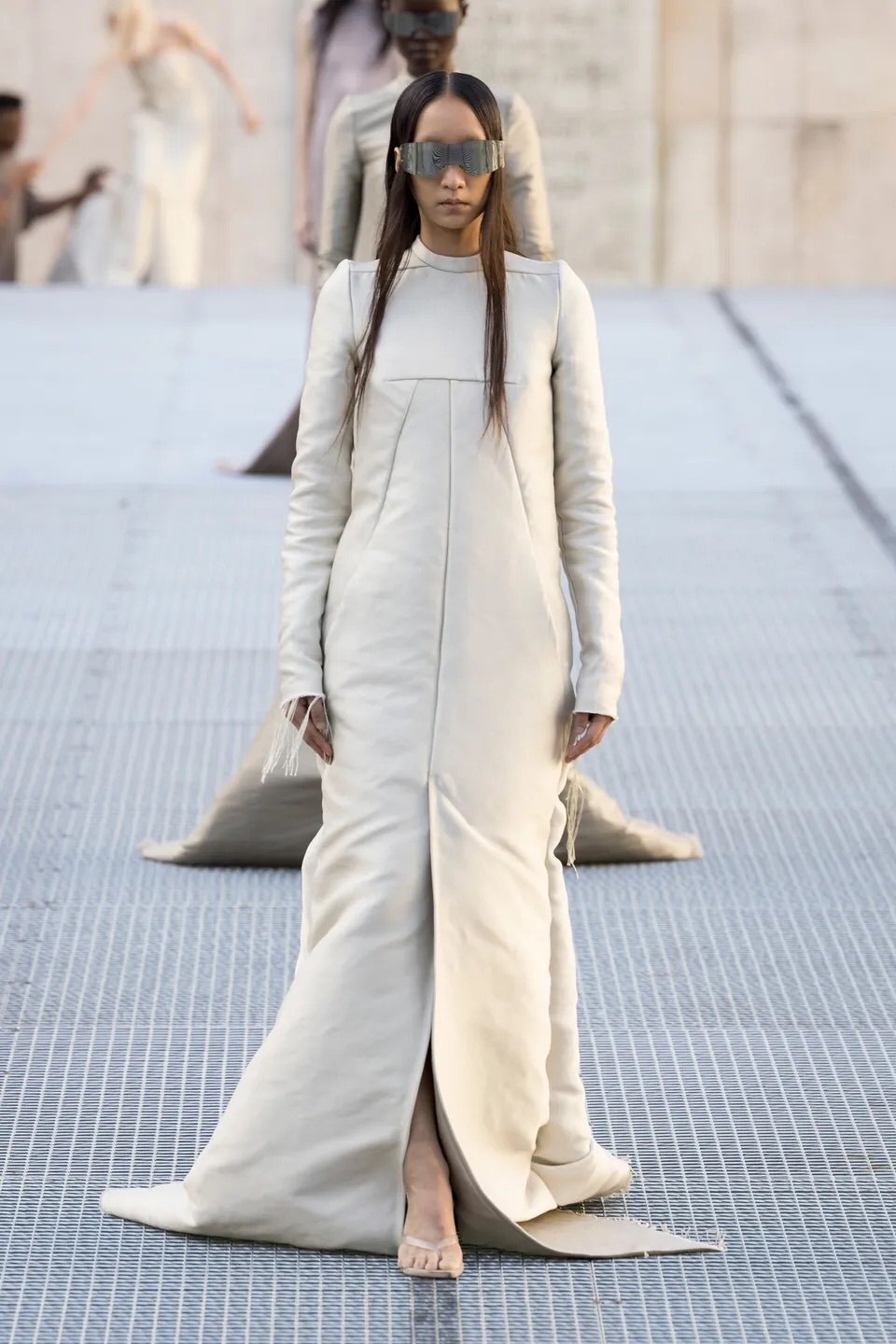
Instead of abandoning Balenciaga’s dramatic proportions, Piccioli reduces the physical burden of those silhouettes. Balloon forms, draping and cocoon shapes remain important, but they are reimagined through lighter construction and fewer layers.
The effect is architecture without heaviness.
Sculptural Silhouettes, Reconsidered
Balenciaga’s relationship with volume has always been one of its defining characteristics, and Spring 2027 continues that tradition.
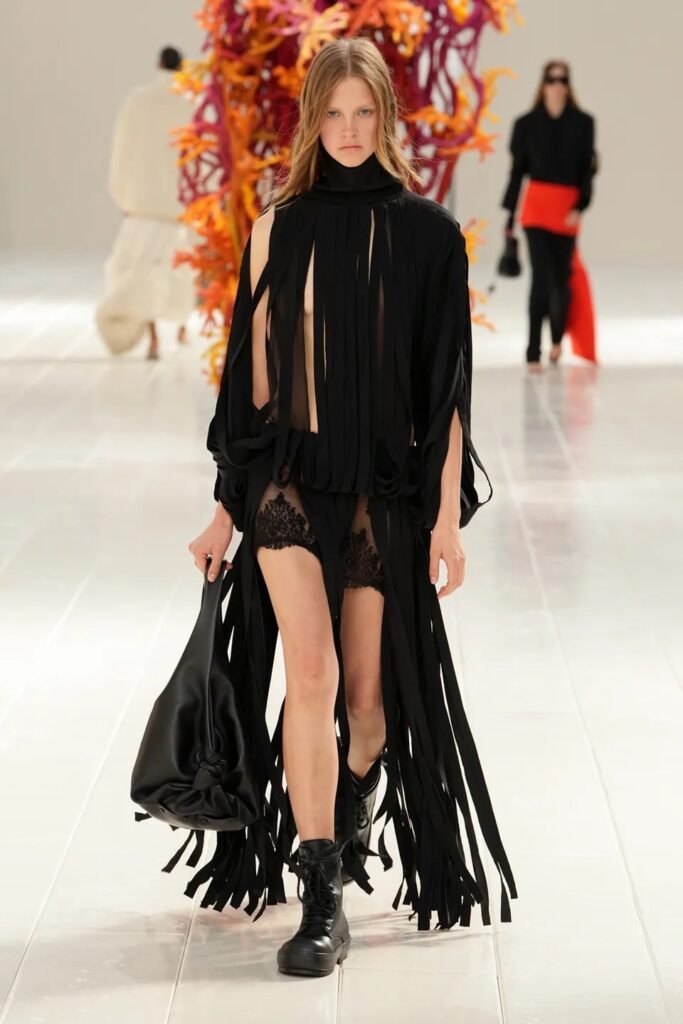
Balloon, drape and cocoon silhouettes appear throughout the collection, but their construction feels more fluid than rigid.
Rather than creating volume simply for spectacle, Piccioli uses it as a way of reconsidering how clothes interact with the body.
Fabric can expand away from the figure before returning to it. Layers can shift with movement. A silhouette can change depending on how the wearer ties, adjusts or positions the garment.
The clothing therefore becomes kinetic.
It does not necessarily have one fixed appearance.
This approach gives the collection a sense of movement even when the garments themselves are relatively minimal. The silhouette becomes something that happens between the body and the fabric.
Denim, Tailoring and TechWear
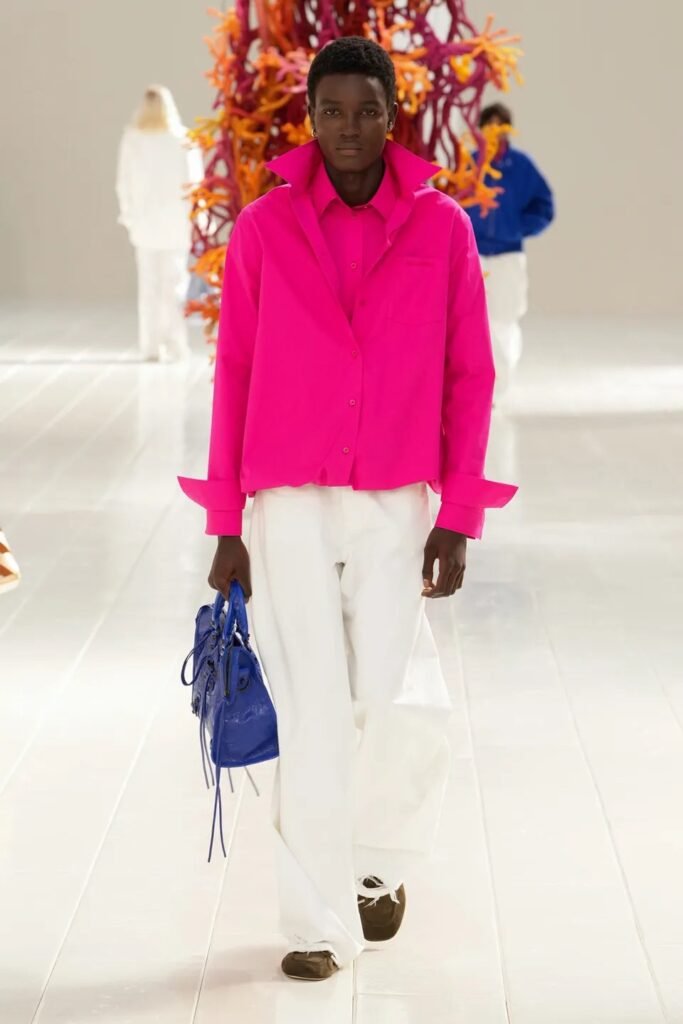
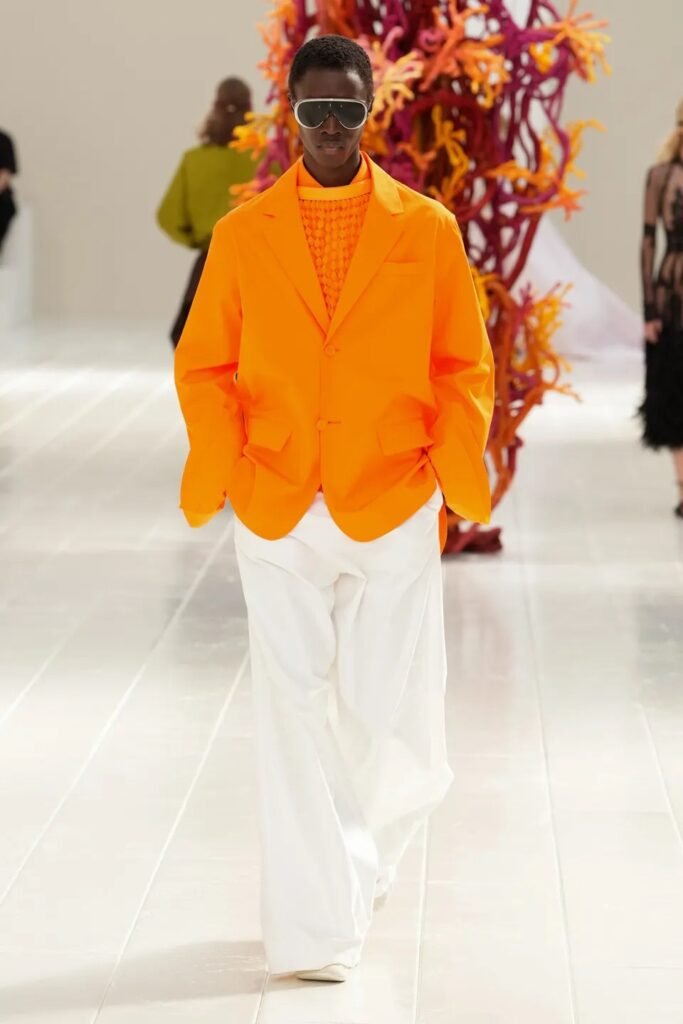
Everyday wardrobe staples are given new significance throughout the collection.
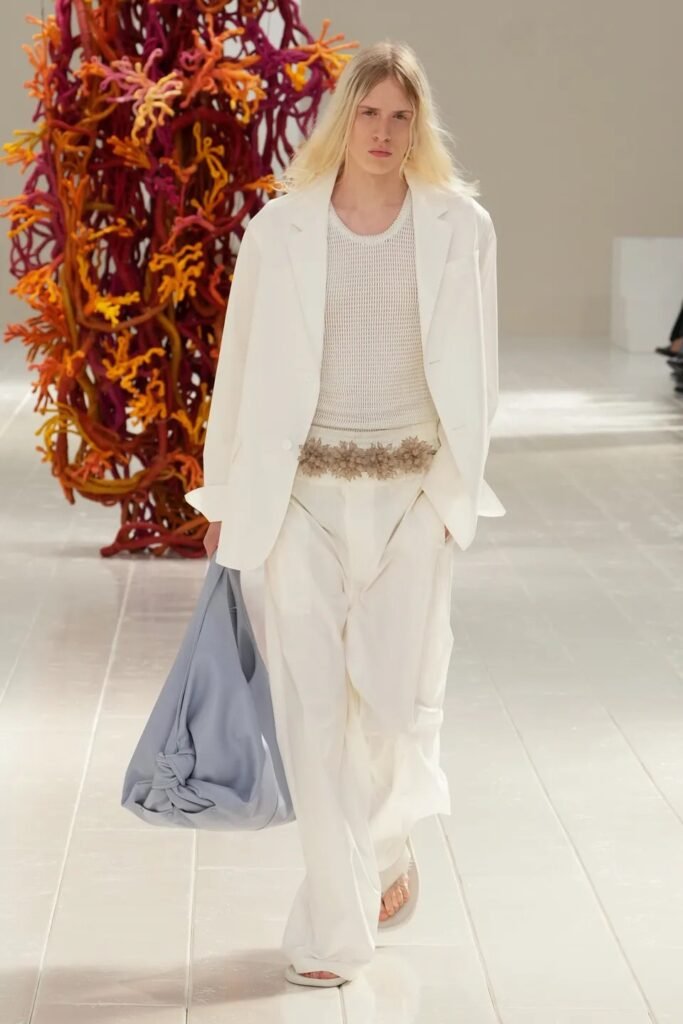
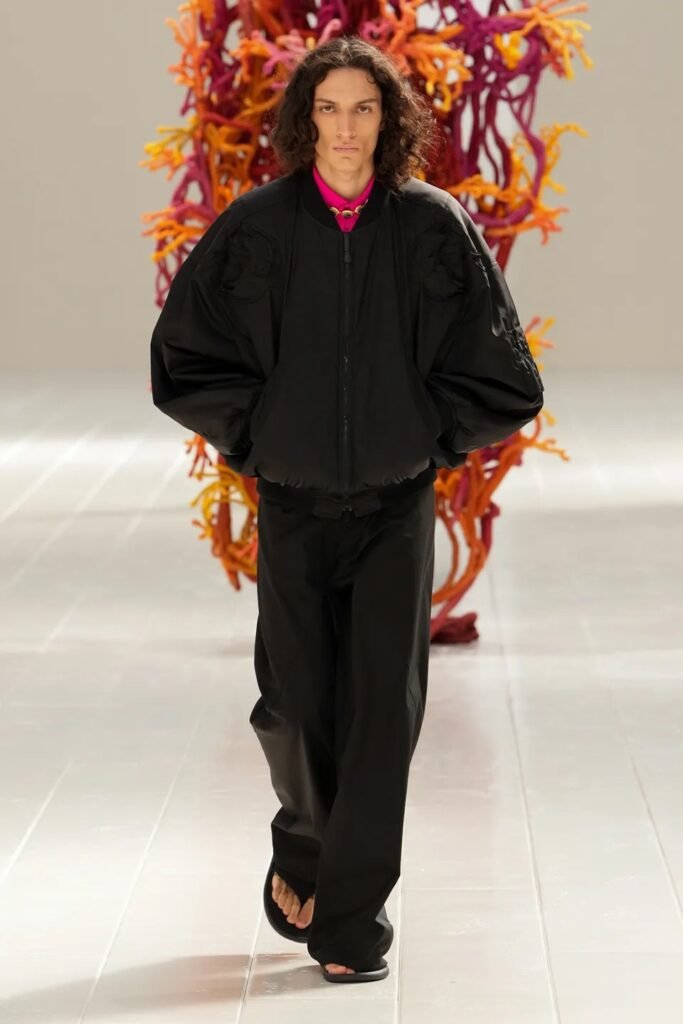
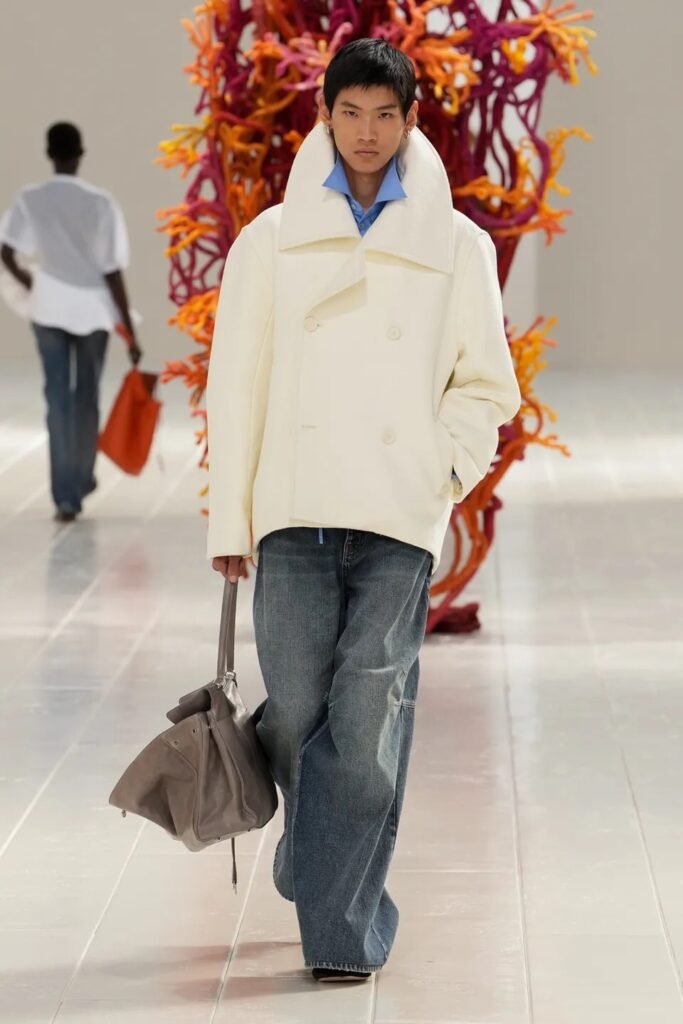
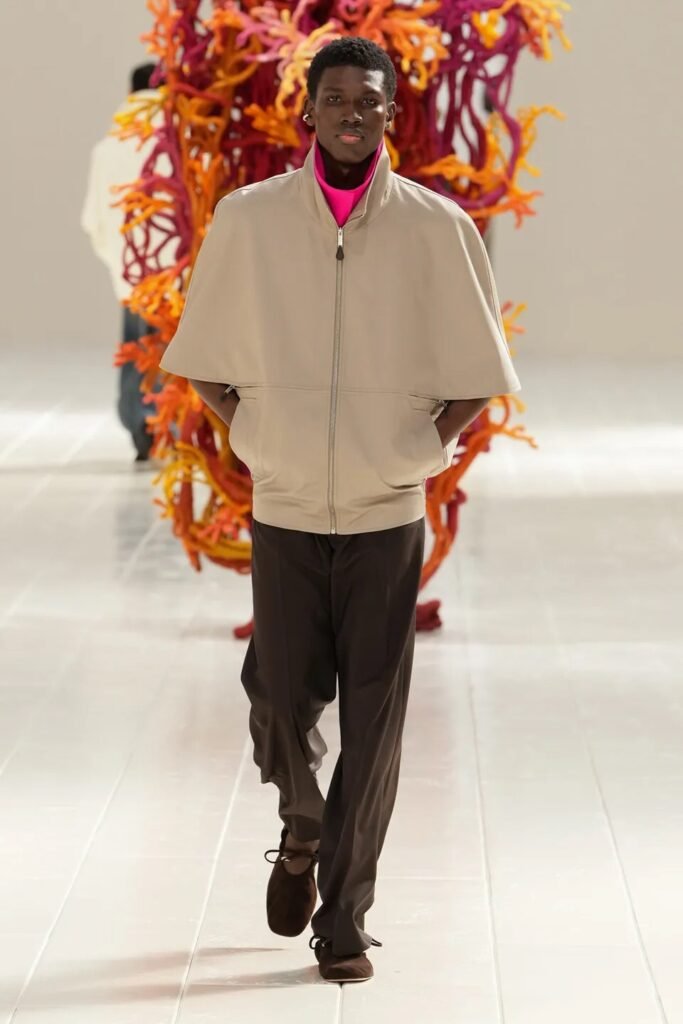
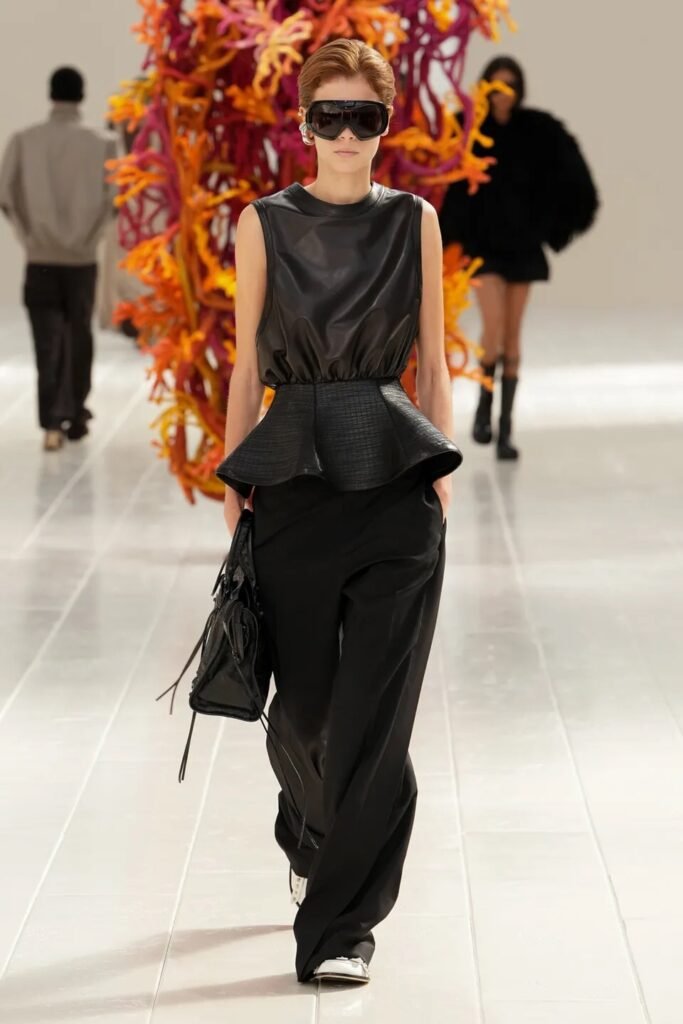
Denim is treated as more than casualwear, while tailoring is placed into unexpected conversations with technical garments.
The combination of jeans and eveningwear is particularly expressive of Piccioli’s approach. Rather than styling casual and formal pieces as separate categories, Balenciaga allows them to exist together.
The result is a wardrobe that feels intentionally mixed.
Tailoring does not necessarily mean formality. Eveningwear does not necessarily mean occasion dressing. TechWear does not exist separately from luxury.
Everything becomes part of one wardrobe.
This idea also reflects the way people increasingly dress in real life, where formal, casual, athletic and technical clothing frequently coexist within the same look.
When the Evening Gown Becomes Everyday
Perhaps the collection’s most intriguing proposition is its treatment of eveningwear.
Balenciaga transforms familiar evening codes by placing them into unexpected contexts. A gown can be worn with jeans. A shirt can receive the sweeping drama normally associated with an evening dress. Familiar wardrobe pieces are given new proportions and new functions.
This creates a kind of everyday glamour that does not depend on conventional occasion dressing.
It also demonstrates Piccioli’s interest in democratizing the language of luxury.
Instead of asking the wearer to adapt themselves to the clothing, the clothing becomes adaptable.
Accessories Become Functional Objects
Accessories follow the same philosophy.
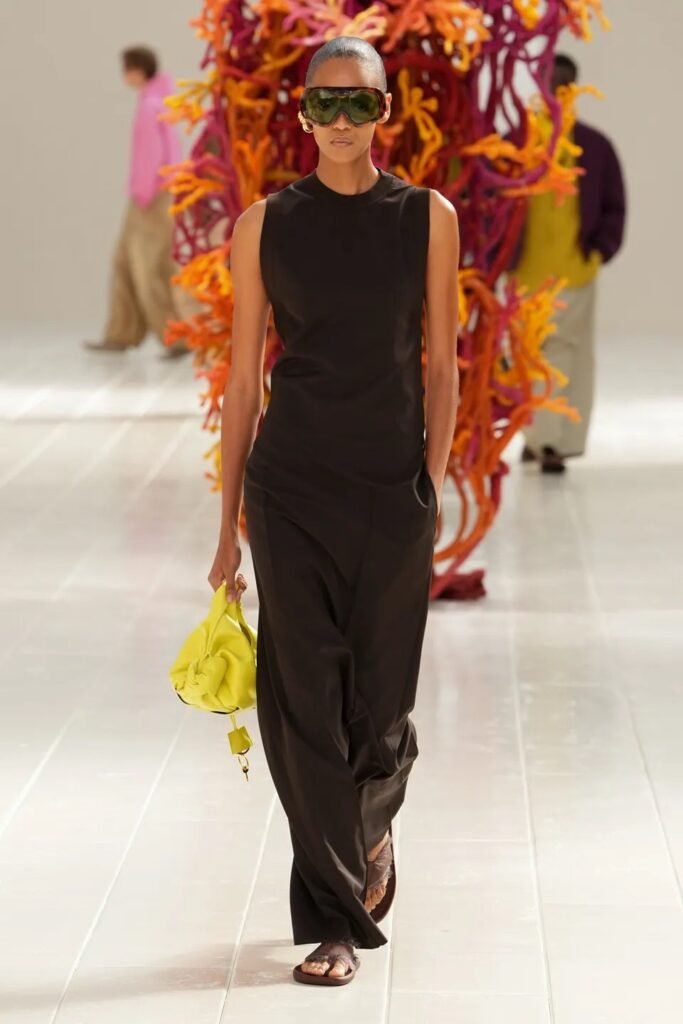
Jewelry is not treated purely as decoration. Balenciaga describes pieces that can serve a functional purpose, including jewelry used to hold volume against the body.
The house’s familiar accessories are also reconsidered through softness and flexibility.
The Le City bag is reinterpreted through washed leather, while the Rodeo is reshaped in ultralight nappa leather with nylon linings. Shoes become softer and more deconstructed, stripping their forms back toward essential functionality.
This functional approach gives the accessories a different relationship with the clothes.
They are not simply finishing touches.
They become part of the architecture.
The Spirit of Cristóbal Balenciaga
For all its modernity, Spring 2027 remains deeply connected to the legacy of Cristóbal Balenciaga.
Piccioli does not appear interested in reproducing archival pieces literally. Instead, he engages with the principles behind the house’s historical vocabulary: sculptural construction, volume, three-dimensionality and the integrity of the human body.
That distinction matters.
Heritage becomes a starting point rather than a costume.
The collection asks what Balenciaga’s original ideas might look like when applied to contemporary life.
The answer is clothing that feels less interested in nostalgia and more interested in evolution.
A More Fluid Future for Luxury Fashion
Spring 2027 arrives at a moment when luxury fashion is reconsidering what people actually want from clothing.
For years, fashion has often celebrated increasingly complicated construction, extreme proportions and visually spectacular runway moments. Piccioli’s Balenciaga proposes another possibility: that innovation can also come through reduction.
Less weight.
Less rigidity.
Less separation between categories.
More movement.
More adaptability.
More attention to the relationship between fabric and body.
That does not make the collection minimalist in the traditional sense. Balenciaga remains unmistakably Balenciaga. The silhouettes can still be dramatic, the proportions still unusual, and the clothes still carry the intellectual tension expected from the house.
But the drama has become lighter.
The New Balenciaga
Pierpaolo Piccioli’s Spring 2027 Ready-to-Wear collection suggests that the next stage of Balenciaga may be less about pushing fashion toward the extreme and more about reconsidering the fundamentals of clothing.
What does a garment need to do?
How should it interact with the body?
Can couture become part of everyday life?
And can luxury feel liberating rather than restrictive?
These questions sit beneath the collection.
“Unsized” ultimately becomes more than a technical approach to construction. It becomes a philosophy about dressing—one in which clothing is allowed to move with the person rather than dictate how the person should move.
For Balenciaga, a house founded on radical approaches to silhouette, that feels like a natural evolution.
Spring 2027 is therefore not simply about creating another season of clothes. It is about reconsidering the relationship between body, fabric and identity.
And in Piccioli’s hands, Balenciaga’s future looks increasingly defined by lightness, freedom and the enduring power of couture to transform the everyday.