

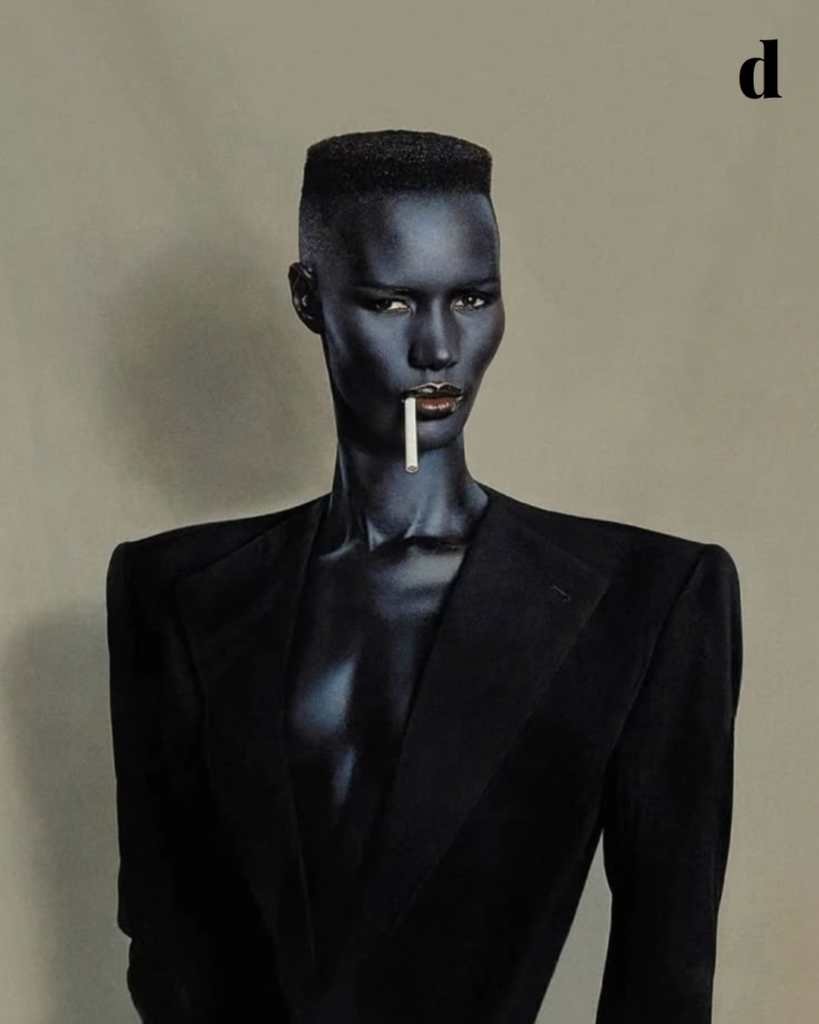
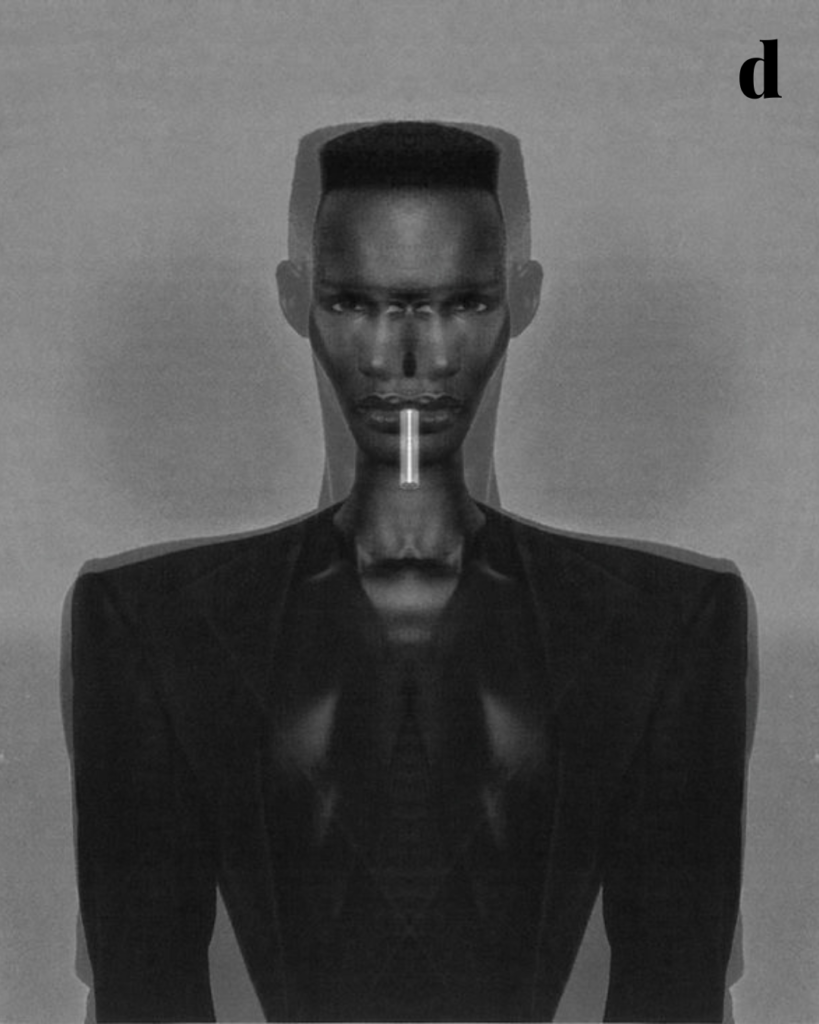
Grace Jones has never been easy to define.
She is a model, musician, actress, performer, fashion muse and cultural icon but none of those descriptions completely capture the force of her image. For more than five decades, Jones has challenged standard ideas of beauty, femininity, masculinity, celebrity and self-expression, transforming herself into one of the most noticeable figures in fashion and popular culture.
Long before gender-fluid fashion became part of the mainstream conversation, before celebrities became their own creative directors and before personal image became an essential part of digital culture, Grace Jones was already treating identity as something that could be designed.
Her silhouette was unfiltered. Her beauty was unconventional. Her style was confrontational. Her performances were theatrical. And her approach to fashion was never simply about looking beautiful.
It was about being unforgettable.
Born in Spanish Town, Jamaica, and raised in a strict religious household, Jones moved with her family to Syracuse, New York, as a teenager. The transition from Jamaica to the United States became an important part of the story she would in time tell through her work. Caribbean heritage, Black identity, American culture, European fashion, nightlife, music and performance all became ingredients in an aesthetic that was impossible to mistake for anyone else’s.
She eventually moved to New York and later Paris, where her modeling career introduced her to the fashion industry. But Jones was never content to remain a model. She moved between fashion, music, film and performance, turning every new platform into another opportunity to reinvent herself.
The result was a career unlike almost any other.
Grace Jones did not simply participate in fashion history.
She helped change the way fashion could be imagined.
From Jamaica to New York
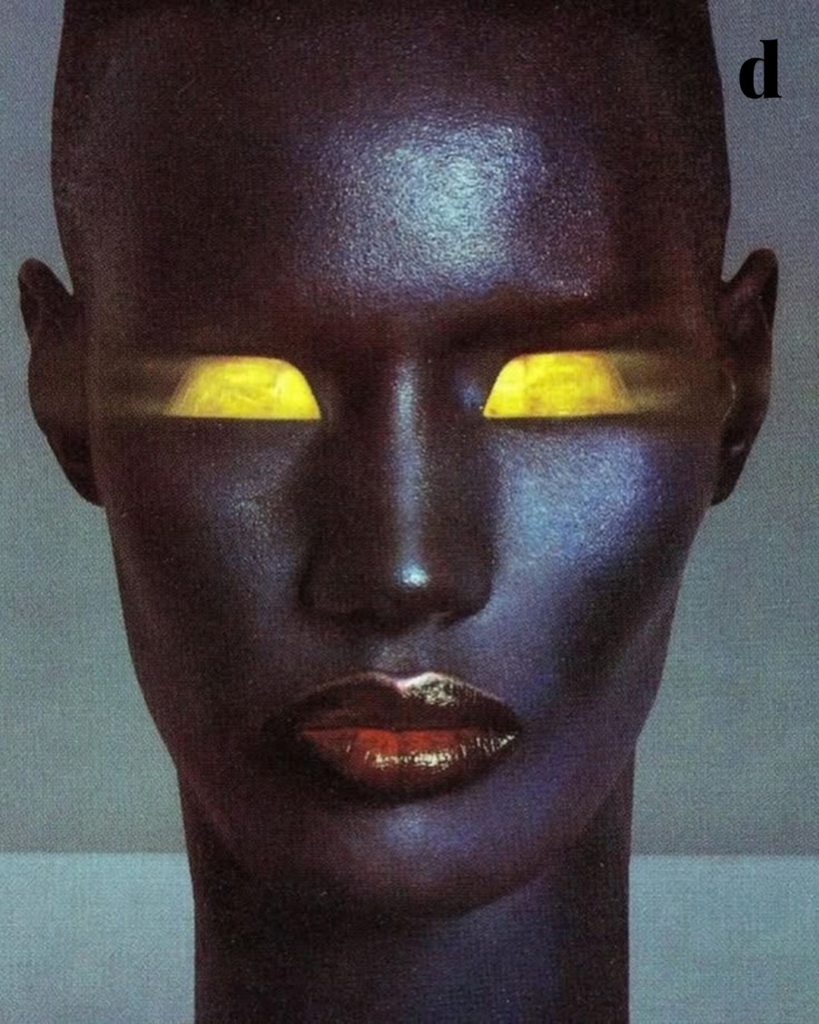
Before the sharp tailoring, sculptural hair and unforgettable photographs, there was Jamaica.
Jones was born in Spanish Town, Jamaica, and spent her early childhood there. Her upbringing was shaped by religion and discipline, with her father serving as a Pentecostal minister.
That environment stood in striking contrast to the woman Jones would eventually become.
Her later career would be defined by physical freedom, controversial performances, sexuality, discovery and a refusal to conform to traditional expectations of femininity. Yet her Jamaican upbringing remained an important part of her identity.
Jamaica never disappeared from her story.
Instead, it became one of the many influences that she carried into the wider world.
When Jones moved to Syracuse, New York, she came across an entirely different cultural setting. She eventually studied theatre and began pursuing modeling, leading her toward New York‘s fashion and nightlife scenes.
New York gave her space to experiment.
Paris gave her another.
And between those worlds, Grace Jones began establishing the persona that would eventually make her internationally famous.
Grace Jones and the Birth of a New Kind of Model
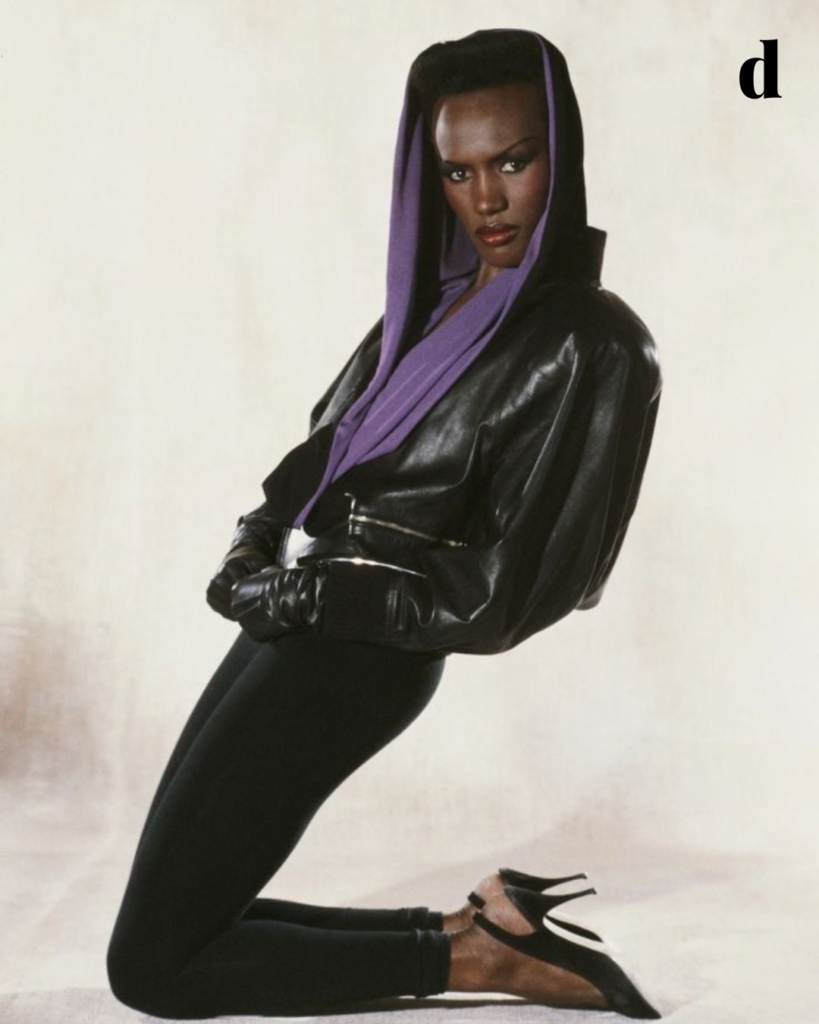
Jones entered fashion at a time when the modeling industry was beginning to expand its ideas about beauty.
Her height, angular features, striking presence and gender fluid appearance immediately made her stand out.
But standing out was only the beginning.
Jones understood that a model could be more than a person wearing clothes.
A model could become an image.
She could become a character.
She could become part of the designer’s creative language.
Jones’s physical presence gave designers something powerful to work with. Rather than disappearing behind a garment, she often appeared to transform it.
A dramatic shoulder became even more dramatic.
A bodysuit became a statement.
A tailored suit became an exploration of gender.
A sculptural dress became part of her body.
This relationship between clothing and performance would become one of the defining characteristics of her career.
Fashion was no longer simply something Jones wore.
Fashion became something she performed.
The Designers Who Helped Shape the Grace Jones Image
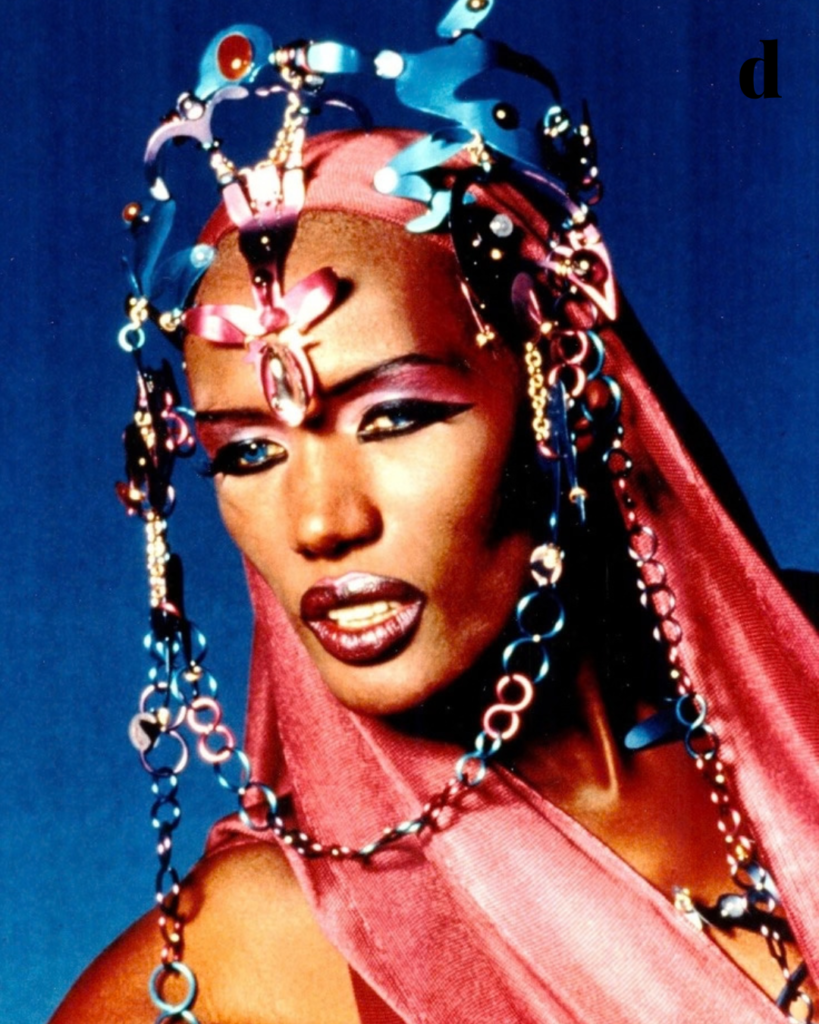
Grace Jones became closely associated with some of the most innovative designers and artists of her generation.
Issey Miyake was particularly significant.
Miyake understood clothing as movement, structure and space, and Jones’s physique made her an outstanding performer of his designs. She has spoken about working with him and taking part in his displays, experiences that helped deepen her understanding of fashion as performance.
Then there was Jean Paul Gaultier, whose fixation with gender, sexuality and the body matched naturally with Jones’s own visual language.
Thierry Mugler‘s sculptural silhouettes and powerful shoulders also suited her exceptional presence.
Azzedine Alaïa became another important figure in her fashion story, particularly through his ability to celebrate the body while maintaining an intensely complex silhouette.
These designers did not simply dress Grace Jones.
They contributed to a conversation between fashion and performance in which Jones herself became a central participant.
She could wear over the top clothing without ever allowing the clothes to outshine her.
That is the difference between wearing an image and becoming one.
Jean-Paul Goude and the Making of an Icon
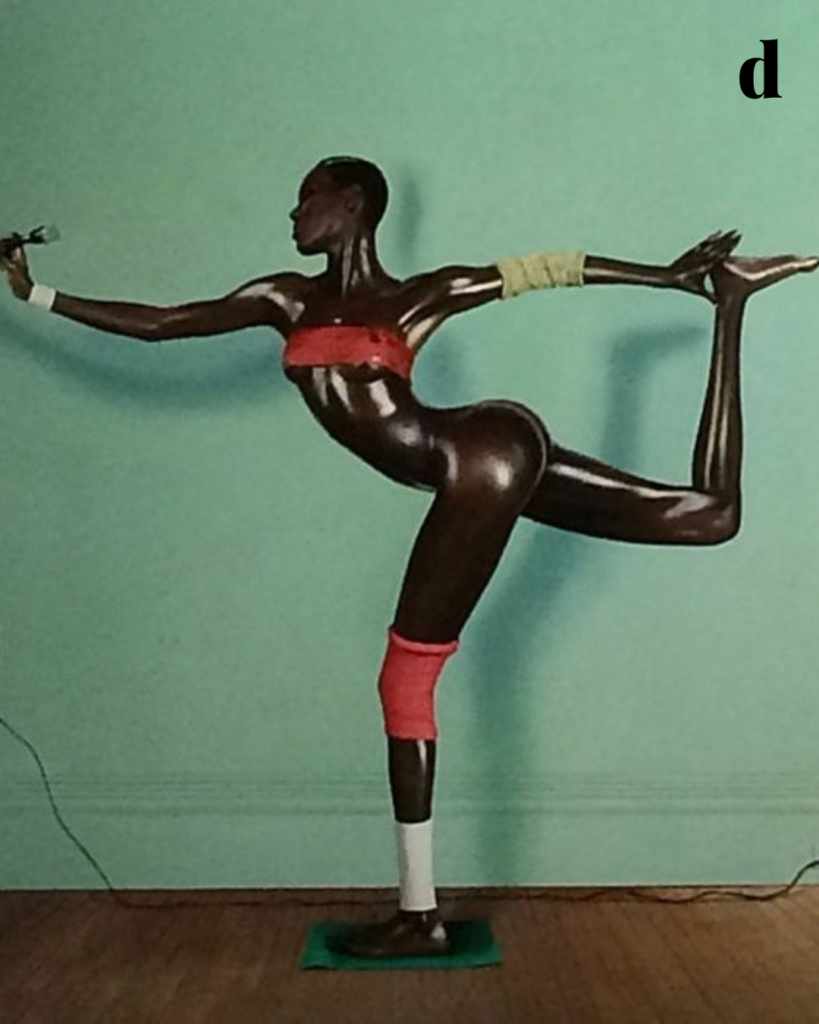
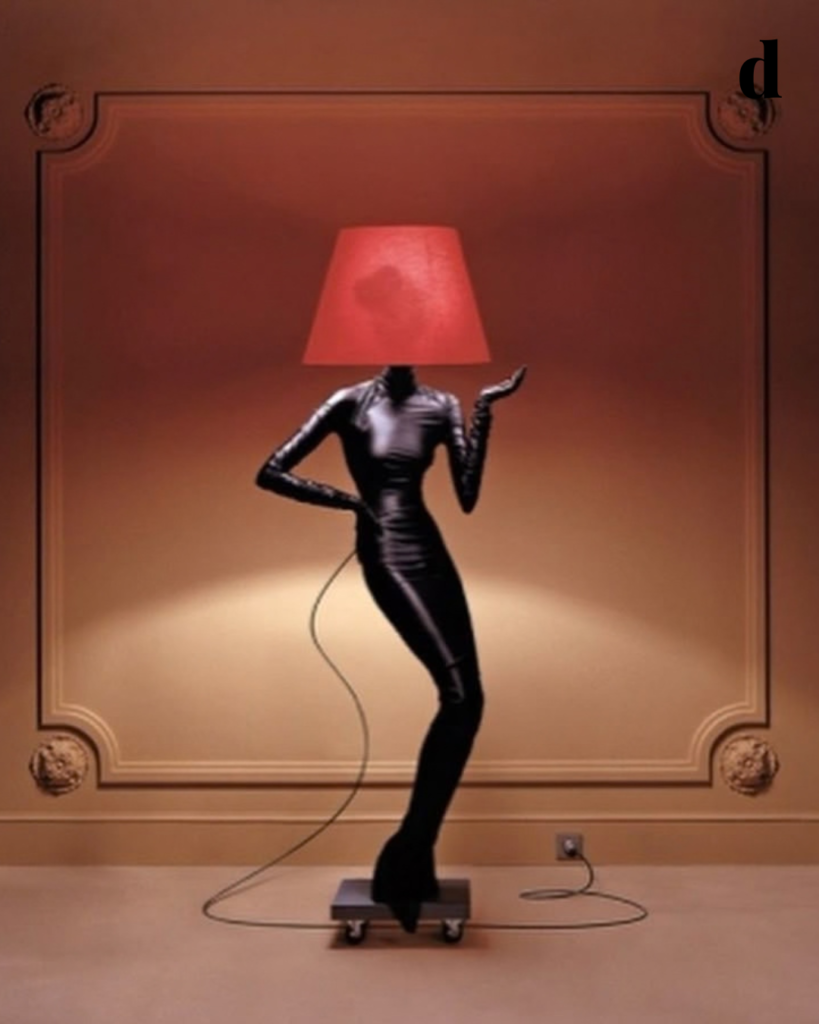
Few creative partnerships are as closely linked with Grace Jones as her relationship with French artist and photographer Jean-Paul Goude.
The pair became romantically and creatively involved in the late 1970s, and Goude photographed Jones intensely.
Together, they both created some of the most iconic images of her career.
The visual language was surreal, magnified and almost impossible.
Jones appeared with drawn-out limbs, dramatic poses and distorted proportions. Her body could look architectural, almost as if it belonged to a different physical universe.
The images helped establish her as something more than a celebrity.
She became mythology.
But the partnership was also complicated.
Jones later discussed their relationship in her memoir I’ll Never Write My Memoirs, highlighting her own contribution in creating the imagery rather than accepting the idea that Goude simply invented her public persona.
That originality matters.
Grace Jones was not merely a muse.
She was an artist partnering in the creation of her own mythology.
Her agency is essential to understanding why those images remain so powerful.
The Flattop: When Hair Became Architecture
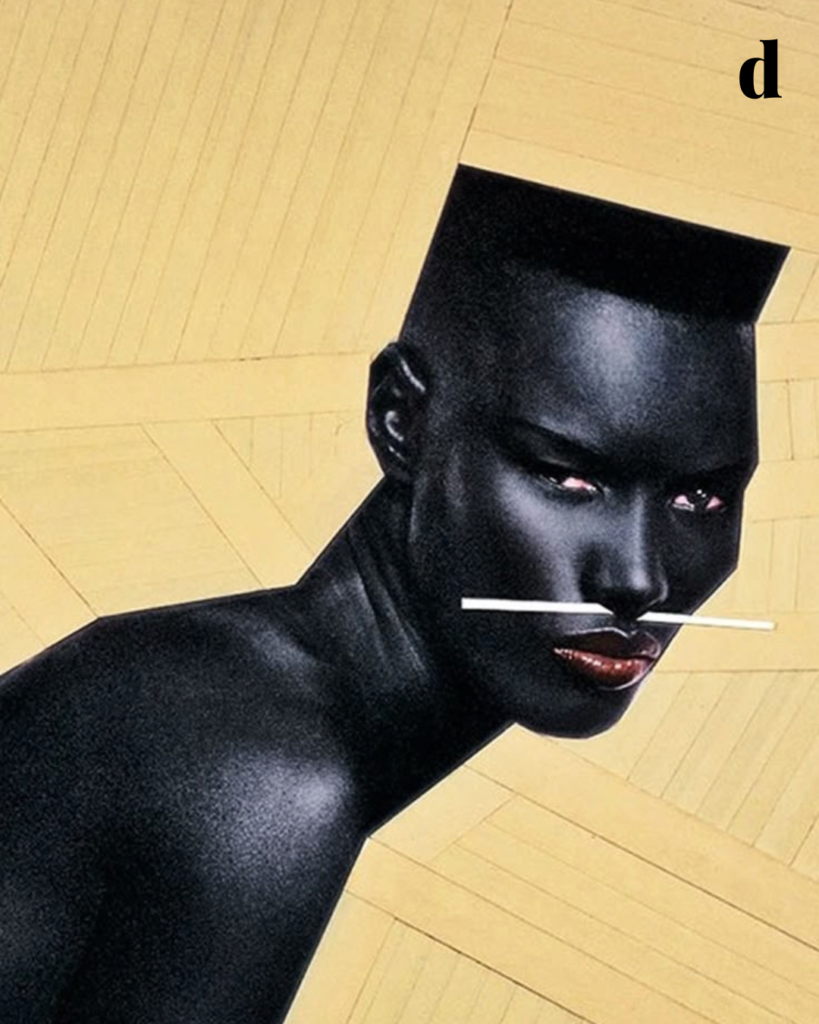
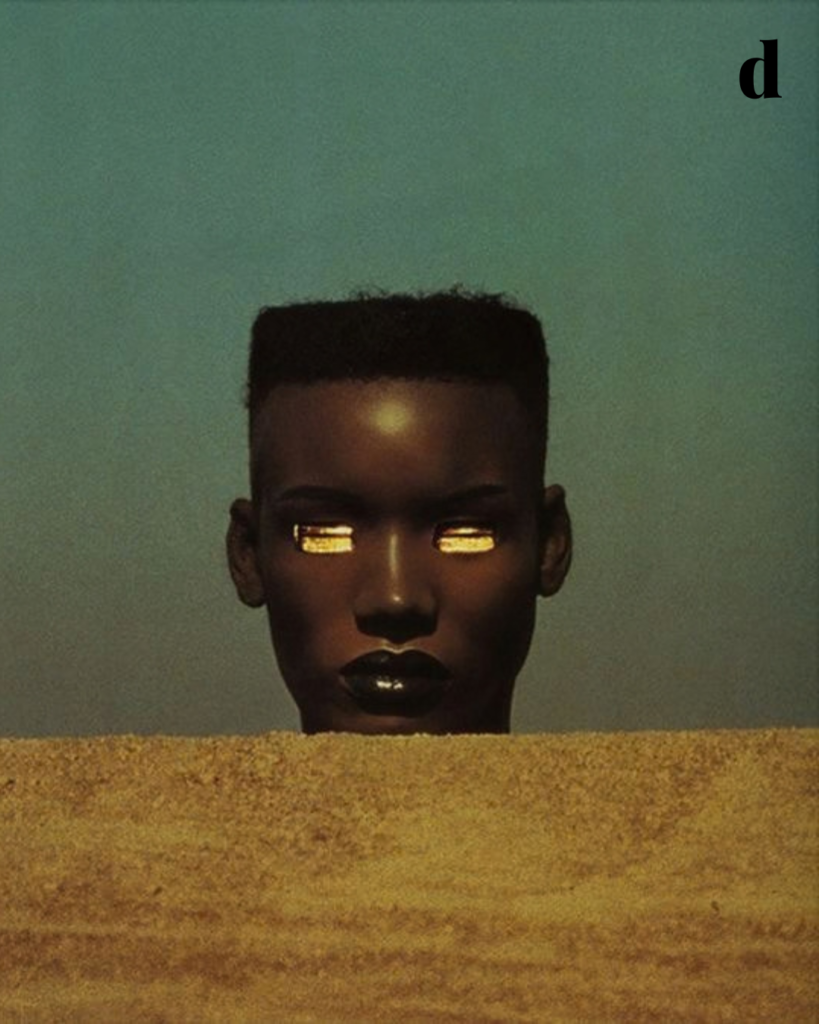
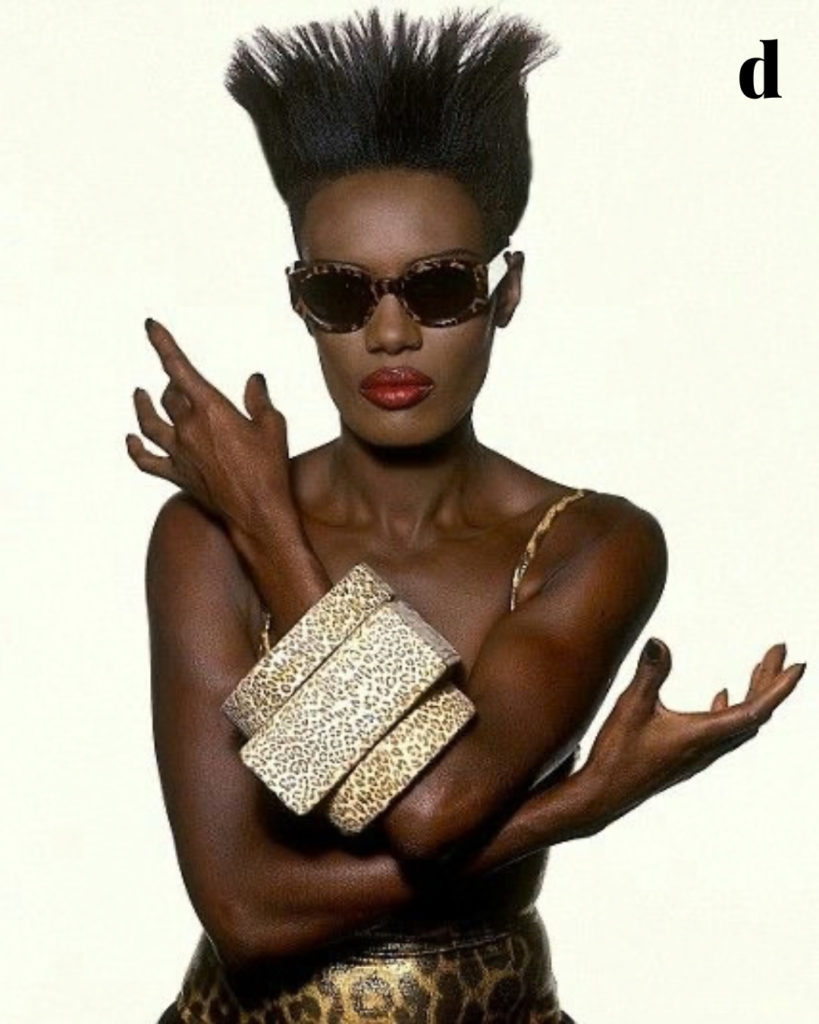
Few hairstyles in fashion history are as immediately noticeable as Grace Jones’s flattop.
Sharp, geometric and deliberately unnatural, the hairstyle transformed her face into something almost sculptural.
Hair usually communicates softness, movement and femininity.
Jones turned hers into geometry.
The shape framed her face with almost architectural precision and became one of the most important elements of her visual identity.
Combined with dramatic makeup, strong brows, sculpted cheekbones and an unforgiving expression, the look created a beauty image that was completely different from the softer glamour usually associated with female celebrities.
Jones did not try to make herself more standard.
She made her unconventional qualities impossible to ignore.
Her beauty was powerful because it was unmistakably her own.
Grace Jones and the Art of Androgyny
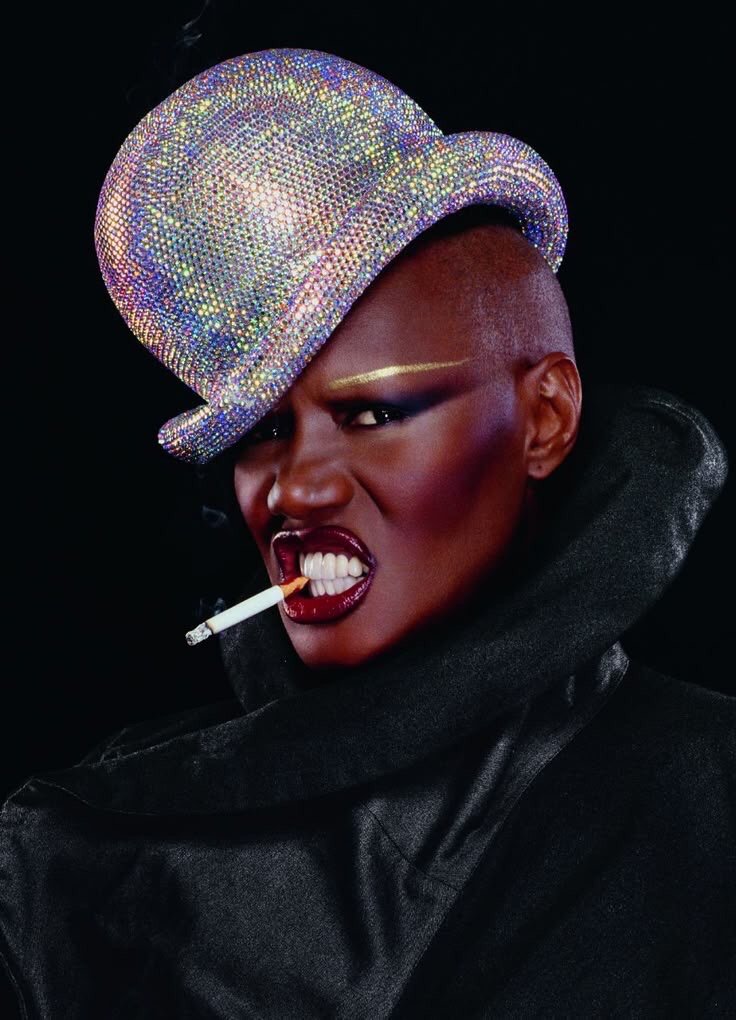
One of the most enduring aspects of Jones’s fashion legacy is her relationship with gender fluidity.
She could wear a sharply tailored suit and look as powerful as any male fashion icon.
Then she could appear in a revealing bodysuit and completely transform the same conversation around her body.
Jones never treated masculinity and femininity as opposing identities.
She moved between them.
Sometimes she combined them.
Sometimes she deliberately made the excellence difficult to identify.
This was particularly radical during the late 1970s and 1980s, when mainstream celebrity culture often relied on very clearly defined ideas of gender.
Jones challenged those expectations simply by existing outside them.
Her style suggested that a woman did not have to look traditionally feminine to be glamorous.
She could be muscular.
She could be severe.
She could be intimidating.
She could wear tailoring.
She could expose her body.
She could dominate the room.
And she could still be an icon of beauty.
From Fashion Model to Music Star
Jones eventually expanded her artistic passion into music.
Her debut album, Portfolio, arrived in 1977, introducing a new side to her public identity.
She began within disco but soon moved toward a more experimental sound.
Warm Leatherette and Nightclubbing became especially important in establishing her distinctive musical identity, blending new wave, reggae, dub, funk, disco and other influences.
Her music was as visually considered as her fashion.
Album covers became extensions of her image.
Performances became theatrical events.
Songs became part of a larger world.
Jones was not simply trying to become a standard pop singer.
She was creating an entire artistic universe.
That universe reached one of its defining moments with Nightclubbing.
The album’s dark, sophisticated sound perfectly matched the increasingly severe image she was creating.
Grace Jones had moved beyond disco glamour.
She had become something harder to categorize.
Nightclubbing and the New Grace Jones
By the early 1980s, the Grace Jones image had become almost completely distinctive.
The square flattop.
The sharp tailoring.
The sculptural shoulders.
The dramatic makeup.
The masculine silhouettes.
The powerful physicality.
The cool expression.
The music.
Everything worked together.
Nightclubbing became a defining statement of this period.
Jones reimagined songs associated with artists including Iggy Pop and David Bowie while introducing them into her own dark, sophisticated musical world.
Her version of “I’ve Seen That Face Before (Libertango)” further demonstrated her ability to bring Caribbean rhythms, European influences and avant-garde pop into the same space.
This was Grace Jones at her most influential.
She was no longer following culture.
She was shaping it.
Jamaica, Black Identity and Global Fashion
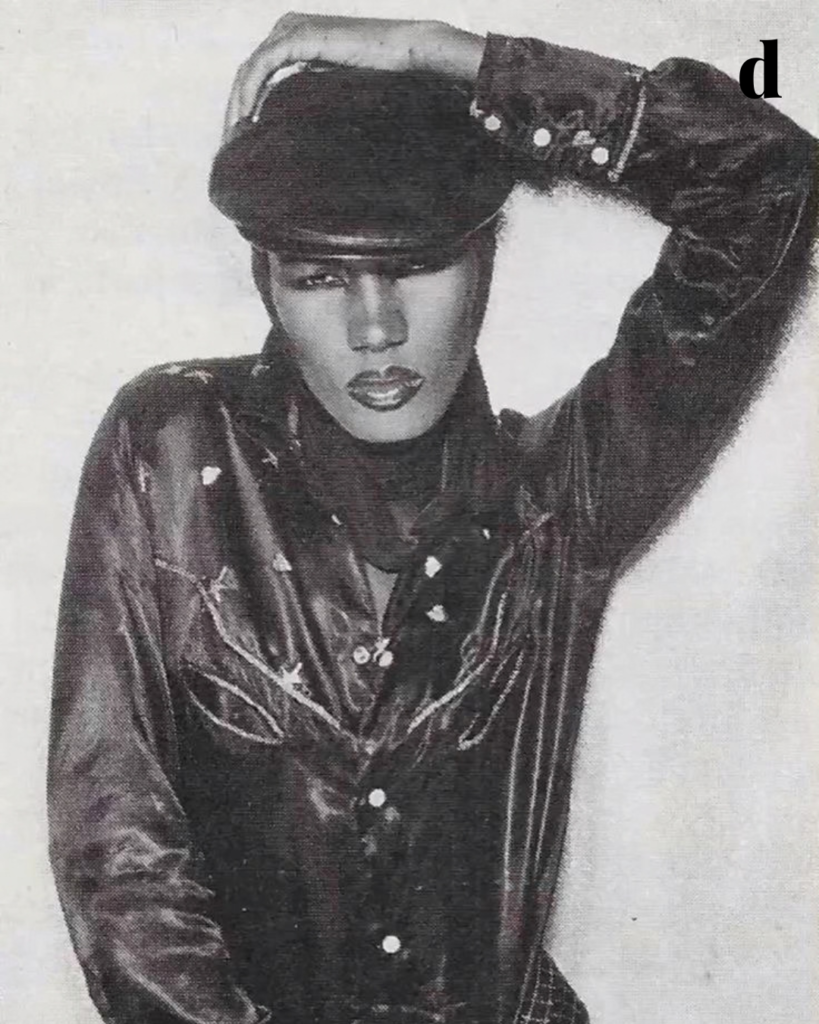
Jones’s Jamaican heritage remained an important part of her identity even as her career became increasingly international.
She carried elements of Caribbean culture into spaces that had traditionally centered European and American definitions of fashion and beauty.
Her Blackness was never something she attempted to make less visible.
Instead, she heightened it.
Her dark skin, strong features, muscular body and unconventional beauty became central to her image.
At the same time, she refused being reduced to a single cultural identity.
She was Jamaican.
She was American.
She worked extensively in Europe.
She belonged to New York nightlife.
She was connected to Black music.
She was embraced by fashion.
She collaborated with artists from different cultural backgrounds.
Grace Jones‘s identity existed between worlds, and that tension became part of her creative power.
Studio 54 and the New York Nightlife
Grace Jones evolved during an extraordinary period in New York nightlife.
Studio 54 became one of the most famous spaces of the era, attracting musicians, actors, designers, artists and social figures.
Jones belonged naturally within that environment.
She understood nightlife as theatre.
The club became a runway.
The stage became a fashion presentation.
The audience became part of the performance.
Her appearances at clubs helped establish the idea that nightlife could be a place where identity was invented rather than simply expressed.
That idea remains central to present day fashion and queer club culture.
Grace Jones and Keith Haring
Another extraordinary collaboration came through artist Keith Haring.
For the film Vamp, Haring painted Jones’s body with his instantly recognizable graphic symbols.
The result blurred the boundaries between fashion, performance and visual art.
Jones’s body became a moving canvas.
Haring’s drawings became part of a performance.
And the collaboration demonstrated how naturally Jones moved between different artistic disciplines.
She was never interested in staying inside one medium.
Photography could become performance.
Fashion could become sculpture.
Music could become theatre.
The body could become art.
That multidisciplinary approach is one of the reasons her work continues to feel contemporary.
Grace Jones on the Big Screen
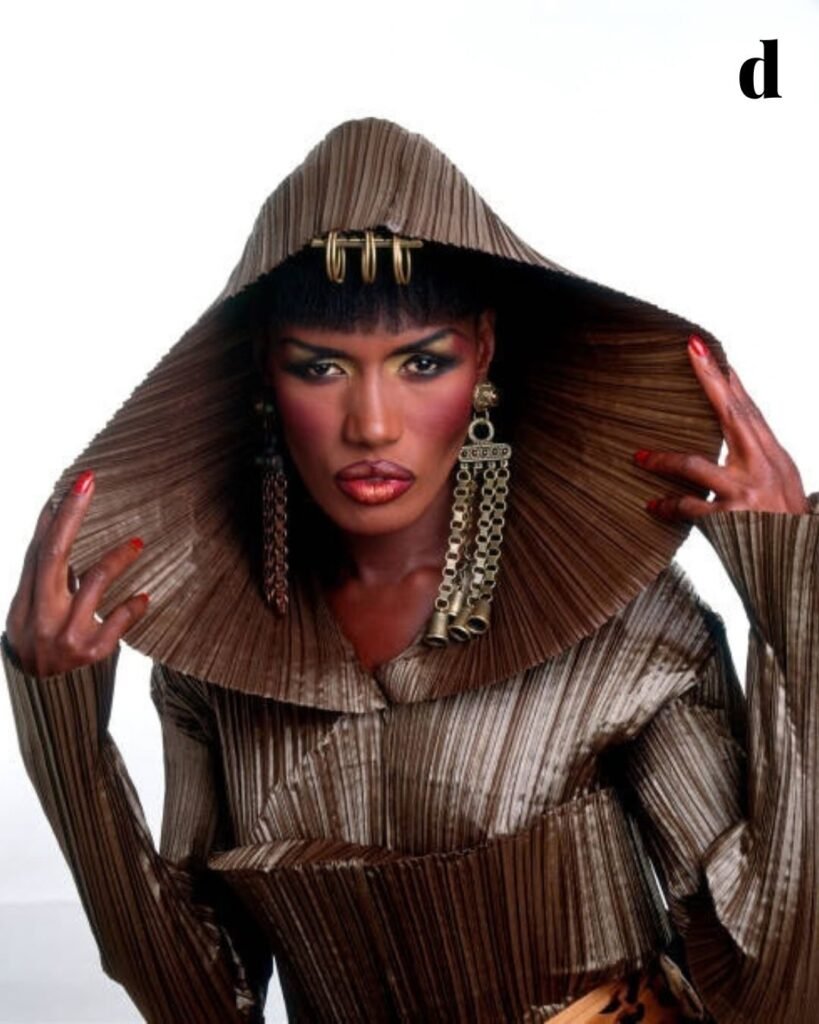
Jones’s move into film added another side to her career.
She appeared in Conan the Destroyer in 1984 before taking one of her most recognizable roles as May Day in the James Bond film A View to a Kill in 1985.
May Day was not presented as a conventional glamorous Bond woman.
She was physically powerful, intimidating and sexually confident.
Jones brought her own physical language to the role.
Even within a huge Hollywood franchise, she remained unmistakably Grace Jones.
She later appeared in Vamp, another role that allowed her to combine fashion, performance and surrealism.
Her film career demonstrated that her image was not limited to photographs or music videos.
She could bring the same force into cinema.
Love, Relationships and the Woman Behind the Image
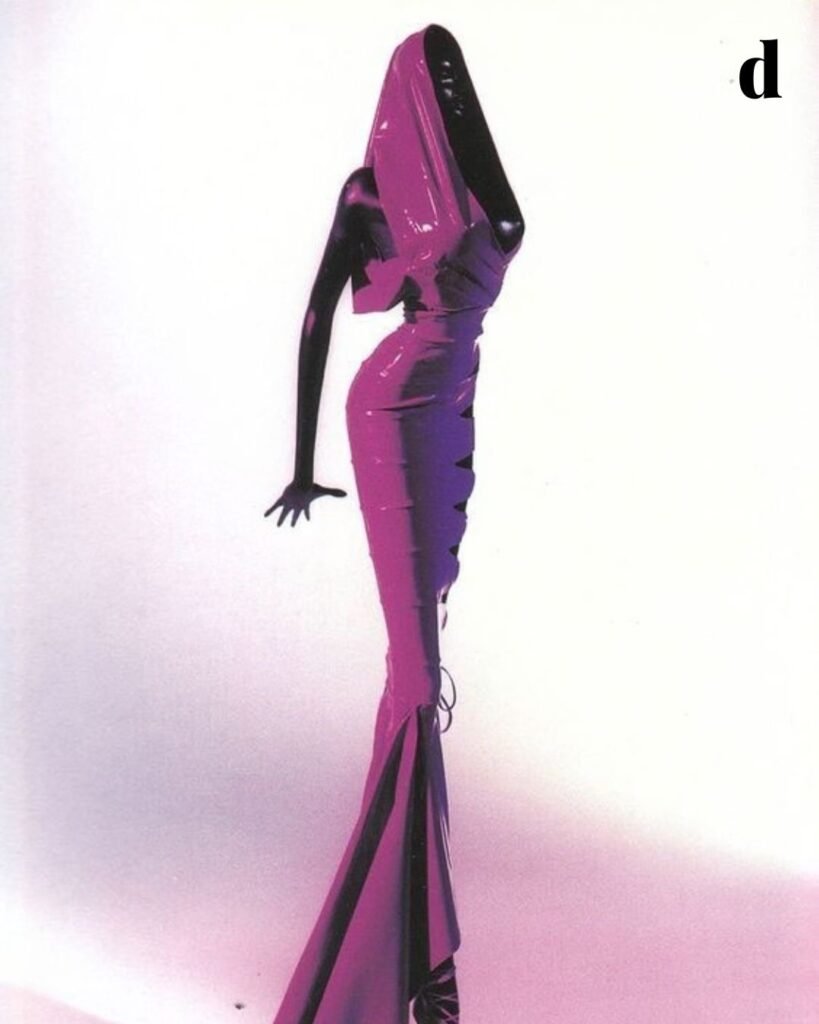
Behind Grace Jones’s public persona was a complicated personal life.
Her relationship with Jean-Paul Goude was one of the most important both personally and professionally. The pair had a son, Paulo, and their relationship became deeply connected to the imagery that helped define Jones’s career.
Jones later reflected on that period in her memoir, offering her own perspective on their relationship and creative collaboration.
She also had high-profile relationships with actor Dolph Lundgren and other figures within the entertainment world.
But the most fascinating aspect of Jones’s personal life is not the list of people she dated.
It is the extent to which she refused to let romantic relationships become the central definition of her identity.
She remained the main character of her own story.
That is consistent with everything else about her career.
Grace Jones has always been the creator of the image, rather than simply the subject of it.
Slave to the Rhythm
In 1985, Jones released Slave to the Rhythm, one of the most theoretically ambitious projects of her career.
Produced by Trevor Horn, the project combined music, spoken word elements and interviews to create something that felt closer to a multimedia performance than a conventional pop album.
The title track became one of Jones’s signature songs.
By this point, she had successfully crossed the boundaries between fashion, music, art and film.
She was no longer simply a model who became a singer.
She had become a complete visual artist.
Why Grace Jones Still Matters
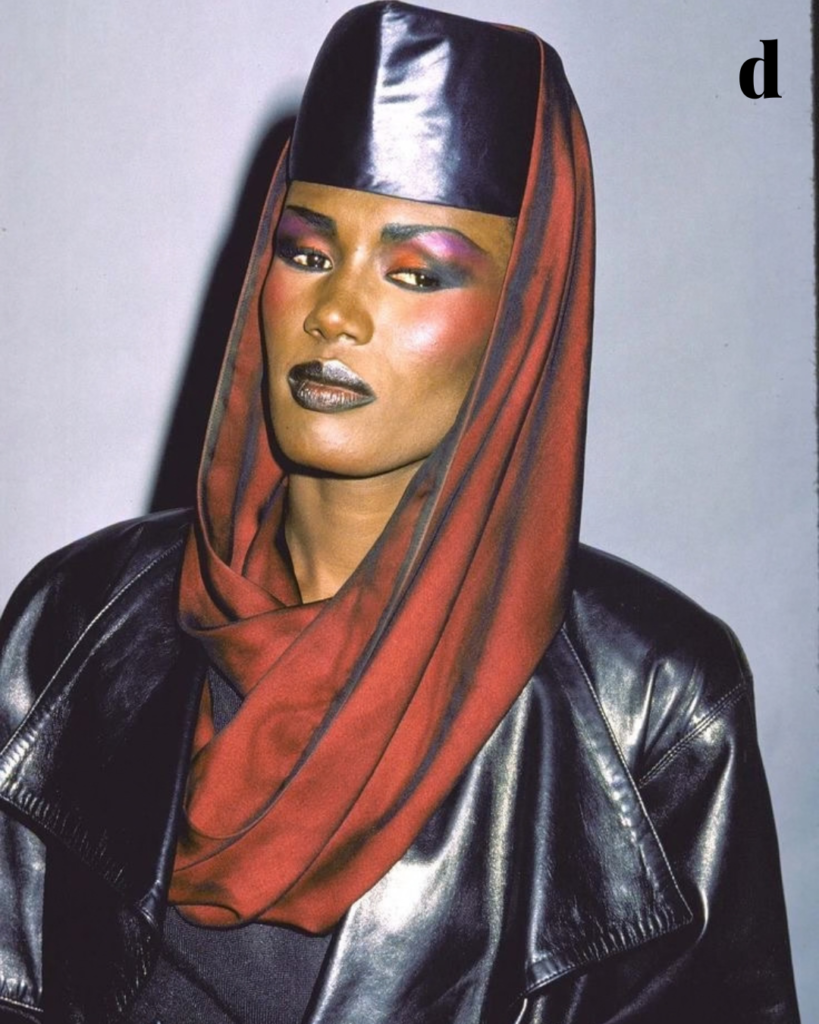
Fashion constantly looks backward.
Designers revisit archives.
Pop stars reference previous generations.
Runways recycle old silhouettes.
But Grace Jones is different.
Her work does not feel trapped in nostalgia.
It continues to look forward.
Her use of exaggerated proportions feels relevant to todays fashion’s fascination with sculptural clothing.
Her gender fluid styling connects directly to today’s broader conversations around gender and personal expression.
Her approach to celebrity image making feels remarkably modern in the age of social media.
And her collaborations between music, fashion, photography and art resemble the hybrid creative culture that now dominates todays fashion.
Jones understood all of this decades before it became mainstream.
The Grace Jones Influence on Contemporary Pop Culture
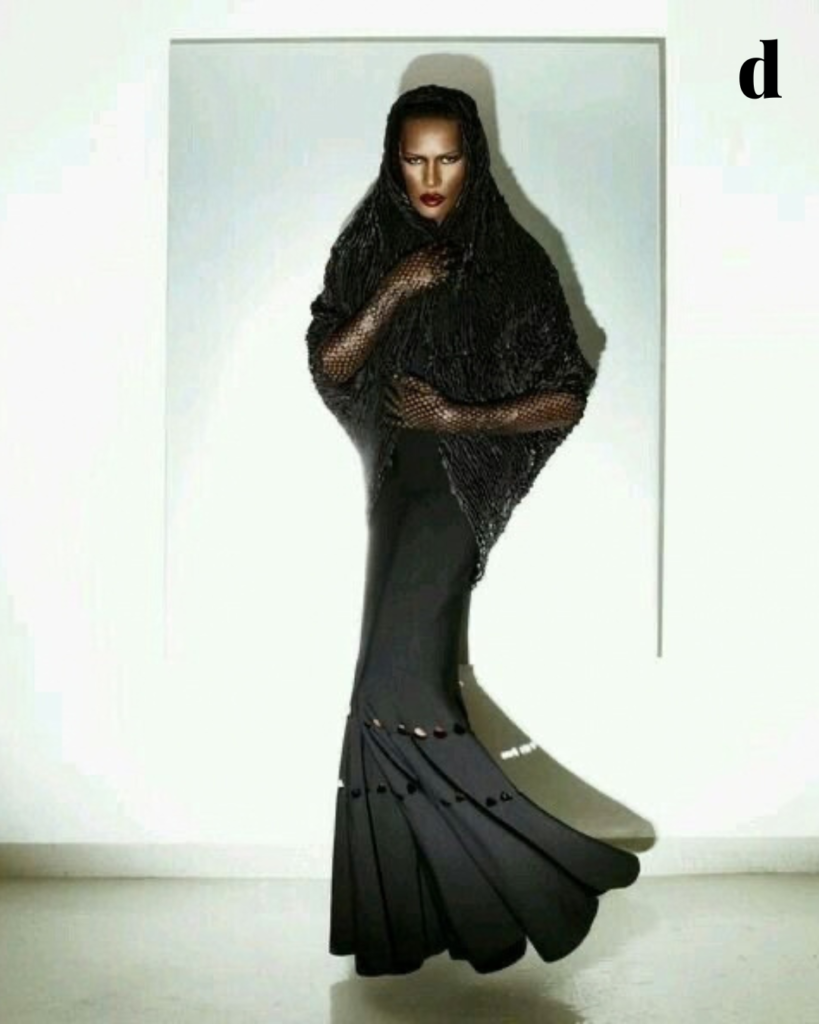
Her influence can be seen across generations of musicians, models and performers.
Artists continue to reference her silhouettes, her makeup, her hairstyles and her theatrical approach to performance.
Beyoncé’s Renaissance era provided another important reminder of Jones’s connection to todays music culture. Jones appeared on “Move,” connecting her legacy to the disco, house and Black queer dance traditions celebrated throughout the project.
The collaboration demonstrated that Jones could enter a present-day pop project without becoming a nostalgic artifact.
She remained herself.
That may be her greatest achievement.
Grace Jones in 2026
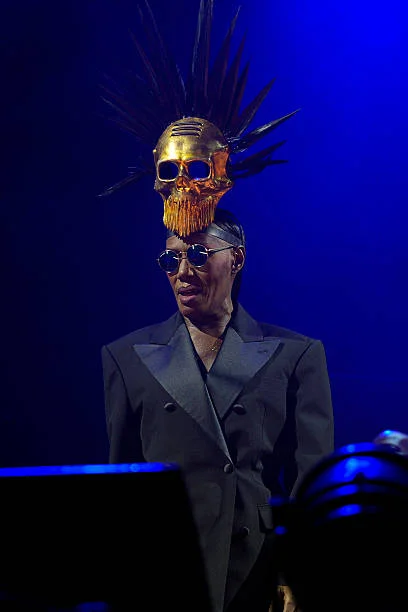

In 2026, Grace Jones remains relevant because the culture has finally caught up with many of the ideas she was exploring decades ago.
Fashion is increasingly interested in fluidity.
Music is once again looking toward club culture.
Luxury houses continue to collaborate with musicians and artists.
Celebrity image-making has become an art form.
And younger creatives are increasingly interested in constructing identities that do not fit traditional categories.
Jones was doing all of this before there was a social-media words for it.
She understood the power of a recognizable image.
She understood the value of mystery.
She understood that clothing could communicate identity.
And she understood that a performer did not have to separate fashion from music, or music from art.
Everything could exist together.
More Than a Fashion Icon
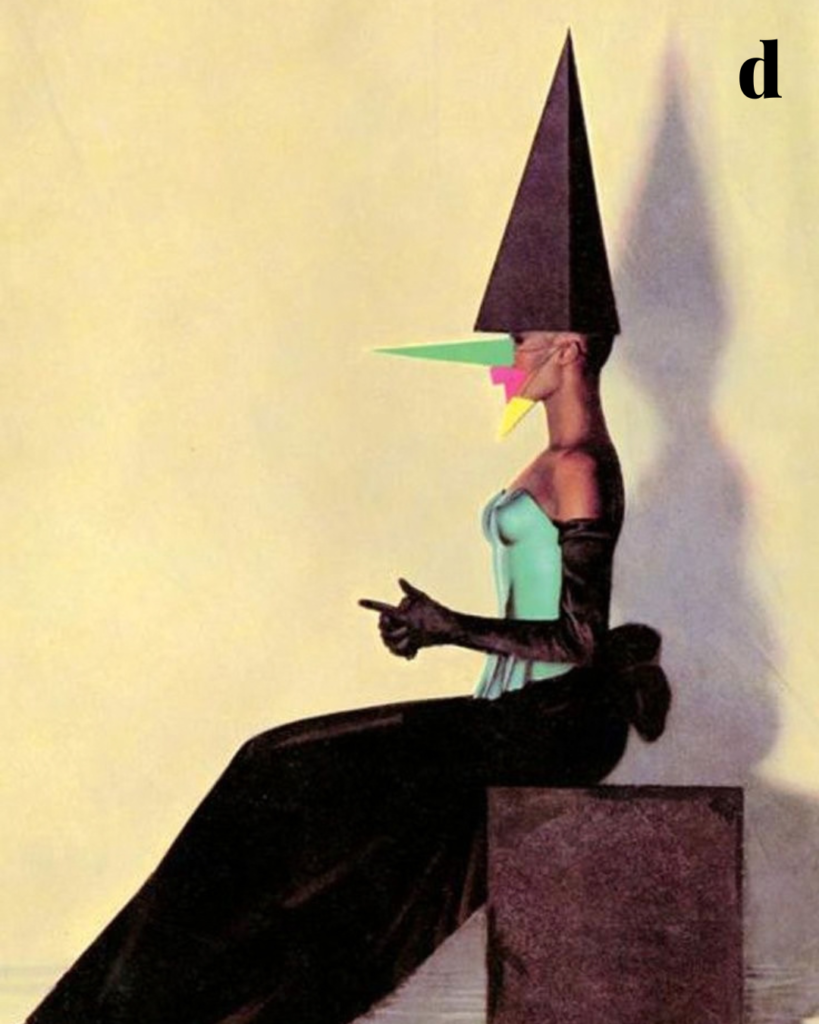
Calling Grace Jones a fashion icon is accurate.
But it is also not enough.
She is a cultural figure whose influence crosses fashion, music, cinema, photography, nightlife and performance art.
Her importance lies not simply in what she wore, but in what she made possible.
She exhibited that a Black woman could be glamorous without being traditionally feminine.
That a woman could embrace masculine tailoring without surrendering sensuality.
That sexuality could coexist with intimidation.
That beauty could be strange.
That celebrity could be mysterious.
That fashion could be theatrical.
And that personal identity could be continually reinvented.
The Future Still Looks Like Grace Jones
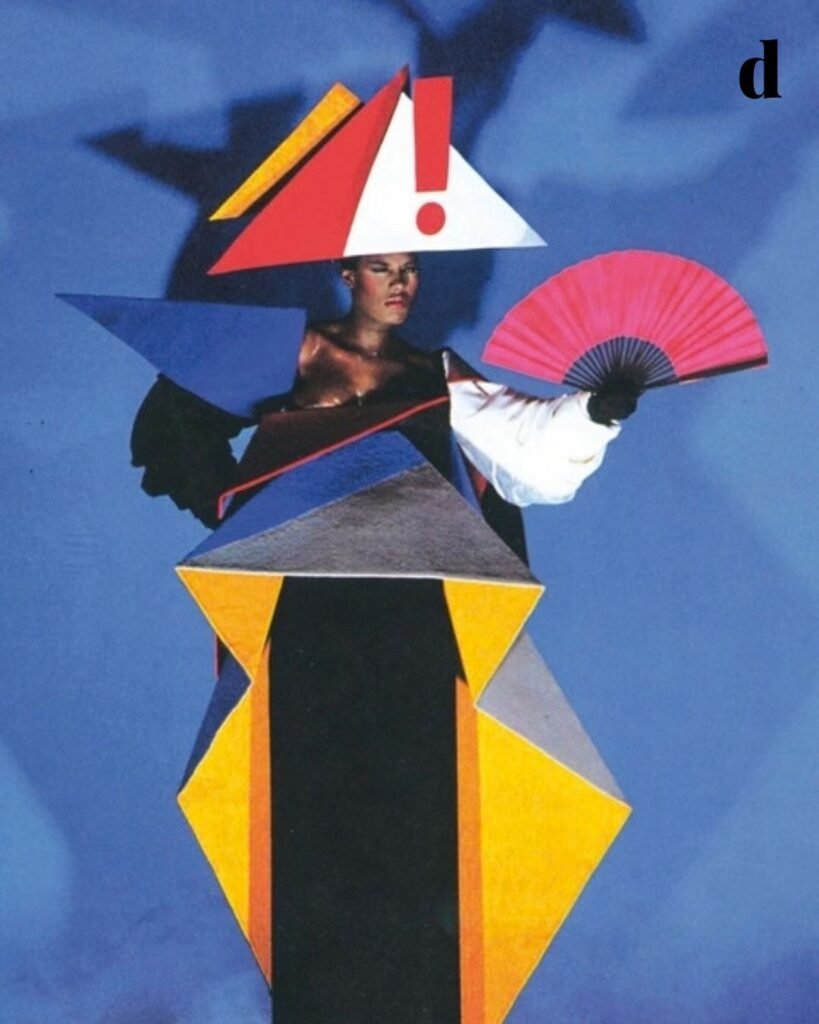
Perhaps the most remarkable thing about Grace Jones is that she never seemed interested in looking up to date.
She wanted to look like something that had not happened yet.
That is why her most famous images remain so powerful.
They do not feel like yesterday.
They feel like a vision of tomorrow.
The flattop still looks futuristic.
The tailoring still looks powerful.
The bodysuits still look radical.
The exaggerated shoulders still feel relevant.
The gender fluidity still feels provocative.
The performances still feel theatrical.
And the mystery remains intact.
Grace Jones built a career around refusing easy definitions, and more than four decades later, the fashion world is still trying to understand the language she created.
From Jamaica to New York.
From Paris runways to Studio 54.
From disco to new wave.
From fashion photography to Hollywood.
From Jean-Paul Goude to Keith Haring.
From Nightclubbing to Renaissance.
Her career has never followed a straight line.
It has moved across cultures, disciplines and generations.
And perhaps that is the real lesson of Grace Jones.
You do not have to choose one version of yourself.
You can reinvent the silhouette.
Change the sound.
Change the language.
Change the rules.
And walk into the future before anyone else knows what it looks like.
Grace Jones did exactly that.
And fashion is still following her there.
Leave a Reply