By Omar Mansoor
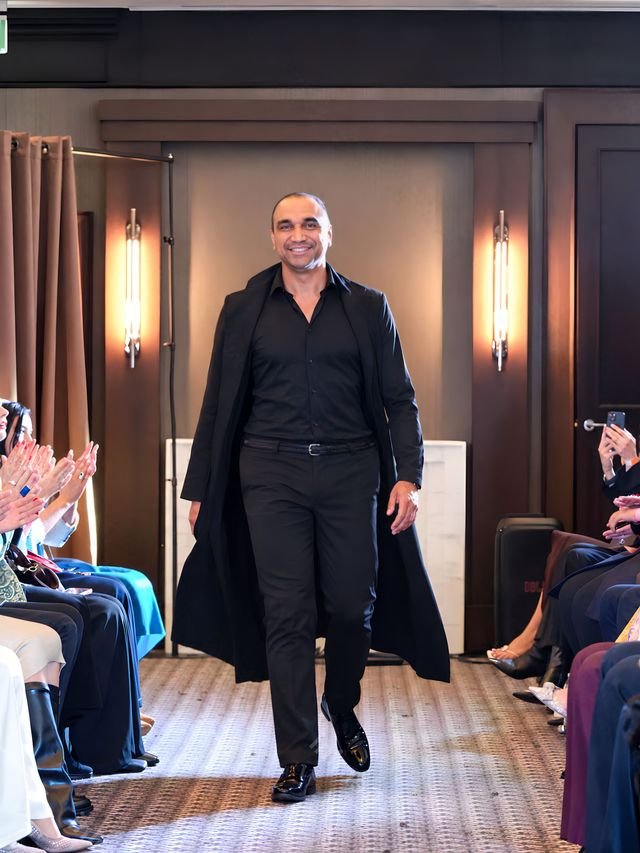
For Spring 2027, designer Omar Mansoor turns his attention to something surprisingly simple: a piece of cloth.
With “The Living Loom,” Mansoor brings the centuries-old tradition of Pakistani khaddar from Kamalia to the global fashion stage, showcasing a collection rooted in craftsmanship, cultural memory and the quiet beauty of handwoven fabric. Marking Mansoor’s 21st appearance at London Fashion Week, the collection places khaddar at the heart of a todays fashion story that travels from Pakistan to New York and London.
At the center of the collection is a material with a history of its own.
Khaddar is traditionally made from cotton and woven by hand on looms, giving the fabric its eye catching texture and character. Unlike perfectly uniform industrial textiles, handwoven khaddar carries subtle variations across its surface. These unevenness are not imperfections; they are evidence of the human hands, time and skill involved in creating it.
For Mansoor, that sense of humanity becomes a vital part of the Spring 2027 collection.
From Kamalia to London
The story of “The Living Loom” begins in Kamalia, a city in Pakistan known for its longstanding tradition of handwoven textiles. The knowledge of making khaddar has been passed down through generations of artisans, connecting present day fashion to a craft tradition that existed long before the modern fashion system.
Mansoor brings this heritage into a modern collection without taking away the identity of the material.
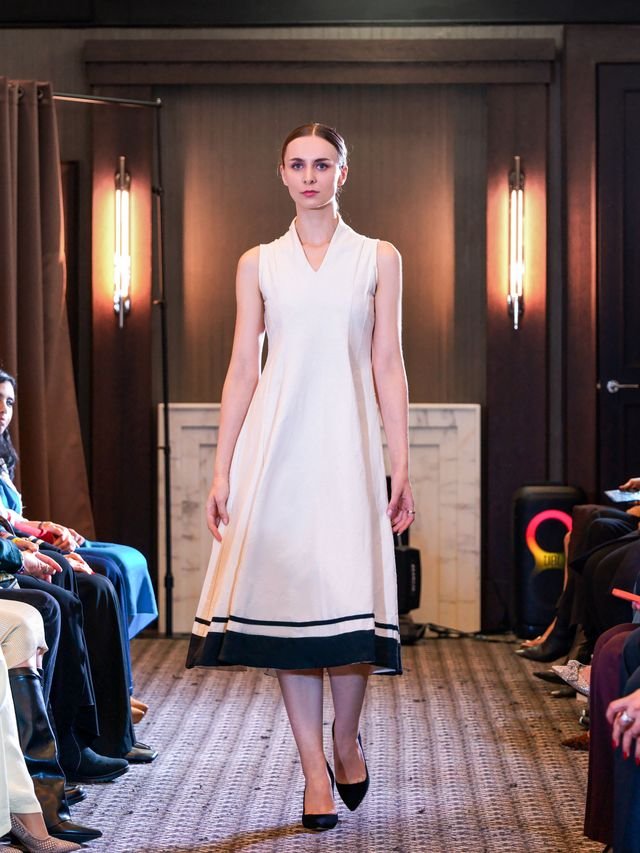
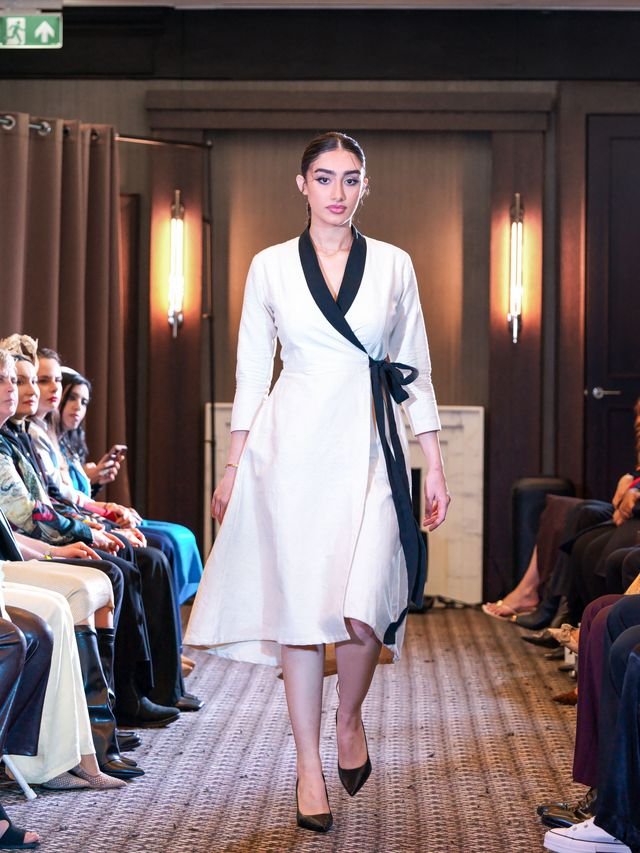
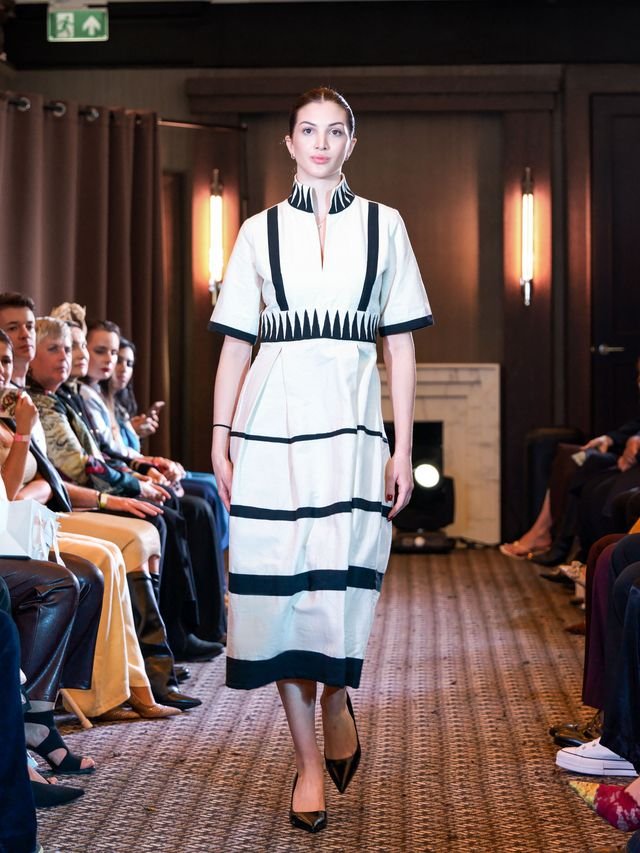
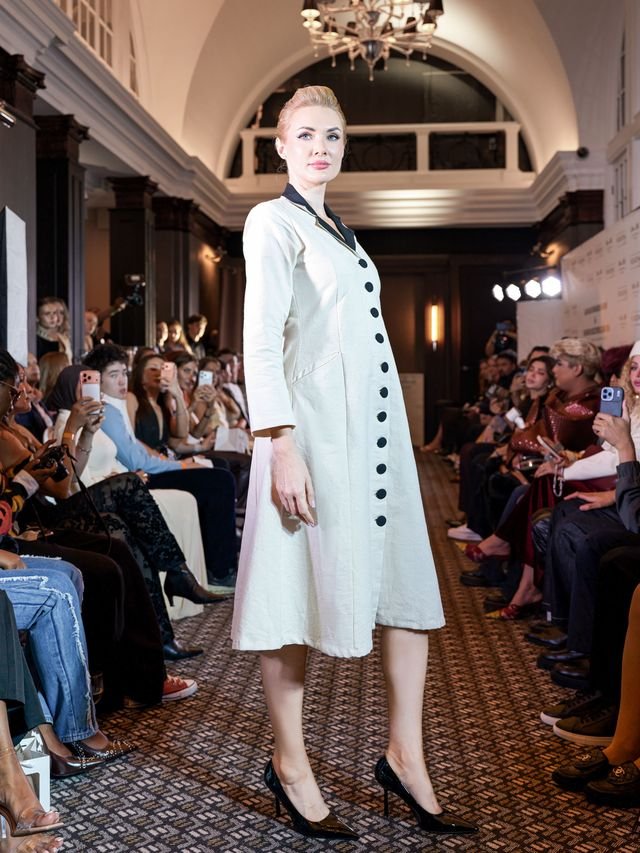
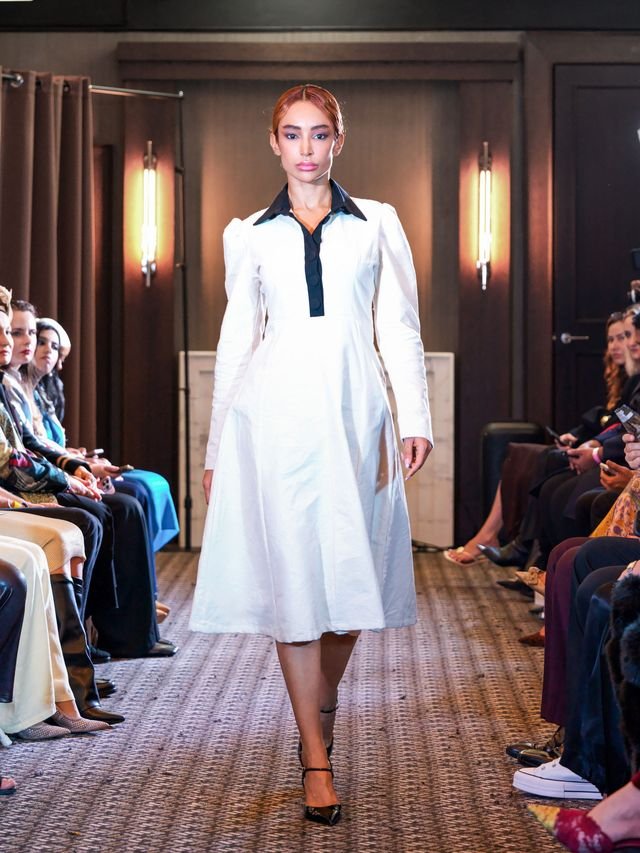
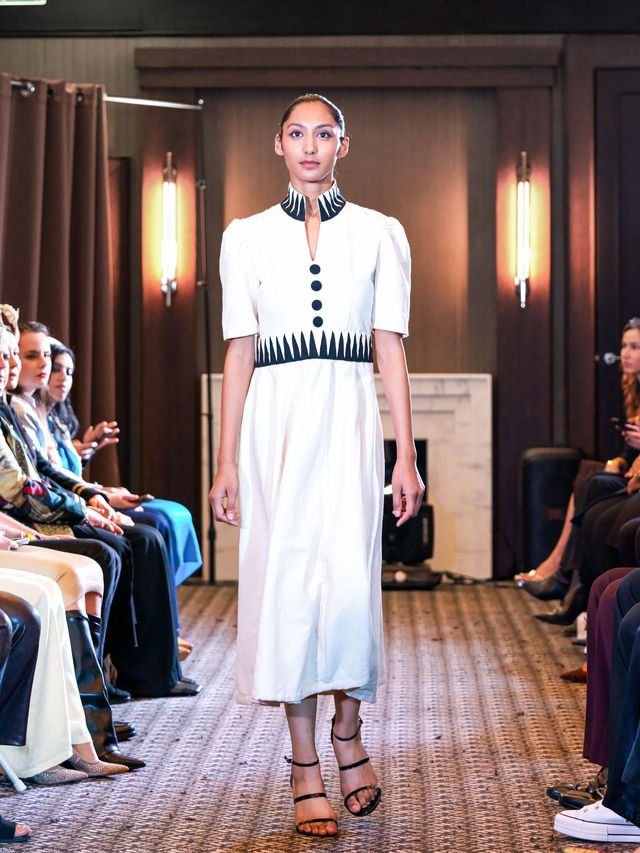
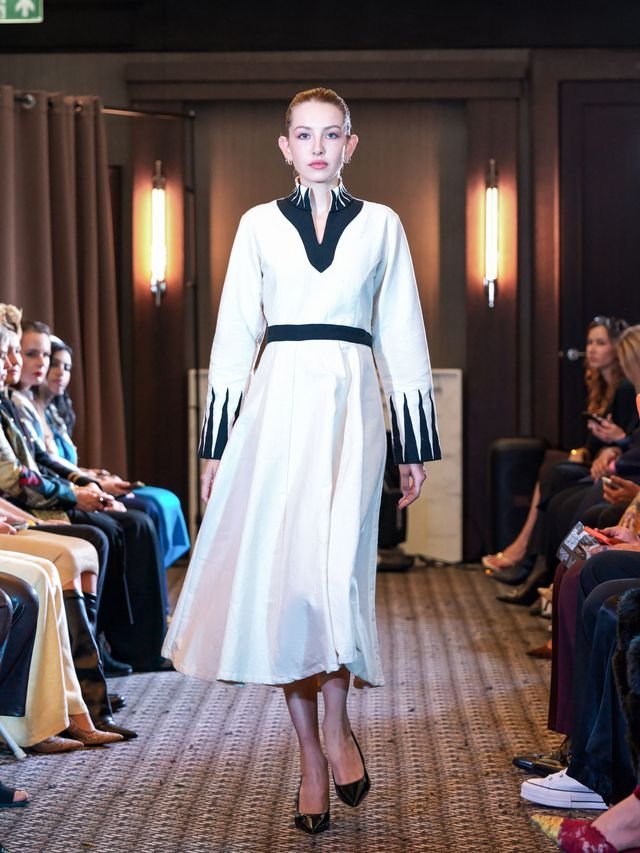
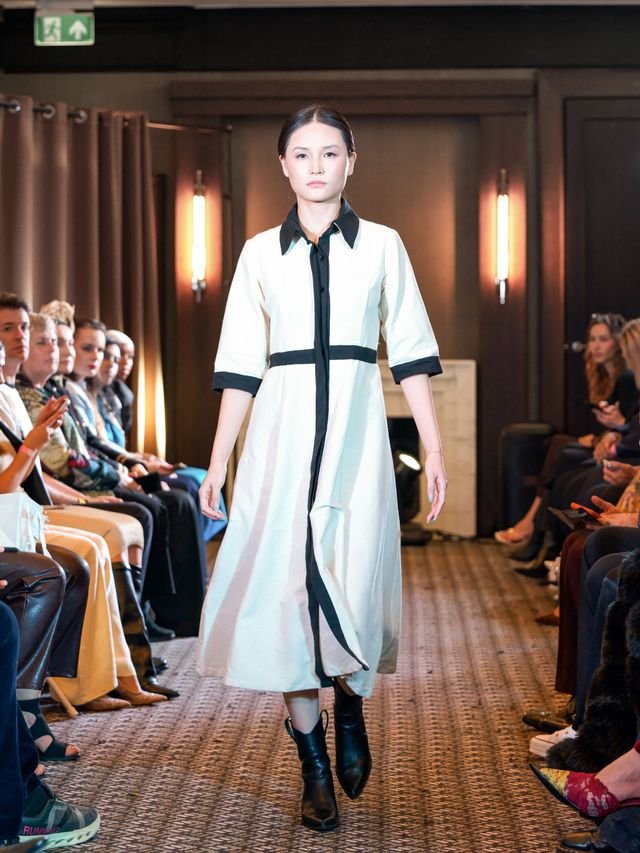
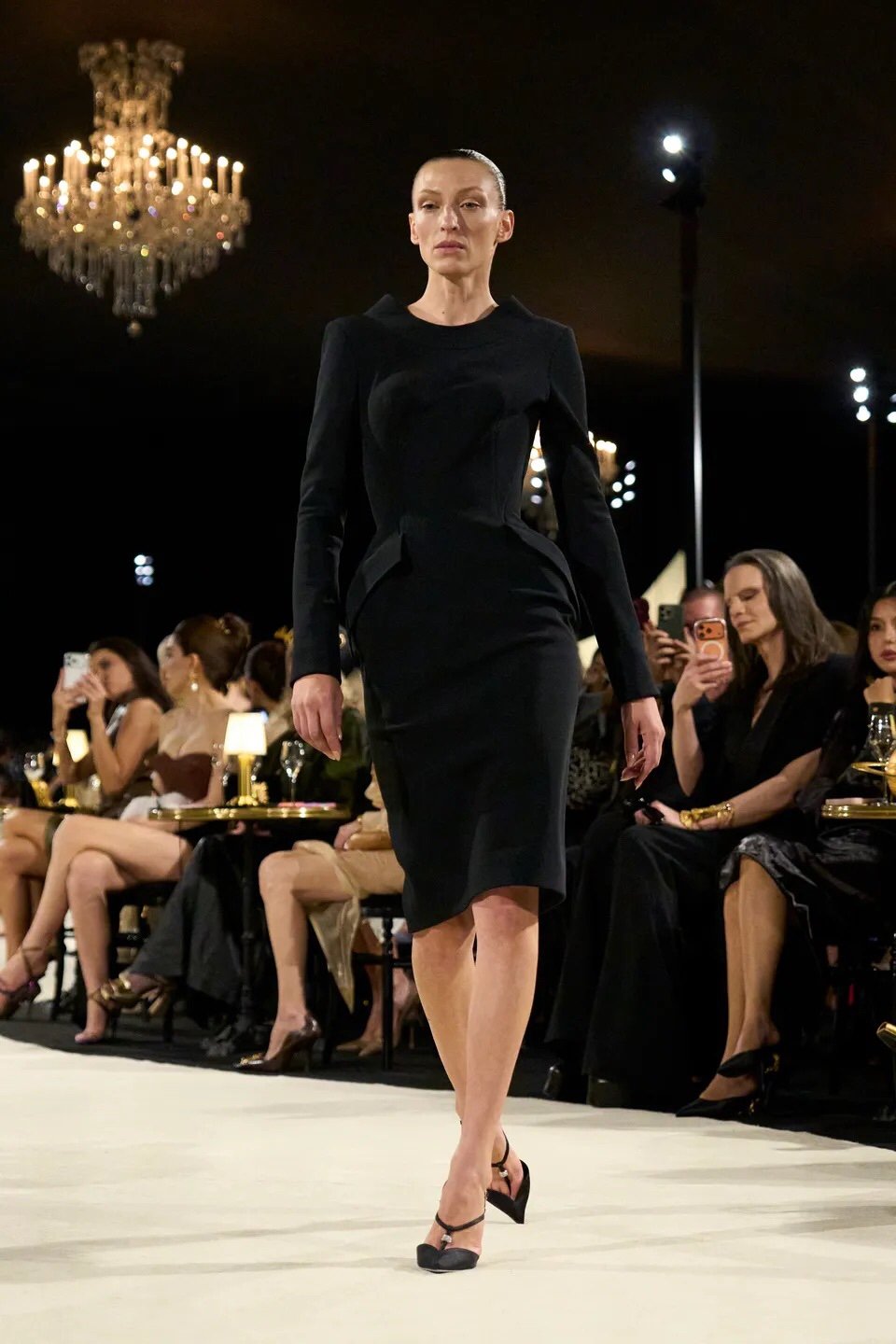
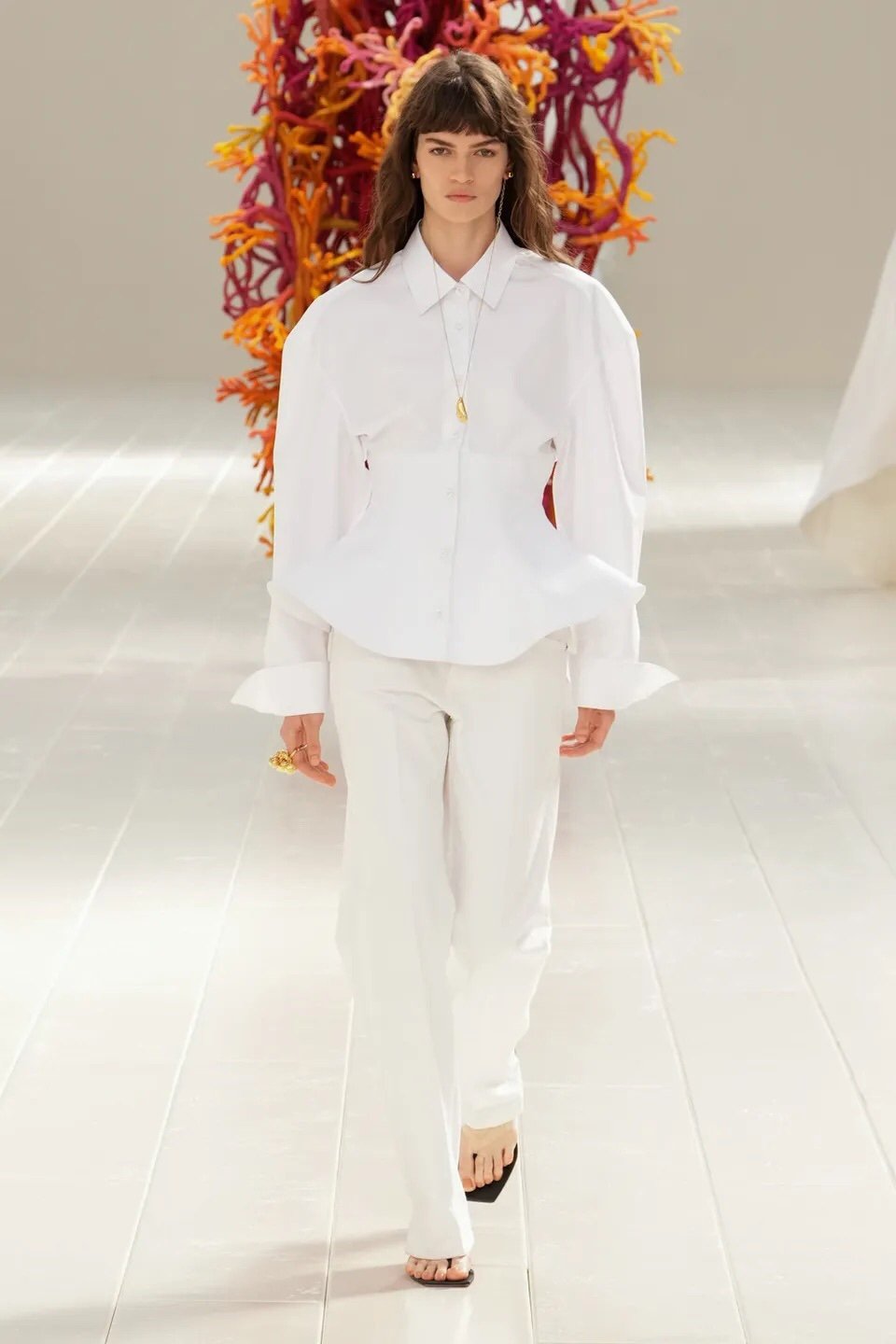
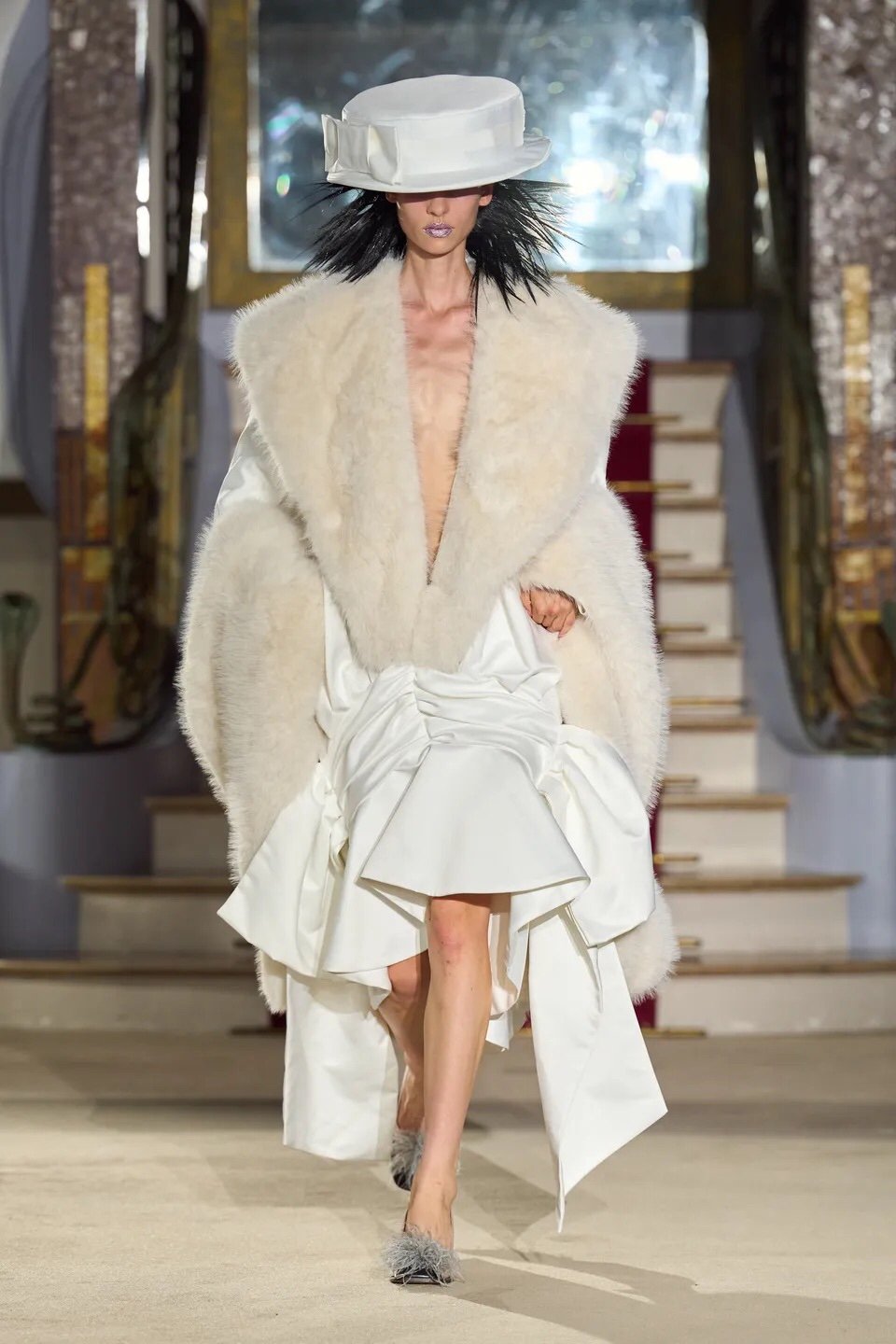
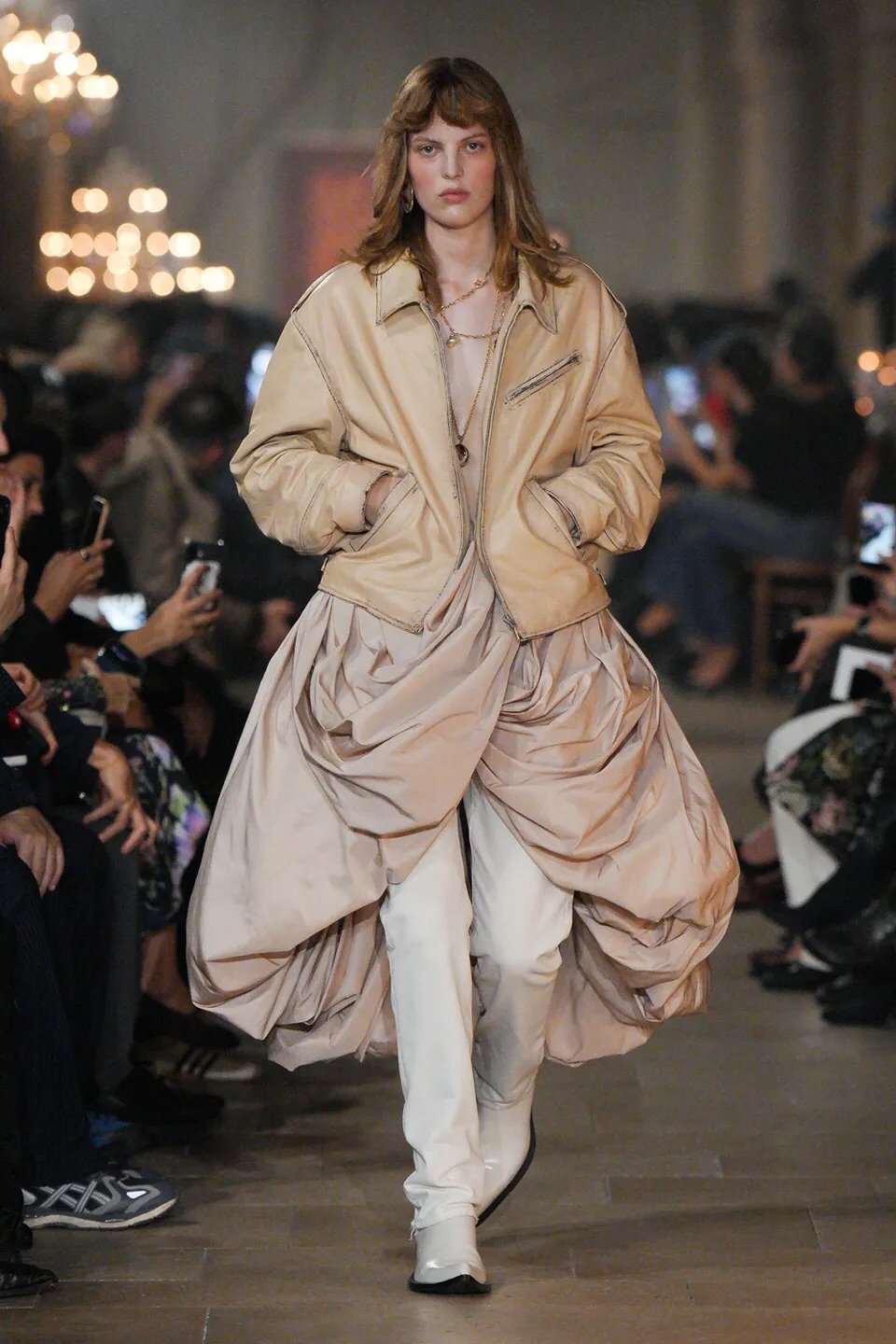
The result is a wardrobe that allows khaddar to remain the centerpiece. Rather than overwhelming the textile with excessive decoration, the collection explores its texture, structure and natural presence through polished silhouettes.
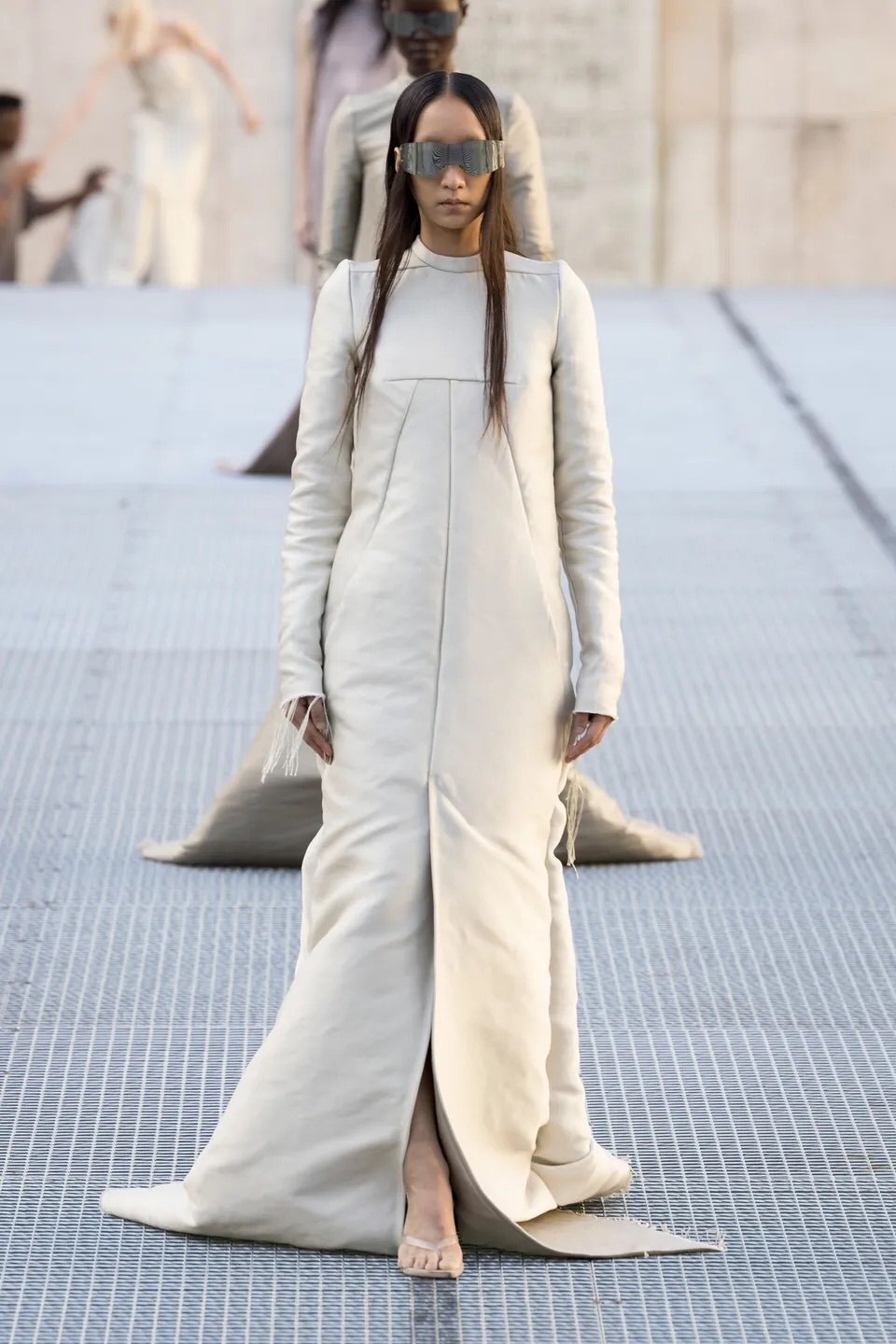
Jackets, coat dresses, A-line dresses and elongated gowns form the foundation of the collection. The silhouettes provide a modern framework for a fabric deeply connected to Pakistani history and craft.
The palette is equally restrained.
Ivory and black create a clean visual language that allows the texture of the khaddar to take center stage. The transparency of the colors also reinforces the collection’s focus on material, craftsmanship and form.
The Beauty of the Handmade
There is something naturally intimate about a handwoven fabric.
Every movement of the loom contributes to the final textile, leaving behind subtle differences that distinguish one piece from another. In an era dominated by mass production and increasingly automated manufacturing, these characteristics give khaddar a particular emotional quality.
Mansoor embraces that quality rather than attempting to conceal it.
“The Living Loom” suggests that clothing can carry the memory of the person who made it. The fabric becomes more than a surface for a garment; it becomes part of the garment’s story.
This approach also places the artisans of Kamalia within the creative narrative. Their work is not treated simply as a production process taking place behind the scenes. Instead, their knowledge and craftsmanship are fundamental to the collection itself.
The loom, therefore, becomes an important symbol.
Before the runway, before the finished silhouette and before the designer’s vision reaches London, there is the loom and the artisan who operates it.
Ancient Inspiration, Modern Silhouettes
While the collection is deeply connected to Pakistani textile heritage, Mansoor does not approach history as something that is frozen in time.
Some of the collection’s forms draw inspiration from the uncomplicated shapes and silhouettes connected with Indus Valley pottery and other ancient objects. Their transparency becomes a starting point for todays fashion.
That connection between ancient form and modern tailoring gives the collection an understated sense of consistency.
The garments do not need to reproduce historical clothing. Instead, they translate the visual language of the past into a modern wardrobe.
An A-line dress, for example, can become a conversation between modern femininity and ancient geometry. A coat dress can provide a modern structure for a textile whose production methods have existed for generations.
It is this meeting of old and new that gives “The Living Loom” its identity.
Fashion as Cultural Storytelling
Beyond its silhouettes and textiles, Mansoor’s Spring 2027 collection holds a broader cultural message.
The journey of the khaddar begins in Kamalia and moves through global fashion capitals, connecting local craftsmanship with audiences in New York and London. Along the way, the fabric carries fragments of Pakistani history and culture with it.
For Mansoor, fashion becomes a way of creating cultural connections.
The collection highlights the possibilities of Pakistani craftsmanship while giving the artisans behind the material greater exposure within a global fashion conversation. It also reflects the historical and cultural connections between Pakistan and Britain, presenting fashion as one possible form of cultural soft power.
This is deeply meaningful at a time when conversations around fashion continuously extend beyond seasonal trends and commercial collections. Designers are looking at where materials come from, who makes them and what cultural stories are rooted within them.
“The Living Loom” places those questions directly inside the clothes.
Keeping Craft Alive
The importance of the collection ultimately extends beyond the runway.
By working with handwoven khaddar and drawing attention to the artisans who produce it, Mansoor’s project showcase the value of keeping alive traditional craft skills. These skills depend on knowledge that is passed from one generation to another, and their survival is closely connected to continued demand and awareness.
The collection therefore becomes a meeting point between fashion and preservation.
Organic cotton and handwoven textiles form the foundation of the work, while the emphasis on artisans reinforces the idea that longevity can also involve protecting cultural knowledge and supporting the communities responsible for keeping traditional techniques alive.
In this context, longevity is not presented simply as a trend. It becomes part of a larger conversation about people, materials, history and continuity.
A Pakistani Story on the Global Fashion Stage
Omar Mansoor’s “The Living Loom” arrives at London Fashion Week with a clear sense of place.
Its story does not begin in London.
It begins in Kamalia, with cotton, a loom and generations of collected knowledge. From there, it travels through the hands of artisans before becoming part of a todays fashion collection presented to a global audience.
That journey is perhaps the collection’s most powerful idea.
A piece of cloth can contain much more than its physical properties. It can carry geography, memory, labor and identity. When elevated into a modern garment, those elements do not necessarily disappear. They can become part of the way the garment communicates.
For Mansoor, khaddar provides precisely that opportunity.
The collection showcases how Pakistani craft can exist within todays global fashion vocabulary without losing its cultural roots. It also offers a reminder that fashion’s global nature does not have to mean cultural regularity.
Instead, global fashion can create space for discrete traditions to be seen, interpreted and appreciated by new audiences.
The Story Begins With the Loom
With “The Living Loom,” Omar Mansoor presents Spring 2027 as a story of material, movement and memory.
The collection’s jackets, coat dresses, A-line silhouettes and long dresses provide a modern stage for khaddar, while the restrained ivory and black palette keeps attention on the fabric itself.
But under every finished garment is another story the story of the textile and the people who created it.
From the traditional looms of Kamalia to global runways of London, Mansoor’s collection traces a path between heritage and todays fashion.
It is a reminder that some of fashion’s most powerful stories do not begin with a garment.
They begin with the cloth.
And before the cloth, there is the loom.