By Duran Lantink
Jean Paul Gaultier has never been a house interested in playing it safe. For Spring 2027, that rebellious spirit returned to the Paris runway through the imaginative vision of Duran Lantink, who continues to reshape the house’s ready-to-wear language with exaggerated proportions, provocative silhouettes, playful tailoring and unmistakable Gaultier references.
Presented during Paris Fashion Week, the Spring 2027 collection demonstrated how Lantink is gradually establishing his own vocabulary at the legendary French house. Rather than simply recreating archival Jean Paul Gaultier signatures, he twisted, enlarged and reconstructed them for a contemporary wardrobe. The result was a collection that felt provocative without becoming inaccessible—sensual, humorous, sculptural and surprisingly wearable.
Duran Lantink’s New Jean Paul Gaultier
Lantink was appointed creative director of Jean Paul Gaultier in April 2025, taking responsibility for both couture and ready-to-wear. His approach has been particularly fascinating because he understands that Gaultier’s legacy is not simply about individual garments. It is about challenging conventions, playing with the body and turning familiar fashion codes into something unexpected.
For Spring 2027, that philosophy became clearer.
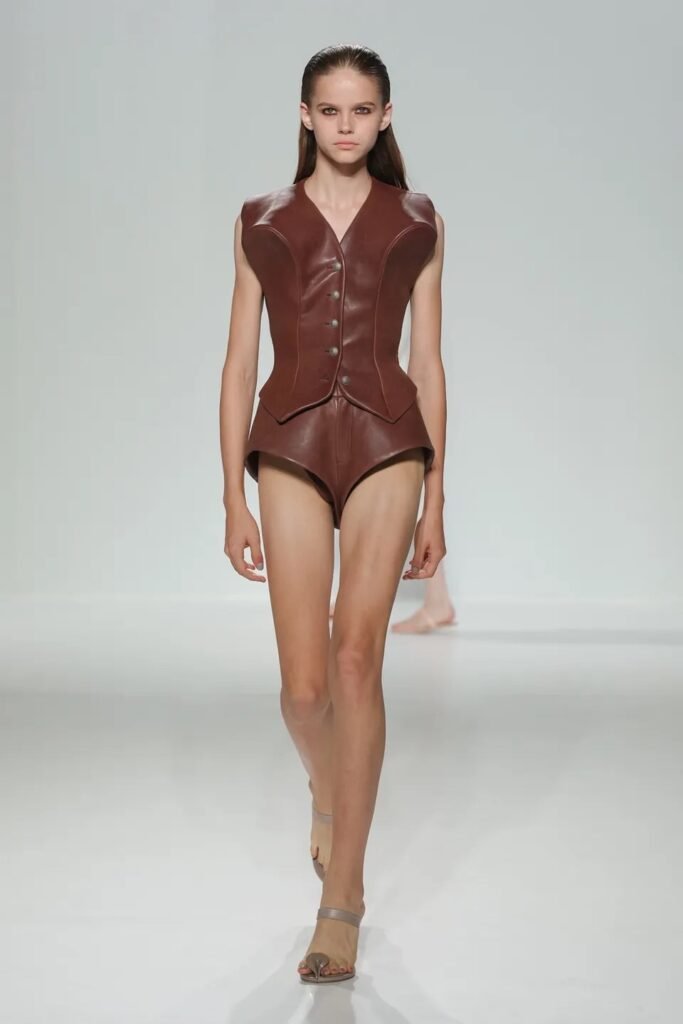
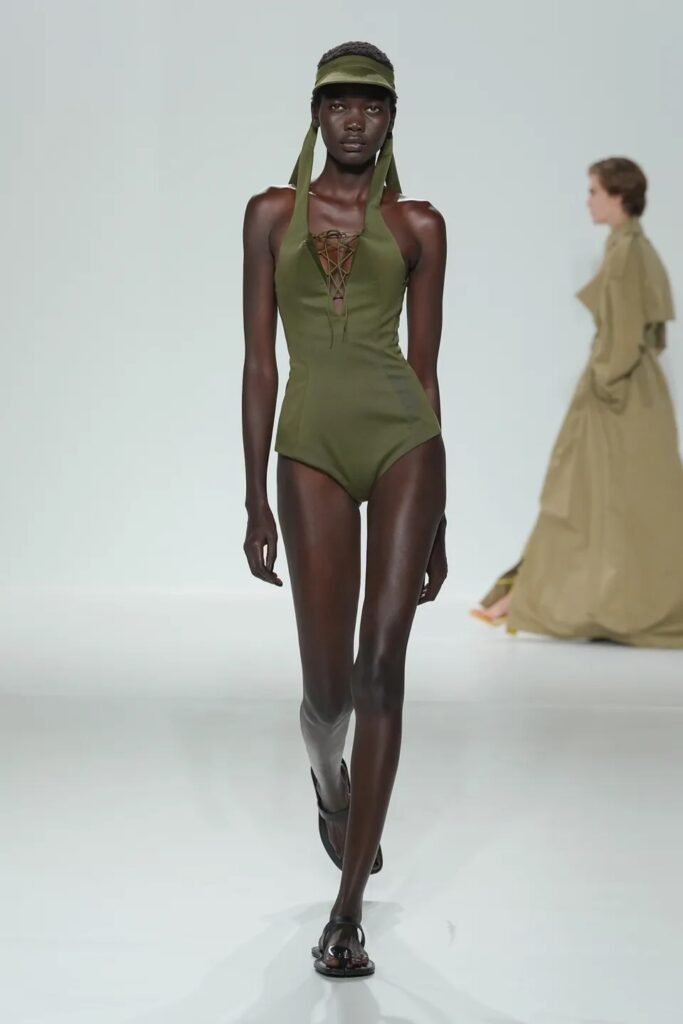
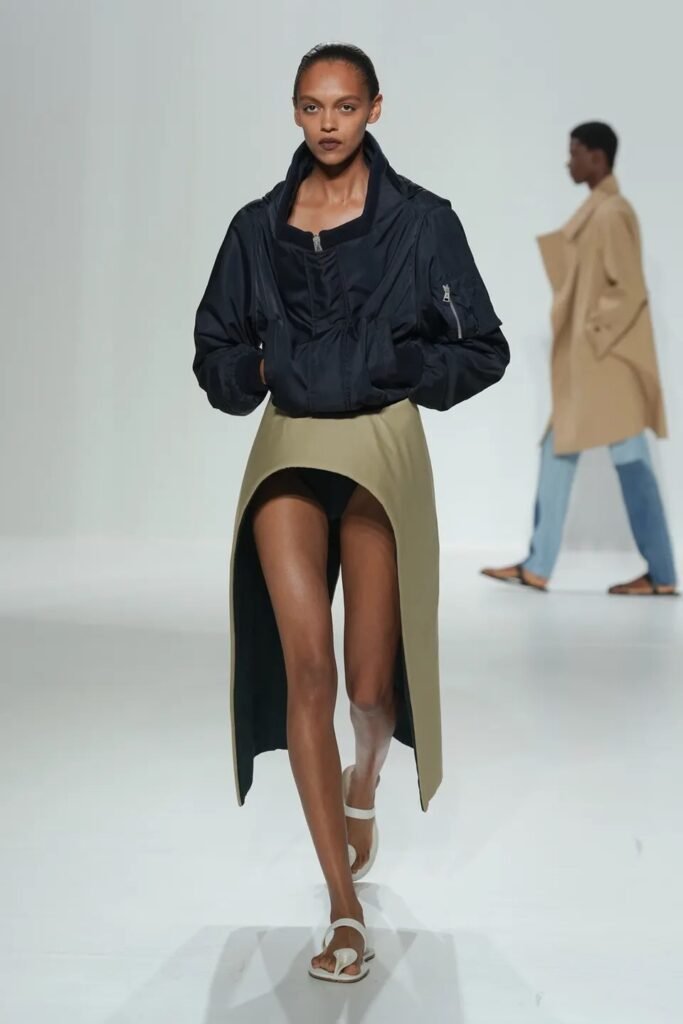
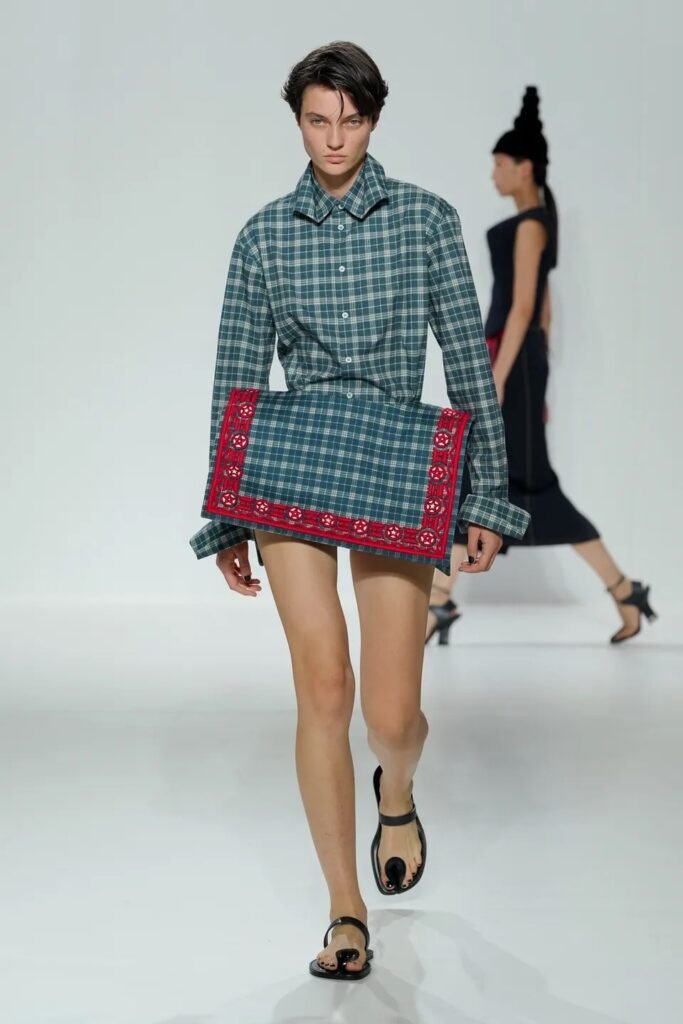
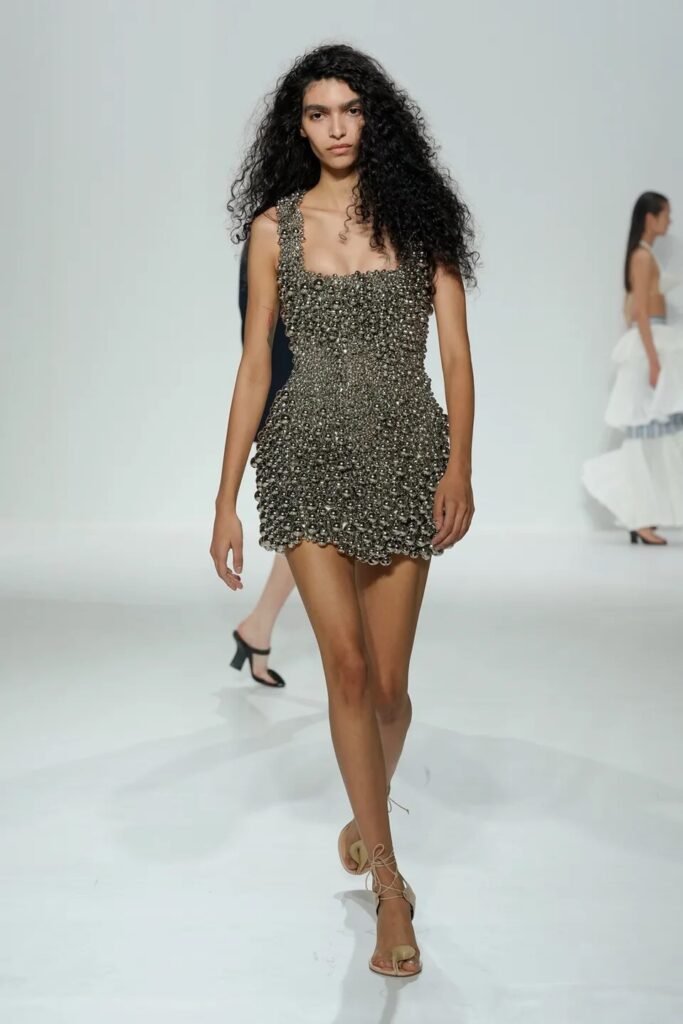
The collection moved between sharply constructed tailoring, exaggerated outerwear, denim, revealing dresses and sculptural tops. Familiar wardrobe pieces were pushed into strange new proportions, creating silhouettes that appeared simultaneously polished and rebellious.
It is precisely this tension that makes Lantink’s interpretation of Gaultier compelling.
The Cone Bra Returns
Few images are more closely associated with Jean Paul Gaultier than the cone bra. First introduced in the designer’s influential work during the 1980s and famously worn by Madonna during her 1990 Blond Ambition tour, the silhouette remains one of fashion’s most recognizable symbols of sexuality and empowerment.
For Spring 2027, Lantink revisited the shape without allowing it to dominate the collection.
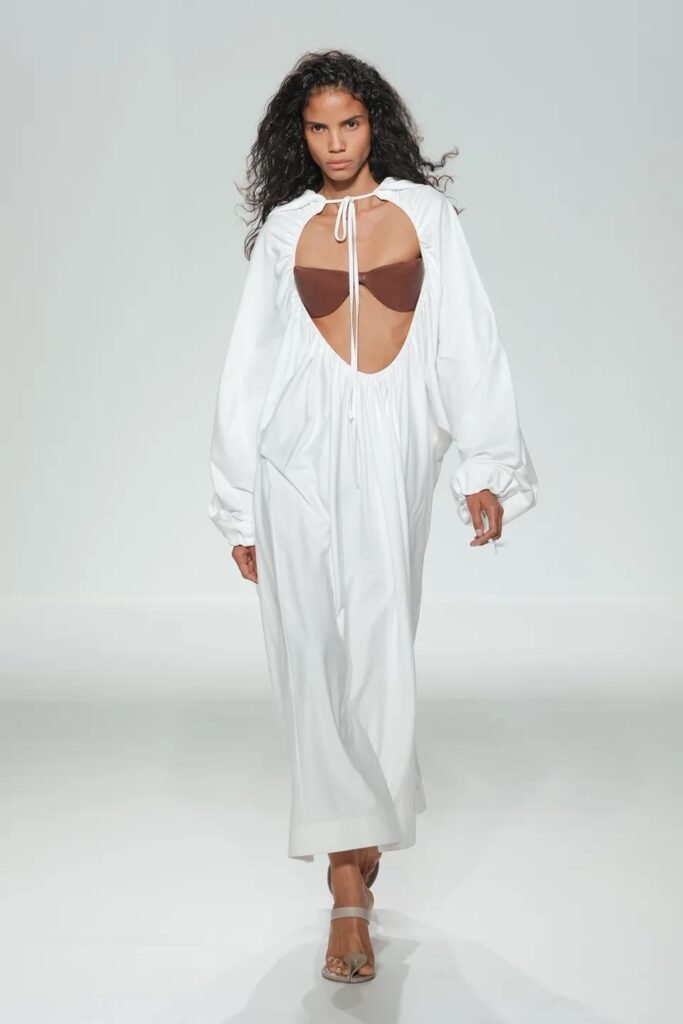
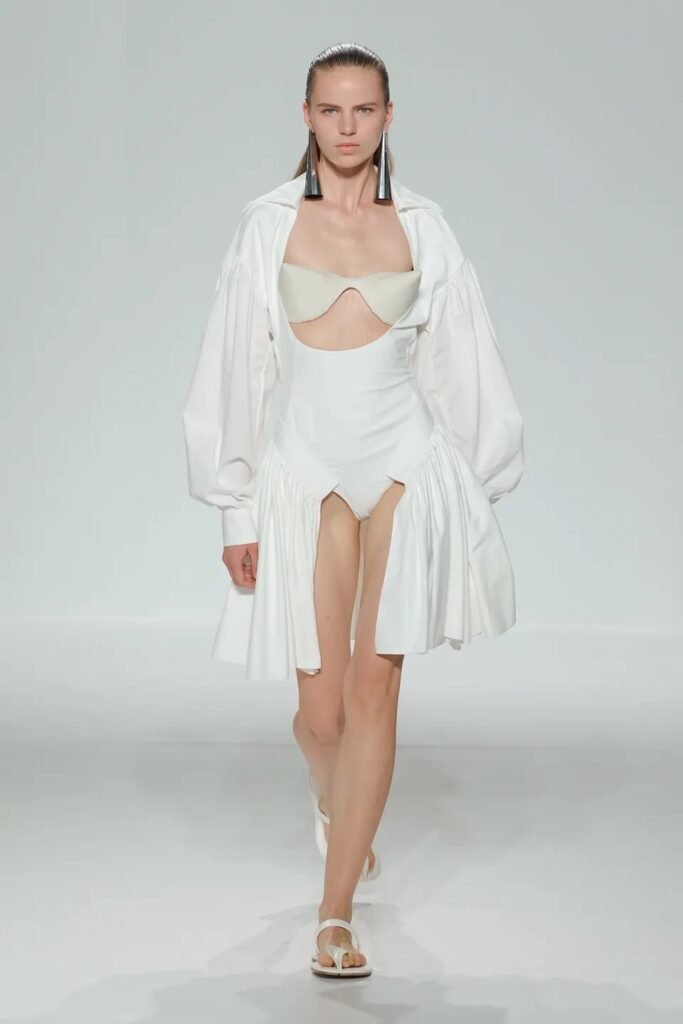
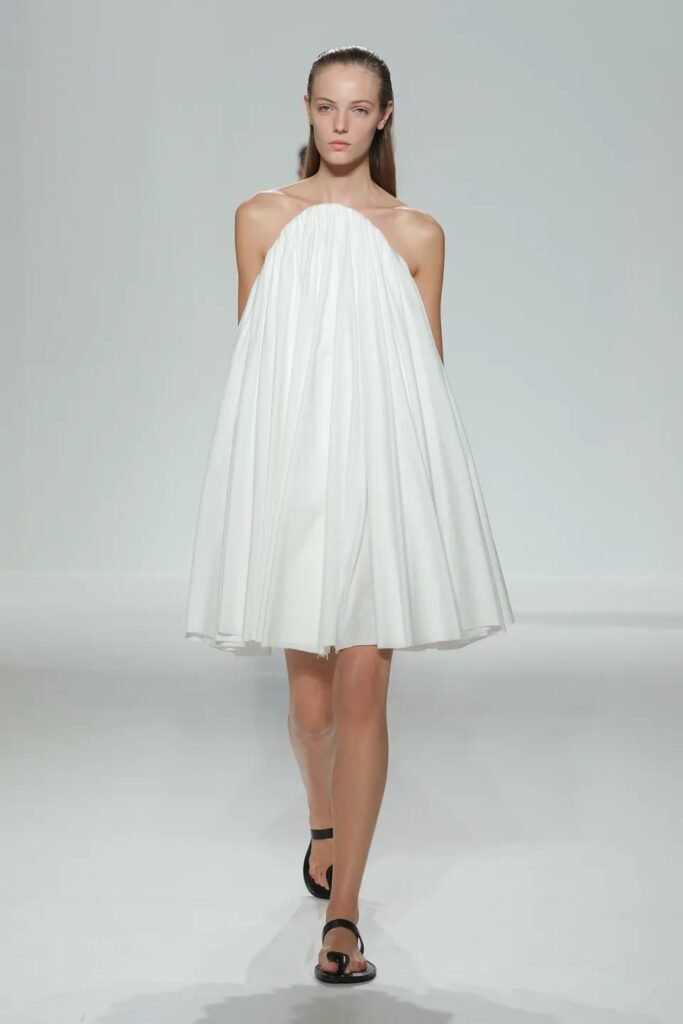
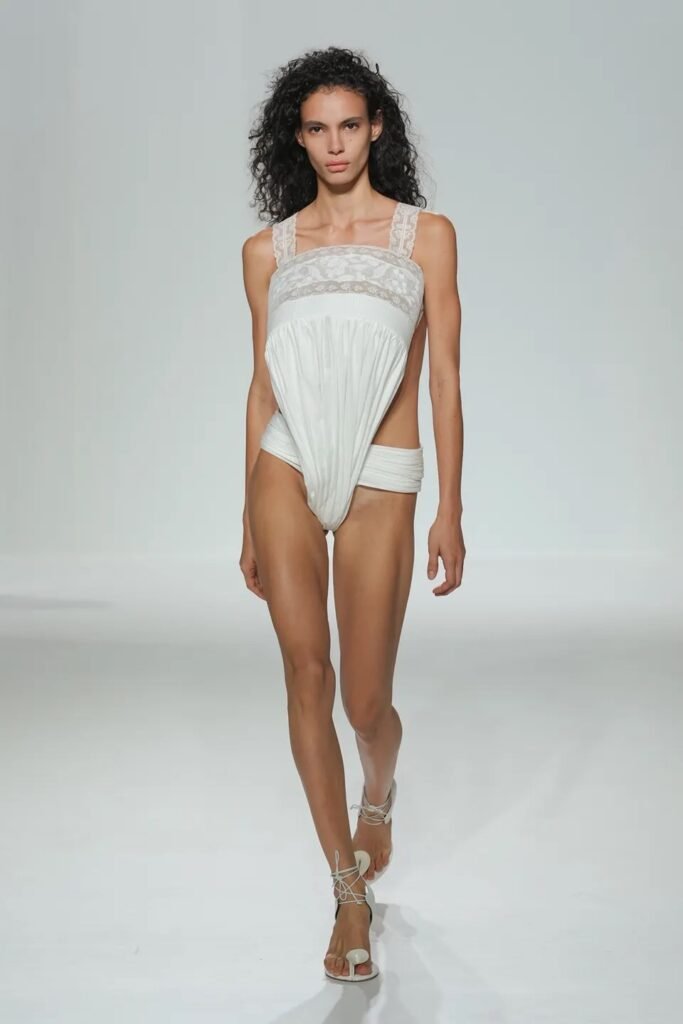
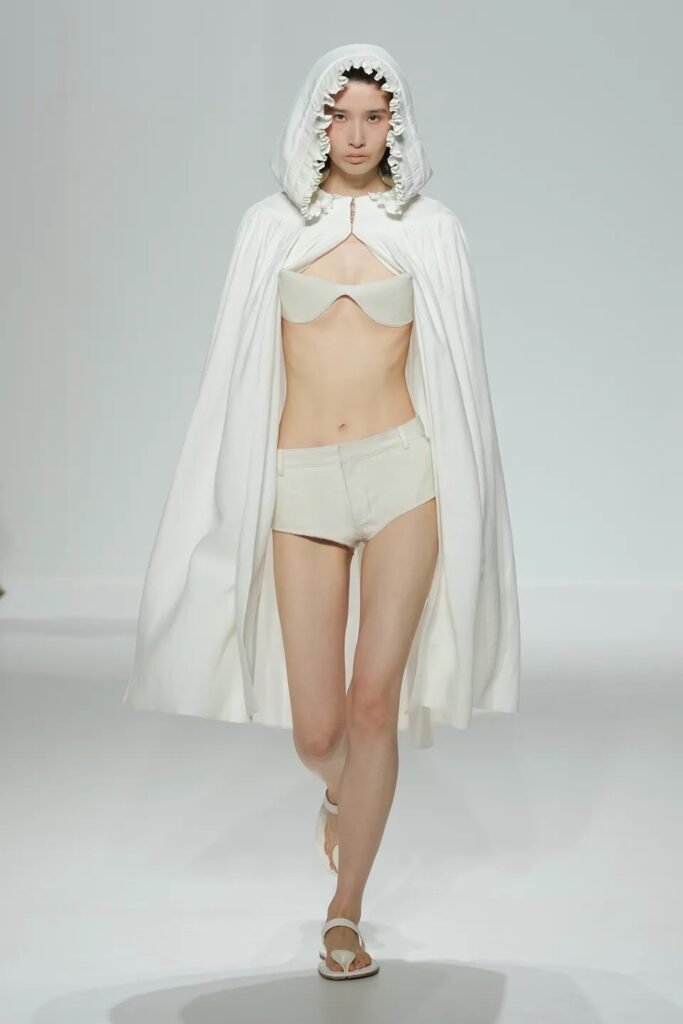
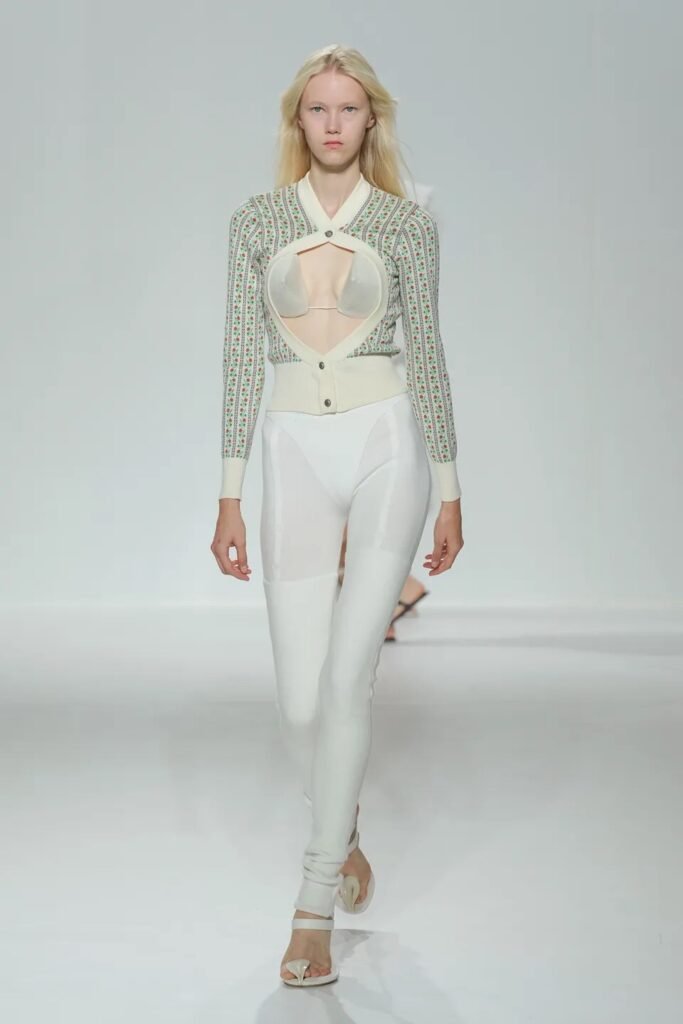
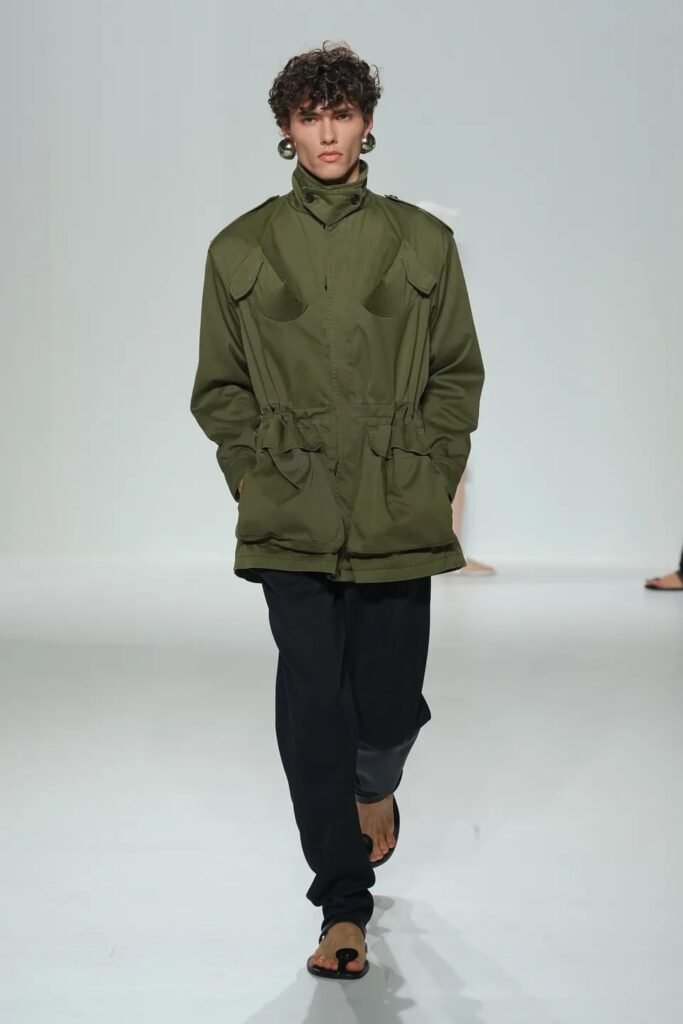
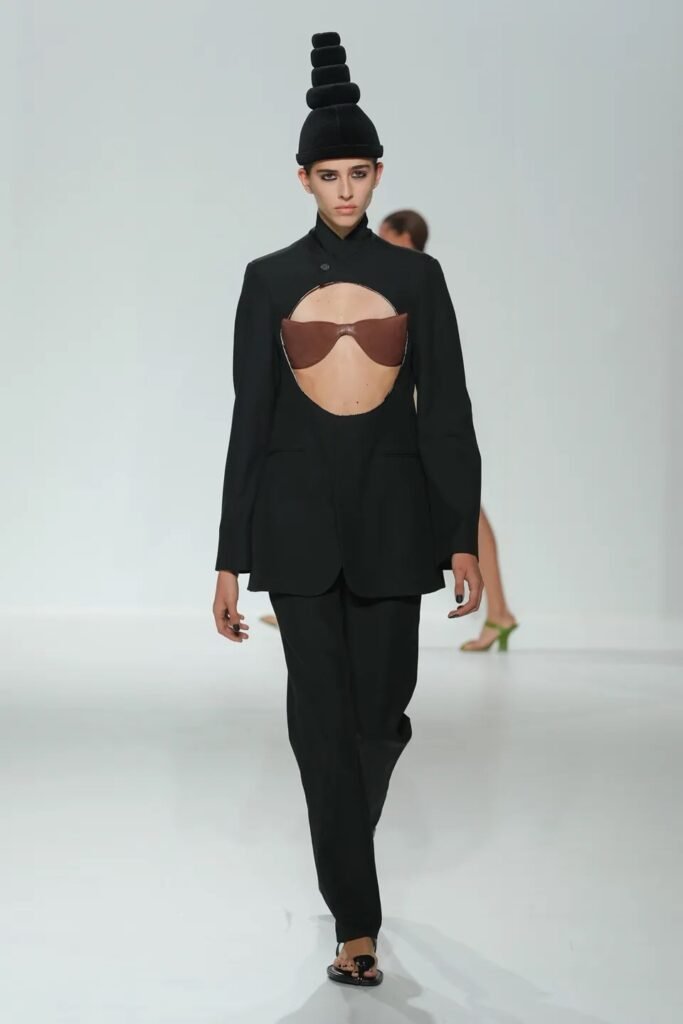
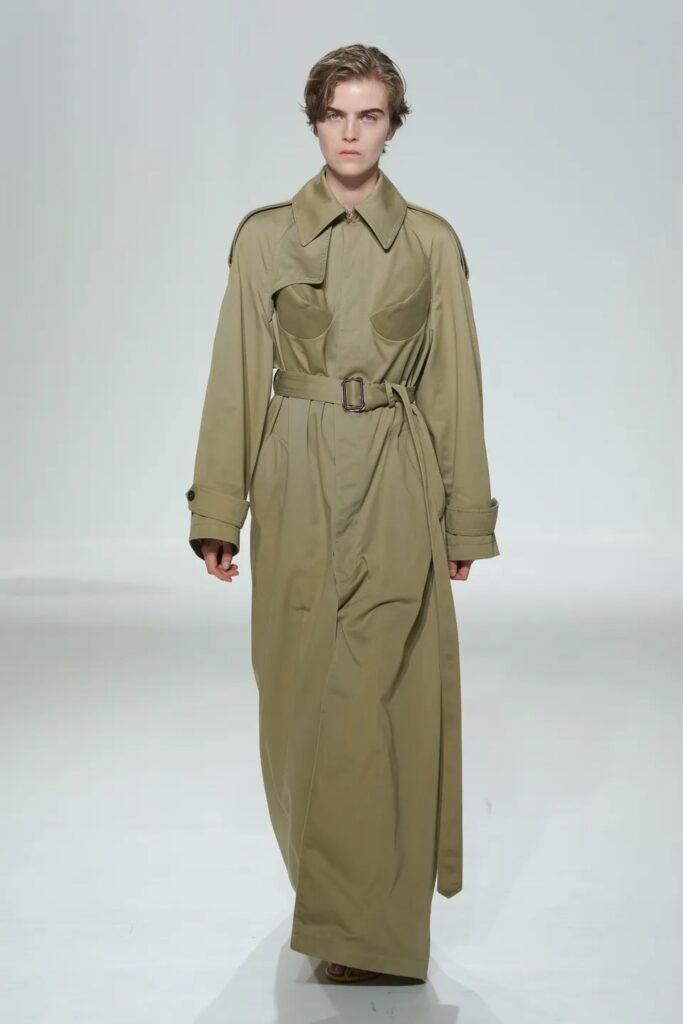
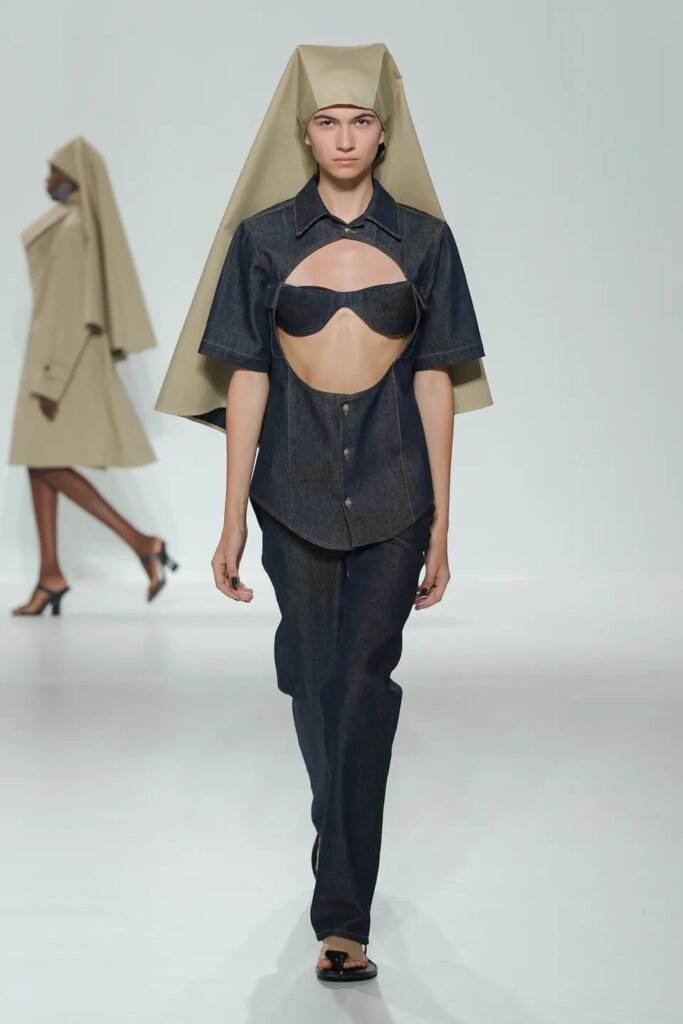
Instead, the cone construction appeared integrated into contemporary garments, including dresses, tops and cutout designs. In some looks, sculptural cups seemed to emerge from the body of the garment, transforming the familiar Gaultier reference into something architectural.
The effect was less about nostalgia and more about rediscovering what makes the silhouette so powerful: its ability to transform the body into an exaggerated fashion object.
Tailoring Gets Twisted
Tailoring became another major focus of the collection.
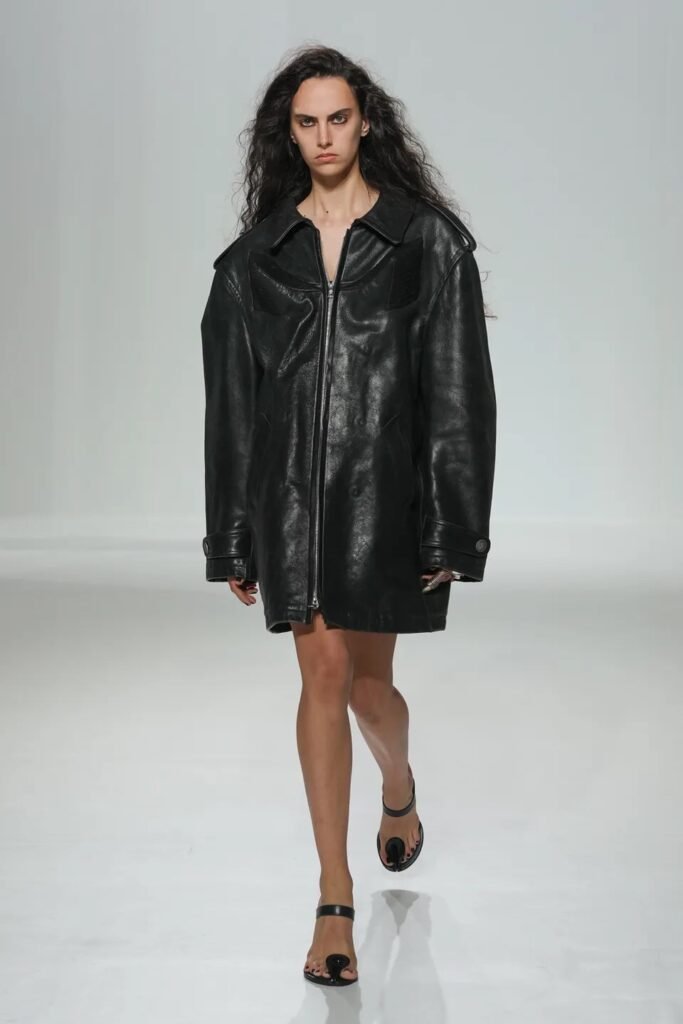
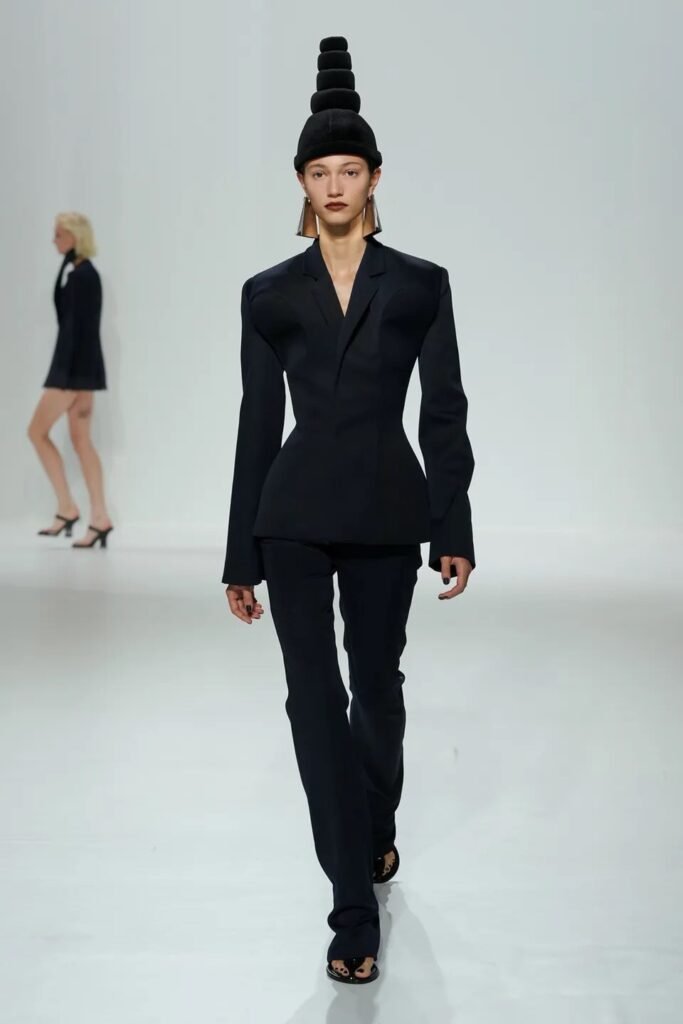
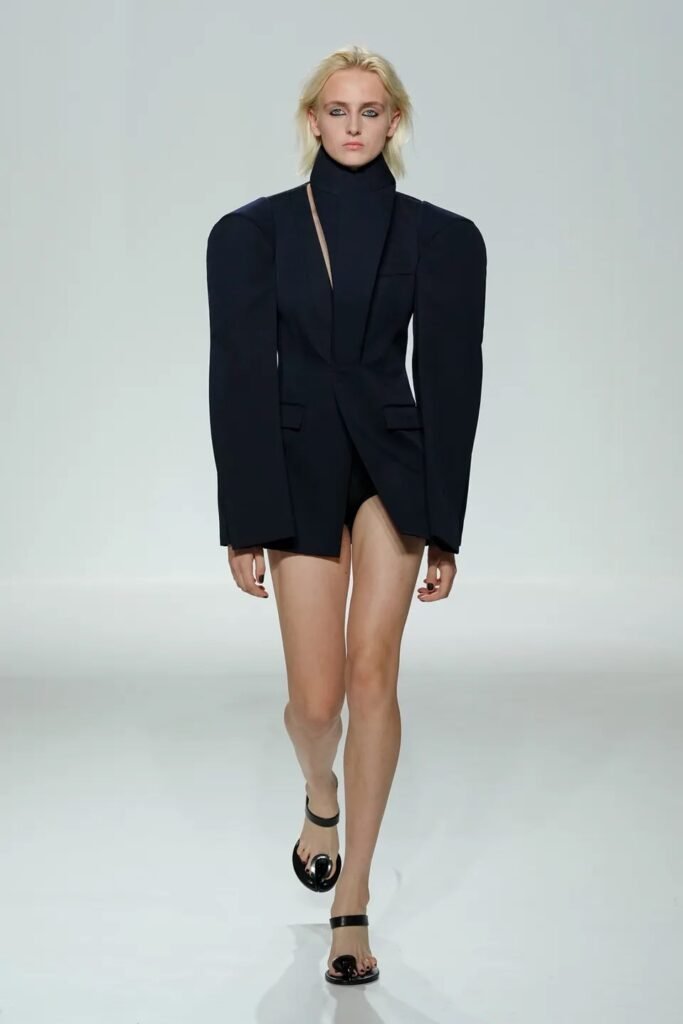
Lantink took conventional jackets, coats and suits and deliberately distorted their proportions. One of the opening looks featured a pristine white coatdress with exaggerated shoulders and a sculpted lapel that rose dramatically toward the neck. It immediately established the collection’s interest in turning classic garments into something slightly surreal.
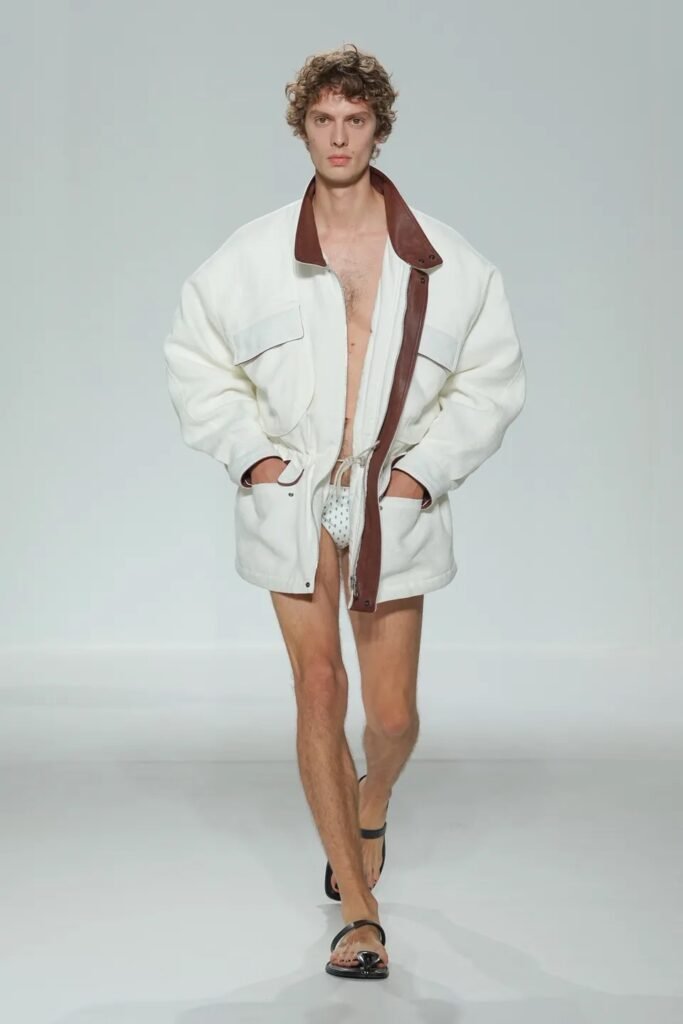
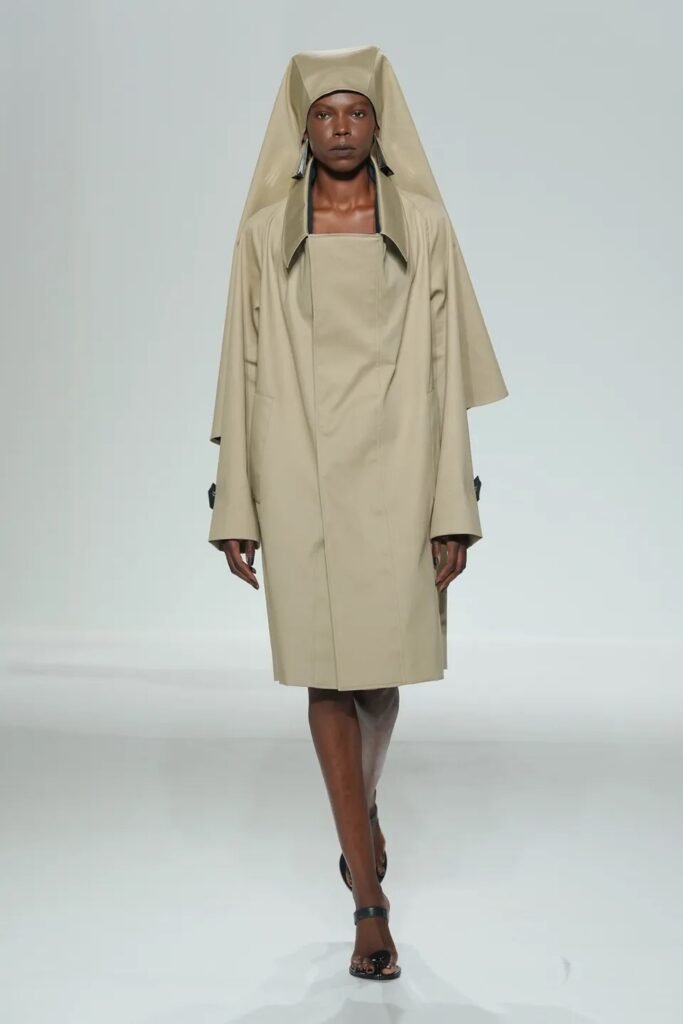
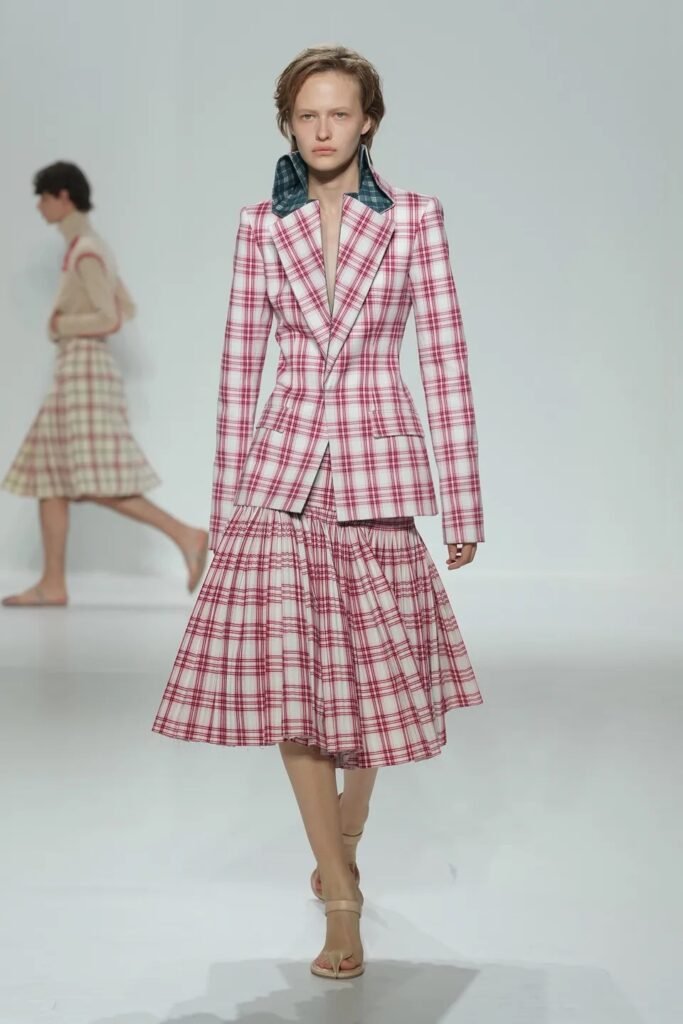
Elsewhere, hourglass-shaped blazers, sculptural trenches and reconstructed suit jackets emphasized the waist while exaggerating the shoulders.
This was traditional tailoring viewed through a Gaultier lens: elegant enough to be recognizable, but strange enough to demand a second look.
The collection also explored asymmetry and unexpected layering, creating garments that appeared to have been taken apart and reconstructed into entirely new forms.
Denim Becomes a Statement
Denim brought a more casual energy to the runway.
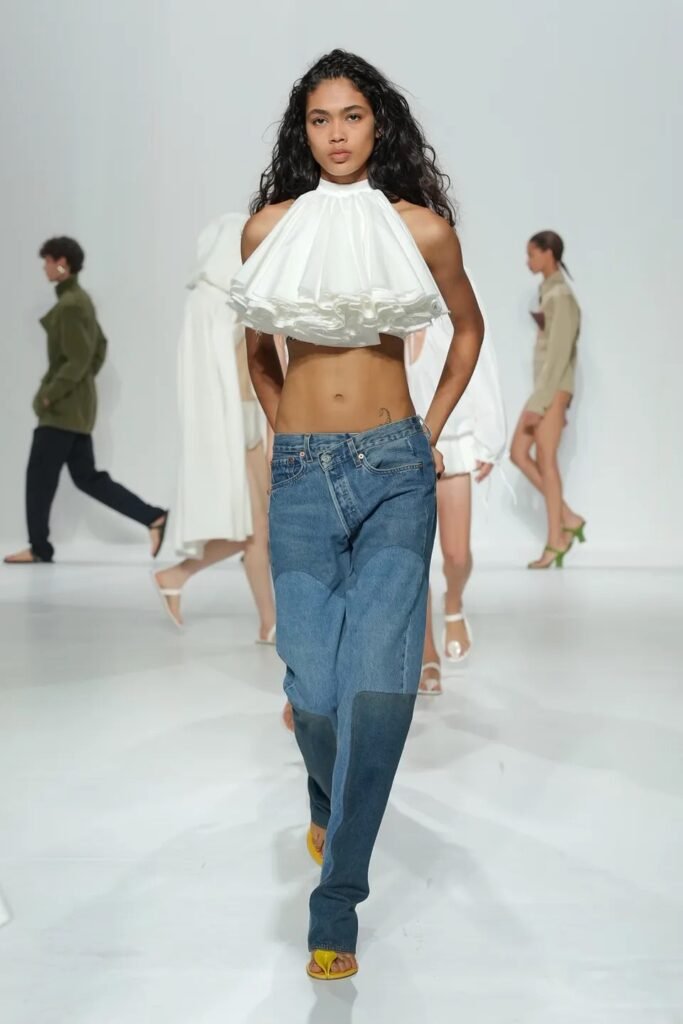
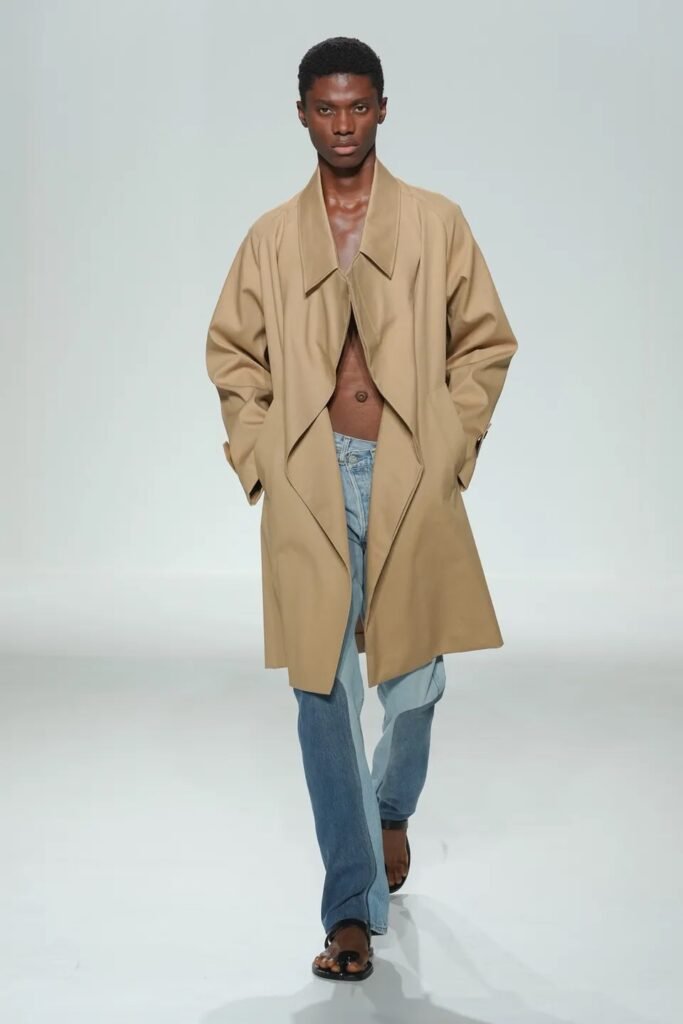
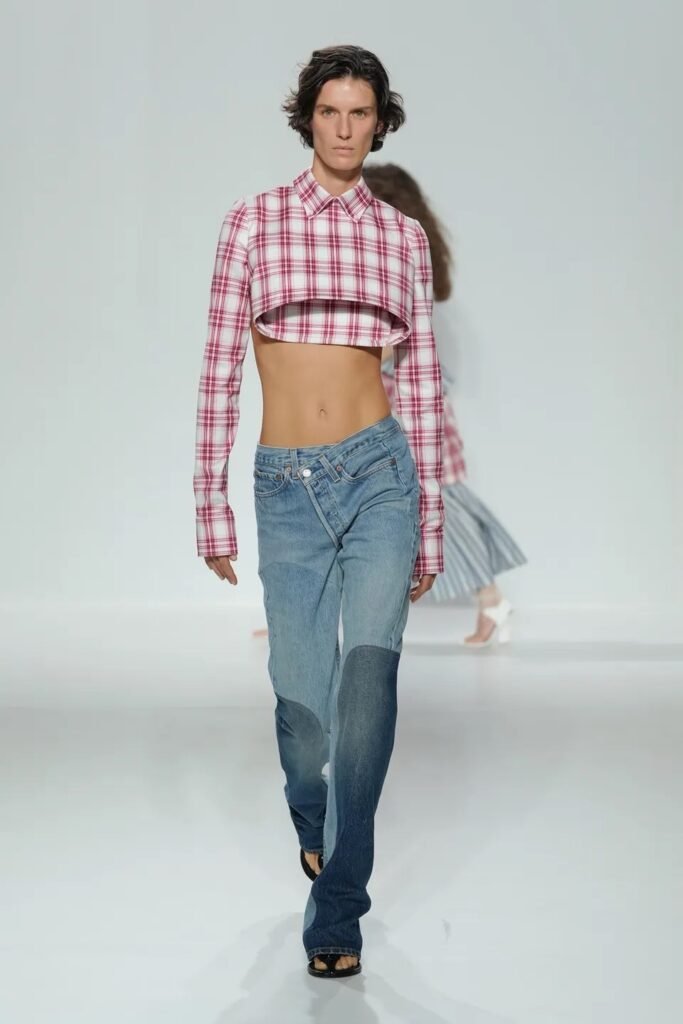
Slim, low-rise jeans appeared with unusual button placements and were styled against dramatic tops and sculptural footwear. The familiar jeans-and-top combination was transformed through exaggerated proportions, exposed skin and unexpected construction.
This contrast between everyday clothing and extreme fashion was particularly effective.
Rather than making every look feel like a costume, Lantink demonstrated how a simple wardrobe staple can become expressive through proportion and styling. A pair of jeans could suddenly feel provocative when paired with a sculptural halter top or an exaggerated silhouette.
That balance is important to the evolution of Gaultier’s ready-to-wear line.
Skin, Cutouts and Sensuality
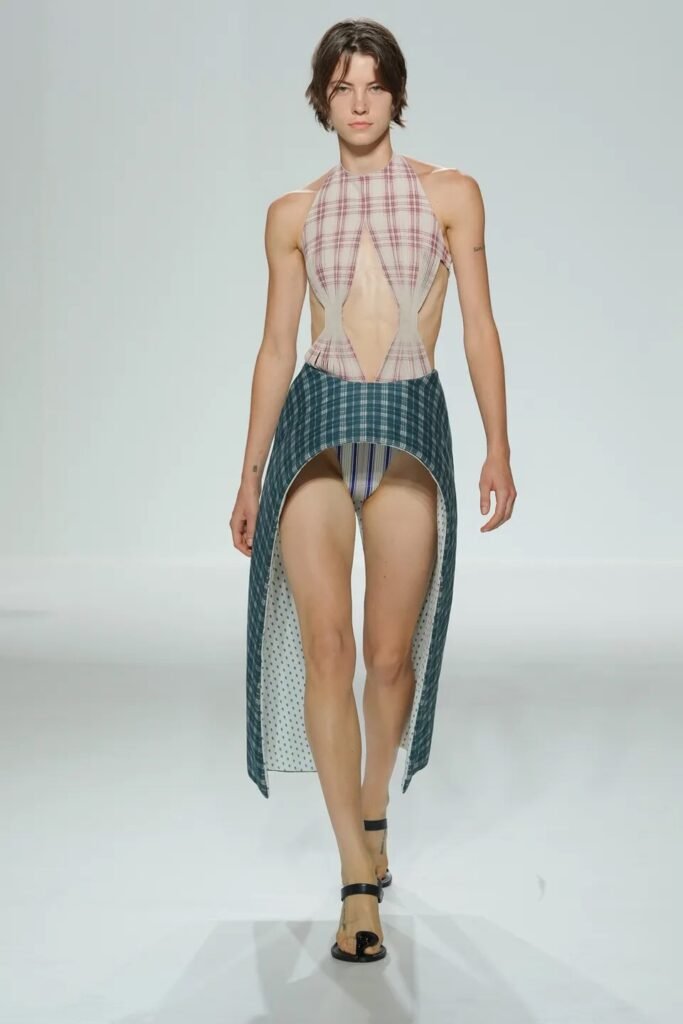
Sensuality remained at the center of the collection, but it was handled with a distinctly architectural approach.
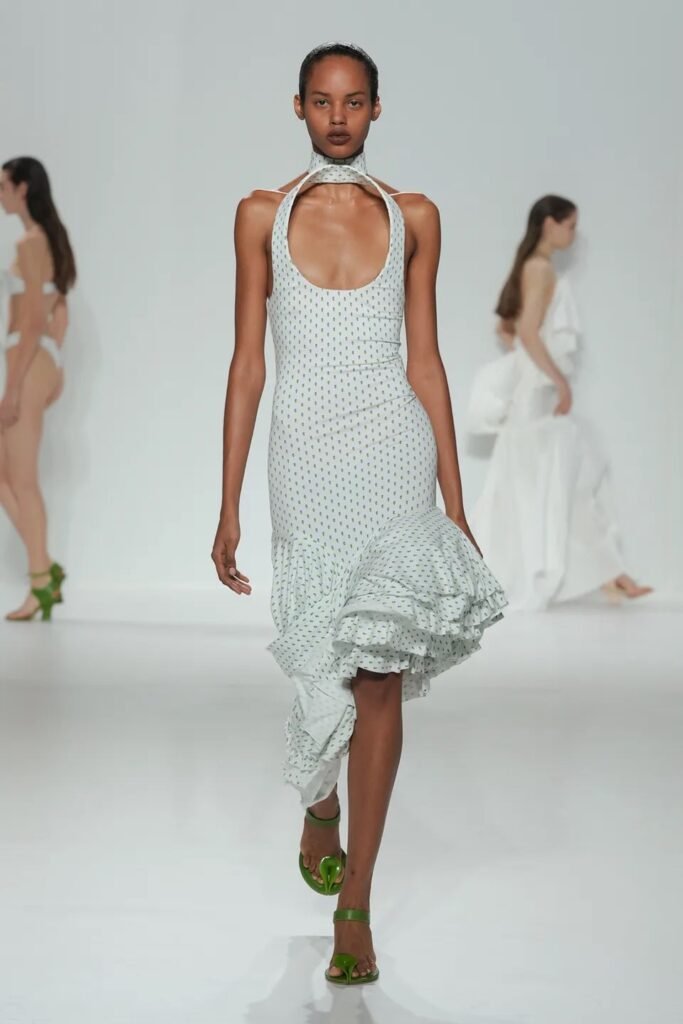
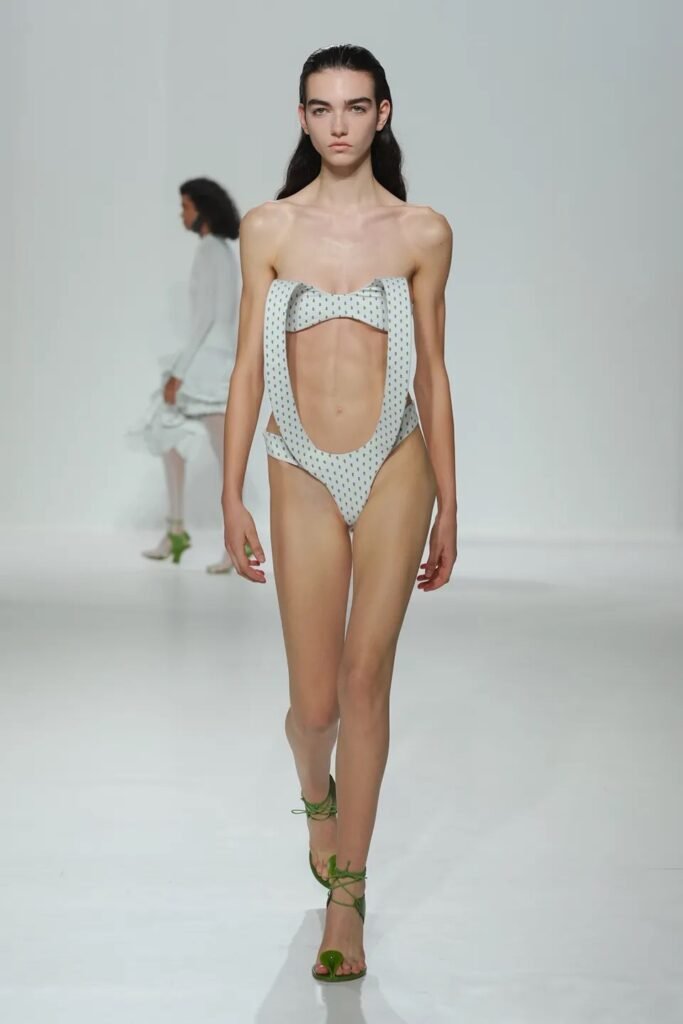
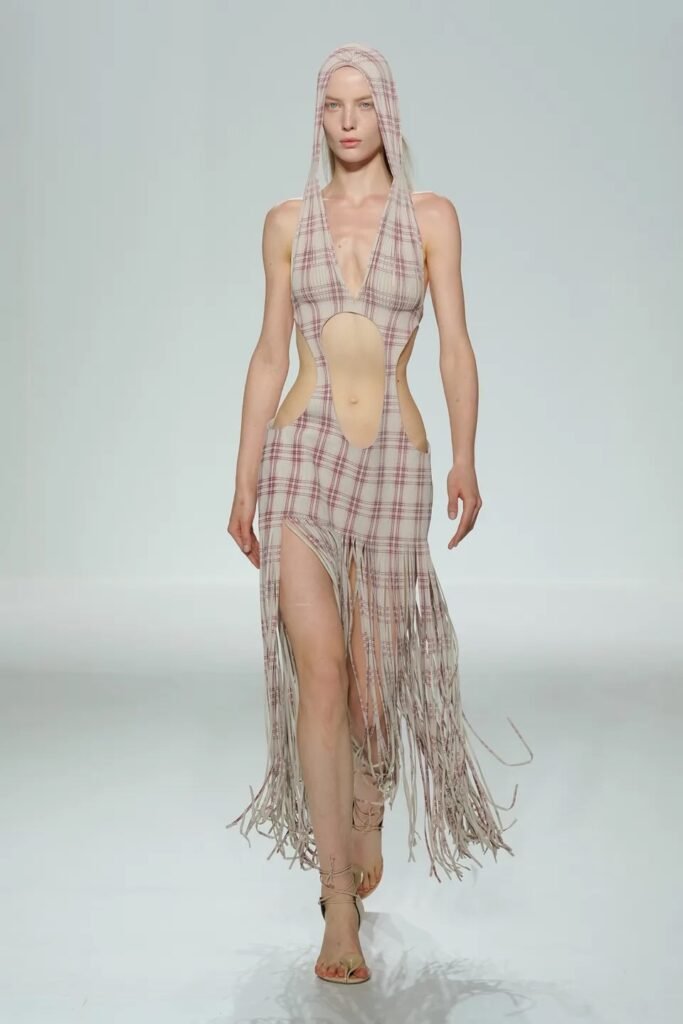
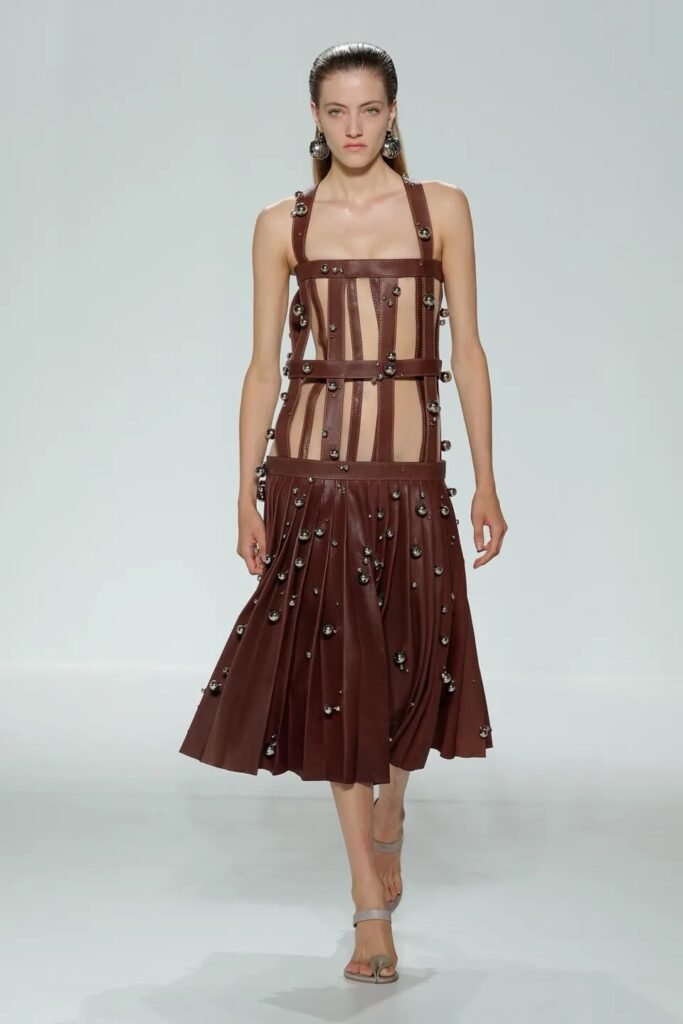
Cutouts appeared across dresses, denim pieces and fitted silhouettes, revealing areas of the body while emphasizing the construction of the garment. Some designs seemed almost to remove the center of the clothing, allowing the sculptural bra elements underneath to become part of the silhouette.
The result was provocative without relying entirely on exposure.
For Lantink, the body is part of the architecture of the clothes. Garments frame it, exaggerate it and sometimes deliberately distort its proportions.
That idea has always been central to Gaultier’s legacy, making it one of the most natural connections between the original house codes and Lantink’s contemporary approach.
Ruffles Become Sculptural
Ruffles appeared in another unexpected form.
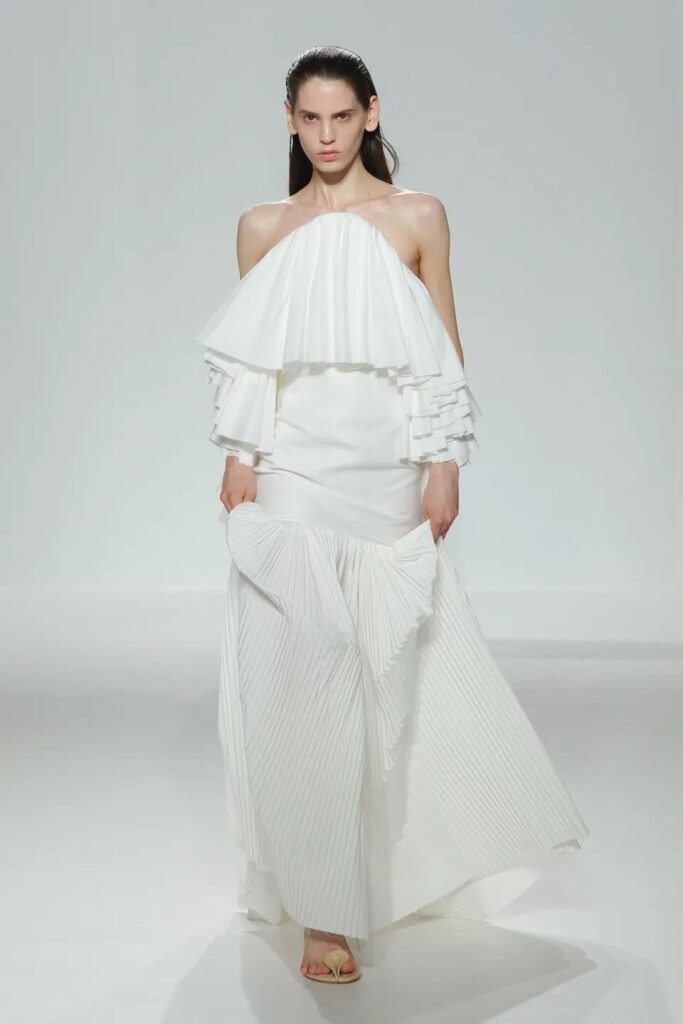
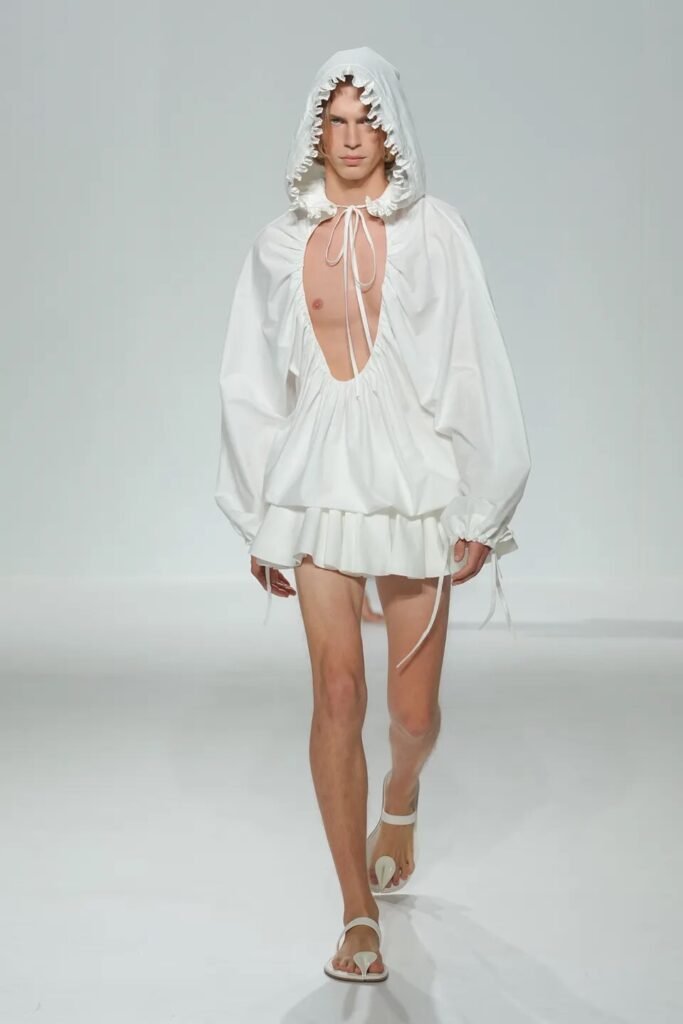
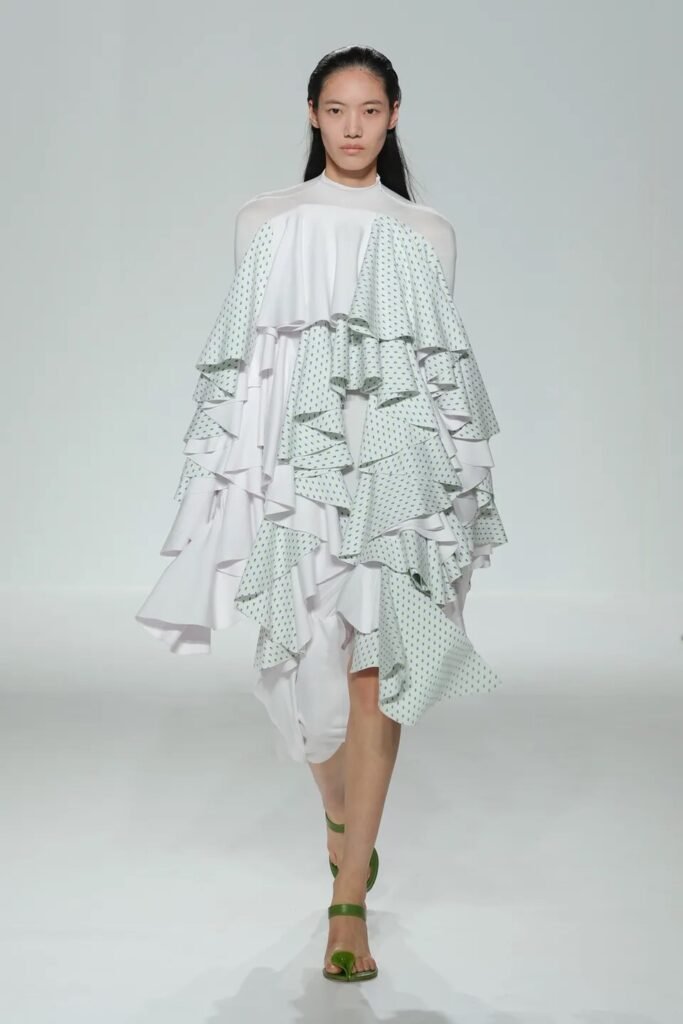
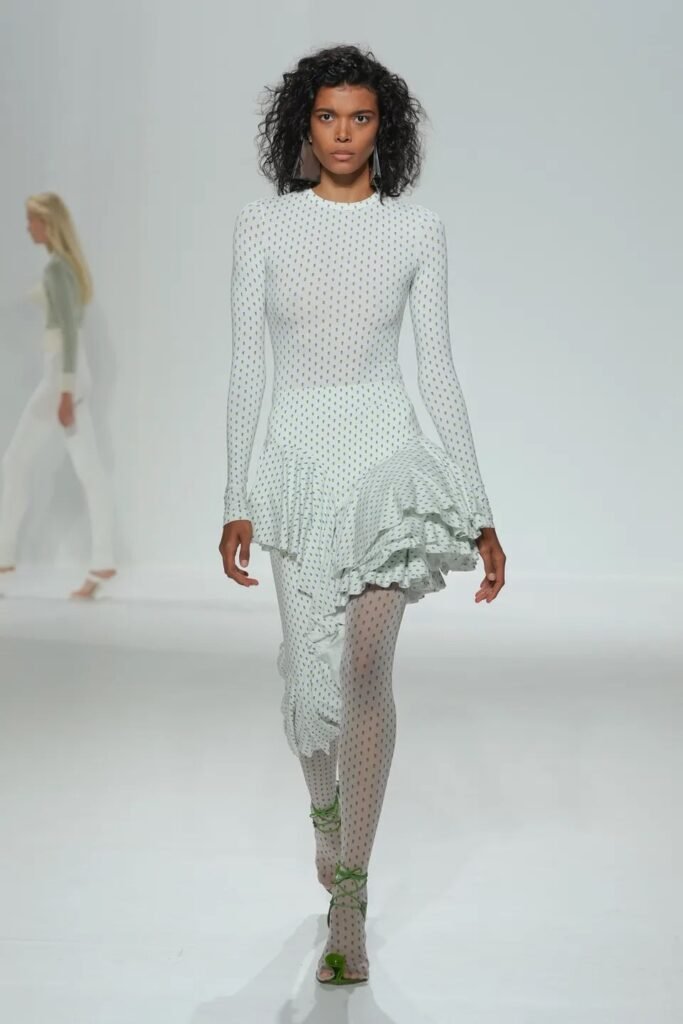
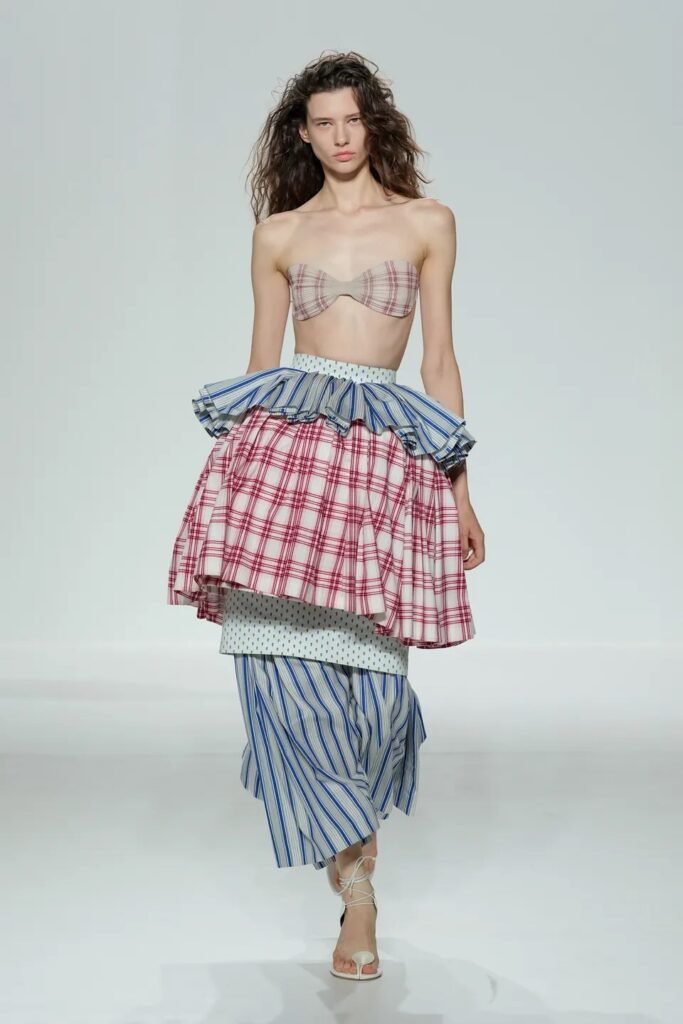
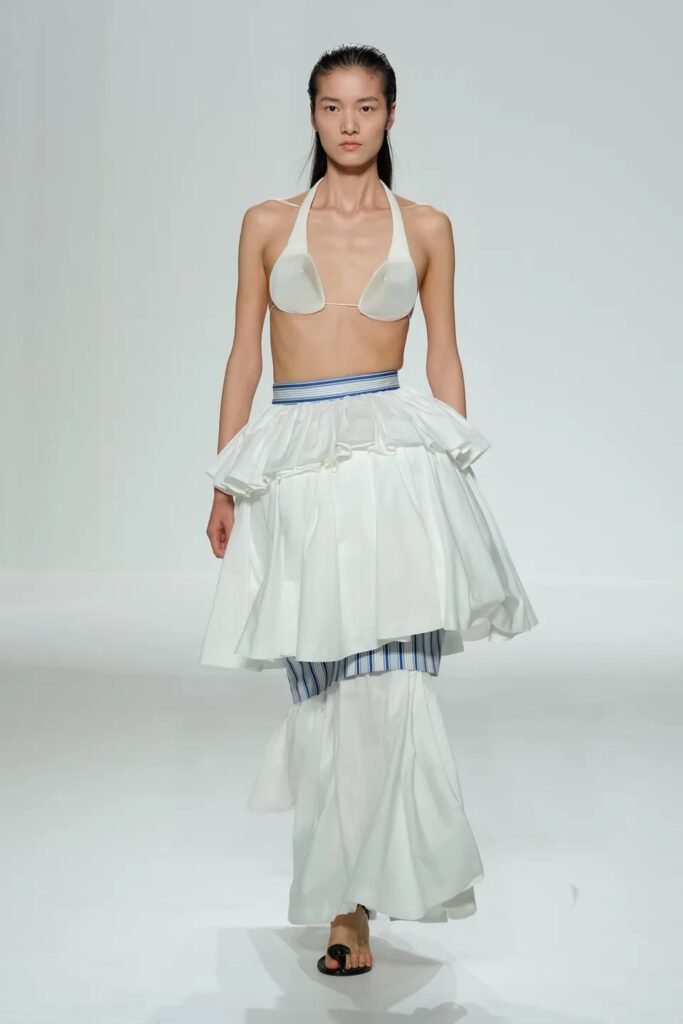
Rather than functioning purely as romantic decoration, oversized ruffles became structural elements that projected away from the body. In some looks, collars and necklines expanded dramatically, creating almost sculptural halos around the wearer.
The exaggerated proportions added a playful quality to the collection.
There was humor here, but it was controlled humor—the kind that makes a garment memorable without making it feel like a joke.
Split-Toe Shoes Enter the Picture
Spring 2027 also marked an important expansion of Jean Paul Gaultier’s ready-to-wear offering into footwear.
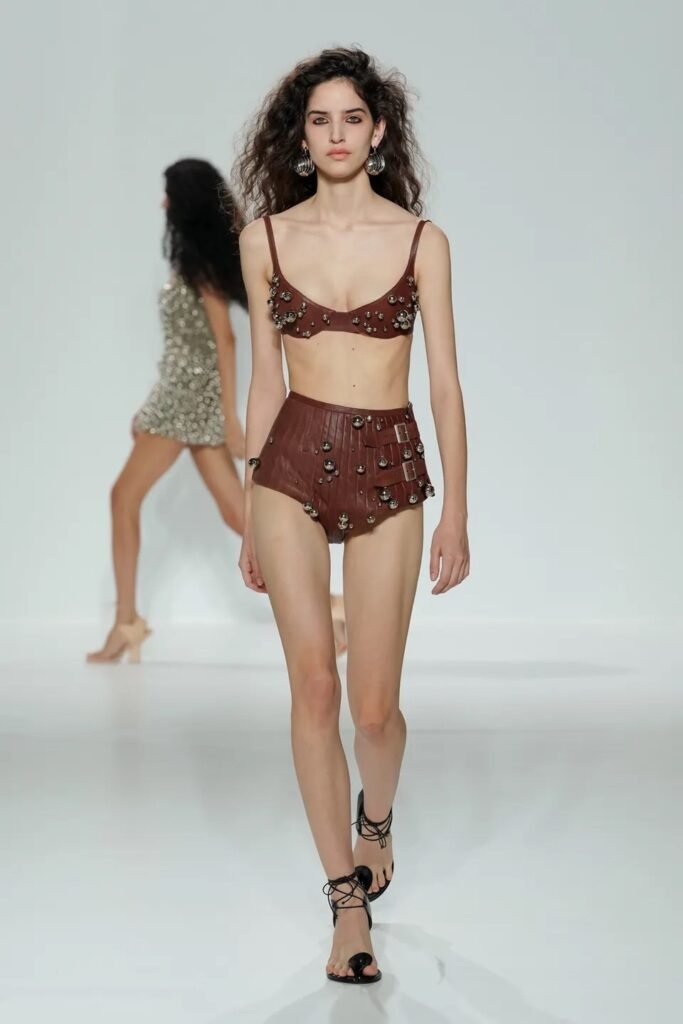
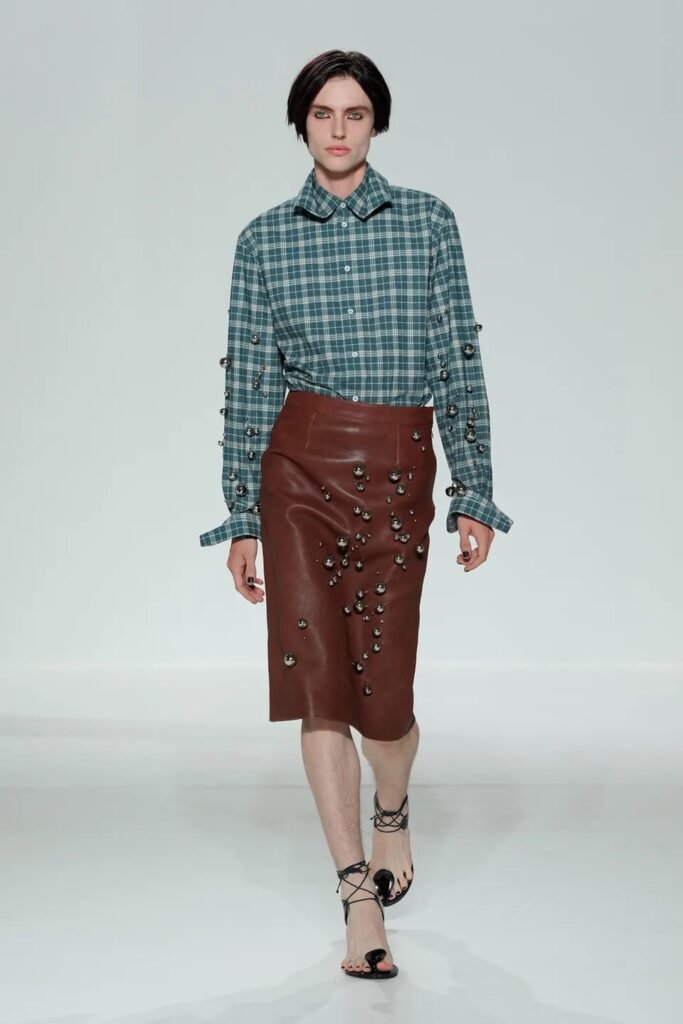
Split-toe shoes appeared in several variations, including flats, heels and lace-up styles. The unusual footwear complemented Lantink’s interest in reshaping familiar fashion conventions.
Shoes were not treated as an afterthought. They helped establish the attitude of the looks, grounding the more exaggerated garments with an accessory that felt equally unconventional.
The introduction of footwear is also significant commercially as the house continues to rebuild and expand its ready-to-wear business under Lantink’s direction. Vogue reported that Jean Paul Gaultier ready-to-wear had expanded to around 120 points of sale, alongside a new Paris retail pop-up.
The Art of Making the Strange Wearable
Perhaps the most interesting aspect of Jean Paul Gaultier Spring 2027 is the way Lantink balanced experimentation with practicality.
His previous work for the house established a reputation for extreme, body-altering and sometimes deliberately shocking propositions. With Spring 2027, however, the designer brought some of that imagination closer to everyday dressing.
A trench coat could still look like a trench coat. A blazer remained recognizable as a blazer. Jeans remained jeans.
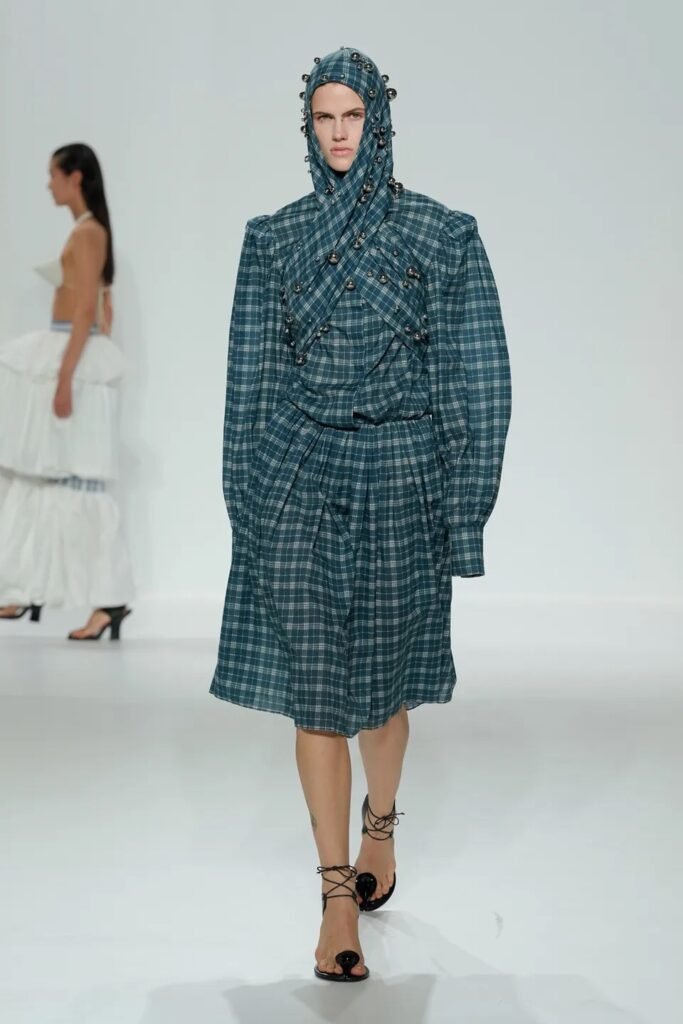
But each garment contained an unexpected interruption—a distorted proportion, an exposed section, an unusual fastening, a sculptural detail or an exaggerated silhouette.
That is where the collection found its strongest voice.
As ELLE observed, the Spring 2027 offering was arguably Lantink’s most wearable Jean Paul Gaultier collection to date, while retaining his taste for the bizarre and unexpected.
A New Chapter for the House
Jean Paul Gaultier Spring 2027 feels less like an exercise in recreating the past and more like an attempt to determine what the house can become next.
Lantink has inherited one of fashion’s most recognizable visual histories: corsetry, cone bras, trompe-l’œil, exaggerated anatomy, gender play, tailoring, lingerie and a willingness to challenge conventional ideas of beauty.
The challenge is knowing what to preserve and what to change.
Spring 2027 suggests that Lantink understands the assignment.
Instead of treating Gaultier’s archive as a museum, he uses it as raw material. A cone bra becomes a structural element. A suit becomes distorted. Denim becomes provocative. A trench coat becomes sculptural. Ruffles become architecture. Shoes become another opportunity to disrupt expectations.
It is a distinctly modern way of approaching heritage.
Final Thoughts
Jean Paul Gaultier Spring 2027 Ready-to-Wear is bold, provocative and unapologetically strange—but it is also more grounded than some of Lantink’s earlier experiments for the house.
The collection proves that fashion can be both wearable and disruptive. It does not need to choose between commercial appeal and creative imagination.
For Lantink, the future of Jean Paul Gaultier appears to lie somewhere between the archive and the unexpected: familiar enough to recognize, but transformed enough to feel new.
And perhaps that is exactly what the house needs.
More than three decades after Jean Paul Gaultier turned the cone bra into one of fashion’s defining images, Spring 2027 shows that the spirit behind that original provocation is still very much alive. Lantink is not trying to become Gaultier. He is using Gaultier’s irreverence as a foundation for something of his own.
The result is a Spring 2027 collection that is sculptural, sensual, playful and unmistakably Jean Paul Gaultier—while pointing toward a new chapter for the legendary Parisian house.