
By Oshobor Odion Peter
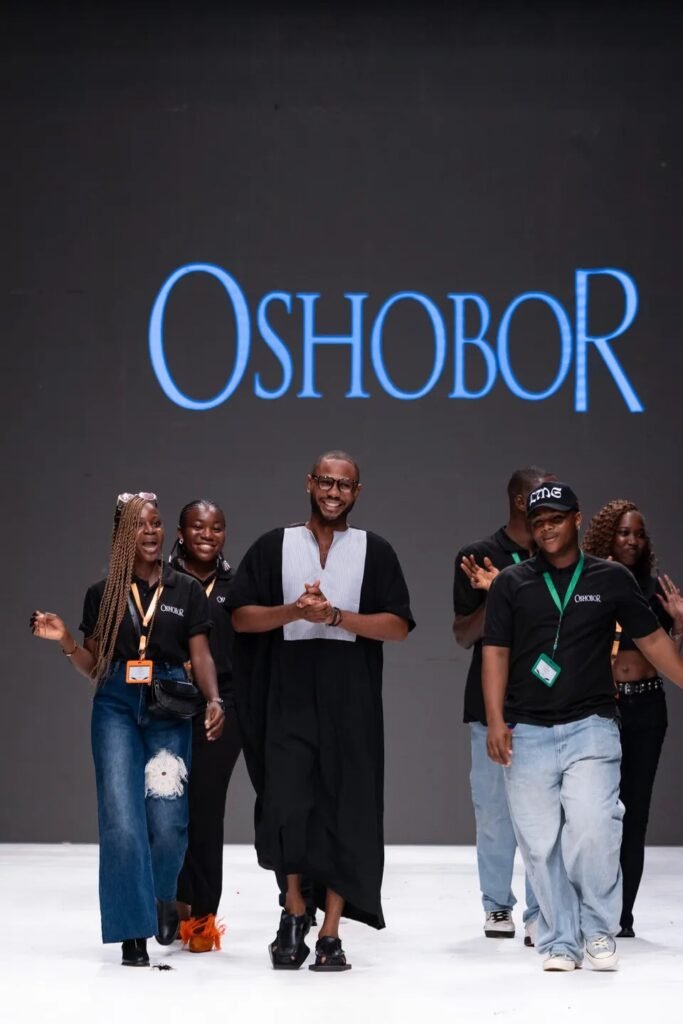
When it comes to fashion that refuses to blend into the background, Oshobor continues to make a compelling case for the beauty of excess. For Spring 2027, Nigerian designer Peter Oshobor returned to Lagos Fashion Week with a collection that explored the intersection of fashion, theatre, mystery and personal transformation.
Known for his experimental approach to design and distinctive use of unconventional materials, Oshobor used the new season to expand his creative vocabulary, presenting an expressive wardrobe filled with exaggerated proportions, elaborate textures, dramatic feather details and sculptural silhouettes.
Presented in Lagos in October 2026, the Spring 2027 collection continued the designer’s exploration of mystery, spiritual awakening and magic, themes that have increasingly become central to the identity of his eponymous label.
A Different Kind of Human: Beyond Conventional Fashion
At the heart of Oshobor’s Spring 2027 presentation was an interest in exploring the unfamiliar. The collection, titled A Different Kind of Human, approached fashion as more than a visual exercise, using clothing to investigate identity, transformation and the possibilities of human expression.
Rather than subscribing to the familiar philosophy of understated dressing, Oshobor embraced maximalism. Speaking about his creative philosophy, the designer expressed his preference for making a statement through fashion, challenging the popular idea that less is always more.
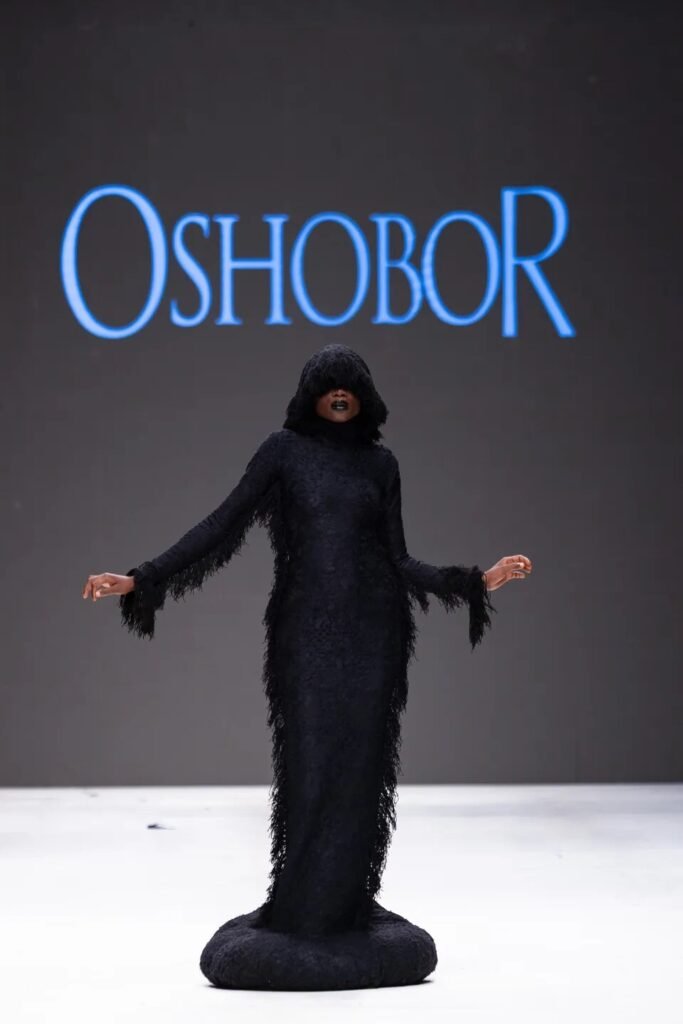
The presentation opened with an eerie atmosphere that continued the narrative established by the label’s Spring 2026 collection. That previous season concluded with a model dressed in an all-black wool ensemble and black face paint, creating an unsettling yet memorable runway moment.
For Spring 2027, Oshobor revisited that theatrical sensibility, further blurring the boundaries between fashion presentation and performance art.
Exaggerated Silhouettes and Dramatic Textures
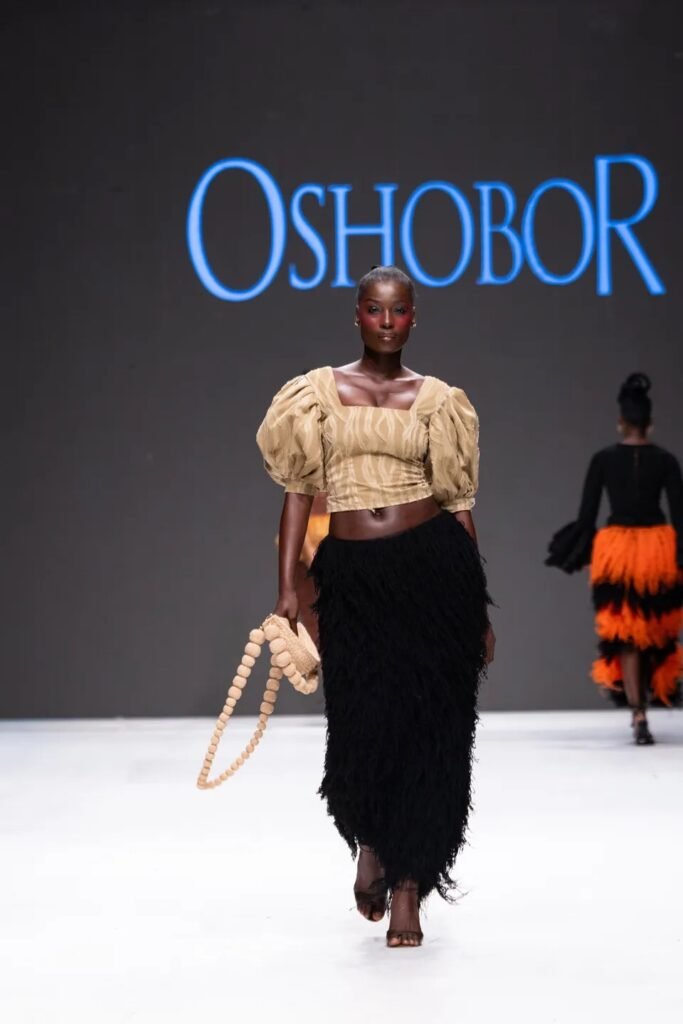
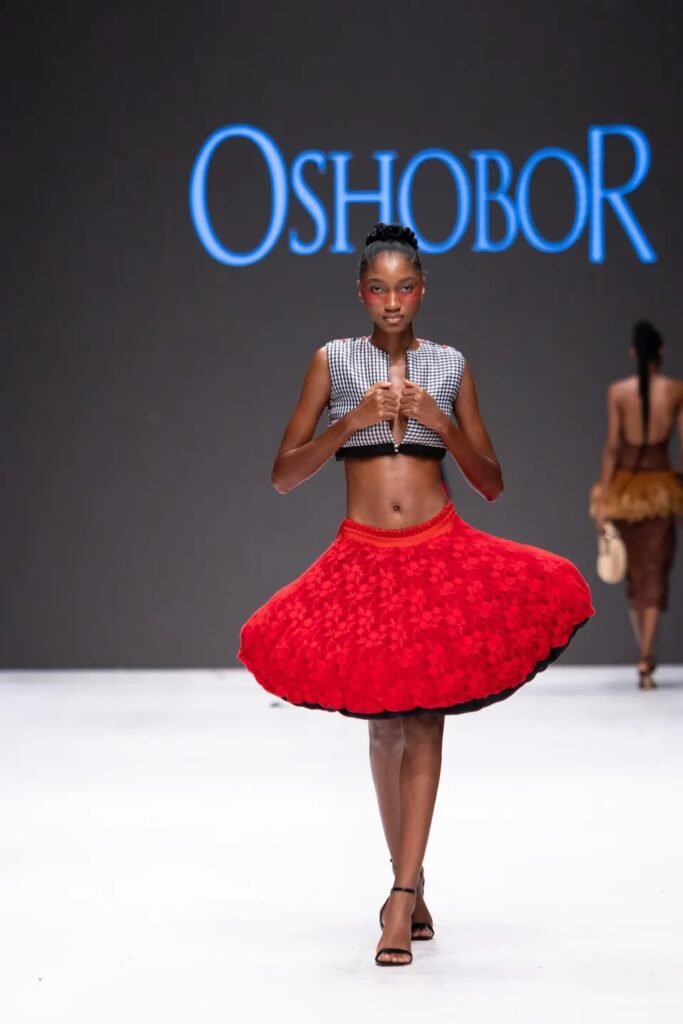
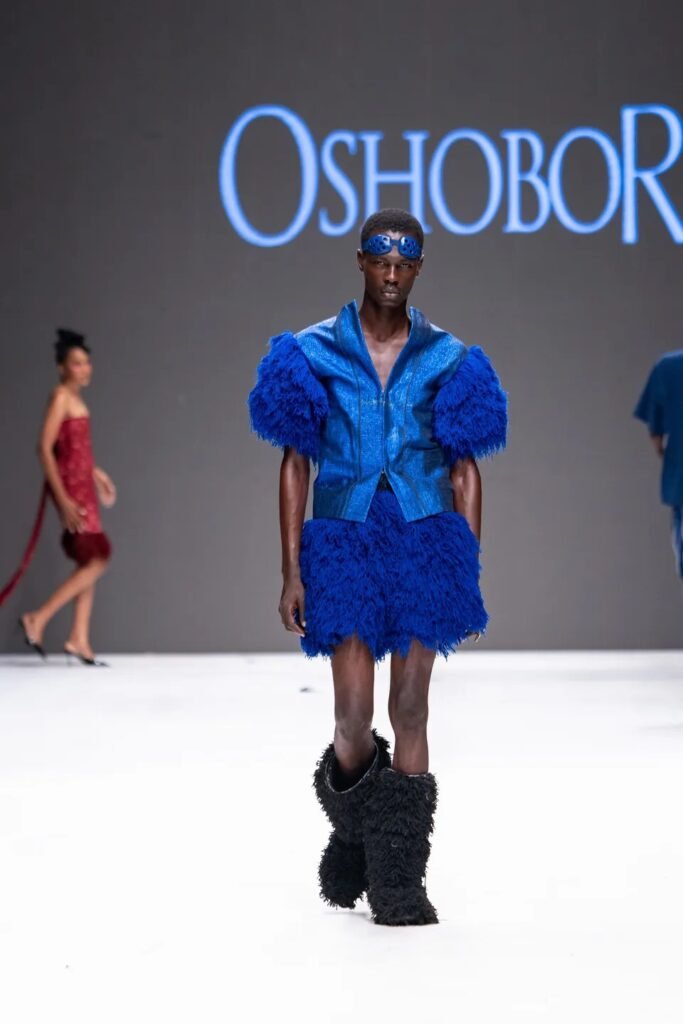
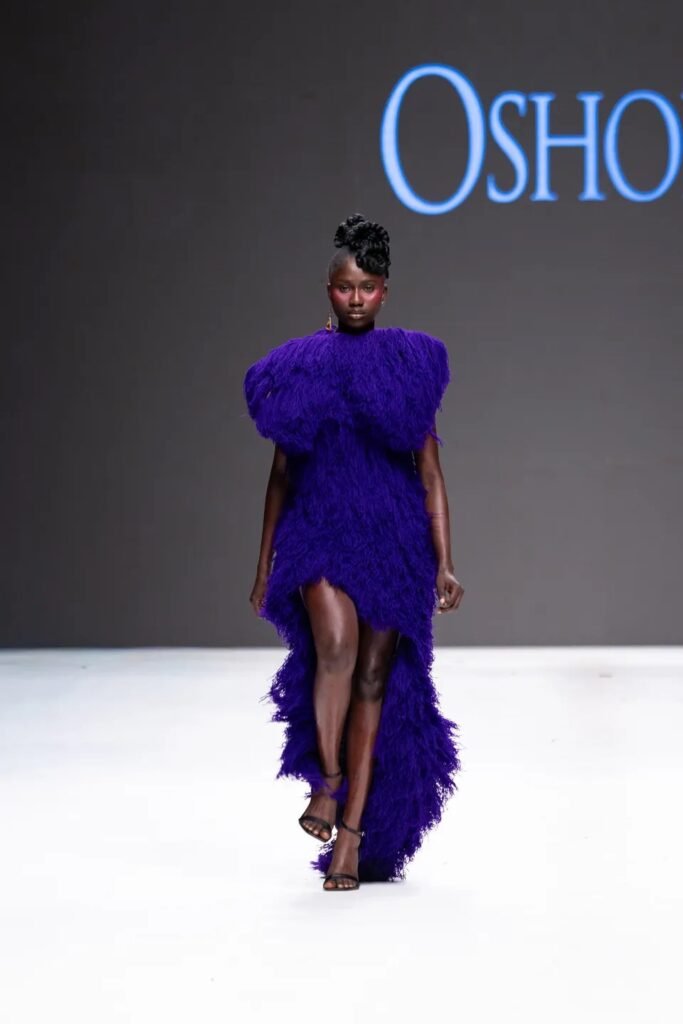
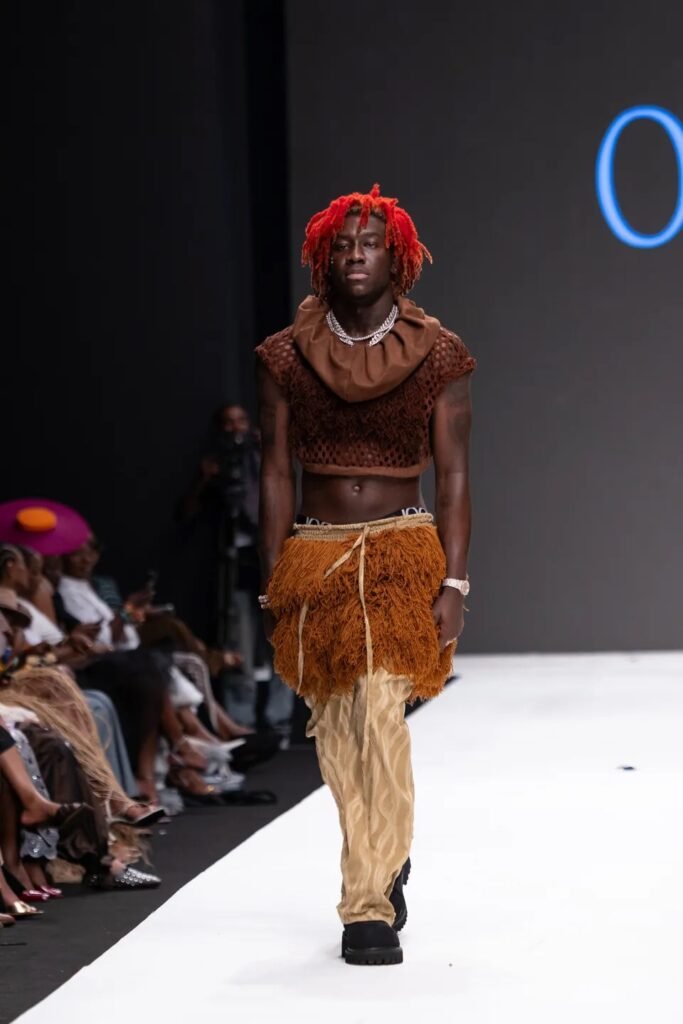
Silhouette played an important role throughout the collection. Oshobor experimented with exaggerated proportions, heavily padded skirts, voluminous outerwear and unconventional shapes that transformed familiar wardrobe pieces into expressive fashion statements.
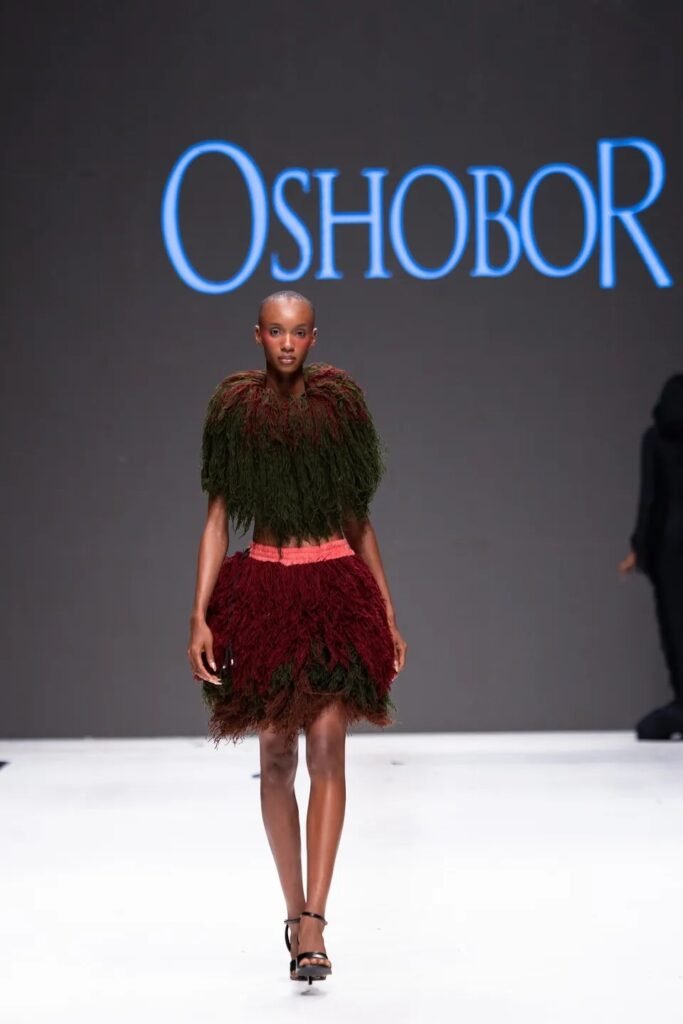
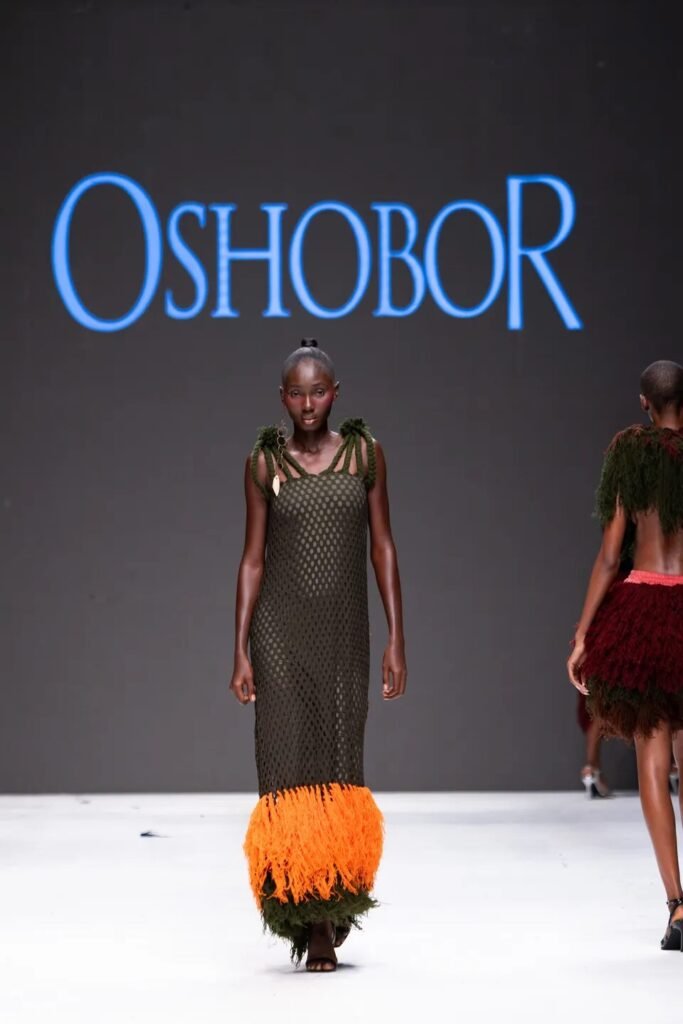
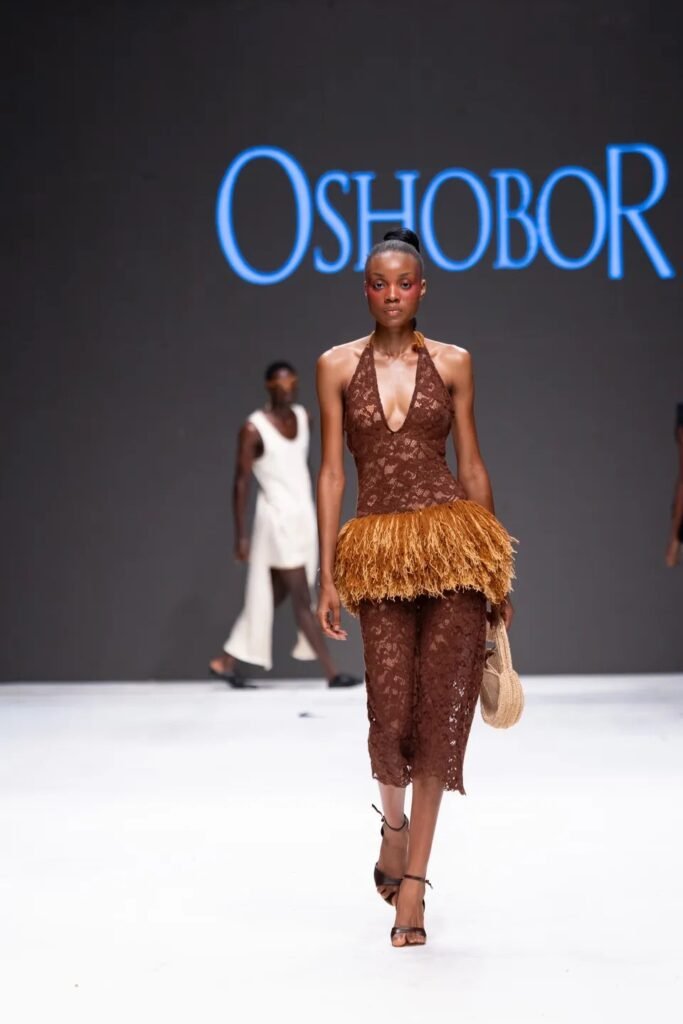
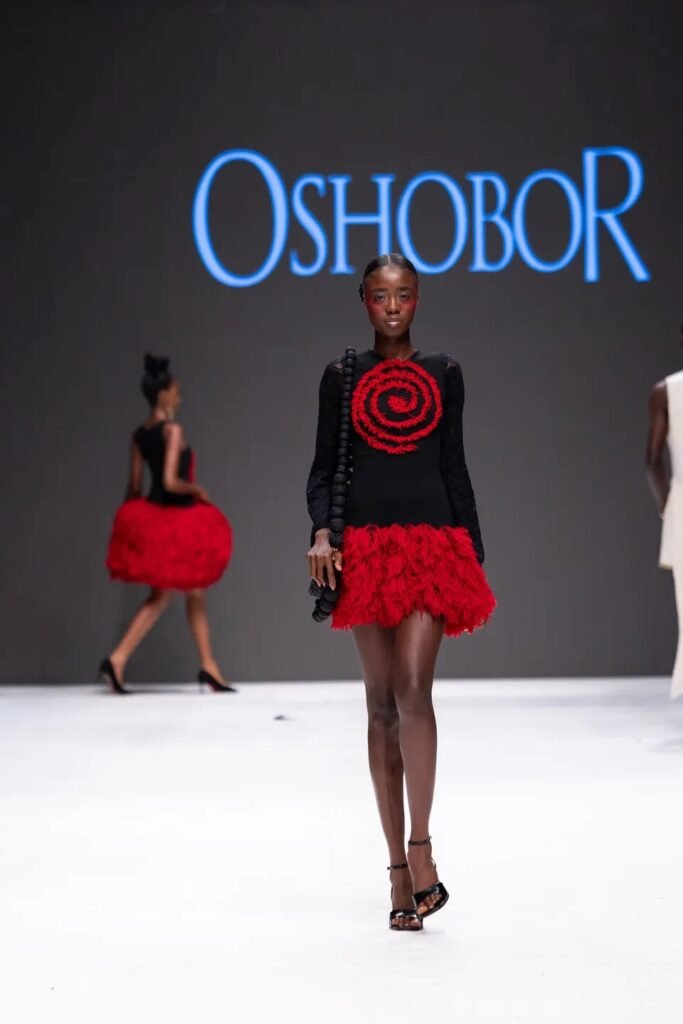
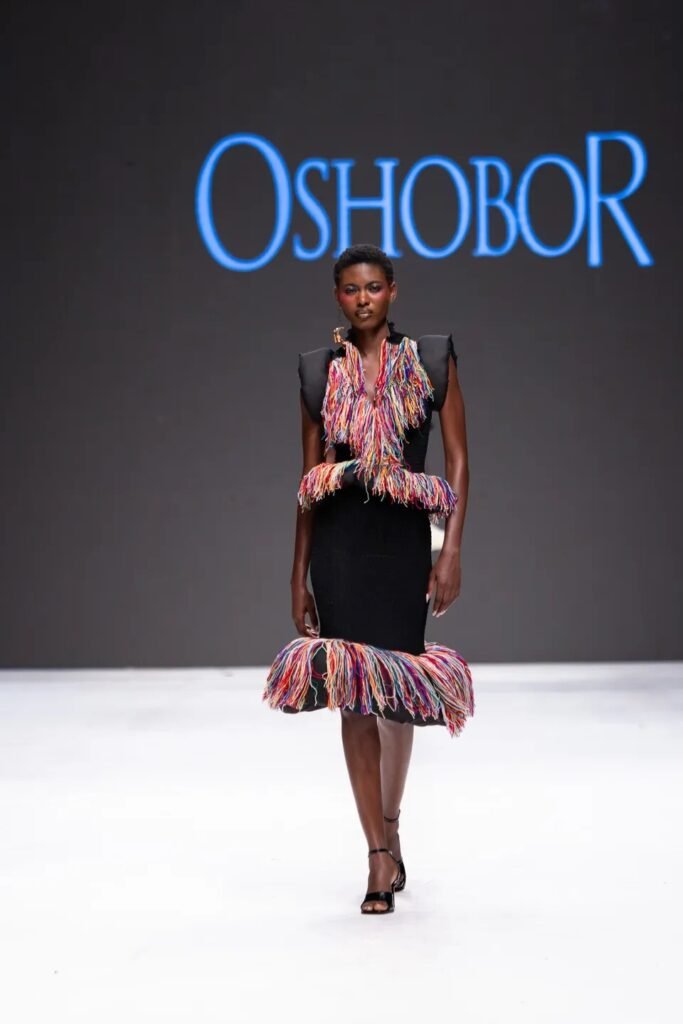
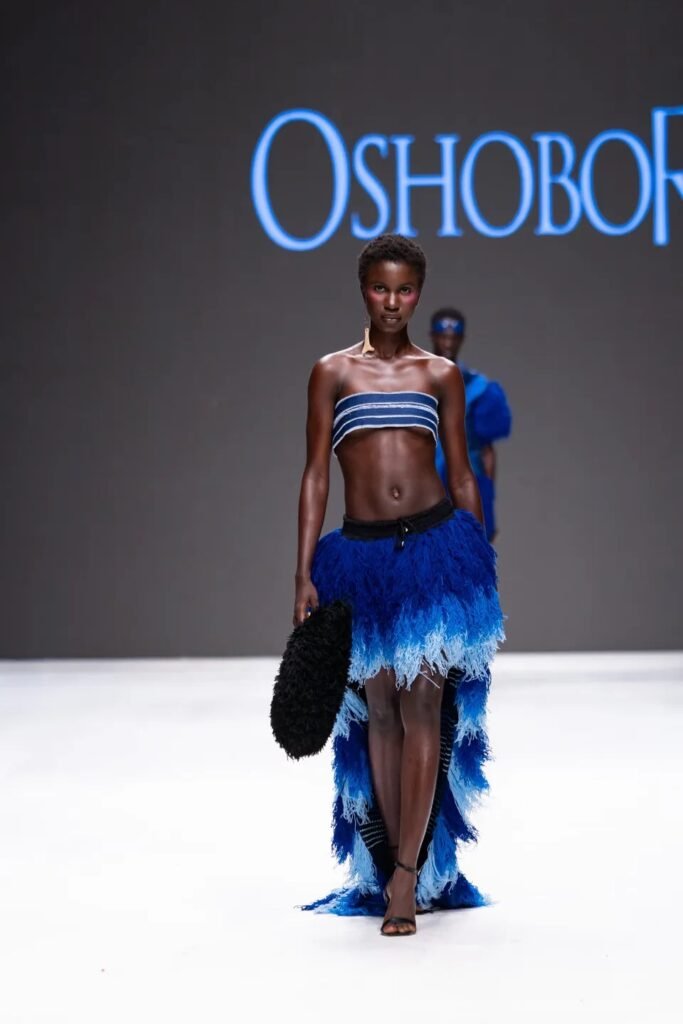
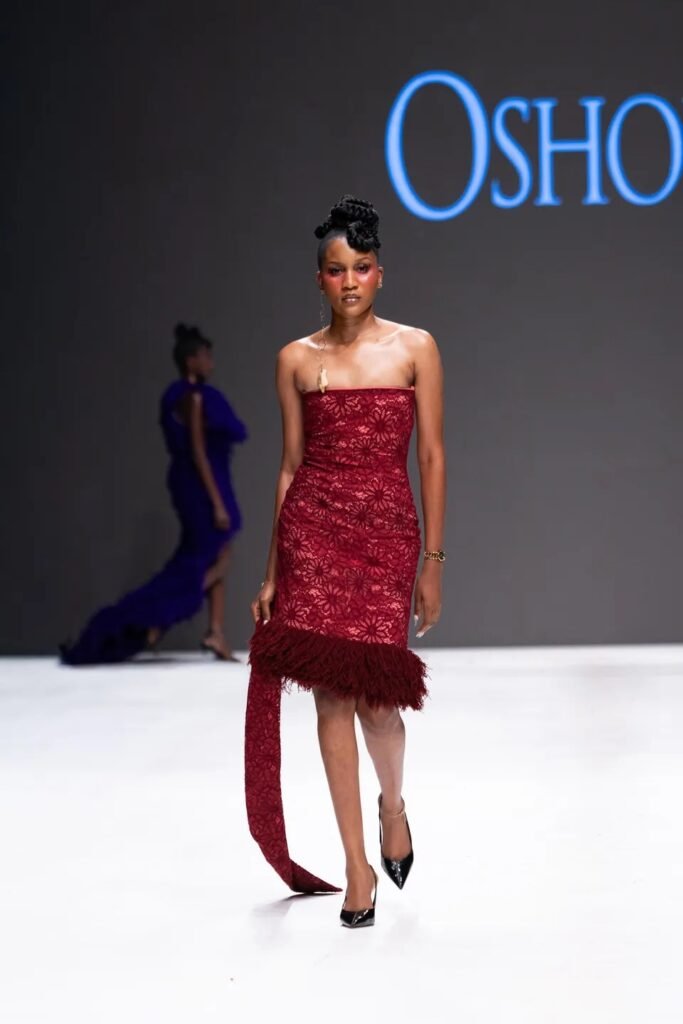
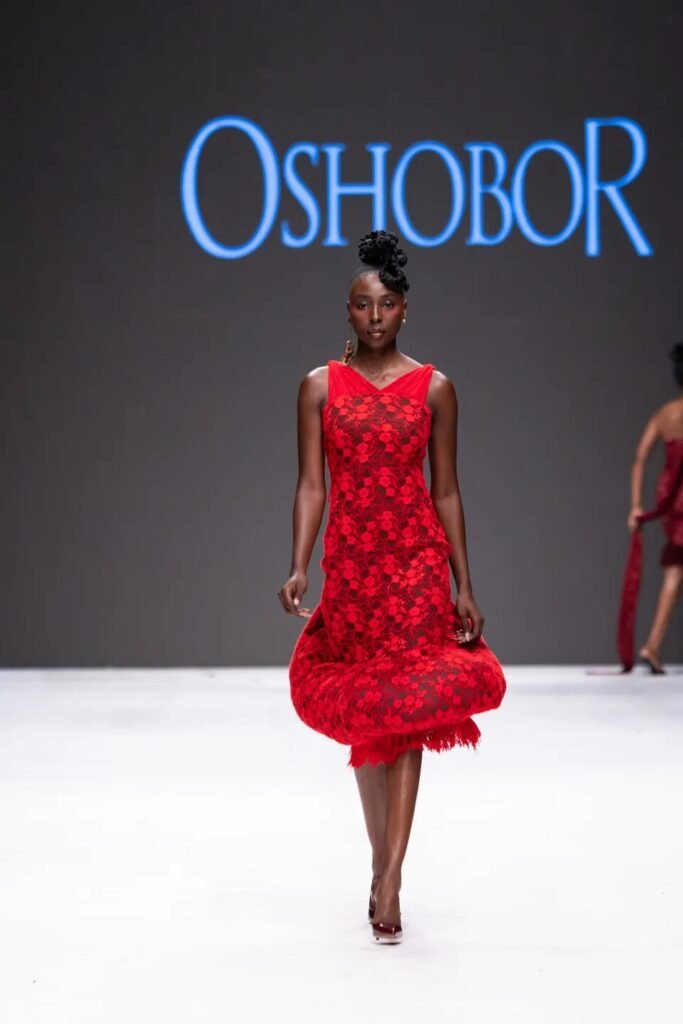
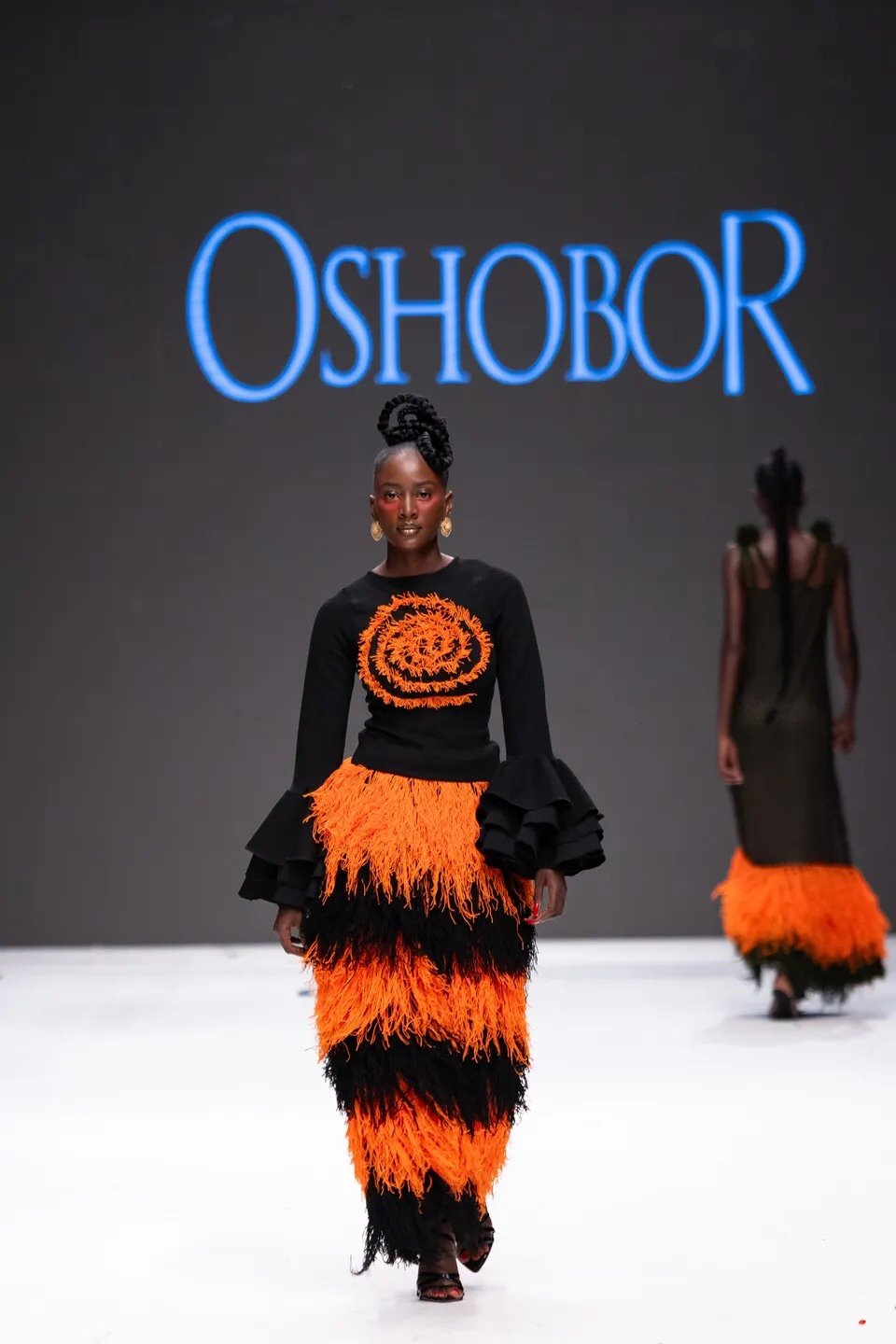
One of the collection’s defining characteristics was its treatment of texture. Feathers, fringe, wool, lace, crochet and knitted constructions appeared throughout the lineup, creating a wardrobe that celebrated tactile experimentation.
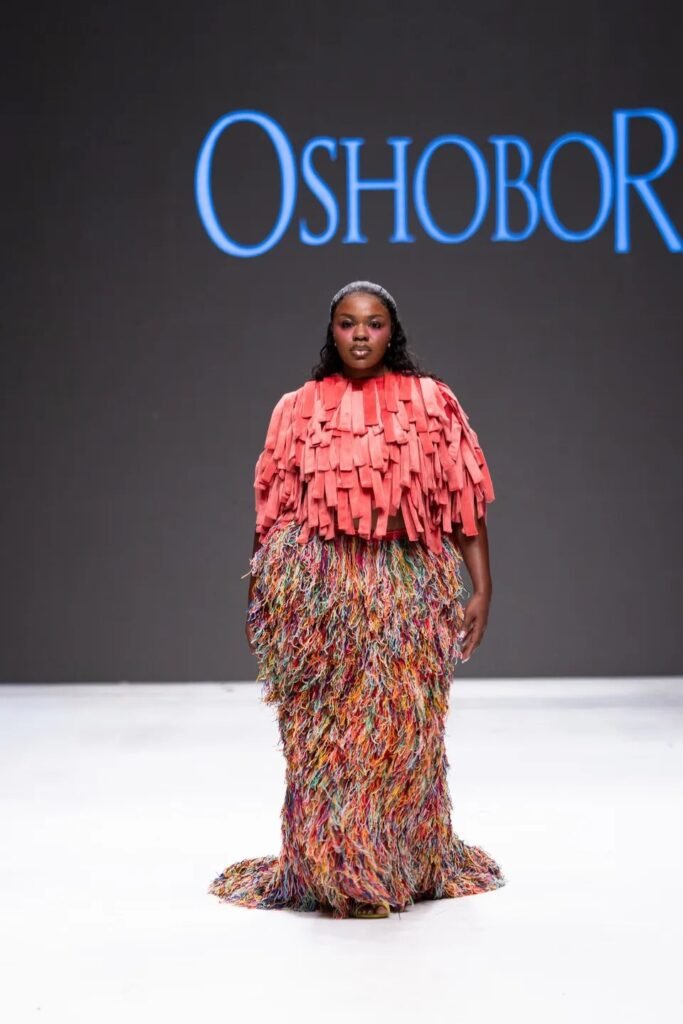
Feather embellishments were particularly prominent, appearing on cropped tops, skirts, jackets and evening dresses. In some looks, the details created dramatic movement, while others featured shaggy finishes and layered textures that gave the garments a more sculptural appearance.
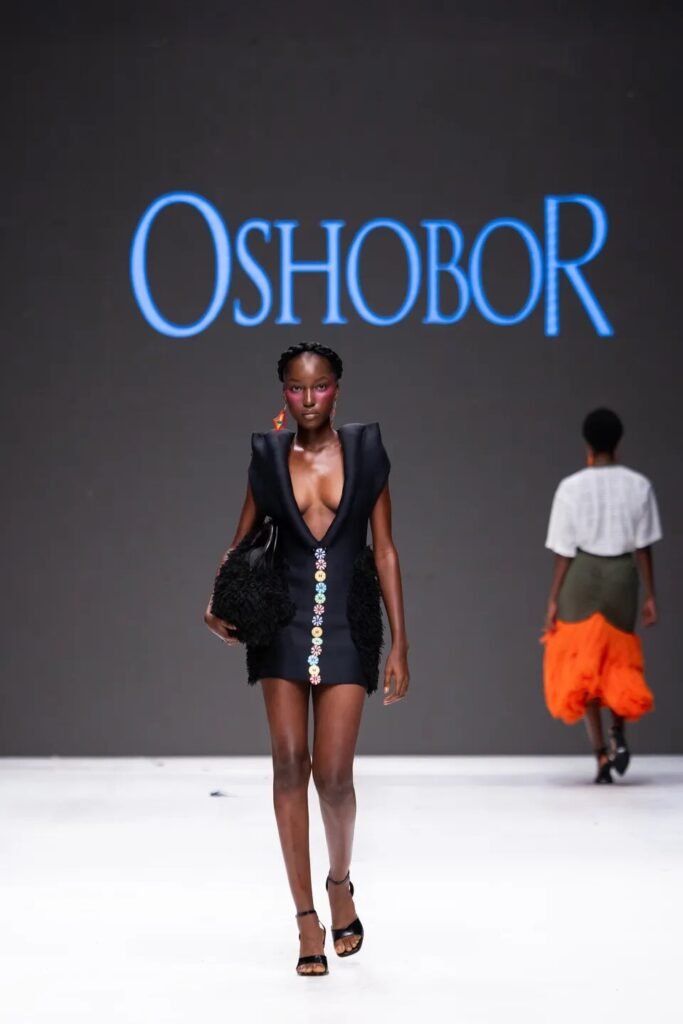
The designer also explored the relationship between structure and fluidity. Cropped tops were paired with elaborate skirts, while fitted dresses contrasted with oversized outerwear and exaggerated accessories.
Among the standout pieces were a black lace column gown with feather detailing, colourful feathered separates, an intricately textured brown lace jumpsuit and a series of dramatic evening dresses.
A Bold Colour Story
Colour provided another dimension to the collection’s expressive direction.
While black remained an important part of the wardrobe, Oshobor introduced striking combinations of yellow, red, orange, purple, green and blue.
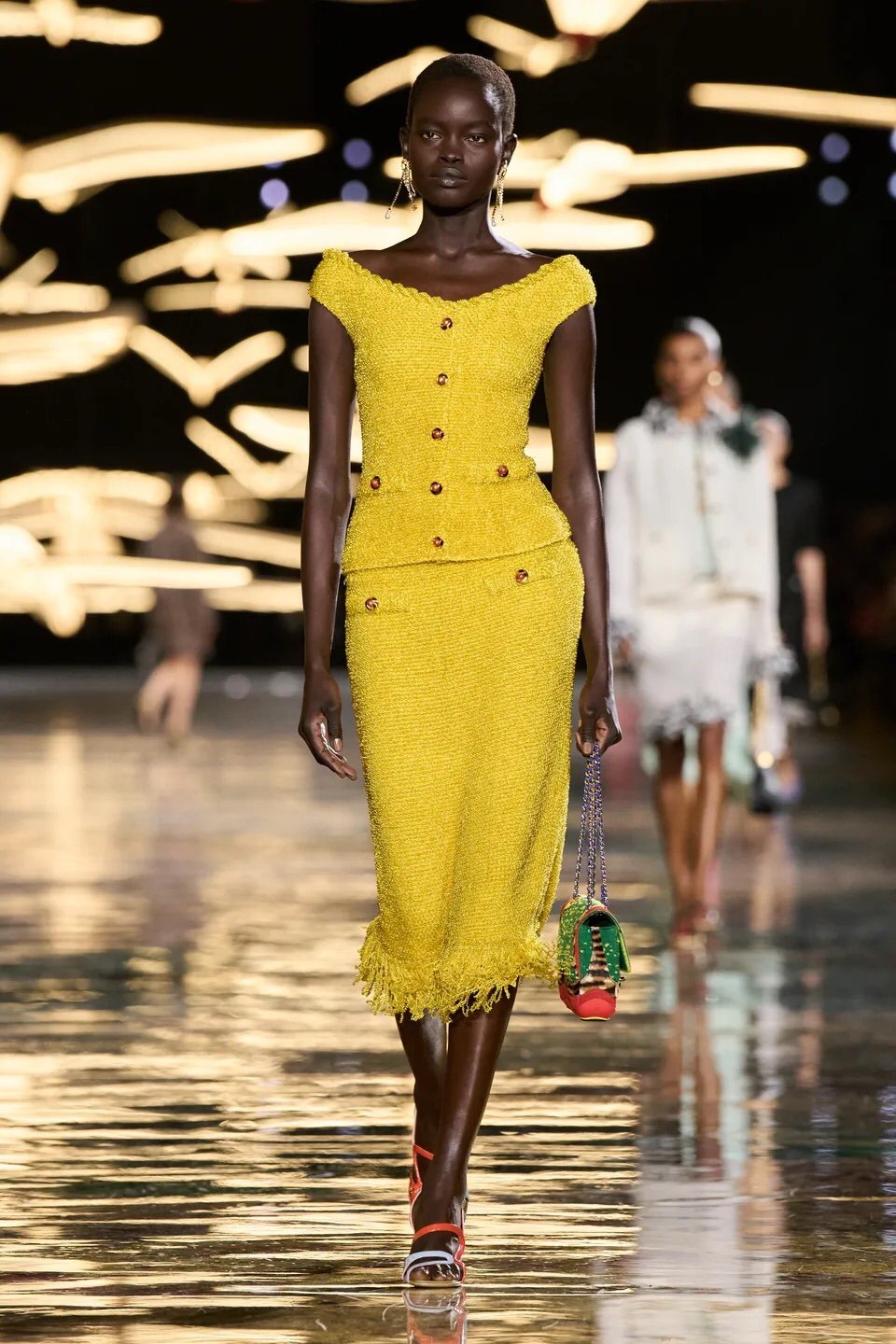
Bright yellow emerged as one of the season’s most memorable shades, appearing in a dramatic feathered evening gown and other expressive pieces. Red was explored through floral lace, feathered mini dresses and sculptural eveningwear, while blue brought a contrasting sense of vibrancy to the collection.
The designer also experimented with colour blocking, combining contrasting shades and textures to create visually distinctive ensembles.
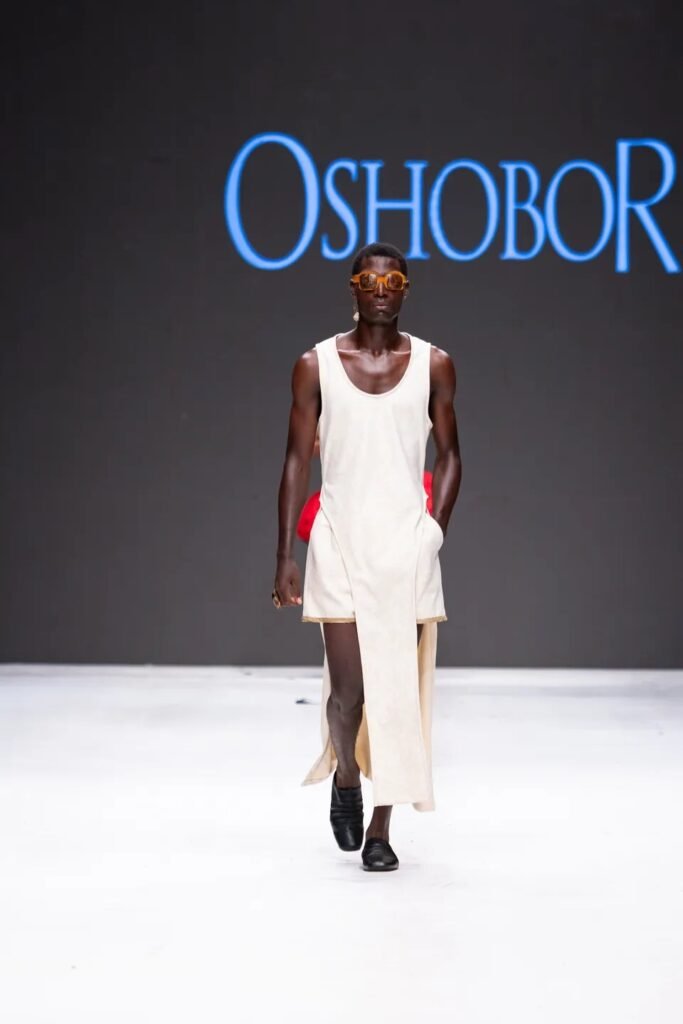
Not every look relied on dramatic colour, however. Ivory, beige, brown and muted tones offered moments of restraint, demonstrating the collection’s interest in balancing theatrical fashion with more approachable wardrobe pieces.
From Runway Drama to Wearable Fashion
Despite its emphasis on spectacle, Oshobor’s Spring 2027 collection was not exclusively concerned with extravagant runway dressing.
Interspersed among the more elaborate designs were relatively understated pieces, including muted T-shirts, ivory shorts, relaxed separates and versatile tops.
This contrast offered a glimpse into the different possibilities of the Oshobor wardrobe. While the designer’s creative identity is strongly associated with dramatic silhouettes and unconventional construction, the inclusion of simpler garments suggested an interest in expanding the label’s commercial appeal.
Nevertheless, the collection’s strongest moments remained its more experimental creations, where the designer’s imagination was given room to flourish.
The Oshobor Aesthetic: Fashion as Theatre
What makes Oshobor particularly interesting within Nigeria’s contemporary fashion landscape is its willingness to approach clothing as a form of storytelling.
Under the creative direction of Peter Oshobor, the label has developed an identity that moves beyond conventional ideas of luxury and occasion dressing. Its collections frequently explore unconventional materials, exaggerated proportions and emotionally expressive presentations.
For Spring 2027, that identity became even more pronounced. The combination of feathers, wool, intricate textures and exaggerated silhouettes created a wardrobe that felt deliberately theatrical.
It was an invitation to reconsider the relationship between clothing and the individual wearing it, suggesting that fashion can be an expression of imagination rather than simply an exercise in dressing.
A Statement for Lagos Fashion Week Spring 2027
Oshobor’s Spring 2027 collection contributed to a Lagos Fashion Week season that placed considerable emphasis on craftsmanship, experimentation and the possibilities of contemporary African fashion.
At a time when Nigerian designers are increasingly finding ways to communicate their creative identities to international audiences, Oshobor’s presentation demonstrated the importance of developing a distinctive visual language.
The collection was not without its moments of creative excess, but that willingness to experiment is precisely what makes the label’s approach interesting. Rather than pursuing a universally commercial aesthetic, Oshobor continues to investigate what fashion can become when designers allow themselves to take creative risks.
With Spring 2027, Peter Oshobor reaffirmed his commitment to maximalism, theatrical storytelling and unconventional design, presenting a collection that refuses to disappear into the background.
For Oshobor, more is not simply more. It is an opportunity to take up space, challenge expectations and create something that feels entirely its own.