
|
Getting your Trinity Audio player ready… |
By Andreas Kronthaler
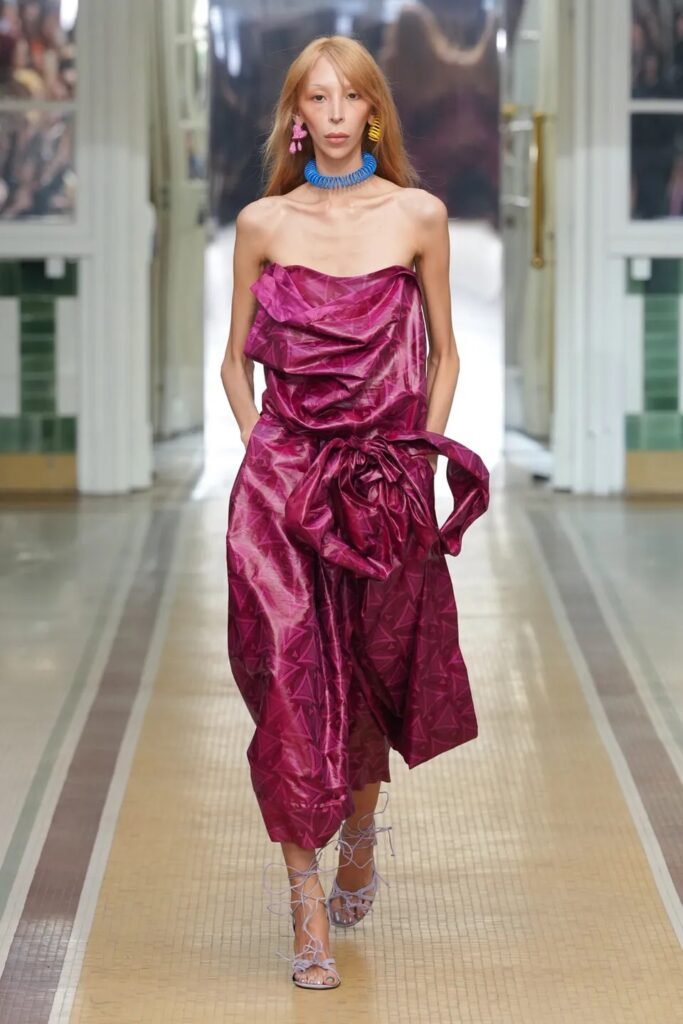
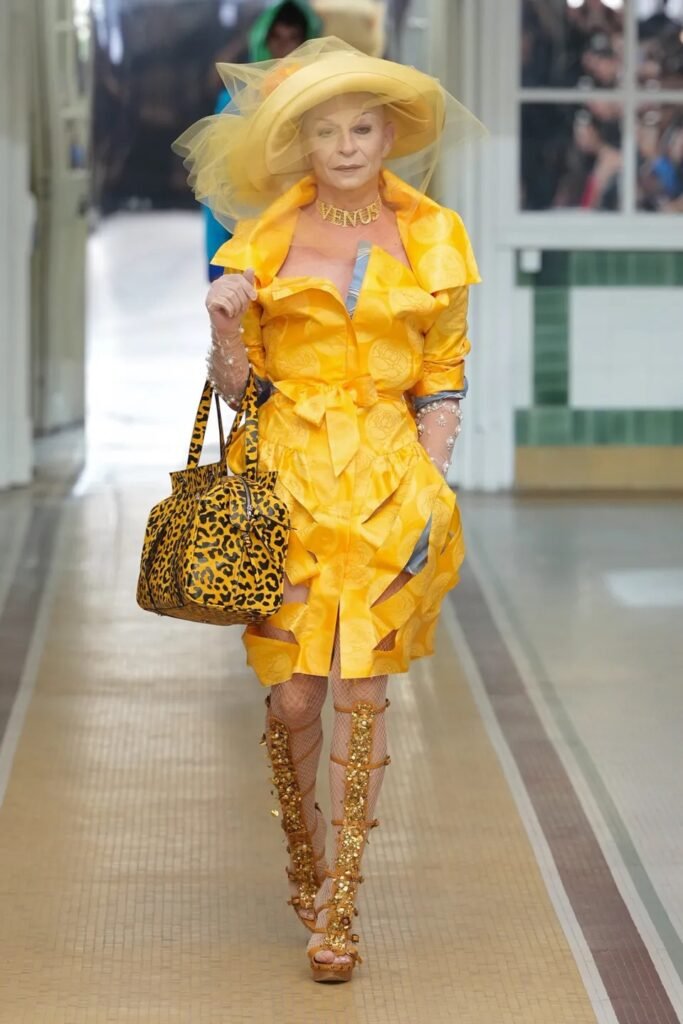
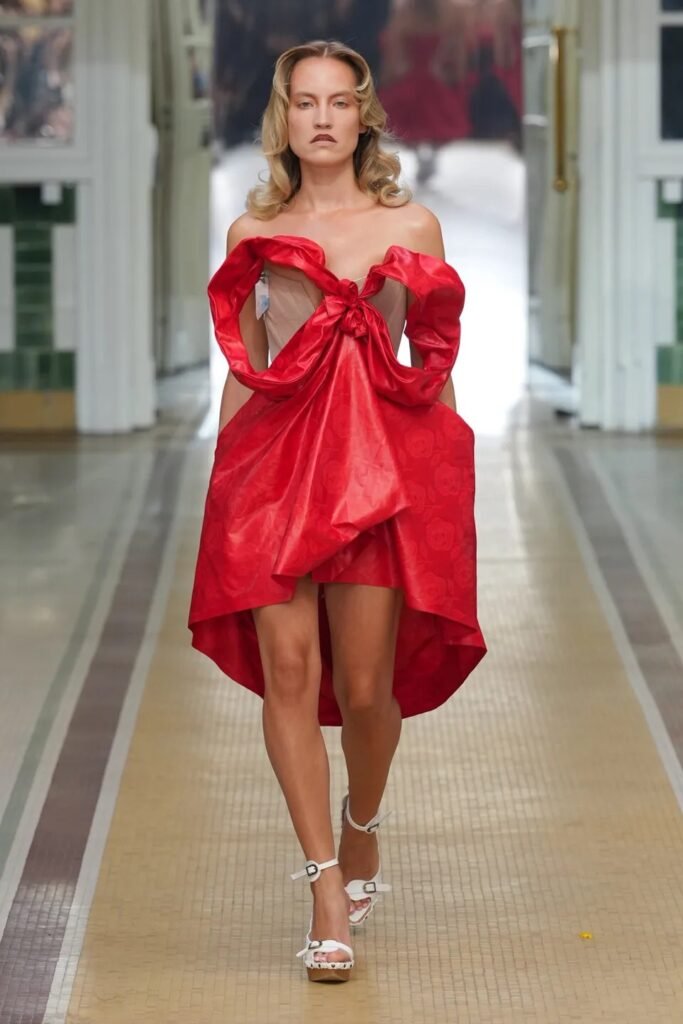
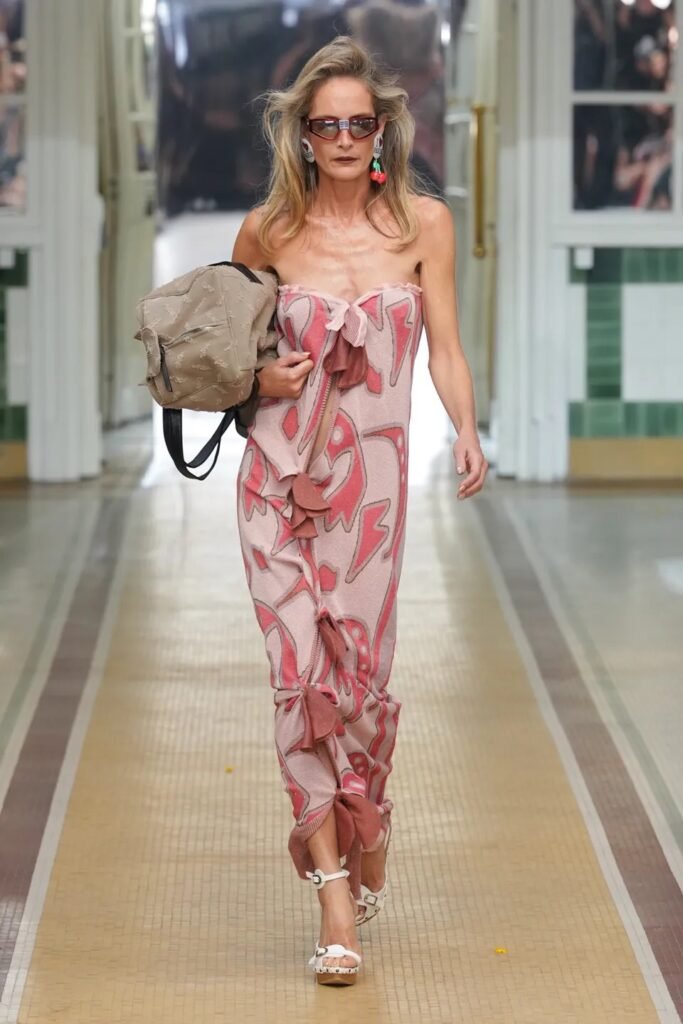
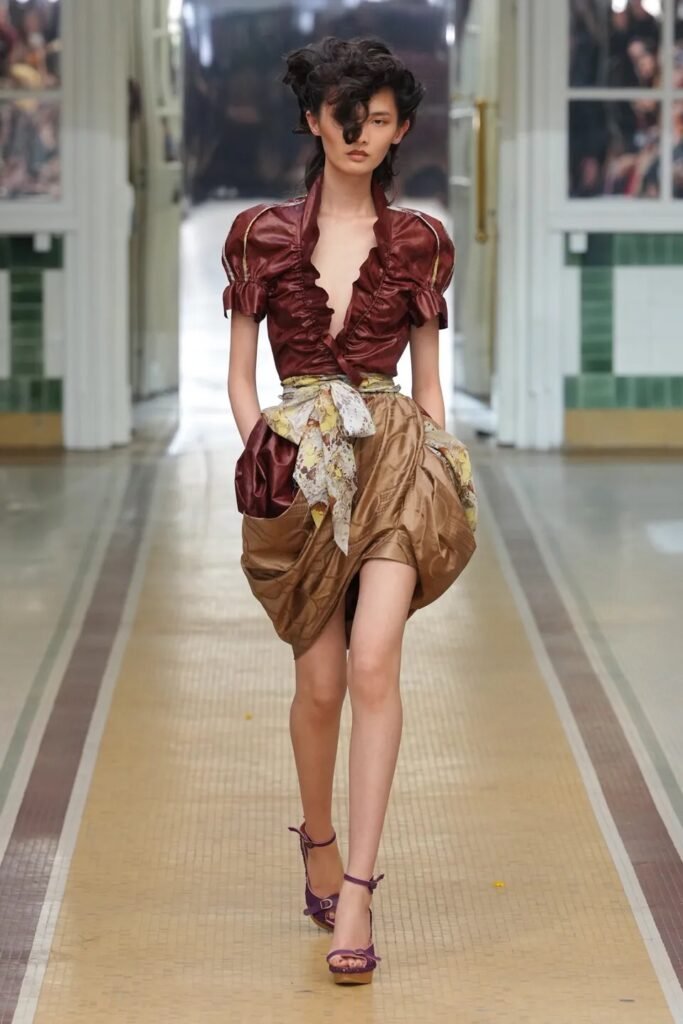
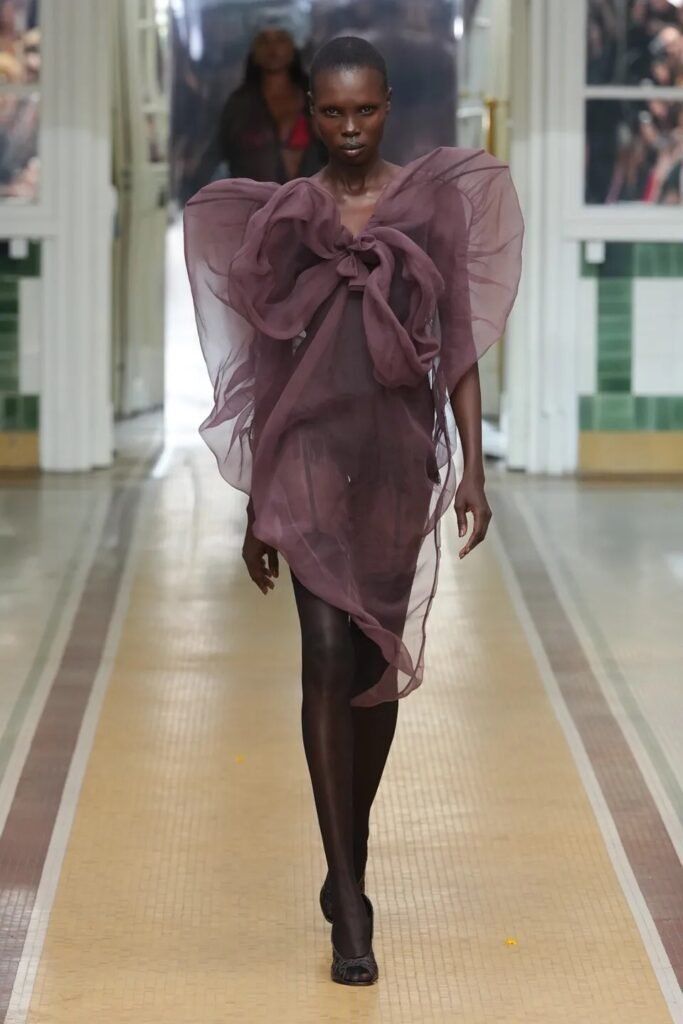
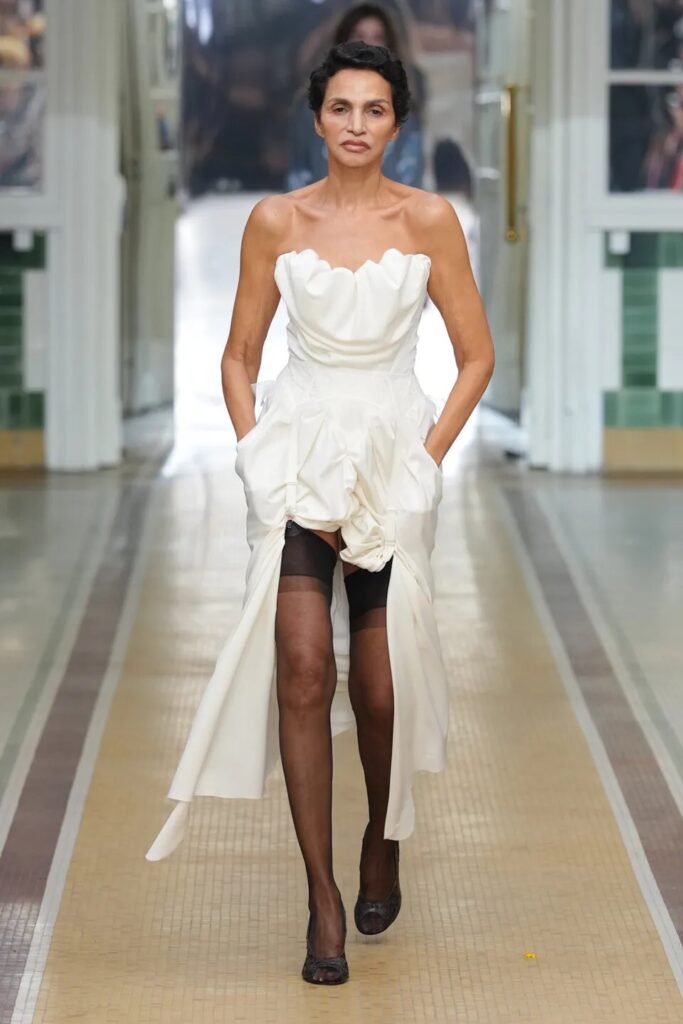
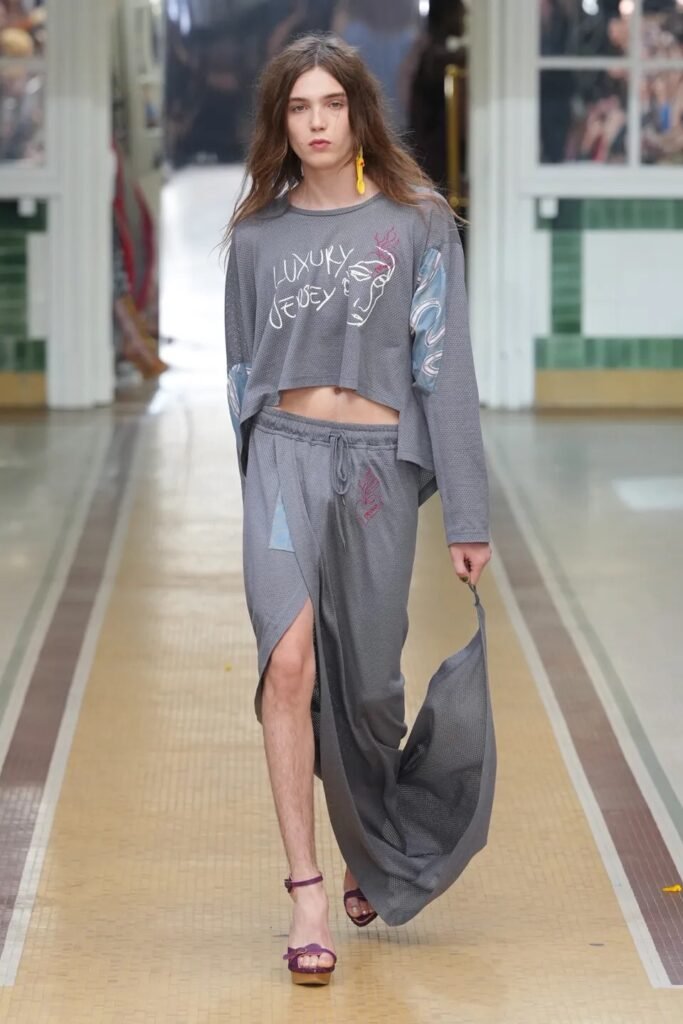
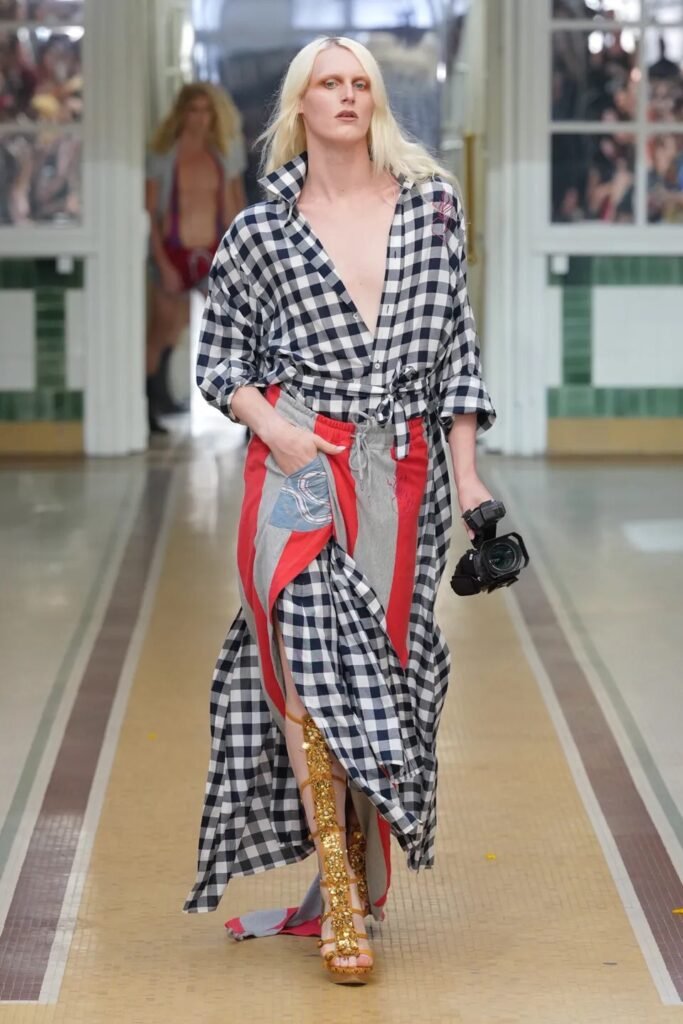
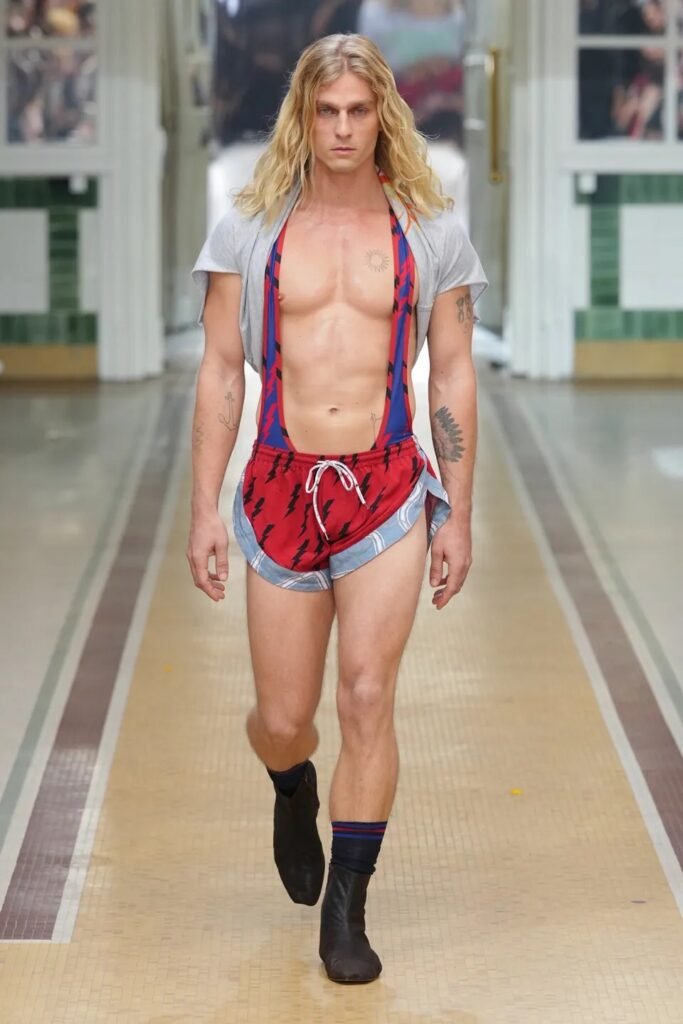
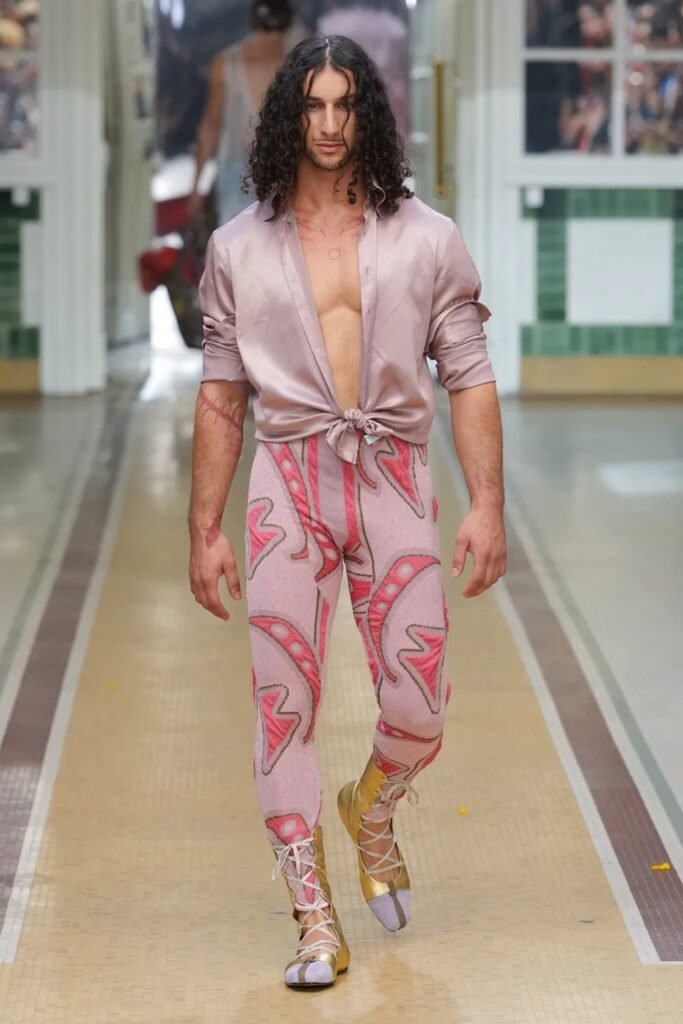
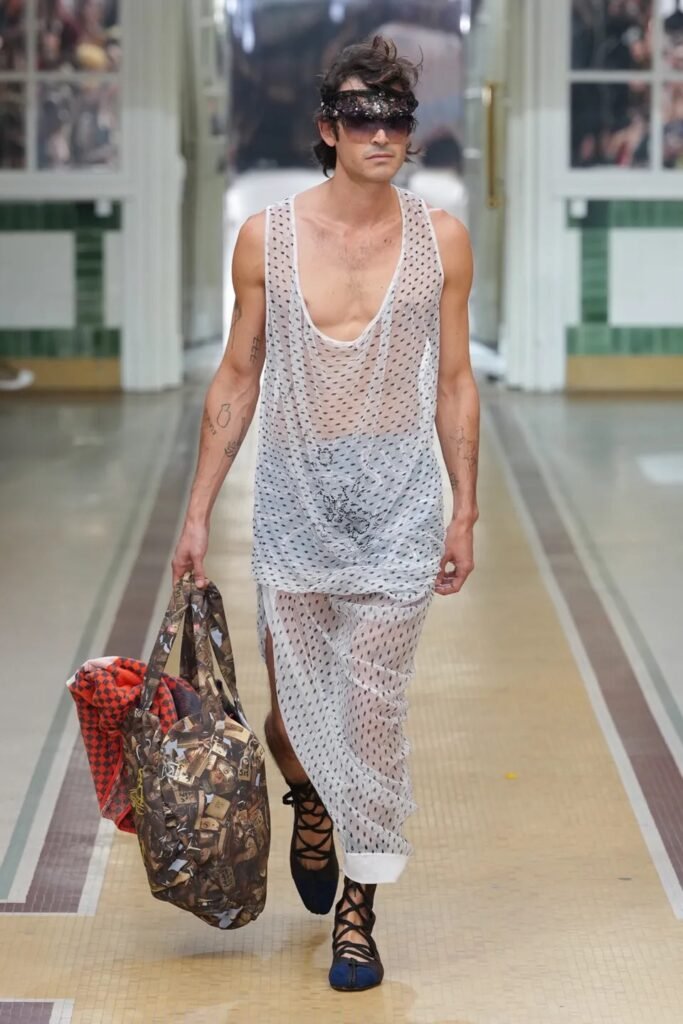
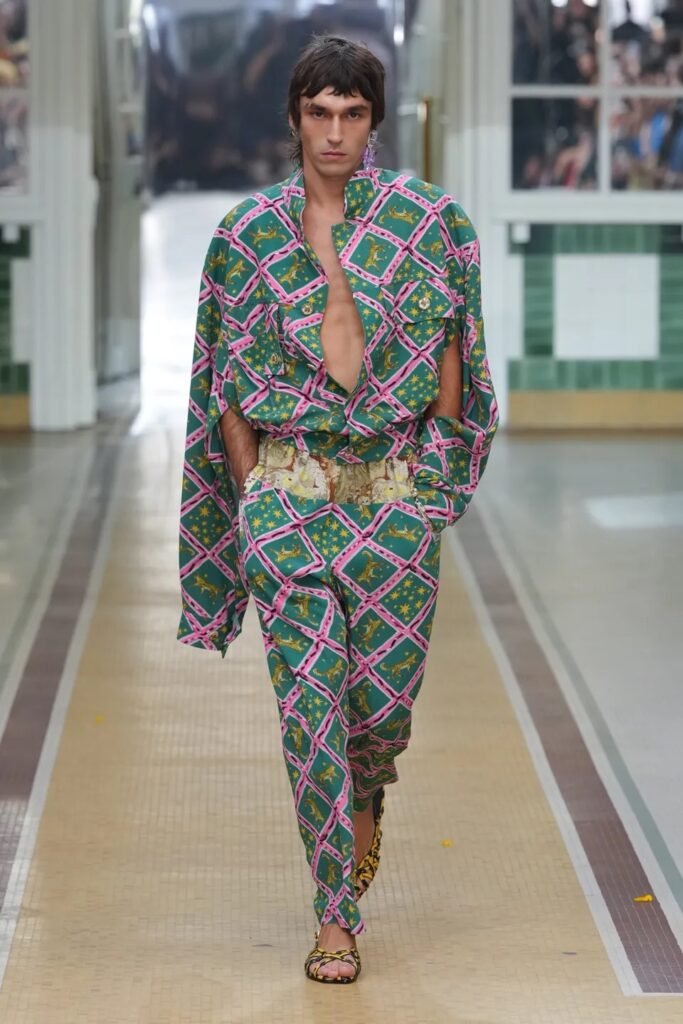
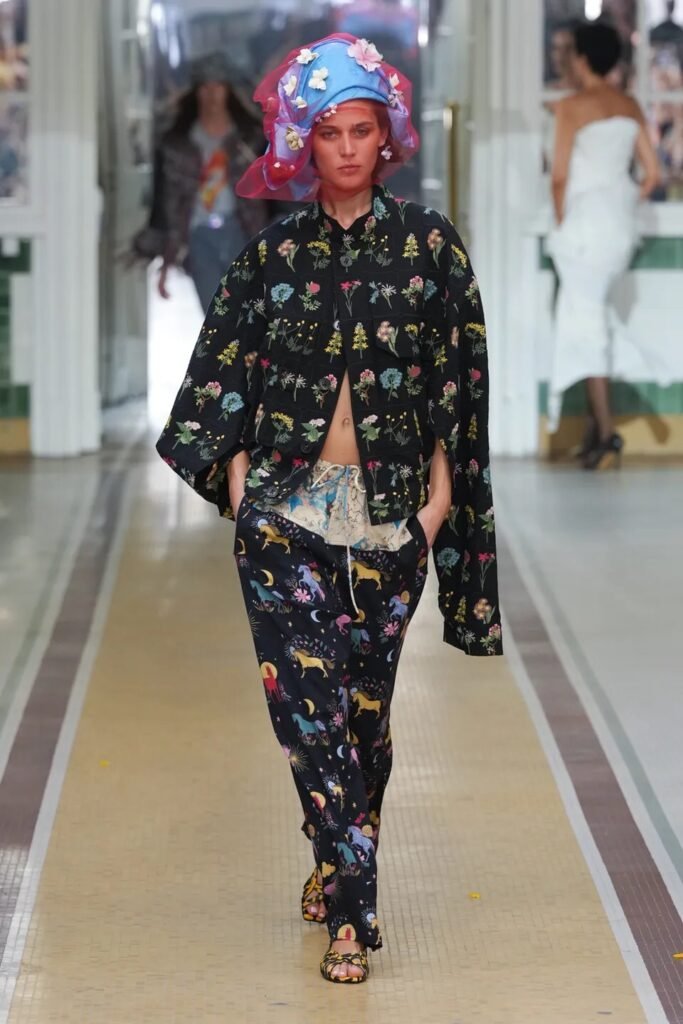
Vivienne Westwood Spring 2027 Ready-to-Wear arrived in Paris with the irreverence, sensuality, theatricality, and rebellious spirit that have long defined the house. For Spring 2027, Andreas Kronthaler continued the legacy of the late Dame Vivienne Westwood through a collection that was deliberately unruly—part punk spectacle, part erotic carnival, and part celebration of simply dressing for summer.
Presented in Paris on October 3, 2026, the collection marked an important moment for Kronthaler. Speaking backstage, he described the collection as being “about summer” and, more importantly, about what people actually want to wear. It was also his first collection since Westwood’s passing in which he felt he had properly found his way forward in continuing her tradition of using fashion as a vehicle for ideas and messages.
And this was not a quiet continuation. It was Westwood at her most mischievous.
A New Chapter for the Westwood Legacy
Vivienne Westwood’s influence on fashion has never been confined to a particular silhouette or era. From punk and historical dress to political activism and provocative tailoring, her work consistently challenged the conventions of what clothing was supposed to communicate.
Kronthaler’s Spring 2027 collection understood that legacy as something that should remain alive rather than preserved behind glass.
The runway was packed with the kind of visual contradictions associated with Westwood: historical references collided with contemporary sexuality, luxury fabrics met deliberately cheeky details, and tailoring was pushed into exaggerated, sometimes almost cartoonish proportions.
The result felt less like a traditional seasonal wardrobe and more like an invitation to participate in fashion as performance.
Punk Meets Summer Excess
The collection’s attitude was immediately apparent.
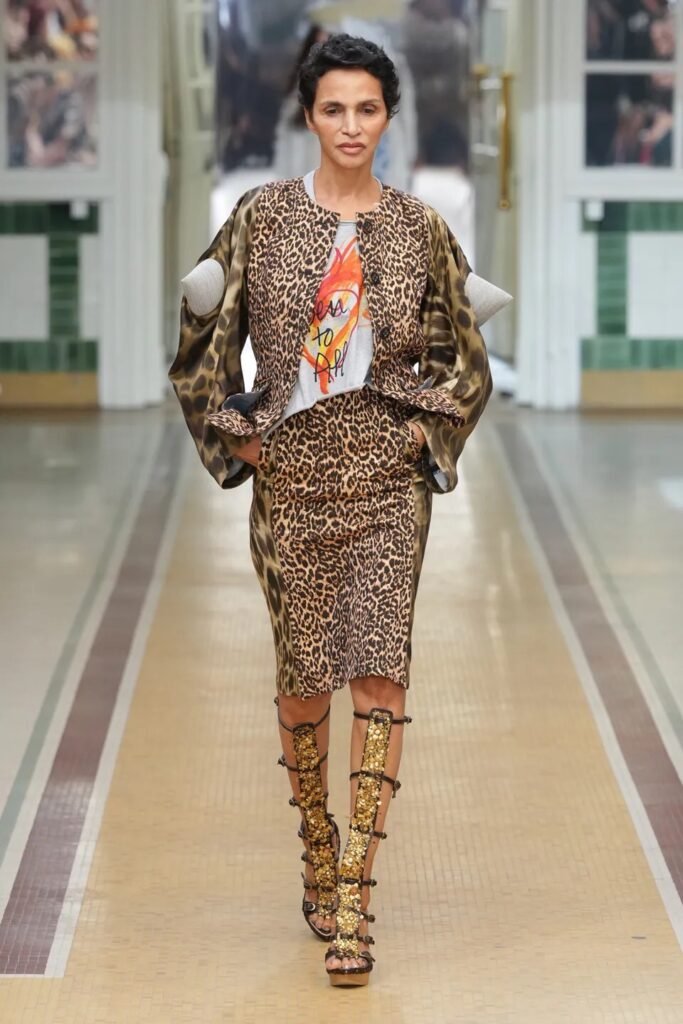
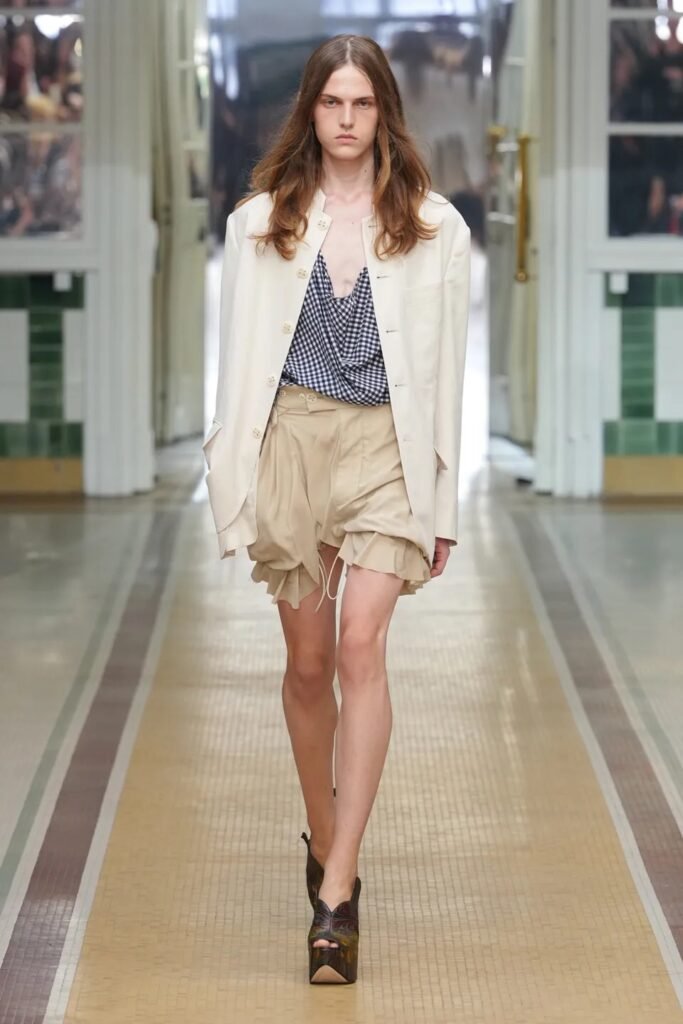
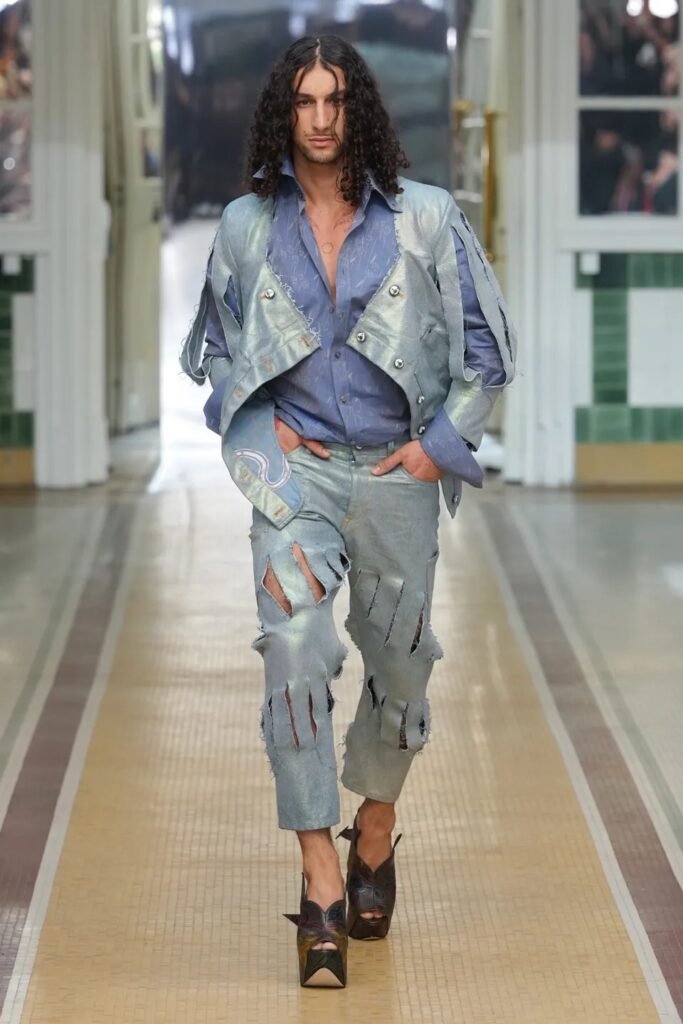
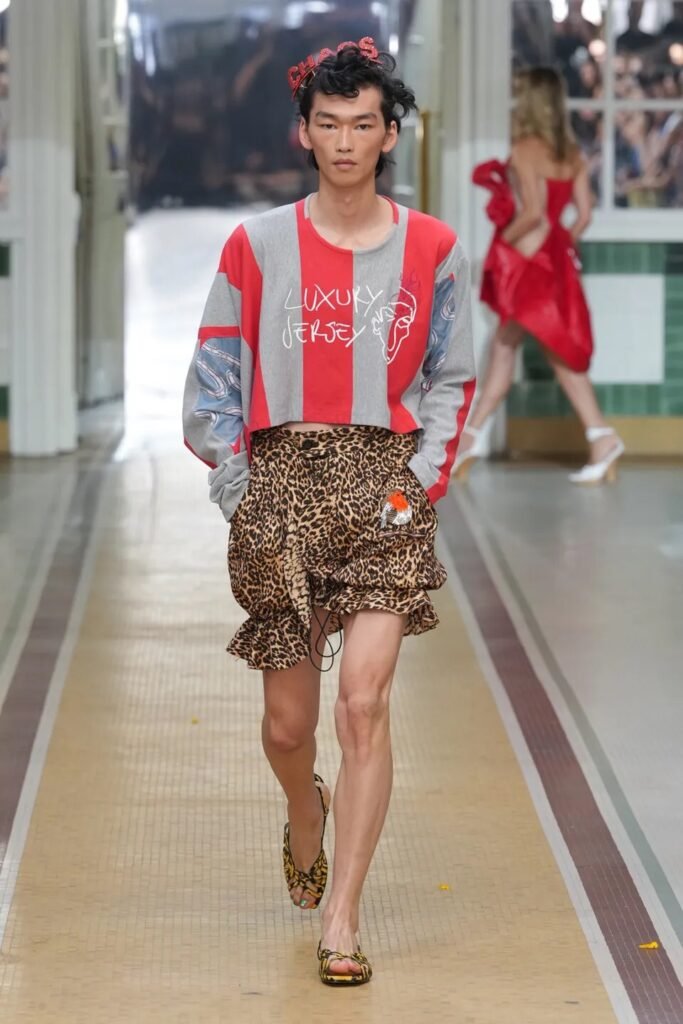
Paisley platforms were decorated with devil’s-horn motifs, while playful badges and provocative accessories amplified the punk irreverence. Leopard-print bloomers appeared with skewed vests, while tiny swimwear-inspired pieces were transformed into deliberately theatrical runway statements.
There was an almost carnivalesque quality to the styling.
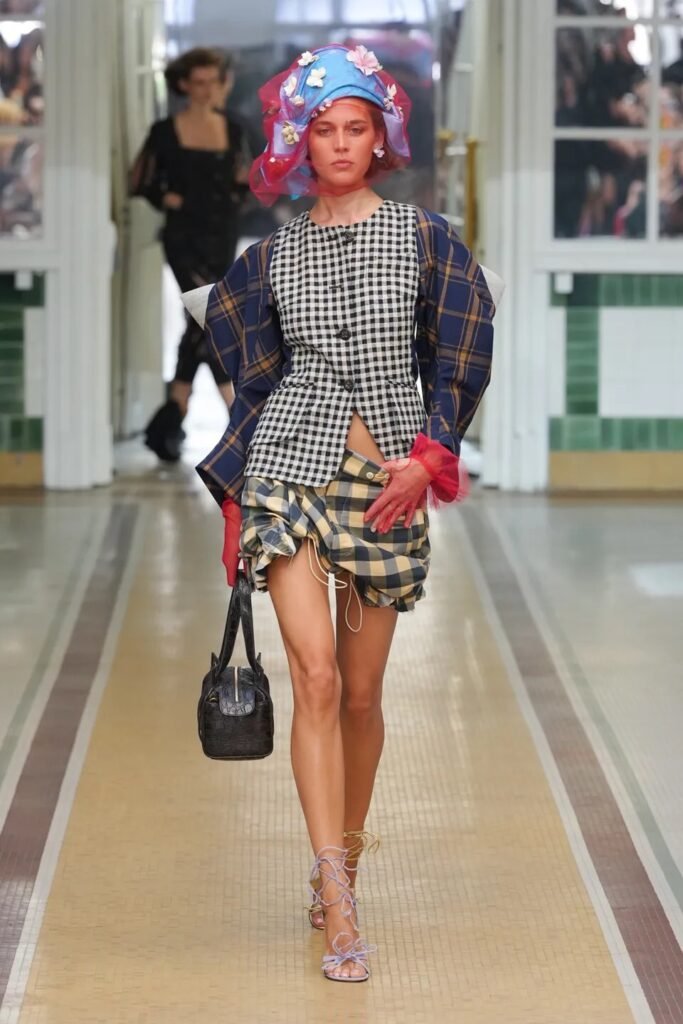
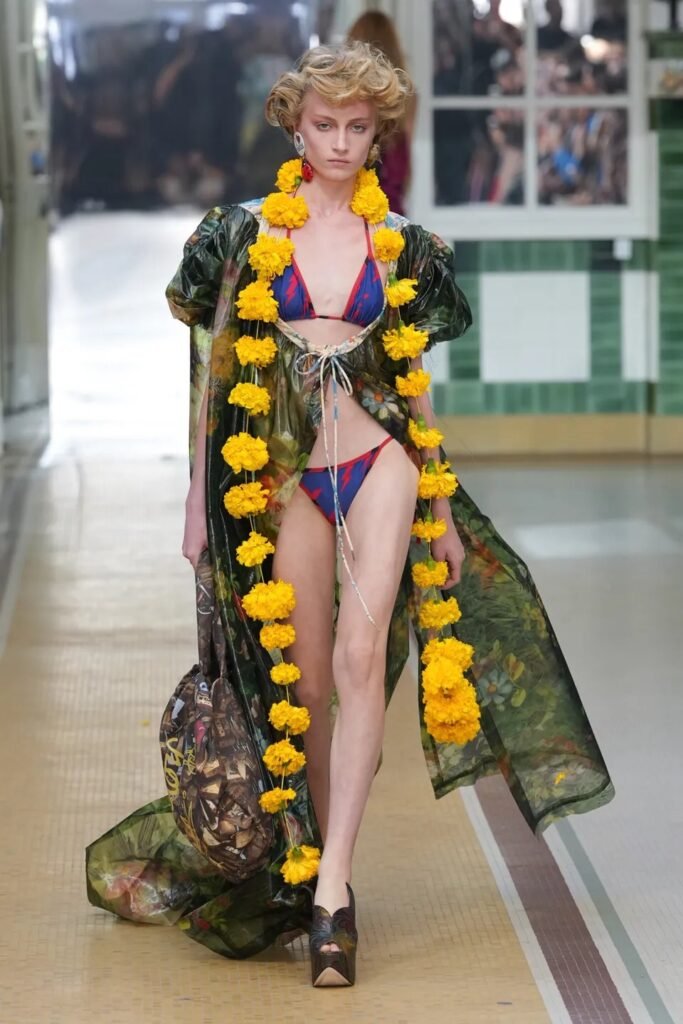
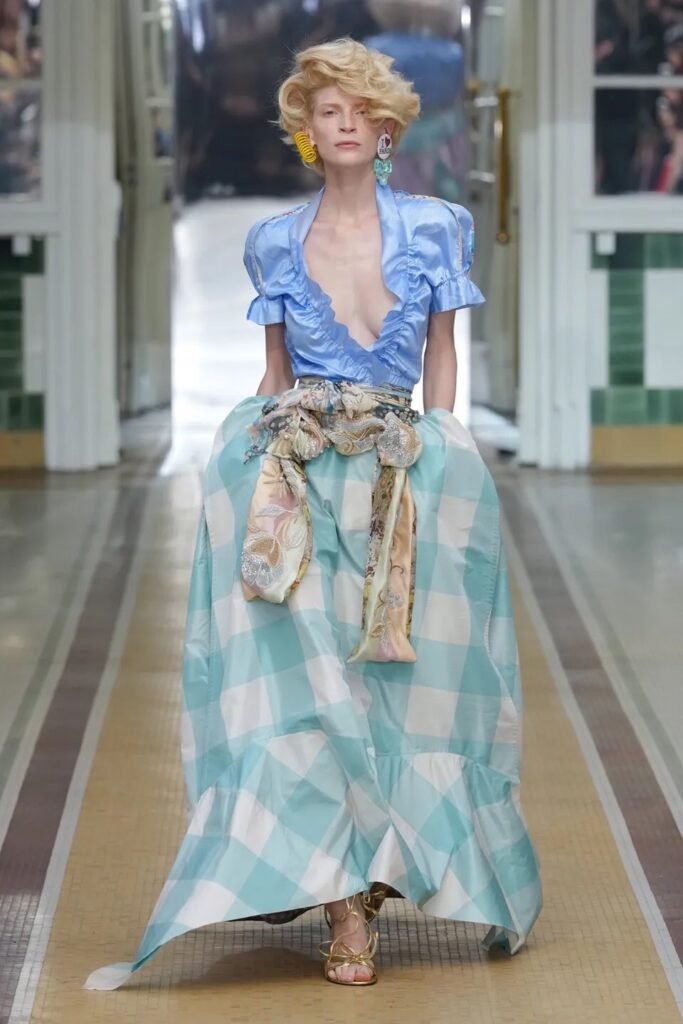
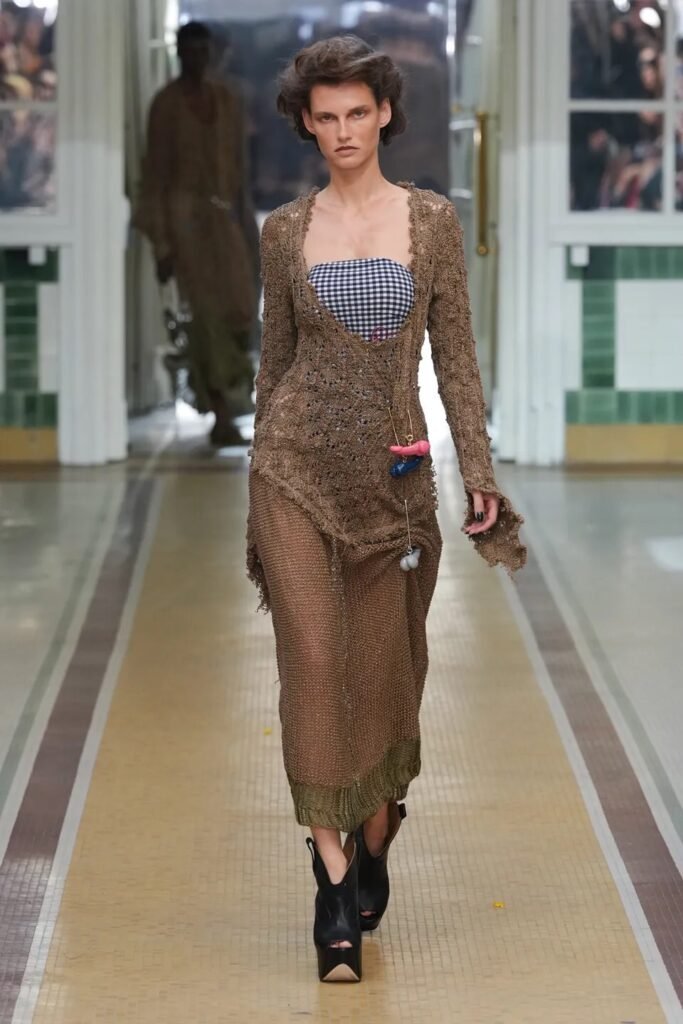
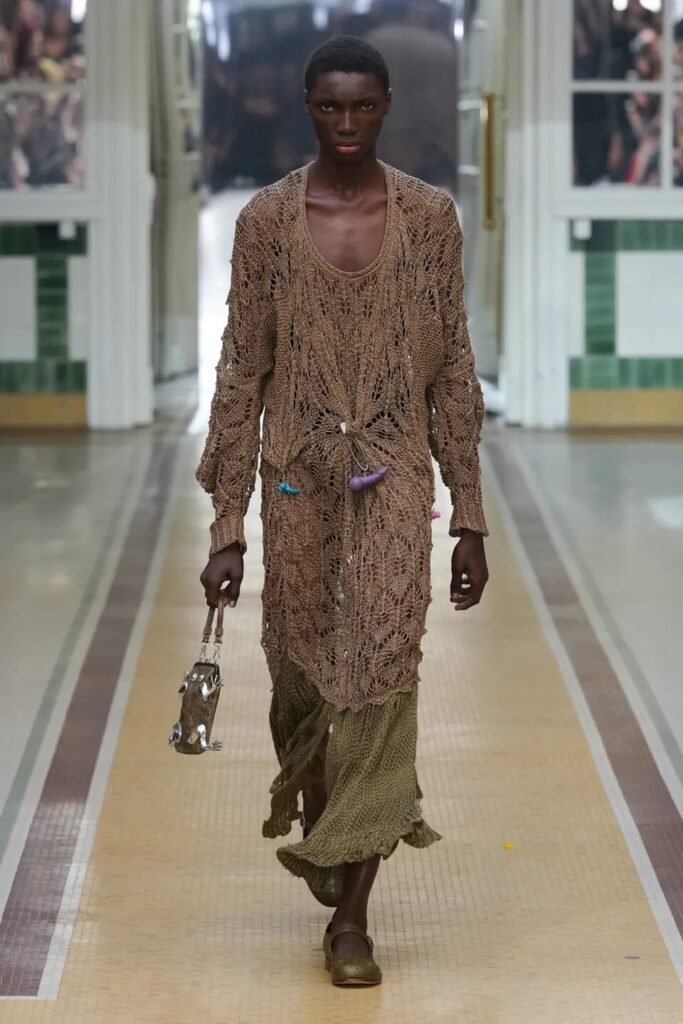
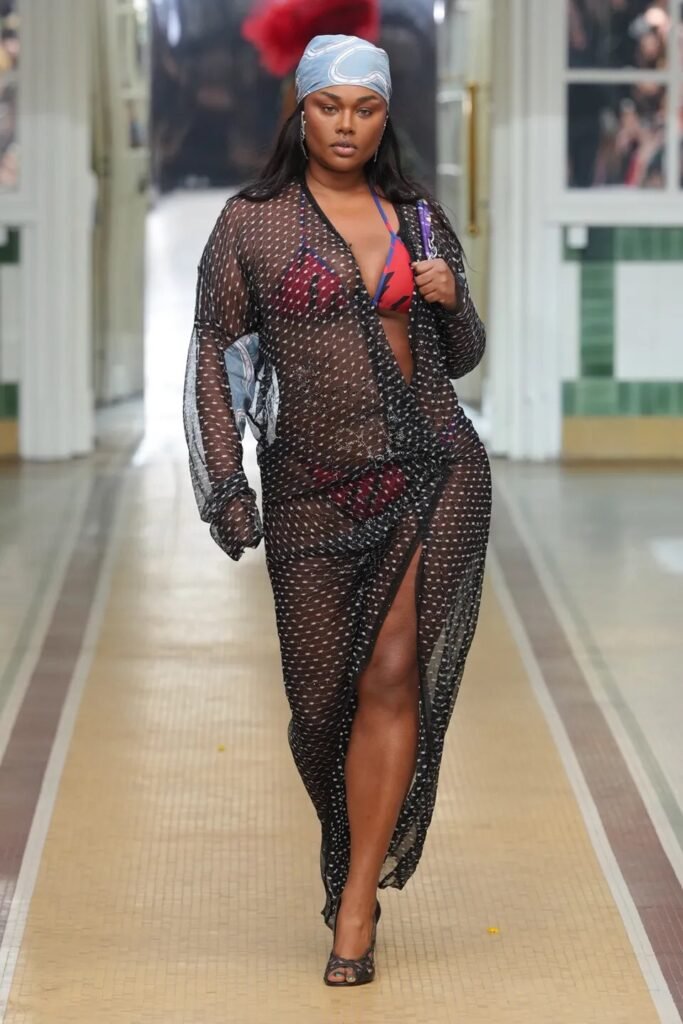
A tangerine pool float accompanied one of the more revealing looks, while an electrified-looking bikini was layered beneath mesh. Golden knitwear was decorated with provocative charms, while oversized gingham pannier skirts were paired with frilled satin blouses featuring dramatically plunging necklines.
Nothing was intended to behave quietly.
This is precisely where the collection felt most connected to Westwood’s original philosophy. The clothes were designed to attract attention, generate conversation, and occasionally make the viewer uncomfortable.
Fashion was entertainment—but it was also confrontation.
Gingham Gets the Westwood Treatment
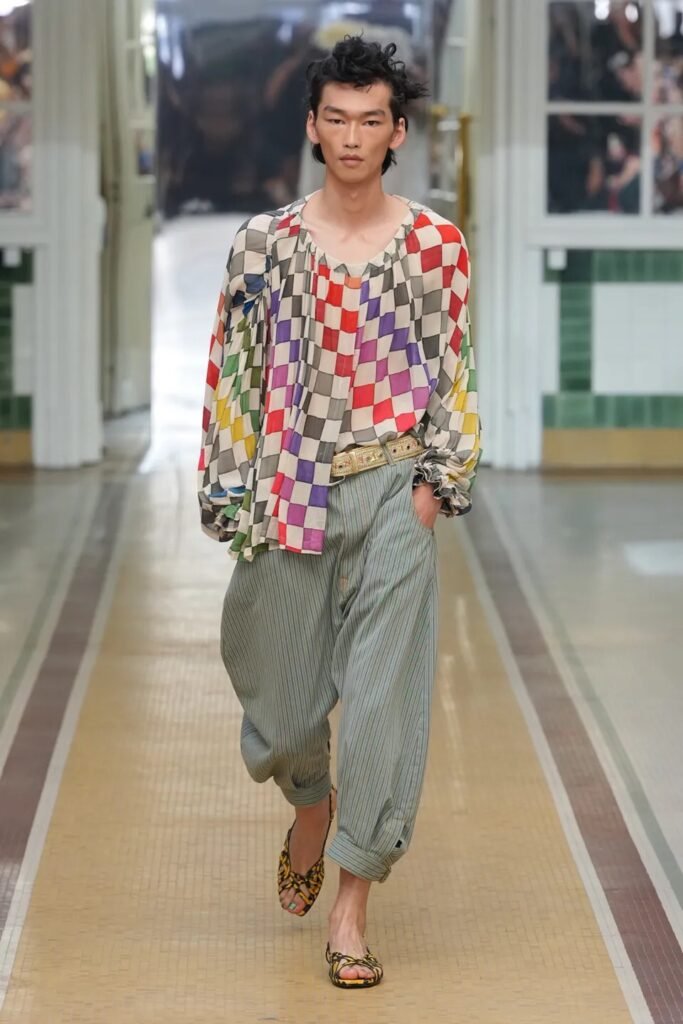
One of the collection’s strongest recurring motifs was gingham.
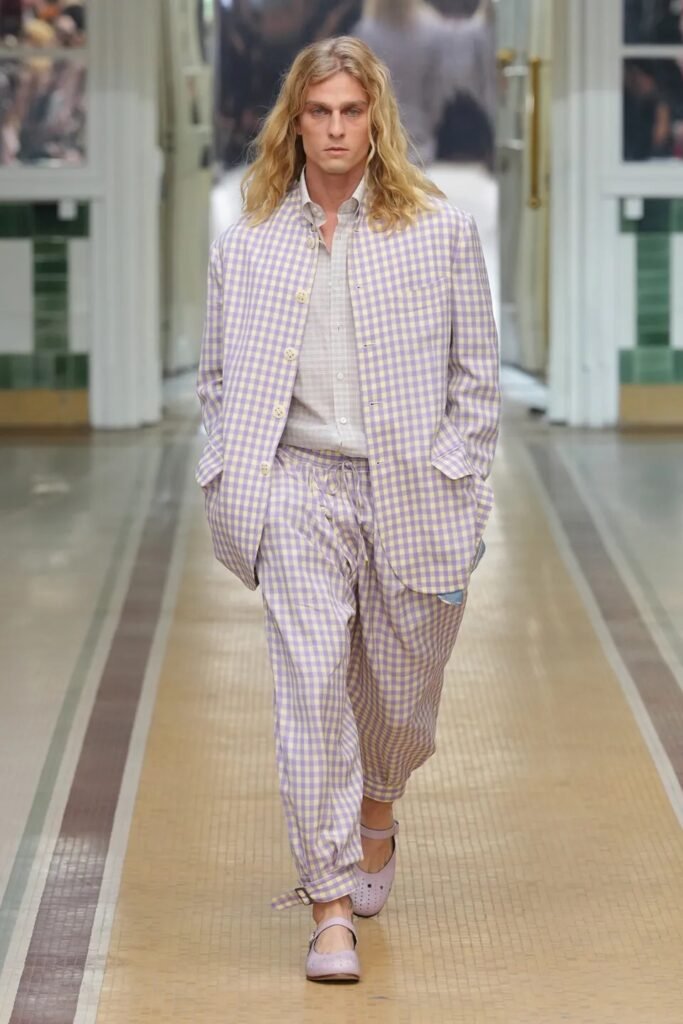
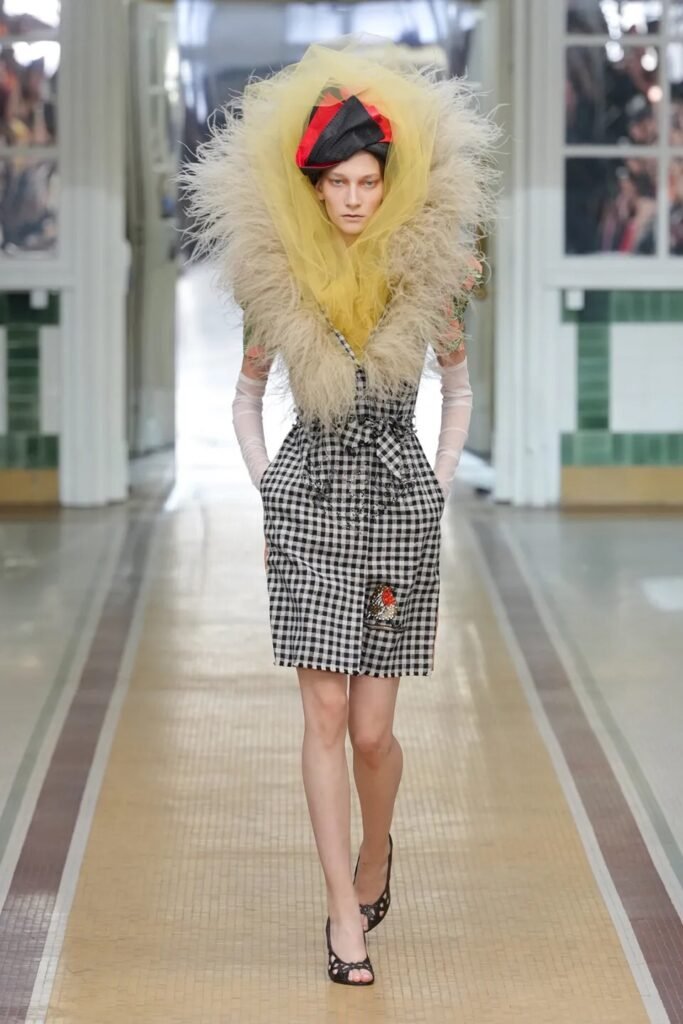
Rather than treating the familiar check as sweet or traditionally British, Kronthaler pushed it toward something exaggerated and theatrical. Oversized pannier skirts transformed the pattern into dramatic sculptural silhouettes, while gingham bustiers brought the fabric into more sensual territory.
The contrast between structured volume and exposed skin gave the collection an unmistakably Westwood quality.
It was historical dress stripped of restraint.
Gingham has long carried associations with British countryside dressing, but in Westwood’s hands it becomes something far more provocative. Here, it helped establish a dialogue between British heritage and punk sexuality.
Lace, Tulle and the Art of Revealing
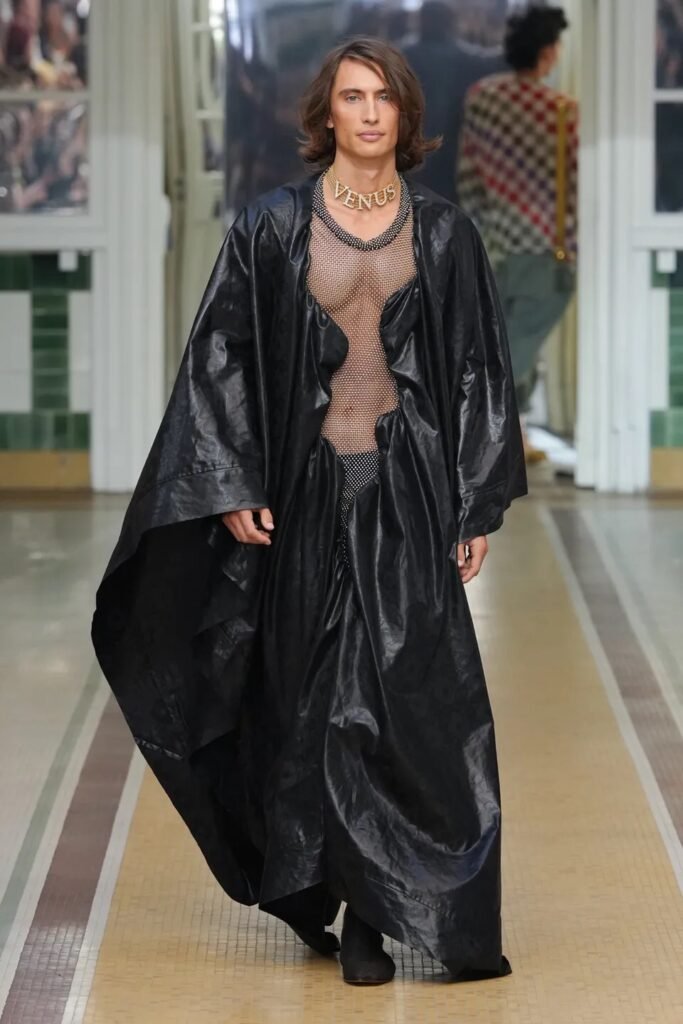
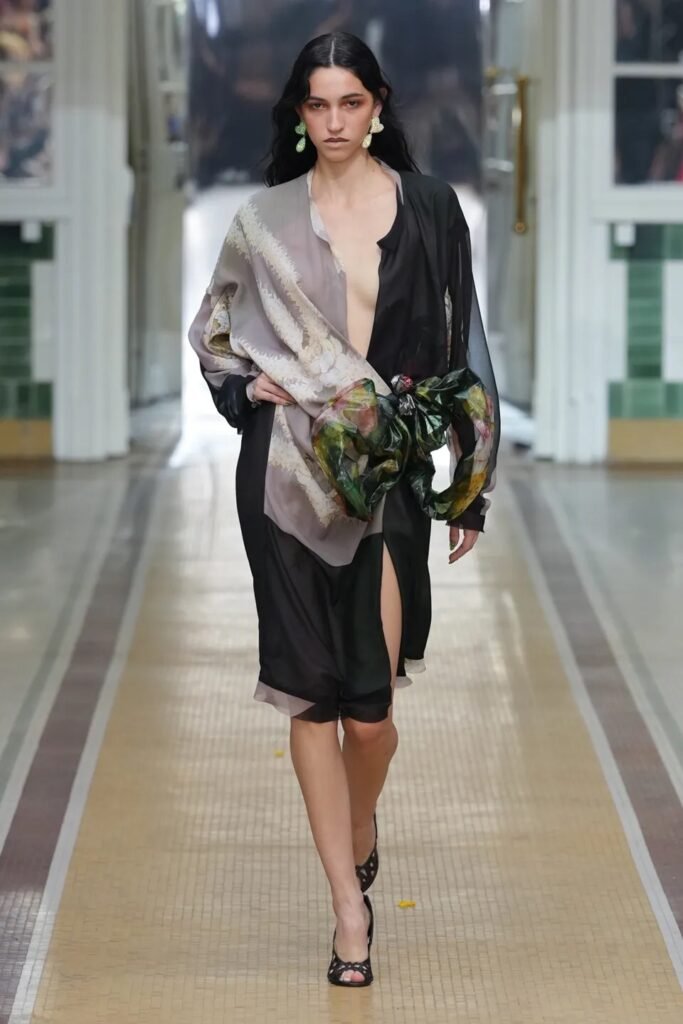
Transparency remained another important part of the Spring 2027 vocabulary.
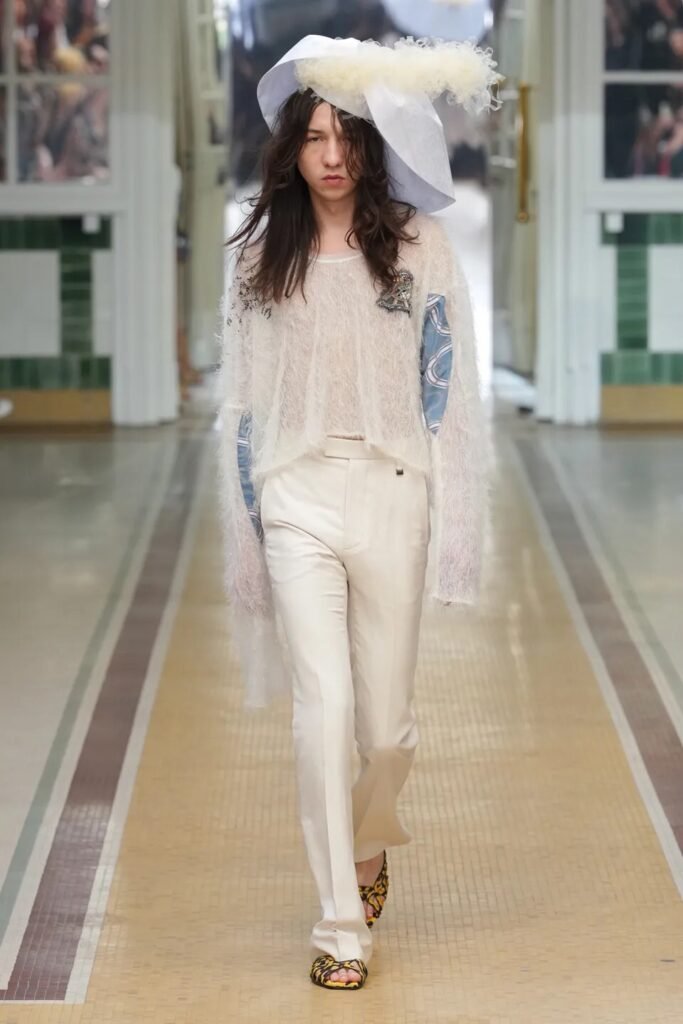
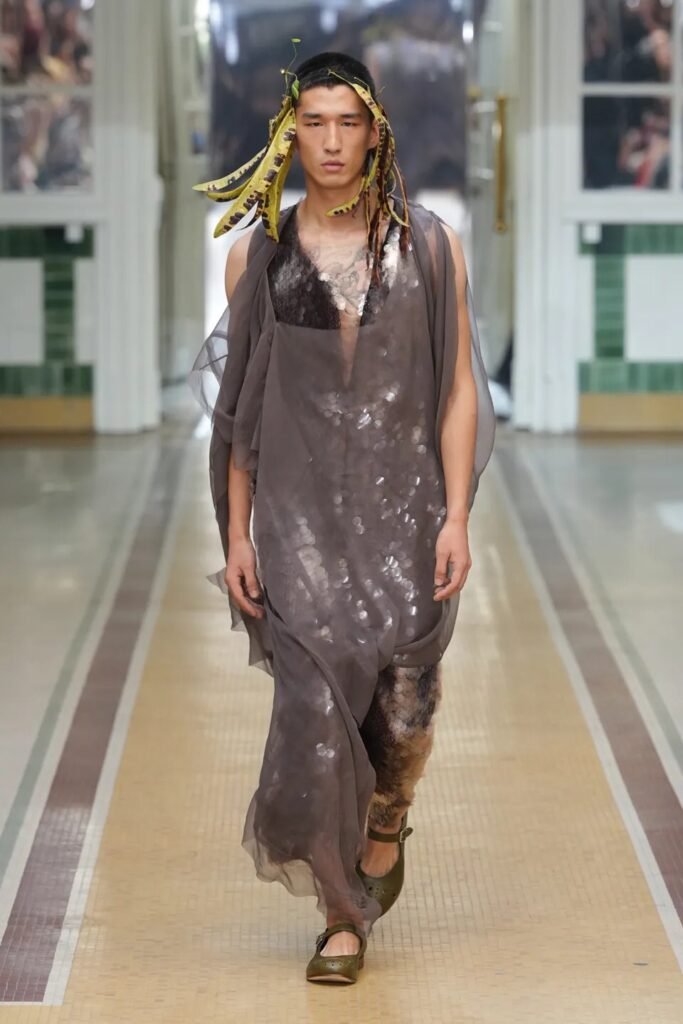
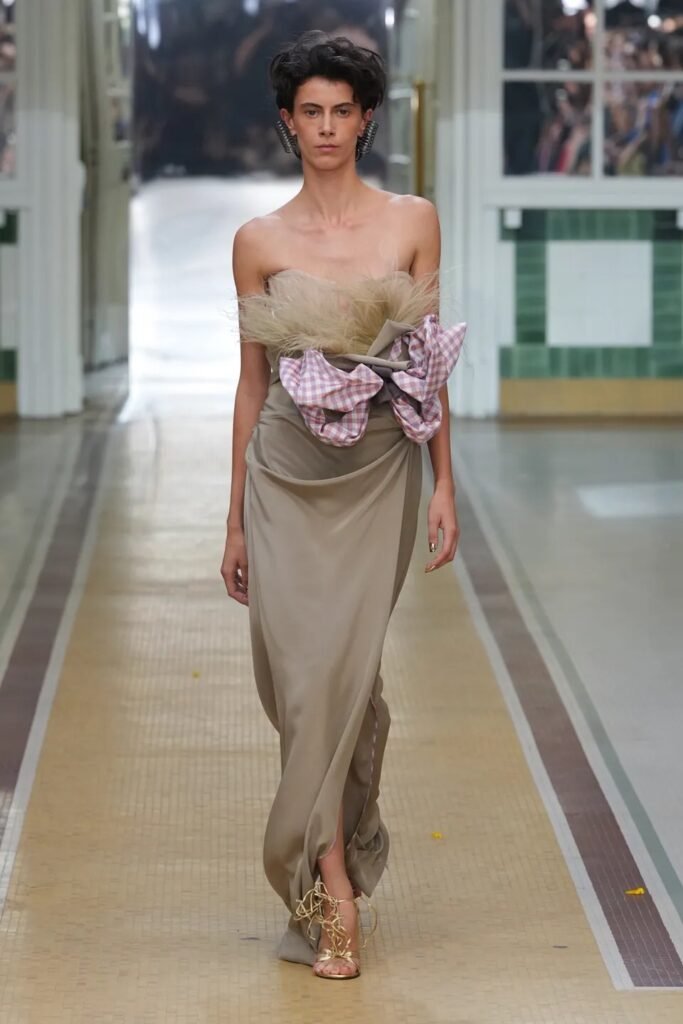
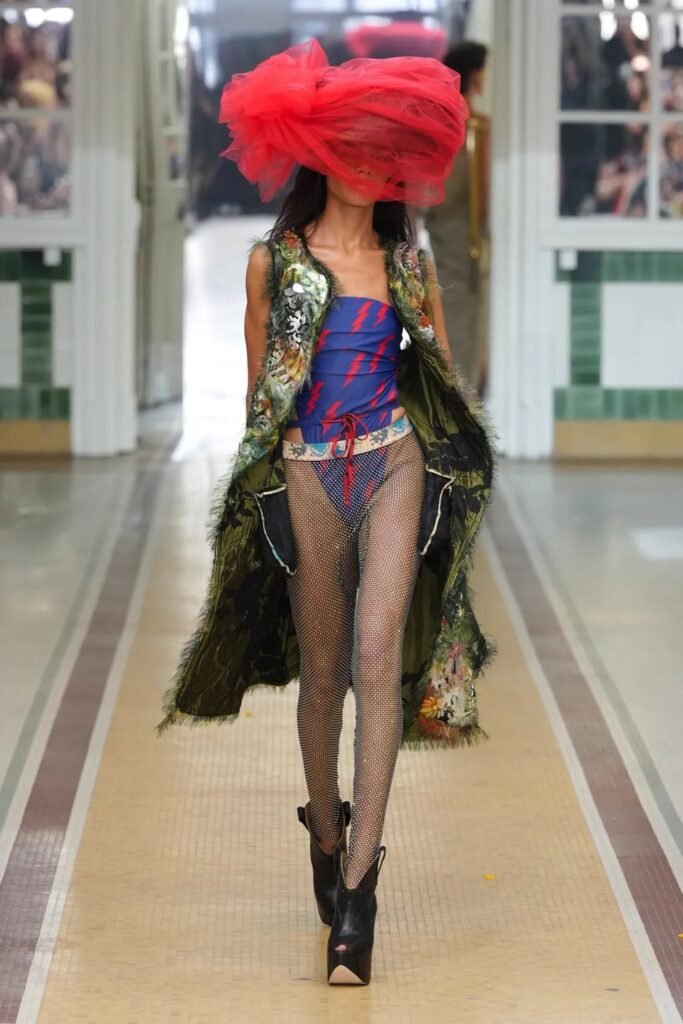
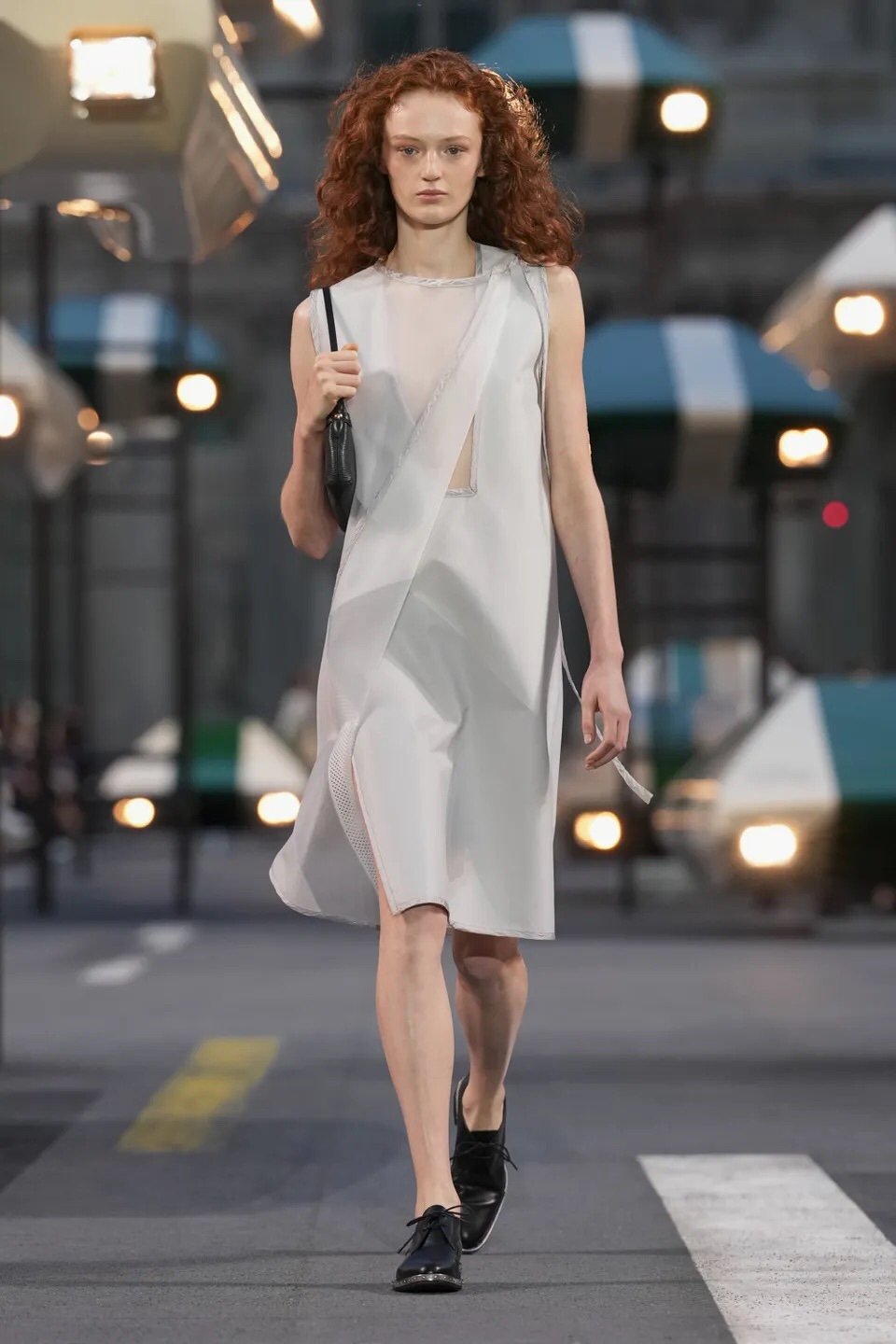
Lightweight tulle corsetry floated around the body, sometimes layered over other garments and sometimes incorporated into elaborate combinations of satin, bodices, and headpieces.
Rather than simply using sheer fabric for decoration, Kronthaler treated transparency as a structural device.
The body became part of the design.
Tulle created movement and volume while simultaneously revealing the figure beneath it. Corsetry emphasized the waist, satin introduced a polished sense of glamour, and exaggerated proportions prevented the looks from becoming conventionally sensual.
This tension between seduction and absurdity is central to the Westwood vocabulary.
From Barbès to the Runway
Fabric played an equally important role.
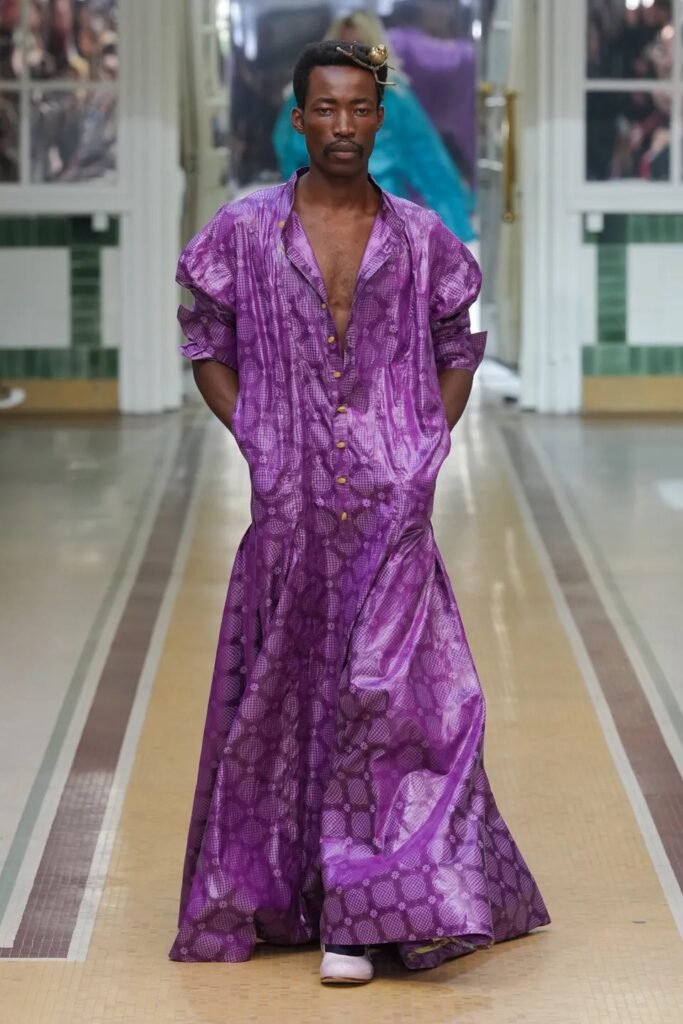
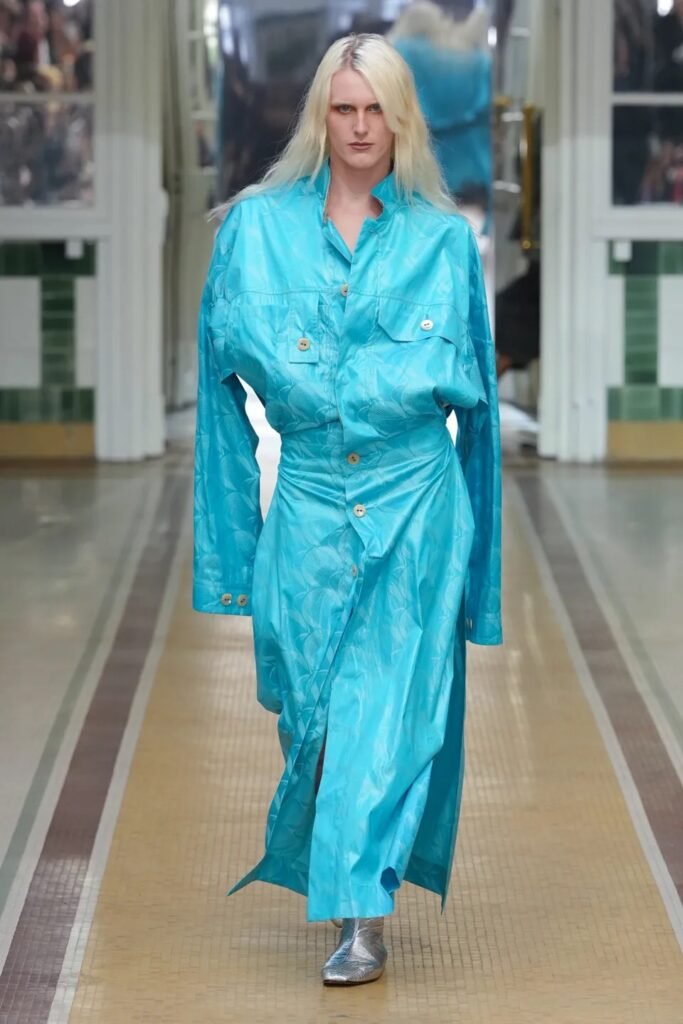
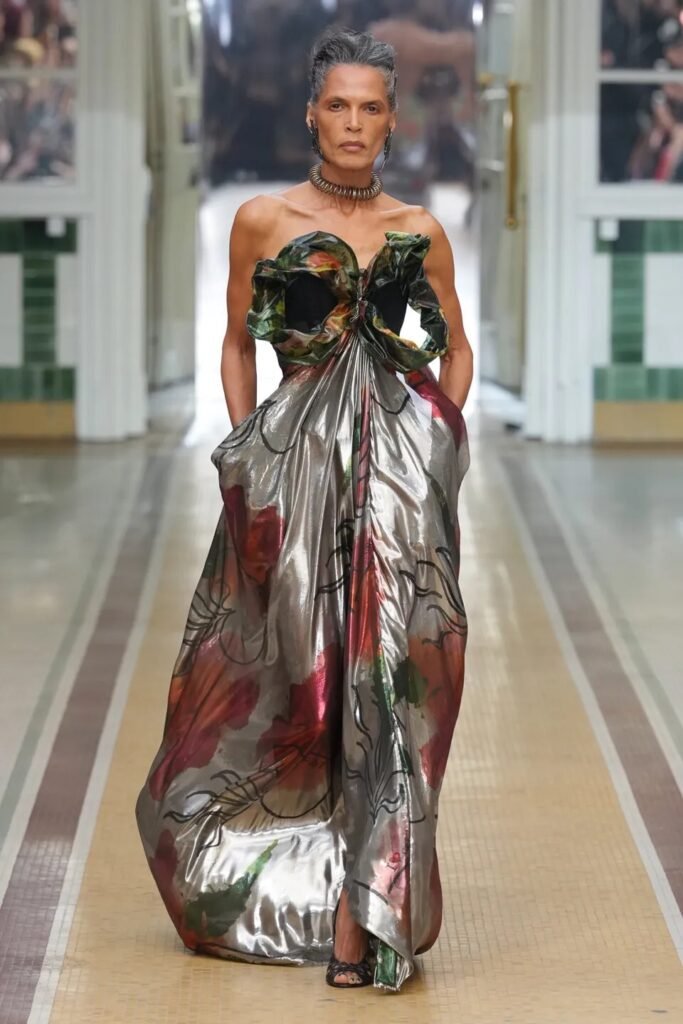
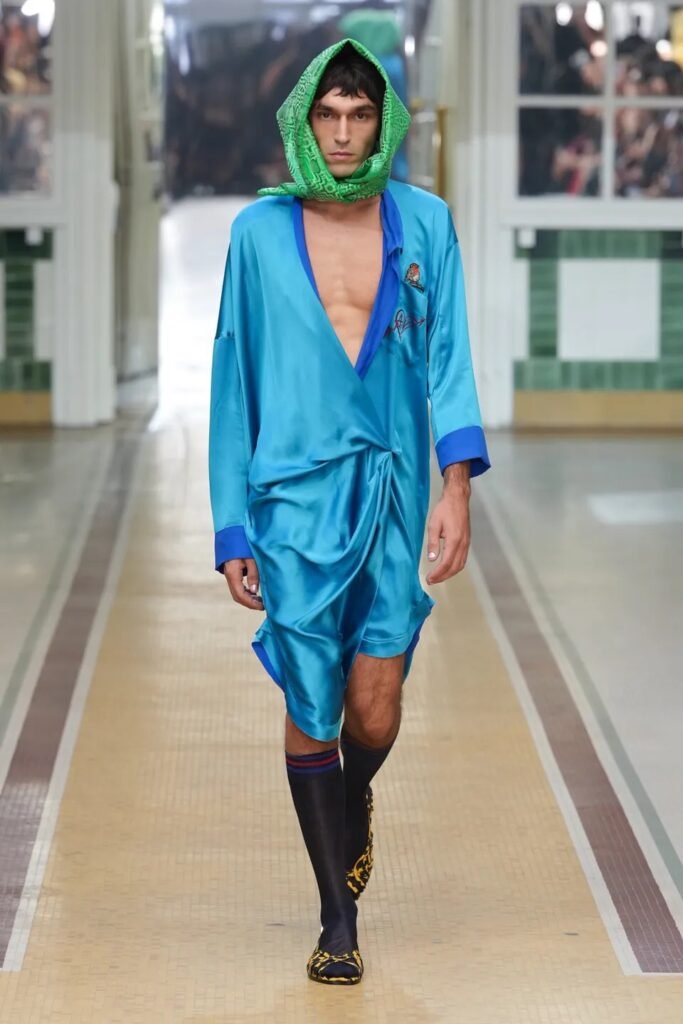
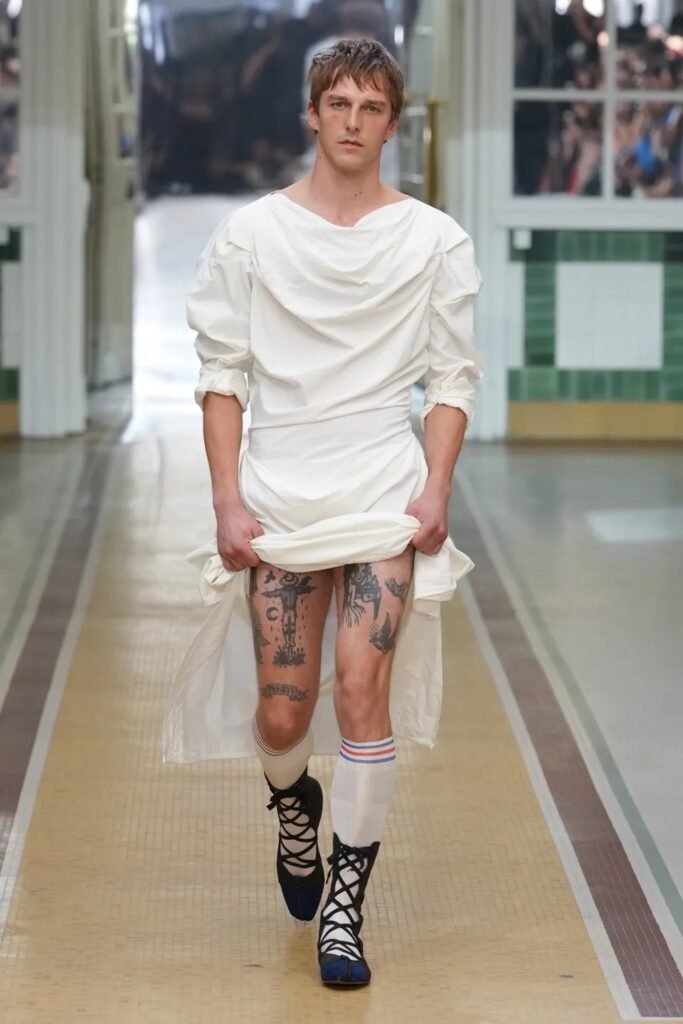
Kronthaler incorporated vivid bazin cotton sourced from Paris’s Barbès neighborhood, using the lustrous material for voluminous nightshirts. The bright textiles introduced another layer of cultural and visual richness to a collection already overflowing with prints, textures, and embellishment.
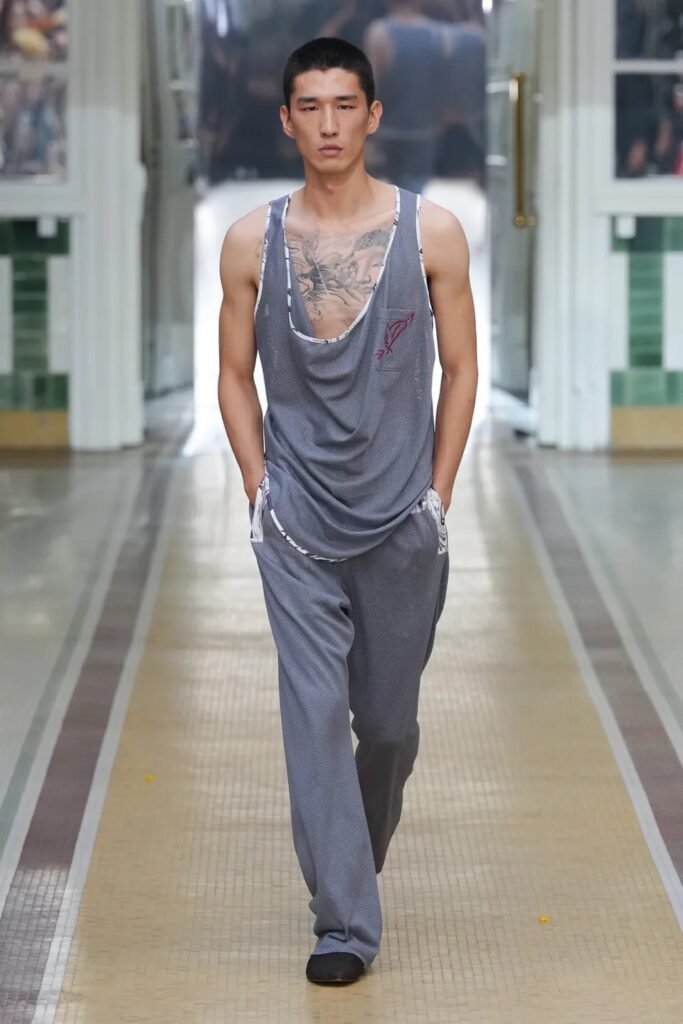
The nightshirt silhouettes brought a sense of ease into the otherwise extravagant wardrobe.
They looked comfortable, oversized, and deliberately relaxed—yet their saturated color and generous proportions made them impossible to overlook.
This was one of the collection’s most successful ideas: everyday dressing elevated through attitude rather than unnecessary complication.
Historical Westwood References
Despite its contemporary energy, Spring 2027 remained deeply connected to the history of the house.
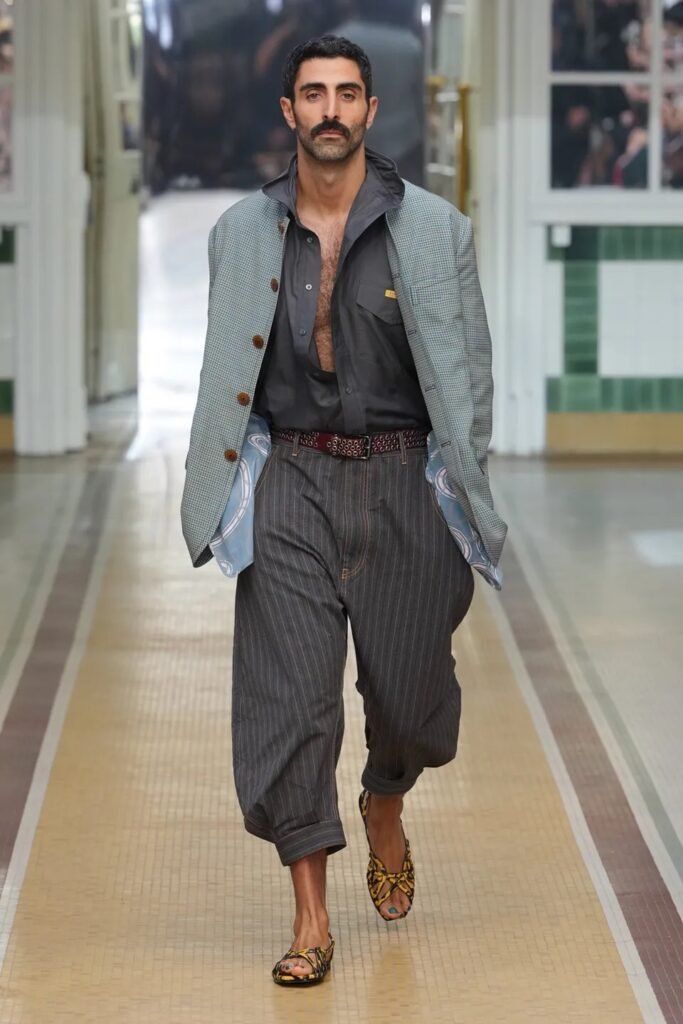
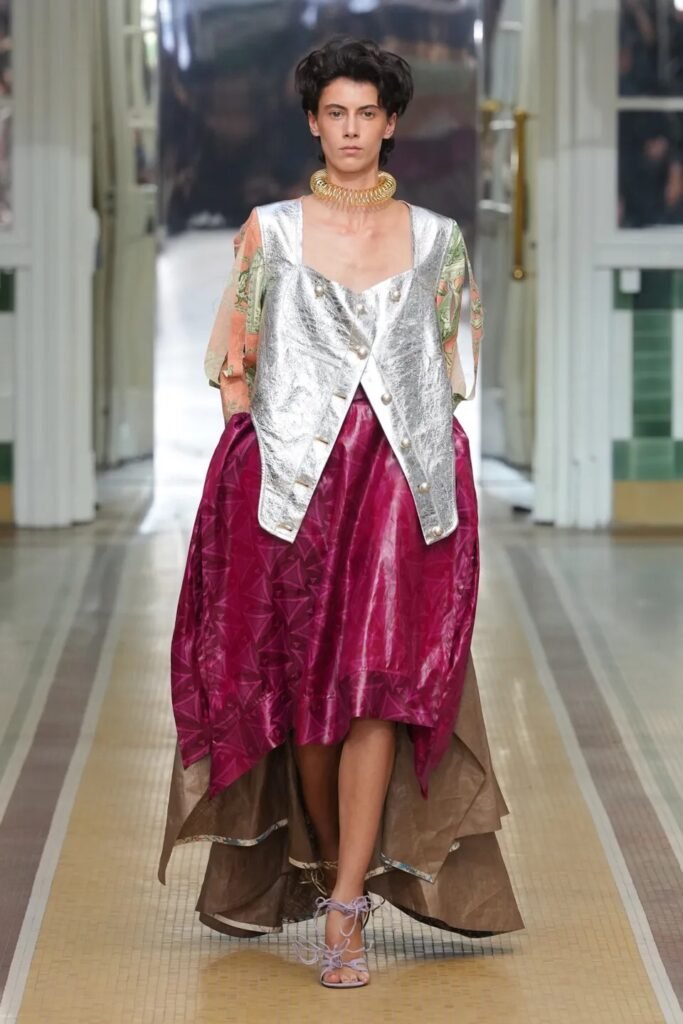
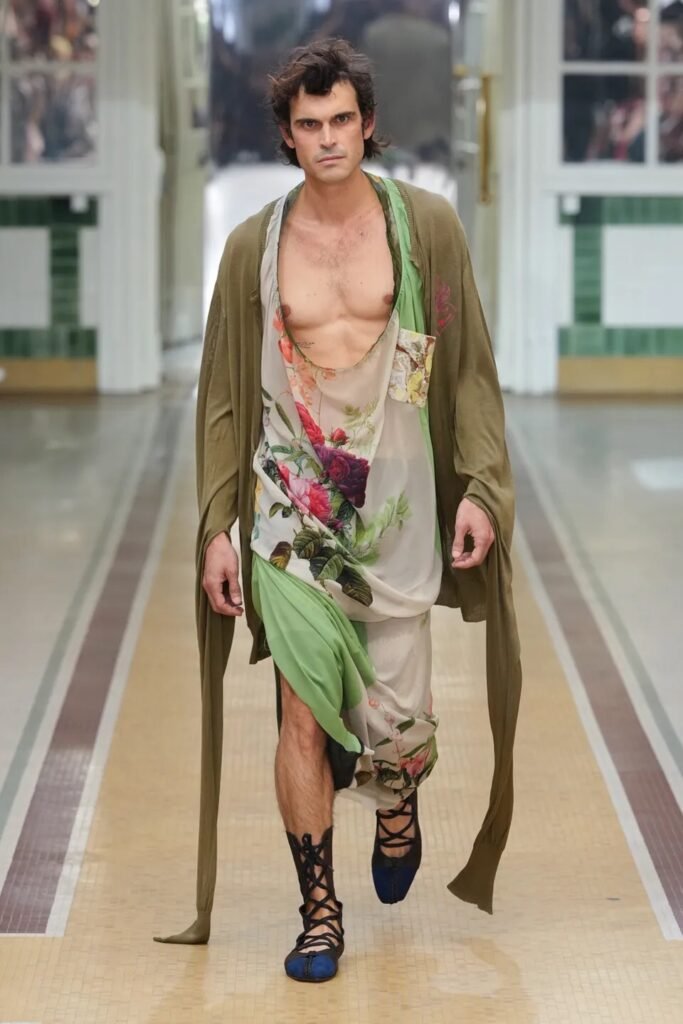
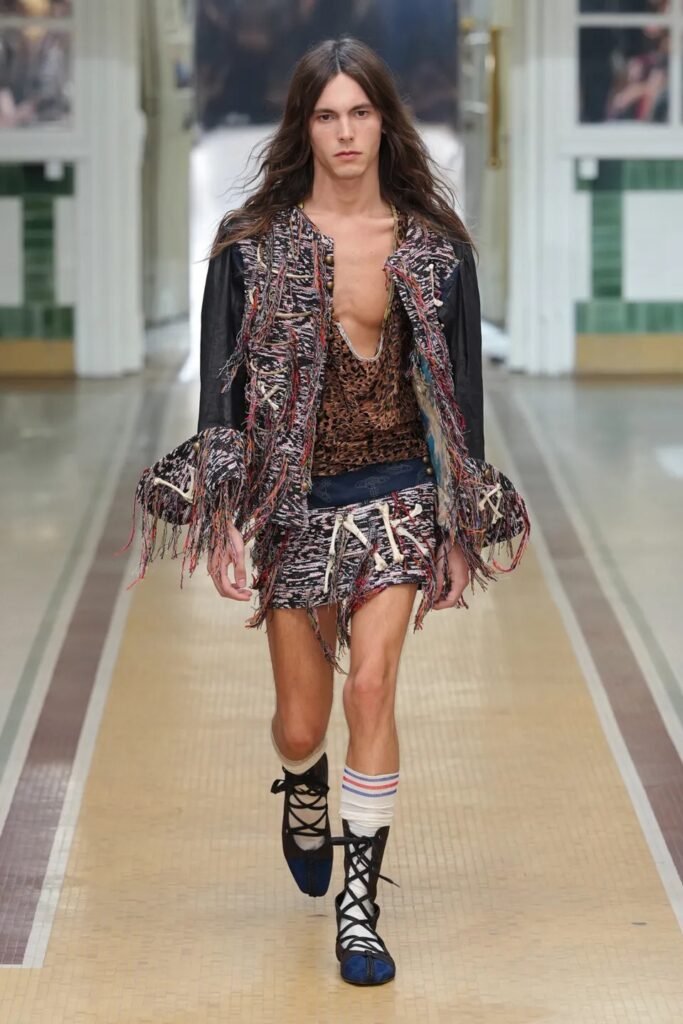
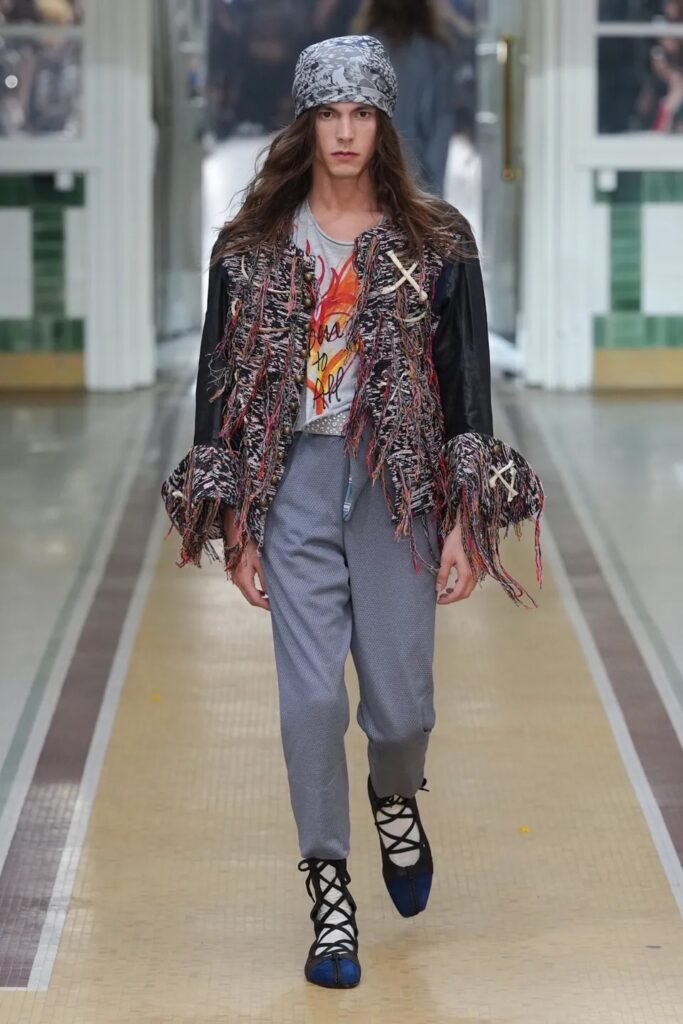
One of the notable references was the Cheat Jacket, a silhouette derived from 17th-century dress and repeatedly reinterpreted throughout Westwood’s career.
Kronthaler revisited the idea through contrasting materials, placing refined cloth where it would be visible while using humbler fabric in less noticeable areas.
It was an appropriately Westwood approach.
Historical clothing was never treated as something untouchable. Instead, it was something to dismantle, distort, remix, and make relevant again.
That philosophy remains one of the strongest reasons Westwood continues to feel so contemporary.
Fringed Coats and Theatrical Tailoring
Tailoring arrived with considerable drama.
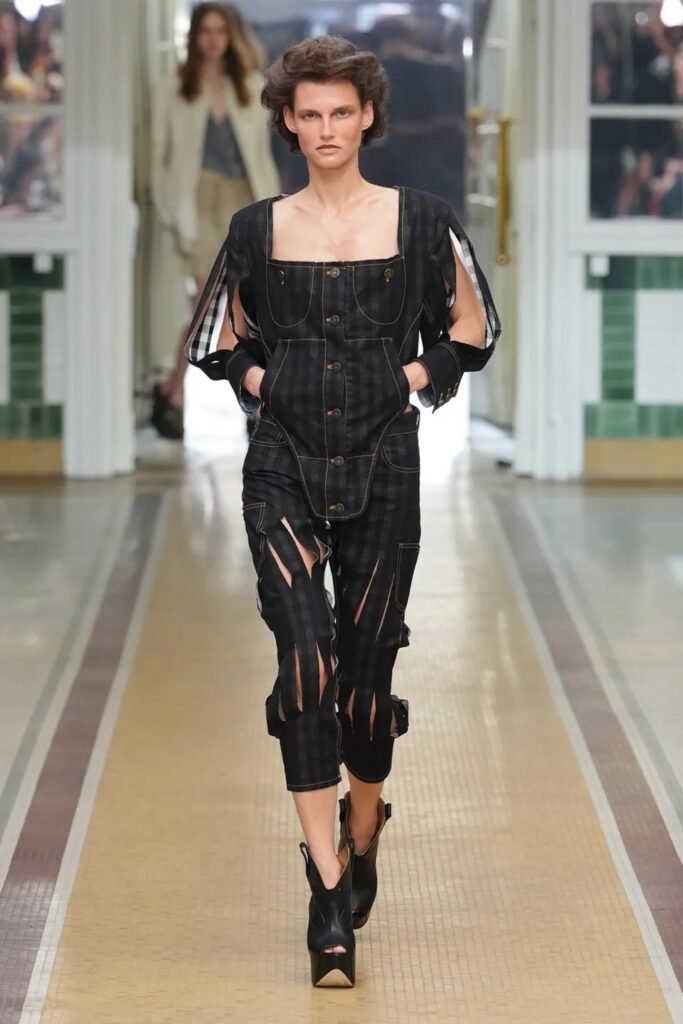
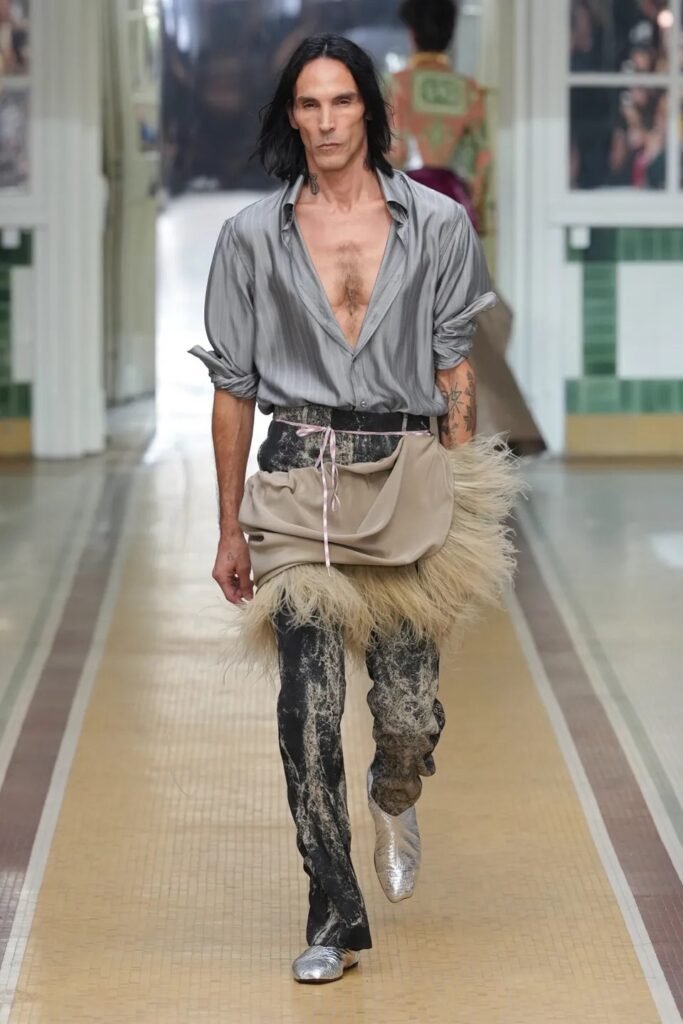
Heavily worked fringed coatdresses brought movement to the runway, while tailored pieces were exaggerated through unconventional proportions and unexpected styling.
The tailoring never felt corporate.
Instead, jackets, coats, and structured pieces became part of the collection’s theatrical language. They were sensual, eccentric, and occasionally outrageous—clothes that seemed designed for someone who wants to enter a room and immediately change its atmosphere.
That sense of spectacle is essential to understanding the Spring 2027 collection.
Leopard, Plaid and Animal Instinct
Prints were allowed to clash freely.
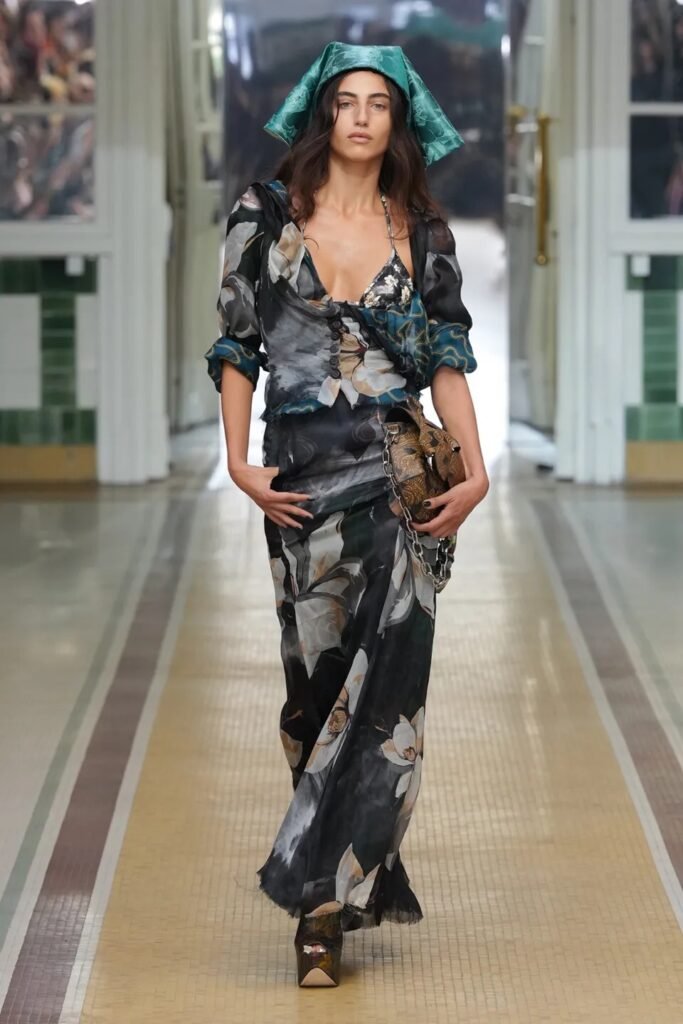
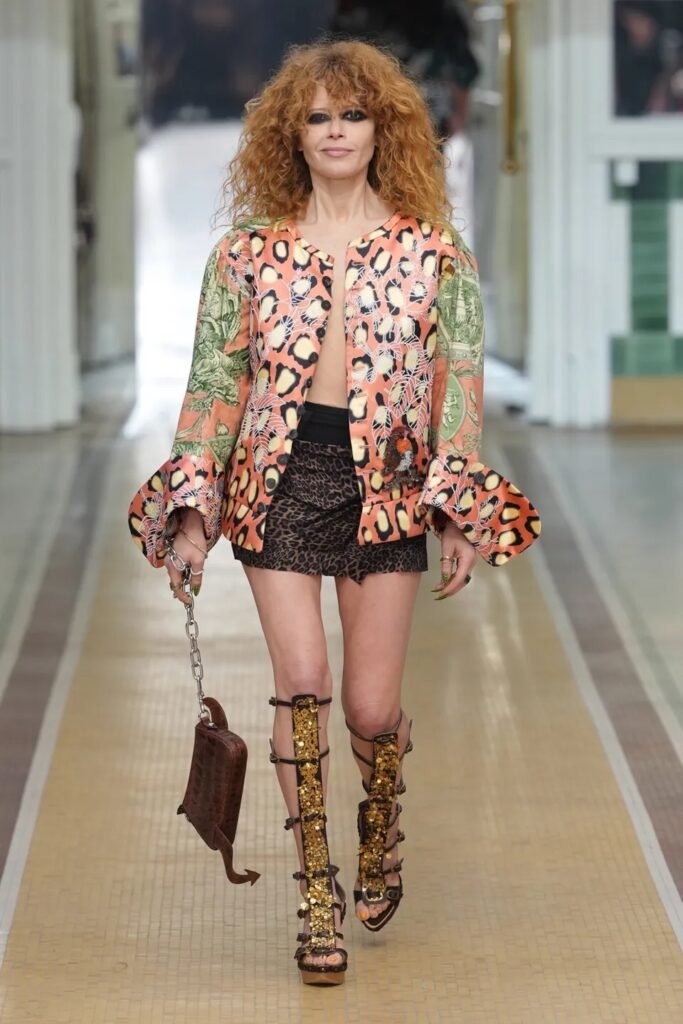
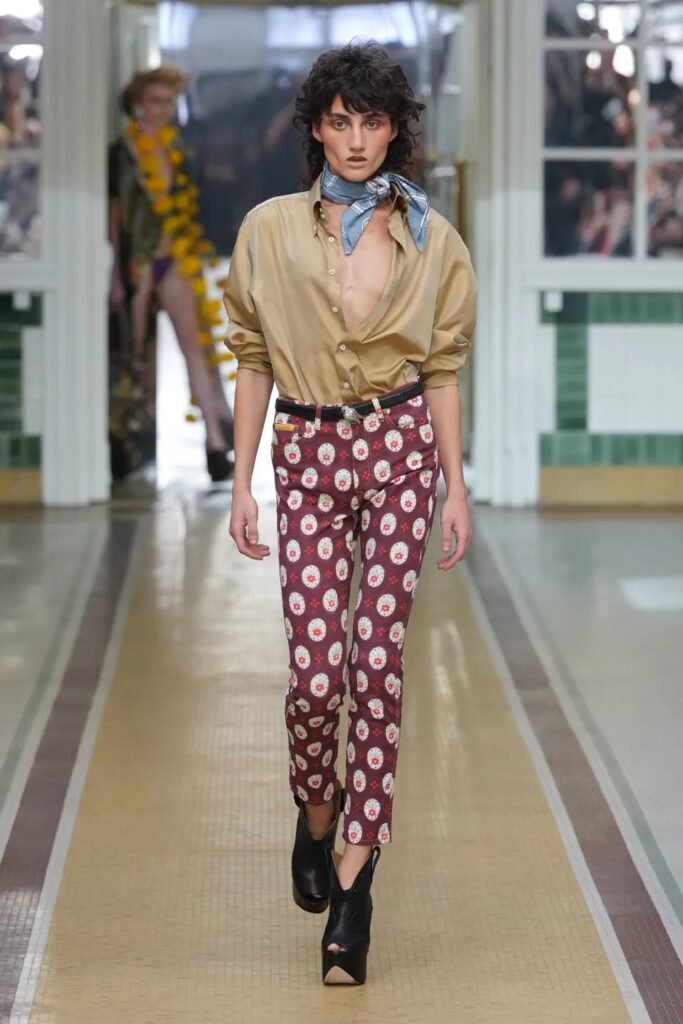
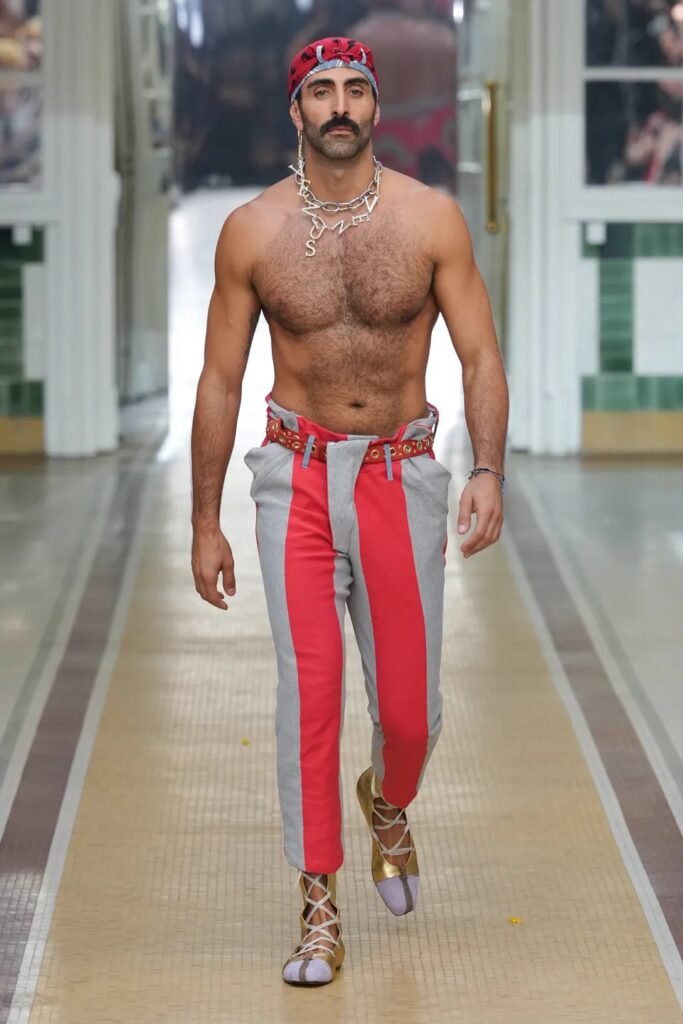
Leopard appeared in abbreviated, provocative silhouettes, while gingham, paisley, plaid, and other patterns competed for attention. The collection embraced visual excess rather than attempting to establish a single polished aesthetic.
This was not minimalism.
It was maximalism with a punk attitude.
The styling suggested that fashion doesn’t always need to be harmonious. Sometimes the excitement comes from combining pieces that technically shouldn’t work together—and discovering that they work precisely because they shouldn’t.
The Shoes Were Part of the Statement
Footwear played a particularly important role in establishing the collection’s attitude.
Platform shoes and boots exaggerated the body and added to the sense of theatricality. Paisley platforms featuring devil’s horns were among the collection’s most immediately recognizable accessories, extending the rebellious mood from clothing to the ground beneath it.
The shoes weren’t finishing touches.
They were characters in their own right.
Like much of Westwood’s fashion vocabulary, they transformed height and proportion into a form of visual rebellion.
Fashion as a Message
Perhaps the most significant aspect of Spring 2027 was its understanding of fashion as something capable of communicating beyond aesthetics.
Kronthaler described his renewed collaboration with suicide-prevention charity Body & Soul as part of the collection’s message. The runway was accompanied by a live performance from punk poet Stuart McKenzie, with archival samples of Vivienne Westwood’s voice woven into the soundtrack.
That connection to Westwood’s own voice made the presentation particularly poignant.
Her approach to fashion was never simply about making beautiful clothes. She used clothing to question authority, challenge social conventions, advocate for causes, and encourage people to look more closely.
The Spring 2027 collection continues that idea.
A Runway Full of Contradictions
What makes Vivienne Westwood Spring 2027 so compelling is its refusal to settle into one mood.
It is sexy but humorous.
Historical but contemporary.
Luxurious but deliberately scruffy.
Romantic but aggressive.
Elegant but completely unwilling to behave.
That contradiction is the point.
Westwood’s legacy has always been built around the collision of opposites, and Kronthaler’s latest collection understands that the house loses its identity if those contradictions are removed.
The Westwood Woman for Spring 2027
The woman imagined for Spring 2027 is not interested in blending into the background.
She wears exaggerated pannier skirts, corsetry, satin, lace, tulle, leopard print, gingham, and tailored jackets with the confidence of someone who understands that clothing can be both beautiful and disruptive.
She can be glamorous without being polished.
She can be provocative without following conventional ideas of sensuality.
Most importantly, she dresses with personality.
The collection does not dictate a single Westwood woman. Instead, it provides a vocabulary for individuality.
Final Thoughts
Vivienne Westwood Spring 2027 Ready-to-Wear is a vibrant reminder that fashion can still be unruly.
At a time when much of fashion is increasingly concerned with refinement, commercial appeal, and quiet luxury, Andreas Kronthaler chose something different: volume, sexuality, humor, historical references, punk attitude, and unapologetic excess.
The collection carries Vivienne Westwood’s legacy forward without attempting to recreate the past exactly. Instead, it takes her most important lesson—that clothing should provoke thought—and translates it into a new season.
From oversized gingham panniers and plunging satin blouses to tulle corsetry, leopard bloomers, platform shoes, vivid bazin cotton, and historical tailoring, Spring 2027 is deliberately excessive.
And that is precisely why it works.
Vivienne Westwood was never interested in fashion that simply behaved. Neither is this collection.