By Harris Reed
Harris Reed enters a new chapter for Spring 2027 with a collection that feels quieter, more intimate, and deliberately stripped back from the theatrical excess that has become synonymous with his name.
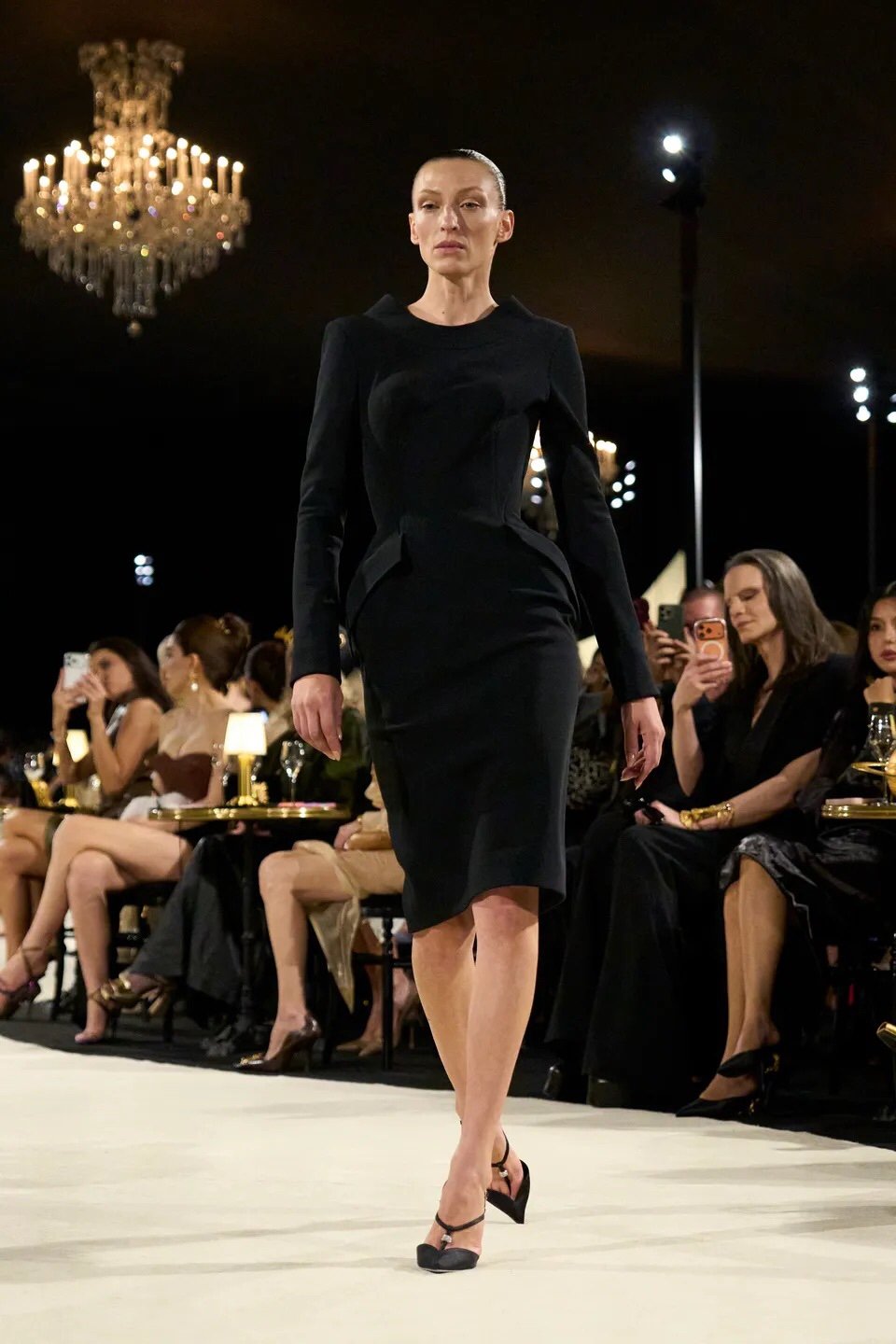
Presented on September 17, 2026, during London Fashion Week, the Harris Reed Spring 2027 Ready-to-Wear collection took place in a salon-style setting at the Mandarin Oriental Ballroom in Knightsbridge. Rather than building the presentation around spectacle, Reed turned his attention toward his customer, his evolving design language, and the materials themselves.
The result is a collection that Reed described as an almost “phantom collection” a ghostly reflection on the previous 11 seasons of his namesake label.
A Softer Harris Reed
Harris Reed has built his reputation around dramatic silhouettes, sculptural eveningwear, corsetry, exaggerated proportions, and a sense of theatrical fantasy. Spring 2027 doesn’t abandon those signatures, but it places them in a much more restrained environment.
One of the clearest changes was footwear. For the first time in years, Reed did not send his models down the runway in his familiar 18-centimeter platforms. The decision immediately changed the physical attitude of the collection, allowing the clothes themselves to become the focus.
That sense of restraint continued through the color palette.
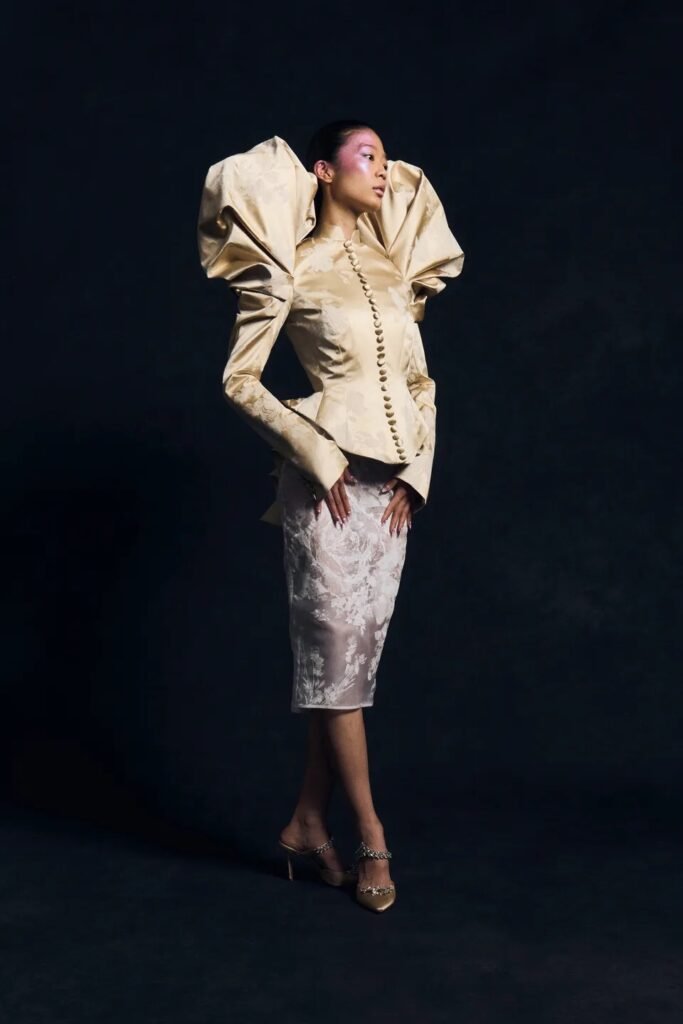
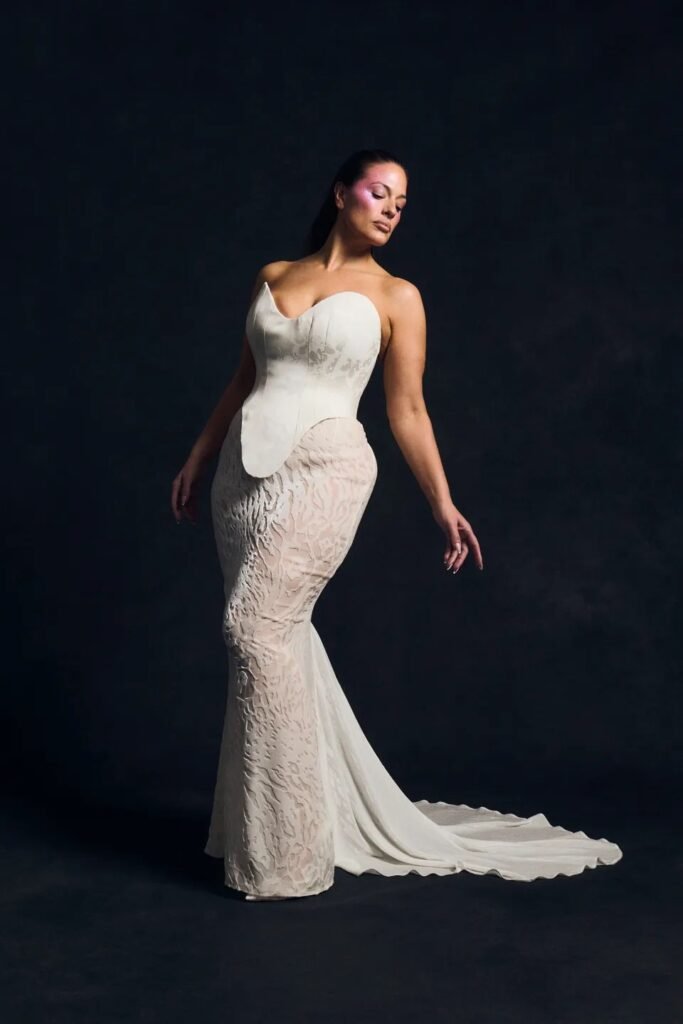
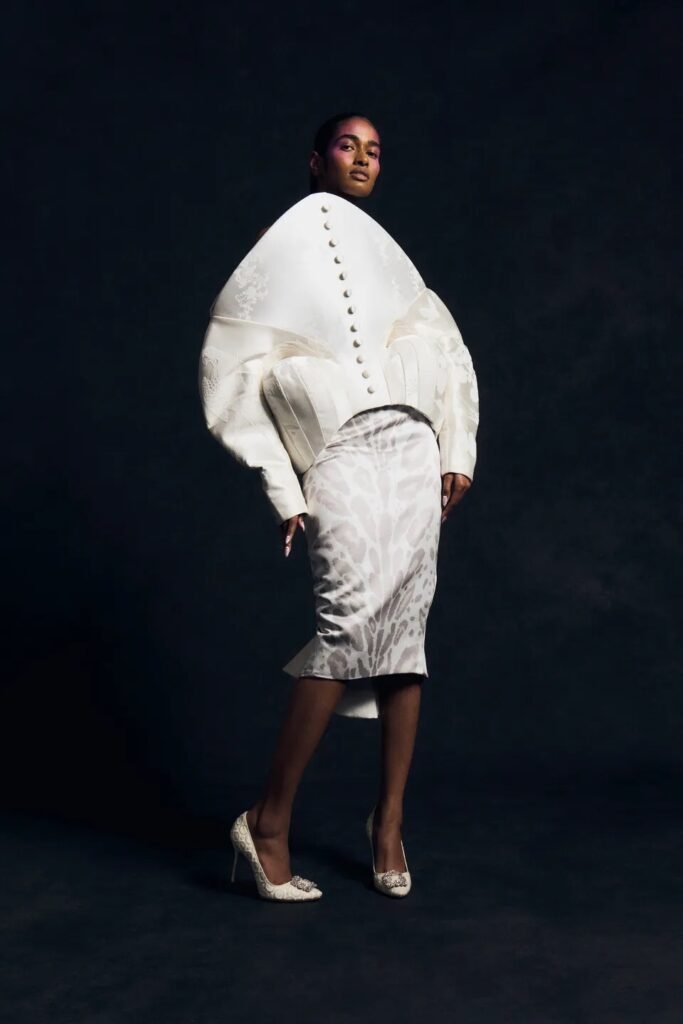
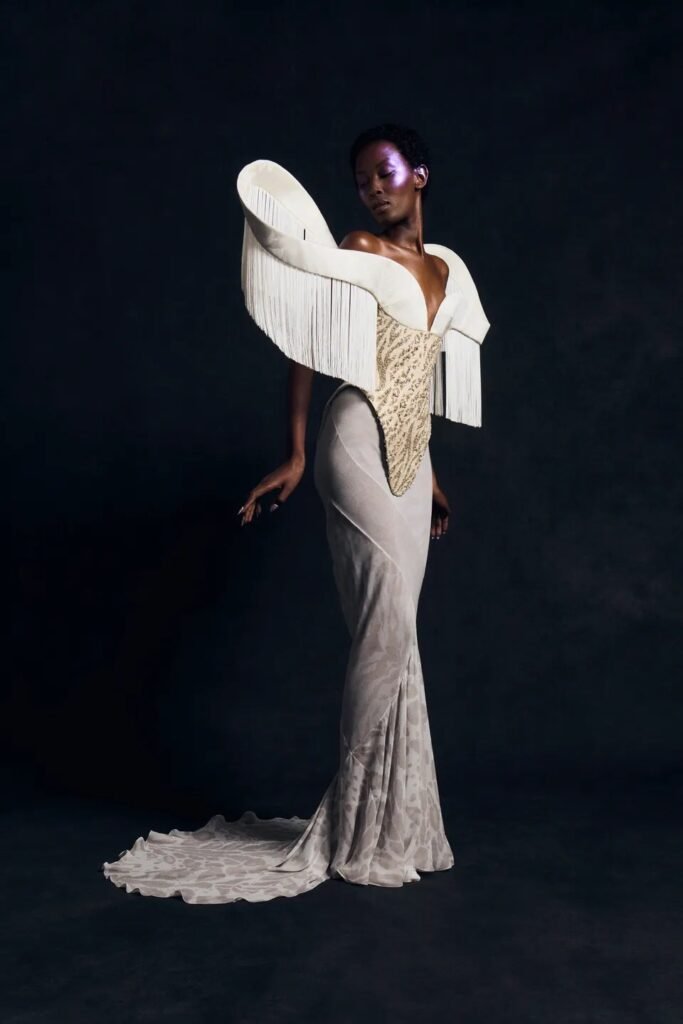
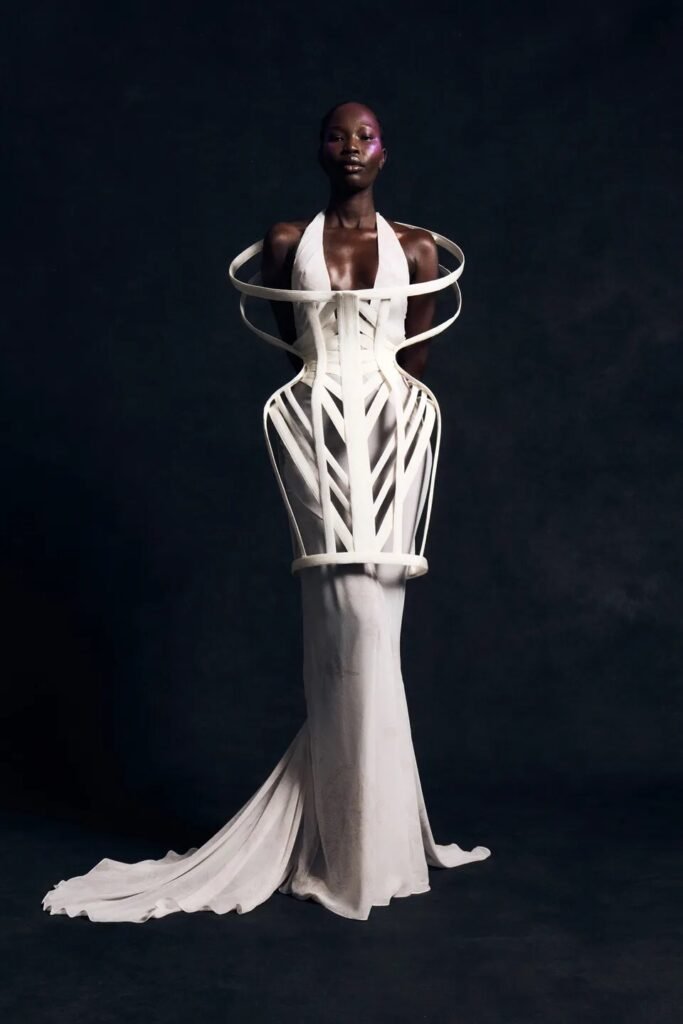
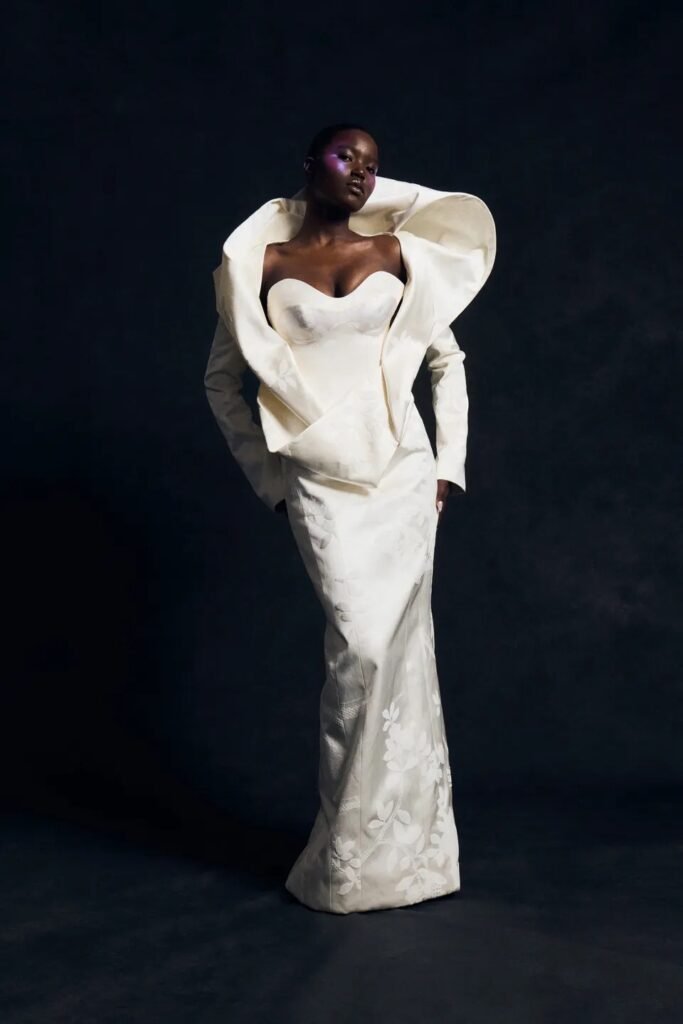
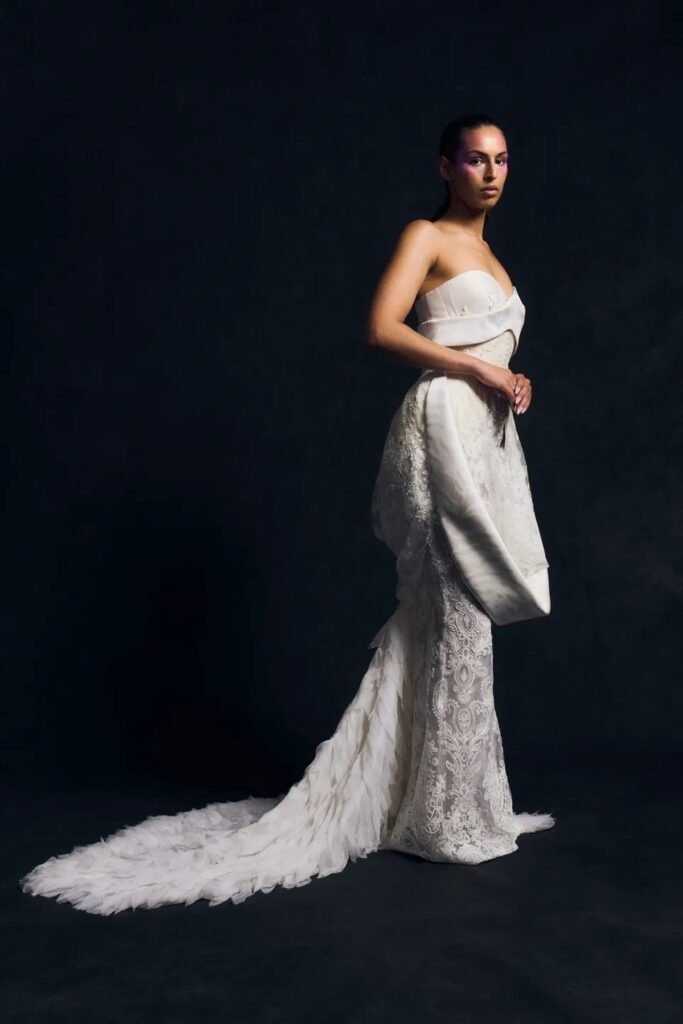
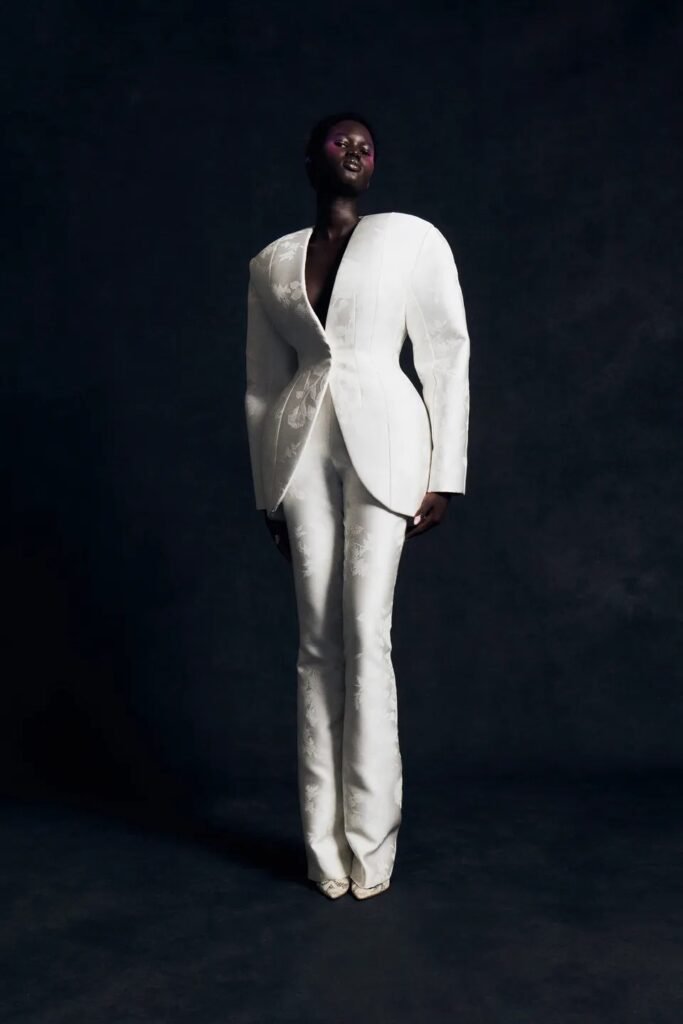
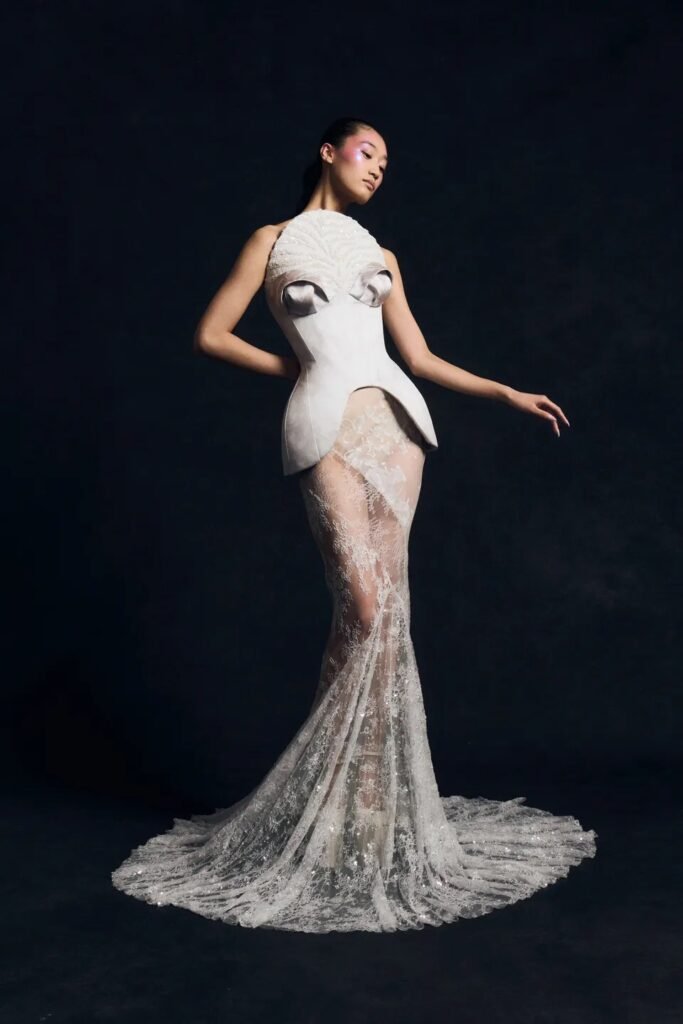
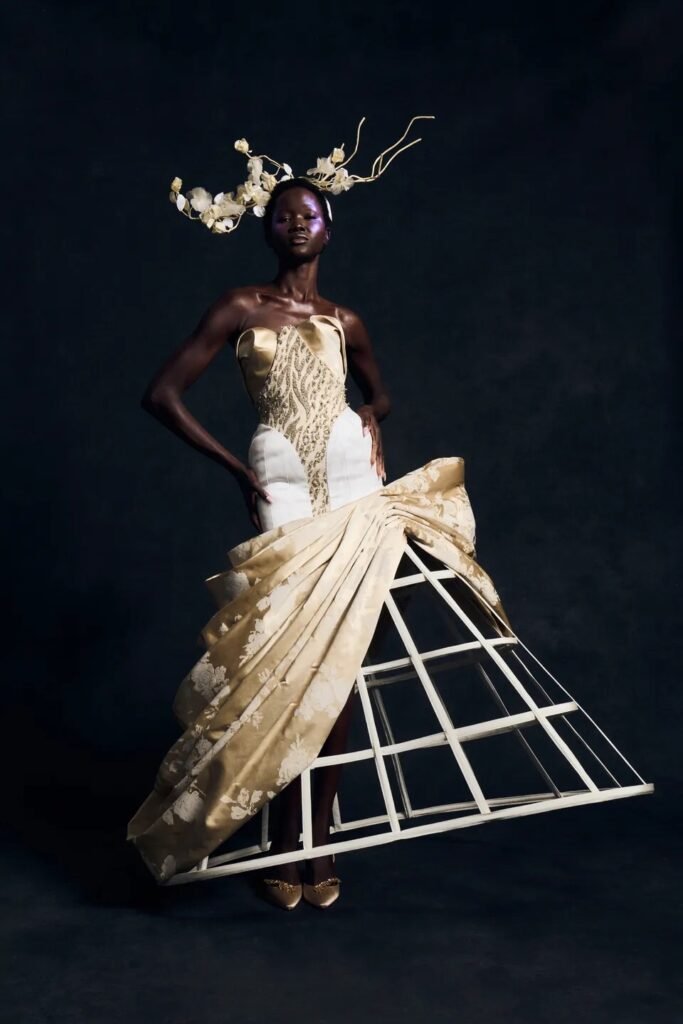
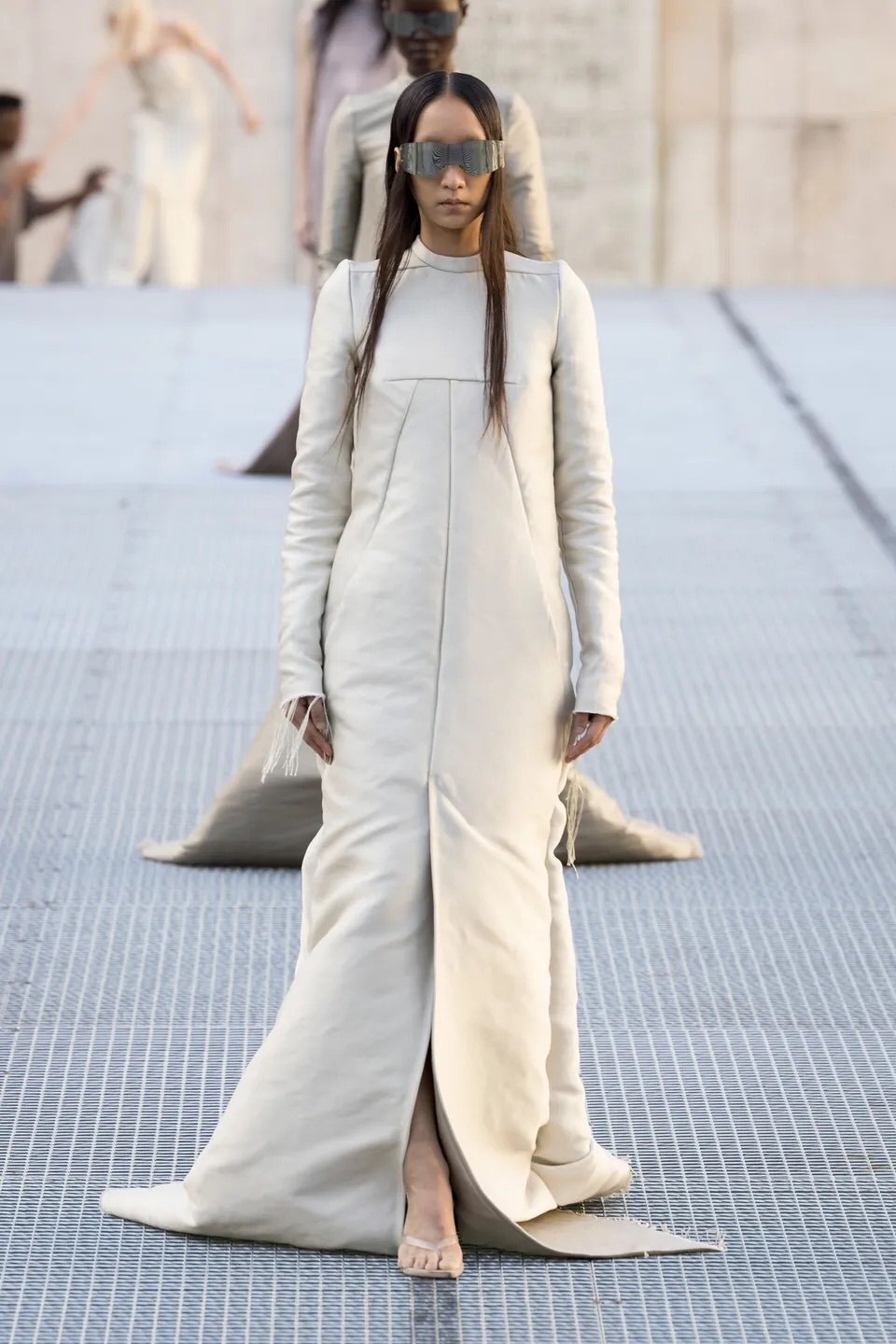
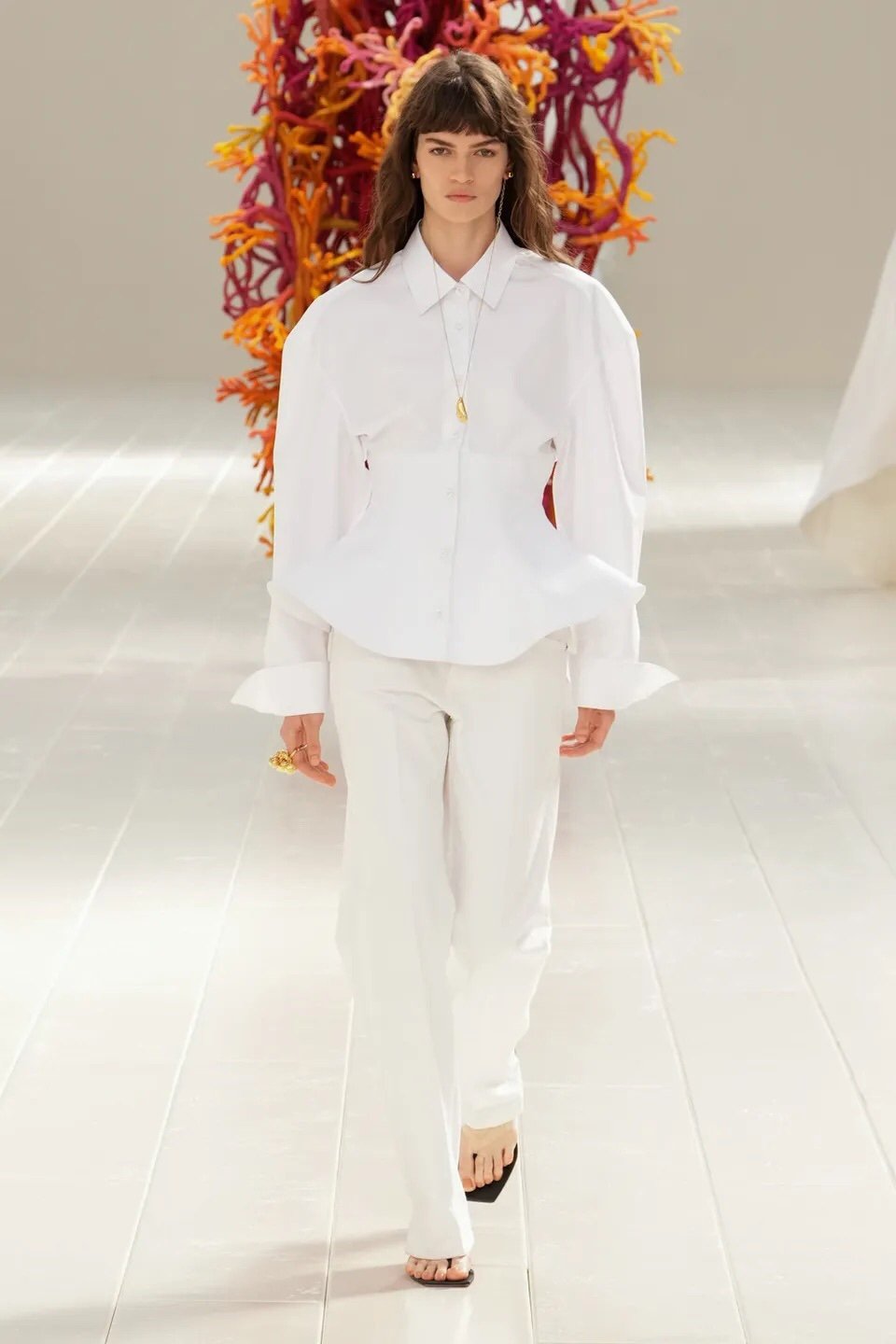
With only a handful of exceptions, the collection was almost entirely white. The opening look introduced a creamy gold jacket crafted from hand-painted duchesse satin, while a sequined corset appeared later in the presentation. The final look brought the collection back to bridal fantasy with a gown featuring an exposed crinoline.
Against the predominantly white palette, these moments became especially powerful.
The Phantom Collection
The idea of a “phantom” became an important lens through which to understand the collection.
Instead of beginning with one specific historical reference, Reed approached Spring 2027 by looking inward at the identity of his own brand. After 11 seasons, the designer revisited the elements that have shaped Harris Reed while asking a more direct question: who is the Harris Reed customer today?
That question resulted in a collection that feels like an edited version of the house’s vocabulary.
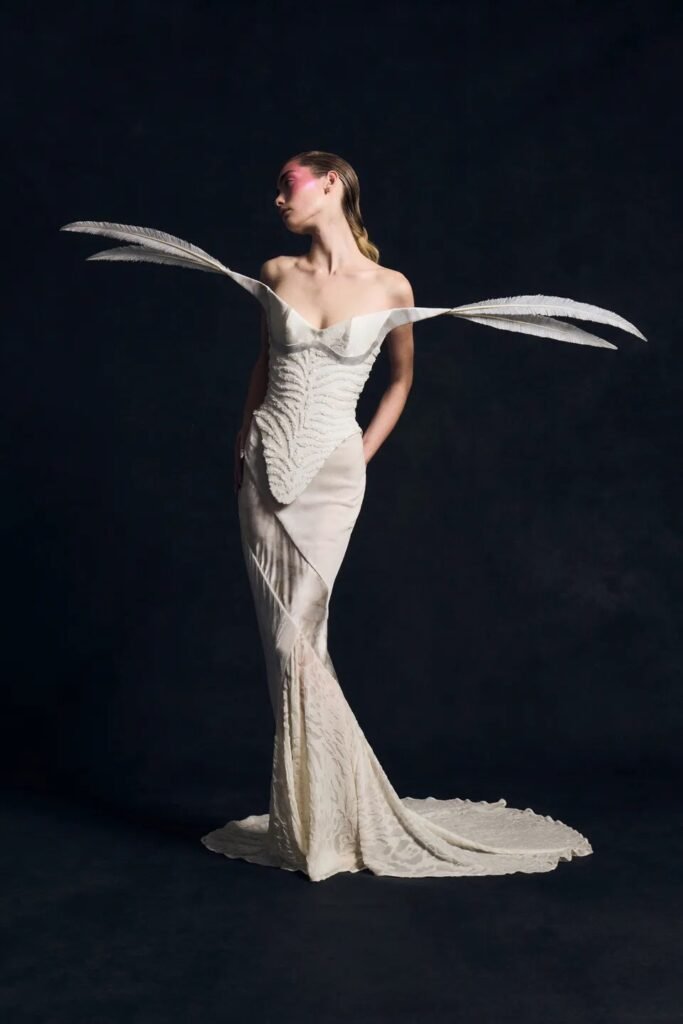
The designer’s signature caging remains present, but rather than dominating the collection, it functions as one component within a larger design language. This shift allows other elements including fabric, surface decoration, tailoring, and construction—to take a more prominent role.
The result is still recognizably Harris Reed, but with a different sense of balance.
Materials Take Center Stage
For Spring 2027, fabric becomes one of the collection’s strongest visual statements.
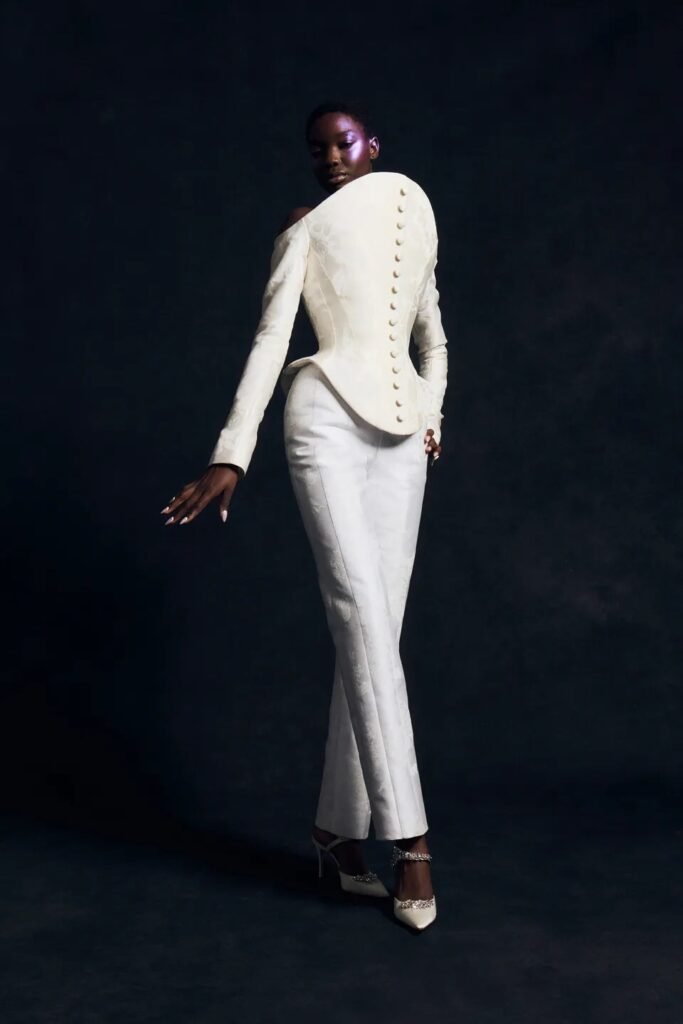
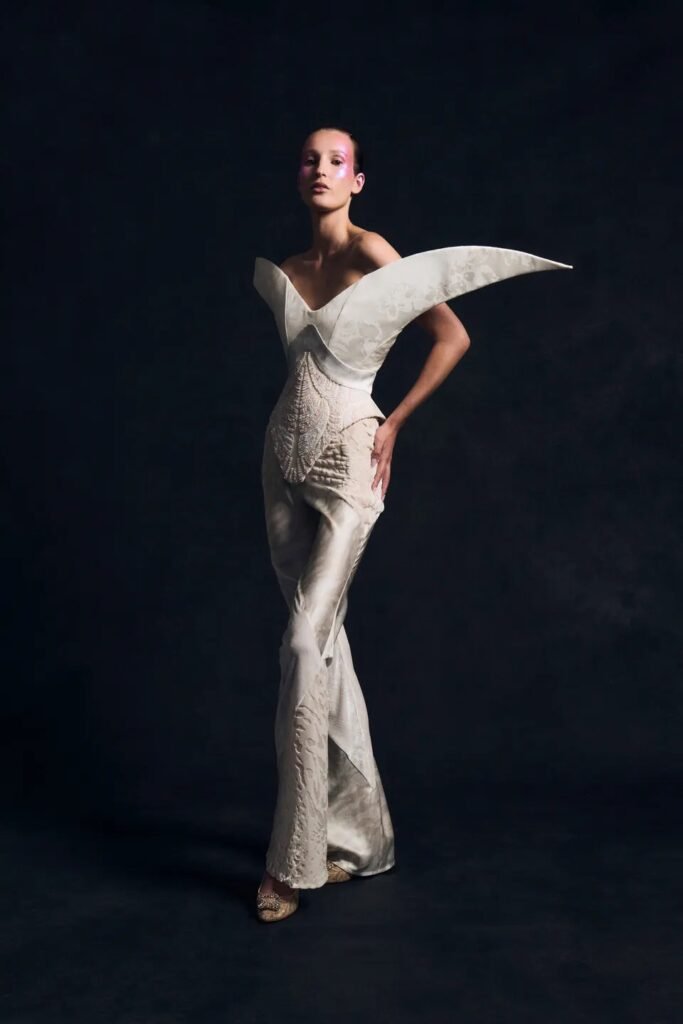
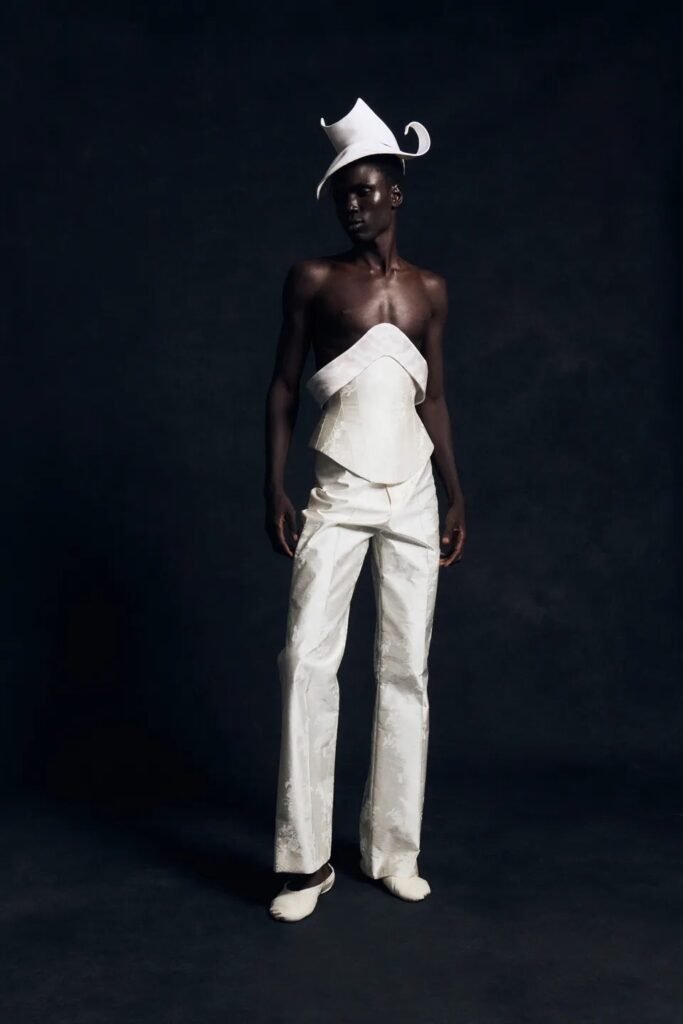
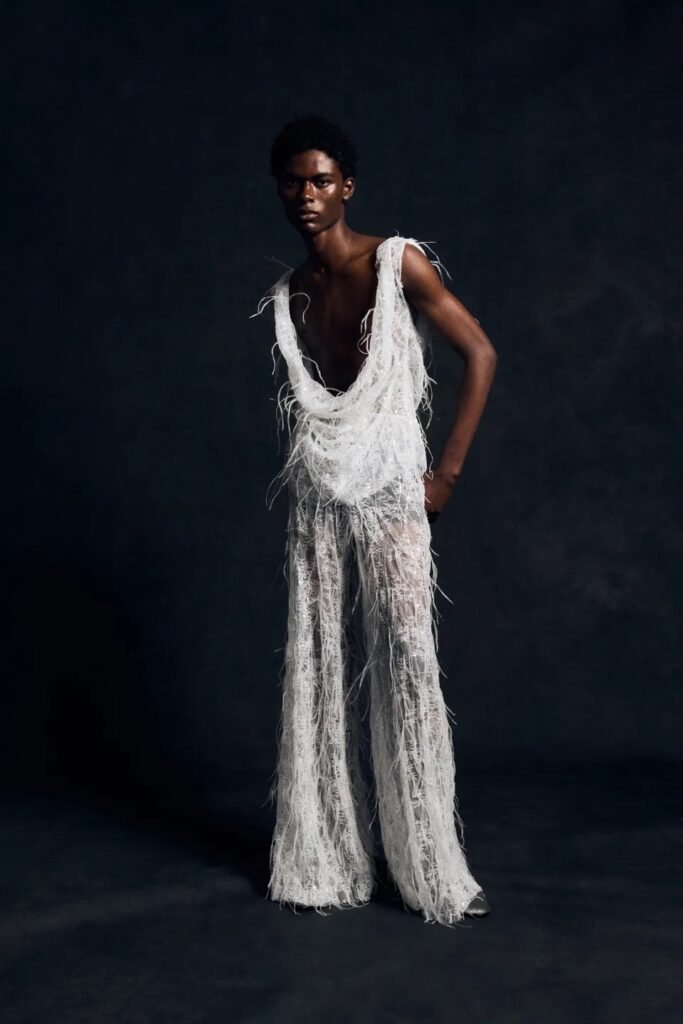
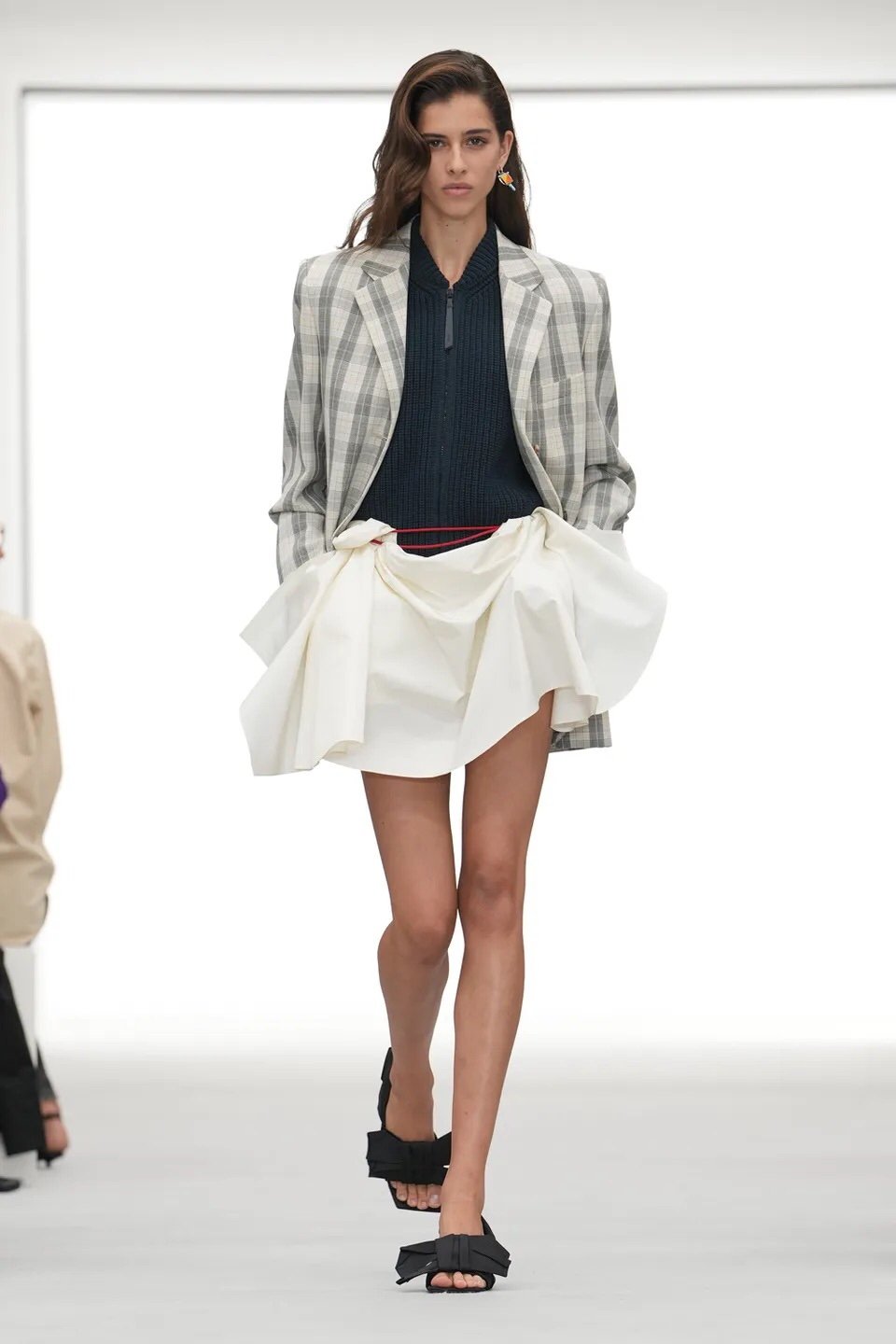
Hand-painted animal prints and floral motifs appeared across delicate organza, bringing an artistic quality to the otherwise restrained palette. Double duchesse satin and silk brocade added richness and structure, while carefully cut panels were patchworked together to create refined skirts and trousers.
This approach creates an interesting contrast.
The collection may appear minimal from a distance because of its limited color palette, but closer inspection reveals layers of texture and craftsmanship. Surface treatments, painted details, glossy fabrics, and intricate construction give the pieces their visual complexity.
It is a reminder that minimal color does not necessarily mean minimal design.
White as a Statement
White dominates the collection, but it is far from one-dimensional.
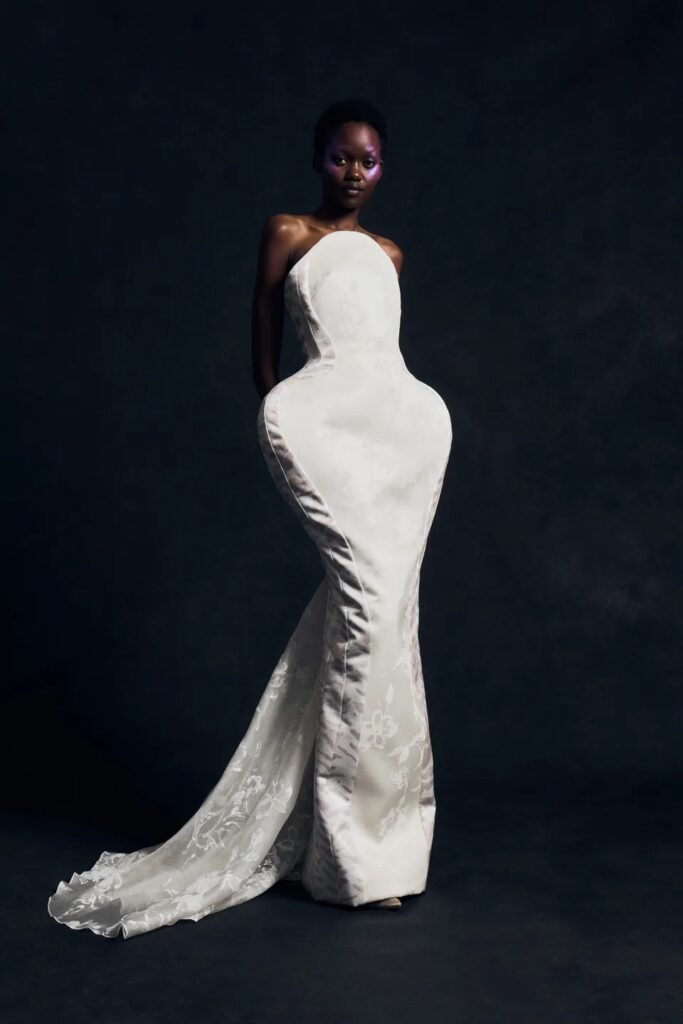
Across the looks, white becomes a canvas for Harris Reed’s experimentation with transparency, structure, texture, and movement. Organza introduces delicacy, while satin and brocade create weight and shine.
The monochromatic approach also allows the silhouettes to become more important.
Without an abundance of color competing for attention, the viewer is encouraged to focus on how each garment is constructed and how it moves around the body. The effect is almost ethereal, reinforcing Reed’s idea of a ghostly or phantom-like collection.
From Spectacle to Substance
For years, Harris Reed has been associated with fashion’s most theatrical moments. His designs have appeared on major red carpets and in high-profile editorial shoots, often characterized by dramatic proportions and elaborate construction.
Spring 2027 takes a different route.
Rather than removing the fantasy completely, Reed brings it closer to the clothing itself. The drama comes through fabric manipulation, painted surfaces, sculptural construction, and carefully controlled silhouettes.
Even the collection’s salon-style presentation reinforces this change.
The show was designed around Reed’s VIP customer, whom he describes as international but with a connection to London. The presentation began with pre-show cocktails and was staged in the Mandarin Oriental Ballroom, creating an intimate environment rather than a traditional large-scale runway spectacle.
That customer-focused approach is also connected to the designer’s plans for the brand. Reed is expected to open a London salon in the coming months, creating another space through which he can engage directly with his clientele.
The Bridal Connection
Bridal fantasy has increasingly become an important part of the Harris Reed universe, and that language appears naturally within Spring 2027.
The finale featured a bridal gown with an exposed crinoline, bringing together the collection’s themes of transparency, structure, romance, and theatricality.
The look also connects with Reed’s broader exploration of fluid bridalwear. Earlier in 2026, his Fluid Bridal range explored wedding dressing through silhouettes designed around a more expansive understanding of gender and fantasy.
In Spring 2027, however, the bridal element feels integrated into the wider collection rather than functioning as a separate statement.
A New Era for Harris Reed
The Spring 2027 collection arrives during an important transition for Reed.
From 2022 through early 2026, the designer divided his time between his own label and Nina Ricci. Reed’s departure from Nina Ricci has allowed him to concentrate more fully on his namesake house, making this collection an opportunity to reconsider what Harris Reed should represent going forward.
That context makes the collection particularly interesting.
Instead of attempting to make the next season bigger than the previous one, Reed appears to be doing something more fundamental: refining the language of the brand.
The result is a collection that still contains recognizable Harris Reed signatures, but places them within a more mature framework.
The Future of Harris Reed
Spring 2027 suggests that Harris Reed’s next chapter may not be about abandoning maximalism, but understanding when and where to use it.
The dramatic caging remains. The bridal fantasy remains. The sculptural approach remains. Yet the collection gives these elements room to coexist with quieter tailoring and luxurious materials.
The hand-painted organza, duchesse satin, silk brocade, patchworked skirts, trousers, and sculptural evening pieces demonstrate a designer increasingly interested in the relationship between craftsmanship and wearability.
For a label known for creating fashion that demands attention, Spring 2027 is surprisingly introspective.
The collection feels like Harris Reed looking at his own design history through a distorted mirror—recognizing the silhouettes, techniques, and theatrical codes that came before while imagining what they can become next.
And perhaps that is what makes the collection feel so appropriate for a new chapter.
The Harris Reed Spring 2027 woman—or customer—is not necessarily defined by one silhouette, one gender, or one idea of glamour. Instead, the collection presents a world built around craftsmanship, fantasy, individuality, and an evolving relationship between clothing and identity.
After 11 seasons, Harris Reed is not starting over.
He is editing, refining, and rebuilding the vocabulary of his house.
And in Spring 2027, that evolution arrives dressed in white.