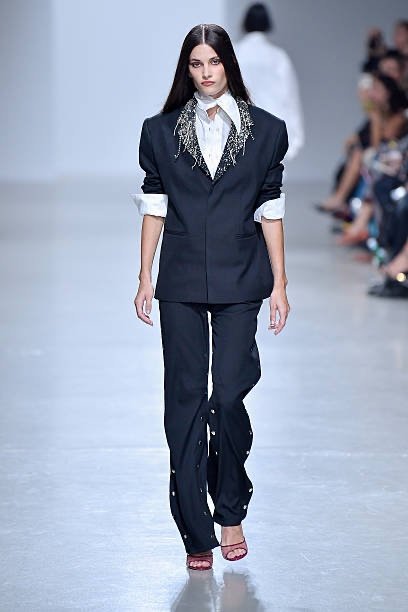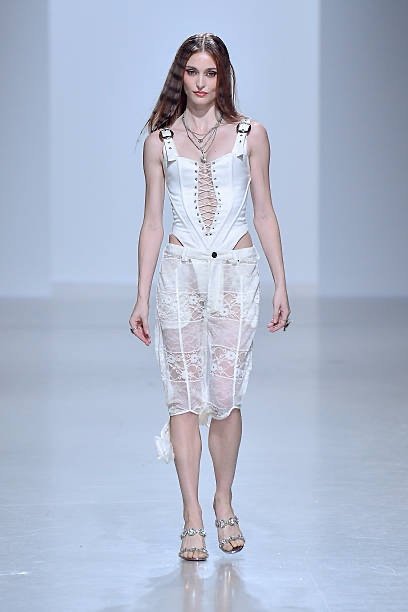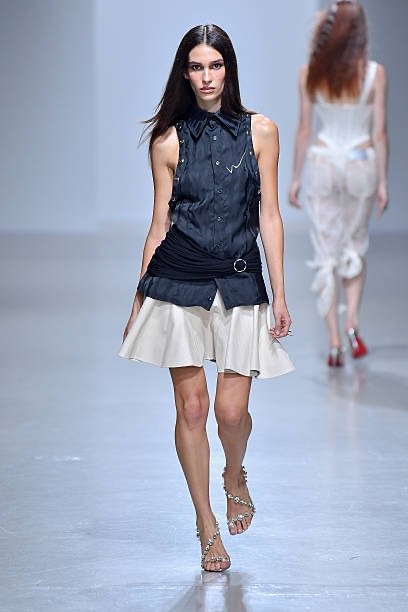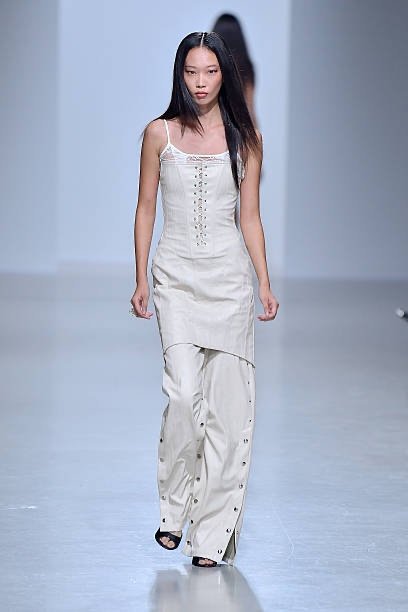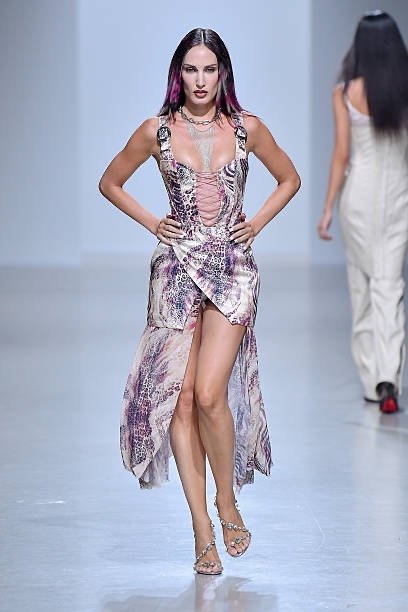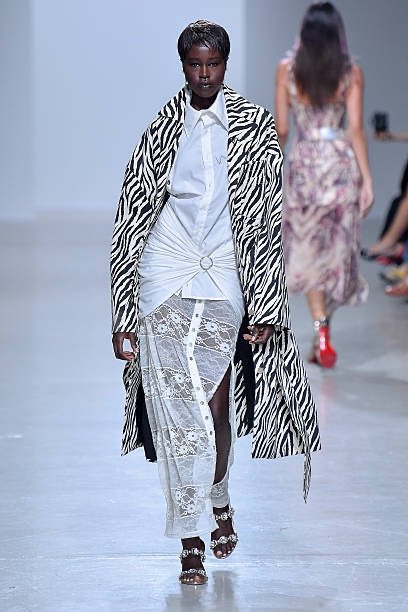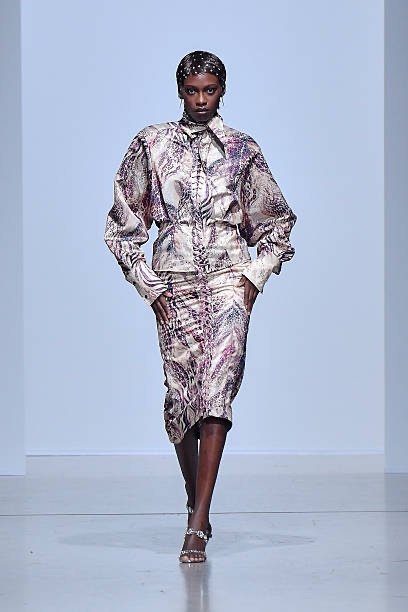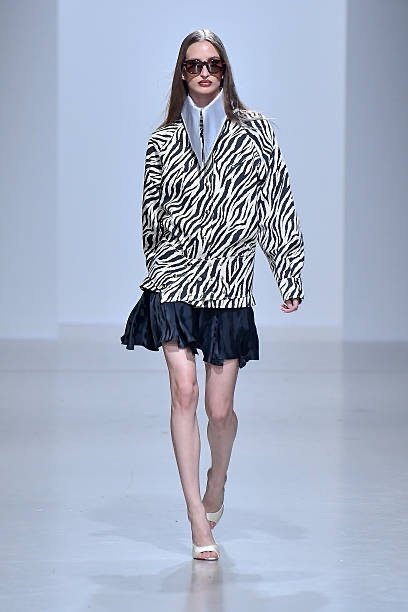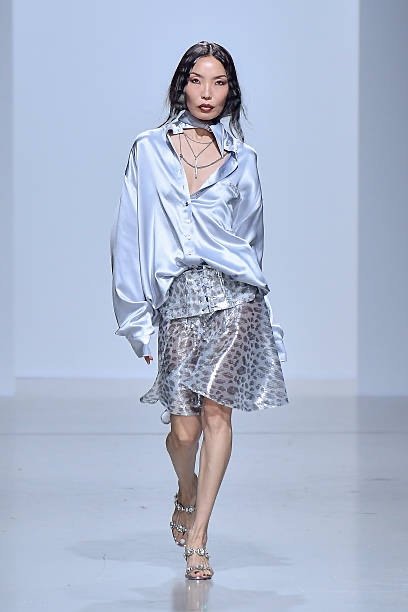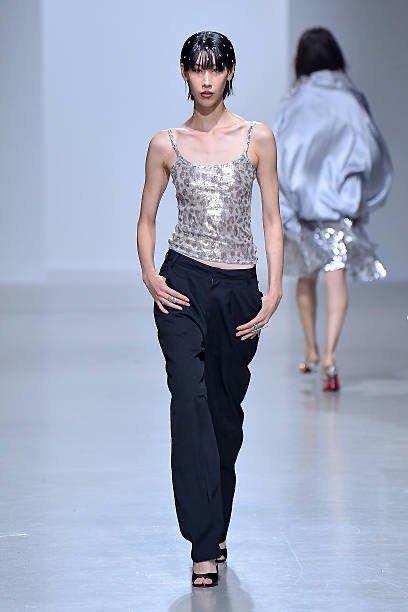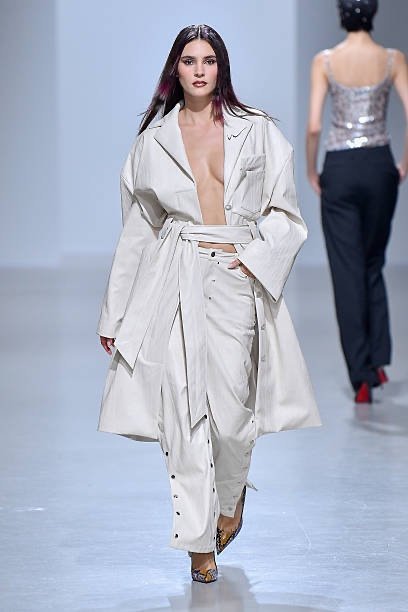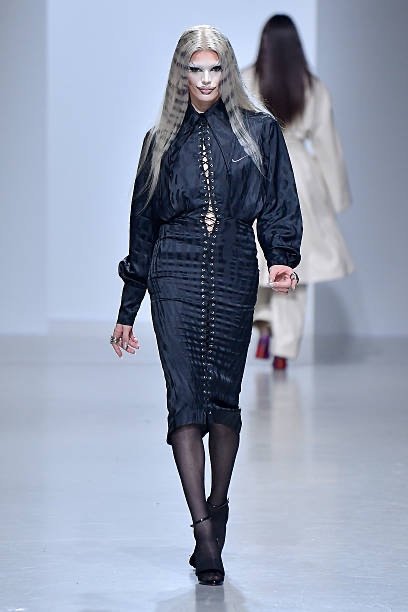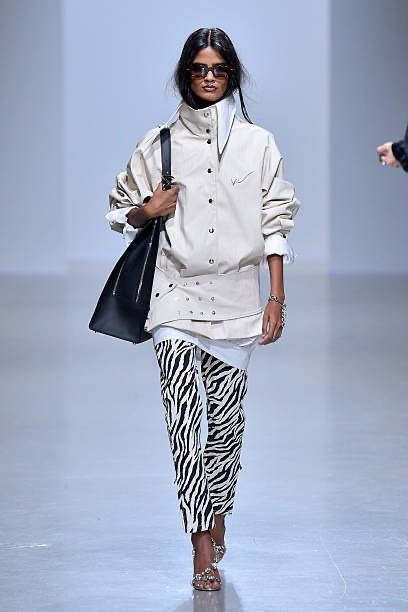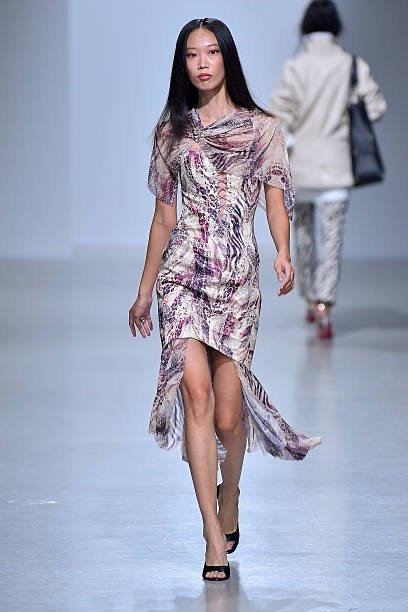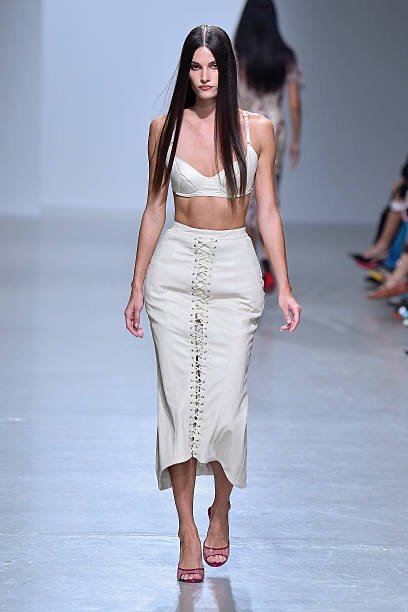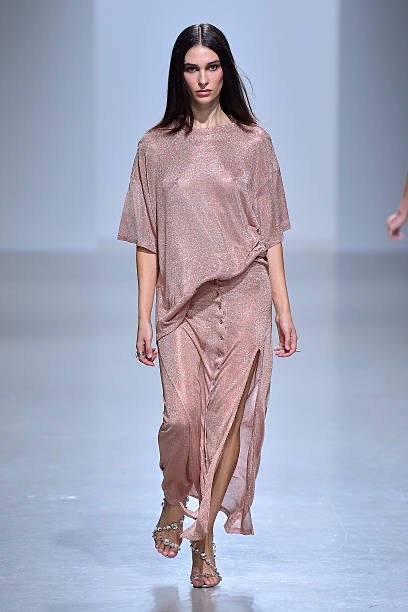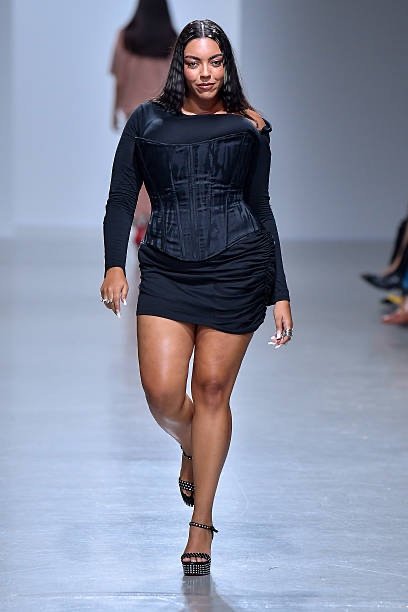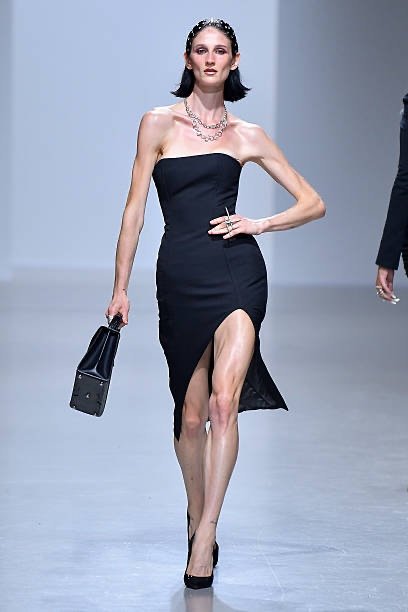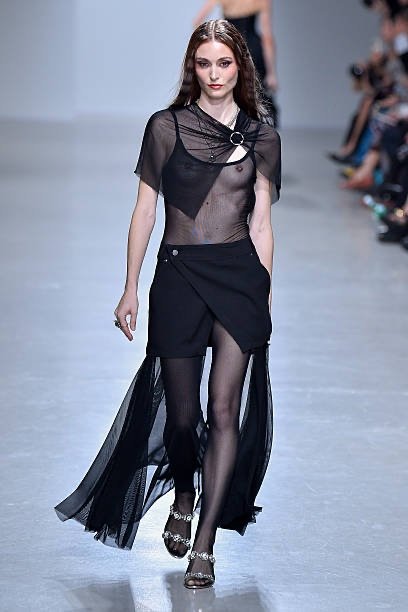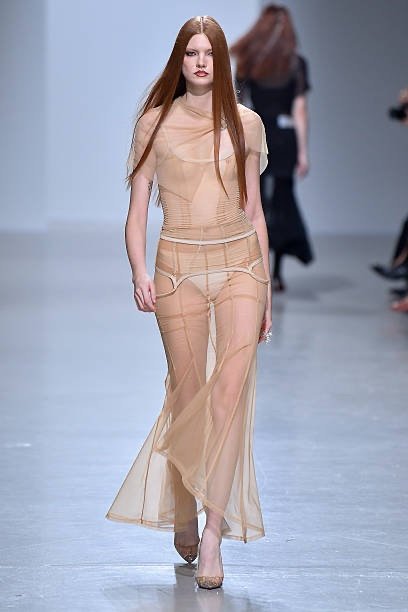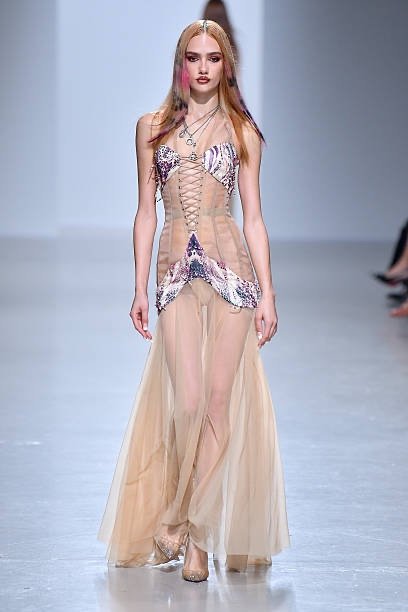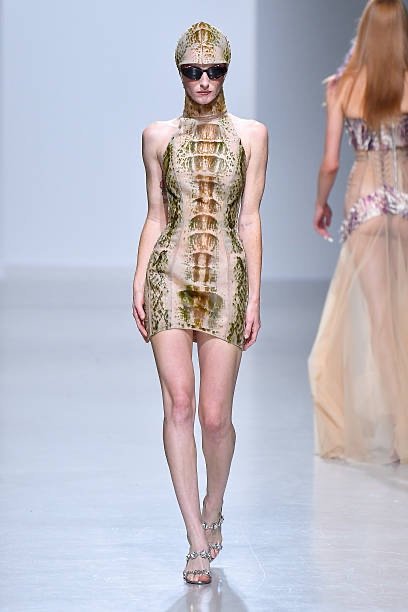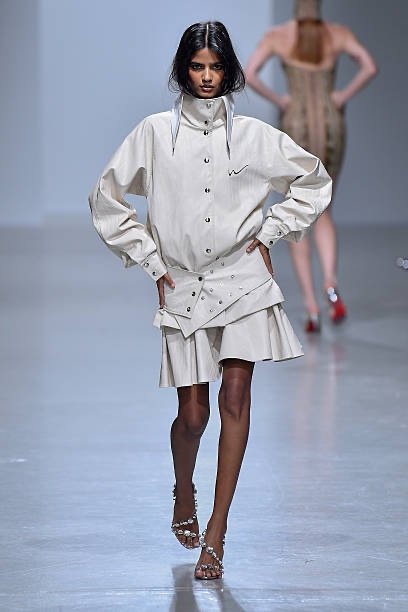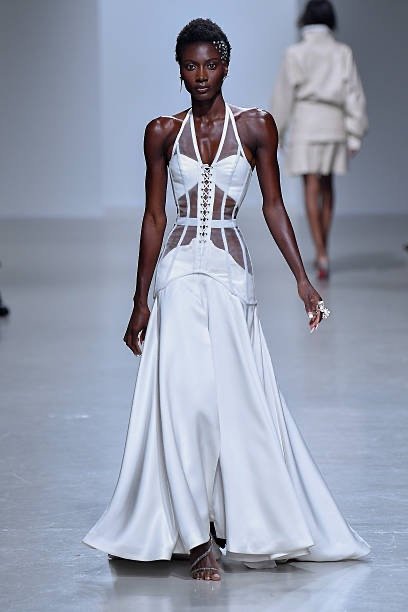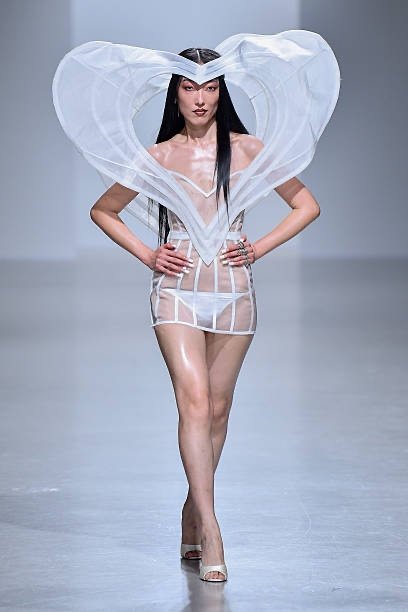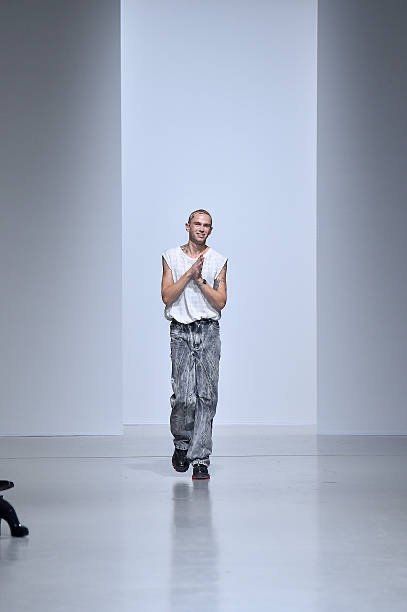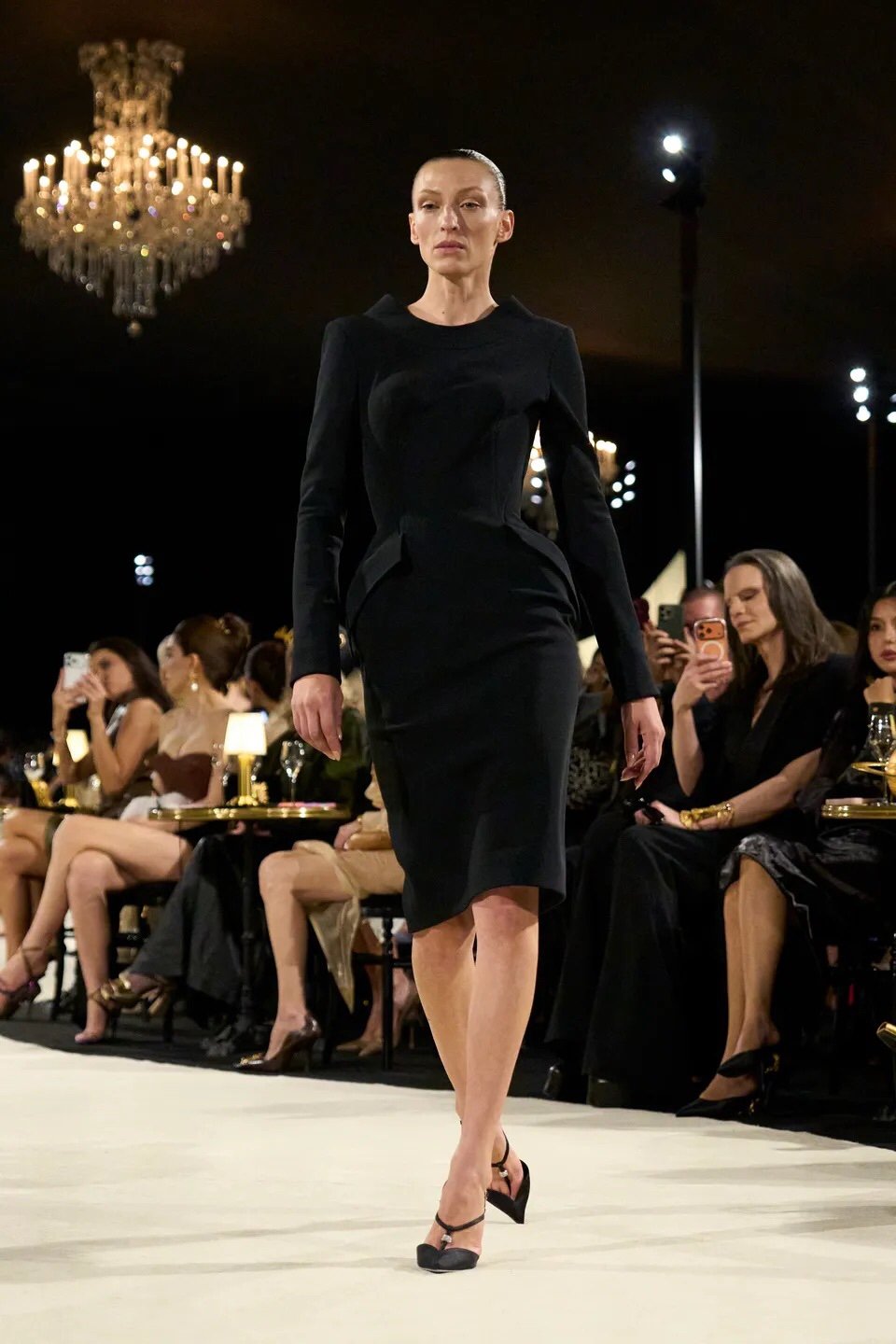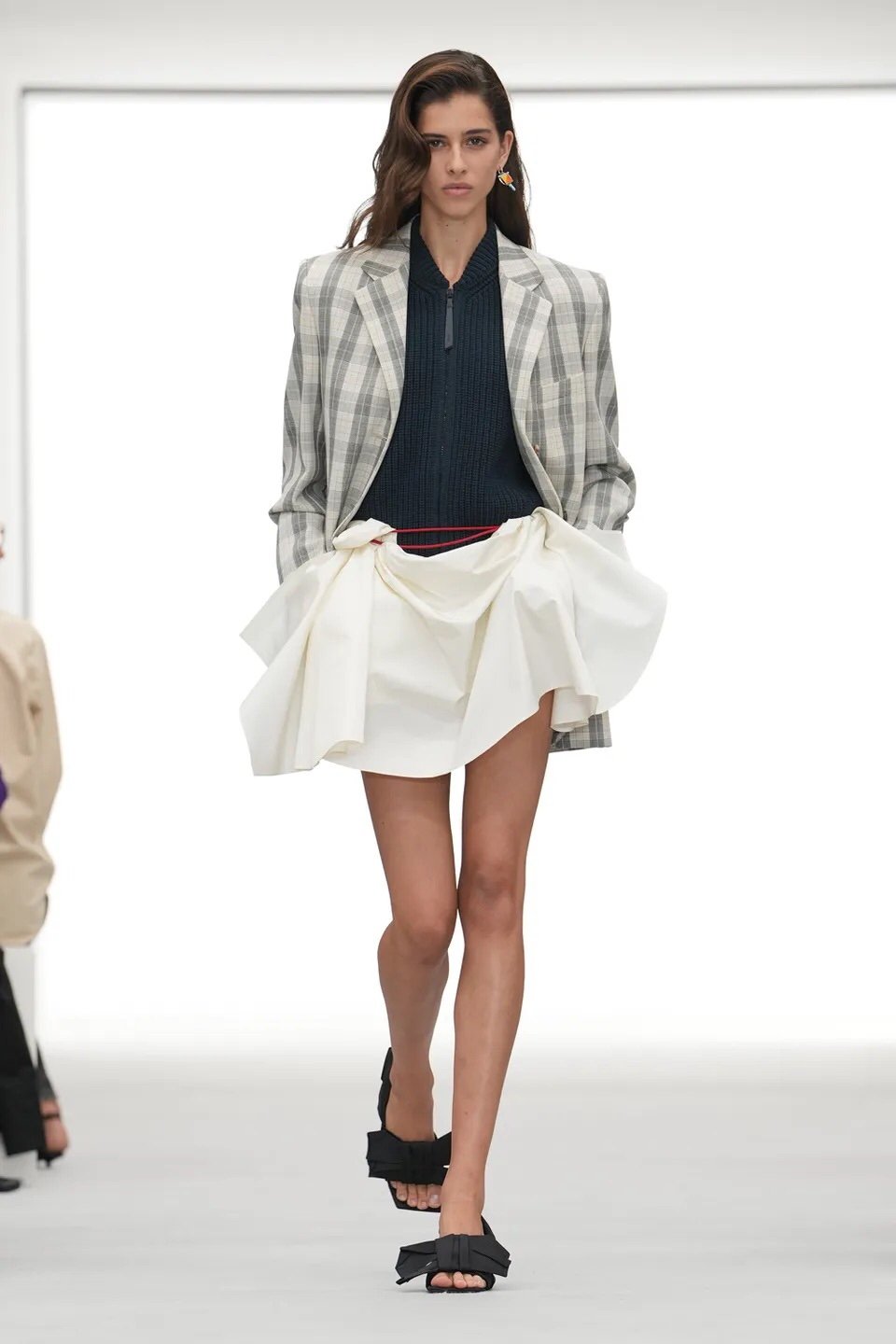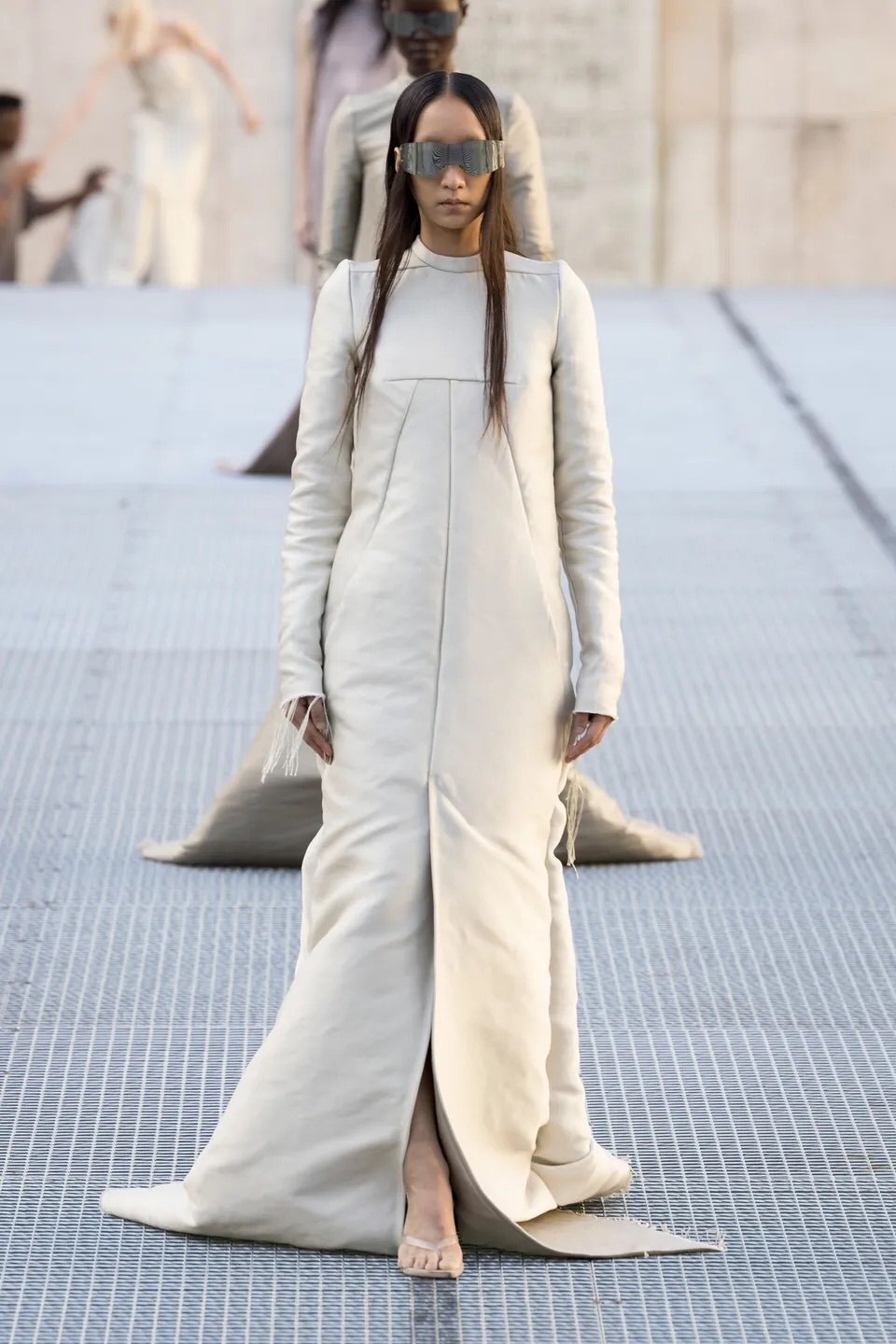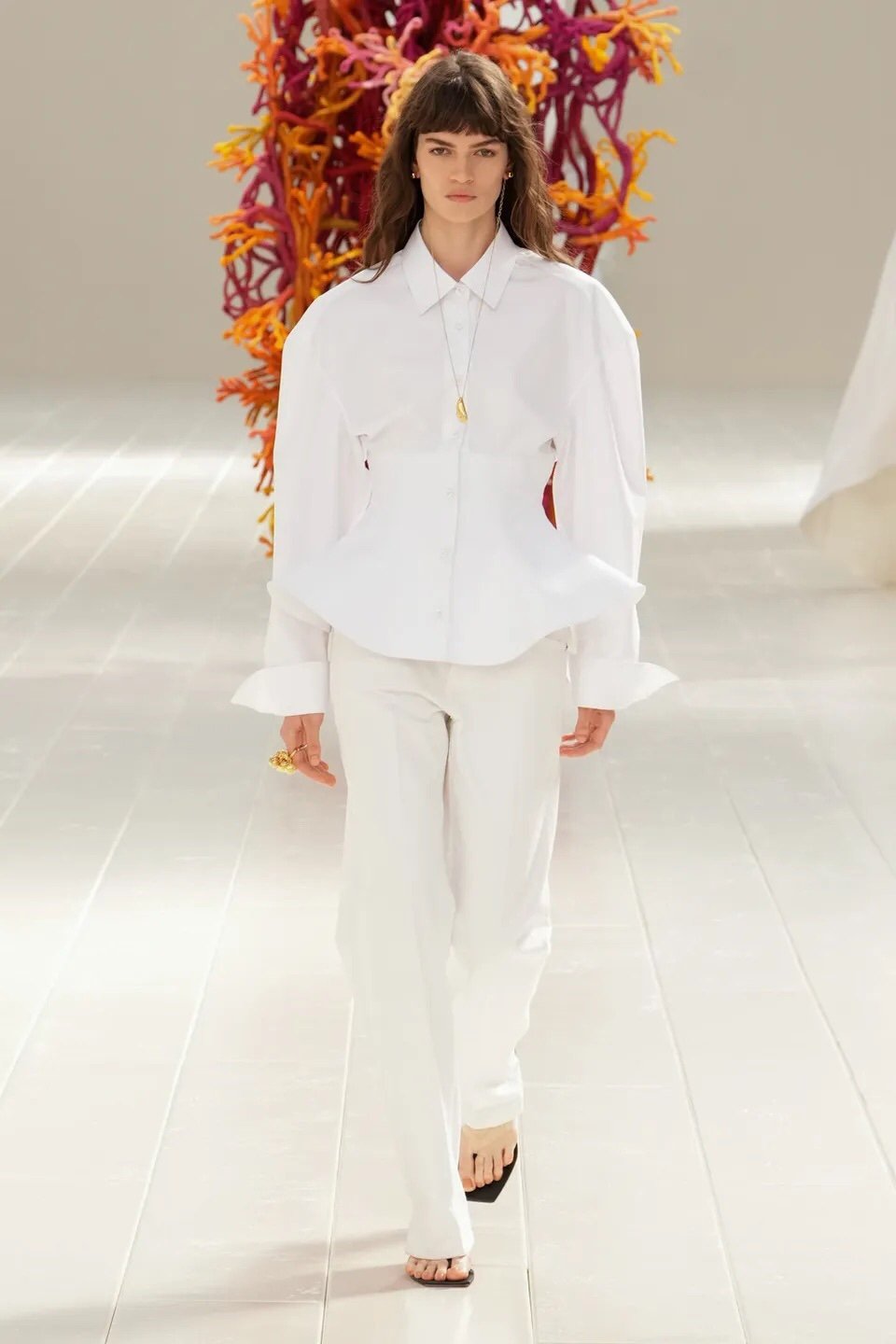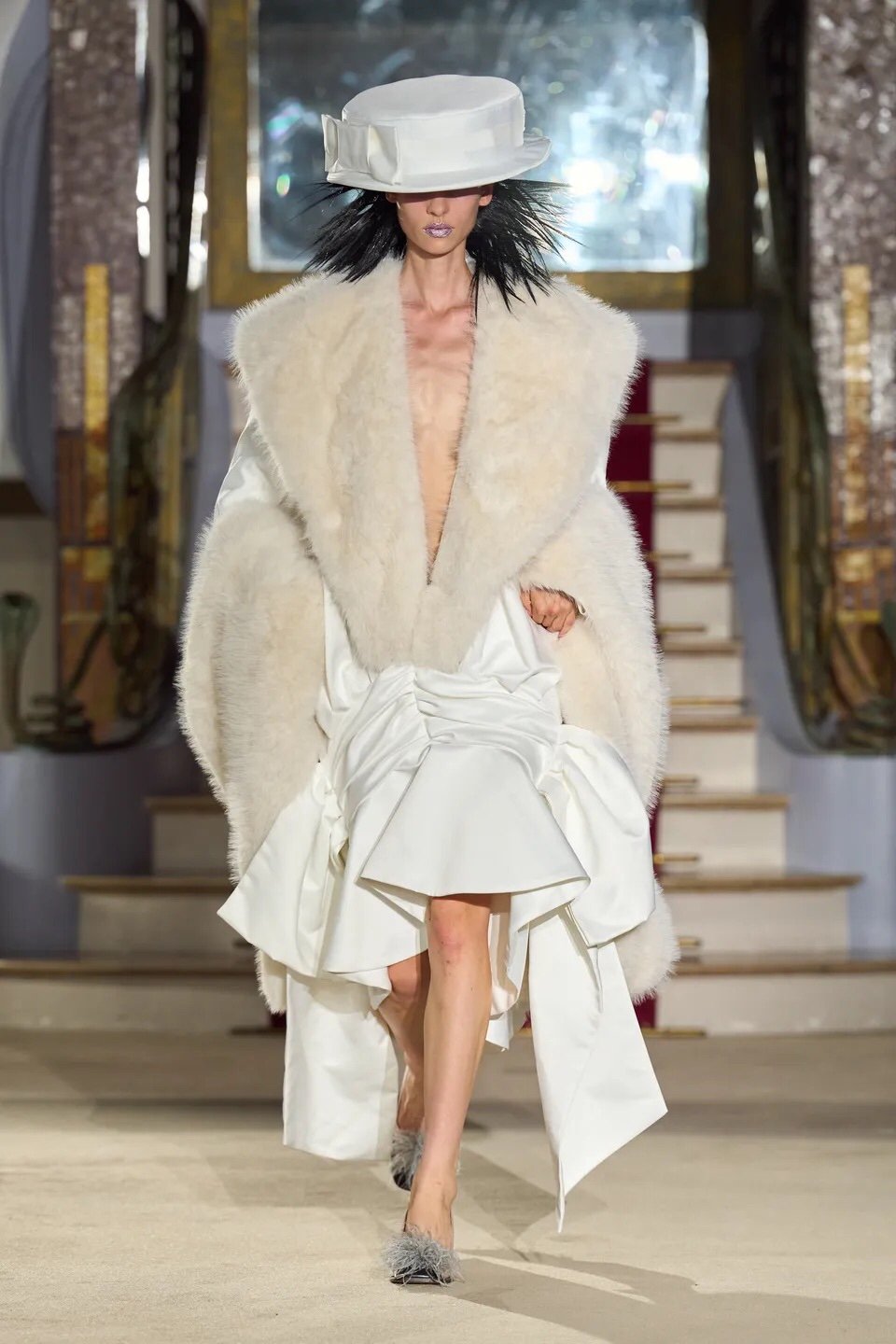
At Paris Fashion Week, Victor Brunstein’s Weinsanto returned for Spring/Summer 2027 with a collection that continued the designer’s fascination with movement, theatricality and fashion as performance. Presented on September 28, 2026, the show formed part of the official Paris Fashion Week womenswear calendar, placing Weinsanto among the season’s emerging and independent voices.
Rather than approaching ready-to-wear as a straightforward exercise in everyday dressing, Weinsanto treats the runway as a stage. That philosophy is central to the house: Brunstein, a former dancer, draws from the performing arts and considers each collection as a production shaped by inspiration, friends and muses.
For Spring 2027, that instinct remained at the heart of the Weinsanto universe.
Weinsanto’s World of Fashion and Performance
Founded in 2020, Weinsanto takes its name from Brunstein’s maternal grandmother. The label was established with the support of the Dover Street Market Paris incubator, following Brunstein’s experience as an assistant designer at Jean Paul Gaultier from 2018 to 2020. He was also a semi-finalist for the LVMH Prize in 2022.
That background helps explain why Weinsanto occupies such an expressive space within Paris fashion.
Brunstein approaches clothing through movement. Instead of designing garments simply for a static silhouette, he considers how they exist on the body and how they change when worn. The result is fashion that often feels closer to costume, performance and sculpture than conventional wardrobe dressing.
Spring 2027 continued that language.
The collection arrived during the opening day of Paris Fashion Week, with Weinsanto scheduled at 4 p.m. on September 28. The presentation also extended beyond the runway: Weinsanto was selected for the SPHERE Paris Fashion Week showroom, which brought together emerging labels at the Palais de Tokyo from September 30 through October 6.
A Runway Built Around Movement
Movement has always been one of the defining ideas behind Weinsanto, and Spring 2027 makes that philosophy particularly relevant.
Brunstein’s experience in dance gives the clothes an unusual relationship with the body. Garments are designed to move, shift and create visual impact rather than simply sit perfectly within a traditional fashion silhouette.
This makes the Weinsanto woman feel less like a fixed character and more like a performer.
There is an inherent sense of motion in the house’s approach: volume can become dramatic, proportions can feel deliberately exaggerated, and styling can transform familiar wardrobe ideas into something more theatrical.
That relationship between body and garment is one of the reasons Weinsanto’s work feels immediately recognizable within the crowded Paris fashion landscape.
Theatrical Ready-to-Wear
The most interesting aspect of Weinsanto Spring 2027 is the way it challenges the boundary between ready-to-wear and performance.
Brunstein does not appear interested in stripping fashion back to purely functional clothing. Instead, he embraces the idea that getting dressed can be an act of transformation.
The runway therefore becomes an environment where exaggerated proportions, expressive styling and unusual combinations can exist naturally.
This theatrical instinct has long been part of Weinsanto’s identity. The Fédération de la Haute Couture et de la Mode describes the house’s collections as productions inspired by Brunstein’s creative world, friends and muses.
For Spring 2027, that philosophy makes the collection feel less like a conventional seasonal wardrobe and more like another chapter in an ongoing fashion performance.
Fashion With a Sense of Humor
One of Weinsanto’s most appealing qualities is its willingness to have fun.
In an industry where luxury fashion can sometimes become increasingly serious, Weinsanto maintains a sense of humor and irreverence. The clothes are designed to provoke a reaction, whether through silhouette, styling or unexpected visual combinations.
That does not necessarily mean abandoning craftsmanship.
Brunstein’s previous experience at Jean Paul Gaultier gave him exposure to one of fashion’s great traditions of technical experimentation and theatrical design. The FHCM notes that his time at the house helped him develop his craftsmanship while giving him room to expand his creativity.
At Weinsanto, those skills are redirected toward a younger, more experimental fashion vocabulary.
From the Street to the Stage
There is also an important tension within Weinsanto’s work between recognizable clothing and fantasy.
The collection remains rooted in ready-to-wear, but its presentation encourages the viewer to see those clothes differently. Pieces can become characters. Styling becomes part of the narrative. A silhouette can suggest a mood before the wearer even moves.
That is where Weinsanto’s connection to performance becomes particularly powerful.
The clothes are not simply presented as objects. They are activated by the people wearing them.
This approach feels especially relevant for Spring 2027, when many emerging designers are using fashion to explore identity, entertainment, technology, art and personal storytelling.
Victor Brunstein’s Expanding Fashion Language
Since launching Weinsanto, Brunstein has developed a distinctive position within Paris fashion.
His work does not attempt to imitate the traditional codes of established French luxury houses. Instead, the designer has built a vocabulary around performance, movement, experimentation and personality.
The label’s presence on the official Paris Fashion Week calendar reflects that growing place within the city’s emerging fashion scene. Weinsanto was again included in the Spring/Summer 2027 schedule, alongside designers and labels representing the next generation of Parisian fashion.
Its inclusion in SPHERE further connects the brand with the fashion industry’s support system for young creative labels. FHCM describes SPHERE as a platform dedicated to supporting emerging fashion houses selected for their creativity and development potential.
A Collection Designed to Be Seen in Motion
Perhaps the best way to understand Weinsanto Spring 2027 is to think about the collection away from the static runway photograph.
These clothes belong to movement.
They are part of a fashion language where walking, posing, dancing and interacting with the environment all contribute to the final image. Brunstein’s background as a dancer makes that approach more than a stylistic decision; it is part of how he understands clothing.
Fashion becomes choreography.
The models become performers.
And the runway becomes a stage.
That distinction is important because Weinsanto’s work is not solely about creating garments that can be worn. It is about creating moments that can be remembered.
Weinsanto Spring 2027: The Final Word
With its Spring 2027 collection, Weinsanto continues to build a fashion universe where clothing, performance and personality exist together.
Victor Brunstein has created a label that refuses to treat fashion as purely practical. Instead, his collections embrace imagination and the transformative power of getting dressed.
That approach is especially visible in a season when Paris Fashion Week is once again giving significant attention to emerging designers and independent labels. Weinsanto’s September 28 show placed Brunstein’s vision directly within that conversation.
The result is a collection that feels unmistakably Weinsanto: expressive, theatrical, playful and deeply connected to movement.
For Spring 2027, Victor Brunstein once again reminds us that fashion does not always have to behave. Sometimes, it is at its most compelling when it performs.