By Jorge Luis Salinas
For Spring 2027, Peruvian designer Jorge Luis Salinas brought the cultural memory of the Andes to Milan Fashion Week with J.Salinas’ “El Retablo” collection, a vibrant exploration of heritage, craftsmanship, identity, and contemporary fashion. Presented in Milan on September 22, the collection transformed traditional Peruvian references into expressive silhouettes defined by crochet, intricate handwork, vivid color, and sculptural texture.
Rather than reproducing traditional Andean imagery literally, Salinas looked to the retablo, a distinctive form of Peruvian folk art traditionally created as a small box-like structure containing scenes of religious, communal, agricultural, and everyday life. For the designer, the retablo became a metaphor for fashion itself: a confined space capable of holding entire stories, memories, and cultural histories.
With El Retablo, those stories leave the box and enter the runway.
A Collection Built Around Memory
The central idea behind J.Salinas Spring 2027 is the transformation of memory into clothing.
The designer describes the collection as an exploration of how stories can become silhouettes, how memory can become texture, and how traditional craftsmanship can evolve into a contemporary visual language. This approach gives the collection an emotional dimension without sacrificing its sense of modernity.
For Salinas, heritage is not treated as something static. Instead, Peruvian traditions become material for experimentation. Traditional techniques meet contemporary proportions, while hand-worked textiles are transformed into garments designed for an international fashion audience.
That balance between preservation and reinvention is central to the J.Salinas identity.
Crochet Takes Center Stage
If there is one technique that defines the Spring 2027 collection, it is crochet.
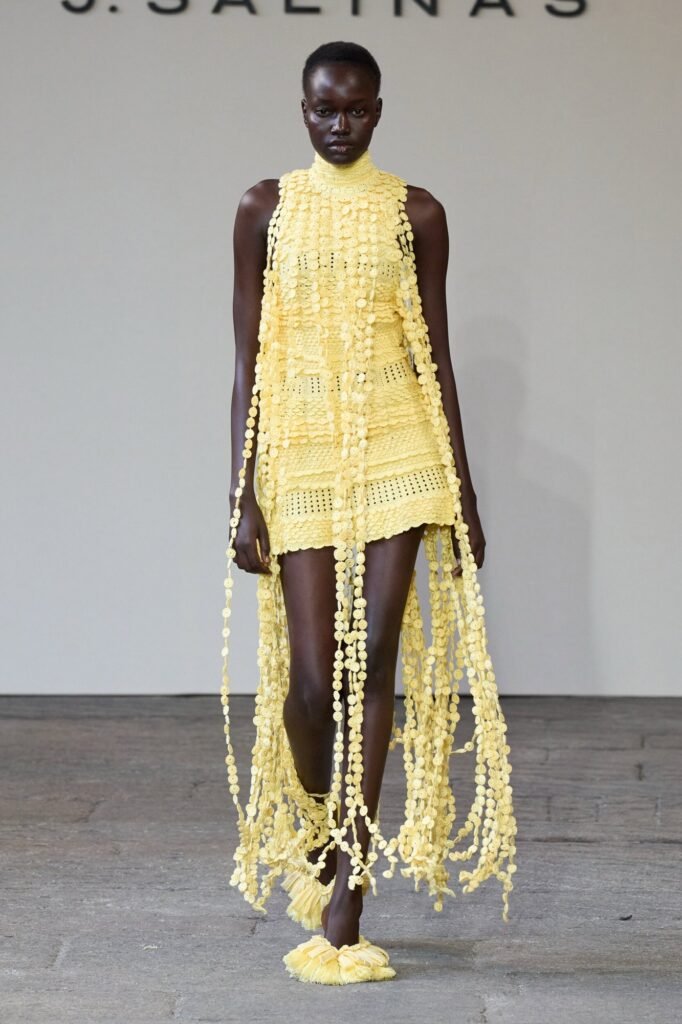
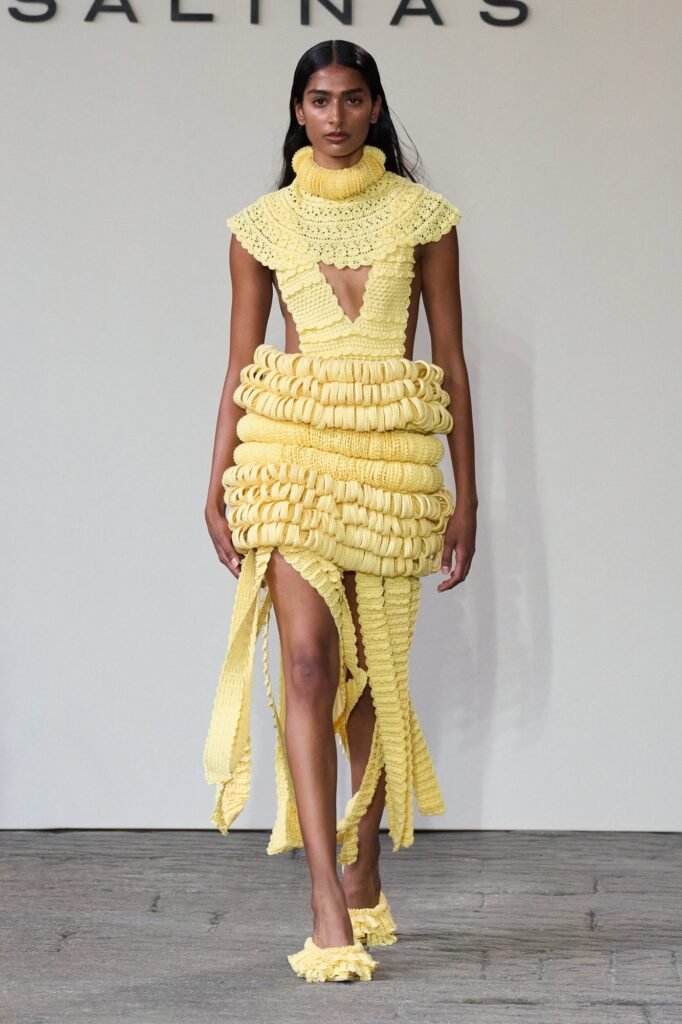
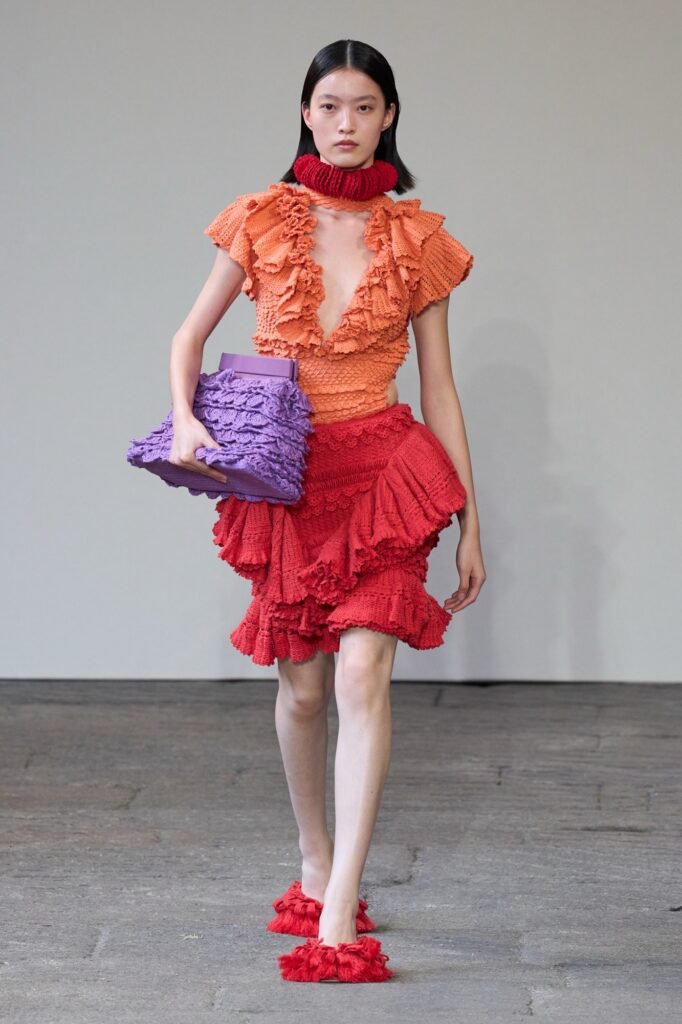
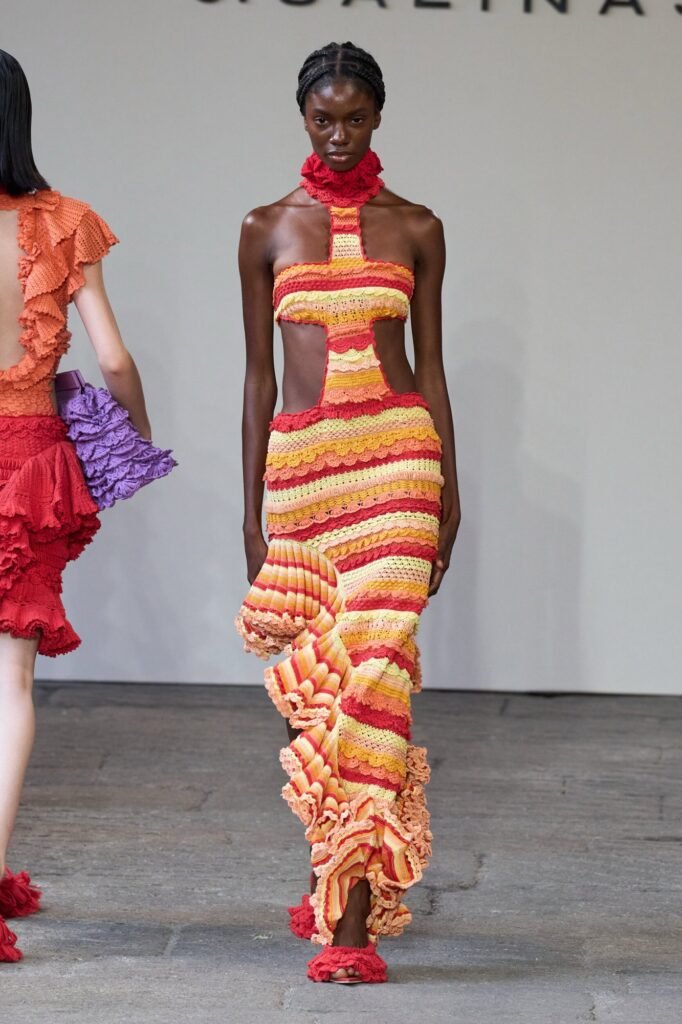
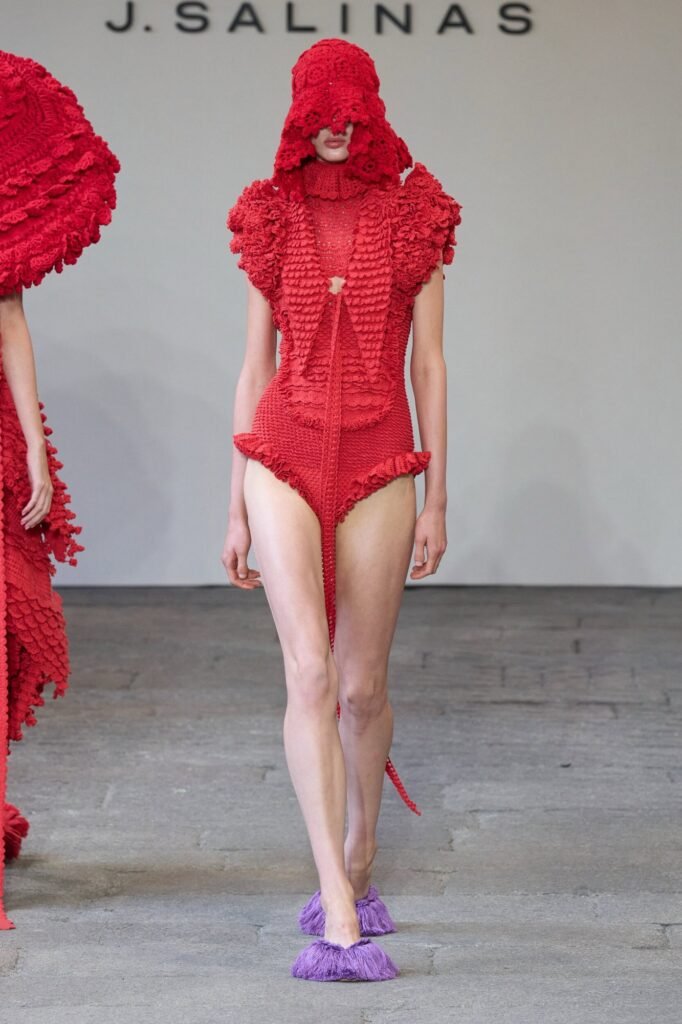
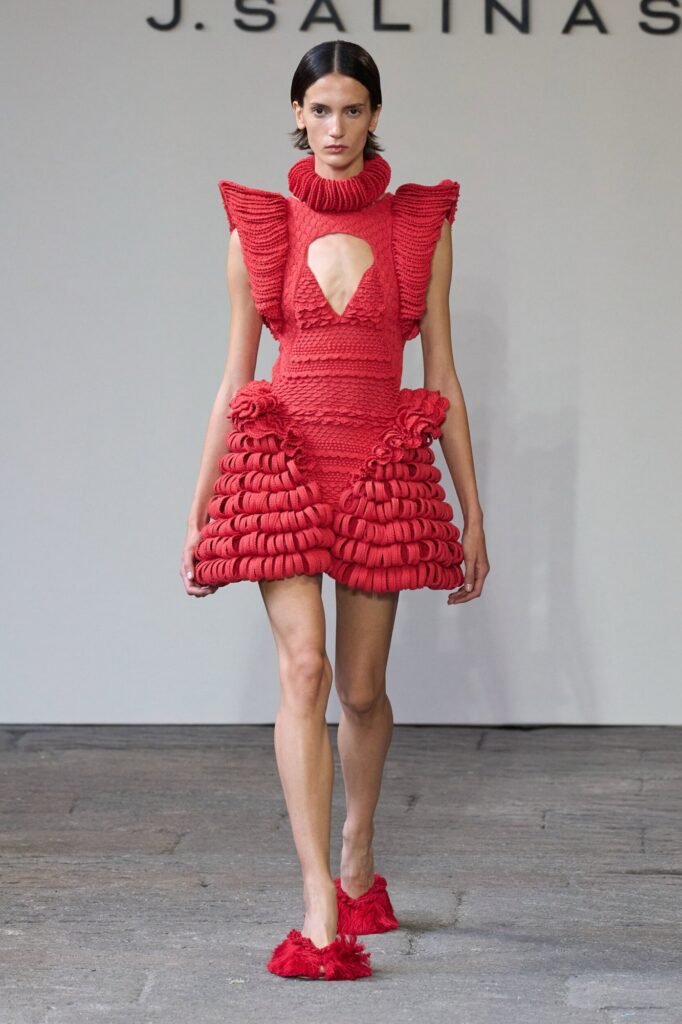
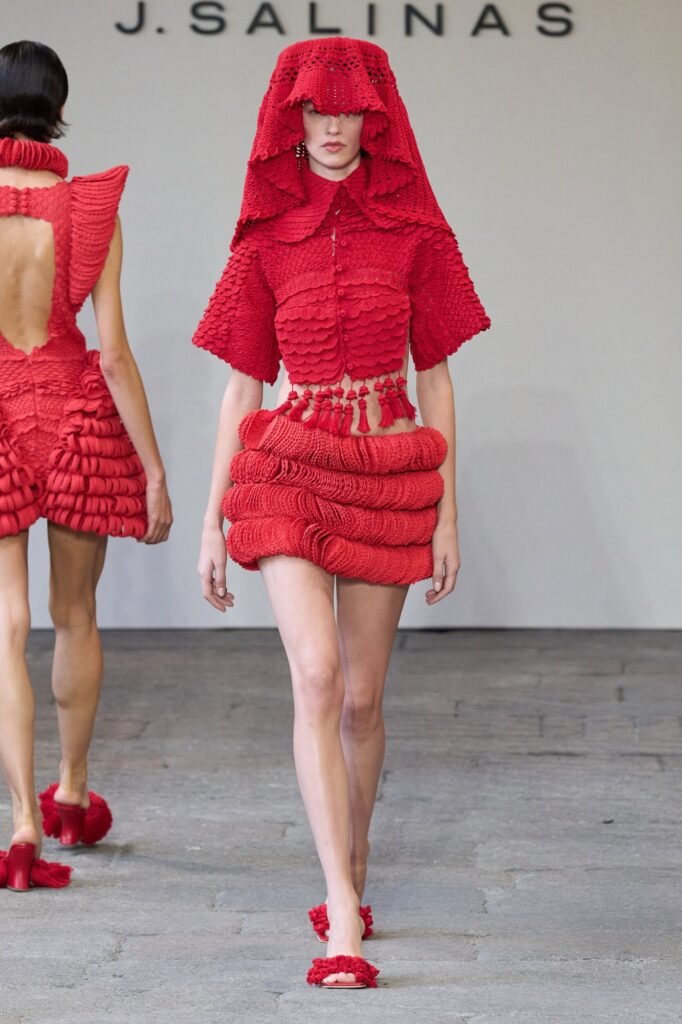
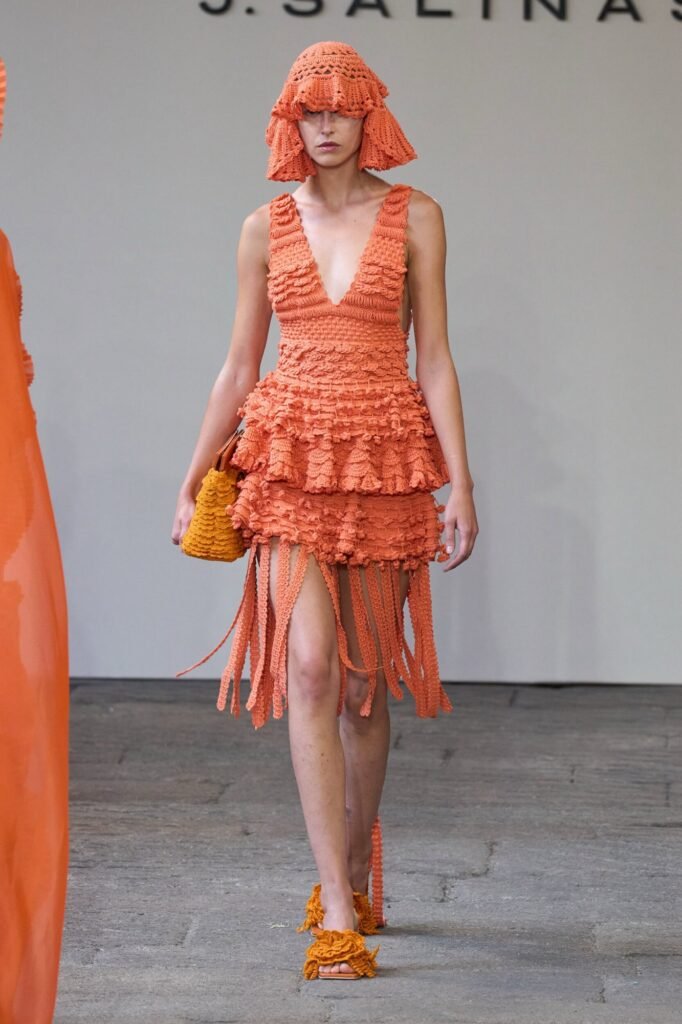
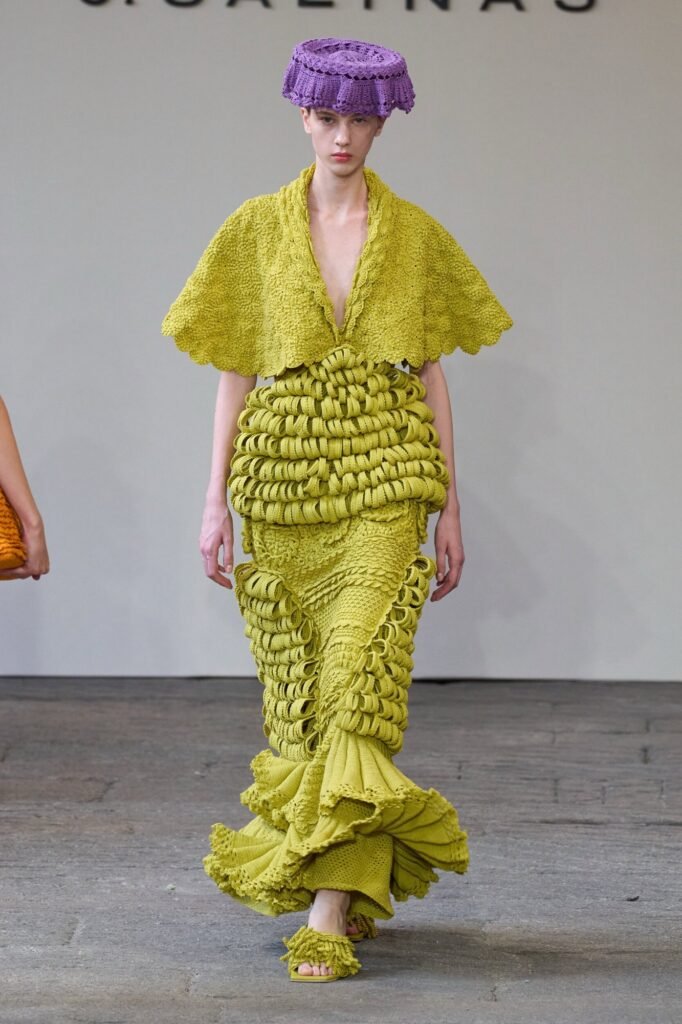
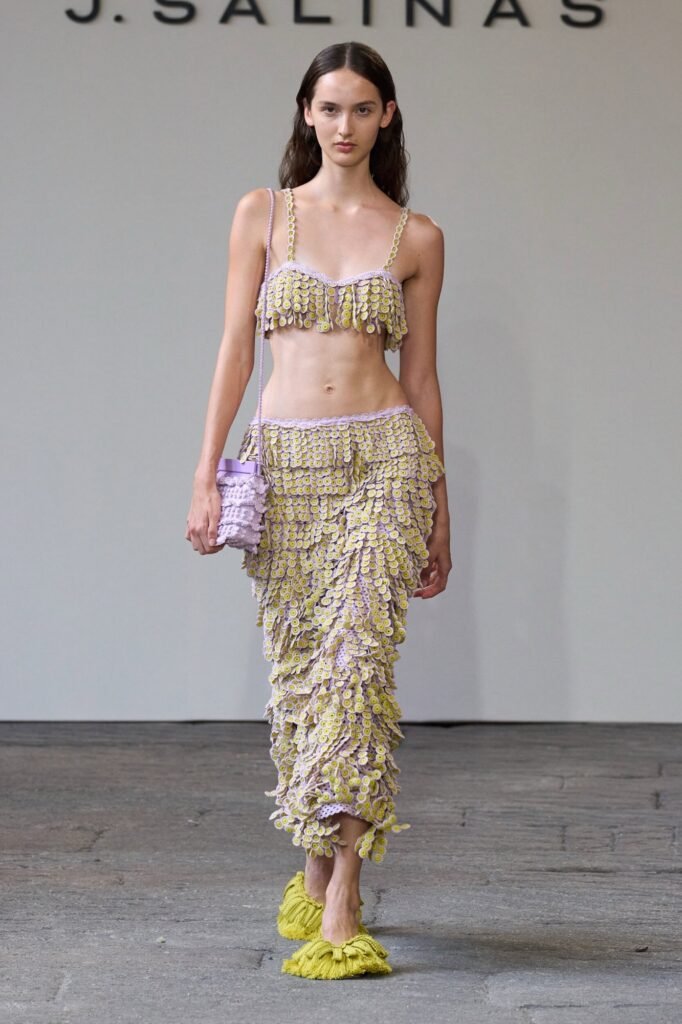
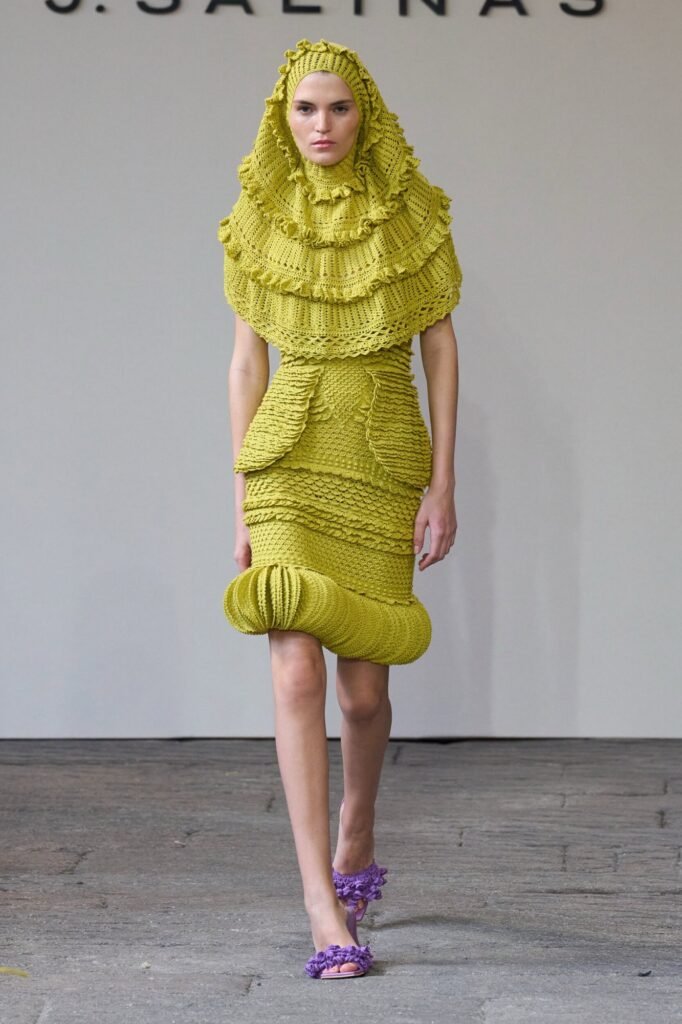
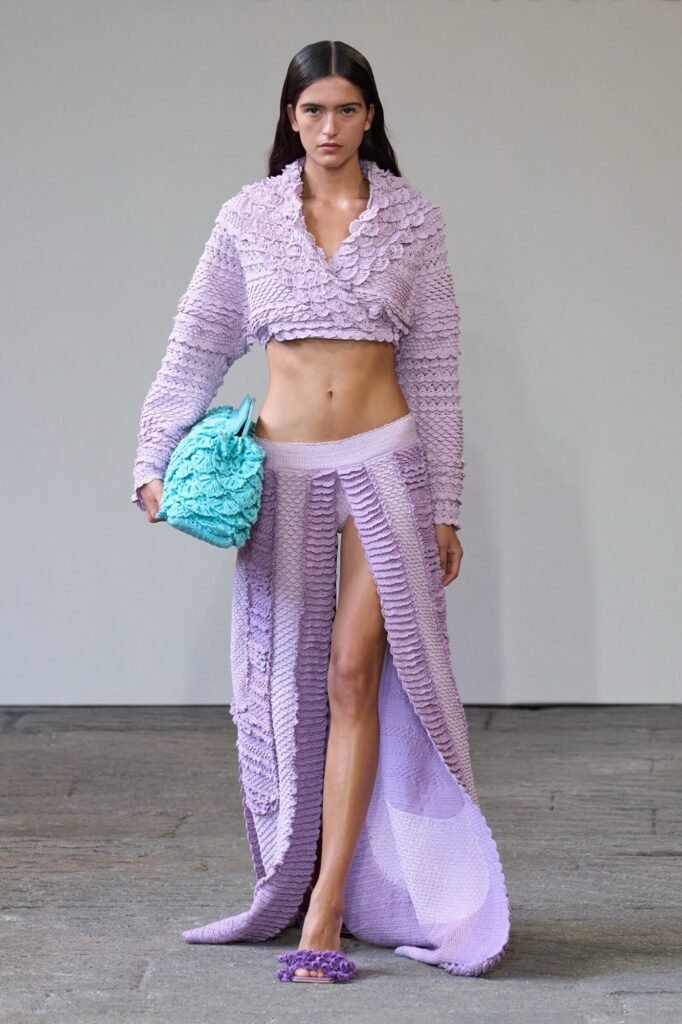
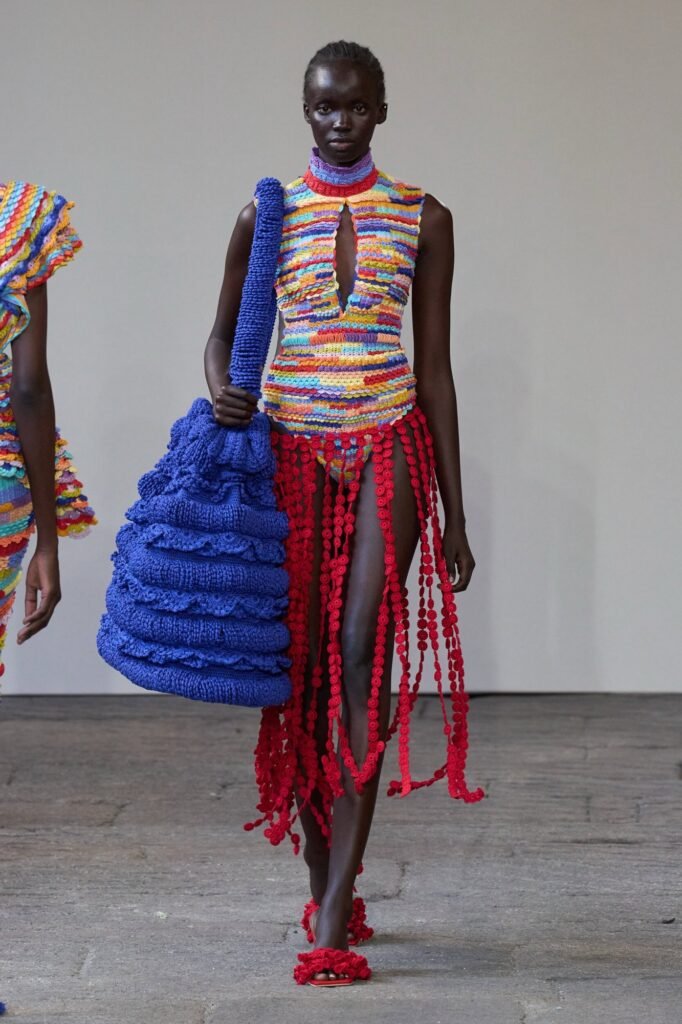
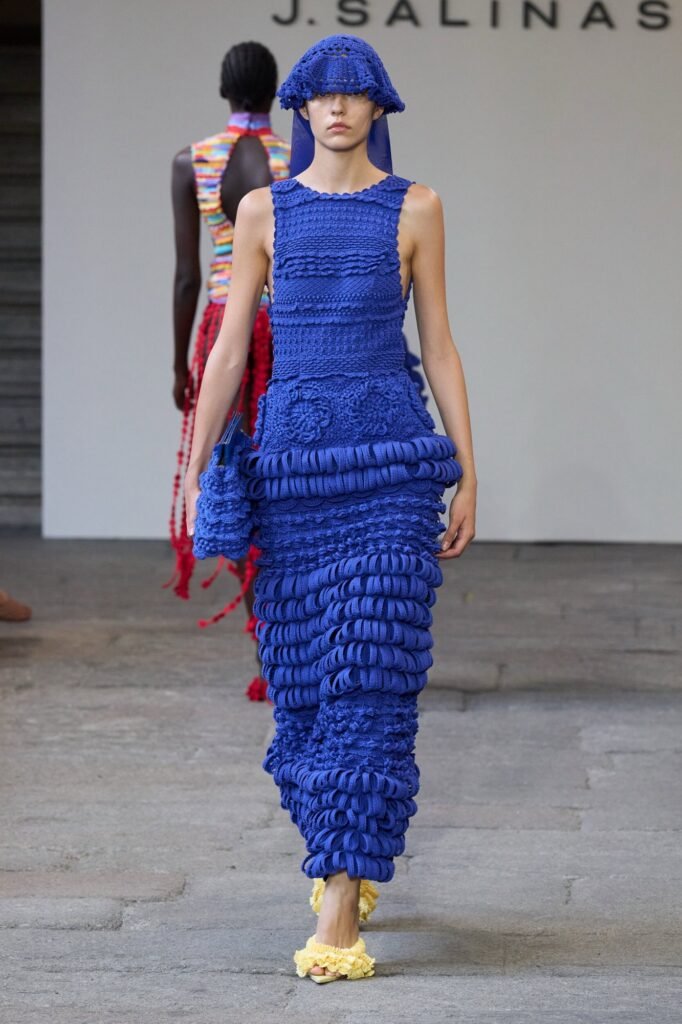
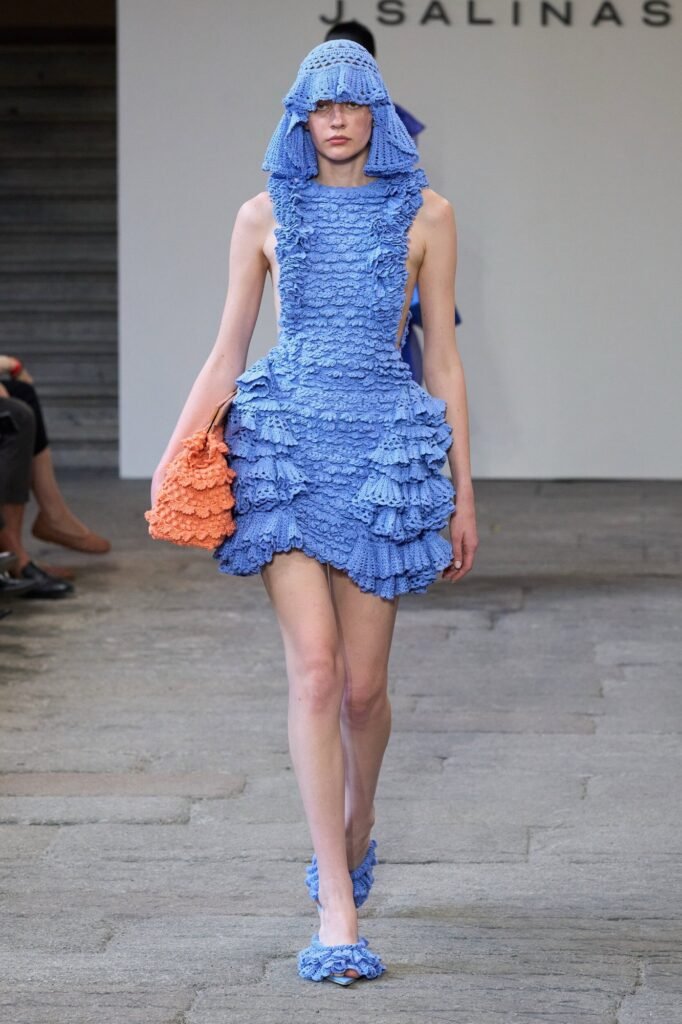
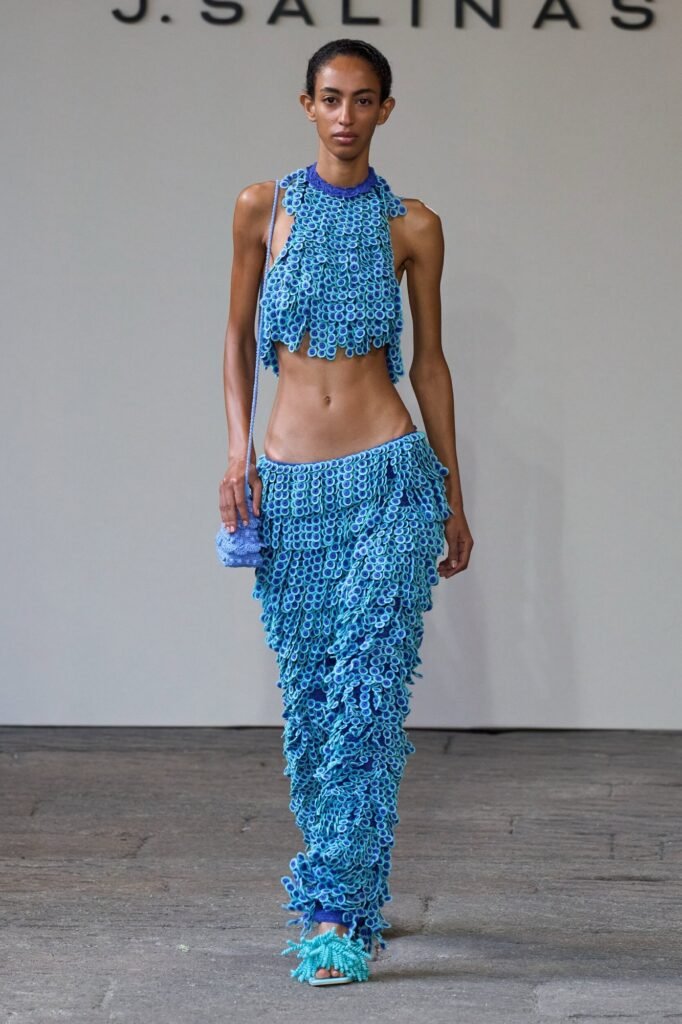
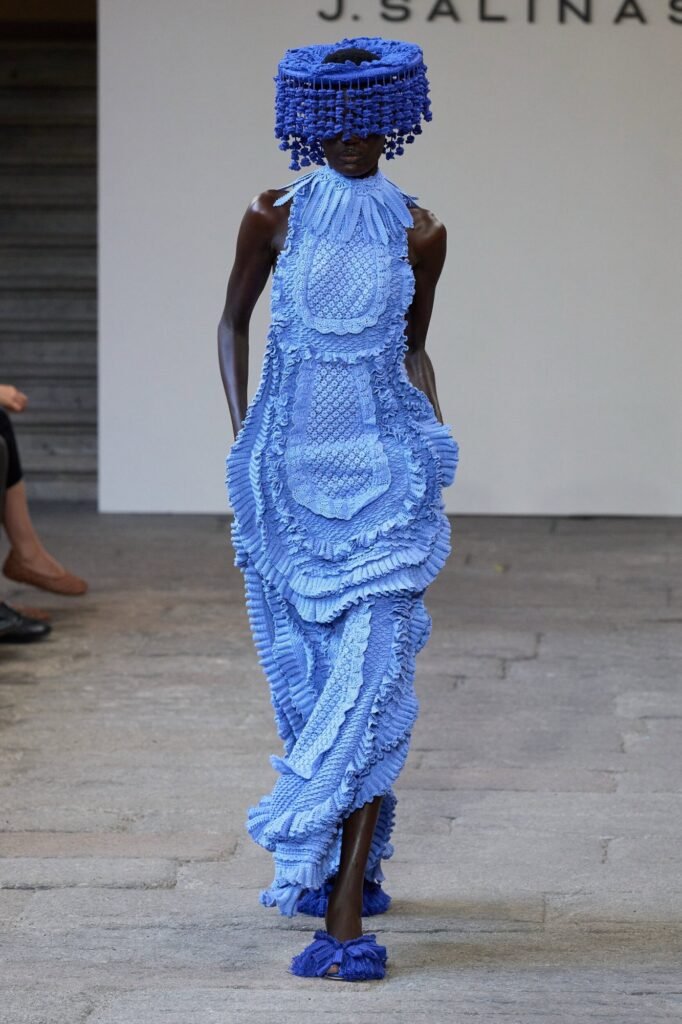
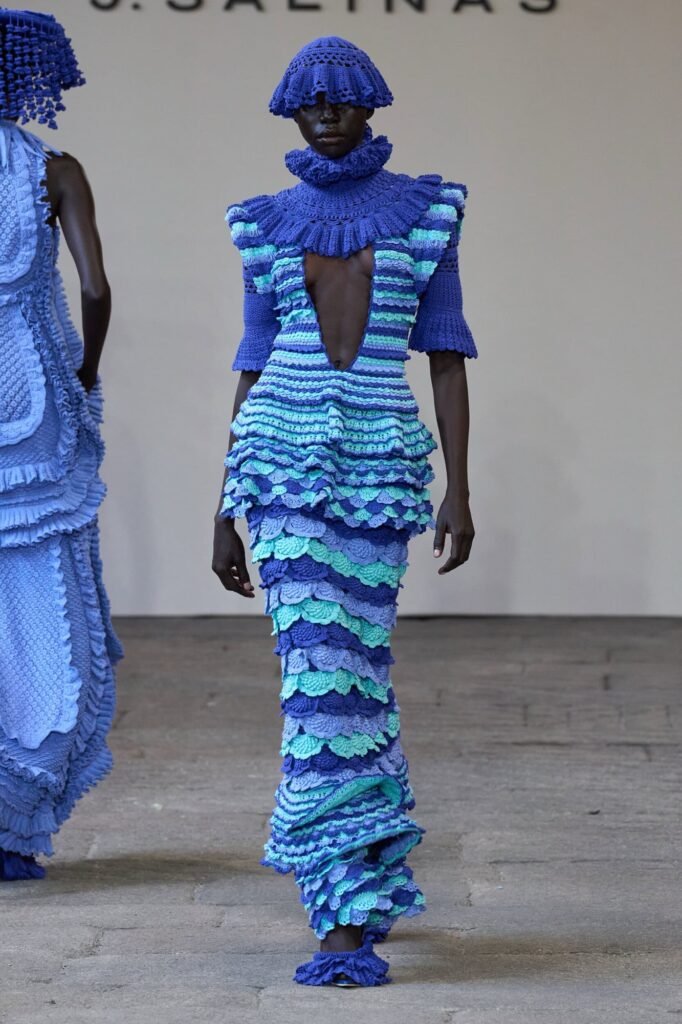
Across the runway, crochet appeared in a remarkable variety of forms, from compact bralettes and cropped tops to flowing dresses, tiered skirts, trousers, hats, bags, and accessories. The technique was not simply used as decoration; it became the architecture of the clothing.
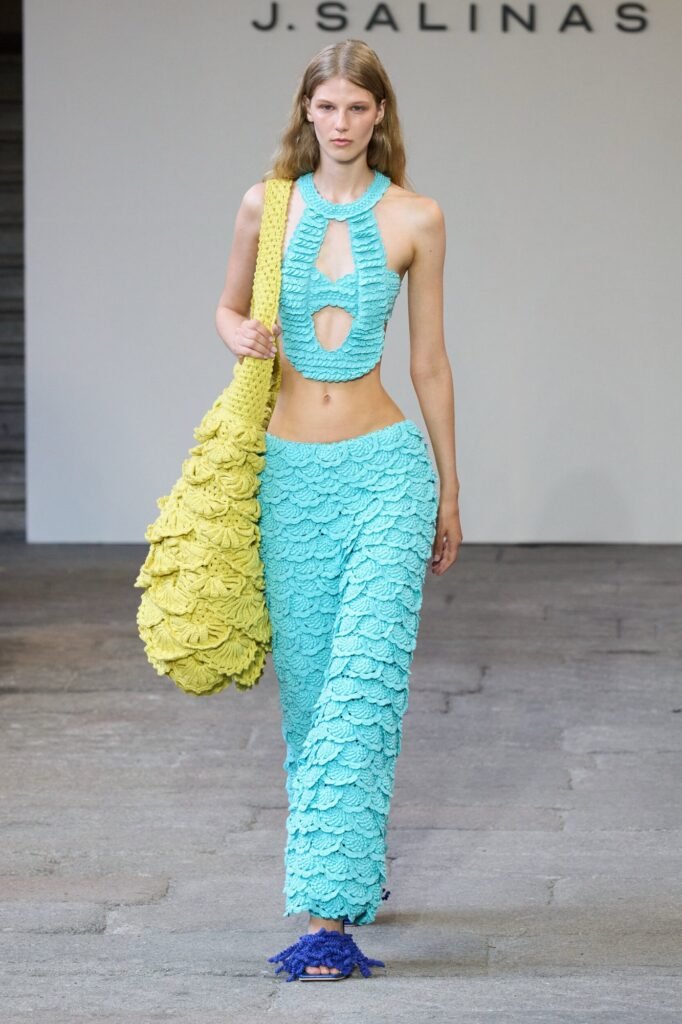
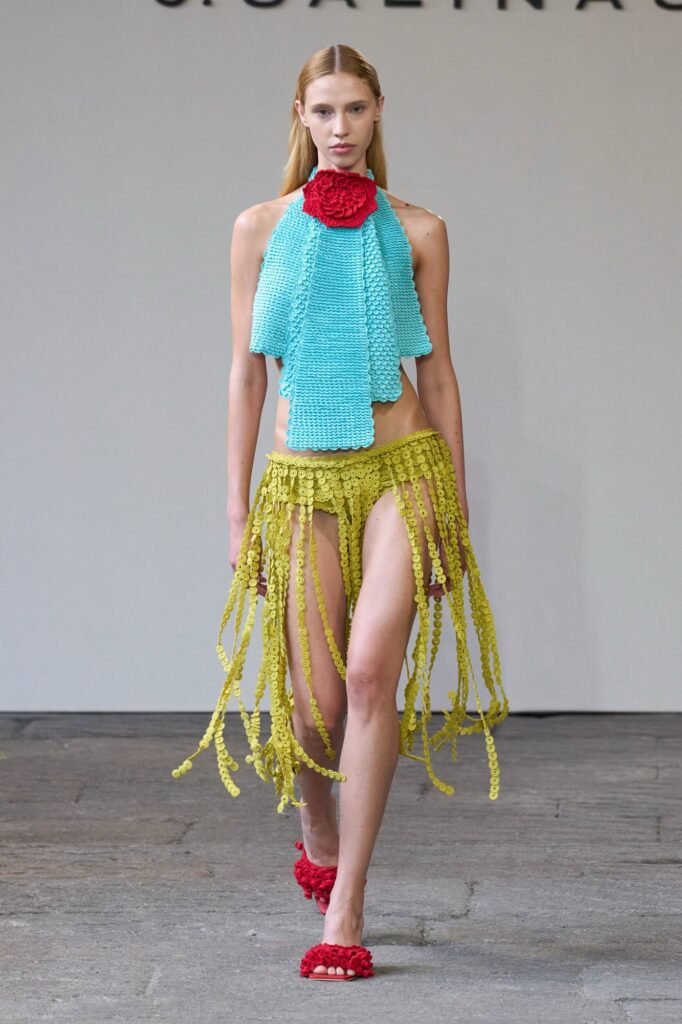
One of the collection’s early looks paired a light-blue crochet halter top with low-rise, tiered trousers, accompanied by a large yellow crochet shoulder bag and purple fringed sandals. The combination immediately established the collection’s colorful, tactile vocabulary.
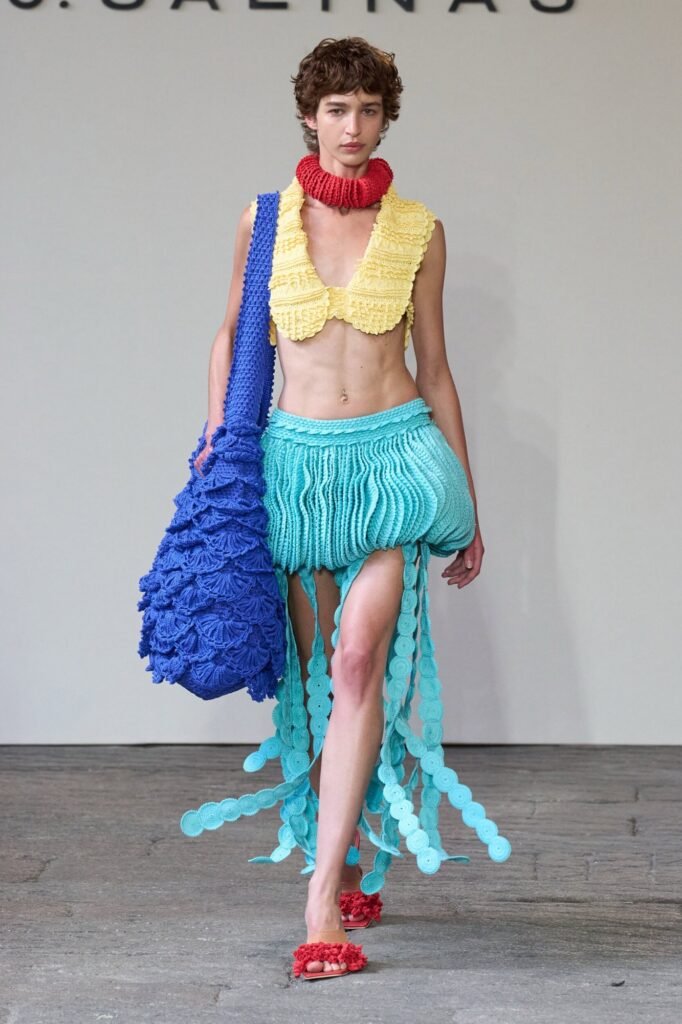
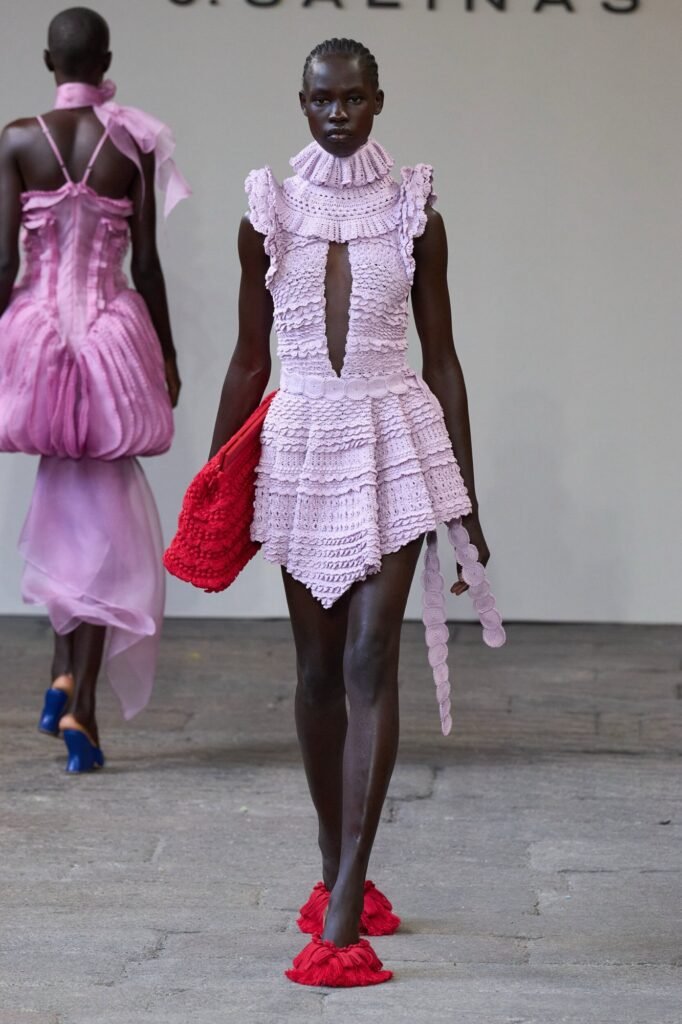
Another look pushed crochet into a more playful direction, combining a crochet bralette with a blue mini skirt decorated with long, dangling circular strips. Red accessories and contrasting colors gave the look an energetic, almost kinetic quality as the textile moved down the runway.
The result is crochet that feels less nostalgic and more sculptural, graphic, and contemporary.
The Vibrancy of the Andes
Color is equally important to El Retablo.
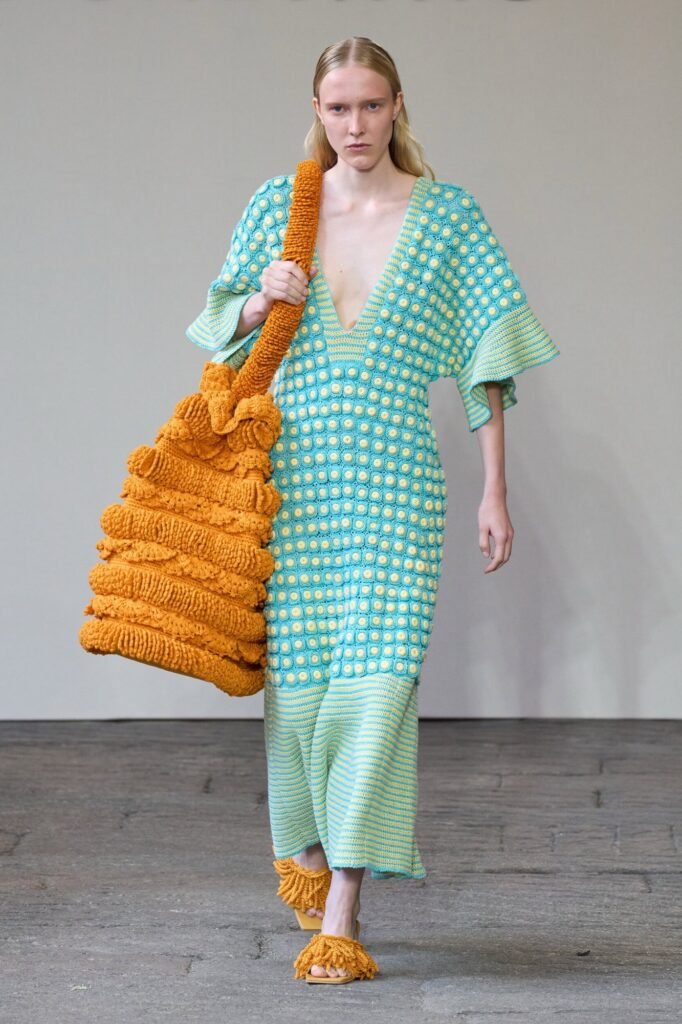
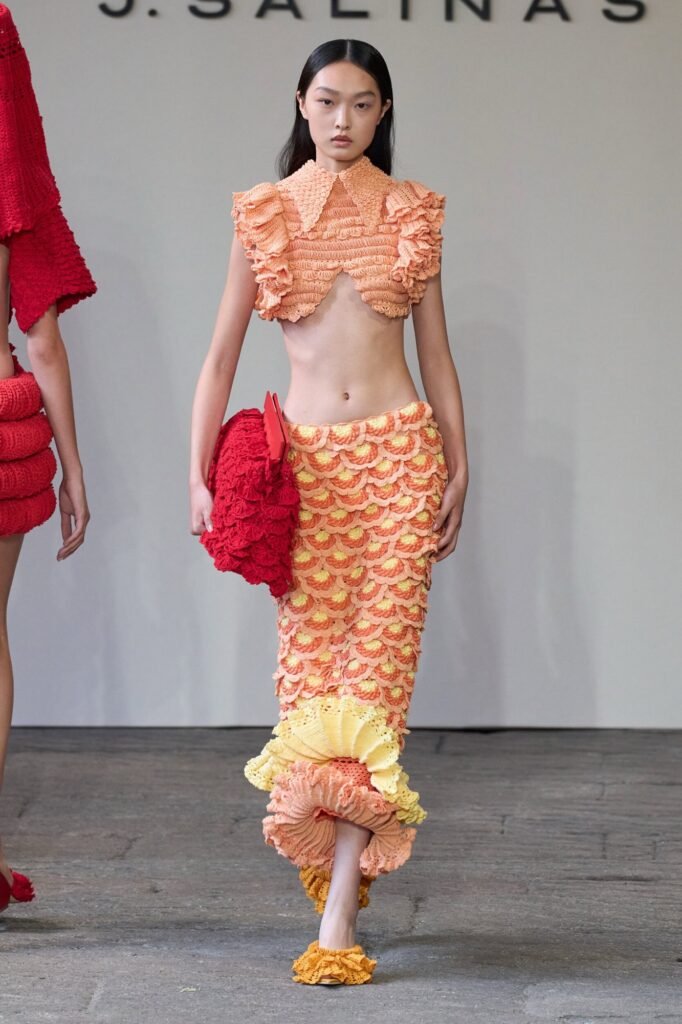
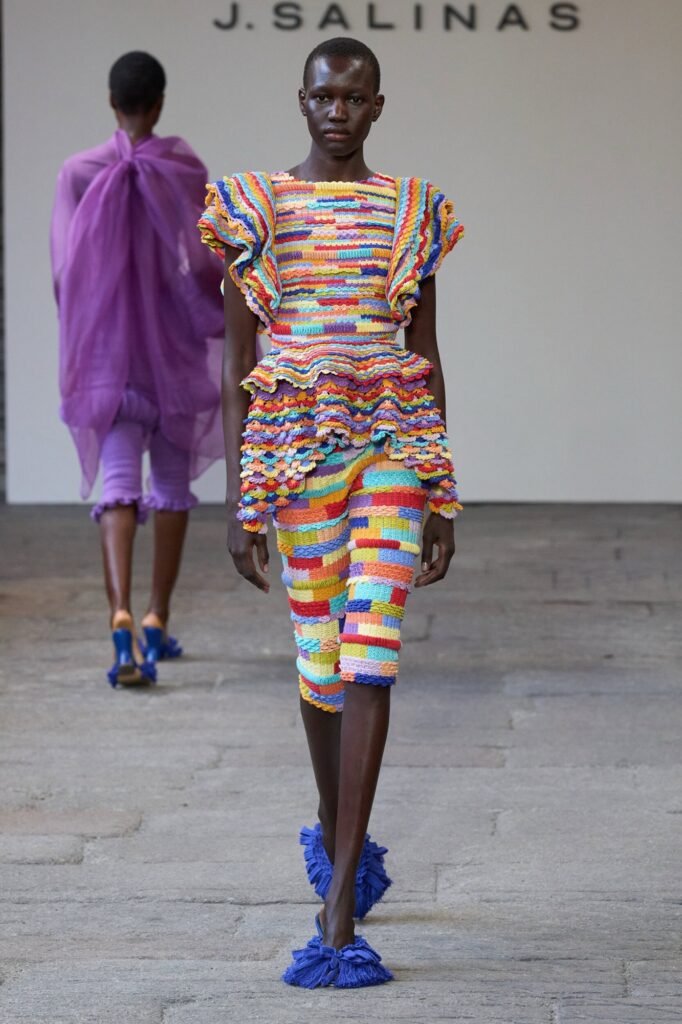
J.Salinas’ official collection palette moves through yellow, pistachio, turquoise, blue, sky blue, red, coral, orange, carrot, lilac, and violet, creating a visual language that feels exuberant and distinctly connected to the collection’s Andean inspiration.
Rather than relying on a single dominant shade, Salinas places contrasting colors beside one another.
Blue meets yellow. Red interrupts lavender. Orange appears against turquoise. Purple and lime create unexpected combinations.
The effect is playful but deliberate, allowing each garment to feel almost like a miniature composition.
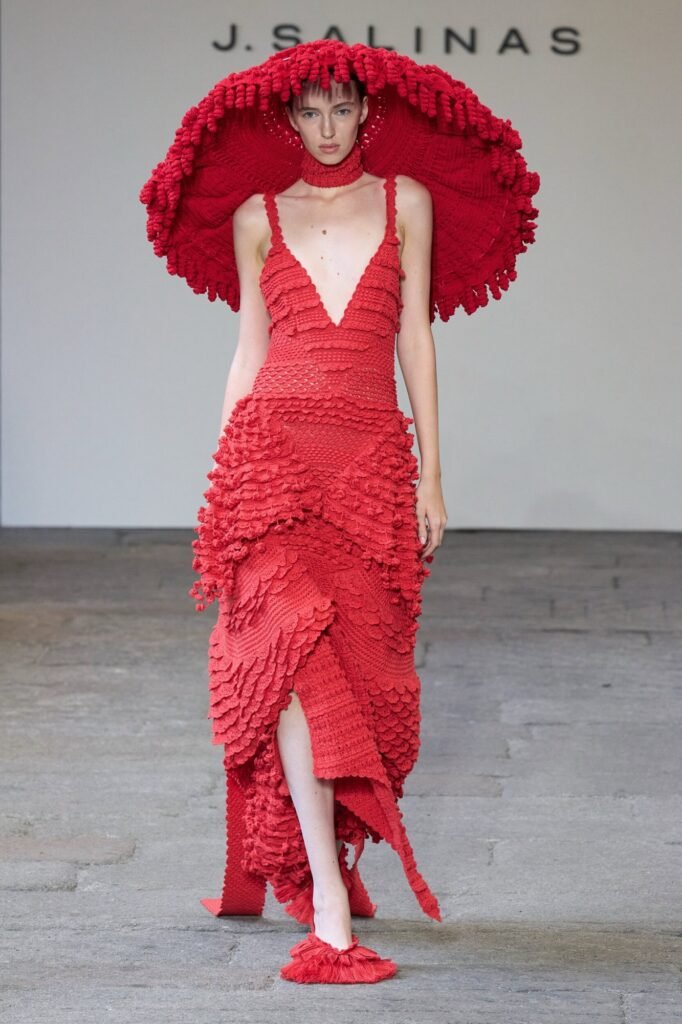
A particularly striking red crochet maxi dress demonstrated the power of this approach. The look featured tiered, ruffled sections, a matching wide-brimmed hat, and coordinated footwear, creating an almost entirely monochromatic moment while allowing the texture of the crochet to become the visual focus.
From Short Dresses to Sculptural Silhouettes
The silhouettes throughout Spring 2027 move between fitted, body-conscious shapes and more expressive volumes.
Short dresses and cropped separates expose the waist and create a youthful, contemporary attitude, while longer dresses introduce a more fluid and elongated proportion. The collection also experiments with exaggerated shoulders, peplum shapes, tiered skirts, fringe, and oversized accessories.
One lavender-and-lime look combines an architectural crochet bodice with exaggerated shoulders and fringe-heavy shorts. The structured upper half contrasts with the movement created by the loops of crochet at the shorts, demonstrating Salinas’ interest in making traditional textile techniques feel almost sculptural.
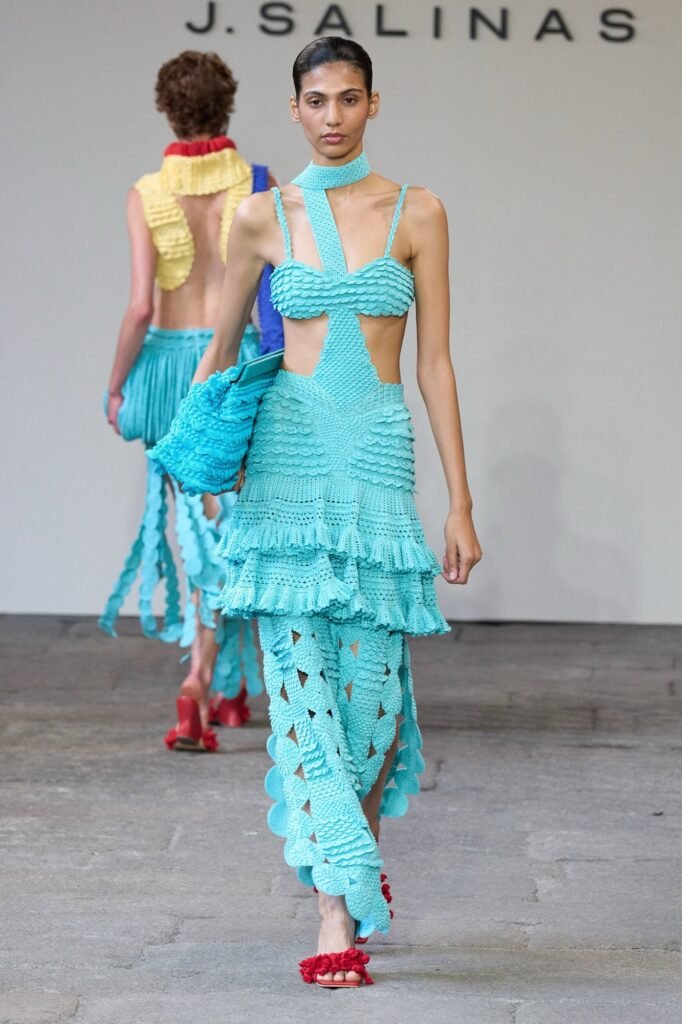
Elsewhere, a blue crochet midi dress features layered loop embellishments across its surface, creating dimension while maintaining a relatively simple column silhouette. A matching crochet hat and clutch continue the textile story, while yellow sandals introduce a contrasting flash of color.
Craftsmanship as the Luxury
For J.Salinas, craftsmanship is not an afterthought.
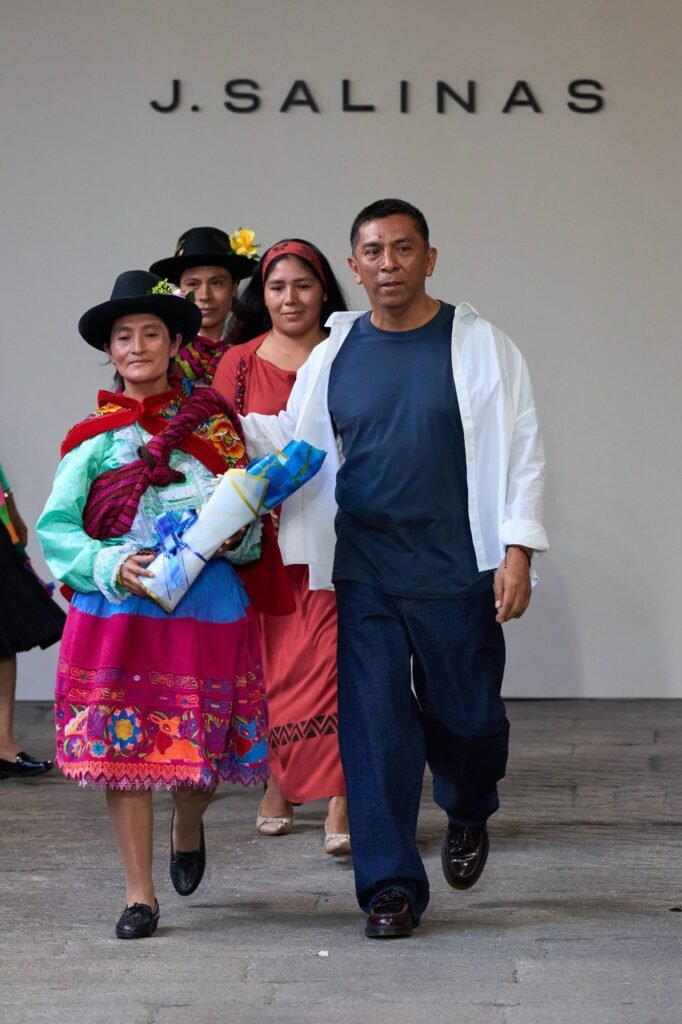
The designer’s studio works closely with Peruvian women artisans, whose expertise in crochet, weaving, embroidery, and other handcraft techniques is integral to the brand’s collections. The house describes this relationship as a way of preserving techniques passed down through generations while giving them a new place within contemporary fashion.
That philosophy gives El Retablo much of its character.
In an industry increasingly fascinated by speed, technology, and mass production, the collection places value on the human hand. The irregularity, weight, density, and dimensional quality of the crochet become part of the garments’ identity.
Here, craftsmanship is the luxury.
Sheer Layers and Delicate Contrasts
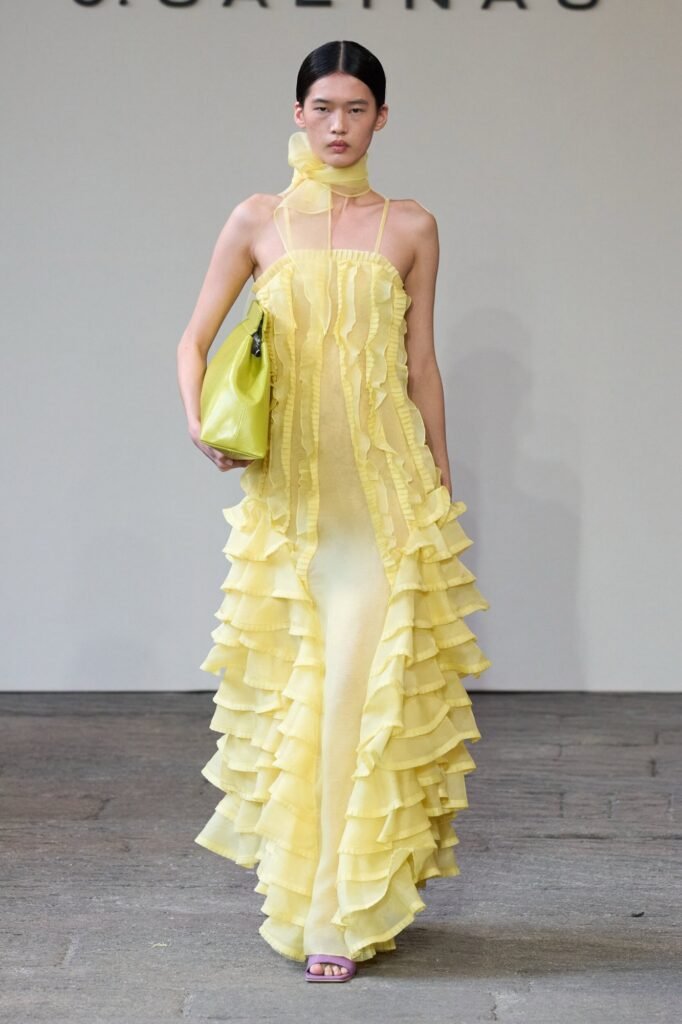
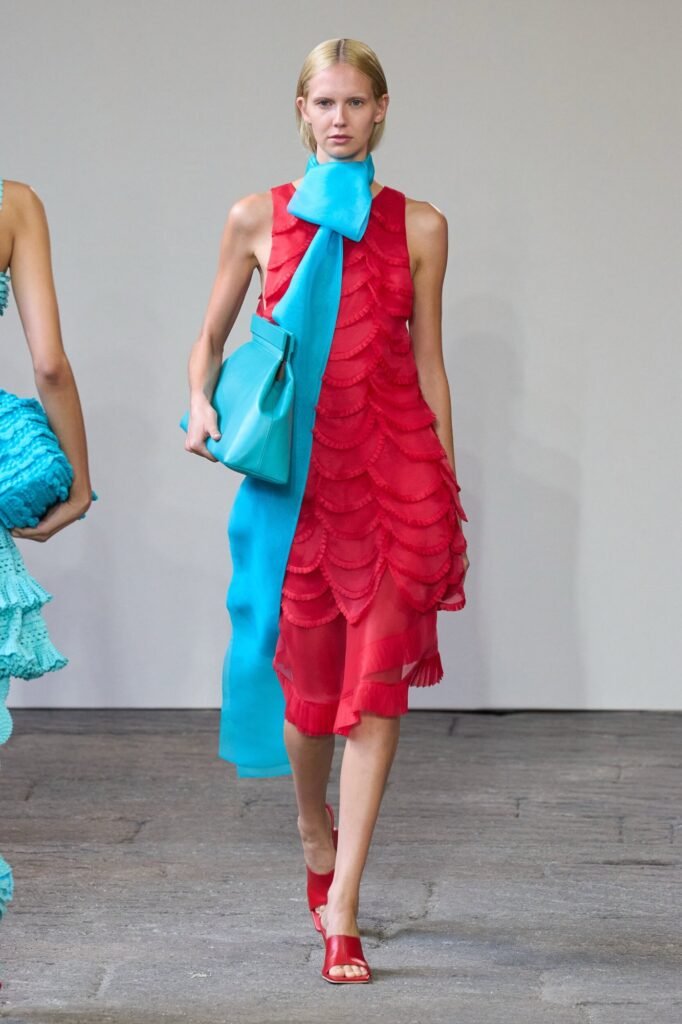
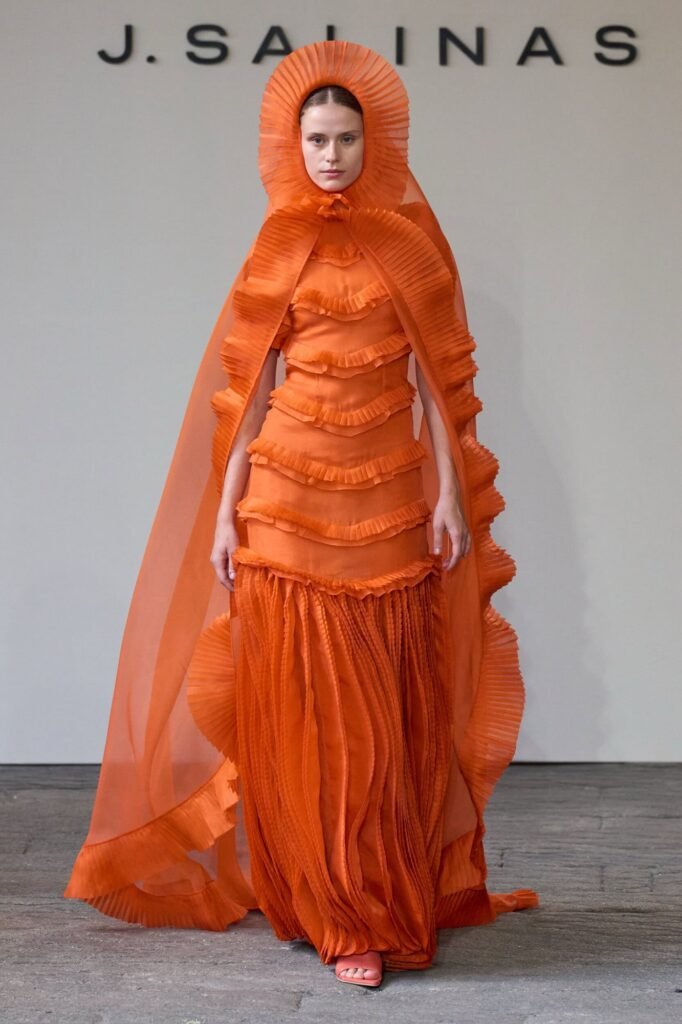
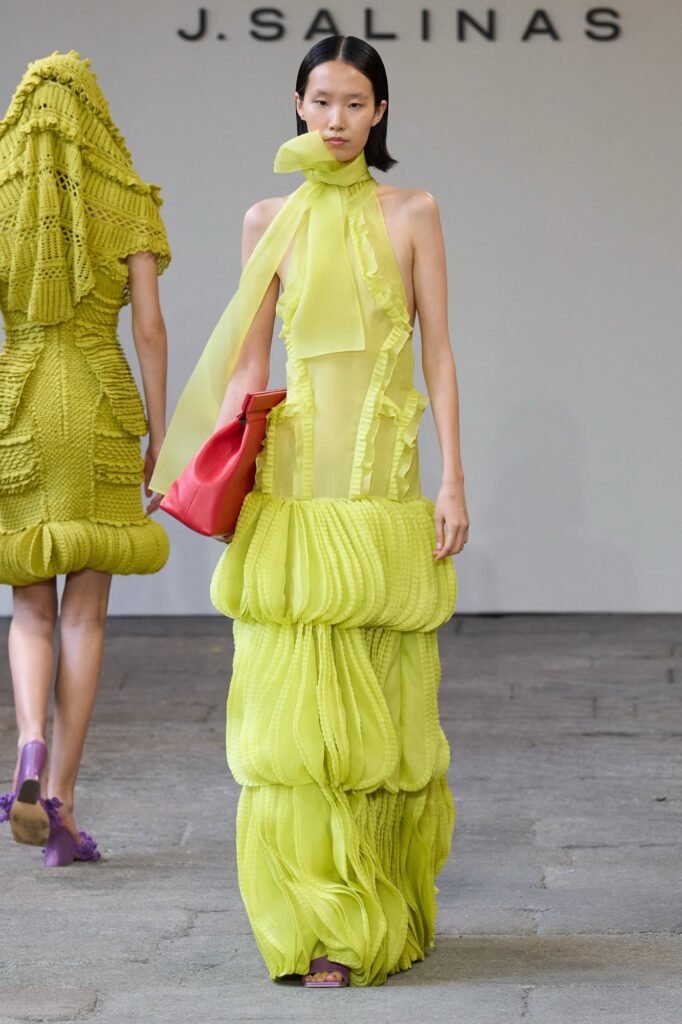
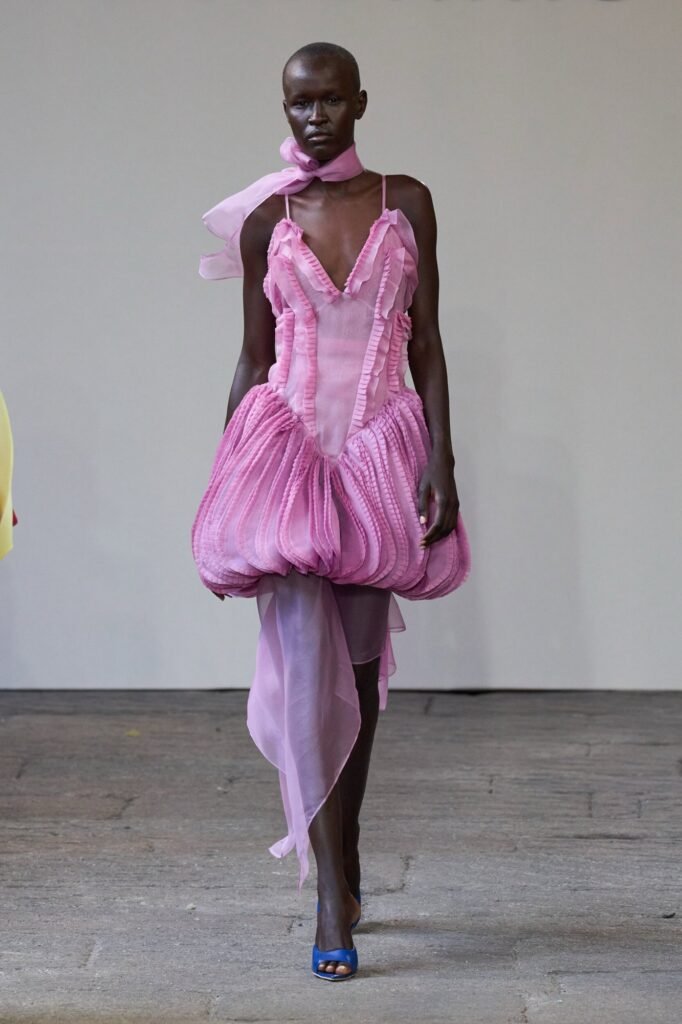
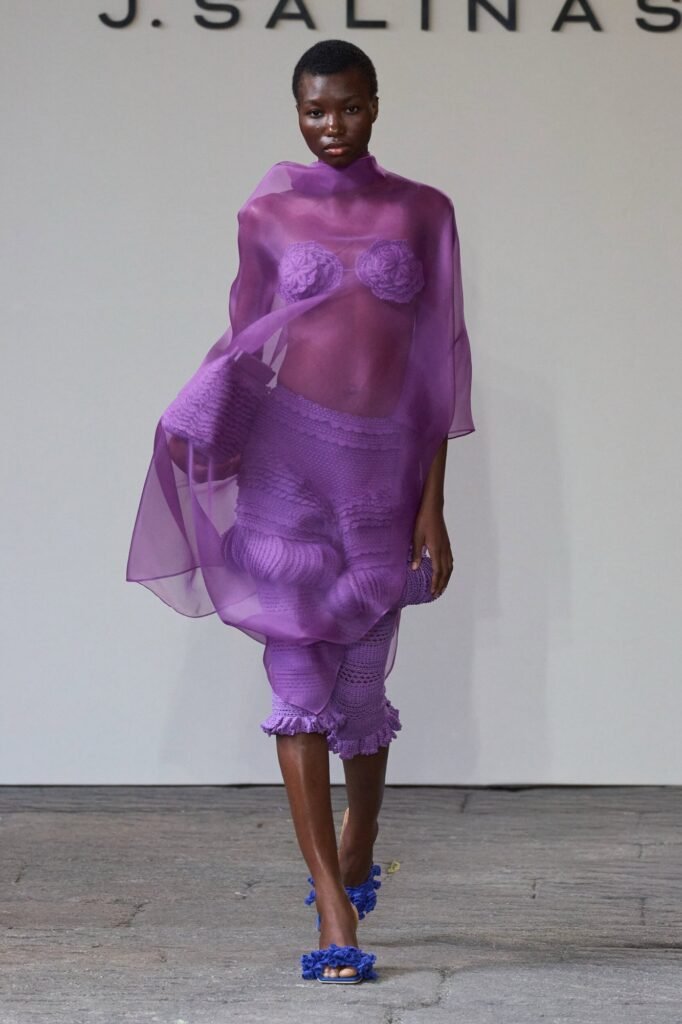
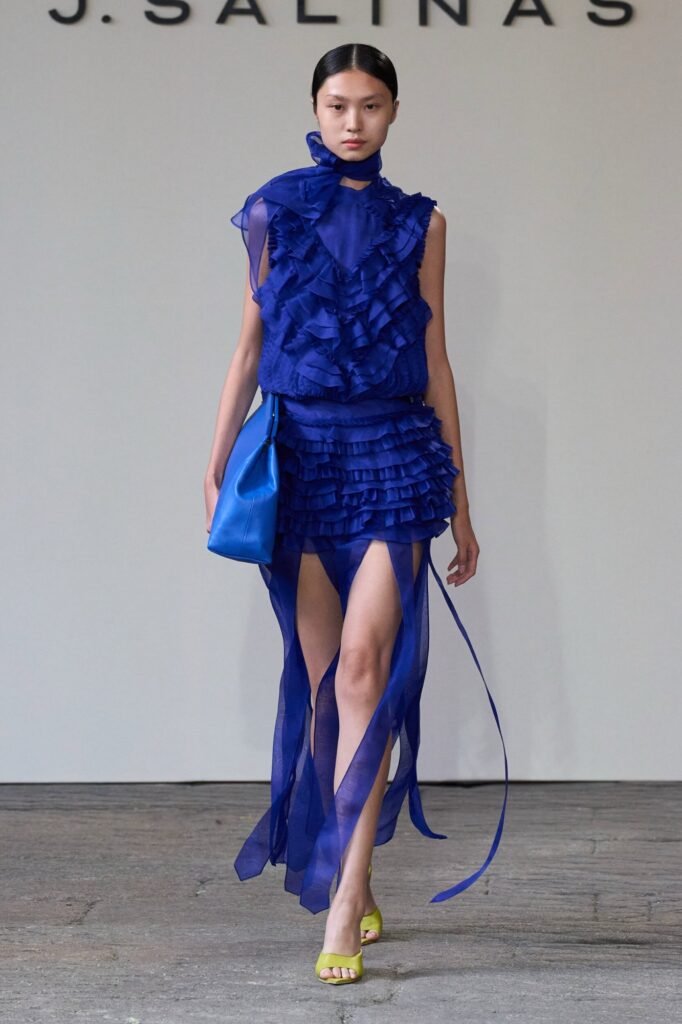
Although crochet provides the strongest visual identity, the collection also incorporates organza, ultra-fine Pima cotton, sheer materials, and layered construction. These lighter fabrics create a useful counterpoint to the heavier handmade textiles.
That contrast prevents the collection from becoming visually one-dimensional.
The dense texture of crochet can sit alongside transparency, while structured pieces are balanced by fluid silhouettes. It is this meeting of opposites—heavy and delicate, traditional and contemporary, structured and fluid—that allows the collection to feel expansive despite its focused concept.
Accessories Become Part of the Story
J.Salinas does not treat accessories as secondary elements.
Crochet bags, hats, sandals, chokers, and clutches are integrated directly into the collection’s textile language. Oversized bags in saturated colors add volume to otherwise streamlined silhouettes, while hats amplify the theatrical quality of certain looks.
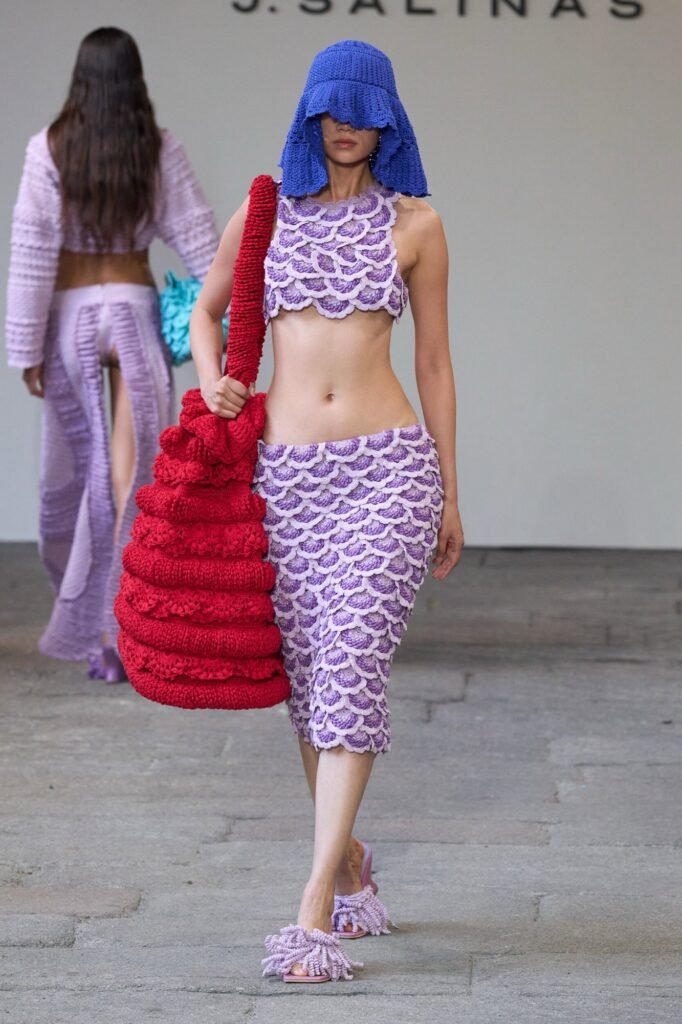
A lavender crochet two-piece, for example, is accompanied by a blue crochet bucket hat, a large red knit bag, and fringed pink slides. The contrasting accessories turn an otherwise coordinated outfit into a dynamic composition of color and texture.
The styling reinforces one of the collection’s central ideas: every element can contribute to the story.
Peruvian Identity on a Global Runway
Jorge Luis Salinas’ work occupies an increasingly interesting space within contemporary fashion because it brings Peruvian cultural heritage into an international fashion conversation without separating tradition from modern design.
His background is deeply connected to Peru’s textile culture. The designer grew up around the influence of his parents’ work in Gamarra, Lima’s major textile district, and later developed a practice centered on combining ancestral techniques with contemporary aesthetics.
That history is visible in El Retablo, but the collection does not function simply as a historical tribute.
Instead, Salinas asks what happens when cultural memory becomes fashion.
The answer is colorful, tactile, expressive, and unmistakably handmade.
The New Language of J.Salinas
With Spring 2027, J.Salinas continues to develop a fashion language where cultural heritage and contemporary design exist together.
El Retablo is ultimately less about recreating a traditional object than understanding what that object represents: memory, community, identity, storytelling, and the preservation of craftsmanship.
Those ideas are translated into crochet dresses, colorful separates, sculptural silhouettes, oversized accessories, sheer layers, and hand-finished details.
The collection’s greatest strength lies in that translation. Rather than placing heritage behind glass, Salinas brings it onto the runway and allows it to move, change, and speak through contemporary clothing.
At Milan Fashion Week, J.Salinas Spring/Summer 2027 became a celebration of Peruvian craftsmanship and a reminder that fashion can carry stories far beyond the clothes themselves.